How Islam Is Being Exploited in France as a Tool for Electoral Pressure Ahead of the 2027 Presidential Elections
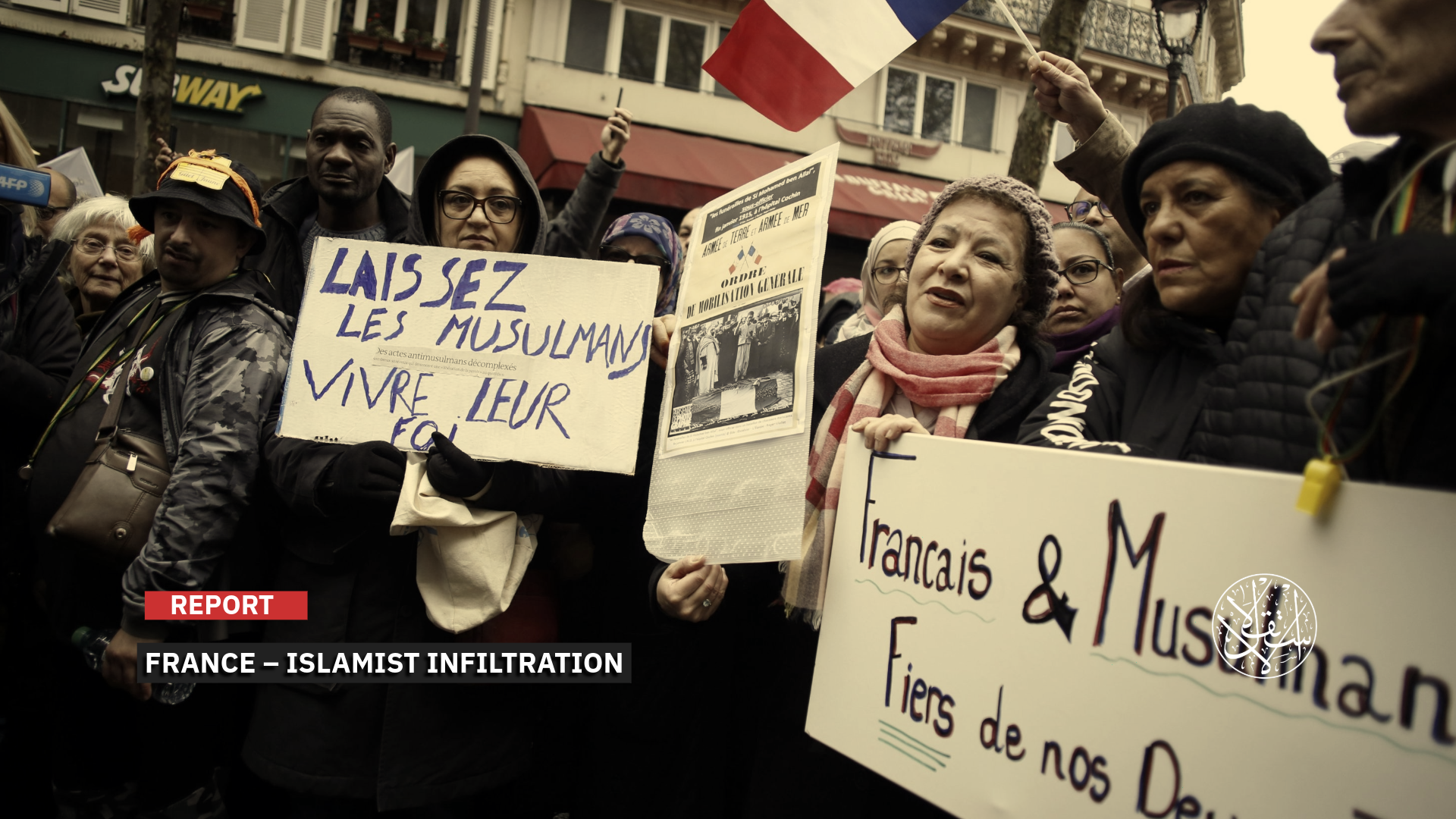
“Islam serves less as a religious belief and more as a security and electoral issue exploited for votes.”
With every election campaign in France, the issue of Islam and Muslims resurfaces, quickly becoming a central focus of political debates and media platforms.
This intense focus coincides with a noticeable escalation in the political rhetoric of right-wing and far-right movements, placing the Muslim community in France—the largest in Europe—before complex social and political challenges.
Official estimates place the number of Muslims in France at approximately 6 million, while some unofficial assessments suggest the actual figure is much higher.
Although this demographic weight partially explains the candidates' eagerness to include Muslim issues at the heart of their campaigns, analytical approaches confirm that numerical size is not the sole factor behind this heightened interest.
Islamist Infiltration
Less than a year before the French presidential election scheduled for April 2027, the issue of Islam has once again taken center stage in the country's political debates. Not as a religious belief held by a large segment of the population, but as a security and electoral issue exploited by various parties to reshape the political landscape and garner votes.
After years in which the terms 'terrorism' and 'extremism' dominated the discourse surrounding France's second-largest religion, the focus in recent months has shifted to the concepts of 'Islamist infiltration' and 'separatism'.
From the halls of parliament and television screens to party headquarters and the offices of the Ministry of the Interior, warnings have intensified about an influence described as expanding within municipalities, civil society organizations, universities, and even sports and cultural circles, with the aim of changing their nature from within.
This debate has transformed into something resembling a legislative and political auction between three camps whose boundaries appear more fragile than ever: the Republicans (the traditional right), the centrist camp (the ruling Renaissance party and its partners), and the National Rally (the far-right).
This intense rivalry manifested itself this spring in three major legislative and political initiatives.
On May 5, the right-wing-majority Senate adopted a bill proposed by the party leader and presidential candidate, Bruno Retailleau, entitled 'Combating Islamist Infiltration in France', by a vote of 208 to 124.
The bill's main provisions include expanding the state's powers to dissolve associations and restrict their funding, and granting authorities broader tools to ban institutions or close places of worship suspected of undermining republican principles. It should be noted that the bill still faces a long legislative journey before its adoption.
On May 3, in a move reflecting direct competition with Retailleau (who previously served as Minister of the Interior), the current Minister of the Interior, Laurent Nunez, revealed to Le Monde the government's intention to draft a new bill against 'Islamist infiltration'.
The government's bill focuses on expanding state tools to address behaviors incompatible with republican values, adding new grounds for dissolving associations, tightening restrictions on hate speech, and strengthening mechanisms to combat anti-republican ideology online.
In April, the National Rally party submitted a bill to the National Assembly aimed at banning the wearing of religious symbols, primarily the hijab, in municipal councils.
Party MP Julien Odoul confirmed that the goal was to empower mayors to counter what he termed 'Islamist infiltration'.
Despite differing party sensitivities and ideological backgrounds, the three camps operate within the same electoral space, competing to offer solutions to what they classify as the 'Islamist threat'.
This accelerated legislative race reveals a profound and structural shift in how the Muslim community is approached within French society, transforming it from an issue of social integration into a politically charged tool for polarization.

Legislative Auction
In the preliminary report prepared by Senator Agnes Cannayet, rapporteur of the Senate's Law Committee and a colleague of Retailleau in the Republicans party, the Islamist threat is presented as a danger whose nature has changed in recent years.
According to the report, the issue is not related to direct acts of violence or traditional clandestine organizations, but rather to the premise of a long-term strategy that seeks to gradually penetrate the heart of the Republic's institutions and replace secular laws and constitutional principles with religious and Sharia law.
Cannayet, like Retailleau and many proponents of this view, relied on two documents that formed the basis of most legislative debates within the Senate, and simultaneously created a sharp division in intellectual and political circles between those who supported their conclusions and those who questioned their scientific validity.
The first document was an official report declassified by the Ministry of the Interior in May 2025. It had been commissioned to investigate the activities of the Muslim Brotherhood and political Islam.
The report discusses efforts to gain access to positions of power through a gradual presence within society via extensive networks of associations, municipalities, and educational, sporting, and cultural activities, rather than through violence or direct political action.
Although conservative and right-wing groups were quick to use this report as a political reference point to substantiate their concerns, it faced widespread criticism from researchers who warned against its potential to become a vague legal and political tool that casts suspicion on a broad spectrum of Muslims indiscriminately.
The second document that fueled the debate was published in November 2025, with the release of an Ifop poll on the attitudes of young Muslims in France.
Two completely contradictory interpretations emerged from this poll. The prevailing media and political discourse—encompassing the right, the far right, and parts of the center—focused exclusively on conclusions indicating a rise in religious extremism, citing high percentages of young people who place God's law above the laws of the Republic, which was considered conclusive evidence of separatist tendencies.
In contrast, this poll was met with harsh methodological criticism from sociologists and political scientists.
The criticisms centered on a flawed scientific conflation of religiosity and social religious conservatism on the one hand, and extremism and political Islamism on the other.
Serious questions were also raised about the poll's impartiality, given the wording of its questions, which were designed to elicit specific answers, as well as the political affiliations of those who sponsored the study.
In this context, a major dilemma emerges: analytical studies confirm that the way a question is phrased fundamentally affects the outcome.
A large segment of young people who express a bias toward God's law in opinion polls proceed from a personal, spiritual, and devotional understanding, without being aware of the political connotations and ideological terminology associated with the word 'Sharia' in the context of French public discourse.
These two documents sparked widespread debate centered on the structural problem of conflating manifestations of natural religiosity with the concept of 'Islamism'.
This overlap was acknowledged by the French Minister of the Interior on several occasions since the beginning of this year, and reaffirmed before the Senate on May 5th when he stated that the legal definition of the concept of infiltration is extremely complex.
In the same context, during the Senate session discussing the proposed law submitted by Retailleau, Said Omar Oili—the Socialist senator from the Indian Ocean island of Mayotte—presented a clear and contrasting vision of the concept of 'national unity'.
Oili began his remarks by reminding those present of his identity as a Muslim senator representing an island that has been under French sovereignty since 1841.
He pointed out that the island today has more than two hundred mosques compared to one church and one Christian chapel.
Despite this numerical disparity, he noted, this has never been an obstacle to peaceful coexistence between the Muslim majority and the Christian minority.
In a direct confrontation, Oili addressed Retailleau, warning that the proposed law would fuel anti-Muslim sentiment in the country.
He concluded his remarks by announcing his decisive vote against the bill, a victory for the fundamental principles upon which the French Republic was founded, foremost among them the values of tolerance and fraternity.

Sharp Polarization
Despite the conciliatory steps taken by Islamic institutions towards the state and society in France—most notably the signing of the Charter of Principles of Islam in France in 2021—these institutions have not escaped the circle of continuous government targeting.
During the presidency of Emmanuel Macron, the French government adopted a more assertive and stringent approach in its dealings with the Muslim community; This cast a shadow over the institutional structures of Muslims, leading to the split of the French Council of the Muslim Faith (CFCM) and the establishment of the Forum for Islam in France, a move that sparked division and widespread controversy within the community.
This crackdown was not limited to the institutional level; it extended to procedural matters, manifested in the authorities' closure of dozens of mosques and Islamic associations under the pretext of combating hate speech.
In the context of this systematic repression, the legislative and political environment in France witnessed a series of successive measures.
These began with the Senate's formation of a commission of inquiry into Islamic extremism in 2020, followed by the passage of the Law on Strengthening Respect for the Principles of the Republic—known in the media as the Law Against Separatism—in August 2021, coinciding with a rise in systematic political rhetoric against what is described as the Islamic phenomenon or political Islam.
An analytical reading of the situation indicates that this legislative tightening is not merely a series of isolated measures, but rather an accelerated strategy closely linked to political stakes and the approaching presidential elections.
This restrictive dynamic reached its peak at a remarkably rapid pace during 2025 and 2026, through a series of successive parliamentary and ministerial actions:
- The formation of a parliamentary inquiry committee to investigate the links between Islamist networks, terrorist organizations, and certain political actors.
- The introduction of a bill in December 2025 calling for a ban on minors wearing headscarves in public spaces.
- The introduction of a bill in March 2026 entitled 'Combating Islamic Infiltration in France'.
- The introduction of another bill in April 2026 prohibiting elected local officials from wearing religious symbols while performing their official duties.
- The culmination of this series of actions was the new bill adopted by the Minister of the Interior, Laurent Nunez, clearly aimed against what the government calls separatism and infiltration.

In turn, political analyst Mohamed Owayed confirmed that the relationship between French authorities and Islamic institutions has reached a critical juncture, marked by the collapse of direct dialogue channels.
Mr. Owayed explained, in a statement to Al-Estiklal, that this shift is not merely a passing electoral maneuver, but rather a result of the infiltration of far-right ideology and its transformation into a dominant current that shapes public policy in the country.
He warned of the dangers of current trends within the Senate, saying, "Historically, French laws were drafted in the spirit of secularism to regulate religions in general. Today, however, legislation is being meticulously tailored to specifically target Muslims, a dangerous legislative precedent."
He pointed out that this climate has produced a structural suspicion that traps Muslims in a paradoxical situation, "If they excel in their studies and work, their success is tainted with suspicion as a form of subtle infiltration. If they choose to stay out of the limelight, they are immediately accused of separatism."
Mr. Owayed concluded his remarks by noting that these pressures have generated a feeling among a broad segment of the population that they have become citizens in name only, their citizenship subject to constant, baseless questioning, despite their significant contributions to the health, education, and economic sectors.