Are Turkiye and the Kurds Nearing the End of a Decades-Long Armed Conflict?
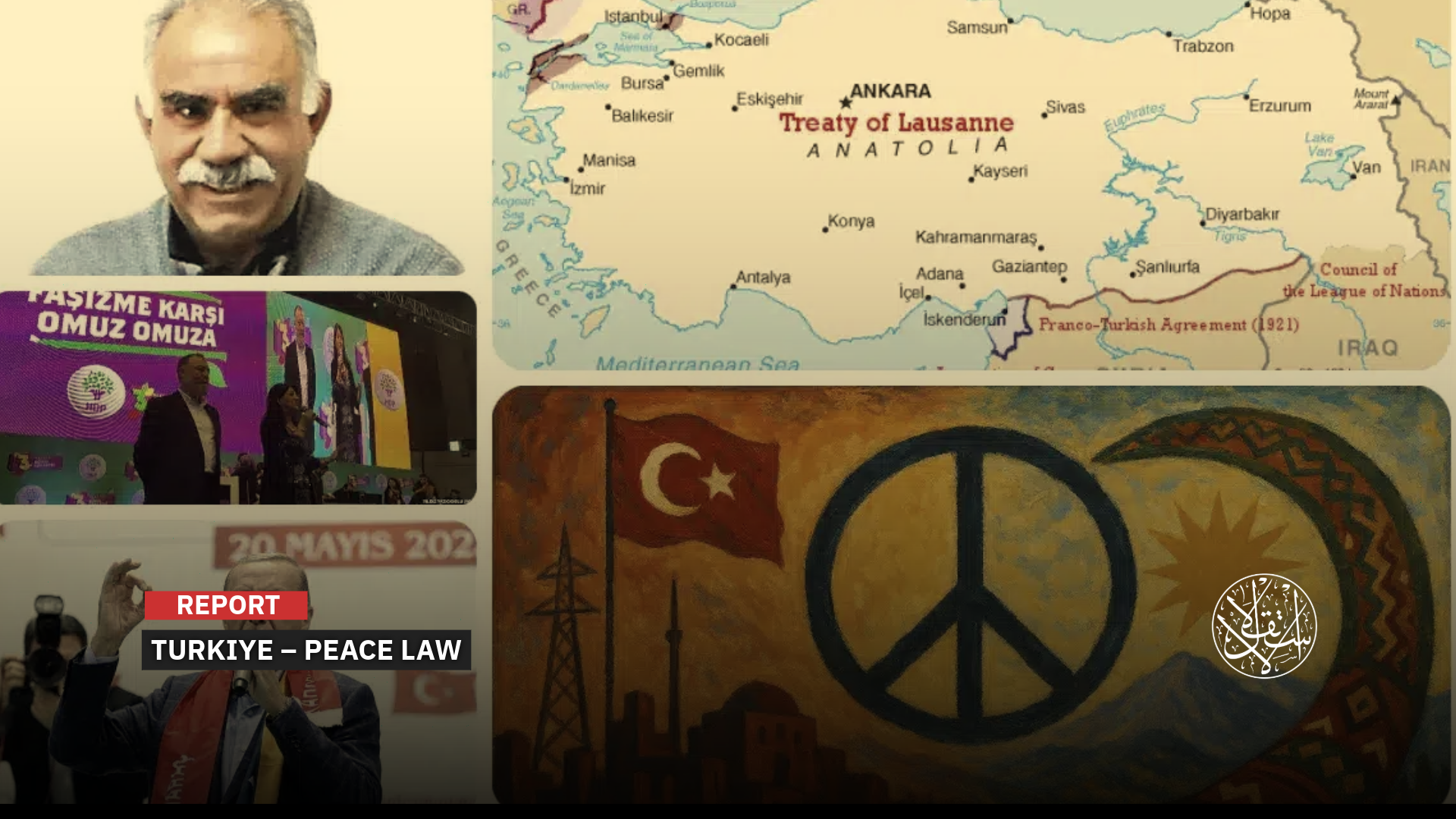
“The PKK expressed doubts about the seriousness with which the peace law is being addressed.”
The peace process between Turkiye and the Kurdistan Workers' Party (PKK), which has been ongoing for over a year and a half, is witnessing significant progress these days, amid growing questions about the future of Kurds in Turkiye after the official and final end of the armed conflict.
Despite the process being stalled since last February, the Turkish parliament is preparing to soon pass legislation within a legal framework that will determine the fate of PKK leaders, fighters, and prisoners, and who among them can return to Turkiye, coinciding with the party's complete disarmament.
Parliament Speaker Numan Kurtulmus stated that discussions are underway, and he hopes the bill will be placed on the agenda as soon as possible with the agreement of the political parties.
The parliamentary justice committee is expected to review the bill before submitting it to the full parliament for a vote, with its passage anticipated by the end of this week or early next week.
In parallel, Turkish media reports revealed that the PKK had recently evacuated 81 camps and positions near the Turkish-Iraqi border, with its fighters withdrawing to the party's main stronghold in the Qandil Mountains on the border between Iraq and Iran. This followed the evacuation of 72 camps in previous months, reflecting a coordinated effort between the two sides.
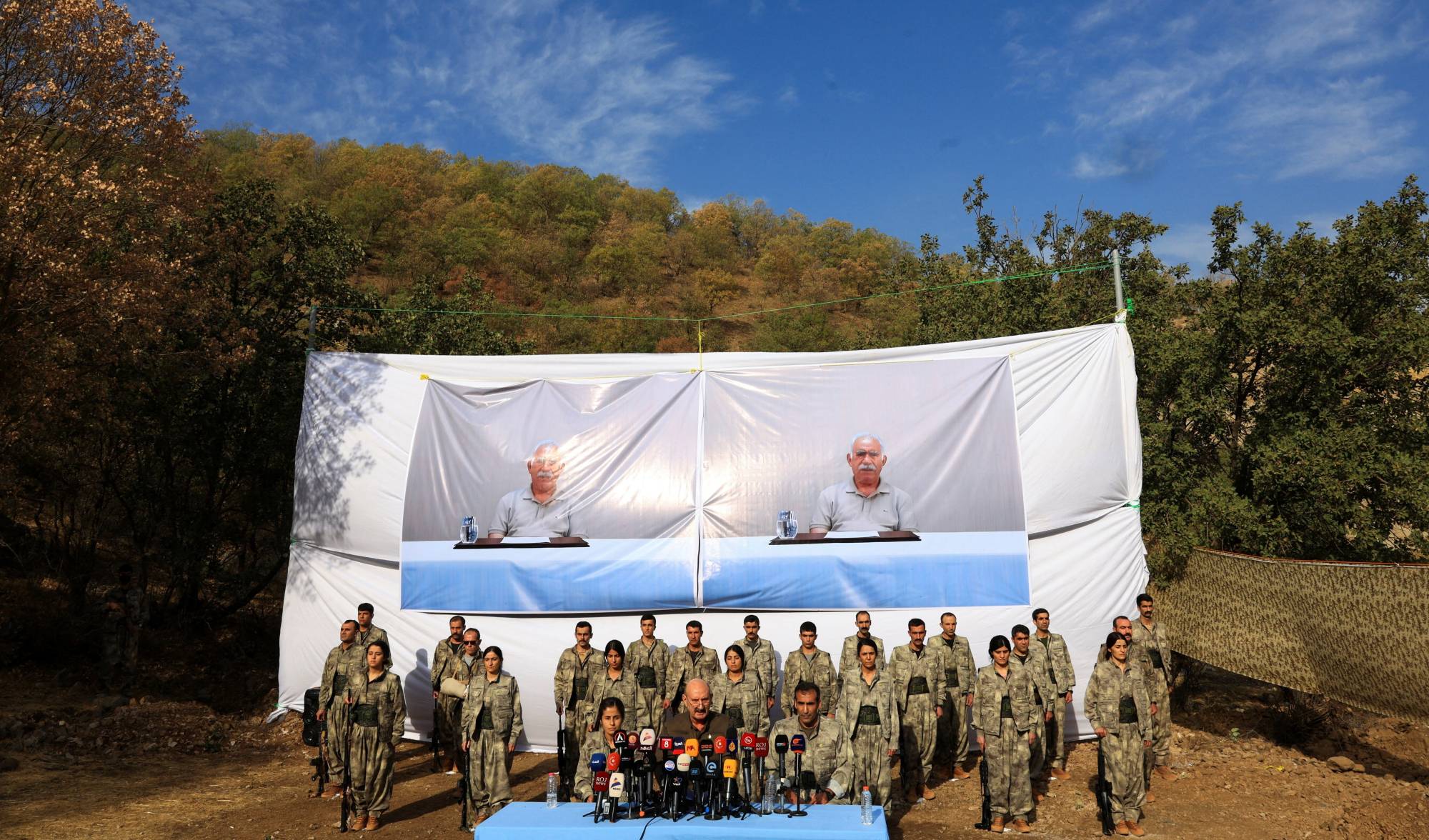
These withdrawals came after the party announced its dissolution and the laying down of arms on May 12, 2025, in response to a call issued by Abdullah Ocalan on February 27, 2025.
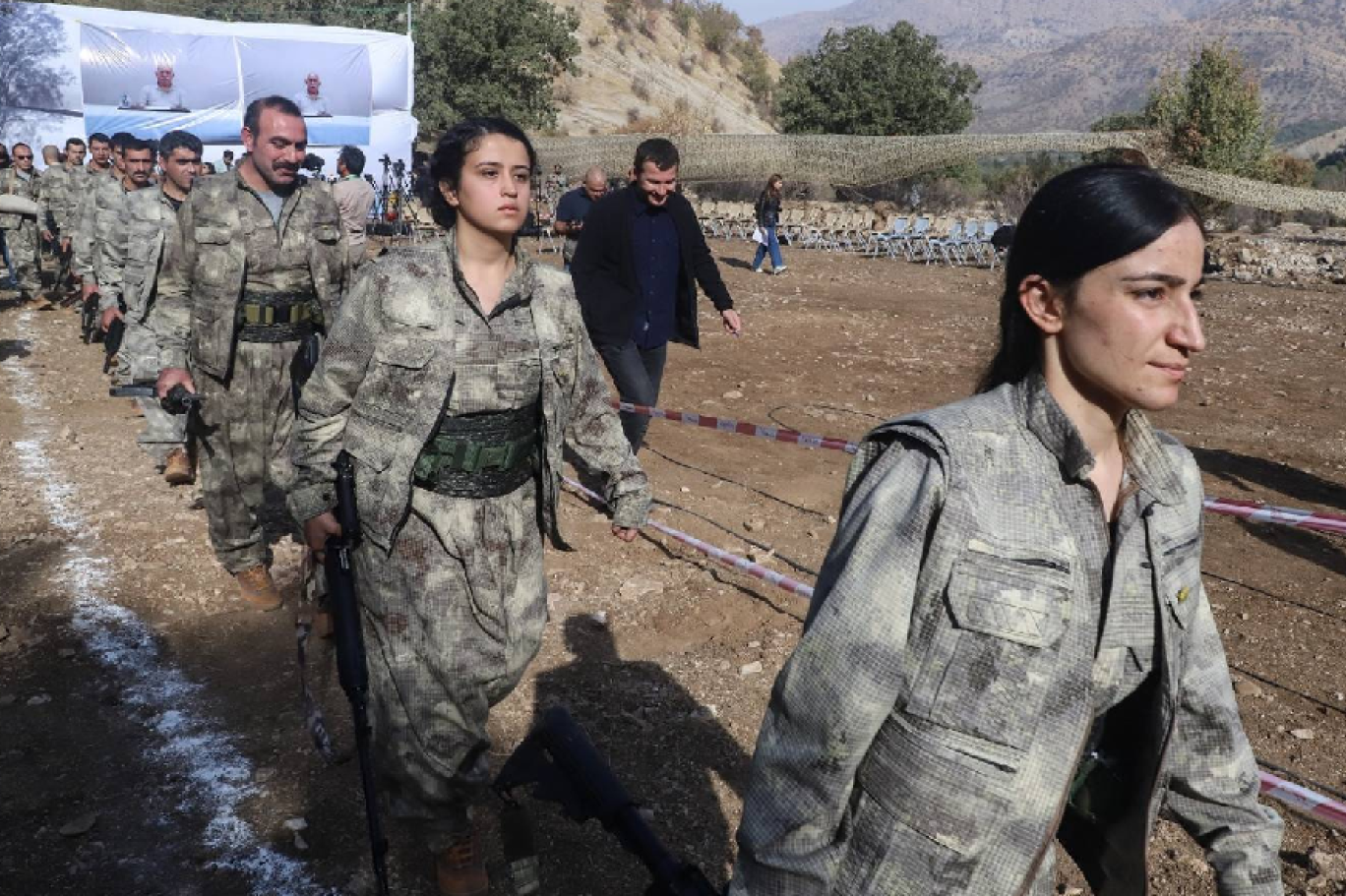
On July 11, 2025, 30 PKK leaders and fighters symbolically burned their weapons at the foot of Mount Qandil in Sulaymaniyah Governorate, northern Iraq.
On October 26, 2025, the party announced the withdrawal of its last 25 fighters from Turkiye to the media defense zones at the zero point on the Turkish-Iraqi border.

Peace Law
All eyes in Turkiye are on Parliament as the draft framework law for the peace process nears its presentation, amid great anticipation for the outcome of the ongoing political negotiations between the government and the relevant parties to definitively end the armed conflict.
Ankara seeks first to solidify the disarmament and dismantle the military structure of the PKK before moving on to the political issues that constitute the broader demand of the Kurds, who are calling for constitutional and legal reforms that address the root causes of the Kurdish question.
It is worth noting that the ruling coalition, led by the AKP, has made significant progress in drafting a new constitution for Turkiye, to replace the current one established after the 1980 coup. This new constitution will be crucial in determining the extent of Kurdish satisfaction, particularly regarding its provisions on the recognition of their national identity and mother tongue.
The Kurds hope that the new text will include a more inclusive concept of citizenship, reduce its rigid nationalist character, and broaden the recognition of cultural and linguistic diversity, without compromising the unity of the country.
These demands face strong opposition from nationalist parties, including the Good Party, which has refused to engage in the peace process from the outset.
This explains why the government launched the peace initiative through its ally, the MHP, and its leader, Devlet Bahceli, who enjoys considerable support and respect among nationalists.
In turn, Parliament Speaker Numan Kurtulmus confirmed that consultations are ongoing with all parties to reach a consensus that guarantees the country's stability, indicating that efforts are underway to place the bill on the parliamentary agenda as soon as possible.
In his recent statements, Kurtulmus added that the new law will not include any general or special amnesties for specific individuals. He emphasized that actual implementation will only take place after the complete disarmament and final dissolution of the PKK.
The Turkish official explained that the state is setting precise criteria to ensure the success of the process, clarifying that the relevant institutions will oversee the dissolution of armed organizations before proceeding with the activation of the new law's provisions within the Turkish Parliament.
According to sources within the ruling AKP, a separate bill addressing the demands of the families of victims of PKK terrorist attacks and veterans will be submitted to Parliament after the passage of the Peace Law. The bill is currently being finalized, and its technical aspects are being addressed.
AKP spokesperson Omer Celik emphasized that the process is highly comprehensive, encompassing both political and legal dimensions, adding that it is still in its early stages.
He further stated that a suitable political climate is necessary before any legislation can be enacted, noting that the focus should be on strengthening citizenship and rejecting extremism as the foundation for building a new era.
He stressed that the success of this initiative hinges on the commitment of all parties to the national principles that guarantee the unity of the country.
MHP leader Devlet Bahceli called for support for the framework law, considering it a cornerstone for the success of the Turkiye Without Terrorism initiative.
The Turkiye Free of Terror initiative is a political and security program launched by the Turkish government to end the threat posed by the PKK and its affiliated groups within Turkiye, through a combination of security, legislative, and political measures.
Tuncer Bakirhan, co-chair of the DEM, described the initiative as the beginning of an era where weapons are replaced by politics, and law replaces conflict, warning that this opportunity may not present itself again.
Ozgur Ozel, chairman of the CHP, announced his initial support for the process, emphasizing that his party's stance on the Kurdish issue and on peace is not circumstantial but based on firm principles.
Former CHP leader Kemal Kilicdaroclu described ending terrorism as a historic opportunity, calling for the process to be managed from within the Turkish Parliament and not solely through security measures.
Fundamental Rights
Amidst the accelerated preparations to finalize the draft law and present it to Parliament before its summer recess, the PKK expressed doubts about the seriousness with which the peace law is being addressed.
The statement, issued by the Movement Administration—an entity established after the PKK)declared its dissolution on May 12, 2025—referred to the imprisoned PKK leader, Abdullah Ocalan, emphasizing in his meeting with a delegation from the pro-Kurdish DEM that the law should not be simplistic or narrow-minded and should take into account the sentiments of all parties.
The statement stressed that the law must be peace-oriented, noting that using the terms terrorism and terrorist organization to describe an entity that dissolved itself and ended its armed struggle against Turkiye would make the process problematic from the outset.
It emphasized the necessity of Ocalan's role in fulfilling the requirements of his call for peace and a democratic society, which he launched from Imrali Prison on February 27, 2025, and the need to clarify his status, guarantee his freedom, and ensure his personal leadership of this process.
The statement indicated that the peace process must be expanded to include democratic laws that guarantee the rights of all, clarifying that reducing the issue to disarmament alone is insufficient to achieve the sustainable stability that the Turkish people aspire to.
Berdan Ozturk, a Kurdish member of parliament representing Diyarbakir, stated that transforming the current peace process between Turkiye and the PKK into a lasting peace requires guaranteeing fundamental rights, foremost among them the right to one's mother tongue, through clear constitutional guarantees.
He explained that what the current peace process needs to become a lasting peace is a comprehensive democratic framework that ensures the establishment of social peace on legal foundations.
A new message from PKK leader Abdullah Ocalan revealed that he considers the success of the ongoing peace process between his party and Ankara a prelude to achieving a democratic republic that benefits all those living within its borders.
Ocalan, imprisoned in Turkiye for 27 years, said that a journey of a thousand kilometers begins with a single step, adding, "We are at the beginning of a democratic process no less important than the efforts made when the Republic was founded (in 1923) by Mustafa Kemal Atatürk."
In his message, Ocalan urged members of his party and the Kurdish community not to despair because of the delay in submitting the draft law to the Turkish parliament for approval.
The pro-Kurdish DEM published Ocalan's new message on its Facebook page. The message was delivered by a delegation that met with Ocalan in prison for the second time in less than two weeks to discuss the steps being taken to pass the Peace Law.
During the meeting, which took place on August 2 and lasted for several hours, Ocalan emphasized the importance of the Peace Law, describing it as a step from which we can move towards resolving a historical problem that has persisted for a century.
Ocalan considered this step a move that will affect the destiny of Turkiye and the region, and pave the way for the development of democratic law and the growth of economic opportunities, noting that it is a great service to the 86 million people living on Turkish soil.
He described the anticipated law as the key to paving the way for this process, saying, “The door to a democratic republic is wide open, and a great responsibility rests on the shoulders of the political establishment. The strength of organized society and a correct understanding are essential for the success of this process.”
Difficult Path
On June 24, Turkish President Recep Tayyip Erdogan praised the progress made in the process of eliminating the Kurdistan Workers' Party (PKK) in Turkiye.
“The path to a Turkiye free of terrorism has successfully passed difficult tests over the past 22 months,” Erdogan said on X.
Erdoğan emphasized his firm belief that Turkiye has the full capacity to resolve this issue without making any concessions on its fundamental principles or the values of its people.
"This issue has burdened Turkiye for forty years, draining its energy, resources, and wealth, causing the deaths of tens of thousands of its citizens, and costing the country more than $2.3 trillion," he added.
A source within the Justice and Development Party (AKP) stated that reaching an alliance with the DEM before the upcoming presidential and parliamentary elections in 2028 is a key objective on the party's agenda.
The HDP plays a more prominent political role for Kurds in Turkiye, thanks to its popularity, which propelled it to third place in parliament, behind the ruling AKP and the main opposition CHP.
The growing political prominence of the Kurdish party reflects the reversal of fortunes for Kurds in Turkiye after the fate of the pro-Kurdish DEM was sealed off, and its leaders, including prominent Kurdish politician and MP Selahattin Demirtaş, were arrested in 2016.
The DEM played a mediating role between the government and parliament on one side, and the imprisoned Abdullah Ocalan and his followers on the other.
The Kurdish party's interventions during periods of deadlock and disagreement between the two sides contributed to advancing the process and overcoming obstacles on several occasions.
A new scenario adopted by the ruling AKP for the upcoming presidential and parliamentary elections reveals the party's need for the votes of HDP MPs to secure early elections. This would allow President Erdoğan an exceptional opportunity to run for a third term, after having already won two consecutive terms in 2018 and 2023.
The DEM is seen as an extension of the dissolved Peoples' Democratic Party (HDP), a political wing of the PKK, and a potential destination for its members who will be able to return to Turkiye and legally participate in political life after laying down their arms and the enactment of laws regulating their return.
The Kurdish party has maintained a balanced relationship between the ruling party and the main opposition party over the past months, engaging with the ruling coalition in the peace process while simultaneously objecting to the arrest of opposition mayors and the judiciary's interference in the CHP internal elections, which led to the removal of its elected leader, Ozgur Ozel.
Commenting on these developments, political analyst Mahmoud Alloush told Al-Istiqlal that "the process is moving towards establishing a new political reality based on containing the popular base and dismantling the military structure, while linking any political or legal gains for the Kurds to full adherence to state institutions and the Turkish constitution."
"The shape of the post-disarmament reality in Turkiye depends on the success of the peace bill in navigating the political and security minefield," he added.
Although the ruling coalition and its allies who support the solution hold the numerical majority to pass the legislation in parliament, the nationalist opposition is imposing a heavy political and social cost that casts a shadow over the implementation of the law and the future of the party landscape in Turkiye, according to Mr. Alloush.