Security Turmoil and the Reshaping of Southern Yemen: What Uncertain Future Lies Ahead for the Southern Transitional Council?
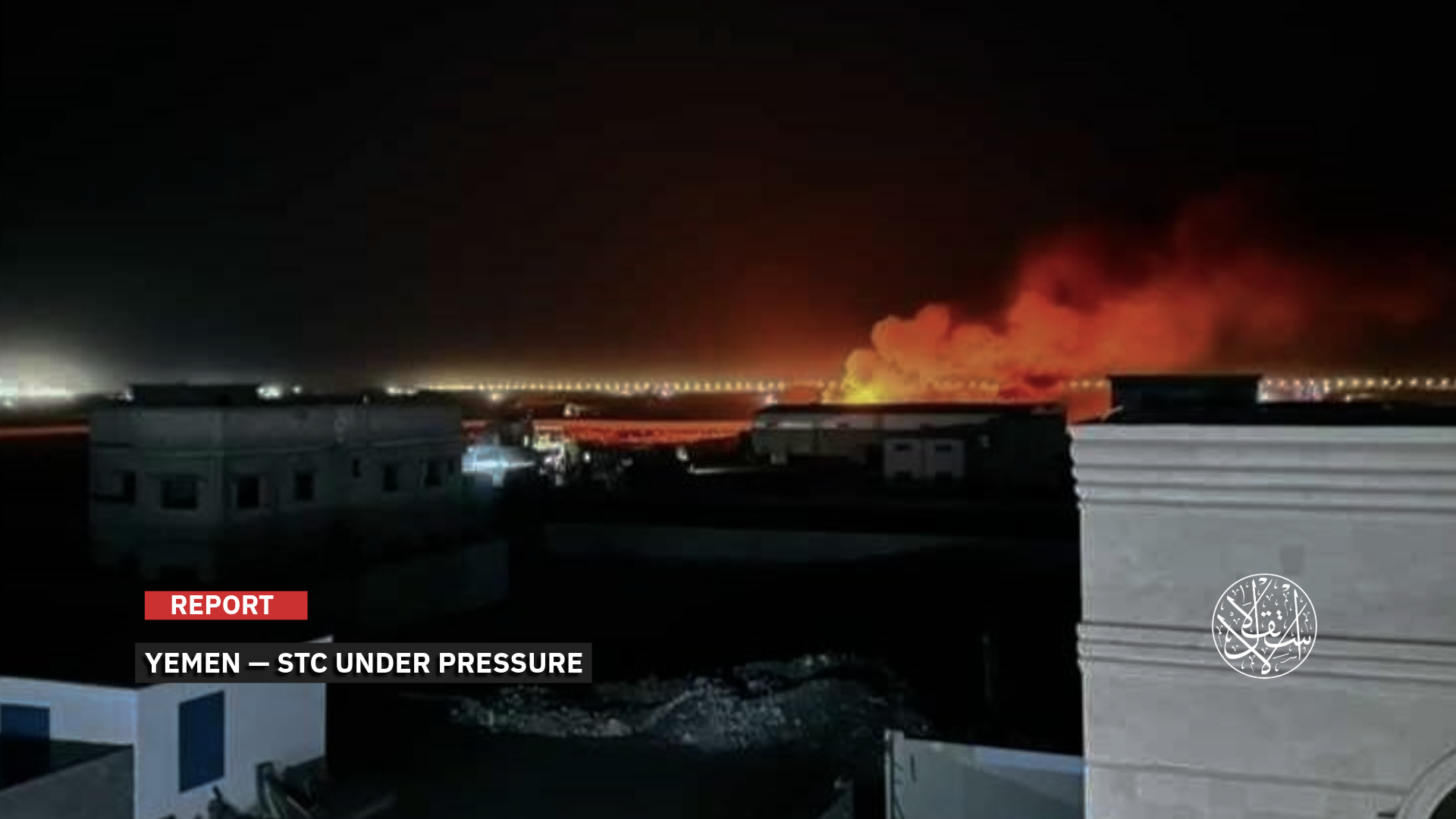
The worsening security situation in the southern governorates over the past few weeks.
Since the beginning of 2026, Yemen’s southern governorates have witnessed a marked escalation in security unrest, with a growing number of assassinations, armed attacks, and strikes targeting military installations as well as political and security figures.
At the same time, there has been a noticeable increase in the presence of drones over sovereign sites and critical infrastructure, raising mounting questions about the nature of the threats facing the south and the authorities’ ability to contain them.
The latest indication of this escalation came on June 11, when a powerful explosion ripped through a weapons depot belonging to the Southern Giants Brigades camp in the al-Mamdara area of Aden, killing 13 soldiers and injuring dozens.
Conflicting accounts emerged over the cause of the blast, with some attributing it to an electrical short circuit while others suggested the possibility of an external attack.
Only hours later, Aden witnessed another shocking incident. On June 12, a member of the security detail at the residence of Aden Governor Abdulrahman Sheikh opened fire indiscriminately, killing a soldier, a Syrian doctor, and the doctor's wife before security forces ended the incident by fatally shooting the perpetrator.
In Hadramawt, security concerns have intensified amid increased activity by unidentified drones. On June 9, multiple drones were observed flying over sovereign and oil facilities, including PetroMasila and al-Dhabba Port, just days after three drones targeted the residence of Presidential Leadership Council member and Hadramawt Governor Salem al-Khanbashi without causing any casualties.
Earlier, on June 4, security authorities in the governorate announced a heightened state of combat readiness after detecting three attack drones that allegedly attempted to strike vital sites and the governor’s residence, coinciding with the assassination of a police officer in the Seiyun district.
The wave of assassinations has also spread to other governorates. In Abyan, gunmen believed to be affiliated with al-Qaeda assassinated Adli Mahrouq, an officer in the National Security Forces, in the Mudiyah district.
Meanwhile, Mohammed al-Hamdi, the son of the former Mukalla Security Director, was shot dead near his home in the city of al-Mukalla.
In April, unidentified gunmen assassinated Dr. Abdulrahman al-Shaer, a senior member of the Yemeni Congregation for Reform (Islah) Party and a prominent educator, in the city of Aden.
The following day, security authorities announced the arrest of a cell they described as terrorist, alleging that it had been planning a series of assassinations targeting prominent social and religious figures.
The Confrontation With the STC and the UAE
The escalating security disorder witnessed across Yemen's southern governorates in recent weeks has redirected the focus of the political confrontation toward the Southern Transitional Council (STC) and its ally, the United Arab Emirates (UAE).
The Yemeni government and Saudi Arabia increasingly view the STC's military formations, which continue to resist integration into the state's armed forces, as one of the principal drivers of the deteriorating security situation in the south.
At the same time, al-Qaeda has become noticeably less prominent in direct accusations surrounding the recent violence. Observers argue that the group's current capabilities do not match the scale and sophistication of some of the latest security incidents.
They also note that, according to allegations widely circulated in Yemeni political circles, al-Qaeda has, over the past several years, served as one of the tools allegedly utilized by the UAE to manage local conflicts and reinforce its legitimacy among international partners as a key counterterrorism ally in Yemen.
In this context, Abdelrazzaq al-Jamal, a Yemeni researcher specializing in terrorism affairs, argues that the UAE has pursued a dual strategy in Yemen, combining the use of the counterterrorism portfolio with reliance on the Southern Transitional Council and allied local forces to reshape the balance of power in southern Yemen and the country as a whole.
According to al-Jamal, Abu Dhabi transformed the terrorism file from a security issue into a political and military instrument for reengineering Yemen's internal landscape in ways that serve its regional influence.
He contends that since 2019, as the U.S. role receded, the UAE has carried out most drone strikes in Yemen, often targeting objectives of limited strategic significance in order to keep the terrorism issue at the forefront of the Yemeni conflict, justify its continued intervention, strengthen the influence of its local allies, and legitimize their territorial expansion.
Al-Jamal further alleged that the UAE established assassination cells operating under the banner of counterterrorism, while their actual mission was to target political figures in order to reshape the balance of power in favor of Abu Dhabi's proxies.
He also argues that the UAE relied on security figures, such as Ammar Saleh, the brother of Tareq Saleh, to manage networks of tribal and political loyalties.
According to al-Jamal, the UAE also used the Southern Transitional Council to mobilize public sentiment in southern Yemen, exert political pressure, and keep certain areas in a state of instability, thereby hindering efforts to consolidate state authority and improve security and economic conditions.

The researcher concludes that this policy represents, in his description, a “war against rivals and geography” conducted under the banner of counterterrorism.
He argues that the organization has been used as a political tool to consolidate the influence of local proxies and to keep Yemen as a weak and fragmented state, possessing formal institutions more than it possesses actual authority.
From this perspective, the government and Saudi escalation against the Southern Transitional Council (STC) and the UAE can be understood as part of a broader effort to restructure the security and political landscape in southern Yemen.
As the scope of security chaos has expanded, the STC is no longer viewed merely as a partner that can be accommodated, but rather as part of the security problem itself.
Meanwhile, the UAE has been accused of reinforcing a situation of competing centers of influence and weakening state institutions through its support for parallel armed formations.
Accordingly, the Saudi escalation appears to be more than simply an attempt to contain the STC; it also represents an effort, according to this interpretation, to bring an end to the phase of UAE influence in southern Yemen.
The Government’s Measures
Amid this explosive security environment and the continued inflammatory rhetoric by STC leaders against the leadership of the internationally recognized government and Saudi Arabia, which they accuse of exercising guardianship over Yemen, the refusal to hand over weapons, and the support for armed groups that could threaten civil peace, undermine the transitional process, and hinder efforts to reach a comprehensive settlement in the country, the Yemeni government, driven by what it described as regional approval, moved quickly to launch a political and legal counteroffensive against the Southern Transitional Council (STC).
At the domestic level, the Attorney General issued a decision to impose a precautionary seizure on the STC’s assets and bank accounts held with banks and exchange companies, prohibiting any transactions involving them until investigations into allegations of corruption, money laundering, and the recovery of public assets that the STC is accused of seizing are completed.
The measures were also expanded to include the removal of figures affiliated with the STC from state institutions, administrative changes in several ministries and civil institutions, as well as the suspension of salaries for military leaders linked to the council.
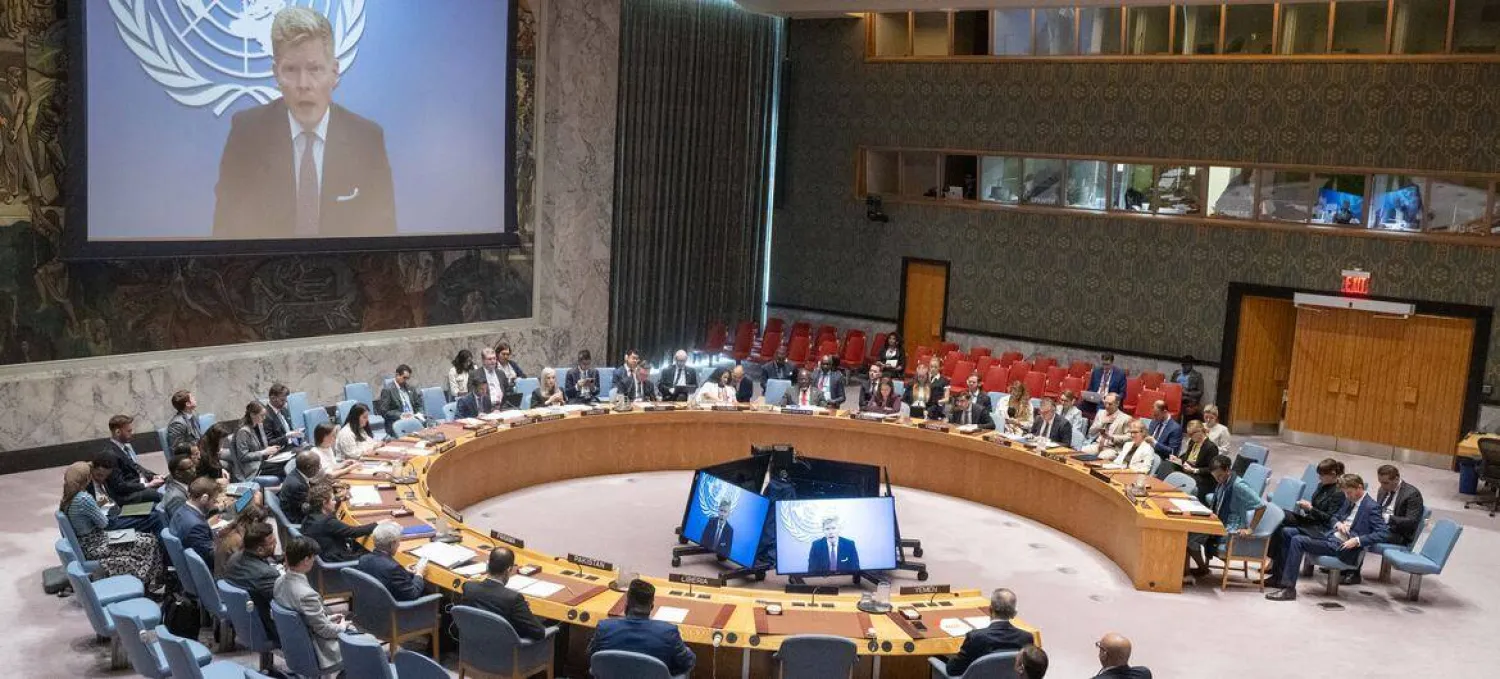
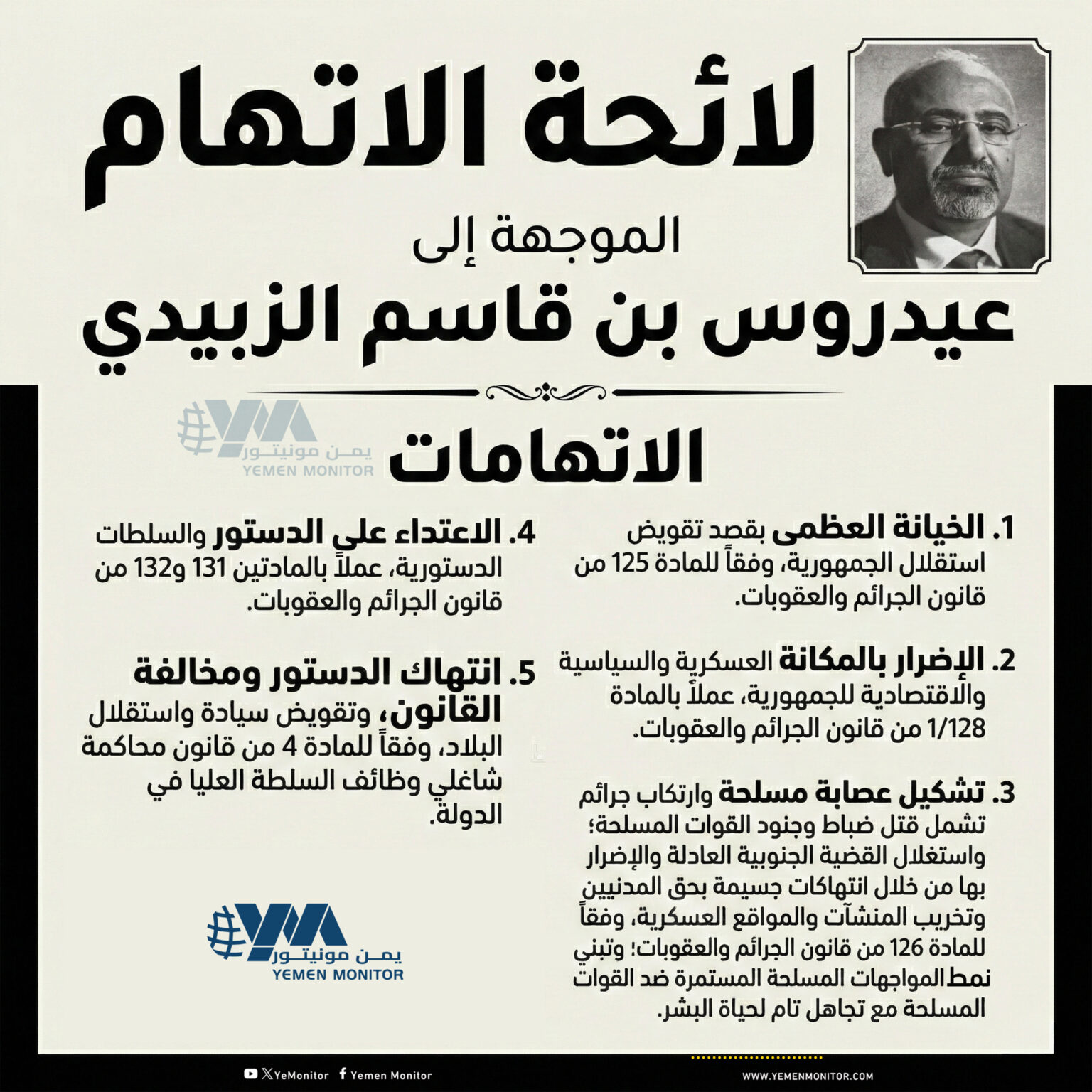
At the international level, the Yemeni government formally requested that the United Nations Security Council place STC President Aidarous al-Zubaidi and a number of his associates on the UN sanctions list, accusing them of engaging in actions that threaten the political process, undermine state institutions, and seek to impose unilateral realities by force.
These measures indicate that the government has shifted from a policy of containment and partnership toward a strategy aimed at dismantling the STC’s political and financial structure and weakening its sources of influence, viewing it as a threat to civil peace.
The Southern Transitional Council’s Response
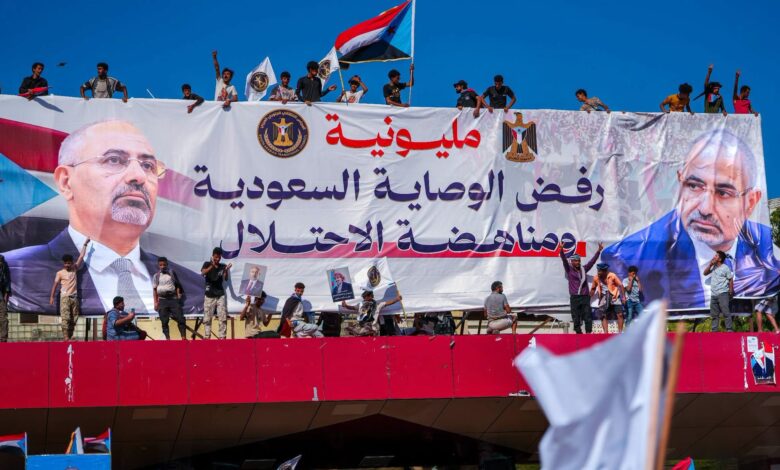
The Southern Transitional Council (STC) responded to the government measures with a broad political and media escalation. It rejected the government’s decisions as politically motivated targeting and accused Saudi Arabia of exercising what it described as “guardianship” over the south.
It also rejected the request to place its leaders on international sanctions lists, describing it as an attempt to eliminate political rivals through international institutions.
In a statement, the STC argued that the current relative calm in the southern governorates was the result of the council’s policy of restraint, while warning that it could escalate and confront what it described as the continuation of a status quo imposed through military and political force.
The council also accused the government of operating under Saudi tutelage, warning against what it considered a misguided course of action and threatening escalation options in the coming period.
The STC called on the international community to intervene and reassess Saudi Arabia’s management of the Yemen file, claiming that its policies were leading to greater tension and instability in the region.
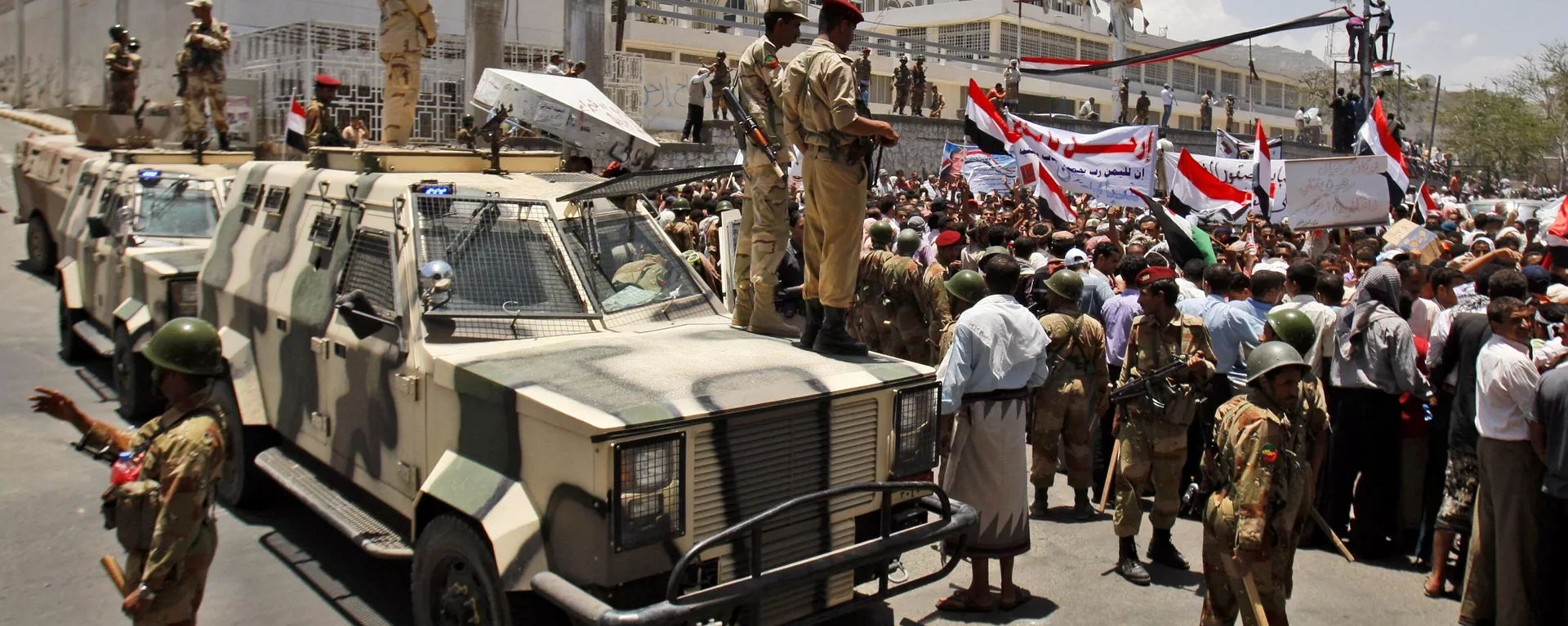
At the same time, the council moved to revive its popular presence by calling for demonstrations and mass rallies in Aden and Hadramawt, in an effort to demonstrate that it still maintains a significant popular base and cannot be bypassed in any future political settlement.
Political and local sources revealed that the STC had carried out political and field-level moves in recent days to reorganize its ranks and institutional structures under alternative components and names.
These efforts began in Shabwa Governorate through what is known as the “Comprehensive Shabwa Conference,” with the support of Governor Awad al-Wazir.
Meanwhile, media outlets and journalists aligned with the STC accused the government of cooperating with terrorist cells allegedly seeking to spread chaos in the south.
They described the government’s measures as a “ridiculous farce” aimed at legitimizing the exclusion of southern factions and stripping them of their military gains under the banner of counterterrorism and military integration.
The UAE Response
The UAE pursued two parallel tracks to contain the repercussions of the government measures against its ally, the Southern Transitional Council (STC).
At the diplomatic and political level, Abu Dhabi intensified its efforts through its mission to the United Nations Security Council and held consultations with the UN Special Envoy for Yemen, reaffirming its support for the political settlement process.
Diplomatic sources reported that these consultations also addressed possible Saudi moves to place STC leaders on the international sanctions list.
At the same time, a security and military track emerged, which, according to local allegations and reports, involved mobilizing its military and security assets to preserve the influence of its ally in the south.
This included accusations that Abu Dhabi had instructed forces aligned with it, including the First Support and Reinforcement Brigade, to escalate security tensions.
One of the most prominent incidents cited was the shooting at the vehicle of Colonel Khalid Saleh Muhaim, commander of the emergency forces in Abyan, along with his family, at the entrance to al-Mahfad district.
In parallel, Abu Dhabi exerted pressure to maintain the independence of the military formations aligned with it, while using the threat of security chaos and assassinations to send a message that weakening or sidelining the STC could push southern Yemen toward further instability.
This approach reflects the UAE’s understanding that losing the STC would not merely mean losing a political ally, but would also mean losing one of its most important strategic instruments of influence in southern Yemen.
Saudi-UAE Competition
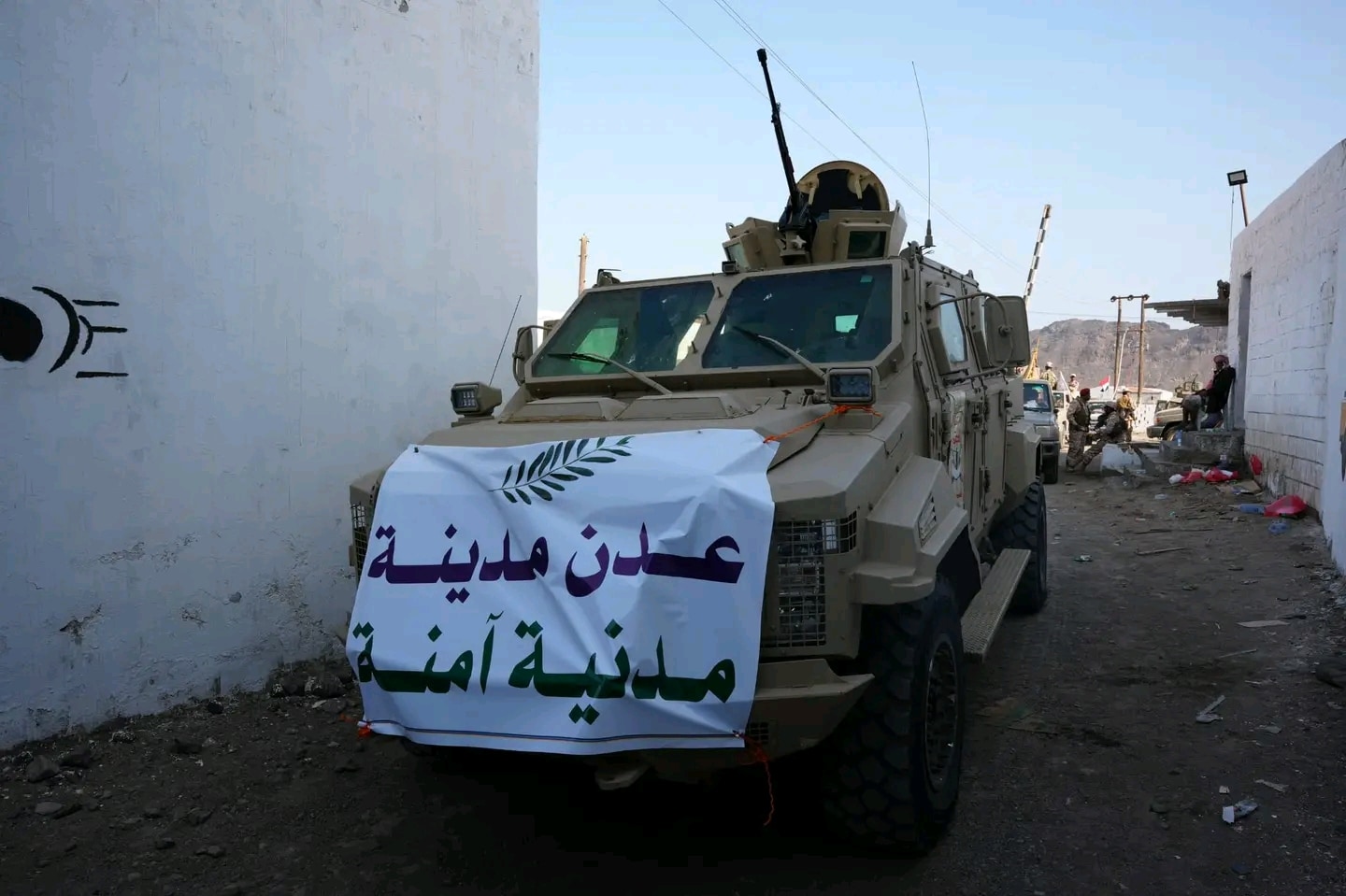
Southern Yemen has become an open arena for Saudi-Emirati competition, shaped by calculations of security and influence.
While the UAE seeks to consolidate its presence in strategic ports and islands through its local allies, Saudi Arabia is working to protect its security depth and prevent the emergence of independent armed entities along its southern border.
Recent developments indicate that Saudi Arabia has moved from a policy of containing the Southern Transitional Council (STC) within the framework of the internationally recognized government toward a broader strategy aimed at reshaping the southern landscape and reducing the STC’s monopoly over political and military representation.
This approach seeks to end the duality of authority, unify security and military institutions under the umbrella of the state, secure the eastern governorates, and prevent any separatist project that could obstruct future regional settlement arrangements. It also aims to create a more pluralistic southern political landscape that is less dependent on the UAE.
In this context, Saudi-backed efforts have emerged to sponsor a south–south dialogue and promote the rise of new forces and figures, including the Southern Future Council led by Fadi Baoum and the Hadramawt National Council, alongside efforts to empower southern figures who are not affiliated with the STC. These moves appear aimed at redistributing the balance of influence within southern Yemen.
At its core, these developments reflect a deeper rivalry between Riyadh and Abu Dhabi that extends beyond the future of the STC itself to encompass their differing visions for Yemen.
While Saudi Arabia seeks to consolidate state authority and prevent the emergence of independent armed entities that could threaten its national security or hinder its regional arrangements, the UAE views the south as a strategic arena for its maritime, economic, and geopolitical interests extending from the Gulf of Aden to the Red Sea.
Despite the intensity of this competition, current indicators do not suggest that it will escalate into a direct confrontation.
Rather, it is more likely to remain a long-term rivalry managed through indirect political and military tools within the Yemeni arena.
Southern Yemen’s Future
Observers believe that southern Yemen is heading toward a state of chronic security fragility due to the multiplicity of centers of influence, the weakness of state institutions, the escalation of popular protests, and the continuation of regional and political polarization.
They argue that the continued dominance of the Southern Transitional Council (STC) and the preservation of UAE influence in the south will lead to further deterioration of the security situation and undermine the authority of the internationally recognized government.
In this context, a number of southern political figures, including former Transport Minister Saleh al-Jabwani, have warned that leaving the south hostage to competing armed projects would weaken state institutions and lead to further division and instability.
Al-Jabwani criticized efforts by some parties to engage in dialogue with the STC or to place responsibility solely on Aidarous al-Zubaidi, rejecting what he described as an attempt to repackage a project that had already proven unsuccessful.
Writing on his Facebook account, he said, “If the Southern Transitional Council has practically ended, why are some seeking to revive it again under different names and initiatives, such as dialogue and others?”
He expressed surprise that, after all that had happened, there was still an “insistence on keeping the STC present in the political scene as a single, cohesive bloc through repeated meetings, dialogues, and political events that portray its leadership as a unified group in Riyadh, as if nothing had changed.”
Al-Jabwani argues that “the STC has been defeated, dissolved, and its role has ended as a political entity that was presented as the exclusive representative of the south,” adding that “any attempt to reassemble it or grant it a new political life under any name is a direct return to the same path that led us to all these crises.”
In this context, those following southern affairs believe that the Southern Transitional Council is facing its most serious political and security test since its establishment in 2017, amid three major developments: the escalation of security disorder, the shift in Saudi Arabia’s approach toward the council, and growing government pressure aimed at dismantling its political, financial, and military sources of influence.
After years of dealing with the STC as a partner within the framework of the legitimate government, Riyadh appears to have entered a new phase focused on reshaping the southern landscape and ending the council’s monopoly over the political and military representation of the south, by promoting alternative southern forces that are more closely aligned with the state and less connected to the Emirati project.
Although the council still possesses important influence tools, including military formations, a popular support base, and Emirati-backed networks, its ability to present itself as the sole representative of the south is clearly declining, coinciding with the rise of competing southern political projects backed by Saudi Arabia.
Therefore, the coming phase does not appear likely to result in the complete collapse of the STC. Rather, it points toward a transition in which the council moves from being the dominant force to becoming one actor among several within a more pluralistic southern political landscape with less concentration of power.
However, if security chaos continues and government and Saudi measures intensify at their current pace, the STC will face three difficult options: accepting reintegration into state institutions, transforming into a limited-influence southern opposition force, or pursuing an escalatory path that could further destabilize the situation and threaten what remains of its political influence.