26 Military Battalions and a New Camp at Risk: How Is Israeli Occupation Reshaping the West Bank?
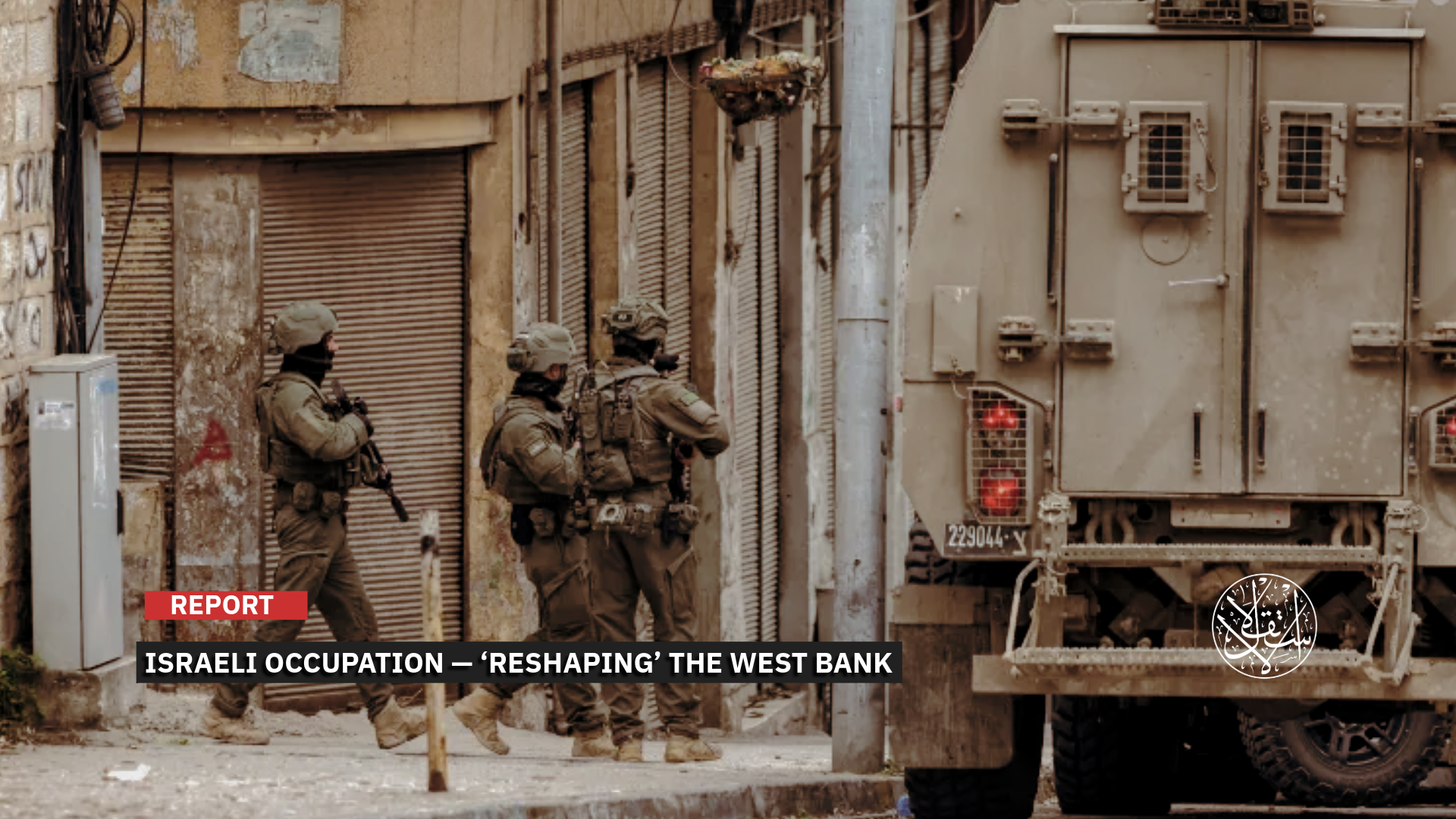
The deployment of 26 military battalions in the West Bank marks a return to the highest levels seen during previous peaks.
The West Bank is entering a new phase in which Israeli Occupation control is expanding and becoming more deeply entrenched on the ground, marked by the deployment of 26 military battalions, the continued presence of Israeli forces inside the Jenin, Tulkarm, and Nur Shams refugee camps, and preparations to occupy another camp and forcibly displace its residents.
The moves reflect a broader Israeli strategy that links military operations with the restructuring of roads, refugee camps, and Palestinian movement while expanding settlements and outposts and transferring greater authority to Israeli occupation institutions across the occupied territory.
Militarization and Occupation
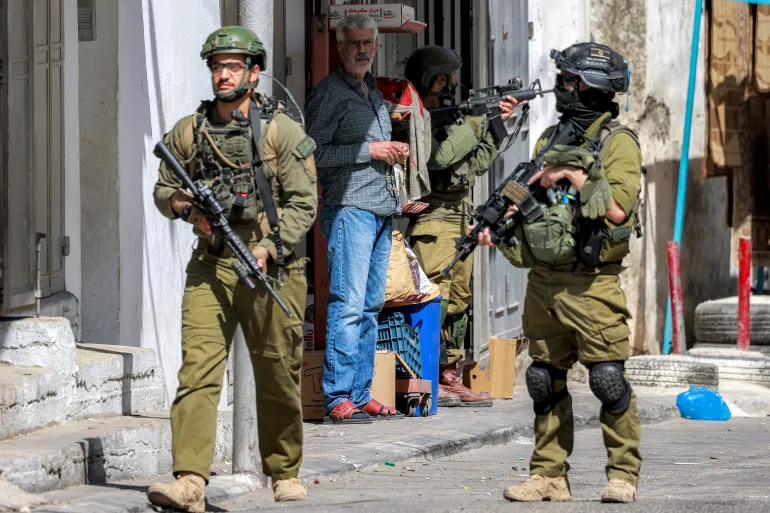
The latest escalation in the West Bank began on July 24, 2026, when a group of armed settlers entered an area under Palestinian Authority administration near the town of Tel, southwest of Nablus.
The Israeli Occupation military said the group entered without coordination, triggering a confrontation that ended with the martyrdom of four Palestinians and the death of two Israeli Occupation soldiers, including one who served in a settlement security unit.
Palestinian residents and officials said the Israeli Occupation settlers attempted to break into homes in the town, while “Israel” based its response on a claim that a Palestinian seized a weapon from one of the Israelis and opened fire during the confrontation.
Before the Tel incident, the Israeli Occupation military had deployed 24 battalions across the West Bank after permanently adding two battalions roughly two weeks earlier. The Times of Israel reported on July 24 that the army deployed five additional companies following the confrontation.
The Hebrew Jerusalem Post reported on July 27 that the number of operational battalions had risen to 26 after the addition of two more. The newspaper said the figure refers to active battalions operating across different parts of the West Bank, not the number of soldiers, and that the deployment changes according to “operational assessments and needs.”
The number carries particular significance when compared with previous years. The Times of Israel reported on June 25, 2023, that the West Bank Division’s regular deployment was around 13 battalions, rising to 26 in October 2022.
The Jerusalem Post later quoted the Israeli Occupation military on December 19, 2024, saying the number of battalions reached around 30 during the peak escalation between 2022 and 2024, after increasing from roughly 11 battalions before that period and settling at 19 battalions by the end of 2024.
The deployment of 26 battalions therefore represents a return to previous high levels, though Israeli forces during the Second Intifada were deployed on a much larger scale, with the Central Command operating several full divisions at the time.
The Israeli military buildup quickly translated into a wider campaign across the West Bank. On July 25, the Israeli Occupation army said it had arrested more than 70 Palestinians, including 11 detainees from Tel, and searched more than 300 locations. Palestinian sources said the number of arrests exceeded 80.
Israeli Occupation forces also raided Nablus Specialized Hospital and arrested a wounded Palestinian from inside the facility. Hospital director Ghassan Barakat said more than 50 soldiers and officers stormed the departments, restrained staff and patients, and created a climate of fear among women and children.
The attacks extended to Balata refugee camp, Shuweika, Bani Na’im, and areas around Ramallah, alongside the closure of roads and entrances to towns and villages in Nablus, Salfit, Qalqilya, Tubas, and areas around occupied Jerusalem.
The Israeli military deployment unfolded alongside continued settler attacks on Palestinian communities. On July 26, a mosque was set on fire in Qusra, another mosque in Kafr Qaddum near Tulkarm was targeted in an attempted arson attack, and assaults were reported in Jalud, Turmus Ayya, and Beita.
The UN Human Rights Office said on July 29 that settler violence had sharply escalated in 2026, with many attacks occurring in the presence of Israeli Occupation forces or alongside them.
The Jerusalem Post, however, noted that the Israeli Occupation military had not provided a separate breakdown of forces assigned to prevent settler attacks within the 26 deployed battalions.
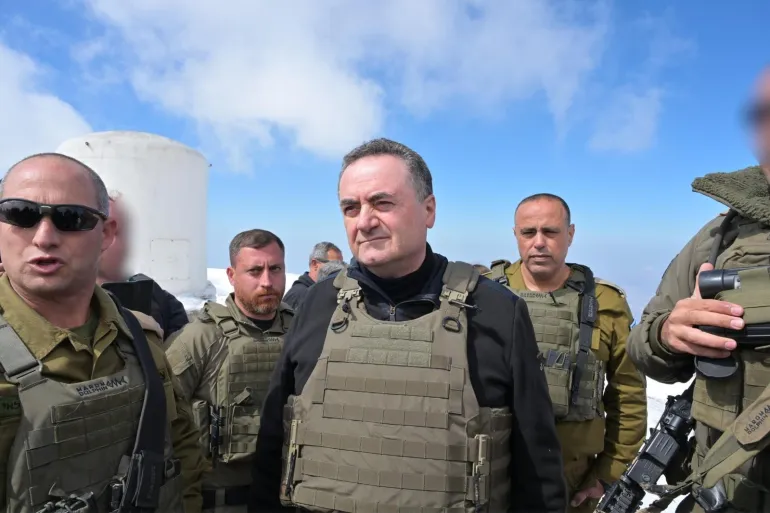
On July 28, Israeli War Minister Israel Katz added a new objective to the campaign focused on refugee camps, announcing after a meeting with the army chief, Shin Bet officials, and Central Command leaders that he had ordered preparations to occupy another refugee camp and expel its residents, following the model applied in Jenin, Tulkarm, and Nur Shams.
The same day, Haaretz reported that the instructions included taking control of the camp and evacuating its residents, while Israeli media reported that the Israeli army intended to maintain a permanent presence there.
Katz did not name the camp. Haaretz pointed to the locations of Balata, Askar, and al-Ain refugee camps near Nablus but did not confirm that any of them had been selected.
The term “model” refers to a military approach developed since the launch of Israel’s so-called “Iron Wall” operation on January 21, 2025.
Israeli Occupation forces first raided Jenin refugee camp using Apache helicopters, drones, bulldozers, and armored vehicles, then expanded the attack to Tulkarm camp on January 27 and Nur Shams camp on February 9.
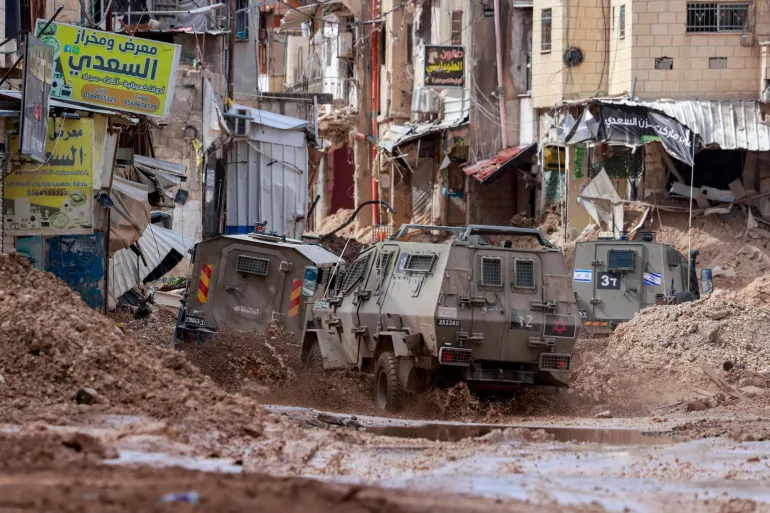
The incursions were followed by near-total evacuations of residents, extended military closure orders, home demolitions, and the opening of wider routes to facilitate troop movements, while residents were prevented from returning and Israeli forces maintained a long-term presence inside the camps.
Israeli Occupation Objectives
The Israeli Occupation military has deepened its attacks in the West Bank under the pretext of pursuing “armed groups” inside cities and refugee camps and preventing them from developing more complex organizational structures.
The Jerusalem Post reported on December 19, 2024, citing military sources, that intensified raids and airstrikes had reduced large-scale attacks, while the use of air power in the West Bank had reached levels rarely seen between 2005 and 2023.
Israeli security rhetoric has increasingly used terms such as preventing the “Gaza-ification” of the West Bank or stopping it from becoming a front similar to southern Lebanon, providing the military with justification for broad incursions and long-term deployments inside refugee camps.
But journalist Ameed Shehade, who covers developments in the northern West Bank, said the current state of armed resistance in Jenin, Tulkarm, and surrounding villages is virtually nonexistent, with no ongoing armed clashes.
In an earlier interview with Al-Estiklal, Shehade rejected the idea that military control of the camps was driven by security needs, arguing that the resistance is currently absent, and it has no tunnels or military camps. He described the measures as collective punishment targeting areas that had previously been home to resistance fighters.
Katz’s instructions show that the Israeli concept of “freedom of action” is moving toward direct control of territory. In February 2025, he said around 40,000 Palestinians had been displaced from northern West Bank refugee camps and ordered forces to prepare for an extended stay while preventing residents from returning for the following year.
Around 17 months later, Katz used similar language regarding another refugee camp, presenting the evacuation of Jenin, Tulkarm, and Nur Shams and the continued military presence there as a model to be expanded. The sequence reveals that preventing return and maintaining a long-term military presence have become stated objectives of “Israel’s” policy toward the camps.
On April 23, 2026, the Institute for National Security Studies (INSS) described the ongoing transformation in the West Bank as a shift toward absolute security, decisive action, and the application of sovereignty.
The INSS linked military operations to a government policy aimed at expanding Israeli Occupation sovereignty and weakening the Palestinian Authority to the point of possible collapse. It warned that such a path could leave “Israel’s” military directly responsible for millions of Palestinians and trigger a wider escalation.
The assessment reflects a broader divide inside Israel over the role of military power. While the government’s right-wing camp views force as a tool to cement control, security officials have warned that undermining the Palestinian Authority could expand instability and lead to a wider escalation.
A similar analysis appeared in Yedioth Ahronoth on February 10, 2026, in a report titled “Without Declaring Annexation: This Is How Reality Is Changing in Judea and Samaria (the West Bank).” The report said the Israeli government was advancing steps that create “de facto sovereignty” through settlement expansion, increased funding, and deeper control over the territory.
The measures included expanding land registration, easing settler land purchases, and transferring planning, construction, and land management powers from the military and the civil administration to Israeli Occupation officials working under Finance Minister Bezalel Smotrich. They also included stripping certain powers from Palestinian bodies, including authorities held by the Hebron municipality.
The Israeli Occupation policy advanced further in April 2026 with the approval of 34 new settlements, followed by a July 14 decision by “Israel’s” security cabinet to allocate 1.3 billion shekels, about $434 million, for their establishment.
Smotrich announced an additional 1.075 billion shekels for infrastructure and roads, presenting settlement expansion as a way to strengthen Israeli control and block the establishment of a Palestinian state.
As a result, settlements and road networks have expanded alongside checkpoints and military positions, making the protection of the settlement system one of the factors driving further troop deployments.
An Israeli military official acknowledged this connection in comments to The Times of Israel published on July 24, 2026, describing settlement outposts and farms as one of the “biggest challenges” facing the army because of their spread and the large areas soldiers are required to protect.
The official said the expansion of settlement outposts and farms, along with growing areas that settlers demand protection for, pushed the Israeli army to increase its presence in the West Bank even before the Tel incident. Within the military, concerns have grown that settler attacks are pushing the territory toward greater instability.
Israeli Chief of Staff Eyal Zamir said on March 18, 2026, that those who believe such attacks serve security interests are “mistaken,” describing them as actions that cause “exceptional strategic damage” to the army’s efforts.
He said Israeli forces are already “fighting” on multiple fronts while also being forced to deal with Israeli settlers attacking Palestinians and draining military resources. Despite these warnings, the Israeli Occupation government has continued expanding settlements and outposts and allocating funds to support them.
Key Impacts
The latest escalation unfolded on top of a vast system of checkpoints and movement restrictions that “Israel” has built over decades and significantly expanded since October 2023.
In a report published on April 23, 2026, the UN Office for the Coordination of Humanitarian Affairs (OCHA) said it had recorded 925 permanent or temporary movement barriers across the occupied West Bank, including occupied East Jerusalem, the highest figure it has documented in 20 years and 43 percent above the average for the period.
The network includes 89 around-the-clock checkpoints, 218 partial checkpoints, and 232 road gates, along with earth mounds and concrete barriers, restricting the movement of roughly 3.4 million Palestinians.
OCHA counted 459 barriers separating towns and villages from main roads, including 121 blocking access to Route 60, the main north-south artery of the West Bank.
The Israeli Occupation also installed more than 120 new road gates in 2025, increasing the share of permanent closures within the broader restriction system and making it harder for Palestinians to predict when they can reach workplaces, schools, hospitals, and agricultural lands.
After the Tel incident, this infrastructure quickly became a security cordon around Nablus and northern West Bank villages, as Israeli forces closed roads and entrances, set up mobile checkpoints, carried out large-scale searches, and temporarily prevented Palestinian workers from entering settlements.
The measures show how an existing network of checkpoints and gates allows “Israel” to isolate large areas within hours, disrupting access to jobs, education, and healthcare.
The deepest impact has been felt inside northern refugee camps. In June 2026, the UN agency for Palestinian refugees (UNRWA) said more than 33,000 refugees remained displaced from the Jenin, Tulkarm, and Nur Shams camps more than a year after the operation began, with closures extended and residents prevented from returning.
The transformation of the camps has involved repeated waves of demolition. In May 2025, military documents and the Tulkarm governor’s office reported the demolition of 116 homes in the Tulkarm and Nur Shams camps, followed by a later order targeting 104 buildings in the Tulkarm camp alone.
By November 2025, Human Rights Watch (HRW) said satellite imagery, demolition orders, and interviews showed that more than 850 homes and buildings had been destroyed or severely damaged across the three camps.
The urban landscape was reshaped through the removal of rows of homes, the widening of narrow alleys into military vehicle routes, and the division of neighborhoods into exposed sectors.
HRW said Israeli forces prevented residents from returning, fired in some cases at people attempting to reach their homes, and allowed only limited temporary access for residents to retrieve belongings.
HRW described the displacement of camp residents and the denial of their return as war crimes and crimes against humanity and said the ethnic cleansing requires investigation and accountability.
The consequences have also spread to education and healthcare. OCHA reported on July 10, 2026, that six UNRWA schools in Jenin and Nur Shams remained out of service because of the camp closures, while 10 schools in Area C of the West Bank, which is under full Israeli Occupation control and makes up about 60 percent of the territory, were abandoned after the communities they served were emptied. Eight were damaged by Israeli settler attacks, and two were demolished.
OCHA also cited the World Health Organization, which documented 987 attacks on healthcare services in the West Bank between October 7, 2023, and May 31, 2026, resulting in 39 martyrs, 201 injuries, and damage affecting 673 ambulances.
The Israeli Occupation strategy includes blocking access, delaying ambulances, searching medical teams, and interfering with treatment, as well as raids and direct attacks.
In Palestinian rural areas, Israeli settlers have driven a parallel wave of displacement. OCHA reported on July 10 that more than 3,200 Palestinians were displaced in 2026 because of settler attacks and the demolition of structures over claims that they lacked Israeli permits.
The figure covers Bedouin and herding communities as well as demolished homes across the West Bank and is separate from the displacement figures linked to northern refugee camps.
Since January 2023, 121 Palestinian communities have faced full or partial displacement, with 46 communities completely emptied, including 10 in 2026. More than 6,200 Palestinians have been displaced.
Settlement-related crimes have also damaged the economic survival of Palestinian villages. Residents of Tel reported settlers cutting olive and fig trees after the confrontation, while UN reports have documented restrictions preventing farmers from reaching large areas of agricultural land and requiring prior coordination for limited visits.
OCHA found that at least 20 percent of movement barriers restrict access to farmland, while 62 agricultural gates along the separation barrier impose an additional system of permits and scheduled access.
Together, these developments are reshaping the West Bank through a gradual accumulation of daily measures. Settlement expansion, demolitions, and attacks are fragmenting links between cities, villages, and refugee camps, turning Palestinian communities into increasingly isolated enclaves under expanding military and settlement control.
Sources
- Israel launches military operation after deadly clash near Palestinian village
- IDF increases West Bank deployment to 26 battalions amid sharp rise in violence
- IDF official says illegal West Bank outposts are among army’s ‘biggest challenges’
- Movement and Access in the West Bank | April 2026
- “All My Dreams Have Been Erased”
- Israeli forces to demolish more than 100 homes in Israeli-occupied West Bank, local governor says
- Katz Orders Army to Prepare for Occupation of Another West Bank Refugee Camp and Expulsion of Residents [Hebrew]