A Rare Government Confession: Inside Iraq’s Salary Payment Crisis
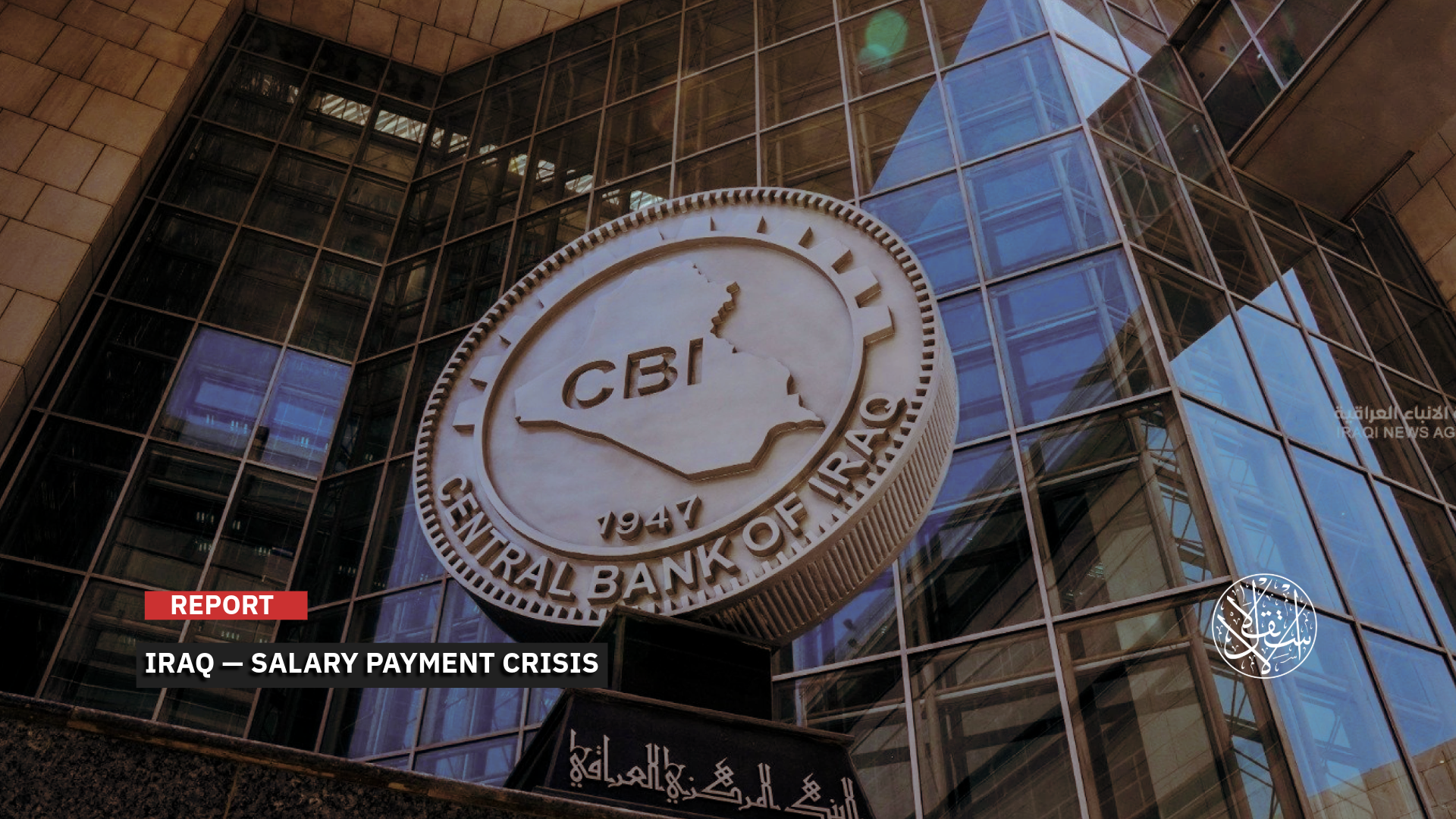
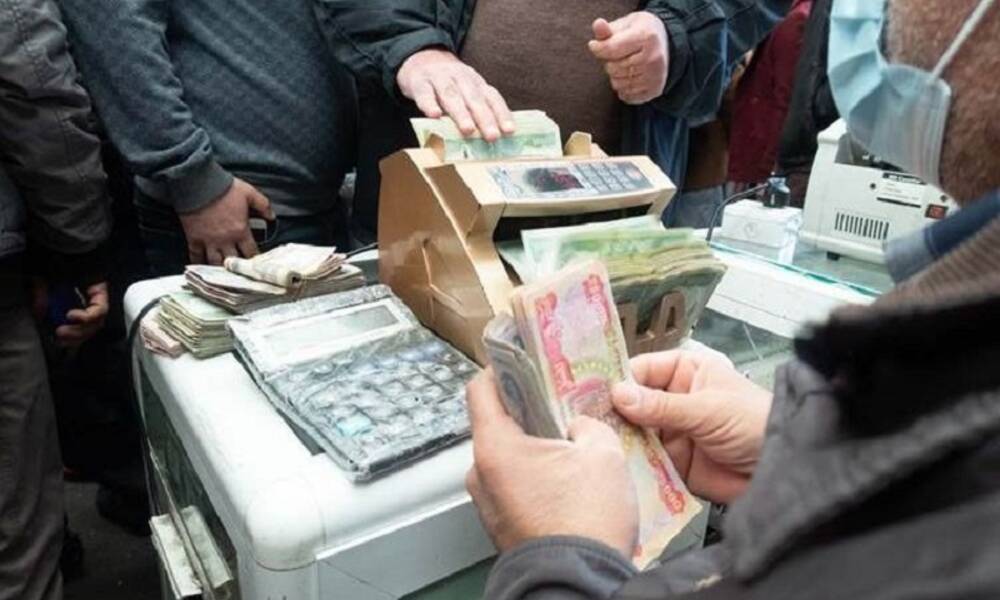
The government acknowledged that a severe cash shortage had delayed salary payments.
For the first time since 2003, the Iraqi government has publicly acknowledged a "serious" financial shortfall that disrupted salary payments for public sector employees in July 2026 and is expected to affect the months ahead, exposing the mounting strain on state finances as oil revenues decline and government spending continues to swell.
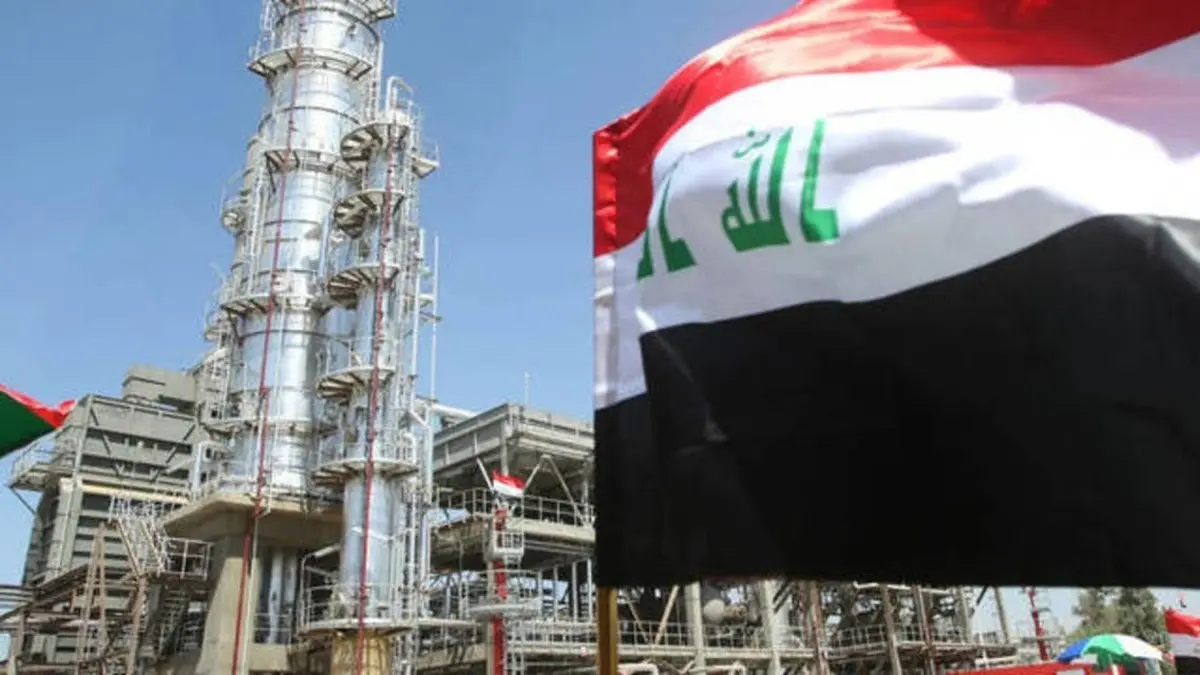
Iraq's oil income fell to $2.3 billion in both May and June, with losses estimated at up to $50 billion since the United States and the Israeli Occupation launched their war on Iran on February 28, leaving Prime Minister Ali al-Zaidi's government facing one of its most politically and economically sensitive crises in years.
Official Admission
For the first time, the Iraqi government has formally acknowledged the crisis after breaking with its usual practice of announcing monthly salary funding, with July's payments delayed, raising questions over whether the country is facing a temporary cash crunch or an early warning that Iraq's fiscal and economic policies require a broader overhaul.
Finance Minister Faleh al-Sari said there is a problem securing salaries, which require about 8 trillion Iraqi dinars, while only about 3 trillion dinars are available. He said the government had begun paying salaries late and in installments as liquidity became available.
The admission came as government spokesman Haider al-Aboudi also acknowledged the financial strain, saying there is a wide gap between the state's current revenues and the funds needed to cover monthly salaries and other obligations.
Speaking in a televised interview on July 30, al-Aboudi warned that salary payments could face further delays, saying the government’s measures may not restore the regular payment schedule seen in previous years and that disbursements would depend on available funds.
He stressed that the government is going through a financial crisis and said Baghdad was exploring domestic borrowing to cover payroll costs, arguing that the regional crisis had significantly affected Iraq's economy.
Al-Aboudi added that agreements signed during the government's recent visit to Turkiye covered the implementation of the Development Road project and efforts to ensure Iraqi oil exports continue despite regional instability. He said geopolitical developments have reshaped Iraq's foreign policy, which is based on economic interests and avoiding alignment with rival blocs.
He also said the regional crisis had taken a heavy toll on Iraq's economy and that Baghdad and Ankara had formed joint committees to prepare a comprehensive study on Iraqi oil exports.
On the same day, Iraqi Health Minister Abdulhussein Almusawi said the government was unable to fully fund salary payments, telling reporters that officials were now spending much of their time searching for ways to secure payroll, while acknowledging that the options available under the current financial conditions were extremely limited.
Prime Minister Ali al-Zaidi's financial and economic adviser, Mazhar Mohammed Saleh, also acknowledged that the strain on Iraq's public finances was clear to everyone but argued that the situation should not be described as bankruptcy.
Saleh said countries do not go bankrupt. They experience financial crises that can be addressed through appropriate economic tools and policies. He added that Iraq still had multiple sources of revenue and that the priority was to better manage and deploy those resources.
He said the government was also considering several external financing options, including advance financing backed by future oil exports, borrowing from international financial institutions such as the International Monetary Fund (IMF) and the World Bank, and tapping global capital markets.
‘Financial Distress’
Against the backdrop of the government’s admissions, Iraqi economist Ziad Alhashimi said Iraq has officially entered a state of “financial distress,” describing the government as facing its worst financial position while citizens wait for their overdue payments, according to a post he published on X on July 31.
Alhashimi said it was “not surprising” that the Iraqi government had finally acknowledged the shortage of liquidity in its treasury after months of denial and resistance, as declining revenues forced it to confront what he called a bitter reality.
He said the real surprise was that some officials and observers remained confident that everything was under control, arguing that Iraq’s large dollar reserves would allow it to continue paying salaries normally.
But he warned that under such a loose and undisciplined financial model, the problem was not only falling oil prices or declining exports but years of reckless government spending based on the assumption that high revenues would continue indefinitely.
Alhashimi argued that a state unable to protect its revenues and control its spending cannot rely on reserves forever, warning that employees and citizens cannot continue bearing the cost of corruption and poor management without limits.
Al-Mohsen said Iraq has one of the highest levels of government spending in the region, meaning any temporary decline in oil revenues immediately affects liquidity. He added that the absence of a general budget has limited the Finance Ministry’s ability to manage cash flows and carry out financial reallocations.
He argued that the proposed temporary financial management law could provide a legal framework to maintain spending and regulate borrowing, but it cannot replace a permanent national budget. He called for a return to regular budget approvals and stronger oversight of public spending.
Tough Choices
Meanwhile, Iraqi researcher Hamed al-Obaidi said the current financial crisis and delays in salary payments are the responsibility of post-2003 governments, arguing that they failed to develop alternatives to the Strait of Hormuz for exporting Iraqi oil and did not create other sources of revenue beyond crude exports.
In an interview with Al-Estiklal, al-Obaidi said that if the Hormuz crisis remains unresolved, financial pressures and salary delays could become a lasting challenge for the current government, potentially for an entire year. He argued that Baghdad must urgently find alternative export routes, given that oil accounts for about 95 percent of state revenues, with nearly 90 percent of exports passing through Hormuz.
He said one possible option for the government to meet salary obligations could be changing the official exchange rate of the U.S. dollar against the Iraqi dinar, a proposal currently being discussed by some economists. But he warned that the problem is that the government lacks enough oil revenues to sell to the Central Bank and generate local currency.
The official exchange rate stands at 1,320 Iraqi dinars per dollar, while the dollar trades at around 1,520 dinars in local markets. Discussions have suggested a possible adjustment that could push the official rate to at least 1,600 dinars per dollar.
But Iraqi political analyst Hamid Alsayed offered a different view, writing on X on August 1 that Iraq is not being strangled by Hormuz but by corruption, and that is the real crisis.
Alsayed argued that the salary crisis is not simply the result of regional tensions, Iranian pressure, or an American conspiracy, but rather the outcome of years of politically motivated hiring, bloated operating expenses, budget mismanagement, and the collapse of productive sectors, turning the state into a system for distributing spoils rather than building wealth.
Alsayed noted that every financial crisis in Iraq reinforces the same reality: a country rich in resources but unable to reassure its employees that their salaries will arrive on time. He argued that the real disaster is not falling oil prices or regional wars, but a system that has wasted Iraq’s wealth on political quotas, privileges, and deals, leaving ordinary citizens to bear the cost.
He argued that those who pushed the state to a point where employees fear whether their salaries will arrive each month cannot claim credit for achievements, good governance, or solutions.
History, he said, will not remember only how much oil Iraq exported but how a generation inherited a wealthy oil-producing nation and was left wondering whether there would even be a paycheck at the end of the month.
Sources
- Iraq probes Finance Minister over unpaid public salaries
- Iraq’s Salary Crisis Deepens as Finance Minister Admits: 'Available Cash Is Not Enough' [Arabic]
- Iraq Slips Into 'Financial Distress' as Corruption Drains Revenues Before They Reach the Treasury [Arabic]
- Iraq’s Cash Crisis Deepens as Government Struggles to Secure Salaries [Arabic]
- Iraq Faces Financial Strain, Not Collapse, Government Adviser Says as Funding Alternatives Remain [Arabic]
- Iraq’s Cash Crunch Puts Salaries at Risk: Are the Government’s Fixes Enough? [Arabic]
- Iraq’s Revenues Fell by More Than $40 Billion Due to the War, Official Says [Arabic]