Border Gold Sparks Tensions: Inside the Egypt–Sudan Struggle Over the Nubian Shield’s Mineral Riches
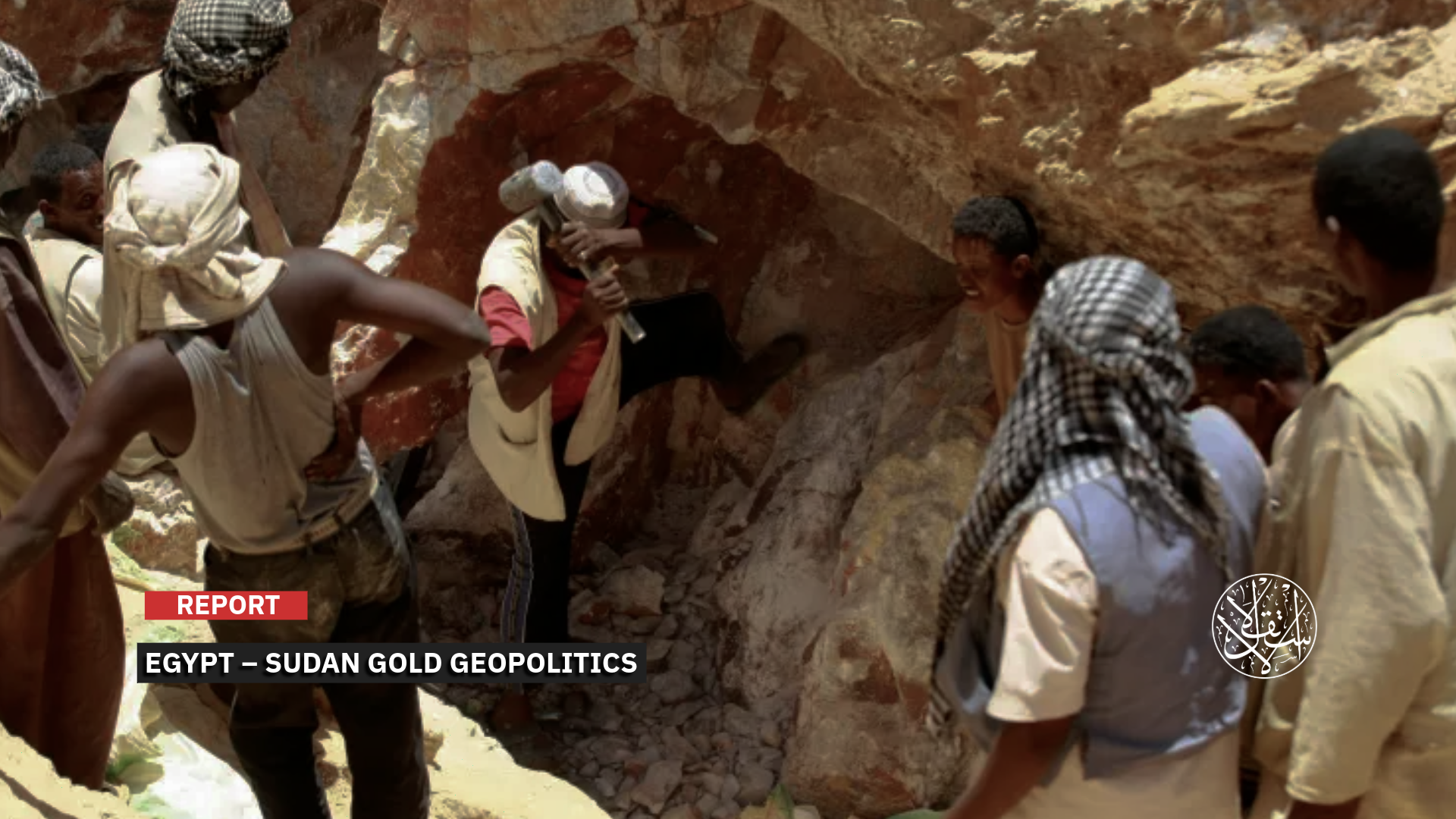
The Eastern Desert extends between Aswan in the far south of Egypt and Marsa Alam on the Red Sea coast.
Between an airstrike that targeted a border area in northern Sudan, killing and injuring artisanal gold miners, and Egypt's categorical denial that it carried out any strikes inside Sudanese territory or sought to seize gold mines, the border region between the two countries has once again become a flashpoint for tensions, raising questions about what really happened and the circumstances behind the incident.
The incident, which occurred in the Jabal al-Aqidat area near the border triangle, has reopened contentious issues related to border security and the region's mineral wealth.
While some accounts claim the strike targeted smugglers and prospectors who had crossed into Egyptian territory, others insist the bombing took place inside Sudan.
As a result, questions continue to mount over the circumstances surrounding the incident and its true implications.
The latest developments have also raised the possibility that the incident is linked to an undeclared struggle over the gold-bearing areas scattered across one of the mineral-richest stretches of the shared border.
Over recent years, these "gold mountains" have become a magnet for prospectors and smuggling networks, as well as the focus of a quiet competition where security, economic, and political interests converge.

Gold’s Discord
The story began with a heavy airstrike on June 16, 2026, targeting the border area between Sudan and Egypt and striking sites used for informal artisanal gold mining.
The incident quickly escalated into a political and security issue that sparked widespread debate in both countries.
According to accounts shared by Sudanese prospectors on social media, the attack, later said to have been carried out by Egyptian forces, left several Sudanese engaged in traditional gold mining near the border strip dead and injured.
They also said that Egyptian army and police vehicles and armored units arrived in the area the following day, forcing the miners to leave, while a number of them were detained.
These developments coincided with a large-scale security operation conducted by the Egyptian authorities in the border region.
The operation resulted in the deportation of between 2,000 and 3,000 Sudanese and other African nationals through the Arqin border crossing on June 20, 2026, following inspections and a crackdown on individuals engaged in unlicensed artisanal mining activities, according to Egyptian and Sudanese sources.
According to matching accounts from Sudanese sources, the strikes targeted mining sites known among workers in the sector as "Jabal al-Aqidat," "Jabal al-Ahmar" (the Red Mountain), and "Jabal al-Abyad" (the White Mountain).
These gold-rich mountainous areas are located within a disputed and overlapping border zone between northern Sudan and southern Egypt.
The strikes also extended to the North al-Wadi mine and the vicinity of al-Ansari Market in Sudan’s Red Sea State, at a distance estimated to be around 20 kilometers or more south of the Egyptian border.
According to statements reported by Sudanese journalist Osama Abdel Halim through the Sudanile website on June 19, 2026, two MiG aircraft, a reconnaissance aircraft, and drones took part in the operation.
He added that an Egyptian ground force consisting of around 20 armed Land Cruiser vehicles moved into the area immediately after the strikes.
He said the first-day toll reached five dead and ten injured, while Sudanese activists circulated video clips that they said documented the aftermath of the strikes at mining sites near the shared border.
These areas hold particular importance because they lie within a desert region considered one of the richest gold-bearing zones along the border strip between the two countries.
While Sudanese administrative maps confirm that the targeted mining sites are located inside Sudanese territory, Cairo considers them part of the area adjacent to Halayeb and Shalateen, which has been under Egyptian control for years, adding a sovereignty dimension to the crisis.
In recent years, especially following the outbreak of the war in Sudan, these areas have become an economic refuge for thousands of Sudanese young people who lost their traditional sources of income.
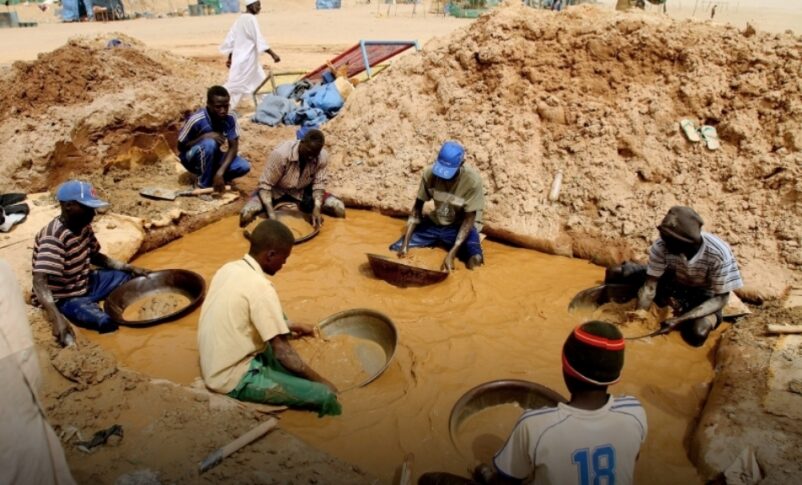
For many of them, artisanal mining has become a means of survival and a way to secure a basic livelihood.
Amid the controversy surrounding the operation, the position of Egyptian businessman Naguib Sawiris, one of the largest investors in the mining sector, drew attention.
He praised the intervention by the Egyptian armed forces, saying that what took place represented a confrontation with "random mining gangs" and an assertion of state sovereignty over border areas.
Sawiris said that such measures would strengthen the confidence of global investors in Egypt’s mining sector, pave the way for increased foreign investment, and contribute to a significant rise in state revenues from mineral resources.
However, Sudanese observers argue that the incident goes beyond merely combating illegal mining, as it has reopened the broader issue of the border dispute and mineral wealth in the region.
This has raised growing questions over whether the "gold mountains" have become an arena for a hidden struggle between economic interests and sovereignty considerations along the shared border.

Strikes Inside or Outside Sudan?
The airstrike incident that took place in the border area between Sudan and Egypt has sparked widespread controversy over the exact location of the targets and the nature of the military operation, amid conflicting accounts from Sudanese and Egyptian sources over whether the strikes were carried out inside Sudanese territory or targeted sites located within Egyptian borders.
Sudanese platforms and newspapers reported that the bombing began on June 16, 2026, and continued until June 18, resulting in the deaths of around 100 "dahhaba" (traditional gold prospectors) and the injury of dozens of others, based on accounts from survivors and eyewitnesses in the area.
These platforms claimed that the Egyptian airstrikes targeted sites located in northern Sudan, and published video clips and footage of the funerals of several Sudanese miners who were reportedly killed in the attacks.
Some Sudanese circles also linked the incident to what they described as ongoing Egyptian attempts to dominate mineral-rich areas within what is known as the "Nubian Shield Belt", one of the region’s most important ancient geological formations.
The area contains significant reserves of gold and precious minerals and extends across large parts of Sudan’s Red Sea and Northern states.
Reports published by Sudanese newspapers, including Sudan Tribune and Sudan War Monitor, spoke of dozens of deaths and injuries among the miners, without reaching a final and precise toll.
Meanwhile, the "Tasis" alliance, which is linked to the Rapid Support Forces (RSF) militia, claimed that "hundreds of people" were killed in the bombing.
The incident quickly became a subject of political dispute, as the Rapid Support Forces militia used it to level direct accusations against Cairo of violating Sudanese sovereignty.
In this context, the Tasis alliance, the political arm of the RSF militia, issued a statement on June 17, 2026, accusing Egypt of carrying out strikes inside Sudanese territory. The Sudan People’s Liberation Movement–North, led by Abdel Aziz al-Hilu, as well as the National Umma Party, joined this position.
The statement described the bombing as direct support for what it called the "Islamist Movement Army," referring to the Sudanese army. It claimed that Cairo benefits from the continuation of the war by seeking to control Sudan’s agricultural, livestock, and mining resources.
In contrast, Egyptian accounts indicate that the phenomenon is not new. Egyptian media have reported since 2009 on the movement of thousands of Sudanese into mining areas in Egypt’s Eastern Desert in search of gold, particularly around the city of Marsa Alam, which is located about 340 kilometers from the Sudanese border.
Following the incident, the Egyptian military spokesperson announced the launch of a broad security and military operation within the Southern Military Region.
The operation targeted organized crime networks involved in illegal mining, arms and drug trafficking, and irregular migration.
In a statement issued on June 20, 2026, he said the campaign resulted in the arrest of 223 people, including 87 Egyptians and 136 foreigners, during operations targeting illegal gold prospecting sites in southern Egypt. He added that foreign nationals were deported to their respective countries.

The Egyptian Armed Forces also announced the implementation of a large-scale campaign against illegal mining and smuggling networks in areas south of the Eastern Desert, which resulted in the seizure of equipment and weapons and the arrest of hundreds of people.
Open-source satellite images circulated by various sources further complicated the situation, as they showed traces of airstrikes on illegal mining sites inside Egypt’s Red Sea Governorate.
According to those images, two separate locations were targeted: the first near the city of Marsa Alam, about 340 kilometers from the Sudanese border, and the second approximately 8 kilometers north of the shared border between the two countries. This reinforced the Egyptian narrative that the strikes took place inside its own territory.
In a related development, Egyptian media outlets drew attention by reporting large figures concerning infiltration attempts across the southern border.
They cited the military spokesperson as saying that the armed forces had managed to apprehend 99,886 infiltrators of various nationalities along the country’s strategic directions.
The figure has renewed focus on the southern border and the security challenges associated with it.
A Sudanese survivor of the bombing told Radio Dabanga on June 17, 2026, that the airstrike targeted the Ras al-Jabal area at the Jabal al-Aqidat mine, one of the largest artisanal mining sites in the region.
He explained that the site was home to between 5,000 and 7,000 Sudanese miners, adding that aircraft believed to be Egyptian had repeatedly flown over the area in the days leading up to the attack.
He said the aircraft later carried out a strike involving four bombs or explosive barrels being dropped on a gathering of miners.
In the first official Sudanese comment on the incident, Chairman of the Sovereignty Council and army commander Abdel Fattah al-Burhan announced that the government would open an investigation into the events that took place near the Egyptian border.
At the same time, however, al-Burhan sent a clear message to Sudanese miners, urging them not to cross international borders.
He said, "Our northern neighbor, Egypt, must have its borders respected and they must not be crossed, so that people do not create problems for themselves and for the state."
Amjad Farid, an adviser to Sudanese Sovereignty Council Chairman Abdel Fattah al-Burhan on political affairs and foreign relations, also confirmed that Egyptian forces targeted Sudanese miners near the border.
He described the incident as "regrettable" and said it represented an extension of a series of previous clashes in which casualties had been reported on both sides.
In a different reading of the situation, Ethiopia’s Horn Review website said in a report published on June 22, 2026, that the Sudanese army’s relative silence over the incident was due to the nature of relations between Cairo and Khartoum, as well as Egypt’s support for the Sudanese army in its war against the Rapid Support Forces militia .
The report suggested that the airstrikes came as part of Egyptian strategic calculations aimed at protecting its economic interests in gold-rich border areas.
It also claimed that the instability caused by the war in Sudan had, in recent years, allowed large quantities of gold to flow across the border into Egypt, providing Cairo with an important source of foreign currency.
This assessment aligns with what the British Chatham House institute reported in March 2025, when it indicated that as much as 60 percent of Sudan’s unofficial gold production flows into the Egyptian economy through various channels.
However, Horn Review argued that the recent strikes were not primarily aimed at stopping the flow of gold itself, but rather at dismantling independent mining networks operating outside state control, which had begun competing with official entities and influencing gold prices and cross-border trade.
Thus, the bombing incident evolved from what appeared to be a security operation against illegal mining into a complex issue involving national security calculations, the border dispute, competition over gold resources, and intertwined economic interests between the two countries.
The Gold of the Nubian Shield
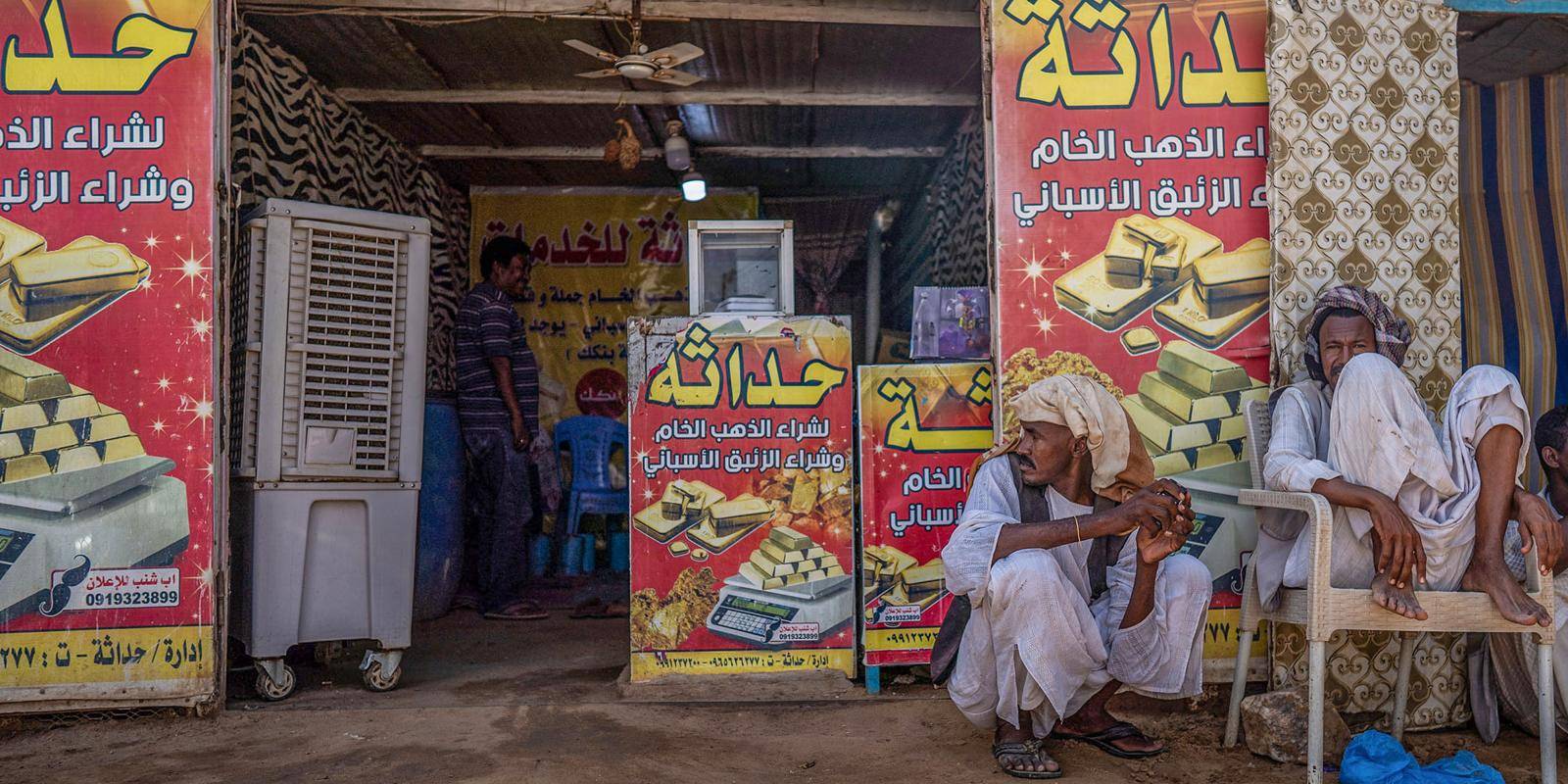
The Eastern Desert stretches from Aswan in the far south of Egypt to Marsa Alam on the Red Sea coast, covering one of the richest mineral basins in the region.
One artisanal miner described the area as a "sea of gold," referring to the abundance of mineral deposits scattered throughout its mountains and valleys.
Across this vast expanse, the interests of traditional miners, smugglers, local tribes, and investment companies overlap, while Egyptian authorities have for years sought to impose greater control over gold exploration and extraction activities in the region.
The Nubian Desert, extending between southern Egypt and northern Sudan and known geologically as the "Nubian Shield Belt," is considered one of the world’s richest regions in gold and precious minerals.
This geological formation contains ancient rock structures with vast reserves of gold, copper, and other minerals, making it a focus of interest for governments, companies, and artisanal miners alike.
The recent bombing incident near the Sudanese-Egyptian border is particularly significant because it touches on three highly sensitive issues simultaneously: border security between the two countries, competition over gold-rich areas and mineral resources, and the humanitarian consequences of the Sudanese war, which has pushed thousands of civilians into artisanal mining near the border strip.
However, many observers believe that the core of the crisis is linked to the escalating struggle for control over gold-bearing areas within the Nubian Shield region, especially after Cairo and Khartoum in recent years entered projects and plans aimed at developing the mining sector and maximizing its economic returns.
Sudanese reports indicate that Egypt has increased its focus in recent years on gold-rich areas along the border strip, particularly areas adjacent to Sudan’s Red Sea State and Jebel Uweinat, which have previously witnessed tensions related to mining and prospecting activities.
In this context, Egyptian state-owned and private mining companies have expanded their activities in the sector, most notably the Shalateen Mineral Resources Company, owned by the Egyptian state, along with other companies linked to the National Service Projects Organization of the Egyptian military. These entities enjoy broad concessions in the Halayeb and Shalateen areas and neighboring regions.
Cairo also strengthened its institutional presence in the sector after issuing Law No. 193 of 2020, which granted the National Service Projects Organization the right to exploit quarries and mining areas for 30 years, a move that observers viewed as part of a broader strategy to tighten control over mining resources in southern Egypt.
In contrast, the Sudanese government has also begun launching investment projects targeting gold- and mineral-rich areas along the border strip.
Months before the latest bombing incident, Sudan’s Ministry of Minerals signed an investment agreement with Deep Metals to carry out gold and iron exploration projects with investments exceeding $277 million.
The projects include concession sites in the states of Northern, Red Sea, River Nile, and Gedaref, in addition to the establishment of a mining waste processing plant and a modern gold refinery.
The coincidence of these projects with border tensions led to the spread of rumors inside Sudan that Cairo had been granted gold exploration concessions in northern Sudan, particularly in areas considered among the richest in gold deposits.
Sudanese platforms circulated information about possible partnerships or contracts involving Egyptian companies inside Sudan, sparking widespread controversy among Sudanese public opinion.
Many viewed such reports as an attempt to seize the country’s resources amid the circumstances of war, division, and weakened state institutions. Cairo, however, quickly moved to officially deny these claims.
On June 19, 2026, Egypt’s Ministry of Petroleum and Mineral Resources stated that reports claiming the existence of agreements to establish 108 gold and precious mineral mines in northern Sudan as part of a strategic partnership between the two countries were false.
The ministry also denied the accuracy of statements attributed to Petroleum Minister Karim Badawi regarding Egypt obtaining concessions or purchasing gold mines inside Sudanese territory, stressing that the claims were "completely untrue."
Despite this, the latest bombing incident has reopened questions about the relationship between security assessments and economic interests in the border region, and whether competition over gold is one of the undeclared drivers behind recurring tensions between the two sides.
A major aspect of this conflict revolves around how to develop and secure the Nubian Shield, which has become a hotspot for repeated security confrontations due to the spread of artisanal and informal mining.
This has prompted Egyptian authorities to carry out campaigns targeting and deporting Sudanese prospectors, while Sudan maintains its position that many of them operate within its sovereign territory.
The complexity of the issue is further increased by its connection to the long-running dispute over the Halayeb and Shalateen Triangle, where political borders overlap with mining concession areas and traditional prospecting sites.
Thousands of Sudanese miners, locally known as "dahhaba," rely on metal detectors and four-wheel-drive vehicles to move through valleys and mountains along the border, taking advantage of the region’s open desert terrain. This makes border enforcement extremely difficult.
While Cairo accuses these miners of crossing international borders and entering concession areas allocated to Egyptian companies, particularly around Marsa Alam, Khartoum maintains that most mining activities take place within Sudanese territory and that local communities have practiced this activity for many decades.
Given the persistence of this situation, a number of experts and economic analysts specializing in Horn of Africa affairs agree that a security-only approach will not be sufficient to prevent similar incidents from recurring.
They argue that the most realistic solution lies in reaching a joint economic and regulatory agreement between Cairo and Khartoum to manage mineral resources in border areas, in a way that protects the national sovereignty of both sides and reduces field-level confrontations.
They also call for the creation of joint technical committees to define artisanal mining zones and establish flexible monitoring and taxation mechanisms that would allow the informal sector to be regulated while ensuring that the treasuries of both countries benefit from the vast mineral revenues contained in the mountains of the Nubian Shield, rather than allowing them to become a permanent source of tension and conflict.
What Is ‘Israel’s’ Connection?
“Israel’s” entry into the debate surrounding the Sudanese-Egyptian border events was notable, as Israeli media and security circles showed unusual interest in the bombing of mining sites near the border strip between the two countries.
The Israeli platform "Kikar HaShabbat", one of the prominent Israeli news outlets serving the ultra-Orthodox Jewish community, claimed on June 18, 2026, that Israeli security and military authorities were closely monitoring the latest developments on the Sudanese border and were treating any Egyptian military movements in the area with great sensitivity.
The platform said that previous incidents of friction had occurred between Egyptian forces and Sudanese miners, but it considered this latest event a "dramatic and unprecedented escalation" because of the use of military aircraft to target sites near the border.
This Israeli interest reflects the security perspective adopted by “Tel Aviv” regarding Egyptian military movements. For years, the Israeli security establishment has monitored the capabilities and deployment of the Egyptian army, particularly in the southern and eastern regions.
“Israel” views any Egyptian military operation beyond the traditional scope of border protection as an indicator of the Egyptian military’s evolving operational capabilities and the expansion of its regional freedom of movement, even if such operations are linked to domestic or border security issues.
Israeli circles are concerned that such operations could become precedents allowing Cairo to expand its military deployment and conduct cross-border operations when necessary, potentially providing it with additional leverage in deterrence calculations and regional power balances.
From this perspective, “Tel Aviv” treats any large-scale Egyptian military movement as a development requiring monitoring and assessment, regardless of the immediate nature of the operation’s target.
Cairo, however, views the situation from a completely different angle. It argues that the war in Sudan since 2023 has created extensive security gaps along the border strip, allowing the expansion of unregulated mining activities, smuggling networks, and irregular movement.
Egyptian authorities fear that informal mining areas could become a breeding ground for more dangerous networks involved in arms, drug, fuel, and human trafficking, taking advantage of the harsh desert terrain and the difficulty of monitoring the long border between the two countries.
Therefore, observers believe that the recent Egyptian intervention, whether it took place inside Egyptian territory or in adjacent border areas, was part of an effort to impose greater security control over a region that has become an increasing national security challenge for Egypt, as the gold issue overlaps with irregular migration, smuggling, and organized crime.
While Cairo views the matter as an issue of border security, sovereignty, and combating illegal activities, “Israel” appears more focused on what these developments reveal about the capabilities of the Egyptian military and its movements within the regional environment.
This explains “Israel’s” indirect involvement in the debate surrounding the "gold war" in the border triangle between Egypt and Sudan.
Sources
- On the Border of Gold and Fire: What Happened at the North al-Wadi Mines? [Arabic]
- Deadly Deal: An Investigation Reveals the Secrets Behind the Egyptian Attack on Sudanese Miners! [Arabic]
- Why Did Egypt Strike Sudan? The Neighbor Bombed Its Own People, But Who Violated Sovereignty? [Arabic]
- Survivor Reveals Dozens Killed in Airstrike on a Gold Mine in Northern Sudan [Arabic]
- Egyptian Airstrikes Target Gold Mines on the Sudanese Border, Leaving Civilian Casualties [Arabic]
- Ministry of Petroleum Denies Minister’s Alleged Statements on Establishing 108 Gold Mines in Sudan [Arabic]
- Gold and the War in Sudan
- SAF’s Silence on Egypt’s Bombing of Sudan
- The Gold War [Arabic]