Tough Challenges and a Lack of Trust: How Long Can the Agreement Between Washington and Tehran Survive?
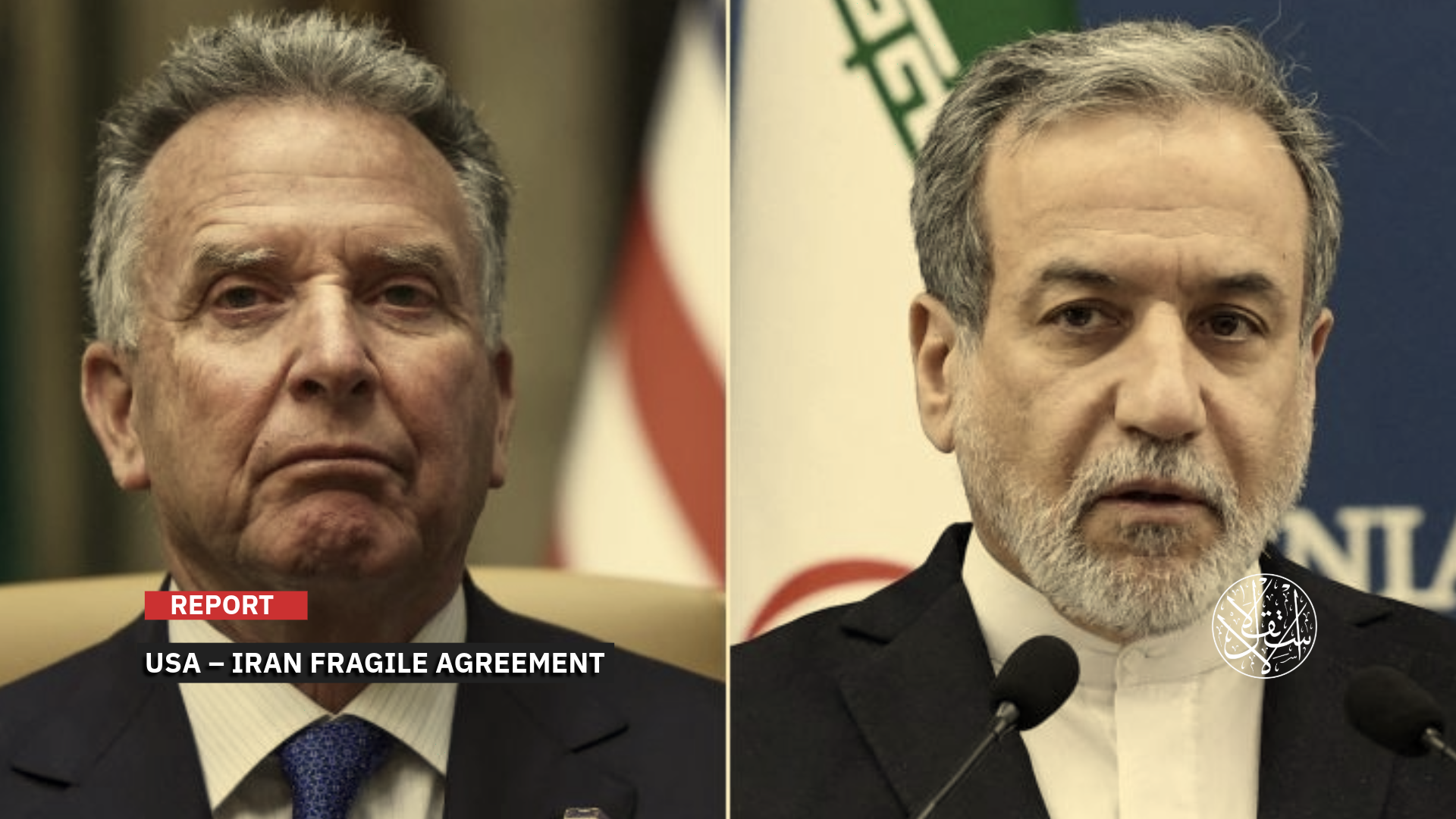
Trump announced the lifting of the naval blockade on Iran and the reopening of the Strait of Hormuz.
Following U.S. President Donald Trump's announcement that an agreement with Tehran had been finalized, questions emerged about whether the deal contains undisclosed provisions whose details have not yet been made public, and about its ability to endure and deliver tangible results, unlike previous understandings that were announced but never fully implemented.
On June 14, 2026, Trump wrote on his Truth Social platform, "The agreement with the Islamic Republic of Iran is now complete. Congratulations to everyone. The Strait of Hormuz is hereby fully authorized to reopen with no transit fees, and I am announcing the immediate lifting of the naval blockade imposed by the United States."
The U.S. president called for the resumption of maritime traffic and the flow of energy shipments through the strategic waterway, saying, "Ships of the world, start your engines... Let the oil flow."
Trump's statement came just minutes after Pakistani Prime Minister Shehbaz Sharif announced on X on June 14 that the United States and Iran had reached a peace agreement that includes an immediate and permanent ceasefire across all fronts, including the Lebanese arena.
Terms of the Agreement
Regarding the details of the understanding reached between Washington and Tehran, Iranian media outlets revealed that the preliminary memorandum of understanding contains 14 provisions covering political, economic, and security arrangements, paving the way for final negotiations between the two sides.
The Iranian news agency Mehr reported that the draft agreement provides for a 60-day negotiation period on Iran’s nuclear program and the mechanisms for the complete lifting of sanctions imposed on Tehran.
According to the agency, the draft excludes Iran’s missile program and Tehran’s support for resistance groups from the final negotiations, limiting discussions to the nuclear issue and the sanctions related to it.
According to details published by the agency, the memorandum stipulates the release of $24 billion in frozen Iranian assets during the negotiation period, with half of that amount to be made available to Iran before the final round of talks begins.
It also includes the suspension of sanctions on Iranian oil and petrochemical exports, as well as the complete lifting of the U.S. naval blockade within 30 days.
The draft further provides for the reopening of the Strait of Hormuz within a period not exceeding 30 days under agreed arrangements, in addition to a commitment by the United States and its allies to present plans contributing no less than $300 billion toward Iran’s reconstruction.
Meanwhile, the semi-official Iranian news agency Fars cited an unnamed source close to the Iranian negotiating team who disclosed details of the final hours preceding U.S. President Donald Trump’s announcement that an agreement had been reached with Tehran.
The source stated that a new round of discussions began on the morning of Sunday, June 14, following the arrival of the Qatari delegation, during which unresolved issues were raised that could have delayed the conclusion of a final agreement.
According to the source, the Israeli airstrike on Beirut’s southern suburbs escalated tensions and prompted Iran to prepare for a large-scale military response on multiple fronts, threatening to derail the negotiations.
The source added that Trump intervened again and offered a package of concessions in exchange for freezing the Iranian response and bringing the negotiations back on track.
These concessions reportedly included the immediate lifting of the naval blockade rather than waiting 30 days, ending military operations on all fronts, including Lebanon, while reaffirming Lebanon’s territorial integrity.
According to U.S. sources, the agreement faced a serious test just hours before its announcement after the Israeli strike on Beirut’s southern suburbs raised concerns within the U.S. administration that the understanding could collapse and military escalation could resume.
CNN reported, citing U.S. officials, that these developments prompted Washington to intensify its contacts with Qatari mediators and Iranian officials to ensure that the situation did not slide into a new confrontation and to preserve the negotiating track.
U.S. Vice President J.D. Vance also confirmed that the administration had received assurances from the Iranian side that it would refrain from military escalation and continue along the path of the agreement until its formal signing.
Critical Tests
Regarding whether there are undisclosed provisions that the two sides have not revealed to avoid domestic political pressure, Middle East affairs analyst Hazem Ayyad said that “there are currently no confirmed indications of the existence of secret clauses in the agreement between the United States and Iran.”
In an interview with Al-Estiklal, Ayyad added that “the existence of such clauses would have reduced the scale of disagreements that emerged during the final stages of negotiations, which required Qatari intervention and the dispatch of a delegation to Tehran to finalize the agreement’s wording.”
He explained that the issue of frozen Iranian funds is one of the most sensitive aspects, as it requires guarantees from third parties responsible for the mechanisms of transferring these funds to Iran, as well as clear U.S. approval not to obstruct the process, especially if Qatar is expected to play a central role in this matter.
He noted that some observers believe additional understandings may exist that were not explicitly included in the agreement, and that they may instead be handled through annexes or parallel arrangements to avoid politically embarrassing U.S. President Donald Trump, particularly given his previous criticism of the nuclear deal reached under former President Barack Obama’s administration, which he accused of granting major financial concessions to Iran.
Regarding the second phase of the understandings, which is linked to Iran’s nuclear program, Ayyad said Tehran does not appear willing to move uranium enrichment or processing activities outside Iranian territory. He suggested that negotiations may instead focus on technical mechanisms within Iran itself, a matter that may not be resolved at the current stage and could be postponed to later phases supported by political guarantees or verbal understandings.
Alongside these issues, the Lebanese file has emerged as one of the most sensitive areas capable of undermining the agreement, particularly after the recent Israeli escalation on June 14, which prompted Trump to publicly criticize Israeli Prime Minister Benjamin Netanyahu, accusing him of acting recklessly and harming the ongoing understandings.
Ayyad said the agreement will remain surrounded by caution due to both Israeli-related complications and issues connected to the release of Iranian funds, noting that the two sides have not yet formally signed the agreement and that implementation mechanisms could face obstacles even after signing.
He added that “signing the agreement does not mean its success; rather, the real challenge begins afterward, as it will face tough tests related to the parties’ commitment to its terms and their ability to overcome unexpected crises.”
He emphasized that reaching the signing stage itself faces significant pressure, whether through Israeli military escalation on the ground or the media battle between Washington and Tehran over the nature and final wording of the agreement. This has fueled speculation about the existence of understandings that neither side wants to disclose directly.
Ayyad stressed that the trust deficit remains the most influential factor shaping the relationship between the two sides, explaining that “lack of trust dominates the course of negotiations, the agreement, and the fragile truce that preceded it, which witnessed rounds of escalation and dangerous clashes.”
He added that the Iranian side continues to draw on previous experiences that deepened its doubts toward Washington, beginning with the Trump administration’s withdrawal from the 5+1 nuclear agreement, followed by the U.S.-Israeli attack on Iran on February 28, and extending to violations that accompanied the ceasefire and developments linked to the Lebanese front.
He concluded that “mutual suspicion and the absence of trust remain the defining factors in the relationship between the two sides,” explaining that this accounts for the continued exchange of accusations and attempts by each side to hold the other responsible for any potential failure, whether before the agreement is signed or after it enters into force. This means that challenges will persist as long as trust remains absent between Washington and Tehran.
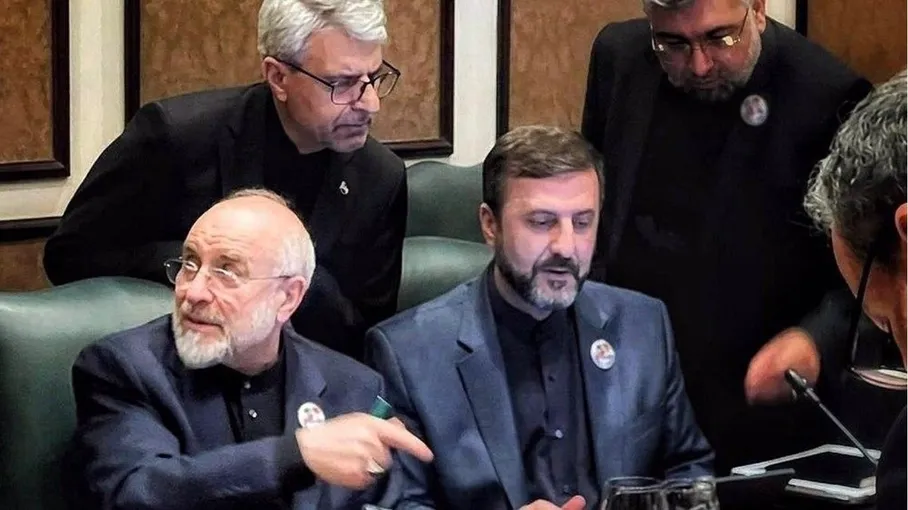
Temporary Truce
In the same context, Iranian affairs expert Firas Elias argued that signing the agreement does not necessarily mean bringing the conflict between the United States and Iran to a sustainable end, describing what has occurred as closer to a "temporary truce" that could collapse at the first major disagreement between the two sides.
In a post published on X on June 14, Ilyas stated that U.S. President Donald Trump had spent recent months portraying Iran as a weakened and divided state, and that sustained military and economic pressure had ultimately pushed Tehran to the negotiating table and led it to accept an agreement that would allow him to declare a political victory before the American public and U.S. allies.
He added that the real problem lies not in reaching the agreement itself, but in the foundations upon which it was built, explaining that "Understandings reached between two parties that hold contradictory views regarding the meaning of the agreement and its ultimate objectives do not represent an end to the crisis; rather, they merely constitute a temporary management of it."
Eli as explained that Washington views the agreement as a tool for imposing new Iranian behavior and reshaping the rules governing relations between the two countries, whereas Tehran sees it as a means of easing economic and military pressures and buying time without abandoning its core strategic principles.
He concluded that agreements built on mistrust and mutual suspicion often fail to withstand the first serious test. He stressed that any security incident, regional escalation, or political dispute could quickly return the two sides to a state of confrontation, revealing that what had been achieved was not a lasting settlement but rather a temporary truce designed to manage the conflict.
On the other hand, concerns are growing inside “Israel” as signs increase that a new agreement between Washington and Tehran may be nearing completion.
Israeli assessments suggest that such an understanding could pave the way for Iran’s renewed regional empowerment by easing international pressure on it and giving it greater room for maneuver.
In this context, Yedioth Ahronoth argued that the anticipated agreement could represent a significant turning point in the Middle East.
It warned that the deal would grant the Iranian regime greater international legitimacy and strengthen its regional influence, while also describing it as a disappointment for the Iranian opposition, which had been hoping for the weakening or even collapse of the regime.
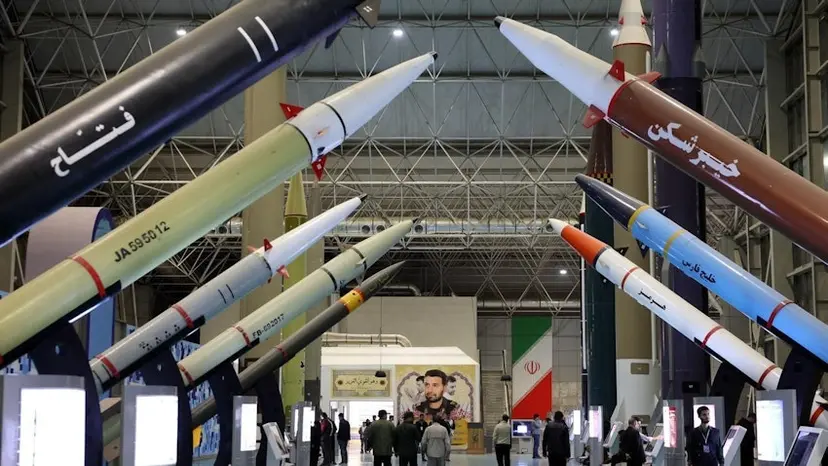
Israeli columnist Ben-Dror Yemini, in an article published by the newspaper on June 15, said that the available information regarding the agreement has caused growing concern in “Israel”, particularly because it does not include restrictions on Iran’s ballistic missile program, which “Tel Aviv” considers one of the most serious threats to its national security.
He added that the agreement also does not contain any arrangements limiting Iran’s ties with its regional allies. According to the Israeli perspective, this would allow Tehran to continue supporting its partners in the region, including Hezbollah in Lebanon, the Houthi movement in Yemen, armed factions in Iraq, and Hamas.
The newspaper argued that the agreement currently being negotiated contradicts previous U.S. rhetoric that encouraged the Iranian opposition and gave it the impression that Washington supported efforts aimed at changing the regime. It assessed that the new understanding could, in practice, strengthen Tehran’s position rather than weaken it.
It also noted that the reported framework of the agreement appears close to the 2015 nuclear deal, formally known as the Joint Comprehensive Plan of Action (JCPOA), which former U.S. President Donald Trump had previously called a “bad deal” before withdrawing from it in 2018 and imposing broad economic sanctions on Iran.
The newspaper added that the administration of former President Joe Biden later moved toward easing pressure on Tehran, suggesting that the current Trump administration is, in one way or another, returning to a similar path, either by reopening negotiations or by reducing economic sanctions.
The newspaper concluded its warnings by stating that lifting economic restrictions on Iran could provide Tehran with additional resources to advance its military programs, particularly its ballistic missile program, as well as increase financial and military support for its regional allies, thereby consolidating Iranian influence in the region in the coming years.
Sources
- Trump: The Agreement With Iran Has Now Been Successfully Completed, and I Congratulate Everyone [Arabic]
- The U.S.-Iran Understanding Includes the Release of $24 Billion in Frozen Funds [Arabic]
- The Washington–Tehran Agreement: Terms and Features of the New Phase [Arabic]
- Iran: The Full Text of the Peace Agreement With America After the Official Signing [Arabic]