The Road to the 2026 Knesset: Who Will Survive Israeli Occupation’s Toughest Election Battle?
The governing equation in the Israeli Occupation starts at 61 seats, as the Knesset has 120 members.
The Israeli Occupation is heading into parliamentary elections, scheduled for no later than October 27, 2026, facing three intertwined challenges: the decisive 61-seat threshold in the Knesset, deep divisions within the ruling camps, and the impact of recent wars on voter confidence.
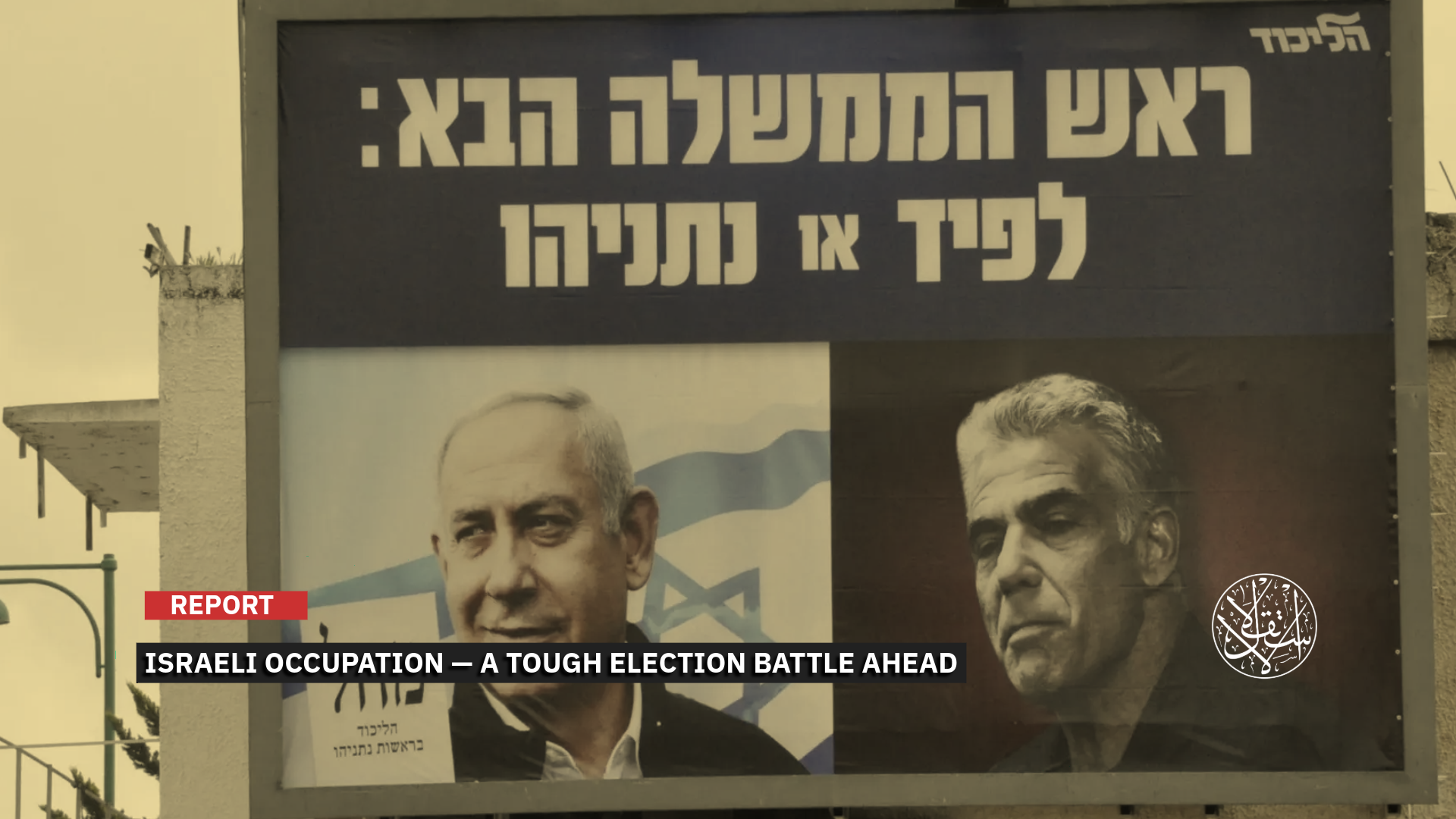
In June 2026, Israeli Prime Minister Benjamin Netanyahu, leader of the right-wing Likud party, announced that he would run in the upcoming election and was determined to win, reopening questions over his ability to secure a stable government.
The leader who built his political career around security and a close alliance with Washington is now entering another election cycle after Operation al-Aqsa Flood on October 7, 2023; a prolonged war on Gaza and Lebanon; the aggression on Iran; and a growing domestic crisis over ultra-Orthodox military conscription.
The Battle for Seats
“Israel’s” governing equation begins with the number 61: the Knesset has 120 members, and forming a government requires a majority under a proportional representation system based on party lists, with an electoral threshold of 3.25% of the vote.
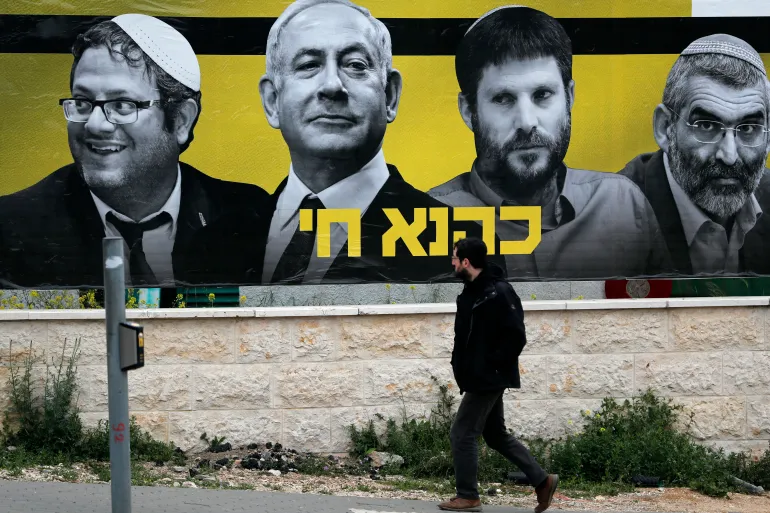
Netanyahu’s camp relies on a familiar religious-right bloc centered around the nationalist Likud party, with support from Shas, the Sephardic ultra-Orthodox party led by Aryeh Deri, and United Torah Judaism, the Ashkenazi ultra-Orthodox alliance representing hardline religious factions.
The bloc also includes the Religious Zionist Party, led by Finance Minister Bezalel Smotrich, and Jewish Power, led by far-right National Security Minister Itamar Ben-Gvir.
This alliance has provided Netanyahu with a solid governing base in recent years, but it enters the next election burdened by domestic political costs and growing tensions, especially over the ultra-Orthodox military draft issue.
The Times of Israel reported that Shas threatened to oppose the 2026 budget unless legislation was passed guaranteeing broad exemptions from military service for religious seminary students, as ultra-Orthodox communities argue that their primary commitment is religious study rather than army service.
Meanwhile, The Jerusalem Post reported that Rabbi Dov Lando, a leading spiritual authority in United Torah Judaism, urged lawmakers from the party to halt cooperation with the coalition over a loss of trust in Netanyahu regarding draft legislation.
In other words, Netanyahu is not only facing his opponents but also partners who have the power to undermine his government from within.
To Netanyahu’s right stand Ben-Gvir and Smotrich, whose political demands often exceed what any centrist coalition could accommodate.
Ben-Gvir rejects any government that depends on Arab parties and pushes for a more aggressive war on Gaza and Lebanon, while Smotrich promotes a hardline nationalist and settlement-focused agenda and has opposed the U.S.-Iran ceasefire agreement, calling it “bad for Israel and the free world.”
Their presence strengthens Netanyahu’s right-wing electoral base but narrows his room for maneuver with the center, making alternative right-wing coalitions more difficult.
On the other side, Netanyahu’s opponents are operating within a broad camp united less by ideology than by a shared desire to end his long tenure as prime minister.
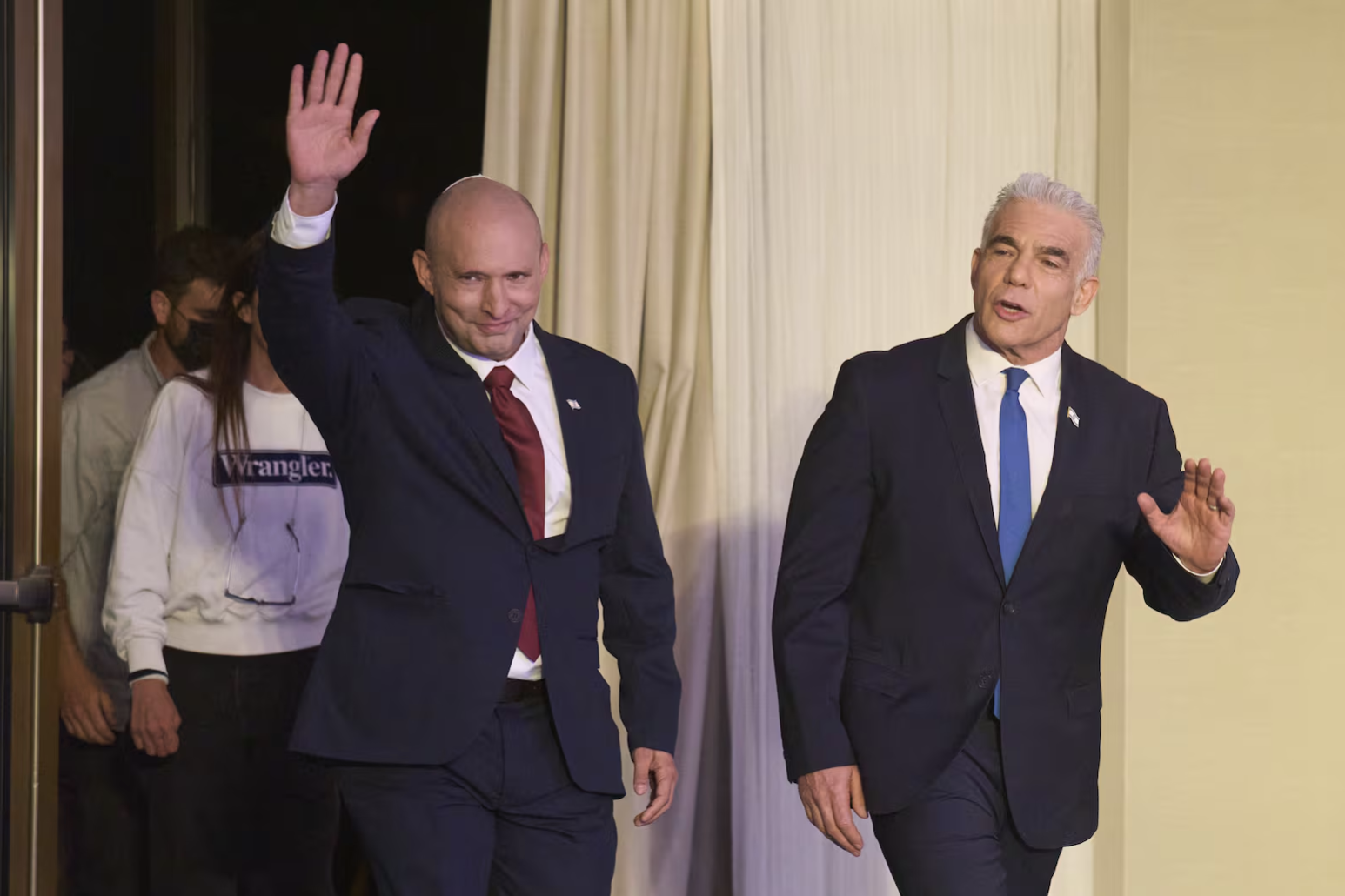
In April 2026, Naftali Bennett, a former prime minister from a nationalist right-wing background, and Yair Lapid, a former prime minister and leader of the centrist Yesh Atid party, announced they would run in the upcoming election under a joint framework called “Beyachad,” or “Together.”
The alliance is attempting to present a liberal-right and centrist alternative capable of attracting voters exhausted by Netanyahu without moving too far toward the left.
But the question of Arab parties remains a dilemma for Netanyahu’s opponents as well. Bennett has pledged not to repeat the experience of relying on Ra’am, the United Arab List, after joining a government supported by the party in 2021.
Avigdor Lieberman, leader of Yisrael Beiteinu and former war minister, has said he would not sit with Netanyahu “even if the world turned upside down,” while also rejecting reliance on Arab parties.
Benny Gantz, former military chief and leader of the National Unity party, launched his campaign by declaring that forming a government dependent on Arab votes had become “impossible” after October 7.
The only figure openly pushing against the exclusion of Arab parties is Yair Golan, a former military commander and left-wing politician, who argues for ending the demonization of Ra’am and Arab parties and treating them as legitimate political partners.
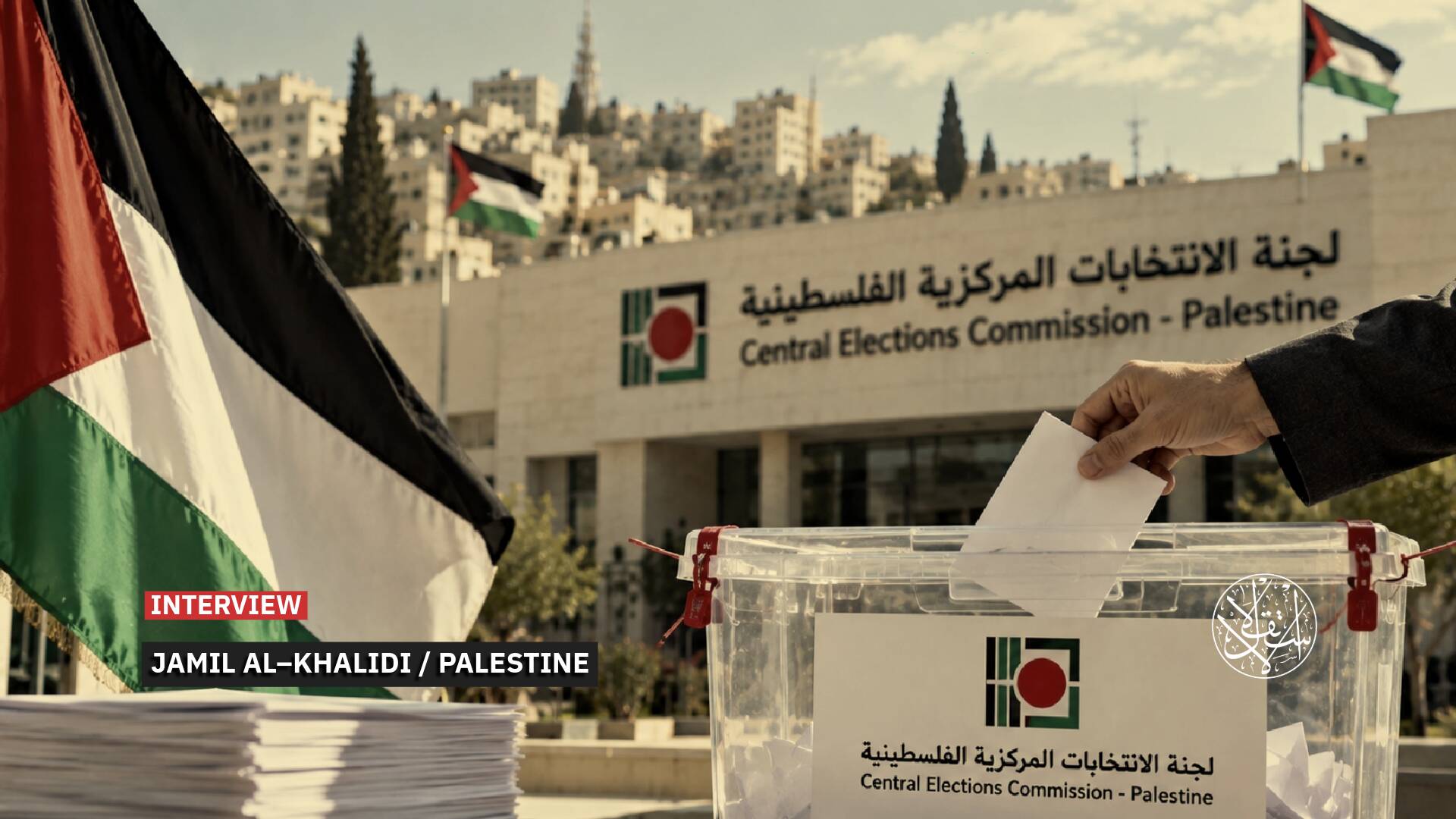
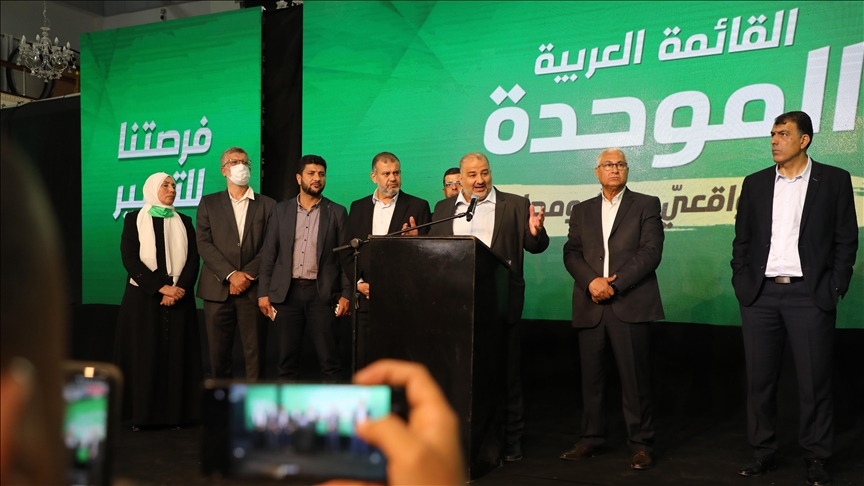
Between these two camps stand Arab parties, both a numerically significant force and a political dilemma. Ra’am, led by Mansour Abbas, presents itself as a pragmatic party focused on negotiating budgets and services for Arab citizens.
The Democratic Front for Peace and Equality and the Arab Movement for Renewal, led by Ayman Odeh and Ahmad Tibi, are seeking to revive the Joint List. Meanwhile, the Palestinian nationalist Balad party rejects joining Zionist coalitions and remains vulnerable to falling below the electoral threshold.
The U.S.-based Jewish advocacy group J Street estimated in a recent study that a unified Arab slate could win 15 seats, making it the third-largest force in the Knesset—a result that could transform Arab parties from a marginal electoral presence into a decisive factor in government formation.
The Polls: A Race Without a Clear Winner
June 2026 polls suggest that Netanyahu’s challenge is not only declining support for him personally but also the inability of most political scenarios to produce a stable governing coalition.
A poll published by the Israel Democracy Institute on June 9 found that 61% of Israelis believe Netanyahu should not run again, reflecting public frustration after years marked by war, protests, legal battles, and alliances with far-right partners.
On June 19, a Maariv poll revealed a notable shift in the political landscape: the “Yashar” party led by former military chief Gadi Eisenkot tied with Likud at 21 seats, while the Bennett-Lapid alliance “Beyachad” secured 20 seats. The opposition bloc reached 61 seats, compared with about 49 seats for Netanyahu’s camp.
The result places Eisenkot not as a minor coalition partner but as a security-focused contender challenging Netanyahu in an area the prime minister has long dominated.
The Israeli business newspaper Globes offered a more balanced picture on June 14 through an average of recent polls. According to its analysis, Likud stood at 25 seats, while both “Beyachad” and “Yashar” held 19 seats each. Netanyahu’s bloc reached 53 seats, compared with 56 for the opposition and 11 for Arab parties.
The political takeaway is clear: Netanyahu’s rivals appear stronger in public sentiment, but their path to 61 seats largely depends on Arab parties—a reality many opposition leaders remain reluctant to acknowledge among Jewish voters.
On June 12, The Times of Israel published a poll giving Likud 24 seats, with both “Beyachad” and “Yashar” at 21 seats, leaving the opposition with 60 seats and Netanyahu’s bloc with 50.
When the poll tested a scenario involving a unified Arab electoral list, Arab parties collectively rose to 13 seats, while opposition parties without Arab support fell to 54 seats.
That leaves the formation of an alternative government unresolved, as defeating Netanyahu’s bloc would still require political cooperation with Arab parties.
The 3.25% electoral threshold adds another layer of uncertainty. A Channel 12 poll on June 5 placed the Religious Zionist Party at just four seats, barely above the threshold needed to enter the Knesset, while parties such as Balad and Blue and White—a centrist list associated with Benny Gantz—remained outside.
In a proportional electoral system, the collapse of a small party does not simply mean losing its projected seats; it redistributes those votes among larger blocs and can be enough to reshape the battle for the crucial 61-seat majority. Both camps are therefore fighting a two-front battle: expanding their support while ensuring smaller allies survive.
The polls show that uniting opposition forces could provide a major boost, but it does not by itself resolve the challenge of forming a government.
A Maariv poll on June 19 found that a merger between Eisenkot’s “Yashar” and the “Beyachad” alliance led by Naftali Bennett and Yair Lapid could win 37 seats.
An earlier Channel 12 poll on April 28 showed another scenario in which the same alliance could reach 41 seats if Eisenkot joined.
Despite these strong numbers, the real challenge lies not in the size of the largest list but in the distribution of blocs—because even the biggest opposition alliance would still need additional partners to cross the decisive threshold of 61 seats.
Wars as a Ballot Box
“Israel’s” upcoming election is unfolding after a series of wars that have reshaped the relationship between security and politics. Operation al-Aqsa Flood on October 7, 2023, remains a defining wound in the debate over responsibility, while the genocide in Gaza has become both a military and political burden for the Israeli Occupation government.
The Israeli war on Lebanon brought a prolonged confrontation with Hezbollah, followed by the U.S.-Israeli War on Iran and a temporary U.S.-Iran agreement that challenged one of Netanyahu’s traditional strengths: his ability to manage “Israel’s” relationship with Washington.
Netanyahu now finds himself as a political survivor facing voter anger after the Iran deal, with his opponents linking the agreement to what they describe as a failure to develop a clear war strategy.
An April 2026 poll by the Israeli Dialog Institute captured a divided public mood: nearly two-thirds of Israelis opposed a ceasefire with Iran, yet Netanyahu’s approval rating fell to 34%, down from 40% at the start of the war.
His opponents argue that the issue is not “Israel’s” need for security but leadership that has failed to turn military power into political outcomes.
From that perspective, Yair Lapid attacked Netanyahu’s performance, saying he had “lost the war” and “collapsed when the moment of truth arrived.” He also described the U.S.-Iran agreement as “bad for Israel” and accused the prime minister of failing to influence Washington.
The pressure from the right came from the opposite direction. Ben-Gvir argued that “Israel” was not bound by the Iran agreement and should not become dependent on the United States, while Smotrich attacked the deal as a threat to the Israeli Occupation.
Netanyahu is therefore trapped between an opposition accusing him of losing influence in Washington and right-wing partners pushing him toward a sharper confrontation with the U.S. administration.
The alliance with Trump is no longer the unquestioned political asset it once was, especially after President Donald Trump and Vice President JD Vance criticized “Israel’s” tactics in Lebanon and insisted that it accept a ceasefire with Beirut.
A Maariv poll found that 49% of Israelis were concerned about a rift between Netanyahu and Trump. Beyond that issue, even after the release of Israeli captives in Gaza, the captive crisis remains central to Israeli politics as a question of accountability over the failures of October 7.
Captive families have become a powerful voice in the national debate over the cost of the war, the government’s handling of negotiations, and whether coalition calculations prolonged both captivity and fighting.
These pressures coincide with the ultra-Orthodox military draft crisis. Boaz Bismuth, chairman of the Knesset Foreign Affairs and “Defense” Committee, a Likud lawmaker and former journalist, said the draft bill was returned to the agenda at the request of Chief of Staff Eyal Zamir after the war on Iran.
Critics argue the legislation would preserve ultra-Orthodox exemptions at a time when reservists are fighting on multiple fronts. Ultra-Orthodox parties, meanwhile, are pushing to protect those exemptions.
For secular and non-ultra-Orthodox right-wing voters, the military burden has become increasingly difficult to justify. The dispute strikes at the heart of Netanyahu’s coalition: he needs Shas and United Torah Judaism to remain in power while risking the support of voters who see equal military service as an existential issue after years of war.
Sources
- Trump says Netanyahu may quit politics, but Likud asserts he will run in elections
- Haredi MKs instructed to end cooperation with coalition over contentious ultra-Orthodox draft bill
- 'Our Unity Is a Message' Ex-PMs Bennett, Lapid Merge Parties Ahead of 2026 Election in Bid to Oust Netanyahu
- According to the polls, the coalition will be unable to form a new government but so would the opposition, without including Arab parties.
- Arab Israeli Politics and Society Ahead of the 2026 Israeli Election
- Israeli opposition leader Lapid says Trump’s emerging deal with Iran is `bad for the region’