Trump’s Shield of the Americas Coalition: A Revival of Hegemony or a Real War on Drug Cartels?
“The Trump administration pledged $1 billion in security assistance to the new Colombian government.”
Latin America is undergoing a profound geopolitical shift that evokes the dominance of the Monroe Doctrine—a policy that long regarded the region as the United States' backyard.
Amid a rapidly evolving landscape, the rise of the far-right in several nations is coinciding with an intense U.S. campaign to reassert influence.
This campaign clearly targets leftist and independent-minded governments—most notably in Venezuela, Cuba, and Brazil—in an attempt to close the chapter on the Pink Tide that defined the region for two decades.
The rise of the right in Latin America is no longer merely a political fluctuation; it has evolved into an organized regional phenomenon.
In Colombia, far-right figure Abelardo de la Espriella assumed the presidency, pledging to defeat terrorism and halt dialogue with armed groups, while announcing his country's accession to the U.S.-led Shield of the Americas.
Meanwhile, in Chile, Jose Antonio Kast took office as the most right-wing president in 30 years; Keiko Fujimori secured a victory in Peru; and the tenure of Argentina's right-wing President Javier Milei was extended.
Analysts view this shift not merely as a reaction to the Left's failure to address economic and security crises, but as the result of systematic U.S. intervention.
Since Donald Trump’s return to the White House, Washington has pursued a Trumpism strategy to reshape the political map of the Americas—an approach grounded in the use of force and tariffs, alongside the support and funding of right-wing forces.
Donroe Doctrine
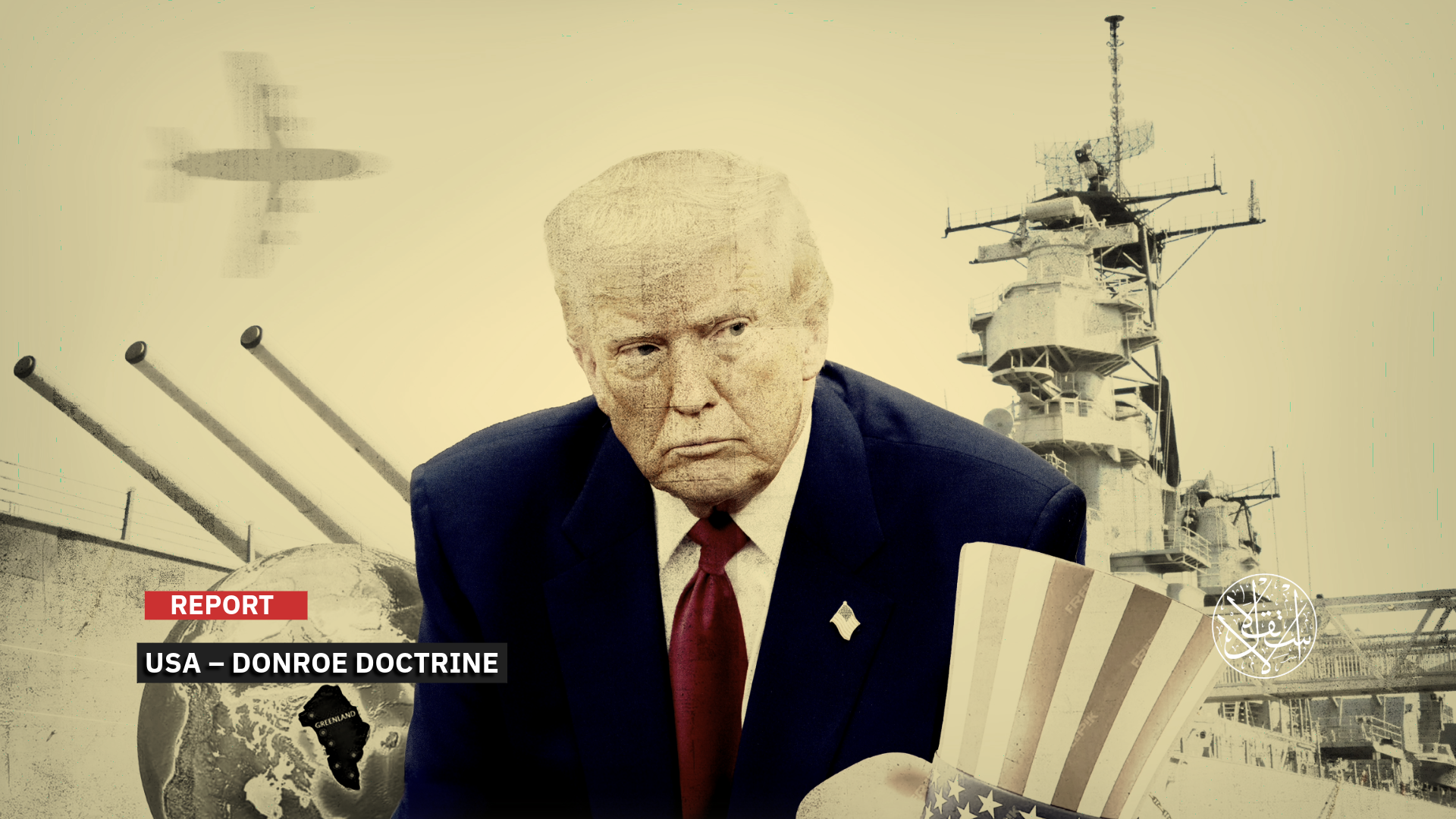
In a move reflecting a broader trend toward expanding the US military role in the Western Hemisphere, US President Donald Trump is moving to cement what media reports have dubbed the 'Donroe Doctrine'.
This term refers to a policy and security framework inspired by the historic Monroe Doctrine but characterized by a more interventionist approach to Latin American affairs, justified by the need to combat transnational threats.
The Spanish newspaper La Vanguardia reported that Trump’s new strategy relies on political support and cover from allied nations across the Americas.
This framework aims to justify military interventions or operations in other countries within the region, citing the need for greater operational effectiveness in countering threats that undermine regional security and impact the U.S.
According to the newspaper, the US military announced this week the launch of the Western Hemisphere Joint Task Force, in collaboration with 19 nations that form what is known as the Americas Counter Cartel Coalition (ACCC).
This move marks a shift away from Operation Southern Spear, launched by Washington in September 2025 to strike vessels allegedly linked to drug trafficking in the Caribbean Sea and the Pacific Ocean.
La Vanguardia explained that the establishment of the new task force effectively signals an end to direct strikes against so-called drug boats—operations that cost approximately $820 million and resulted in at least 221 deaths.
The newspaper noted that these strikes had drawn widespread criticism from Democratic lawmakers and human rights organizations, primarily due to the lack of public evidence proving that the targeted vessels were actually transporting narcotics.
It is worth noting that the Trump administration repeatedly defended these attacks, which legal experts and human rights organizations have deemed tantamount to extrajudicial killings.
Estimates and data indicate that the influx, distribution, and consumption of drugs within the U.S. have not declined despite these strikes, fueling criticism regarding the efficacy of relying on military bombardment as a primary tactic in the war on drugs.
The Spanish newspaper views this move as the latest phase in the White House's efforts to expand the role of U.S. armed forces in the fight against transnational criminal organizations—this time under a regional umbrella involving partners from the area, thereby lending the U.S. initiative a multilateral dimension.
The Western Hemisphere Joint Task Force is set to function as a permanent command headquarters, consolidating intelligence, surveillance, operational planning, and multinational military coordination under a single command.
Thus, Washington is shifting from limited military operations against suspected maritime targets to a broader security architecture aimed—according to the US narrative—at organized crime networks in Latin America and the Caribbean.

Military Presence
In the latest development, U.S. Secretary of War Pete Hegseth announced that the new Colombian government has requested US support to conduct joint military operations against cartels within its territory.
This move could pave the way for a direct expansion of U.S. military intervention, marking a shift from air and naval strikes against drug traffickers to ground-based military operations.
The Colombian newspaper El Tiempo reported that, under the new agreement, Colombia will officially join the ACCC, becoming the 19th member of this U.S.-led initiative, which operates under the Shield of the Americas strategy.
The joint operations aim to dismantle cocaine trafficking networks, bolster border security, and cut off funding sources for illegal groups—estimated to comprise around 25,000 fighters.
Hegseth’s remarks were made during the coalition's meeting in Panama—held just days after the new Colombian president, Abelardo de la Espriella, assumed office—signaling a radical shift in Bogota’s approach to the armed conflict.
The coalition comprises nations with right-wing governments, including Argentina, Bolivia, Chile, Colombia, Ecuador, Honduras, and Peru. Notably, Mexico, Brazil, and Venezuela have not joined the alliance, despite being home to powerful drug trafficking gangs.
In a move reflecting the depth of this new alliance, Washington announced a massive $1 billion security aid package for Colombia, which is the world's largest producer of cocaine, while the U.S. remains its largest consumer.
This aid underscores the commitment of the Trump-led US administration to bolstering its military presence in Latin America, capitalizing on escalating security tensions in the region.
For his part, President de la Espriella has ruled out negotiations with armed groups, pledging to relentlessly combat drug-linked terrorism.
However, the new agreement with the U.S. raises questions regarding its impact on the humanitarian situation in rural and remote areas.
Human rights groups fear an escalation of violence against civilians resulting from joint military operations, particularly in regions where armed groups funded by the drug trade operate.
Conversely, Washington maintains that these operations are part of a joint security cooperation effort to protect the interests of both nations, noting that the US military presence will be limited to providing intelligence and logistical support to Colombian forces.
As this cooperation takes effect, attention is turning to the potential success of these operations in achieving the desired security, amidst concerns that the new policy could ignite fresh conflict fronts rather than quell the decades-old struggle.

Ideological Coalition
The ACCC is a US-led regional security and military alliance. Launched on March 7, 2026, at the Trump National Doral resort in Miami, Florida, its objective is to combat drug cartels and organized crime while curbing foreign influence in the Western Hemisphere.
The coalition’s intellectual and strategic roots trace back to the 2025 US National Security Strategy—released in November 2025—which adopted a tougher approach to Western Hemisphere issues, linking counter-narcotics and irregular migration efforts with great-power competition.
In this context, the US administration promoted what it termed the Trump Amendment to the Monroe Doctrine.
This was framed as a modern reformulation of a historic doctrine aimed at cementing US influence in the Western Hemisphere, curbing waves of irregular migration, and diminishing the strategic presence of rival powers—specifically Russia and China—in the region.
The ACCC also emerged against the backdrop of a diplomatic vacuum caused by the stalling of the 10th Summit of the Americas. Originally scheduled for December 2025 in Punta Cana, Dominican Republic, the summit was derailed by sharp divisions among regional nations and US pressure to exclude governments whose stances did not align with Washington’s policies.
In this context, the alliance formed an alternative platform bringing together—in the words of the U.S. State Department—allied nations with shared visions, distinct from broader multilateral frameworks such as the Organization of American States.
The launch of the coalition was preceded by a series of U.S. military actions, including Operation Decisive Resolve on January 3—which resulted in the arrest of Venezuelan President Nicolas Maduro and charges of drug trafficking and transnational crimes—and a joint military operation with Ecuadorian forces near the Colombian border in early March that targeted criminal organization camps.
On March 5, U.S. officials and representatives from 17 Latin American and Caribbean nations signed the Joint Security Declaration at U.S. Southern Command headquarters.
At the time of the coalition's launch, information regarding its organizational structure or leadership responsibilities was unavailable.
However, the official announcement, hosting arrangements, statements, and speeches during the conference were dominated by the U.S. presence.
Analysts have also suggested that this organization embodies the concept of minilateralism rather than multilateralism—that is, limiting participation to a small number of states to achieve the most effective solutions.
Analysts at research institutions—such as Brookings, Chatham House, and Foreign Policy—viewed the initiative primarily as an ideological alliance aimed at curbing China's influence.
In this context, several drug cartels were designated as Foreign Terrorist Organizations. This classification provides Washington with a broader legal and operational basis to implement security and military measures aimed at dismantling these networks, which it views as a direct threat to its national security.
Shield of the Americas is not limited to counter-narcotics efforts; it encompasses broader geopolitical dimensions, most notably curbing external influence in the region and securing vital resources in the region, particularly the Lithium Triangle comprising Argentina, Bolivia, and Chile.
Here, US concern regarding China's growing economic presence in Latin America comes to the fore; estimates indicate that the volume of trade between China and countries in the region reached approximately $518 billion in 2024.
Conversely, several major leftist regional powers are notably absent from this alliance—foremost among them Brazil and Mexico—along with other nations such as Canada and Cuba.
The absence of these countries poses a strategic challenge to the alliance's effectiveness, given that their economies account for roughly half of Latin America's total GDP.
Mexico's absence has also raised questions regarding the efficacy of coordination, particularly given its border—stretching over 3,000 kilometers—which is a major magnet for organized crime gangs, drug trafficking, and irregular migration.

At a conference in Miami last March, the U.S. President criticized Mexico after its president refused to authorize U.S. military operations within Mexican territory; he also issued warnings to Cuba, noting that its turn was coming.
Trump also appointed Kristi Noem—recently dismissed from the Department of Homeland Security—as Special Envoy for the Shield of the Americas, a new position with undefined authority within the diplomatic hierarchy.
In this context, White House spokesperson Anna Kelly stated: "After years of neglect, Trump has established the Donroe Doctrine to restore U.S. leadership in the Western Hemisphere."
This approach is directly linked to what the administration calls the Donroe Doctrine—a policy adopted by Trump based on the Monroe Doctrine of 1823, under which the United States asserted that any foreign intervention would be considered a hostile act against it.
Sources
- Trump will be able to intervene militarily in eighteen Latin American countries [Spanish]
- Colombia opens the door to joint military operations with the U.S. on its territory after joining a coalition against drug trafficking organizations [Spanish]
- Map Shows All ‘Shield of the Americas’ Nations as Trump’s Alliance Grows
- Trump’s ‘Shield’ Against Multilateralism