‘Investment Opportunities’: How Syria and Lebanon Are Deepening Economic Ties
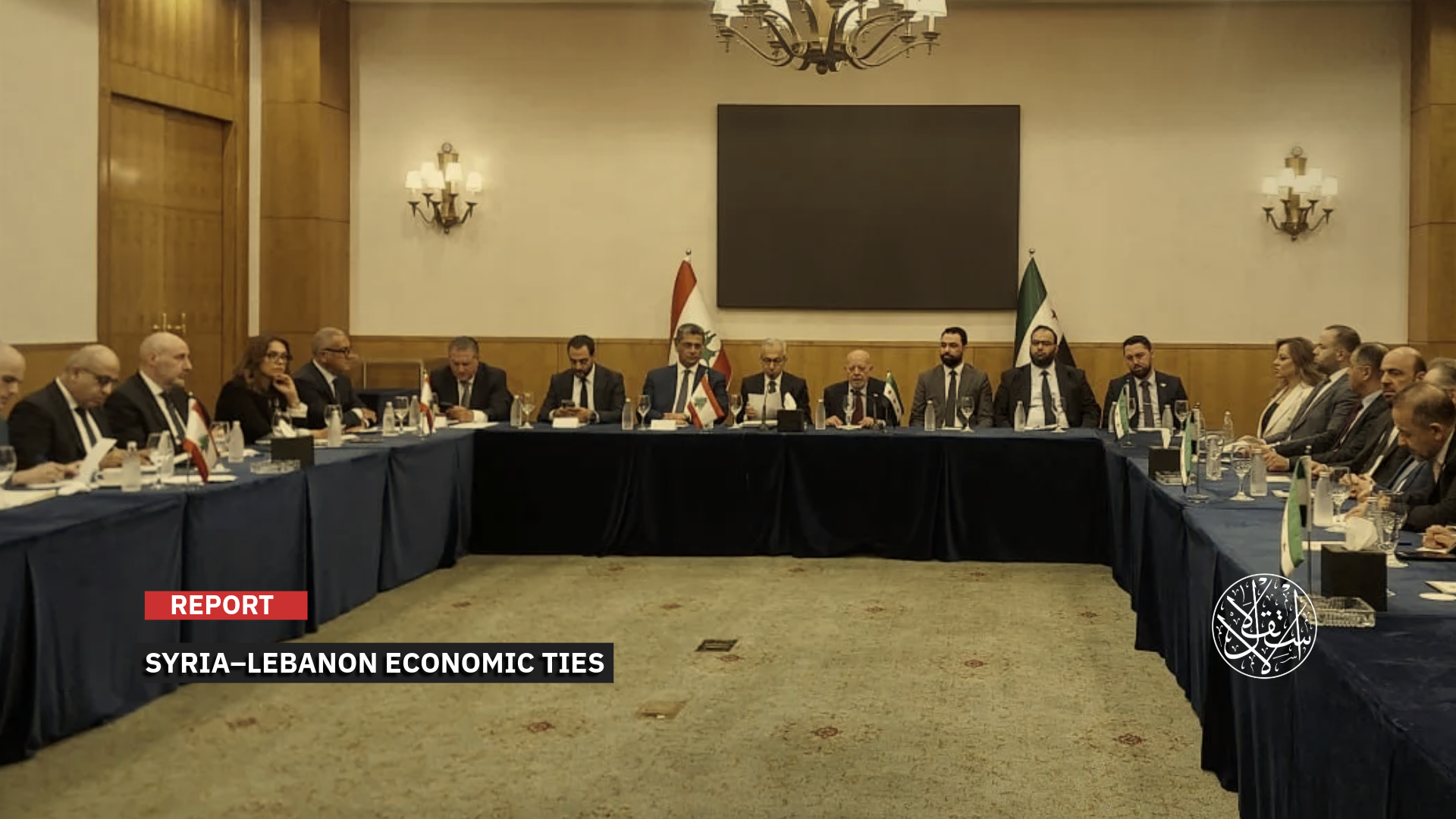
At its peak, trade between Syria and Lebanon reached just under $800 million.
After decades of political and security tensions that severely constrained economic integration, Damascus and Beirut are now seeking to recast their relationship around mutual interests and greater parity.
As the public and private sectors in both countries move to revisit old agreements and remove barriers to trade, transportation, and investment, geography and intertwined interests are emerging as powerful drivers of a broader economic partnership.
Deepening the Partnership
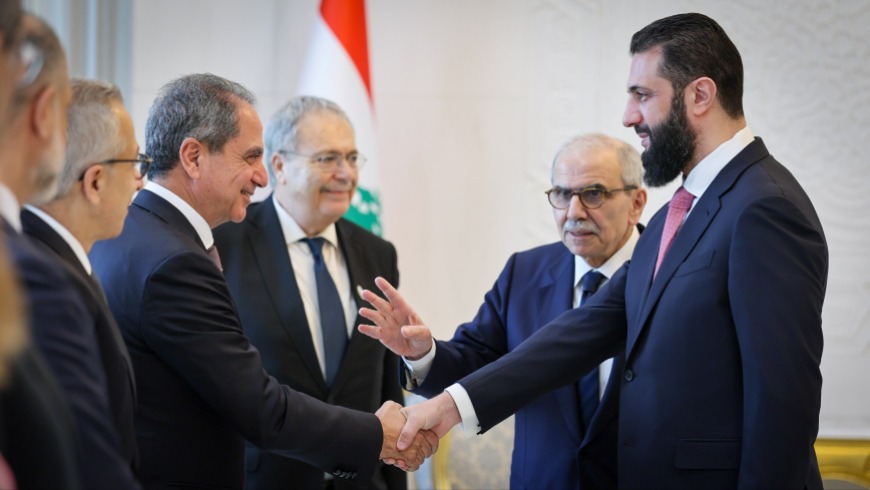
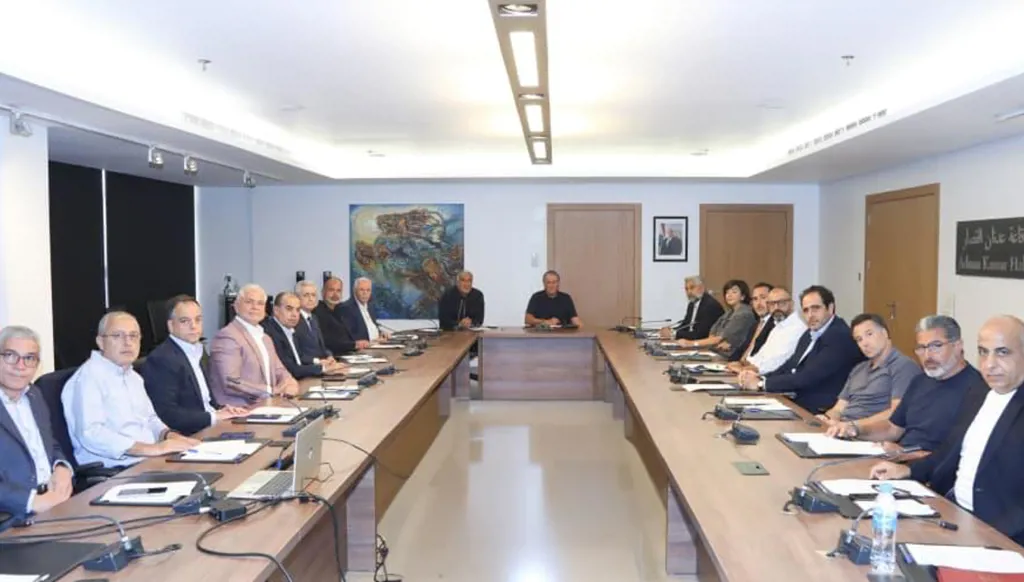
The Lebanese-Syrian Business Council (LSBC) held an expanded meeting on August 3, 2026, chaired by former minister and head of the economic bodies Mohammad Choucair and LSBC president Khalil al-Arab. The meeting reviewed the findings of a Lebanese economic delegation’s visit to Syria on July 14 and 15, including talks with Syrian officials and investment opportunities discussed during the trip.
Choucair described the visit as an important milestone that laid the groundwork for a new phase of economic cooperation and partnership between the two countries. Meetings with Syrian officials, he said, revealed promising investment opportunities across several sectors, with the next phase focused on turning agreements into concrete steps and viable projects.
Choucair also stressed the need for the Lebanese government to establish an official committee tasked with following up on agreements and joint files with Syria, ensuring they are implemented in a way that serves both countries’ interests.
Khalil al-Arab outlined investment opportunities in Syria spanning tourism, agriculture, industry, trade, infrastructure, education, health, information technology, and logistics, based on information provided by Syrian officials during meetings with the Lebanese delegation.
He also reviewed Syria’s investment law and the incentives it offers investors, along with key legal provisions governing foreign investment, saying the council would follow up on the issues raised and brief Lebanon’s business community on the details.
The meeting also focused on removing administrative and technical obstacles hindering trade and investment between the two countries. Participants called for easier movement of businesspeople, citizens, and goods; simpler entry procedures; easier visa and border permit processes; smoother transit traffic; and the resolution of outstanding trade and customs issues.
The LSBC agreed to launch a series of practical measures in the coming period aimed at giving fresh momentum to Lebanese-Syrian economic ties and strengthening private-sector cooperation.
Relations between Syria and Lebanon were strained by decades of political and security crises under Hafez al-Assad and his son, Bashar al-Assad, who ruled from 1971 to 2024. Those tensions deprived the neighboring economies of significant opportunities for integration and trade.
Now, following the fall of Bashar al-Assad’s regime, Damascus and Beirut are seeking to open a new chapter based on shared interests and mutual stability.
The two sides appear more willing than ever to recast their relationship on more equal terms and revisit agreements reached under the al-Assad regime.
That includes the Syrian-Lebanese Supreme Council (SLSC), established under Article 6 of the 1991 Treaty of Brotherhood, Cooperation, and Coordination between Syria and Lebanon, which has faced growing criticism in Lebanon.
Many Lebanese experts argue that the SLSC reinforced Lebanon’s subordinate position under the al-Assad regimes and was used to serve their interests at the expense of Lebanese sovereignty.
Since al-Assad’s fall, political ties have warmed, with Syrian President Ahmed al-Sharaa meeting former Lebanese Prime Minister Najib Mikati, followed by meetings with current President Joseph Aoun and Prime Minister Nawaf Salam.
Damascus and Beirut have also stepped up coordination on border issues, combating smuggling and regulating cross-border movement while exploring economic cooperation through official committees.
Against this backdrop, reshaping economic ties between Lebanon and Syria appears to be more than a review of trade agreements signed under the Assad regimes. It is an attempt to rebuild a relationship shaped for decades by geography and intertwined interests.
The two countries share a long border and deeply connected trade routes and flows of goods and services, making the economy one of the areas most likely to drive a new, more balanced, and pragmatic relationship following Syria’s political transformation in 2024.
Lebanon shares a 375-kilometer border with Syria to the north and east and relies on Syrian roads to transport exports by truck to Jordan and the Gulf states.
Syrian exporters, meanwhile, have used Lebanon as a key export route since the outbreak of the Syrian uprising in 2011.
At its peak, trade between Syria and Lebanon reached just under $800 million.
Toward Economic Integration
Economic researcher Radwan Aldebes told Al-Estiklal that the current situation requires Syria and Lebanon to develop what he described as a “shared destiny and common unity.”
He noted that until roughly the 1960s, the two countries were linked through a single central banking system and a shared currency arrangement, with the Lebanese and Syrian pounds tied through the Lebanese central bank.
Their economies remained closely connected for decades before separating, Aldebes said, adding that this history should be considered alongside their geographic interdependence. Lebanon’s geography makes Syrian territory its main land route to the outside world.
If Syria’s border crossings with Lebanon were closed, he said, Lebanon would be severely constrained. Lebanese goods bound for Iraq, the Gulf states, Jordan, and Syria itself must pass through Syria, as would any route to Turkiye.
Lebanon therefore needs Syria as its main gateway, particularly for exports. Its maritime routes are much longer for reaching the Gulf and Iraq, while the complications surrounding trade with the Israeli Occupation can prevent Lebanese ports from operating normally in all circumstances, according to the researcher.
Syria, in turn, needs Lebanon for financial services, he said, noting that Lebanon’s banking sector was relatively advanced and had escaped the sanctions and boycotts imposed on Syria.
During the Syrian revolution, Lebanon also served as a key financial outlet for Syrians, with businesses in Damascus, parts of Aleppo, and the coastal region relying heavily on Lebanese banks as a major financial channel.
Aldebes said the two countries also share deep economic challenges. Both have suffered from inflation and destruction, and both face the need for reconstruction and economic recovery. Their shared circumstances, he argued, create a strong incentive for greater cooperation as they seek to overcome their crises together.

Similar Economies, Shared Interests
Experts say giving the economies of the two neighboring countries a stronger push will require revisiting previous agreements and memorandums of understanding, potentially paving the way for a broader bilateral trade deal covering commerce, transportation, customs duties, and investment.
Lebanese Economy Minister Amer Bisat told Reuters in mid-July 2026 that Lebanon and Syria would begin reviewing decades-old trade agreements in the coming months, seeking to revive economic ties following the ouster of Bashar al-Assad in 2024.
"That economic relationship needed to be reset, and it has the potential of being the most important bilateral relationship for both countries," Bisat said.
Trade between the two countries totaled about $250 million in 2025, Bisat said, arguing that the figure “should be measured in billions” instead.
As a first step, a committee set up in early July would review more than 40 pacts and memoranda of understanding agreed with al-Assad-era Syria that covered investment frameworks, visa and tax regimes, and other dimensions of Syrian-Lebanese trade.
Bisat said the review could take several months but that a bigger trade deal could take longer.
Such a deal would need to address logistical hurdles to land transport and tackle tariffs that are "not uniform.”
“Lebanese exporters pay an export tariff and the Syrians don't,” he added.
Aldebes said the two countries’ similar economic structures, particularly their reliance on tourism, agriculture, transit, and medical services, as well as their handicraft and other industries, make greater integration both necessary and mutually beneficial.
The obstacles, he said, could be reduced through measures such as harmonizing customs tariffs and regulations, easing the burden on traders, establishing a single customs window at the border, standardizing fees, and allowing more flexible banking services between Syria and Lebanon.
What Syria and Lebanon need now, Aldebes argued, is strong political and administrative will, backed by agreements and frameworks governing financial, tourism, administrative, and customs affairs, with both sides committed to implementing them.
He also called for opening the borders to citizens of both countries, allowing trucks to cross in both directions, regulating transit traffic and making imports and exports easier for businesses on both sides.