‘America First’ or ‘Israel First’? How Iran Constrained Washington’s Security Umbrella for ‘Tel Aviv’
It is no longer merely a matter of deterrence calculations or political costs, but also of military and operational constraints.
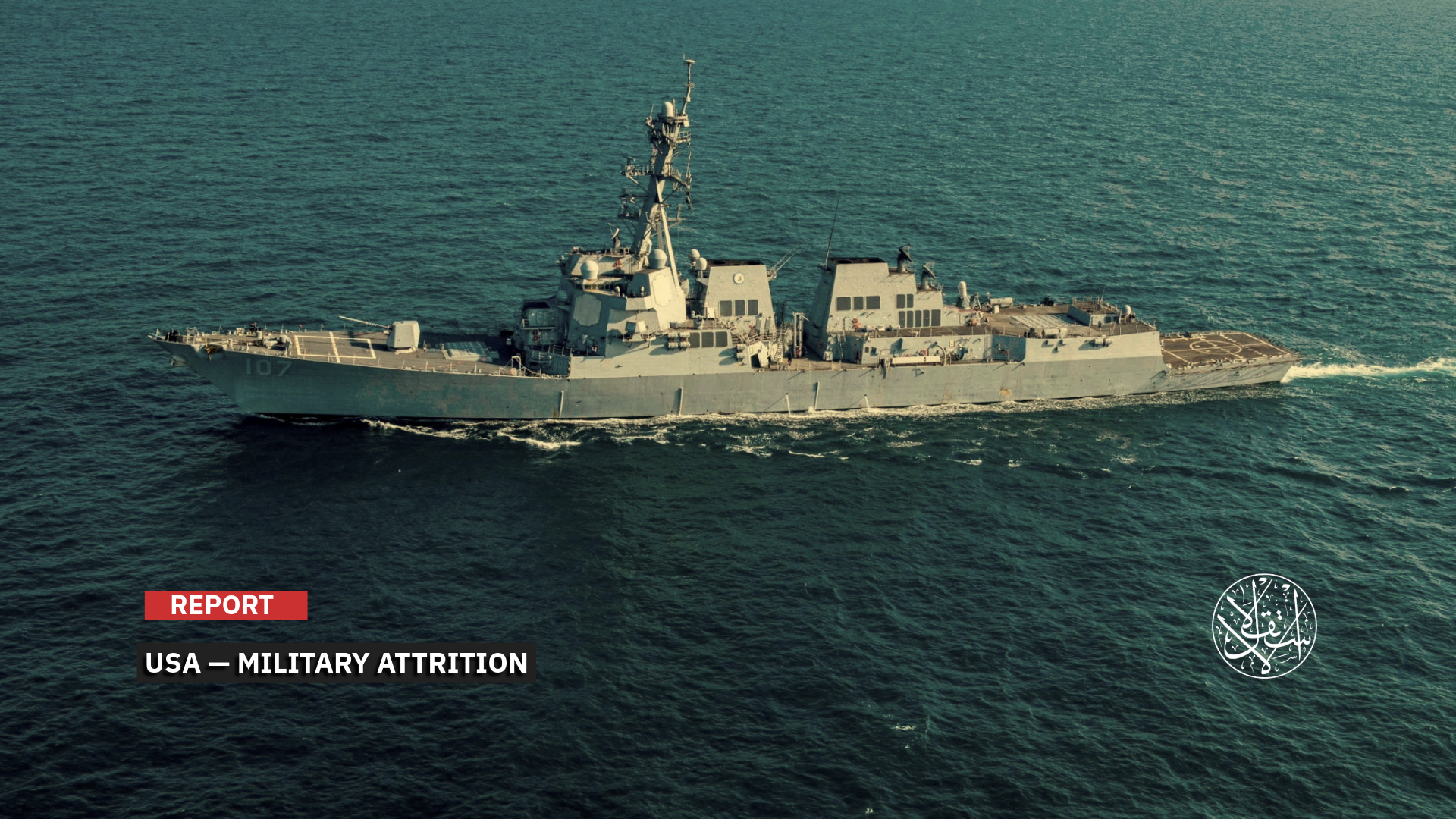
The reported incident in which the commander of U.S. European Command (EUCOM) formally informed the U.S. Department of Defense, the Pentagon, that he did not have enough destroyers and missiles to continue protecting “Israel”, and that he was forced to choose between “defending Israel” and “protecting U.S. territory,” reveals a strategic shift that raises profound questions about the priorities of Washington’s security doctrine in the aftermath of the Iran war.
Has the “America First” principle, in the face of the “Israel First” slogan, now come up against a genuine test on the battlefield? And when U.S. military assets are in short supply, who gets protected by American weapons, Washington or “Tel Aviv”?
The incident has also raised questions that go beyond its immediate military dimensions: Has the U.S. military umbrella dedicated to protecting “Israel” reached its limits? And has Iran, through a war of attrition, succeeded in creating a dynamic that strains U.S. capabilities and turns the defense of “Israel” into a burden that affects the global deployment of American forces?
Is Washington now beginning to confront a dilemma over how to allocate its military resources between protecting its allies and directly defending its own national security?
These developments also shed important light on why President Donald Trump backed away from his earlier threats to launch a broader war against Iran.
The issue is no longer merely a matter of deterrence calculations or political costs, but also of military and operational constraints imposed by the realities of attrition.
More importantly, these developments open the door to a renewed debate within the United States over the limits of its military commitment to “Israel”, at a time when the “America First” camp is gaining influence and arguing that protecting U.S. national security should take precedence over any foreign commitment, even one involving Washington’s closest allies.
Declining Capabilities
U.S. and Western reports in recent months indicate that the war with Iran is no longer measured solely by the number of airstrikes or direct casualties, but also by the United States’ ability to sustain the fight.
The problem is no longer simply a shortage of munitions, but the depletion of combat platforms, interceptor missiles, and naval destroyers, as well as a declining ability to meet military commitments across multiple theaters of operations simultaneously.
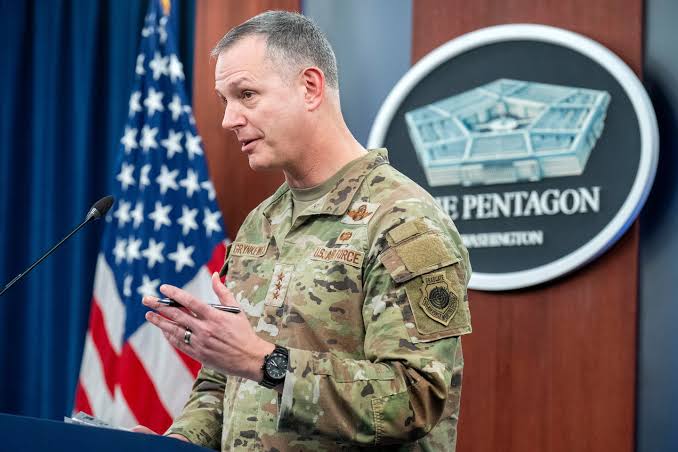
This was underscored by a detailed report in The Washington Post in early August 2026, which revealed that the commander of U.S. European Command, General Alexus Grynkewich, had informed the Pentagon through a “formal written notification” that he no longer had enough naval destroyers to continue protecting “Israel” from Iranian ballistic missiles.
He warned that unless he received an additional destroyer, he would be forced to prioritize the defense of U.S. territory over the defense of “Israel”.
According to the newspaper, the general’s warning came at a critical moment in a war that had been ongoing for more than five months.
Attacks had resumed following the collapse of peace talks between Washington and Tehran, and the intensity of the operations had depleted U.S. stocks of key defensive weapons.
The significance of the report lies in the fact that it shows that constraints on U.S. military capabilities are no longer limited to shortages of interceptor missiles, but have extended to the platforms that carry those missiles, namely the destroyers themselves. This complicates the management of U.S. military deployments around the world.
It also confirms that the shortage of naval destroyers capable of intercepting Iranian ballistic missiles would force U.S. European Command to prioritize the defense of the United States over other commitments, particularly the defense of “Israel”.
The Washington Post reported that this type of notification is a known procedure inside the Pentagon when military commanders determine that available resources are no longer commensurate with the scale of their assigned missions. It reflects competition among different combatant commands for “limited resources,” including ships and munitions.
The intensity of operations has depleted U.S. stocks of defensive assets, particularly as the U.S. Navy has assumed an additional burden as a result of imposing a naval blockade on Iranian ports, which requires the widespread deployment of ships.
U.S. destroyers have operated in the eastern Mediterranean for years to protect “Israel”, not only from Iranian missiles, but also from missiles and drones launched by the Houthis and Hezbollah.
European Command is responsible for coordinating these operations, while at the same time it is required to maintain readiness for any potential escalation with Russia, which also possesses intercontinental missile capabilities that pose a threat to U.S. territory.
The shortage of U.S. interceptor missiles has also raised concerns among Washington’s allies in Asia, particularly Japan and South Korea, which rely on the United States for deterrence against potential threats from North Korea and China.
Currently, two destroyers are in the Mediterranean, while three destroyers are stationed at Spain’s Rota Naval Base. In addition, two carrier strike groups are in the Arabian Sea, accompanied by at least 15 other warships, including 11 destroyers, participating in the naval blockade of Iran.
They are joined by the destroyer USS Gonzalez in the Red Sea, where it is confronting Houthi threats to maritime shipping and “Israel”.
An earlier Washington Post report in May 2026 stated that Pentagon assessments showed U.S. forces had borne the brunt of defending “Israel” against Iranian ballistic missiles.
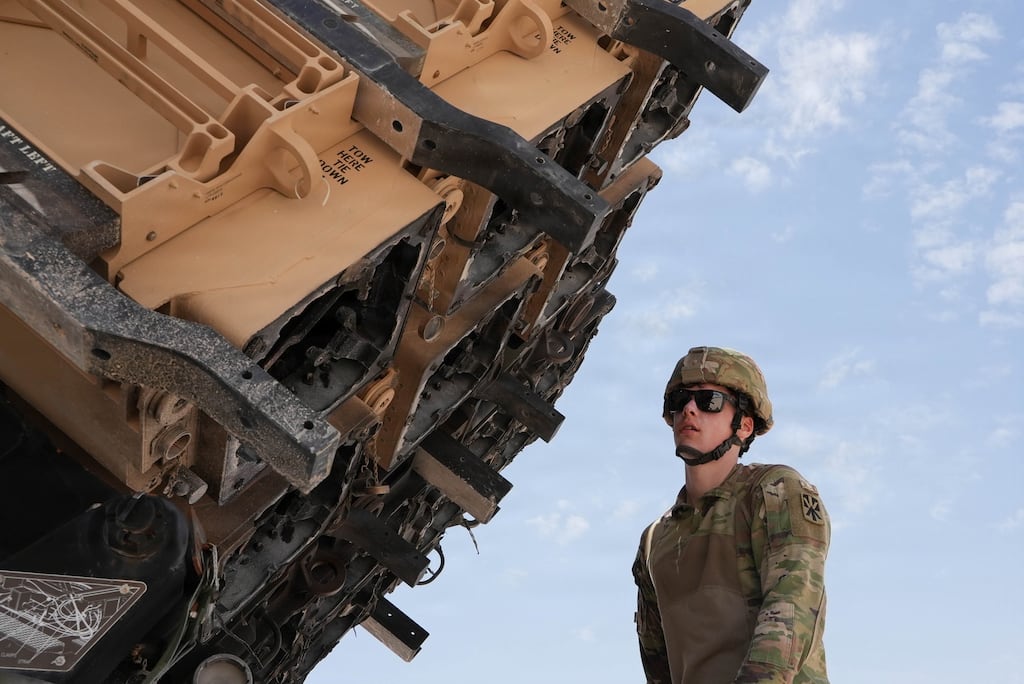
It revealed that the United States had launched more than 200 interceptors from the Terminal High Altitude Area Defense (THAAD) system in defense of “Israel”, representing nearly half of the Pentagon’s total stockpile of these missiles.
The United States had also launched more than 100 SM-3 and SM-6 missiles from naval vessels in the eastern Mediterranean, while “Israel” had launched fewer than 100 Arrow interceptors and approximately 90 David’s Sling interceptors.
Some of these U.S. and Israeli interceptors were used against less sophisticated projectiles launched by Iran-backed groups in Yemen and Lebanon.
Military Frustration
The military frustration reflected in General Alexus Grynkewich’s message about shortages of missiles and equipment, which could force him to choose between protecting U.S. interests and protecting “Israel”, coincided with growing political frustration at home and internal battles within the “America First” movement.
Public support in the United States for the war in Iran has declined, while members of Congress from both parties have grown increasingly frustrated with the administration, amid the difficulty of formulating a plan to end the war on terms considered favorable to the United States. At the same time, the debate over “America First” or “Israel First” has intensified.
Those who had supported President Donald Trump and helped him reach the White House because he had promised not to launch wars, particularly prominent conservative commentator Tucker Carlson, Representative Marjorie Taylor Greene, and Representative Thomas Massie, began turning against him and against “Israel”, arguing that he had abandoned the principle of “America First” in favor of “Israel First.”
Trump’s opponents, along with Republicans who are dissatisfied with what they see as the party’s departure from the principles of “America First,” have gone beyond criticism and public disagreements.
They have moved toward efforts to establish a “third party” that would compete with the two traditional parties, the Republican and Democratic parties.
The war is largely unpopular and is becoming increasingly resented, even among members of Trump’s “Make America Great Again” movement, because it is driving up everyday costs for Americans due to disruptions to shipping through the Strait of Hormuz.
Even members of Congress have grown tired of the United States expending its resources on the war with Iran, particularly on “Israel”, prompting some lawmakers to renew efforts to halt or reduce U.S. military aid to “Israel”.
In mid-July 2026, 103 Democratic members of the U.S. House of Representatives voted in favor of eliminating $3.3 billion in annual military aid to “Israel”, in an unprecedented vote that highlighted the widening divide within the Democratic Party over support for “Israel”.
Although the amendment failed by a vote of 314 to 104, the fact that 103 Democrats supported it was a clear indication of declining traditional support for “Israel” in the U.S. Congress and waning enthusiasm among lawmakers for supporting a longtime U.S. ally.
The startling intelligence assessments revealed by The Washington Post regarding the U.S. munitions used in the war with Iran, meanwhile, highlighted the extent of “Israel’s” reliance on and exploitation of U.S. support, deepening the crisis from a political one into a military one.
Withdrawal and Redeployment of Missiles
What has alarmed Americans even more is that U.S. forces have begun withdrawing from some American bases in the region and taking Patriot missile systems with them because of a shortage of defensive assets, according to the U.S. outlet al-Monitor on July 31, 2026.
U.S. forces and equipment were withdrawn from Erbil Air Base in the Kurdistan Region, which Iran struck several times in early August 2026, leaving the Kurds, whom Washington had pledged to protect, without protection.
These U.S. moves are a clear and tangible indication of a declining stockpile of American interceptor missiles around the world. It is likely that the missiles withdrawn from the region were redeployed to protect U.S. forces in the Gulf and Jordan.
The Wall Street Journal reported on July 30, 2026, that a serious debate was underway inside the Pentagon and other U.S. institutions over moving a substantial portion of U.S. forces out of the Gulf states, particularly the American military presence in Kuwait.
The newspaper reported that “the Pentagon is no longer discussing only how to defend Kuwait, but is reassessing whether the large U.S. military presence there still serves American interests.”
In a webinar on July 2, 2026, General Frank McKenzie, the former commander of U.S. Central Command (CENTCOM), offered his assessment of the most recent war with Iran, saying that “the U.S. base architecture in the Gulf has become a relic of a bygone era.”
Bases such as al Udeid in Qatar, al Dhafra in the United Arab Emirates, Manama in Bahrain, and the bases in Kuwait were established to support the wars in Iraq and Afghanistan and counterinsurgency campaigns, rather than a high-intensity missile and drone war against Iran.
He therefore argued that no one in their right mind would place the forward headquarters of U.S. Central Command roughly 100 miles from Iran if the current Iranian threat were the starting point.
This would mean pulling back from the Gulf altogether and creating greater geographic depth, making it more difficult for Iran to reach U.S. aircraft while giving Washington greater warning time and freedom of movement.
What Remains Is Not Enough for Another Round of War
According to an analysis published by the Center for Strategic and International Studies (CSIS) on July 27, 2026, the war reduced the United States’ stockpile of Patriot interceptors by about 65 percent, leaving it with fewer than 1,000 interceptors.
The stockpile of THAAD interceptors, meanwhile, declined by roughly 38 percent, leaving an estimated 234 to 278 interceptors.
CNN reported on July 29, 2026, even lower figures for the U.S. stockpile, saying that the United States had fewer than 827 Patriot interceptors and fewer than 278 THAAD interceptors remaining, according to three sources familiar with Pentagon data.
The sources told the network that before the war, the stockpile was estimated at roughly 2,200 Patriot interceptors of newer variants and 452 THAAD interceptors. Each interceptor costs millions of dollars, making replenishment a slow and expensive process.
This has prompted experts to warn of the consequences of another round of fighting that could deplete the remaining stockpiles, and of the possibility that the U.S. military might have to alter its rules of engagement, such as firing fewer interceptors or allowing some projectiles to get through if they are not aimed at critical targets.
According to CSIS, the greatest strategic risk lies not in the continuation of the current conflict itself, but in having to respond to another high-intensity contingency before Patriot and THAAD stocks have been replenished.
The Wall Street Journal warned on July 27, 2026, that rebuilding U.S. military stockpiles is not a matter of weeks or months. Producing many advanced missiles takes between three and five years, while they are being consumed at a high rate in the war against Iran.
This means that any expansion of military operations or the resumption of another major round of fighting would leave Washington facing an increasingly wide gap between consumption and production.
This has led other reports to suggest that Trump’s reluctance and retreat from his threats to strike Iran’s energy facilities were driven more by equipment shortages than by other considerations.
“Fireworks” Then End the War
A CNN report on August 2, 2026, quoted experts as saying that Trump was therefore considering carrying out strikes resembling a “fireworks display,” meaning broad or highly demonstrative attacks against targets in Iran that had already been struck, with the aim of securing a symbolic victory that would allow him to exit the war without an agreement.
The revelation that a senior intelligence officer at U.S. Central Command sent an email to a large number of military analysts asking them for “new, innovative and unconventional ways to pressure and punish Iran,” while CENTCOM requested alternative military plans, reflected a growing crisis within the military establishment over how to manage the war against Iran.
For two weeks, leaks from within the Pentagon and U.S. intelligence agencies about the war plans and their constraints had continued unabated.
Although some viewed the leaks as disinformation, Trump’s retreat from the destruction plans he had announced, according to NBC News on July 31, revealed a lack of strategic clarity within the military establishment, alongside shortages of defensive missiles.

Strategy of Prolonging the Conflict
According to Gulf officials and analysts who spoke to Reuters on August 3, 2026, Iran is pursuing a strategy of prolonging the conflict and gradually increasing its costs rather than seeking a decisive military victory.
The objective is not to defeat the United States militarily, but to persuade Washington that containing the crisis has become more costly than making concessions, particularly regarding the Strait of Hormuz.
First: “Escalatory Attrition Strategy”
Reuters’ sources say Tehran is pursuing a policy of calibrated escalation, gradually increasing pressure without allowing the conflict to escalate into an all-out war.
The basic idea is to create a new crisis roughly every week, continually expand the theaters of confrontation, and leave Washington facing a growing series of dilemmas that become increasingly difficult to manage.
Michael Knights of the Washington Institute said, “Iran, from the beginning, has tried to out-escalate the United States by stretching out its escalation options so that it always has something new to bring every week -- a new geography, a new type of weapon, a new type of target.”
"The bigger advantage they have is not that they can hurt America or Israel," Knights added. "Their big advantage is that they can hurt the regional states and the global economy."
Second: From Hormuz to the Red Sea
After demonstrating its ability to disrupt shipping in the Strait of Hormuz, Iran has begun, according to the report, to expand the scope of the threat.
The focus is no longer limited to the Strait of Hormuz, but has extended to the Red Sea, the Bab el-Mandeb Strait, Saudi oil infrastructure, and maritime trade routes.
The message from Iran is clear, according to experts cited by Reuters: if Iran’s role in Hormuz is not accepted, no maritime passage will remain safe.
Third: Betting on Trump’s Political Calculations
A Gulf official said that Islamic Revolutionary Guard Corps commanders believe they can extract additional concessions because they see President Trump as unwilling to fight a prolonged war, unwilling to risk an economic crisis ahead of the midterm elections, and concerned about rising oil and gasoline prices.
“The Iranians believe that expanding the war and increasing the pressure will eventually force Trump to back down,” the source said.
Fourth: Why Has Tehran Taken a Harder Line?
According to a senior Iranian source cited by Reuters, Iran’s leadership has drawn an important conclusion: “The more flexible we were in the past, the greater the American pressure became.”
As a result, the prevailing view in Tehran is that Iran must first acquire leverage and then negotiate. Iranian leaders believe that Trump interprets any concession as a sign of weakness.
Fifth: The Core Dispute Is the Strait of Hormuz
Reuters reports that Oman has put forward a Gulf-backed proposal for managing the strait, but the real dispute is that Iran wants a formal administrative role in the strait, including authority to regulate maritime traffic and impose fees on ships.
The United States, meanwhile, wants the strait to remain an international waterway, does not want Iran to charge fees, and rejects any recognition of Iranian sovereignty over maritime navigation. This is at the heart of the current crisis.
Sixth: Is Iran Beginning to Achieve Its Objective?
The report suggests that a shift in priorities is already becoming apparent. Rather than the international focus remaining on punishing Iran, attention has increasingly turned to protecting ships, safeguarding infrastructure, and securing energy supplies.
The report cites the new Saudi-led naval coalition and the European Operation Aspides in the Red Sea as examples, with both focused more on protecting trade than on confronting Iran.
Seventh: A Battle of Wills
Reuters characterizes the conflict as a battle of endurance more than a battle of strength. Iran’s leadership believes it can withstand sanctions and economic pressure for longer than the United States and its allies can tolerate disruptions to global trade, rising energy prices, and military attrition.