‘America First’ Meets ‘Israel First’ : How War on Iran Is Redrawing a Historic Alliance
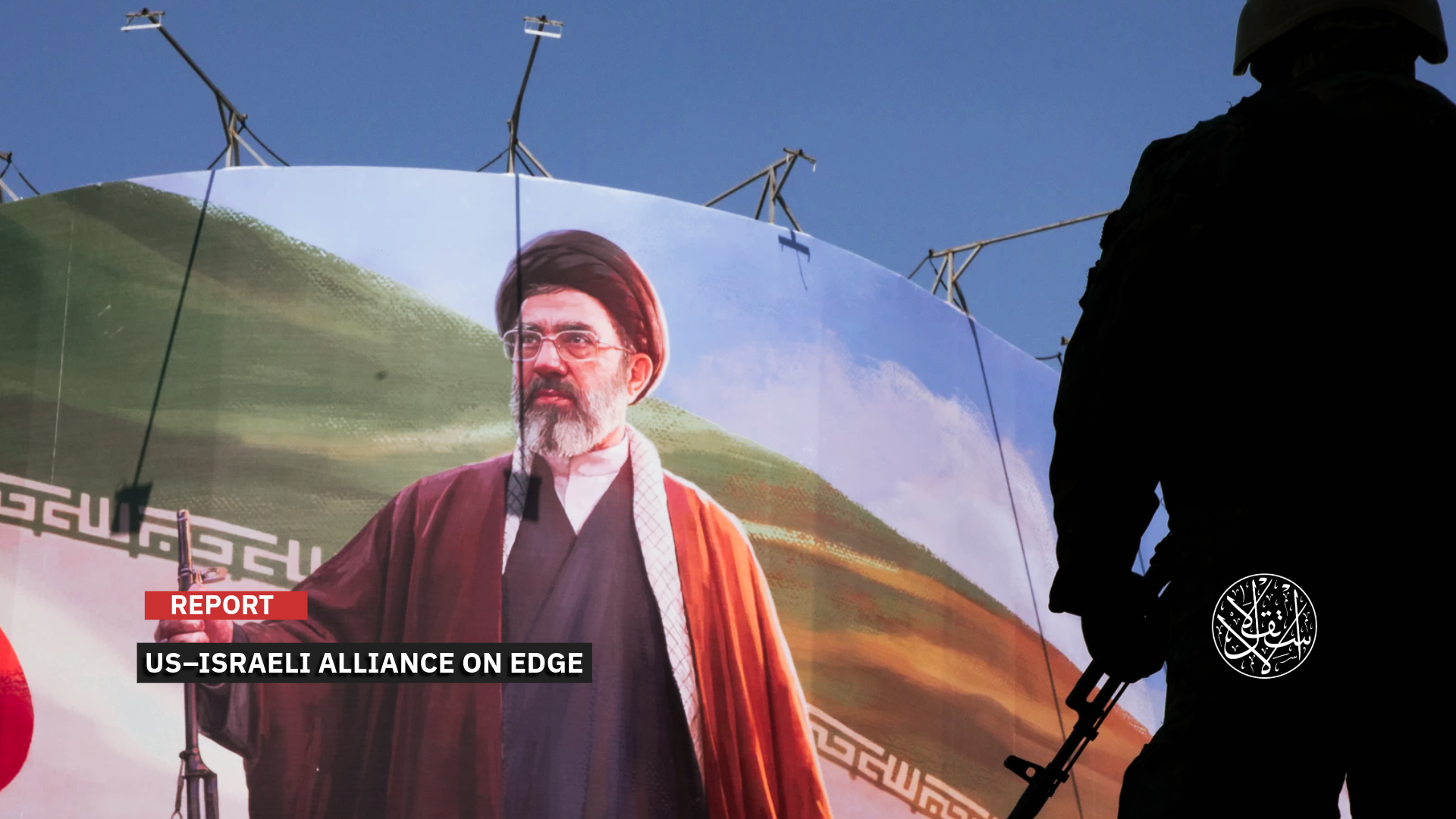
U.S. soft power in the region continues to erode.
The moment U.S. President Donald Trump signed the agreement with Iran inside France’s Palace of Versailles was laden with political and historical symbolism—one that may ultimately prove as significant as the deal itself.
Versailles was not merely the venue for another diplomatic accord between Washington and Tehran. It is a place indelibly linked to turning points in world history, where great powers have risen, others have fallen, and leaders have attempted to lock in a vision of the future, only for events to reveal how fragile any balance of power can be.
Whether analysts interpret the agreement as an Iranian retreat under the weight of war and sanctions or as evidence that the United States could no longer impose its terms after months of attacks, a common conclusion has emerged across much of the strategic debate: the war and its aftermath exposed deeper shifts in American influence across the Middle East.
More importantly, it raised questions about the regional order Washington has largely overseen since the end of the Cold War and the 1991 Gulf War.
The choice of venue only amplifies that message. It was at Versailles, in June 1919, that Germany was forced to accept a treaty many historians regard as an act of political humiliation, designed to cement the outcome of World War I and close the chapter on Germany as a major European power.
Yet just 21 years later, in June 1940, Adolf Hitler returned the symbolism in dramatic fashion, compelling France to surrender after the fall of Paris and overturning what many believed had been settled permanently.
Today, Versailles once again finds itself at the center of a geopolitical moment. This time, however, the significance lies not in the triumph of one side over another, but in what the agreement reveals about the limits of American power.
For many observers, the U.S.-Iran deal is more than the end of “a military confrontation.” It is a reminder that Washington’s ability to dictate regional outcomes is no longer as unquestioned as it once was.
Historically, the agreements signed at Versailles have mattered because they were never simply diplomatic documents. They marked the beginning of new eras and the fading of old ones, reshaping international relationships and redefining the distribution of power.
That is why a growing number of studies and policy papers published by American think tanks in recent months have focused on a broader argument: the U.S.-Israeli War on Iran exposed the gradual erosion of some of Washington’s traditional leverage in the Middle East.
The regional architecture built after the Cold War is facing pressures unlike any seen in decades, as new regional powers assert themselves and the United States finds it increasingly difficult to manage crises through the same tools and assumptions that guided its strategy for much of the last 30 years.
Regardless of whether the agreement is ultimately judged as a victory for Washington or Tehran, the events at Versailles in 2026 may one day be remembered less as the conclusion of a war and more as an early signal of a wider transformation in both regional and global power politics.

The Regional Order Begins to Crack
The U.S.-Israeli War on Iran was not merely “a military confrontation” that ended in a political settlement. In the eyes of many analysts, it became a watershed moment that accelerated the erosion of the regional order the United States has overseen in the Middle East since the end of the Cold War and the 1991 Gulf War.
The war reshaped the region’s strategic landscape not only because of its military consequences but also because it shook the foundations of an order Washington spent more than three decades building.
That conclusion has emerged across analyses published by leading policy journals and research institutions, including Foreign Affairs, Foreign Policy, the Carnegie Endowment for International Peace, and the Atlantic Council. While none argue that the U.S.-led regional system has collapsed entirely, many suggest the war exposed its growing limitations and reopened questions about its future.
Several Western think tanks have gone further, asking whether the regional framework established by Washington in the 1990s has entered a period of gradual fragmentation.
Signs of strain had been accumulating for years. The 2026 war on Iran did not create those vulnerabilities, but it exposed them and accelerated forces already pushing the region toward a new balance of power.
The war marked a strategic turning point, highlighting the limits of American influence while prompting regional states to reassess their security calculations. It also created opportunities for rival regional and global powers to expand their roles.
Perhaps most significantly, the war revealed the fragility of traditional deterrence structures and alliance networks, pointing toward a gradual shift from a U.S.-dominated regional order to a more competitive and multipolar landscape.
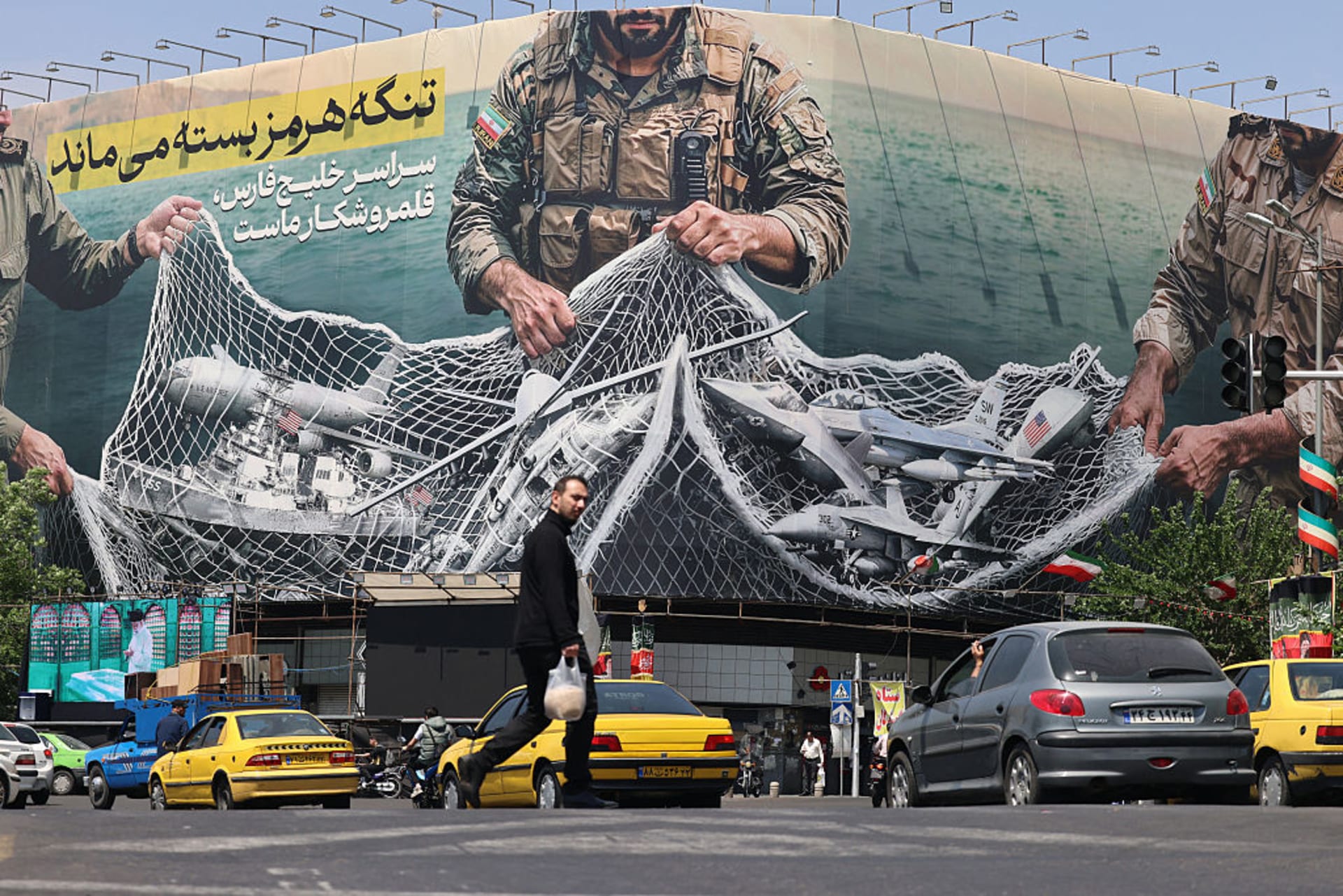
It also reinforced Iran’s position as a regional actor that cannot easily be excluded from future security arrangements—not only because of its nuclear program, but also because of its missile capabilities, geopolitical reach, and strategic position overlooking the Strait of Hormuz, one of the world’s most important energy and trade corridors.
After decades of American dominance, the war highlighted Washington’s diminishing ability to set the rules of the game on its own and ushered in a new phase in which regional and international powers are competing to redefine influence and security across the Middle East.
In a June 17, 2026 article for Foreign Affairs, Eurasia Group founder Ian Bremmer and analyst Firas Maksad described the war as Trump’s most dangerous foreign policy mistake.
The two argued that the U.S.-Israeli War on Iran became a real test of the regional order Washington had led since the end of the Cold War. Its consequences, they wrote, exposed profound changes in regional alliances, the limits of American deterrence, the evolving relationship with “Israel,” and the growing influence of emerging regional players.
The war began with ambitious objectives: weakening Iran’s nuclear program, curbing its missile capabilities, undermining its network of regional allies, and, in some quarters, even raising the prospect of regime change.
Yet it ended with a limited settlement that reopened the Strait of Hormuz in exchange for political and economic understandings, while leaving Iran’s political system intact and preserving much of the regional influence Washington and Tel Aviv had sought to weaken.
As a result, the debate quickly moved beyond the question of who won and who lost. The more important issue became what the war revealed about the confidence of America’s regional partners, particularly amid what many observers viewed as inconsistent messaging and shifting positions from the Trump administration.
Against that backdrop, new alignments have begun to take shape across the Middle East.
On one side stands what some analysts describe as the “Abraham coalition,” centered on “Israel” and the United Arab Emirates (UAE) and aimed at expanding the network of partnerships created by normalization agreements.
On the other, a broader regional axis appears to be emerging around Saudi Arabia, Turkiye, and Pakistan, with Egypt playing an increasingly important role as these states seek greater strategic autonomy and more diverse security options.
According to this view, Riyadh emerged from the war convinced that exclusive reliance on the American security umbrella is no longer sufficient, prompting deeper engagement with regional partners such as Turkiye, Pakistan, and Egypt.
A Brookings Institution study published on June 10, 2026, titled “How the Iran War Will Change the Middle East,” argued that the war could accelerate Gulf efforts to diversify security partnerships and reduce dependence on the United States as their sole source of protection.
The study also suggested that U.S. soft power in the region could face further decline, while Gulf states pursue greater independence in foreign and security policy—even as they continue to value their partnership with Washington.
These developments suggest that the war did not unite the region against Iran, as some Western assessments had anticipated. Instead, it deepened divisions over the roles of Iran, the Israeli Occupation, and the United States, while weakening Washington’s ability to serve as the region’s undisputed security guarantor.
The result may be a gradual shift toward something closer to a “G-Zero” world—one in which no single power is willing or able to manage the international system alone and where regional actors exercise greater autonomy while countries such as China, India, and Pakistan play increasingly influential roles.
Many Western analyses conclude that one of the war’s most immediate consequences will be a reordering of alliances across the Middle East, accompanied by stronger direct security and economic partnerships among regional powers, rising military spending, and a reduced reliance on the United States.
In that sense, the war may have marked the beginning of the end of an era in which Washington served as the region’s dominant power and primary security guarantor—not because it is leaving the Middle East, but because it is being forced to operate within a more complex, competitive, and multipolar regional order.

Shrinking American Influence
Thomas Wright, who previously served as senior director for strategic planning at the U.S. National Security Council during the Biden administration, attempted to assess what he called “the price of defeat in Iran” in an article published by The Atlantic on June 19, 2026. In his view, the most significant consequences of the war have less to do with the terms of the agreement itself than with the gradual erosion of American influence in the Middle East.
Wright drew a contrast with the Marshall Plan, launched by the United States after World War II to rebuild Europe and cement an American-led international order. The roughly $300 billion in economic commitments reportedly linked to the Trump administration’s understanding with Iran, he argued, amounted to a “Marshall Plan for the Iranian regime”—but one designed not to consolidate a U.S. victory but to manage the aftermath of a war that ended far differently than Washington had hoped.
For Wright, Tehran’s most important gain is not found in the economic provisions of the deal. Rather, it lies in the possibility that the war has weakened America’s willingness to continue acting as the Middle East’s primary security guarantor.
He argues that the agreement could one day be remembered as a turning point that accelerated the broader trend of American disengagement from the region. That shift comes as a growing current in U.S. politics increasingly views the Middle East as a strategic black hole—one that consumes resources without generating returns commensurate with the cost.
The war also exposed the vulnerability of U.S. military installations across the region. Several bases sustained direct or indirect damage, reigniting a debate within American policymaking circles about the long-term value of maintaining such an extensive military footprint in the Middle East.
If that sentiment gains traction in Washington, the region could witness a gradual decline in the traditional American role that emerged after the 1991 Gulf War. In practical terms, that would mark the beginning of a profound restructuring of the regional order that the United States has led for more than three decades.
Yet Wright warns that a reduced American presence would not necessarily produce a more stable Middle East. Instead, it could open the door to new rounds of regional competition and conflict.
With the U.S. security umbrella weakened, rivalry between “Israel” and Iran could intensify further. Crises involving the Strait of Hormuz—and the disruptions they create for global energy markets—could become more frequent.
At the same time, competition among other regional powers is likely to expand, particularly between Turkiye and the Israeli Occupation, while global players such as China and Russia seek to capitalize on the relative vacuum to strengthen their strategic foothold in the region.
James Jeffrey, a fellow at the Washington Institute for Near East Policy, former U.S. deputy national security adviser, and former ambassador to Iraq, Turkiye, and Albania, anticipated such shifts even before the agreement was signed.
Writing in the Jerusalem Strategic Tribune in March 2026, Jeffrey argued that the war on Iran would produce fundamental changes in the Middle East, the United States, and the world, with consequences extending far beyond the battlefield.
The conflict, he suggested, would revive fundamental questions about the ability of major powers to impose their will, the limits of American power, and the capacity of ideologically driven states to disrupt the international order and impose significant costs on stronger adversaries despite conventional military imbalances.
His conclusion was stark: the United States will be forced to reassess how many political, economic, and military resources it is willing to devote to the Middle East—a review that could ultimately reshape the nature of America’s regional presence for years to come.
The End of American Monopoly
After the 1991 Gulf War, the end of the Cold War, and the collapse of the Soviet Union, a new regional order emerged in the Middle East—one largely shaped and managed by the United States, which faced no comparable international rival capable of challenging its influence.
That order rested on several pillars: a broad network of security partnerships with Gulf states, Egypt, and Jordan; efforts to contain Iraq and Iran through sanctions and deterrence; the projection of overwhelming American military power through bases across the region; and the protection of “Israel” as Washington’s most important strategic ally in the Middle East.
Over the following decades, the system gradually strengthened, receiving another boost in 2020 with the signing of Arab-Israeli normalization agreements, which Washington promoted as the foundation of a new regional security architecture designed to confront shared challenges—above all Iran.
But the 2026 U.S.-Israeli War on Iran placed one of the system’s central pillars under unprecedented pressure.
American bases across the Gulf, long presented as a safeguard for regional stability, came under direct and indirect attack during the war, with military facilities, radar systems, and sensitive operational sites targeted. The attacks triggered a wider debate over the limits of the American security umbrella in a rapidly changing region.
Regardless of the actual scale of the damage, the war demonstrated that traditional military superiority alone is no longer enough to manage regional power balances in the way it did over the previous three decades.
It also showed that Washington’s role as the Middle East’s primary security guarantor can no longer be taken for granted as it was in the post-Cold War era, particularly as regional powers become more independent and expand their military and technological capabilities.
The war also fueled growing debate in Gulf capitals over the security and political costs of hosting foreign military bases. Once viewed as protective shields, some of these facilities became potential targets in any wider regional confrontation, prompting officials and analysts to reconsider the balance between protection and exposure.
For decades, the U.S.-led regional order relied on a simple assumption: American and Israeli military superiority would be enough to deter adversaries and preserve the existing security framework.
The latest war challenged that assumption. The spread of ballistic missiles, drones, and cyber warfare has fundamentally changed the nature of regional threats, making absolute dominance increasingly difficult even for countries equipped with advanced air and missile defense systems.
That is why researchers at the Center for Strategic and International Studies (CSIS) and other institutions have called for a reassessment of traditional deterrence concepts in the Middle East, arguing that today’s security environment is fundamentally different from the one that emerged after the Gulf War.
More broadly, the war revealed that the regional system built in the early 1990s no longer functions according to the same rules. The Middle East is moving toward a more complicated landscape defined by multiple centers of power, overlapping alliances, and competing interests.
The war also pushed several Arab states to rethink their strategic choices, particularly after most regional capitals avoided direct involvement in the aggression on Iran and sought to prevent escalation into a broader war.
Instead, many have moved toward diversifying security partnerships and expanding their diplomatic room for maneuver—an effort to adapt to a new regional reality in which the United States is no longer the only power capable of shaping the rules of security and influence in the Middle East.
An Alliance Under Strain
Among the most significant political consequences of the U.S.-Israeli War on Iran has been the emergence of unprecedented signs of tension between Washington and “Tel Aviv” over how to manage the war and shape the region’s future, despite the two allies entering the war with broadly aligned objectives and shared public goals.
What initially appeared to be the highest level of coordination between the two partners ultimately exposed growing disagreements over the limits of military power, regional security priorities, and the future direction of the American-Israeli alliance.
At the center of this shift is the renewed influence of the “America First” doctrine within the Trump administration and the broader Republican movement—an approach that places greater emphasis on direct U.S. interests rather than the traditional expectation that Washington should prioritize the concerns of its closest allies, including “Israel.”
The change was especially visible in comments by Vice President JD Vance, one of the most prominent figures in the Make America Great Again (MAGA) movement, who publicly criticized Israeli officials who attacked the U.S. understanding with Iran.
Vance argued that the United States would act according to its own national interests, even when those interests do not fully align with “Israel’s” preferences. Supporting “Israel,” he said, does not mean automatically adopting every Israeli policy or decision.
Addressing Israeli critics of the agreement, Vance said on June 18, 2026, that President Donald Trump is the most pro-”Israel” global leader at this moment, warning that attacking America’s position during such a period would represent a strategic mistake.
He added that the United States remains the foundation of “Israel’s” security, noting that much of the weaponry and defensive systems “Israel” relied on in recent months were funded or supplied through direct American support.
Observers see these remarks as part of a broader shift within U.S. policymaking circles, where voices calling for a reassessment of overseas security commitments are gaining influence and pushing for a closer link between foreign engagements and immediate American interests.
A June 2026 study by the Brookings Institution suggested that the outcome of the war could prompt Washington to reconsider the nature of its security involvement in the Middle East—including aspects of its relationship with “Israel” itself.
Foreign Policy also explored the issue in an article by Israeli Occupation writer Joshua Lelfer titled “The End of the U.S.-Israel Alliance,” arguing that the war exposed growing fractures within the traditional American consensus supporting “Israel.”
The magazine noted that criticism is no longer limited to progressive left-wing circles but has also spread among parts of the conservative right aligned with MAGA, where influential voices have begun questioning the scale of U.S. foreign aid and calling for a reassessment of America’s “special relationships” with its allies.
From this perspective, a growing segment of the Republican Party’s more isolationist wing is viewing foreign alliances through a cost-benefit lens rather than through the strategic commitments that shaped American policy for decades.
Inside the Israeli Occupation, the war’s outcome has also triggered a broader debate over the future of relations with Washington and “Israel’s” role in the emerging regional order.
Israeli academic Eli Podeh argued that “Israel” historically enjoyed a unique position that allowed it to serve as an indirect bridge between Washington and several Middle Eastern countries. Yet recent developments suggest that this role is gradually diminishing as more regional capitals build direct channels with the United States.
Podeh stressed that this does not mean “Israel” is becoming less important to Washington but rather reflects a changing political and regional environment in which “Tel Aviv” no longer holds the same level of influence over regional issues.
Israeli opinion polls conducted after the U.S.-Iran understanding also revealed growing domestic divisions over the Israeli Occupation government’s handling of the war and its political consequences, highlighting the intense debate the war has generated inside “Israel.”
Ultimately, these developments do not signal the end of the U.S.-Israeli alliance, which remains deeply rooted in military, security, and institutional ties. But they do point toward a new phase—one marked by a more transactional American approach and a growing effort to redefine the boundaries of shared interests between the two countries in a rapidly changing Middle East.
Sources
- The Long Shadow of the Iran War
- How the Iran war will change the Middle East
- The Price of Defeat in Iran
- It’s Time for the United States to Leave the Middle East
- THE MIDDLE EAST AFTER THE IRAN WAR: LESSONS AND OUTCOMES
- 4 Ways the Iran War Has Reshaped the Global Economy
- Netanyahu fumes, allies rage over Trump's Iran deal
- Blowback: How the Iran war may change the world
- Loyal but Powerless: The Downgrading of Russia’s Elite
- What the US-Iran deal means for the rest of the Middle East (and beyond)