Cockroaches Shake Modi's Grip as Gen Z Challenges India's Most Powerful Government
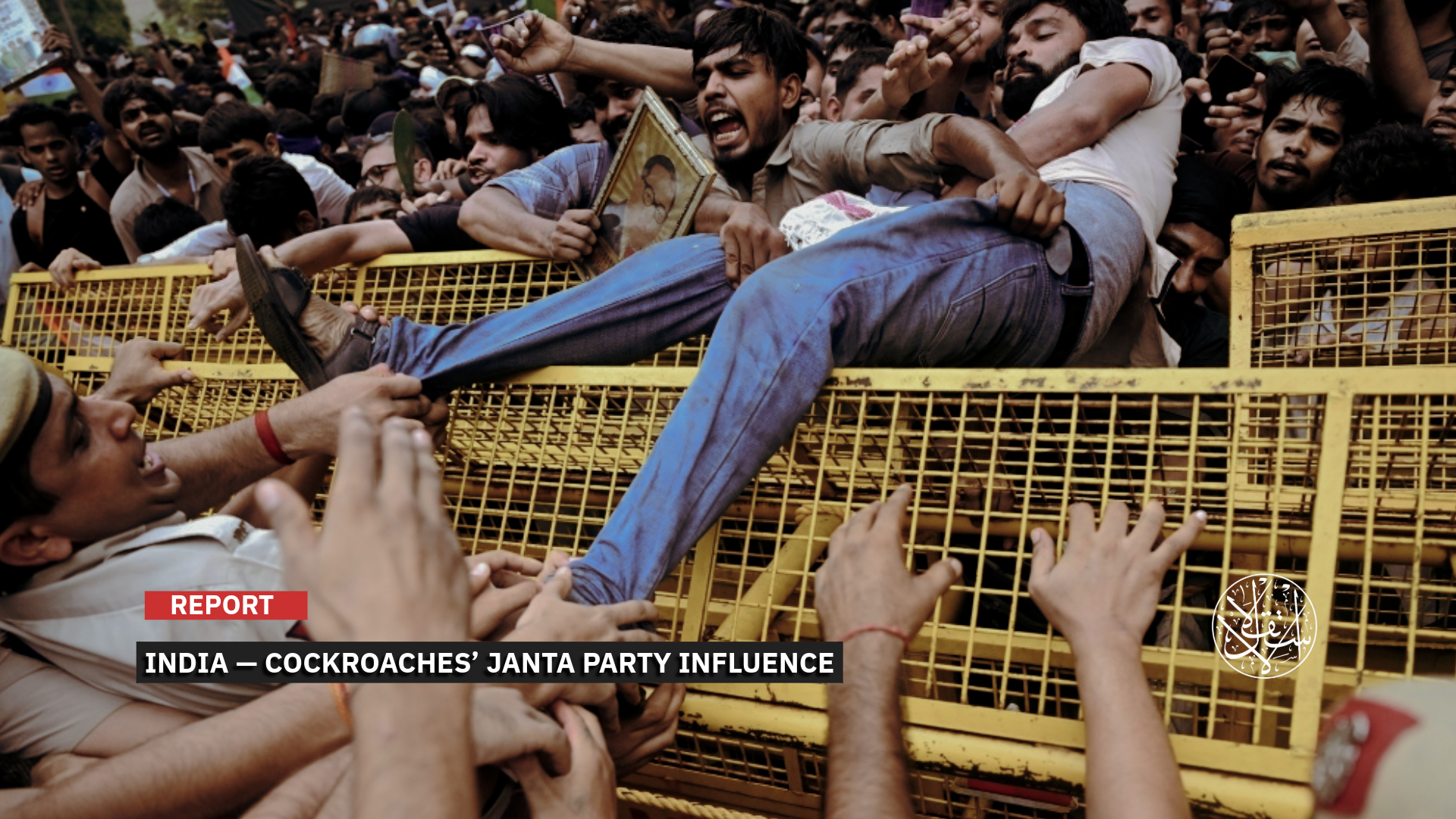
The Cockroaches' movement was only the spark that ignited long-simmering anger.
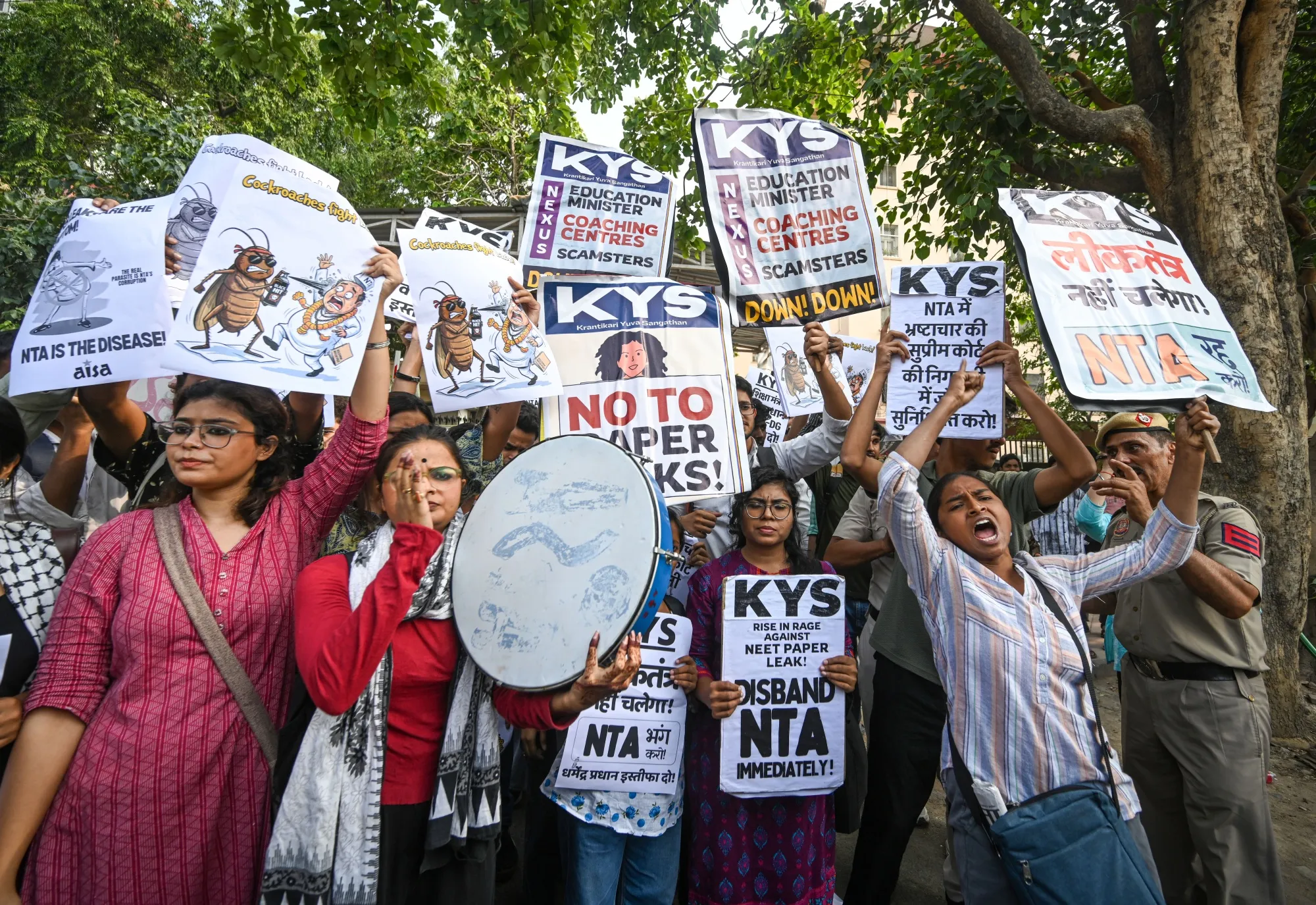
On May 15, 2026, Indian Supreme Court Justice Surya Kant compared unemployed young people and holders of fraudulent degrees to "cockroaches," a comment that many expected would fade as another political controversy. Instead, it ignited a social media campaign led by Generation Z, whose members embraced the insult and urged these so-called "cockroaches" to take to the streets and expose what they argued was the real cause of their unemployment: a corrupt education system.
The movement, which called itself the Cockroach Janata Party, began as an online satire campaign but, within two months, evolved into one of the largest youth protests against Prime Minister Narendra Modi's government. The demonstrations reached their peak on July 25, 2026, when India's education minister resigned.
Yet the cockroaches’ movement was only the spark that ignited long-simmering anger. The unrest reflected years of mounting frustration among young Indians, fueled by repeated scandals involving leaked university entrance exams, particularly the NEET medical admissions test taken by more than two million students, as well as the cancellation and repetition of several national examinations because of widespread cheating and paper leaks.
The Story Behind the Cockroaches
The controversy began on May 15, 2026, during a hearing before India's Supreme Court, where a lawyer was making his third attempt to obtain the prestigious designation of senior advocate. While discussing the growing number of people entering professions with fraudulent academic credentials, Chief Justice Surya Kant said there are unemployed young people like cockroaches.
Indian newspapers quoted him as saying, “There are already parasites of society who attack the system [...]. There are youngsters like cockroaches, they don’t get any employment, they don’t have any place in profession. Some of them become media, some of them become social media, some of them become RTI activists [...] and they start attacking everyone.”
The remark immediately ignited a backlash. Abhijeet Dipke, a political communications activist and graduate of Boston University, responded with a sarcastic question on social media, "What if all the cockroaches came together?"
Within days, he announced the creation of the Cockroach Janata Party (CJP), a satirical protest movement whose name deliberately echoed that of India's ruling Bharatiya Janata Party. By adopting the initials CJP, the group offered a mocking counterpart to the governing BJP.
The following day, Chief Justice Kant issued a formal clarification, saying his comments had been taken out of context and that he had been referring specifically to people who had entered professions such as law using fake or fraudulent degrees, according to The Indian Express on May 17, 2026. The explanation, however, did little to contain the public outrage.
Instead, members of Generation Z, broadly defined as Indians between 18 and 30 years old, embraced the "cockroach" label as a symbol of the marginalization they said they faced amid high unemployment and persistent accusations of corruption in the country's education and hiring systems.

The cockroaches, alongside Generation Z, sparked a wave of anger that gradually moved from social media platforms to the streets of Indian cities, where violent clashes broke out with police. The unrest later pushed the authorities to try to contain the crisis by accepting the education minister’s resignation and pledging reforms to the education system.
Within weeks, the term “cockroaches” had become the symbol of a youth-led protest movement driven by Generation Z. The movement mobilized tens of thousands against the government before gaining media attention under the name Cockroach Janta Party (CJP).
The movement relied heavily on Instagram and other social media platforms, using satire and digital symbols to attract millions of young people. Some analysts described it as India’s first protest movement fully led by the internet generation.
The CJP lit the spark of the protests, but it was Generation Z that took the movement from the digital world to the streets. Using multiple organizing tools, including Discord, young activists successfully mobilized thousands to join large-scale demonstrations.
According to timelines published by Reuters, The Associated Press, and The Guardian on July 26, 2026, the movement first took to the streets on June 6, 2026, with protests reaching their peak on July 20, 2026.
The first street demonstrations began in New Delhi, where thousands of students and young people demanded the resignation of Education Minister Dharmendra Pradhan and reforms to the exam system following a series of question paper leak scandals.
Throughout June and July, protests spread to several Indian states, drawing in activists and students. The movement expanded from calls to reform exams and education into a broader campaign against unemployment, corruption, and a lack of transparency.
The confrontation reached its peak on July 20, 2026, when more than 10,000 protesters attempted to march toward the Indian Parliament, triggering clashes with police, who used tear gas and batons to disperse demonstrators.
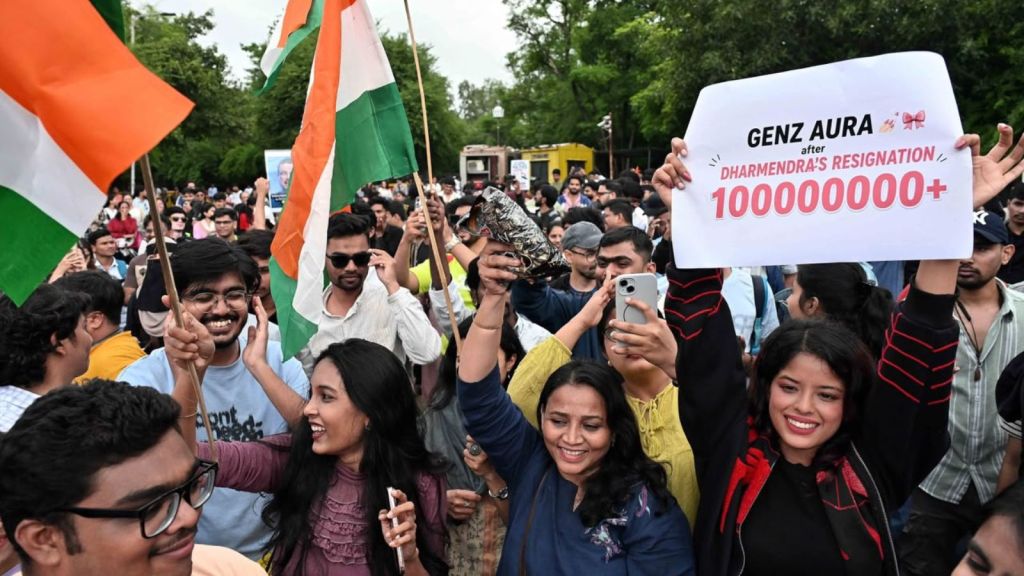
The protests and sit-ins did not subside until July 25, 2026, when Education Minister Dharmendra Pradhan announced his resignation, the movement’s main demand. The following day, the leadership of the CJP announced an end to the sit-in and said it would shift its focus to monitoring the regime’s commitments to reform the education and employment sectors and tackle corruption within them.
Why Did They Take to the Streets?
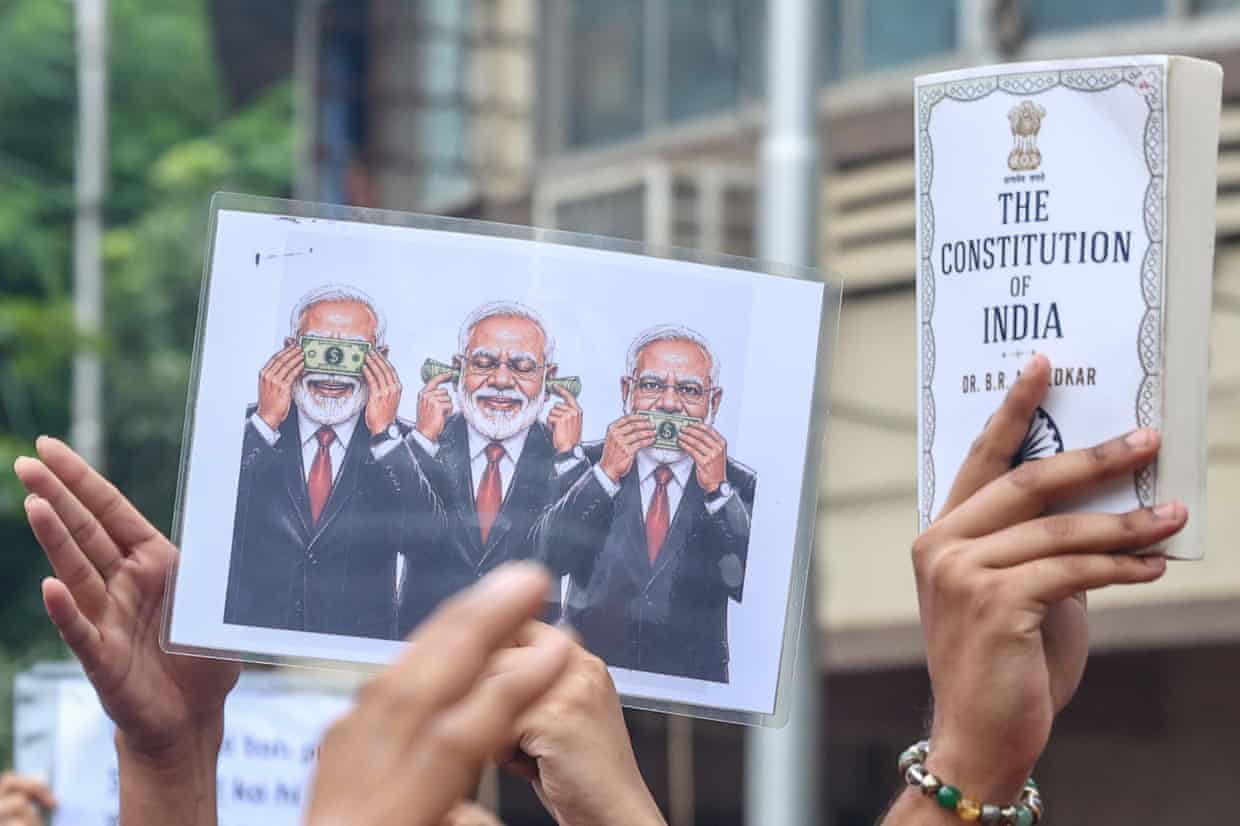
Activists linked the pressure surrounding entrance exams to the suicides of several Indian students in recent years, alongside rising youth unemployment and growing concerns that the education and employment systems are plagued by corruption and fail to guarantee equal opportunities.
When the Supreme Court chief justice described unemployed graduates as “cockroaches,” many young people saw the remark as pouring fuel on the anger that had been building for years. A wave of outrage erupted across social media before spilling into the streets.
The movement initially called for the removal of Education Minister Dharmendra Pradhan, but its demands soon expanded to include a sweeping overhaul of the national examination system, investigations into exam leak networks, and compensation for families of students who died by suicide amid exam-related pressures.
Protesters also demanded accountability for corruption in the education sector, better job opportunities for young people, and protection of citizens’ right to peaceful protest.
Prime Minister Narendra Modi’s government initially downplayed the movement, while police imposed restrictions on demonstrations and used force to disperse protesters in New Delhi. The response, however, fueled further anger among young people and widened the protests rather than containing them.
As several activists were arrested and forced into police trucks, protesters intervened to free their detained peers. Rights groups criticized the security forces’ handling of the demonstrations, further intensifying protests that were largely driven by Generation Z.
Opposition lawmakers also protested inside parliament, demanding that Prime Minister Narendra Modi and the interior minister appear to give statements after reports and social media videos showed injured demonstrators who said they had been hit by pellet guns during their march toward parliament on July 20, 2026.
New Delhi police, backed by paramilitary forces deployed in the capital, denied using pellet guns against protesters.
The weapon fires small metal or plastic pellets and was previously used in 2016 to disperse protesters in the Muslim-majority region of Kashmir.
After weeks of protests, the movement secured tangible gains, with the government agreeing to several of its demands, including Education Minister Dharmendra Pradhan’s resignation, a commitment to reform the examination system, dropping legal action against some protesters, and opening talks on broader education reforms.
Following three rounds of negotiations between movement representatives and Health Minister J.P. Nadda and Minister of State Jitendra Singh, the education minister announced his resignation, ending the crisis after the cockroaches refused to end their protests without achieving their main demand.
The CJP welcomed the resignation and announced the suspension of the 10-day protest campaign, which drew thousands of students and young people, after the government met its key demands. The group stressed, however, that the wider fight for reforms “was not over.”
Celebrations erupted among protesters after the resignation was announced. The movement’s founder, Abhijeet Dipke, wrote on Instagram, “We did it!” as hundreds of demonstrators cheered.
At the same time, the movement expanded its demands to include youth unemployment, job opportunities, and opposition to what it described as Prime Minister Narendra Modi’s increasingly authoritarian approach to governing the country. The protests became one of the biggest challenges facing Modi’s government since he first came to power in 2014 and was reelected in 2024.
The CJP is not a political party in the traditional sense. It is a youth-led protest and pressure movement that began as a satirical online campaign before evolving into an organization that led demonstrations and coordinated demands. Its founders say their current focus is on public pressure and securing reforms rather than contesting elections.
The Gains of the Cockroaches and GenZ
The CJP did not merely achieve a protest victory by forcing Narendra Modi’s government to accept the education minister’s resignation and respond to demands for tougher action against corruption. Analysts describe the outcome as the first clear political defeat Modi has faced from a movement led by Generation Z since he came to power in 2014.
After 36 days of sit-ins and demonstrations that began online before spreading to the streets of New Delhi and dozens of other cities, Modi’s government yielded to public pressure, something it has rarely done. It agreed to accept a minister’s resignation in response to a popular protest, a move The Times of India described on July 27, 2026, as a victory for young people.
The government went beyond the resignation, announcing a package of reforms that included, in line with protesters’ demands, the creation of a national committee led by technology entrepreneur Nandan Nilekani to restructure the examination system.
The reforms also included amendments to examination laws, tougher penalties for question paper leaks and cheating, and a review of the work of the National Testing Agency (NTA). In effect, the Cockroaches and Generation Z moved from demanding accountability to forcing institutional change in one of the most sensitive issues affecting millions of Indian students.
According to The Guardian on July 26, 2026, the victory of the CJP represented a warning of troubles to come for Modi’s government.
The newspaper said the protests forced Modi to remove his ally, the education minister, while boosting opposition parties and giving them political momentum. The movement also weakened the prime minister’s influence over the media, which eventually had to cover the youth protests.
The report added that Modi had remained confident that the largest mass uprising of his 12 years in power would not seriously threaten his government, but he gave in less than 24 hours later and accepted the protesters’ main demands.
Analysts described the episode as an unprecedented humiliation for a government that had ruled India with near absolute confidence since 2014, according to The Guardian. It also challenged Modi’s image as a leader immune to public pressure.
Since 2014, Modi’s government has generally ignored protests or sought to contain them through security measures, with rare exceptions, most notably the repeal of agricultural laws in 2021 after nearly a year of farmer protests. This time, however, the government backed down after only a few weeks, a development many viewed as an extraordinary political setback.
Another major loss for Modi and his BJP was not only the street pressure created by the Cockroaches movement but also the collapse of the government’s dominance over the online narrative. Since taking power, Modi’s party has built a powerful digital network to mobilize supporters and attack criticism from citizens, politicians, and journalists.
That digital machine was overwhelmed by millions of satirical images and short videos that spread across social media, openly mocking the prime minister and his government, with each post more creative and controversial than the last.
Modi also lost control over another key media tool: major television news channels that had largely aligned with the BJP during its 12 years in power and promoted its right-wing Hindu nationalist agenda.
At first, those channels ignored the protests. When they eventually covered them, they attempted to portray demonstrators as being funded by “malicious foreign forces and Pakistani terrorist groups.”
Protesters responded by using social media to challenge what they called the channels’ “lies.” As the protests grew, Modi’s presence on television screens noticeably declined, and news networks were eventually forced to cover the demonstrations.
Ashutosh Varshney, a professor of international studies at Brown University in Rhode Island, explained the shift by saying that the protesters completely dominated the digital space, and pro-establishment media lost much of its credibility.
He argued that Modi’s loss was not limited to giving up the education minister. It also marked the first time in 12 years that his government lost control over the political narrative and saw the climate of fear it had built begin to weaken.
The emergence of the Cockroaches also revived India’s opposition parties. The Congress Party used the momentum to mobilize protests and disrupt parliamentary sessions, while opposition leader Rahul Gandhi led demonstrations outside Modi’s residence in solidarity with students.
Analysts told The Guardian that the Cockroaches’ movement provided a major boost to India’s opposition, which had faced systematic marginalization over the previous 12 years, restoring its role as a force capable of holding the government, especially the prime minister, accountable.
The real test of whether the movement has changed India’s political landscape will come in the state elections scheduled for early 2027 in Uttar Pradesh, the country’s largest and most politically important state and a stronghold of the ruling party. The results could have major implications for the 2029 general elections.
Still, The Indian Express reported on July 27, 2026, that ruling party officials believe the delay in containing the Cockroaches protests had damaged the government’s image but did not cause major political harm to the BJP.
The newspaper, which is considered close to the ruling party, acknowledged that the events had significantly harmed Modi’s image and that of his government, but said party leaders did not believe the opposition had fully capitalized on the moment.
Analysts have outlined three possible scenarios for the future of the Cockroaches movement and the government’s response:
The first scenario: The government contains the movement by implementing genuine reforms to the education and examination systems, gradually reducing its momentum. This has partially happened after the movement suspended its protests.
The second scenario: The movement becomes a permanent pressure platform that monitors government performance and mobilizes young people around broader issues such as unemployment, artificial intelligence, and corruption. This is the path its leaders have promised to pursue, with support from opposition parties seeking to weaken the ruling BJP’s influence.
The third scenario: The movement evolves into an electoral political project, contests state or national elections, and potentially becomes a major opposition force. Government allies view this as the most troubling long-term possibility.
The reality now circulating across Indian social media is that the Cockroaches movement succeeded in extracting a rare political concession from one of India’s most assertive governments of the past decade.
It also showed that a new generation, armed with satire, digital content, and decentralized organizing, can emerge as a major player in Indian politics.
If Generation Z succeeds in turning its protest energy into a lasting organization, the 2027 state elections and the 2029 general elections could become the first real test of its influence over the future of Modi’s rule and the Hindu nationalist movement that has shaped India’s political landscape since 2014.
Sources
- India’s Cockroach Janta party protest victory signals trouble ahead for Modi
- ‘Misquoted by media’: CJI Surya Kant clarifies ‘cockroaches’ remark on unemployed youth
- India's youth protests force exam reforms after education minister quits
- ‘Dent, but can recover’: BJP leaders on CJP impact on PM’s and party’s image
- uncles-and-aunties-can-keep-complaining-cjp-party-videos-after-dharmendra-pradhans-resignation-surface-saurav-das-says-gen-z-