Volunteering With the Israeli Police at al-Aqsa: What Is Behind the Recruitment of ‘Temple Groups’?
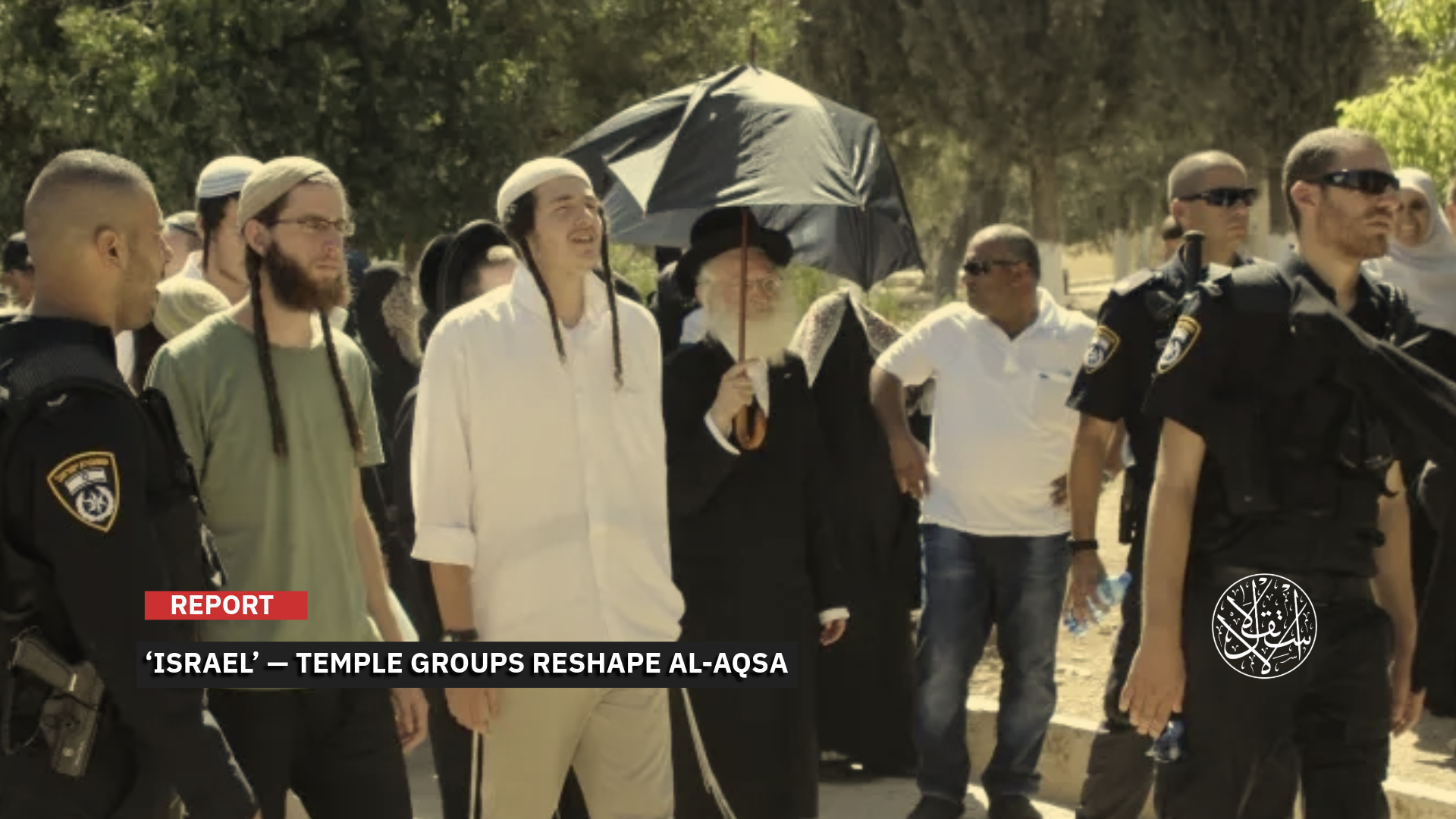
A rise in organized entries into the al-Aqsa Mosque compound is expected.
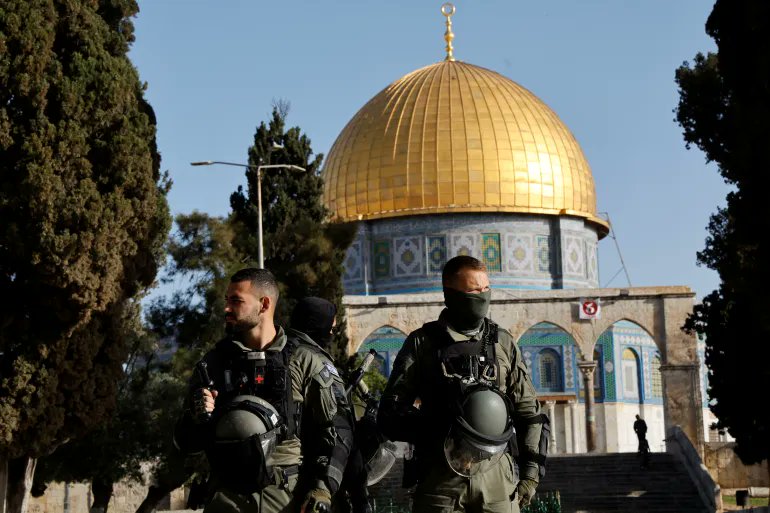
As part of a gradual Israeli effort to reshape the administration of al-Aqsa Mosque, the Israeli police are moving to incorporate volunteers from the Religious Zionist camp and the settler movement into the police unit responsible for the on-the-ground management of the holy sites.
The move shifts the Temple groups from a position of exerting external pressure on the Israeli police to a presence within the very body that accompanies incursions into the compound, determines the timing and movement of worshippers, and deals daily with the Islamic Waqf authorities.
The Latest Development
The latest development was revealed by the Israeli newspaper Haaretz on June 3, 2026, when it reported that the leadership of what is known as the “Temple Mount Unit” within the Jerusalem Police is working to recruit volunteers from the religious right-wing community.
Daniel Lirach, the deputy commander of the unit, circulated messages in WhatsApp groups associated with settlers, calling on those interested in joining to contact him “to participate in enforcing sovereignty.”
This brief phrase gave the move its political meaning. The Israeli police, which previously received demands from Temple groups to expand incursions and allow religious rituals, are now opening the door for the same constituency to become part of the unit tasked with managing the compound areas and the routes used for incursions.
In this way, the project of “Israeli sovereignty” over occupied Jerusalem is moving from being a slogan promoted by right-wing groups to a practice carried out within an official security apparatus.
The “Temple Mount Unit” operates within the Israeli Jerusalem Police. In Knesset (Israeli parliament) records, it appears as a police division specializing in the site, supported by what are known as Border Guard forces during major events.
In practice, the unit is responsible for facilitating and escorting settler incursions, monitoring the movement of Muslim worshippers, carrying out removal orders, and managing checkpoints around al-Aqsa.
According to Haaretz, the recruitment call is not aimed at ordinary volunteers, but rather at religious Zionists and activists from the Temple groups’ milieu, groups that call for the establishment of a Jewish temple in place of al-Aqsa Mosque and actively campaign for extremist visits to the mosque compound.
According to promotional material circulating on Telegram and Instagram accounts linked to Temple groups, the unit’s commander, Guy Tal, and his deputy, Daniel Lirach, appeared in a video alongside rabbis from the Religious Zionist movement, including Shmuel Eliyahu, Shlomo Aviner, and Elyakim Levanon, in the context of encouraging young people to join the unit.
This move comes within the context of the rise of specific groups made up of religious and political networks seeking to redefine al-Aqsa as a Jewish sovereign space.
Among them is the “Beyadenu – Returning to the Temple Mount” organization, which presents itself as a broad movement raising awareness about the “Temple Mount,” organizing incursions and tours, and pushing to expand visiting hours.
Meanwhile, the “Temple Institute” focuses on symbolic and religious preparations, from producing worship items and priestly garments to spreading awareness about the claimed temple.
The “Temple Mount Faithful Movement” promotes a more direct message regarding the construction of what it calls the “Third Temple.”
National Security Minister Itamar Ben-Gvir has provided direct political backing for this environment; he has participated in incursions into al-Aqsa and adopted the language of “sovereignty” and “governance” regarding the site.
On June 13, 2026, the Hebrew newspaper Makor Rishon reported that the “Temple Mount Unit” received an innovation award within the police after presenting a 360-degree surveillance technology project.
This detail reflects that the unit is gaining institutional and technological reinforcement, alongside its opening to volunteers from the religious right-wing sphere.
Operational Management
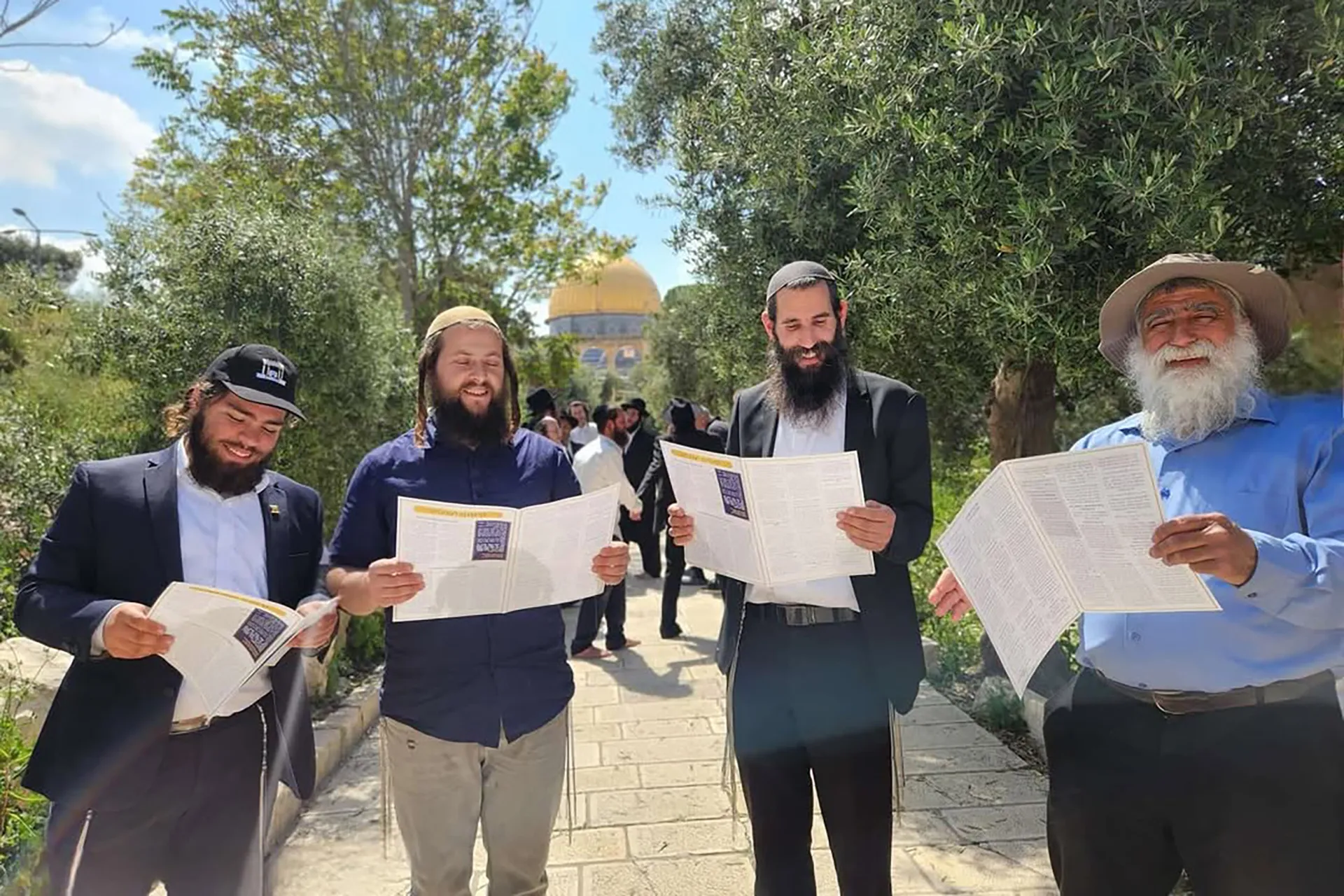
Israeli control over al-Aqsa has advanced in recent years through a series of gradual police measures, most notably the regulation of incursions, the extension of settler routes, preventing Muslim worshippers from approaching the site during certain hours, removing Waqf guards and Murabitoun activists, and expanding the scope for Jewish rituals inside the courtyards.
“Ir Amim,” an Israeli organization that monitors occupation policies in Jerusalem, says that during Jewish holiday periods the police have allowed public prayers, the blowing of the shofar (a ritual horn used during Jewish holidays), and the wearing of tefillin (small leather boxes containing religious texts that are worn on the arm and head during Jewish rituals).
The organization explained that this is taking place while thousands of Muslim worshippers are prevented from entering al-Aqsa during those times, in practices that indicate a decline in the existing status quo governing the holy sites.
In January 2026, the Jewish News Syndicate (JNS) reported that police allowed Jewish prayer instruction sheets to be brought into al-Aqsa following a request from one of the Temple movements, presenting the measure under the title of “maintaining order.”
Settlers also raised the Israeli flag inside al-Aqsa under police protection during what is known as “Independence Day” in April 2026.
This was preceded by an August 2025 incursion led by Ben-Gvir, during which public prayers were held near the Dome of the Rock, with wide participation by settlers.
The introduction of volunteers from the same ideological current into the police unit gives these developments a new dimension. A recruit coming from the environment of the Temple groups views Jewish prayer at al-Aqsa as a religious right that must be established and secured.
Jerusalem Governorate media adviser Maarouf al-Rifai said that the danger of this step lies in the fact that it reflects a transition from providing police protection for incursions into al-Aqsa Mosque to a stage of integrating individuals ideologically affiliated with Temple groups into the body responsible for managing the on-the-ground situation at the mosque.
In a statement to Al-Estiklal, al-Rifai explained that this is an imposed reality created by the occupation through force, saying, “This means that this body will include individuals who embrace an ideological project seeking to change the identity of al-Aqsa Mosque and impose new realities there.”
Al-Rifai continued, “There are fears that this will strengthen the influence of Temple groups within field-level decision-making circles, resulting in increased incursions, an expansion of biblical rituals, and stricter restrictions on Muslim worshippers and employees of the Islamic Waqf Department.”
This is in addition to “accelerating the occupation’s efforts to impose an Israeli authority over al-Aqsa Mosque at the expense of the existing historical and legal status quo, which grants the Jordanian Islamic Waqf exclusive jurisdiction over it.”
According to al-Rifai, the concerns are not related to the recruitment process itself, but rather to the changes that may result from it on the ground.
He added, “Introducing volunteers who hold ideological views linked to Temple groups into the unit responsible for al-Aqsa may lead to further bias in the management of the mosque’s affairs and give these groups greater influence in shaping the policies and procedures implemented there.”
Consolidating Control
The move to recruit volunteers from Temple groups into the police unit responsible for al-Aqsa has brought the question of administration to the forefront.
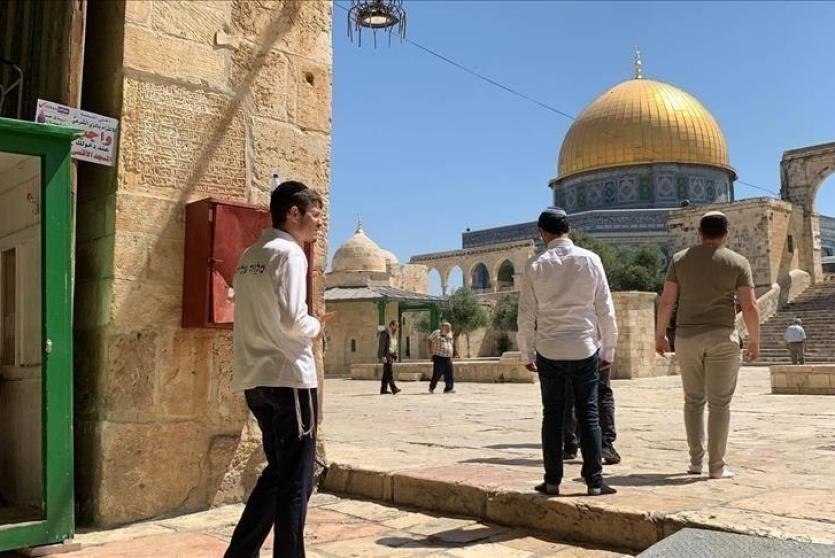
The mosque, whose religious and daily affairs are supposed to be managed by the Jordan-affiliated Islamic Waqf Department, has seen its practical arrangements increasingly shift toward the Israeli police, the authority that controls the entrances, the routes of incursions, decisions on restrictions and expulsions, and the way Waqf guards and worshippers are treated.
Since the occupation of Jerusalem in 1967, the formula of the status quo has been based on keeping religious and civil administration inside the mosque in the hands of the Waqf, while Israel maintains security control and non-Muslims enter as visitors without performing religious rituals.
However, this arrangement has lost much of its practical meaning in recent years, as police have become involved in determining the times of incursions, regulating Muslim movement inside the mosque, and allowing an expanding space for Jewish rituals.
The British newspaper The Guardian wrote in February 2026 that the longstanding arrangement governing prayer rights at al-Aqsa since the period after 1967 had “effectively collapsed,” amid the expansion of Jewish prayer at the site, the arrest or restriction of Muslim religious officials, and the prevention of worshippers from entering.
The Palestinian platform “Jerusalem Story” indicates that Israel is changing the status quo at al-Aqsa through developments on the ground, without making a direct political announcement.
According to this trajectory, the role of the Waqf is gradually declining in the face of the Israeli police apparatus, which determines what takes place in the courtyards.
The actions of National Security Minister Itamar Ben-Gvir provide an indication of the nature of this shift. In August 2025, he said that he had prayed in the al-Aqsa courtyards, a step that contradicts the existing arrangement prohibiting non-Muslim prayer at the site.
Although the office of Israeli Prime Minister Benjamin Netanyahu later reaffirmed that official policy had not changed, the incident demonstrated that change no longer necessarily requires an openly declared government decision, it is enough for the Israeli police to treat the new practice as something that can be managed and protected.
From this perspective, the presence of volunteers from Temple groups within the police unit becomes part of a process shifting practical authority from the Waqf to the Israeli security apparatus.
This directly affects Jerusalem residents, as the new step is expected to be accompanied by tighter restrictions on the entry of worshippers, merchants, women, elderly people, and Murabitoun activists into al-Aqsa.
Israeli analyses have also warned about the sensitivity of this trajectory. The Institute for National Security Studies (INSS) in Israel has addressed the risks of changing the status quo at al-Aqsa, noting that allowing Jewish prayer at the site or tampering with existing arrangements carries a high potential for security and political escalation.
Al-Rifai said, “If this policy continues, we can expect to see an escalation in organized incursions, broader attempts to impose public Jewish prayers and biblical rituals, alongside greater restrictions on worshippers, Mourabitoun, and Waqf employees.”
He noted that this would gradually establish a new reality through which the occupation seeks to reshape the status quo at al-Aqsa Mosque and impose effective Israeli sovereignty over it.
Sources
- Israel Seeks to Recruit Ultranationalists for Police Unit at al-Aqsa Mosque
- Jerusalem Governorate: Integrating "Temple" Groups into the Occupation Police at al-Aqsa Is a Dangerous Escalation
- Jerusalem Governorate: Recruiting Extremists into the "Temple Mount" Unit Is a Dangerous Escalation Targeting al-Aqsa Mosque [Arabic]
- Palestinian Authority Warns Against 'Dangerous' Plan to Strip Jordan of al-Aqsa Custodianship
- Jerusalem’s Status Quo Agreement: History and Challenges to Its Viability