The Repeated Detention of Mauritanians in Mali Is Fueling Public Anger Against Ghazouani’s Government: What’s Behind It?
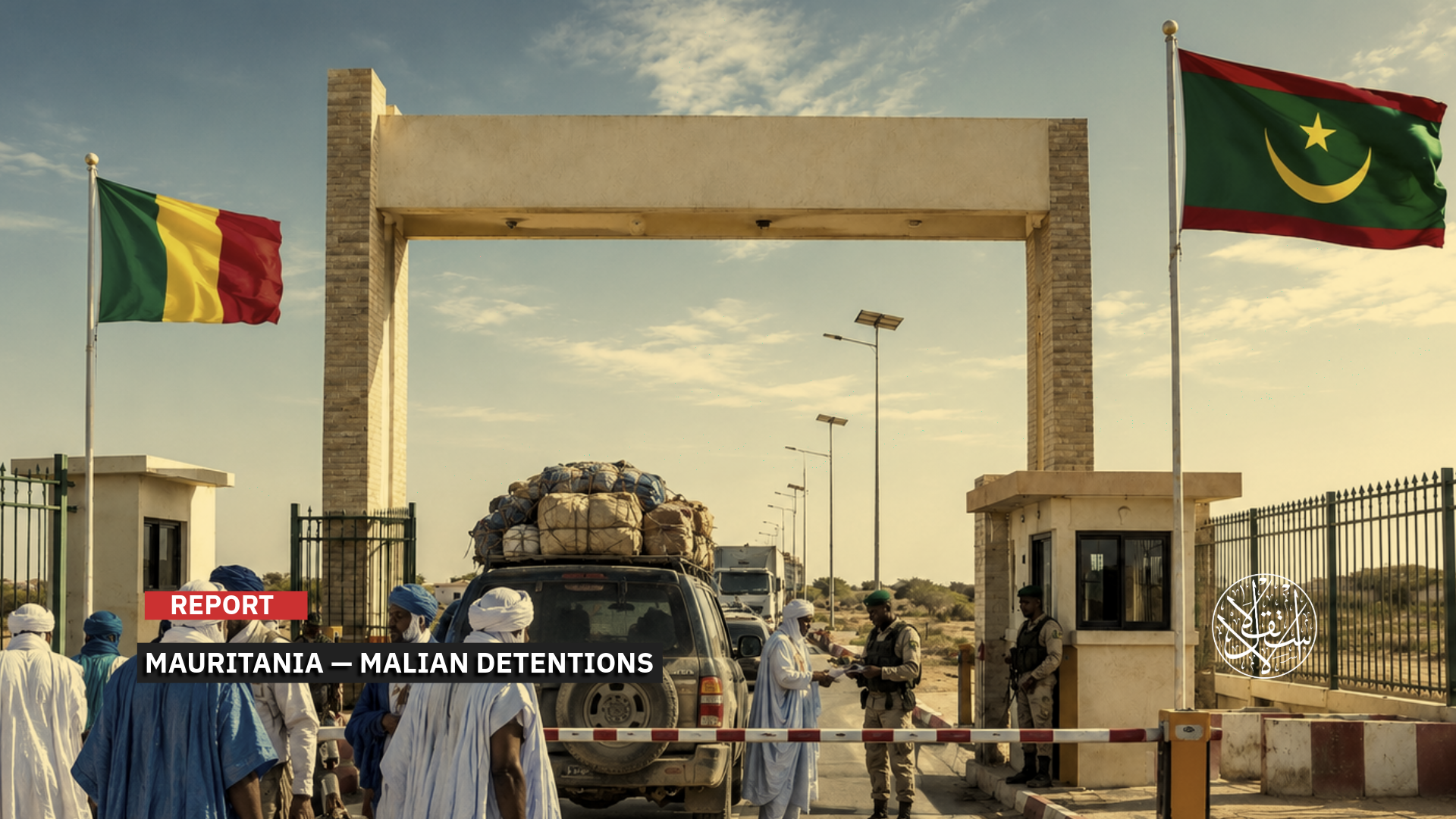
A human rights center has documented the deaths of around 120 Mauritanians in Mali since the 1990s.
Mauritanian public opinion is increasingly angry over the growing number of Mauritanian citizens being detained in Mali, amid calls for the government to take a tougher stance toward Bamako to safeguard the safety of its citizens.
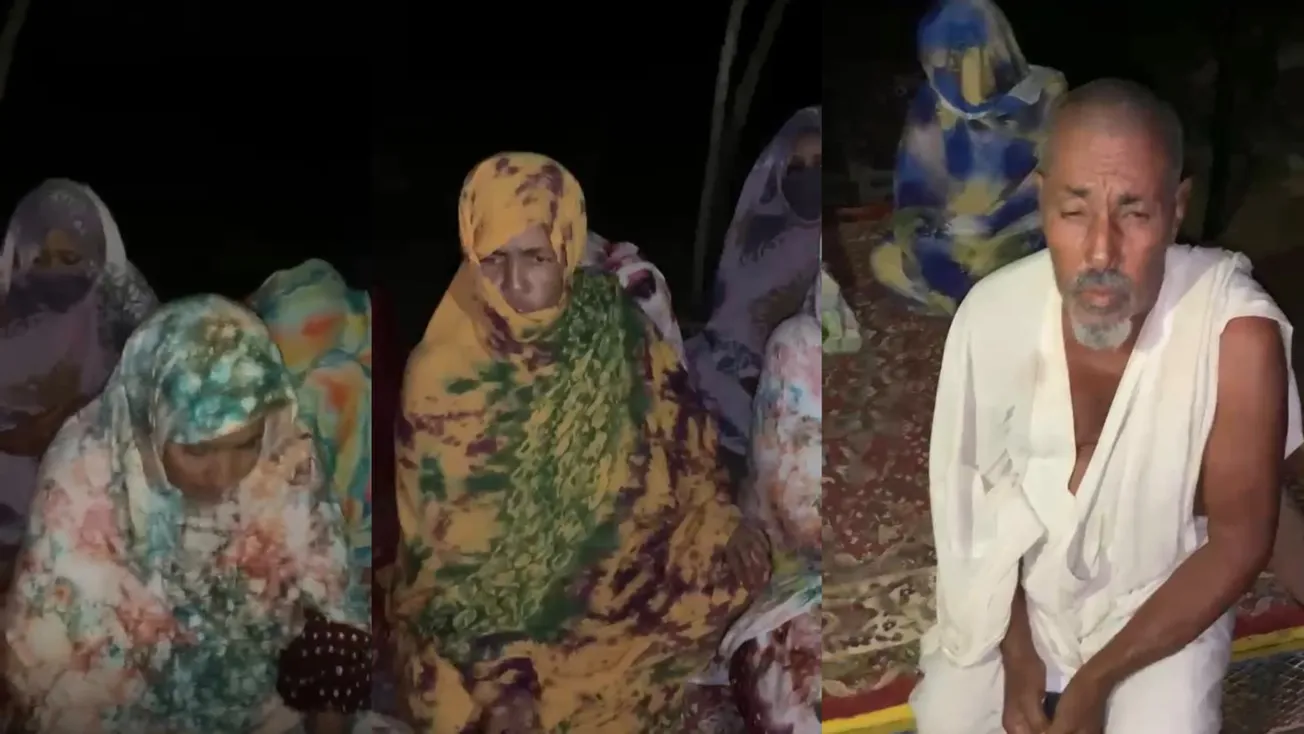
The issue sparked renewed public debate in Mauritania in early August 2026, after local media platforms published images of Mauritanian citizens detained in Mali and described by the Malian army as “terrorists” who had allegedly attempted to infiltrate the city of Kati, near the Malian capital.
Diplomatic Efforts
The Malian army has not issued any official statement clarifying the circumstances of the incident or the charges against the detainees, nor has it provided evidence linking them to any armed groups, further fueling anger among the Mauritanian public.
The incident comes amid repeated cases involving Mauritanians inside Malian territory. In April 2026, Malian forces detained six Mauritanians during security operations following widespread attacks.
In March 2026, Nouakchott condemned the killing of two of its citizens, describing such incidents as “recurring.”
Mauritania had previously urged its citizens, particularly herders, to avoid entering unsafe areas inside Mali and activated border vigilance committees amid escalating military operations by the Malian army and its allies against armed groups, along with reports of violations against civilians.
In response to the latest incident, the Ministry of Foreign Affairs, African Cooperation and Mauritanians Abroad said it had begun, in coordination with the Ministry of Defense and Retired Affairs, Martyrs’ Children and Security Affairs, contacting the Malian authorities over the detention of a group of Mauritanian citizens inside Malian territory.
In a statement issued on August 4, the ministry said the move was carried out on the instructions of President Mohamed Ould Cheikh Ghazouani, with the aim of clarifying the circumstances of the case, securing the detainees’ release, and ensuring their safe return home as soon as possible.
The Foreign Ministry added that all relevant authorities are following the case directly and coordinating with the Malian authorities within their respective areas of responsibility, in order to safeguard the security and interests of Mauritanian citizens and resolve the matter as quickly as possible.
The ministry did not disclose the number of detainees or provide further details about the circumstances of their detention.
Gruesome Images
In this context, relatives of Mauritanian citizens detained by the Malian army while passing through Malian territory from Ivory Coast en route to Mauritania called on the authorities to intervene to ensure their safety and secure their immediate release.
In separate statements to the local independent news agency al-Akhbar on August 4, the relatives said their brothers and sons had reached the Malian capital, Bamako, on their way to Mauritania.
They left the city that day, but were subsequently taken by the Malian army to an unknown location, without any stated reason for their detention.
They called for urgent and immediate government intervention with Mali to secure the release of the Mauritanian citizens, facilitate their return home, and ensure their physical safety.
Sidi Ould Hademine said the detainees had been engaged in trade in the Ivorian city of Bouaké and had left for Mauritania.
They reached Bamako before their families were surprised to see photos of them circulating on social media showing that they had been detained by the Malian army.
Ould Hademine appealed to President Mohamed Ould Cheikh Ghazouani and all officials to intervene to ensure their safety and release, stressing that there was no justification for their detention.
Mahjouba Bint al-Bashir said they wanted to inform the authorities that their relatives had been in Bamako and that there was no justification for their arrest or detention.
She added that the families did not know where they were being held and were appealing to the authorities to intervene and secure their release.
At the party level, the Rally of Democratic Forces (RFD) expressed concern over the repeated targeting of Mauritanian citizens inside Malian territory, calling on the authorities to act and take measures to prevent such incidents from recurring.
In a statement on August 5, the party said it had repeatedly seen what it described as “shocking and degrading” images of Mauritanian citizens inside Mali, expressing hope that the latest images circulating would be the last such scenes.
The party reiterated its call on the Malian authorities to protect Mauritanian citizens on Malian territory, clarify what happened in the latest incident, and release those detained.
It also urged the Mauritanian authorities to establish “the truth about what happened and take measures to prevent its recurrence, including continued coordination with the various authorities, to safeguard the safety and dignity of citizens in those areas, whether those living along the border or those returning home from another country.”
The party urged citizens to avoid conflict zones wherever they are to protect their safety and to seek secure routes when leaving the country or returning home, stressing its solidarity with them and its readiness to assist them under all circumstances.
The statement said the party had been following developments in Mali and its difficult security situation for some time, considering that any threat to Mali’s security or that of any neighboring country poses a threat to Mauritania’s security.
At the same time, it reaffirmed its rejection of any rhetoric or conduct that could harm relations between Mauritania and Mali.
Academic Analysis
At the academic level, Ahmedou Ould Mbarek, head of the Diloul Center for Strategic Studies, said that 21 Mauritanian citizens remain detained in Mali, rejecting reports that all those detained had been released and confirming that diplomatic efforts to secure their release are still underway.
According to comments published by the local website Taqadomy on August 6, Ould Mbarek said 17 Mauritanians had already been released, while 21 others remain in detention.
He noted that the charge d’affaires at the Mauritanian Embassy in Bamako is continuing negotiations with the Malian authorities over their release.
He added that, according to video footage, members of the group still in detention had been restrained and blindfolded, which he said indicated that their case was more complicated.
Ould Mbarek said the detainees were not arrested in combat zones or while taking part in armed activities. Rather, they entered Mali through an official border crossing after completing the required procedures and paying the applicable fees, before their vehicles broke down inside Malian territory. A military patrol subsequently detained them around 150 kilometers from the Mauritanian border.
He explained that residents of Mauritania’s Hodh Ech Chargui and Hodh El Gharbi regions have maintained trade and economic ties with Mali and neighboring countries for decades.
Cross-border movement is therefore part of the region’s traditional economic activity, he said, making calls to refrain from traveling to Mali unrealistic in the absence of economic alternatives.
Ould Mbarek stressed that the state bears responsibility for protecting its citizens both inside and outside the country, calling for more effective diplomatic action to defend Mauritanians detained or otherwise affected abroad.
He said the way countries respond when their citizens face such situations reflects their international standing, noting that many states launch extensive political and diplomatic efforts when one of their nationals is at risk.
He added that, according to the Diloul Center’s records, around 120 Mauritanians have been killed inside Mali since the 1990s.
The center is working to complete a database documenting the victims’ names and the parties suspected of responsibility for the incidents, with the aim of preparing case files that could be used to approach international bodies and seek accountability.
The center’s head called for documenting all violations suffered by Mauritanians in Mali, including killings, arrests, and property destruction, with a view to raising these cases with the Malian authorities in the future, as well as before international judicial and human rights mechanisms.
He stressed that changes in government do not extinguish the rights of victims.
He also pointed out that international agreements, including the Geneva Conventions, establish states’ obligations to protect their nationals through diplomatic and consular missions.
He called for strengthening the role of Mauritanian missions in monitoring the conditions of citizens abroad, particularly in conflict zones.
He further argued that official calls for Mauritanians to stop traveling to Mali fail to take into account the economic and social realities of communities in the border regions.
Thousands of livestock herders depend each year on pastures inside Malian territory, he explained, and halting this activity without providing practical alternatives would have significant economic consequences for local communities.
Difficult to Fully Regulate
In this context, activist and journalist Mustafa Mohamed Ould Louly expressed deep regret over the repeated violations against Mauritanians inside Malian territory and along the border.
Ould Louly told Al-Estiklal that the recurrence is partly due to the close ties between the two peoples, which are difficult to fully regulate.
He noted that Mali serves as a key transit route for thousands of Mauritanians returning from other African countries. There is also a large Mauritanian community that has lived in Mali for decades, along with thousands of herders who move across the border year-round in search of water and pasture, all of which increases the potential for risks and incidents.
Ould Louly said the border issue further complicates matters, as the Mauritania-Mali border is poorly demarcated in many areas, with some Mauritanian villages located inside Malian territory and vice versa.
Against this complex backdrop, the Mauritanian authorities have repeatedly urged their citizens to exercise caution and avoid entering Mali except when necessary, the activist said.
“Yet despite this, we continue to receive reports of violations allegedly committed by the Malian army against Mauritanian civilians, raising a major question: How can our citizens be protected in an area where the Malian state does not exercise full control, or at least cannot protect residents or travelers from abuses by some of its soldiers?”
Ould Louly stressed that “this question represents the real challenge at hand and requires a firm response from the Mauritanian government, along with clearer security coordination with Bamako, to ensure the safety and security of Mauritanians in the face of the dangers prevailing in the region.”