The Deadly Journey Through Yemen: African Migrants Caught Between Smuggling Networks and the Houthi Agenda
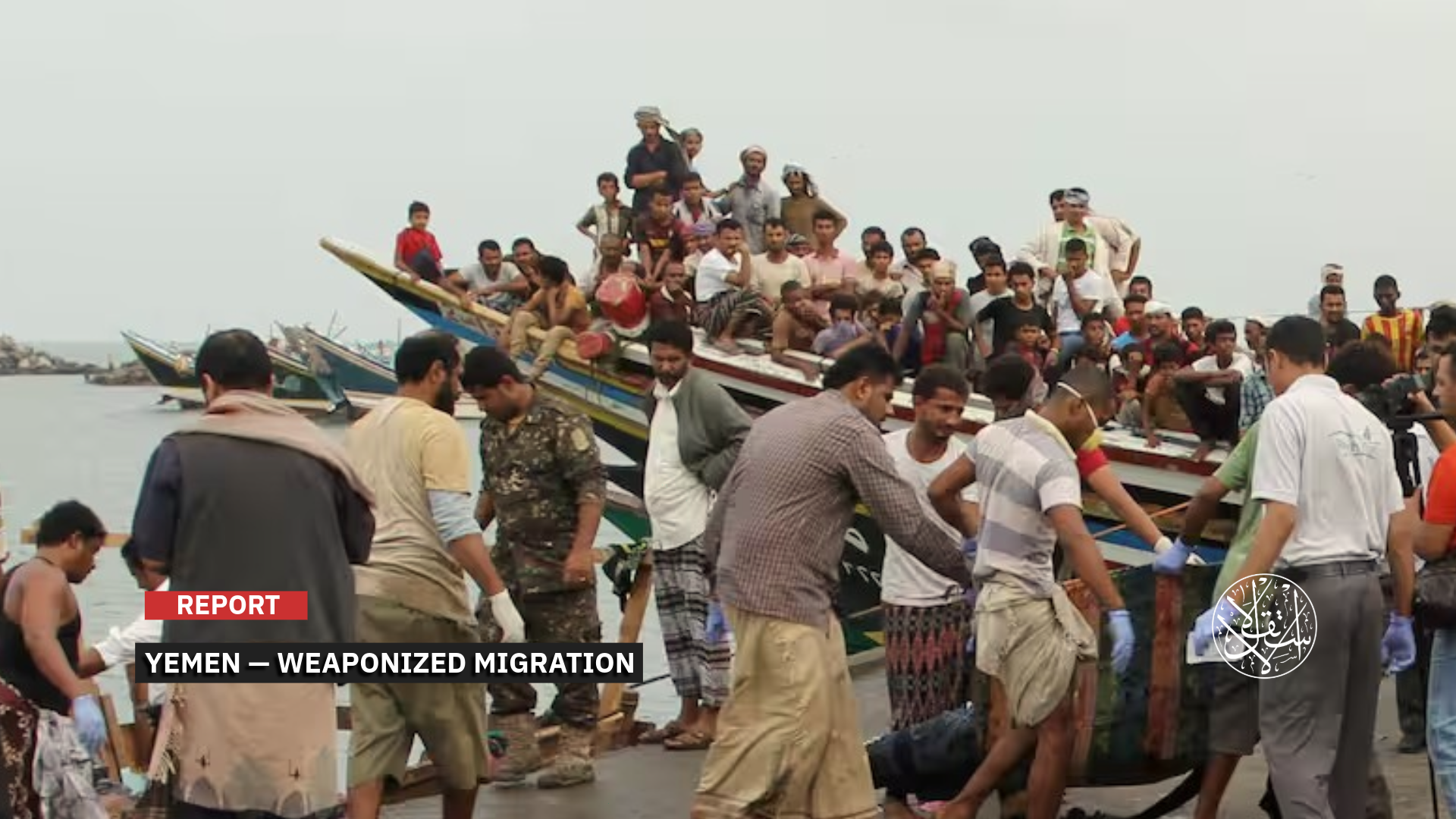
Illegal migration has shifted from a humanitarian issue to a growing security threat to Yemen and the region.
Along Yemen’s rugged coastlines and borders, the journey of thousands of migrants from the Horn of Africa continues in search of better economic opportunities.
However, this journey often turns into a path of exploitation and abuse, as migrants fall victim to organized smuggling networks that profit from their suffering, amid direct human rights accusations against the Houthi group of exploiting their presence and using them in illicit activities that serve its various agendas.
Migration flows from the Horn of Africa to Yemen gradually began to take shape between 2002 and 2011, through maritime routes across the Gulf of Aden and the Red Sea.
During that period, the number of arrivals remained relatively limited, with Somalis making up the largest share due to the security deterioration in their country, while Yemeni authorities automatically granted them refugee status.
However, the situation changed significantly between 2012 and 2019, as the number of Somali migrants declined while the number of Ethiopians increased sharply, particularly from the Oromo and Amhara communities, driven by difficult economic conditions and the search for employment opportunities outside their country.
These migration flows reached their peak in 2019, when more than 138,000 migrants arrived in Yemen, a figure that at the time exceeded the total number of migrants who crossed the Mediterranean toward Europe.
According to data from the International Organization for Migration (IOM), around 73,000 migrants arrived in Yemen in 2022, before the number rose to approximately 96,670 migrants in 2023, one of the highest recorded levels in the past decade.
The flows remained high throughout 2024 and 2025 despite growing security and humanitarian risks, while estimates for the first half of 2026 indicate that around 84,000 African migrants crossed into Yemen.
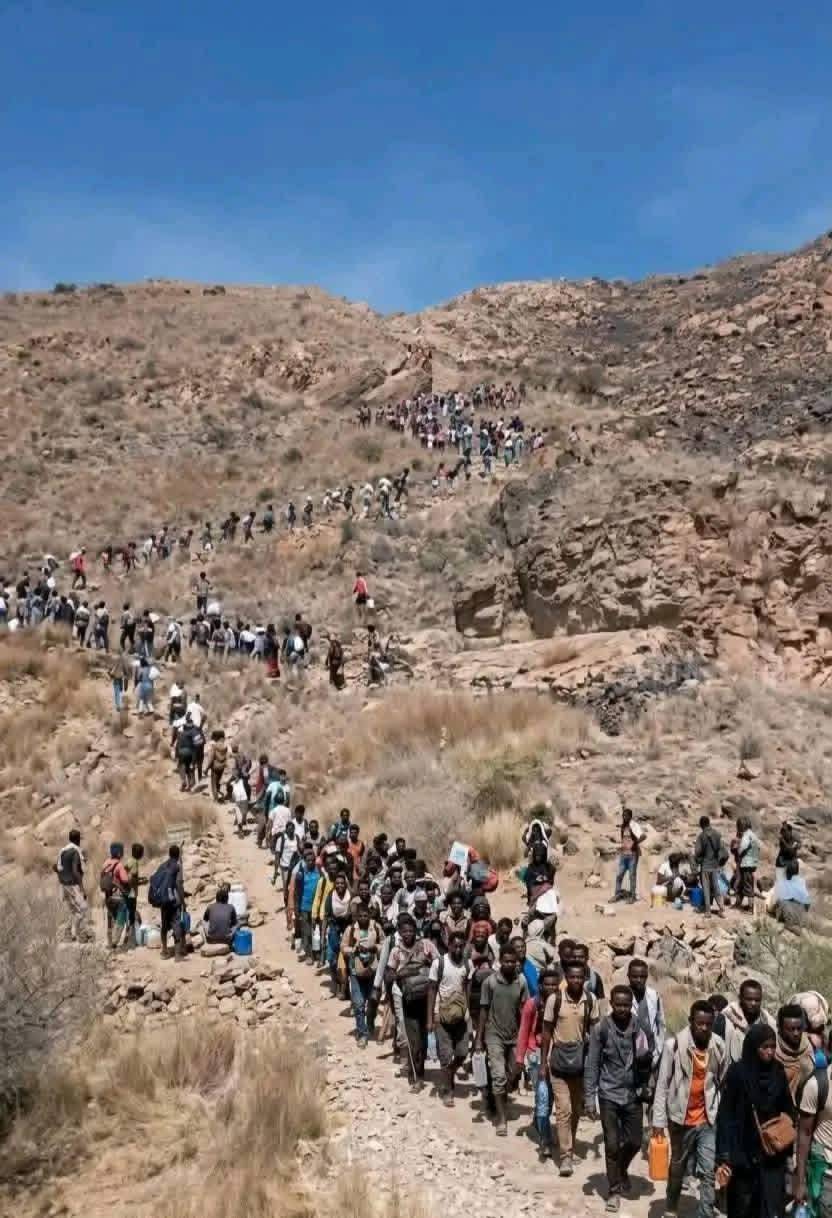
Migration Drivers
Ethiopia experienced one of the worst droughts during the period from 2021 to 2023, resulting in the deaths of more than 6.8 million livestock. Estimates by the World Food Programme indicate that around 20 million people are in need of food assistance.
Meanwhile, conflict and violence continue between the government and Amhara and Tigray forces, while the number of internally displaced people has reached approximately 4.2 million.
The clashes that took place between Ethiopian migrants from the Amhara and Oromo ethnic groups in Yemen in September 2023 reflect the depth of Ethiopia’s ethnic tensions, as the Ethiopian government rejects the return of non-Oromo groups to certain areas.
In Somalia, around 727,000 people face the risk of hunger due to the food security crisis affecting the Horn of Africa as a result of severe climatic conditions, in addition to the ongoing threat posed by the armed group al-Shabaab, which controls large areas of the country.
Eritrea, meanwhile, is considered one of the poorest countries in the world, making Yemen an attractive transit point for many migrants seeking to reach the Gulf Arab states.
At the same time, Yemen’s geographic location, its long coastline, and weak government control have helped make it an ideal transit route for migration movements.
Smuggling networks have also reinforced the perception among migrants that reaching Saudi Arabia through Yemen remains possible, despite tighter border controls in recent years.

The Role of the Houthi Group
Given its control over densely populated areas and land crossing points leading to Saudi territory, the Houthi group has treated the issue of African migrants as a multi-dimensional strategic and economic tool.
Reports issued by the Yemen-based Platform for Tracking Organized Crime and Money Laundering (P.T.O.C) have revealed an expanding role by the Houthi group in exploiting the issue of African migrants and using it for various security, military, and economic activities.
According to information obtained by the platform, the group operates, through a network of smugglers, migrant transportation and smuggling operations to and from Yemen and neighboring Gulf countries. It also imposes financial levies on migrants, which are collected by smugglers and handed over to Houthi security officials.
The cost of smuggling an individual ranges between $200 and $500.
According to the platform, Abdulwahid Abu Ras, the group’s official responsible for external expansion and the Horn of Africa file, along with Houthi intelligence and security leaders and members, oversees the intelligence, military, and ideological training of African migrants at camps located in the provinces of Hodeidah, al Jawf, Saada, and Sana’a.

Another report by the platform revealed the Houthis’ alleged use of African migrants as fuel for their war through forced recruitment and military exploitation, as well as their involvement in human and weapons smuggling networks.
In a report titled “The Houthis’ Exploitation of African Migrants as Tools in Their Military Conflicts,” which was based on confidential security and intelligence documents, the platform stated that the group had turned several locations into centers for recruiting and training Africans and conducting intelligence activities.
One of the most prominent sites mentioned is the Martyrs’ Mosque in the Bab al-Yemen area of the capital, Sana’a, where Somali, Ethiopian, Eritrean, and Djiboutian migrants and refugees are reportedly recruited and subjected to ideological courses with a sectarian character, as well as military training, before being sent to front lines or to the Horn of Africa in exchange for monthly salaries.
According to the report, these activities aim to spread Houthi ideology and exploit migrants in operations to smuggle weapons and fighters across the Red Sea.
The group has also established four additional training centers: in Bajil in Hodeidah province under the supervision of Yusuf al-Madani; in al Jawf under Badr Bazara’a; in Saada under Mutlaq al-Marani; and in Hajjah under Abdullah al-Tawoos.
According to the report, the group seeks to strengthen its military and logistical capabilities by recruiting migrants to compensate for its human losses, while simultaneously expanding its regional influence by threatening maritime routes and disrupting international trade.
For years, the Houthis have targeted African migrants and other nationalities by allegedly luring them with food and money to carry out combat and logistical tasks, including transporting weapons, ammunition, and supplies, as well as building fortifications and digging trenches along front lines.
The Yemeni Network for Human Rights and Freedoms accused the Houthis of concealing around 2,406 Yemenis, in addition to 382 African refugees, across 17 provinces between January 2017 and mid-2023.
The most serious threat facing Yemeni and regional societies, according to the report, is the systematic “ideological mobilization” of African migrants.
It alleges that the Houthi group seeks to transform them into “ticking time bombs” by subjecting them to extremist sectarian courses, erasing their cultural identities, and instilling foreign sectarian ideas among them.
The impact of this transformation is not limited to Yemen; its consequences extend across the region through the deployment of these individuals as sleeper cells or fighters in the Horn of Africa, threatening social cohesion and fueling cross-border instability.
Turning a “person seeking a livelihood” into an “ideologically indoctrinated militant” could undermine social peace and create complex security challenges, transforming migrants from victims of humanitarian circumstances into tools for spreading conflict and instability across the region.
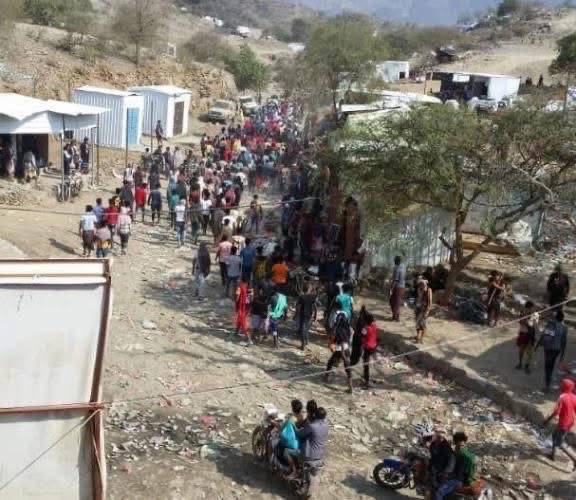
Growing Public Concerns
Yemeni circles are witnessing a noticeable rise in concerns over the growing number of African migrants in the country, amid increasing warnings circulated by Yemeni activists on X that the phenomenon could become a direct threat to the security of Yemeni citizens and the country.
These concerns are intensifying amid repeated accusations against the Houthi group of exploiting this issue and using it for security and military activities that serve its interests.
Activists have circulated accounts claiming that the group is working to recruit and train African migrants at camps in the provinces of Hodeidah, al Jawf, Saada, and Sana’a, where some are allegedly subjected to military and intelligence training before being sent to front lines or assigned various field missions.
Posts circulating online also accuse the group of using migrants in human and weapons smuggling networks, as well as in logistical support activities linked to its military movements.
At the same time, public concerns are growing over the security consequences of the expanding presence of migrants in border areas, amid the continued weakness of state institutions and the widening security vacuum.
Yemeni accounts on X have alleged the involvement of some African migrant groups in acts of looting, road blockades, and attacks targeting Yemeni travelers and residents of border areas, as well as attempts to impose control over certain smuggling routes and illicit activities.
Yemeni activists have also circulated warnings that some border areas, particularly al Thabet Market in Saada province, have become major gathering points for migrants, amid reports of robbery and killings targeting Yemenis while attempting to reach Saudi Arabia.
These accounts further claim that some of these groups possess light and medium weapons, deepening concerns about the difficulty of containing future security challenges.
Security Implications
The Red Sea Center for Political and Security Studies warned that illegal migration has transformed from a humanitarian issue into a growing security challenge threatening Yemen’s national security and the security of countries in the region.
In a research paper titled “African Illegal Migration to Yemen: Security Risks, Their Implications for Yemen’s Security and Neighboring Countries, and the Houthis’ Role in Exploiting Migrants,” presented by the center’s chairman, Mohammed al-Walass Bahibah, the paper examined the mechanisms allegedly used by the Houthi group to exploit African migrants through the establishment of recruitment and training camps along the Yemeni-Saudi border, and their use in combat and smuggling operations.
According to the investigation findings presented in the paper, there are seven recruitment camps hosting more than 20,000 African recruits, while around 2,900 migrants were reportedly killed while fighting alongside the Houthis between 2018 and 2022. The paper also estimates that more than 1.5 million African migrants have entered Yemen through irregular routes.
Meanwhile, Yemen’s Deputy Minister of Interior, Major General Mohammed bin Salem al-Sharif, stated that the continued influx of irregular migrants represents a direct threat.
He pointed to the alleged involvement of Houthi elements, as well as groups such as Al-Qaeda and ISIS, in exploiting migrants for combat and criminal purposes.
The Ministry of Interior has developed a security plan that includes establishing shelters in Marib, Abyan, and Hadramawt, creating a database, and issuing identification cards for migrants, with the aim of regulating their status and facilitating their voluntary return.
These measures are viewed as an urgent necessity to protect the country from the exploitation of migrants in illegal activities that undermine stability and further complicate Yemen’s fragile security situation.
Threats to Saudi Arabia
The districts of Yemen’s border province of Saada, particularly Munabbih and al Thabet, have become the final destination for the gathering of thousands of African migrants inside Yemeni territory, driven by the area’s rugged mountainous geography, which provides ideal hideouts and places to remain out of sight while waiting for signals from smuggling networks to breach the border fence into the Kingdom of Saudi Arabia.
This growing presence carries a range of direct security and criminal risks for the Saudi side, beginning with violations of the Kingdom’s sovereign border security system, concerns over the infiltration of hostile or intelligence elements under the cover of migration, and extending to economic and social impacts resulting from the growth of illegal labor and violations of residency regulations.
It also includes criminal threats linked to close coordination between human smuggling networks and drug and contraband trafficking groups, including those involved in the smuggling of qat and hashish.
In a serious development that has drawn the attention of field and intelligence reports, organized armed groups and pockets of African migrants have recently emerged, particularly among the Oromo community and some former fighters from Ethiopian conflicts, positioning themselves in these rugged mountainous areas.
Available data indicate that the Houthi group is the main actor allegedly behind the arming, training, and directing of these groups, with several strategic objectives.
These include establishing forward defensive lines and proxy forces to protect vital smuggling routes that generate significant financial returns for the group’s leadership; using these groups as tools to harass and exhaust Saudi border forces through armed infiltration operations and the movement of specific shipments; and providing protection for smugglers themselves from potential raids by local tribes or security campaigns against these illegal activities.
The threat is becoming more complex amid the escalation of hostile Houthi rhetoric toward Saudi Arabia and ongoing mobilization campaigns along the border.
In this context, concerns are growing that some African migrants who have been recruited or gathered in border areas could be used as a security and military pressure tool against the Kingdom, serving the group’s negotiating and regional objectives.
The Iranian Dimension
Beyond the humanitarian and local security dimensions, the geopolitical dimension emerges as the most dangerous driver shaping the issue of African migrants in Yemen.
Analyses and reports indicate that Iran, through the Houthis, is seeking to use migrants as part of a broader project aimed at consolidating its influence in the Horn of Africa and gaining control over strategic maritime routes in the Red Sea.
According to these assessments, some migrants are subjected to ideological and military training in order to transform them into tools of cross-border influence, serving a regional project extending from Tehran through Sana’a to the African hinterland, and turning Yemen into an advanced platform for threatening regional security and stability.
In this context, the testimony of an Eritrean citizen from the Afar tribe, who was detained on Yemen’s western coast, revealed alleged growing Houthi activity in the Horn of Africa aimed at recruiting members of the tribe and attracting them to areas under the group’s control in Yemen for military and ideological training.
According to his account, the group seeks to build a loyal force along the Red Sea coast modeled after “Hezbollah,” benefiting from alleged Iranian promises of financial and military support for a separatist project involving the Afar region, which extends across Djibouti, Eritrea, and Ethiopia.
This is reportedly pursued in exchange for expanding the group’s regional influence and strengthening its presence along strategic maritime routes.

Why Do Efforts to Curb Migration Fail?
Despite the measures taken by Yemeni and Saudi authorities in recent years to curb the flow of irregular migrants, the phenomenon has continued at high levels.
This is due to a combination of interconnected factors, foremost among them the deteriorating economic and humanitarian conditions in the Horn of Africa, which push thousands of people to undertake dangerous journeys in the hope of reaching the Gulf countries.
On the Yemeni side, the ongoing war, political divisions, and limited security capabilities have reduced the state’s ability to control its long coastlines and pursue smuggling networks.
The Houthis’ control over large sections of the main transit routes has also further complicated monitoring and regulation efforts.
As for Saudi Arabia, it has strengthened its border measures and carried out continuous campaigns to combat infiltration and smuggling.
However, the rugged geography of the border and the adaptability of smuggling networks have allowed attempts to cross the border to continue.
The Yemeni Coast Guard also faces major challenges due to limited technical and logistical capabilities compared with the size of the coastline and the scale of active smuggling routes.
Despite humanitarian efforts by international organizations to assist migrants and provide voluntary return programs, these efforts remain focused largely on managing the consequences of the crisis rather than addressing its root causes, leaving migration routes open to new waves of arrivals.
Sources
- Yemen – Flow Monitoring Points | Migrant Arrivals and Yemeni Returnees from Saudi Arabia in 2019 [Arabic]
- Migration Overview 2023: Horn of Africa and Arabian Peninsula [Arabic]
- Flow Monitoring – International Organization for Migration (IOM) – During 2024 [Arabic]
- UN Report: More Than 83,000 African Migrants Entered Yemen Since Early 2026 [Arabic]
- A Journey of Suffering: How African Migrants Became Tools in the Houthis’ War [Arabic]
- Political Seminar in Cairo Organized by the Red Sea Center Titled: “From the Horn of Africa to Yemen: Irregular Migration and Its Risks” [Arabic]
- Deputy Minister of Interior Discusses the Risks of Irregular Migration to Yemeni and Regional Security with the Red Sea Center for Political and Security Studies [Arabic]
- Revelations Expose Houthi Cells in the Horn of Africa: Promises Made on Behalf of Iran to Support Afar Independence [Arabic]
- Horn of Africa Migrants: Victims of the Houthis and Smuggling Networks [Arabic]
- Smuggling Revenues Drive Houthis to Abuse African Migrants [Arabic]
- P.T.O.C Yemen Center Exposes Houthi Networks for Smuggling Weapons and African Fighters [Arabic]
- P.T.O.C Yemen Center Exposes Houthi Violations Against African Migrants Through Forced Recruitment and Military Exploitation [Arabic]