‘Lebanon–Israel Agreement’: Will It Withstand Internal Divisions or Meet the Fate of May 17?
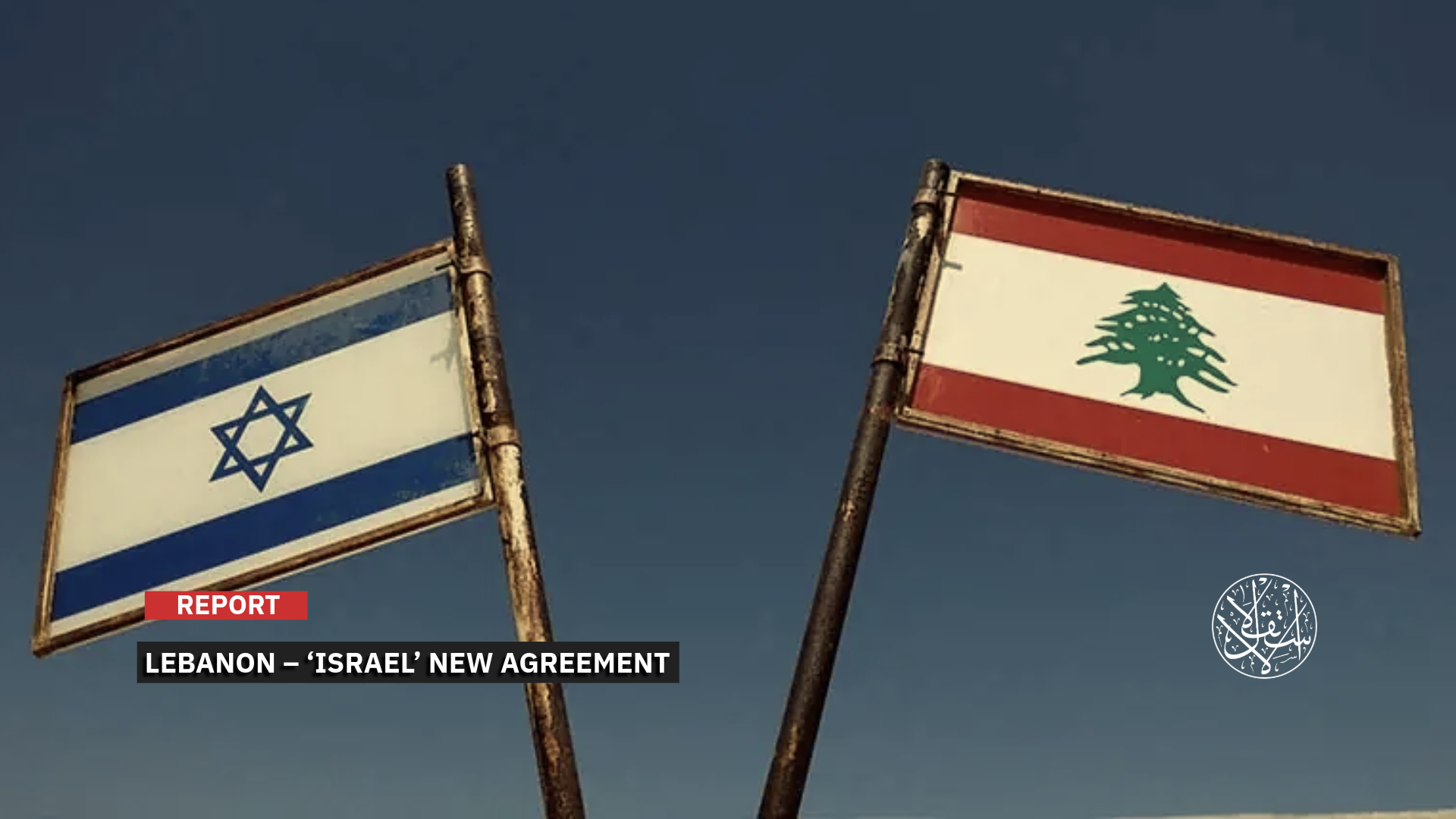
Washington agreement grants ‘Israel’ broad influence over Lebanon’s security track.
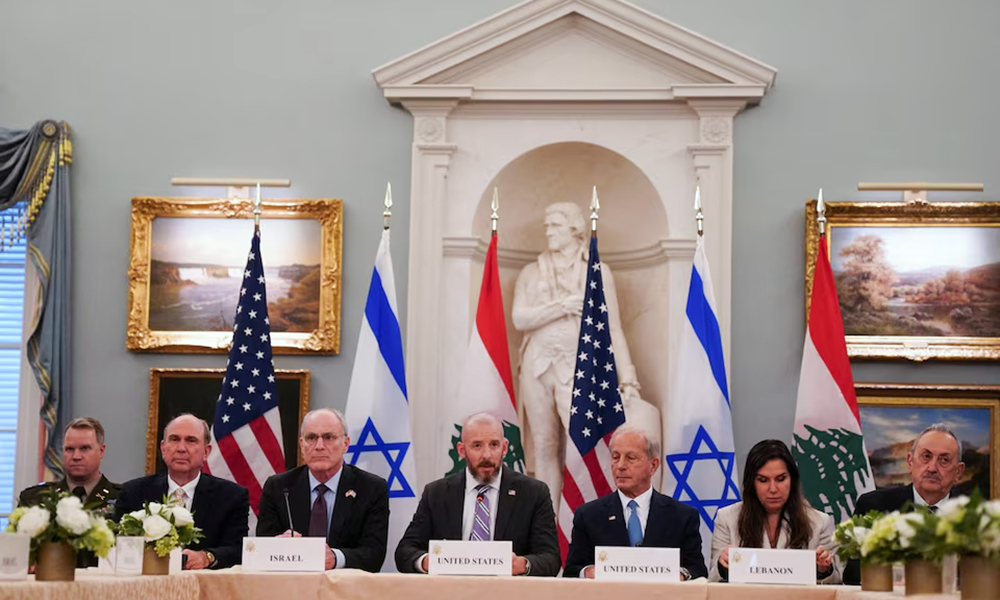
Between the Iranian–American memorandum of understanding, which included 14 clauses, and the Lebanese–Israeli framework agreement signed about ten days later under American sponsorship and containing the same number of clauses, widespread comparisons have emerged regarding the nature of the gains achieved by each side in both agreements.
While estimates published by Bloomberg Economics concluded that Iran secured gains in 9 out of 14 clauses, compared to only two clauses in favor of the United States, with three clauses resulting in a draw, Lebanese politicians and analysts argue that the agreement concluded with “Israel” largely serves “Tel Aviv’s” interests.
Critics of the agreement say its most dangerous provision is the linkage of the deployment of the Lebanese army in the south to monitoring and coordination mechanisms involving the United States and “Israel”, in addition to conditioning the disarmament of non-state armed groups, primarily Hezbollah, on an Israeli withdrawal, something they believe gives “Israel” wide leverage over the pace of implementation.
According to these critics, the agreement allows “Israel” to maintain a military presence in certain areas until it deems that security threats have been eliminated, which could delay its full withdrawal and the return of residents to their villages in the south.
Opponents also argue that some provisions may raise constitutional issues, as they tie the deployment of the Lebanese army to external arrangements, which they say contradict the constitution that restricts the command and authority of the armed forces to Lebanese institutions.
They further add that clauses preventing recourse to international courts or bodies to claim rights or compensation may trigger legal controversy regarding their compatibility with the principle of sovereignty and the requirement for approval by Lebanese constitutional institutions for any such commitments.
The President and the Army Under Israeli Influence
Lebanese readings and analyses of the 14-article Israeli–Lebanese agreement indicate that, according to these interpretations, 9 clauses tend to favor “Israel”, compared to 3 clauses in favor of Lebanon, while 2 clauses are considered balanced or mutually beneficial to both sides.
Based on this assessment, Lebanese media outlets and political forces, including Hezbollah, the Amal Movement, and other political currents, have described the agreement as heavily tilted toward Israeli demands.
These actors argue that the Washington-sponsored agreement grants “Israel” broad influence over Lebanon’s security track and places Lebanese authorities, including the presidency and the army, in an implementing role for security arrangements linked to Israeli conditions, without clear guarantees of a full withdrawal.
According to these readings, the agreement provides for the deployment of the Lebanese army in the south and the prevention of any non-state armed presence, including Hezbollah, as part of arrangements tied to the Israeli withdrawal process.
It also includes a cooperation and coordination mechanism between the Lebanese and Israeli armies under U.S. sponsorship, whereby Israeli withdrawal would occur gradually in exchange for the implementation of parallel security arrangements, raising debate over the nature and conditions of this balance.
The agreement further stipulates the formation of a “military coordination group” comprising representatives from both sides with U.S. participation, as well as an “international monitoring mechanism,” which critics view as a gateway to placing Lebanese security decision-making under external oversight.
According to the Israeli newspaper Yedioth Ahronoth on June 27, 2026, the agreement includes an undeclared military annex that defines implementation mechanisms.
A report by Channel 12 Israel on June 28, 2026, also revealed details regarding this annex, including the linkage of Israeli troop withdrawal to field-based assessments rather than a fixed timetable, which may explain the continuation of military operations in certain areas.
In the same context, the newspaper Maariv reported discussions about establishing a direct communication line between the Israeli General Staff and the Lebanese army in the south, in addition to military meetings and coordination sessions held in Washington during the negotiations.
Lebanese journalist Hasan Illaik, known for his proximity to Hezbollah, said that the establishment of a joint security coordination committee could place the Lebanese army in a position of indirect oversight by the Israeli side through mechanisms for verifying compliance with commitments, describing it as a “security dependency agreement.”
He added that some of these arrangements could, in his view, restrict the Lebanese military’s decision-making freedom in the south and tie it to obligations agreed upon within the international framework.
In contrast, Lebanese analysts have warned that any internal commitment to implementing clauses related to the forcible disarmament of Hezbollah could lead to serious domestic tensions, given the sensitivity of the country’s sectarian and political balance.
They note that Hezbollah is not viewed solely as an armed group, but also as part of broad sectarian representation that makes up around 30% of the population, which means that any direct confrontation with it would have wide internal repercussions.
Hezbollah parliamentary representative Hassan Fadlallah said that the agreement includes provisions that contradict the Lebanese constitution, pointing in particular to Article 52, which, according to him, does not allow any party to relinquish a state of hostility with “Israel”.
He added that any direct negotiations with “Israel” are, in his view, inconsistent with Lebanon’s constitutional principles and do not grant any party the authority to unilaterally alter the nature of relations with it.
The Trap of Article 4
Article 4 of the agreement, according to its published text, stipulates that the Lebanese government must restore full sovereignty over all its territory and ensure the state’s monopoly over the use of force, in addition to achieving the complete and verifiable disarmament of all non-state armed groups.
The article also calls for preventing these groups from playing any military or security role or possessing any armed capabilities within Lebanese territory, alongside an emphasis on “ensuring the support of international partners, particularly Arab partners, under the leadership of the United States,” to achieve these objectives.
Lebanese political and analytical circles interpret this wording as opening the door for external actors to be involved in the implementation of internal provisions related to Lebanon’s security, raising questions about the limits of national sovereignty and the mechanisms for enforcing the agreement.
According to these readings, the reference to “international and Arab partners’ support” in a file related to the disarmament of internal groups raises issues concerning the nature and limits of external involvement, and its connection to Lebanon’s security process.
These assessments also question the identity of the Arab and international parties involved in this support, as well as the nature of coordination with the United States, in the absence of detailed clarifications regarding implementation mechanisms.
In the same context, some analyses warn that this wording could open the door to extensive regional and international roles in Lebanese security affairs, with implications for internal balances.
Some readings also link this clause to earlier regional and international discussions on the future of security arrangements in Lebanon, although these interpretations remain debated and have not been confirmed by any official statements.

Rescuing War Criminals
Clause 13 of the Israeli–American–Lebanese agreement has sparked widespread controversy after it reportedly states the “cessation of all hostile or harmful actions in international political and legal forums, and work on the search for remains, their return, and the release of detainees.”
Critics argue that this clause could result in restricting the legal and diplomatic actions of the concerned parties, including limiting recourse to international courts or the filing of complaints related to alleged violations or war crimes.
According to these readings, the wording may be interpreted as including a commitment not to escalate legal proceedings in international forums, including judicial or human rights bodies, which raises debate over its implications for international accountability efforts.
Some observers further argue that such provisions could limit the continuation of existing or future legal actions before international courts, including the International Criminal Court, regarding allegations of violations during previous conflicts.
In this context, Ramzi Kaiss, a researcher at Human Rights Watch, said that any new political framework between Lebanon and “Israel” could impose restrictions on pursuing legal and diplomatic tracks related to past violations, as he put it.
He added that “such an approach could lead to the closure of accountability pathways linked to allegations of war crimes documented by international rights organizations, including Human Rights Watch and Amnesty International.”
In a comment posted on X, Kaiss said that any waiver of these legal avenues “undermines the rights of victims of human rights violations to access justice,” according to his statement.
Lebanese journalist Hasan Illaik, known for his proximity to Hezbollah, argued that provisions related to not pursuing “Israel” legally or diplomatically over any past or future violations could be interpreted as granting it implicit legal protection, limiting the possibility of prosecuting it before international forums.

Is the Aim to Ignite a Civil War?
Because “Israel” is aware that Hezbollah will reject the agreement, yet still pursued it with the government in Beirut, Lebanese observers argue that “Israel’s” objective goes beyond merely signing an agreement.
According to this view, “Israel” is engaging in an arrangement it expects may be unenforceable and could eventually collapse, similar to the May 1983 agreement signed under occupation pressure and later voided.
These observers suggest that “Israel’s” aim may extend beyond the immediate security dimension and instead seek to provoke internal tension or division in Lebanon, sufficient, in this narrative, to reduce “Israel’s” military burden and allow it to consolidate its presence in the south.
This is framed in the context of Lebanon’s internal political fragmentation, including Shiite factions opposing the agreement and other Christian or political groups either supporting or cautiously accepting it.
This interpretation is further reinforced, according to its proponents, by a report aired on Israeli Channel 13, alongside analyses by Israeli commentators who view the agreement as potentially falling within a framework of “conflict management” or an attempt to reshape Lebanon’s security environment, though interpretations differ.
In this context, Israeli commentator Raviv Drucker said on Channel 13 that some readings within “Israel” suggest the agreement may be linked to attempts to influence internal balances in Lebanon, while military correspondent Alon Ben David, known for his proximity to military and security institutions, indicated that dealing with Hezbollah remains a central focus of Israeli security thinking, according to his analyses.
On the other hand, Lebanese analysts argue that betting on the outbreak of a civil war or large-scale internal strife in Lebanon remains unlikely, given the country’s complex sectarian and political structure, as well as the fact that most Lebanese political forces, despite their differences, do not appear willing to engage in a comprehensive internal conflict.
They cite the positions of several political and religious actors, including the Islamic Group and the Association of Muslim Scholars in Lebanon, both of which have rejected the agreement in its current form, while also emphasizing their rejection of any slide into internal strife or civil war.
The Islamic Group stressed that any discussion of the exclusivity of arms and the extension of state authority should not take place under occupation pressure or threats, but rather through serious national dialogue leading to a comprehensive defense strategy that enhances the army’s ability to protect borders and citizens.
It also warned against the risks of linking Israeli withdrawal to security conditions that could be delayed or subject to interpretation, or of interpreting any clause in a way that restricts Lebanon’s right to defend its sovereignty, stressing that the occupation must end as an occupation.
The group called on the Lebanese government to be transparent in presenting the details of the agreement, disclosing its text and annexes, particularly the security annex, verification mechanisms, and the redeployment timetable, and insisted that any major commitments be presented to the relevant constitutional institutions.
It affirmed that its position is based on a “rejection of impulsive choices that would drag Lebanon back into war and isolation, and a rejection of hasty acceptance that grants the enemy what it failed to achieve by force,” emphasizing that its benchmark is Lebanon’s higher national interest, including full sovereignty, complete withdrawal, a strong state, a capable army, national unity, safe return of displaced persons, fair reconstruction, and rejection of all forms of occupation and aggression.
It also called on all political forces and national and religious authorities to avoid inflammatory and divisive rhetoric, and to adhere to a unified stance that protects the state, preserves rights, supports the army, prevents internal strife, and rejects occupation without opening the door to a new war.
The Association of Muslim Scholars in Lebanon also announced its rejection of the agreement signed with “Israel”, stating that any agreement that does not guarantee full withdrawal from Lebanese territory and does not reject normalization with the occupation cannot be accepted and does not meet the requirements of safeguarding Lebanese sovereignty.
It further rejected any formulation it considers a form of “external guardianship” over the Lebanese state, stressing that national sovereignty must remain free from any external interference or supervision.
Meanwhile, protests were reported in Beirut following the signing of the agreement by the Lebanese authorities, in rejection of what opponents described as a consolidation of “Israel’s” presence in southern Lebanon. Supporters of Hezbollah reportedly took to the streets, blocking roads and setting tires on fire in several areas.
The Association of Muslim Scholars in Lebanon also announced its rejection of the agreement, stating that any agreement that does not guarantee the full withdrawal from Lebanese territory and does not reject normalization with the occupation cannot be accepted and does not meet the requirements for protecting Lebanese sovereignty.
It also stressed its rejection of any formula that could pave the way for normalization of relations with “Israel”, calling on the Lebanese parliament to reject and block the agreement.
It further rejected any arrangement it considers a form of “external guardianship” over the Lebanese state, affirming that national sovereignty must remain free from any external interference or supervision.
Meanwhile, Lebanon’s Sunni Dar al-Fatwa reportedly attempted to provide the authorities with a “Sunni” religious cover for normalization through a statement attributed to it.
Lebanese observers also consider it unlikely that parties, political factions, and figures from Christian components, including prominent movements such as the Frangieh and Jumblatt currents, as well as the “Shiite duo” (Hezbollah and the Amal Movement), would be drawn into a scenario of internal strife or civil war serving such an outcome.
In this context, Lebanese Parliament Speaker Nabih Berri described, in a phone call with his Iranian counterpart Mohammad Bagher Ghalibaf, the Israeli–Lebanese deal as a “conspiracy and sedition,” stating that “Israel” is attempting to bypass Lebanese sovereignty through other means.

These actors also argue that betting on the involvement of Christian currents, particularly what is described as the “isolationist Maronite current,” in any large-scale internal confrontation remains weak, given the presence of Christian forces that reject being drawn into civil war.
They further maintain that political parties such as the Lebanese Forces and the Kataeb Party, according to this view, neither have the capacity nor the willingness to engage in a comprehensive confrontation with Hezbollah or other factions.
Hezbollah Secretary-General Naim Qassem condemned the agreement, describing it as a “grave lapse” and a “surrender of sovereignty,” affirming that the party will treat it as “non-existent.”
Qassem called on the authorities to reverse what he described as a “major sin” of relinquishing sovereignty in favor of “Israel”, arguing that the agreement could lead to the entrenchment of occupation for a long period and potentially the consolidation of new realities on the ground.

Will It End Like the May 17 Agreement?
The differing reactions to the agreement have raised questions about its sustainability, amid comparisons made by some observers to the “May 17 Agreement” signed between Lebanon and “Israel” in 1983, before it was later annulled.
These observers suggest that the current agreement could face similar political and popular challenges, potentially threatening its continuity if internal divisions over its provisions or implementation mechanisms deepen.
The May 17 Agreement was signed on May 17, 1983, between Lebanon and “Israel”, following the Israeli invasion of Beirut during the war with the Palestine Liberation Organization, under U.S. sponsorship, in negotiations described at the time as taking place under a severe imbalance of power due to the Israeli military presence on Lebanese territory.
The Lebanese Parliament ratified the agreement on June 14, 1983, by a majority of 65 deputies, with two votes against it and four abstentions, while 12 MPs boycotted the session, including former Prime Minister Rashid Karami.
However, the agreement did not last long, as it faced broad political and popular rejection, and internal opposition intensified against it, culminating in the February 6, 1984 uprising, which eventually led to its repeal by the Lebanese Parliament under its then Speaker Hussein al-Husseini, who had succeeded Kamel al-Asaad, one of the agreement’s supporters at the time.
Some observers draw on this historical experience to assess the future of the current agreement, suggesting that its fate will depend on its ability to withstand internal divisions and political and security developments in the country.