Renewed War: Why Did Trump Order a Strike on Iran?
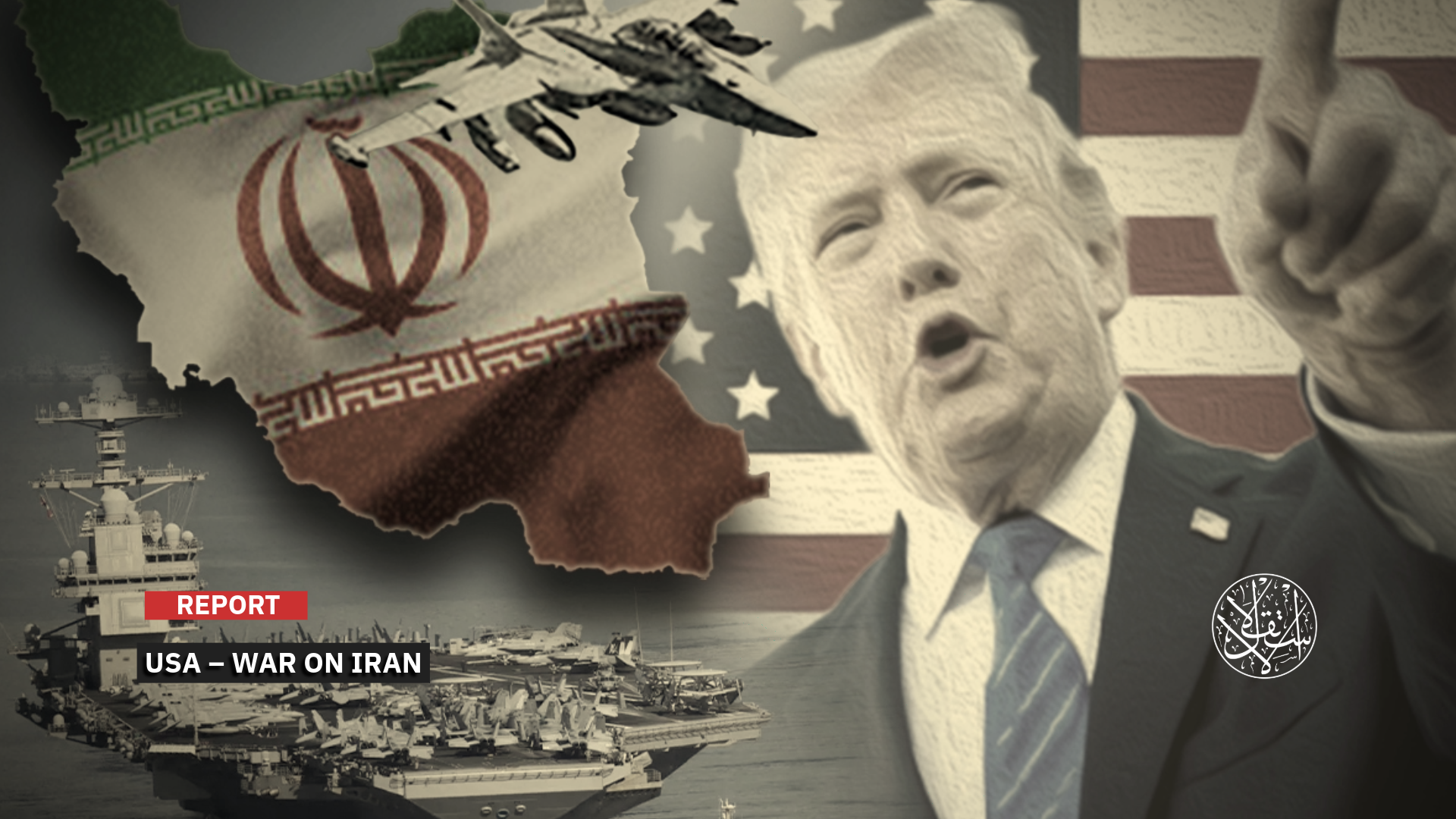
“Trump said the ceasefire agreement with Iran is over.”
The threats to navigation in the Strait of Hormuz, the US retaliatory strikes, and the subsequent revocation of the waiver allowing Iran to sell its oil have all revealed that the memorandum of understanding (MoU) between Washington and Tehran was merely a fragile truce, suspended between a war that had not ended and a settlement that had yet to see the light of day.
While Tehran attempts to project an image of controlling the narrative regarding the war and its aftermath, Washington appears better positioned to dictate the new balance of power: "Whoever disrupts the Strait of Hormuz pays a price—both militarily and economically—and whoever seeks an agreement must demonstrate that their decision-making is unified and actionable."
The temporary truce was intended to open a 60-day window for negotiating a permanent agreement addressing the most complex outstanding issues—foremost among them freedom of navigation in the Strait of Hormuz, vessel transit arrangements, and the future of Iran’s nuclear program.
However, recent reciprocal attacks have returned the conflict to a highly fragile state, even though neither Washington nor Tehran has officially walked away from the negotiating table.
Observers view the Strait of Hormuz as the defining issue of this phase: it is not merely an energy corridor, but the arena where the limits of Iranian power, the limits of Washington’s patience, and the limitations of any truce unsupported by a clear decision-making authority in Tehran are laid bare.
New Strikes
On July 8, 2026, US President Donald Trump announced the expiration of the interim memorandum of understanding with Iran.
He hinted at further strikes just hours after US raids had targeted over 80 Iranian sites—an escalation that shattered the ceasefire and pushed the confrontation over the Strait of Hormuz into a far more dangerous phase.
In response, Tehran warned that any landing of hostile forces on its shores would plunge the invaders into an inescapable hell.
Trump’s remarks came hours after US Central Command (CENTCOM) announced a broad wave of strikes against Iranian targets in retaliation for attacks on three oil and gas tankers in the Strait of Hormuz.
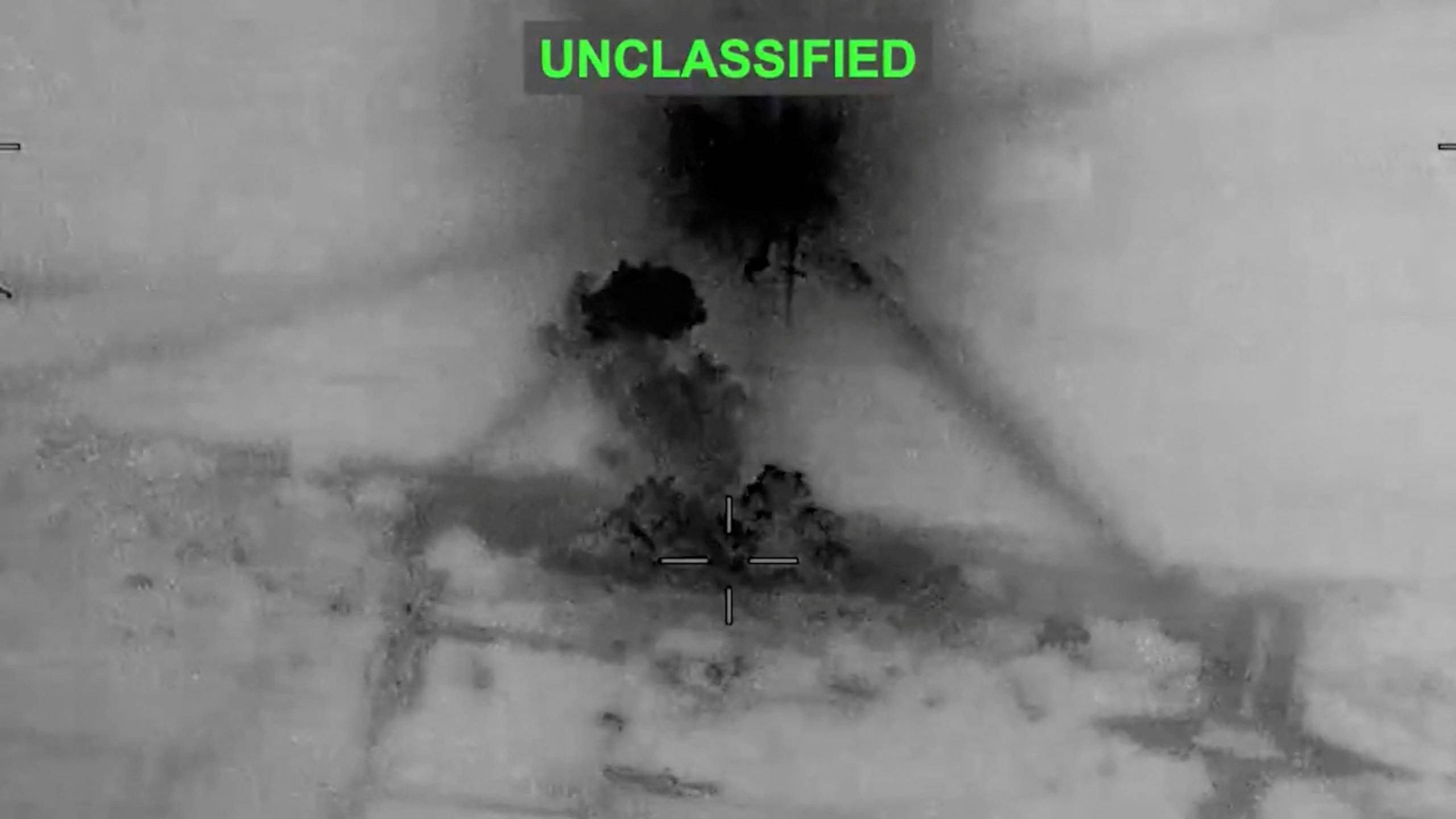
CENTCOM stated that US forces targeted Iranian air defense systems, command-and-control networks, coastal radar sites, anti-ship missile capabilities, and more than 60 small boats belonging to the Revolutionary Guard in and near the Strait of Hormuz.
Iran responded by targeting 85 US military sites in Bahrain and Kuwait, while Washington revoked, on July 7, a license that had allowed Tehran to sell oil under the terms of an interim agreement.
On June 22, the US Treasury Department had issued a general license permitting the sale of Iranian crude oil, petrochemicals, and petroleum products until August 21. Upon revoking it, Washington granted Iran a grace period until July 17 to finalize any outstanding transactions.
This license represented one of the most significant concessions in the interim agreement, as it enabled Iran to openly sell oil in US dollars for the first time in years.
Although Trump did not completely shut the door on diplomacy, he questioned its viability, stating that while US representatives could engage in talks, he believed they were wasting their time.
Nevertheless, he emphasized that he did not believe a war with Iran would break out, adding: "I think it will move very quickly. They hit two ships, so we hit them much harder. When they strike, we strike ten times harder."
Earlier, ahead of the NATO summit, Trump was asked whether the memorandum of understanding with Iran had collapsed. He replied: "I think it’s over. I don’t want to deal with them."
He added: "They are scum. They are sick. And they are led by sick people... For me, dealing with them is just a waste of time."
On the night of July 8, Trump hinted at new US strikes against Iran, stating: "Washington will hit them hard tonight."
The reciprocal attacks between Washington and Tehran undermined the fragile ceasefire and weakened hopes of transforming the memorandum of understanding—signed on June 17—into a permanent agreement to end a war that began with US-Israeli strikes on Iran on February 28.
The conflict had subsequently escalated into a regional confrontation centered on the Strait of Hormuz, involving Iranian attacks on neighboring countries.
It included 14 points, among them a 60-day period for a ceasefire during which negotiations should continue, the safe passage of vessels through the Strait of Hormuz and the US lifting sanctions on Iran.
American Bullying
In turn, the Iranian Foreign Ministry accused the United States of violating the UN Charter and the memorandum of understanding to halt the war.
It added that US strikes, the Treasury Department's decision to revoke the license for Iranian oil sales, violations of Iranian arrangements in the Strait of Hormuz, and continued Israeli attacks on Lebanon have effectively hollowed out key aspects of the ceasefire understanding.
It held Washington responsible for the dangerous consequences of the escalation, stating that Iranian armed forces would defend territorial integrity and national sovereignty, and would target the source and origin of any aggression.
Iranian politicians responded to Trump’s threat to attack Kharg Island—the main hub for Iranian oil exports—with counter-threats involving attacks on US forces, the closure of maritime corridors, and a shift in nuclear doctrine.
Ebrahim Rezaei, spokesman for the Iranian Parliament's National Security Committee, wrote on X, addressing Americans: "Come; we are waiting for you, and we promise that not a single American soldier will return alive."
He added that altering Iran's nuclear doctrine, withdrawing from the Treaty on the Non-Proliferation of Nuclear Weapons, and closing the Bab al-Mandab Strait alongside the Strait of Hormuz were options that could be considered should Iran face a new US attack.
Kazem Gharibabadi, Iran’s Deputy Foreign Minister for Legal and International Affairs, stated that Trump’s recent remarks were not a sign of strength but rather an admission of the failure of a policy—based for years on force, sanctions, and threats—that had proven unable to subjugate the Iranian people.
For his part, Ali Akbar Velayati, an adviser to the former Supreme Leader Ali Khamenei, stated that Tehran had previously warned that the region is not an arena for political gambling, adding in a post on X that "it has repeatedly proven that reckless adventures are met with an immediate response."
These reactions followed accusations by the Speaker of the Iranian Parliament and chief negotiator, Mohammad Bagher Ghalibaf, that the U.S. had committed grave violations of the memorandum of understanding.
He said in a post on X: “America still hasn’t learned that bullying and breaking promises are no longer cost-free.”
Political Messages
Conversely, several American newspapers viewed Tehran's insistence on threatening navigation in the Strait of Hormuz as reflecting a desire to exert economic pressure and an attempt to reclaim the narrative of the war.
They noted that after suffering severe blows and the death of Supreme Leader Ali Khamenei, Iran needs to demonstrate that it remains unbroken and capable of disrupting energy markets and threatening the interests of Washington and its allies; consequently, the Strait is transforming into a symbolic arena.
They pointed out that whenever Iran uses the Strait of Hormuz to project power, it provides Washington with a pretext to expand its strikes under the banner of protecting international navigation.
They also noted that, at this juncture, the U.S. does not need to declare all-out war to alter the rules of the game; it suffices to strike naval and missile capabilities linked to the Revolutionary Guard and to revoke the oil concessions that made the truce palatable within Tehran.
However, they added that revoking the authorization that allows Iran to sell oil is not merely an isolated economic measure, but a political message that any gain granted by Washington can be turned into leverage should Tehran use the Strait of Hormuz as a weapon.
They concluded that, in this sense, the Iranian threat is partially successful: it drives up oil prices and embarrasses Trump—given his concerns regarding market stability and the midterm elections—while simultaneously casting Iran as a party that threatens energy supplies and disrupts trade, an image that gives Washington greater scope to justify escalation.
For his part, political analyst Ibrahim Khatib told Al-Estiklal that the memorandum of understanding was nothing more than a necessary agreement to halt an unnecessary war, yet it is fraught with risks and faces numerous obstacles and challenges.
He added that the current situation resembles a dormant conflict with various potential future outcomes—ranging from a return to war or targeted military operations to an economic blockade by Washington—all aimed at eventually reaching a lasting agreement.
He noted that the prospect of Washington and Tehran sharing influence in the region is unlikely, given their historic hostility and their divergent goals, agendas, and external alliances.
He stated that the confrontation between the US and Iran has been resolved neither by force nor by diplomacy; rather, the conflict has stalled without a decisive outcome that could serve as a turning point for the region's future.
He concluded that "Trump is not completely closing the door to negotiations; instead, he is using time and pressure to define the terms of a final settlement ahead of the midterm elections. Iran, meanwhile, is attempting to demonstrate its capacity to disrupt, without proving its willingness to comply."
Economic Fluctuations
In a related development, the global economy has entered a complex new phase of geopolitical and financial uncertainty.
This follows Trump’s recent announcement scrapping the temporary truce he had reached with Tehran, dismissing any further attempts to negotiate or engage with the Iranian leadership as futile and a waste of time.
This sudden, dramatic shift—accompanied by US threats of fresh, large-scale military strikes against Iran—has sent violent financial shockwaves through the global economy.
Oil prices surged immediately by more than 7%, breaching the $79-per-barrel mark—a move that threatens to erase two years of gains in the fight against inflation and undermines hopes for monetary policy easing.
Although these levels remain below the $120 peak recorded at the onset of the conflict involving Iran, the rapid 25–32% jump from pre-war levels has reintroduced inflation risks into bond markets.
Meanwhile, Wall Street, European, and Asian indices turned red as investors fled in large numbers toward safe-haven assets; the renewed conflict in the Strait of Hormuz has effectively pushed the entire global economy to the brink of a crisis.
In turn, the International Monetary Fund (IMF) warned once again that the persistence of this turmoil would force it to further downgrade global growth rates, which are already hovering at a modest 3%.
Global stock markets reacted with immediate jitters to US threats of overnight land and naval strikes against Iran, triggering a massive sell-off of high-risk assets.
Trading in New York opened sharply lower: the Dow Jones Industrial Average lost approximately 1% of its value (equivalent to 514 points), followed by the broader S&P 500 index, which fell 0.46%, and the tech-heavy Nasdaq, which dropped 0.31%.
In Europe, markets in Paris and Frankfurt suffered sharp declines of 1.8%, while London’s market fell by 1.2%. In Asia, Seoul’s KOSPI index led the downturn, recording a steep drop of over 5%.
Airlines and cruise lines were immediate casualties of the sudden surge in fuel prices; United Airlines shares fell 3.2%, and Delta shares dropped 1.9%.
Shares of cruise operators like Carnival also tumbled 3% amid fears that profit margins would evaporate and operating costs would escalate.
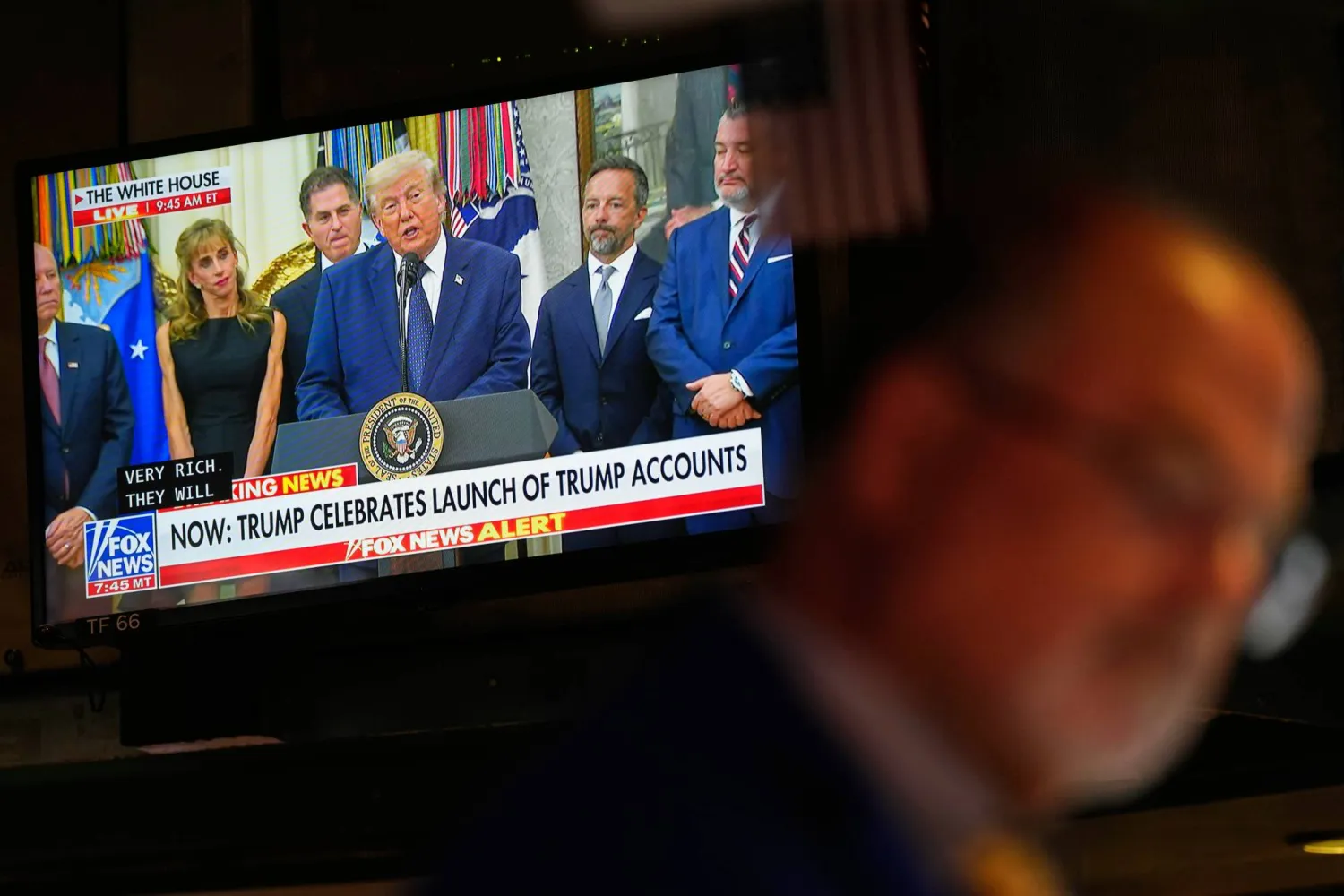
Foreign exchange markets were not immune to this shock; the rhetoric of war shifted traders' priorities toward holding the US currency as a safe haven during times of crisis.
The US Dollar Index remained relatively stable against a basket of major currencies, hovering around the 101.1-point mark, supported by expectations that interest rates would remain high for longer to curb potential inflation driven by rising oil prices.
Experts and analysts generally agree that international markets are now entirely dominated by sharp, violent volatility stemming from a lack of geopolitical clarity—a situation caused by the constantly shifting tactical stances of the current US administration.
Financial analysts believe the primary concern lies not in the current, momentary drop in stock prices, but in the possibility that the collapse of the de-escalation could devolve into a complete diplomatic rupture—triggering an open, all-out oil tanker war that compels international powers to impose a mutual naval blockade.