Tensions in Iran Escalate to the Point of Death Threats: What Is the Story of the ‘Paydari Front’ and Why Does It Want War?
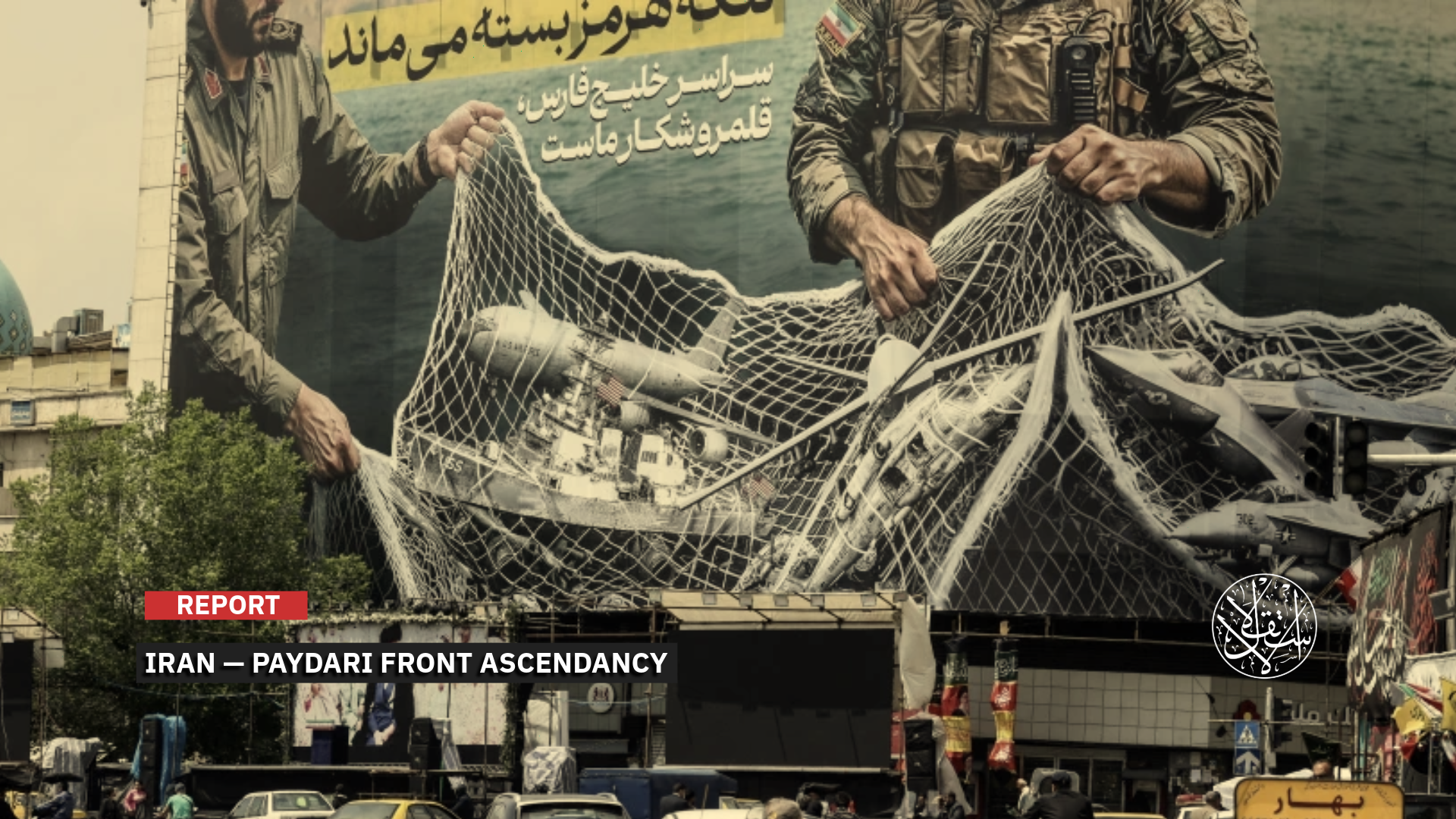
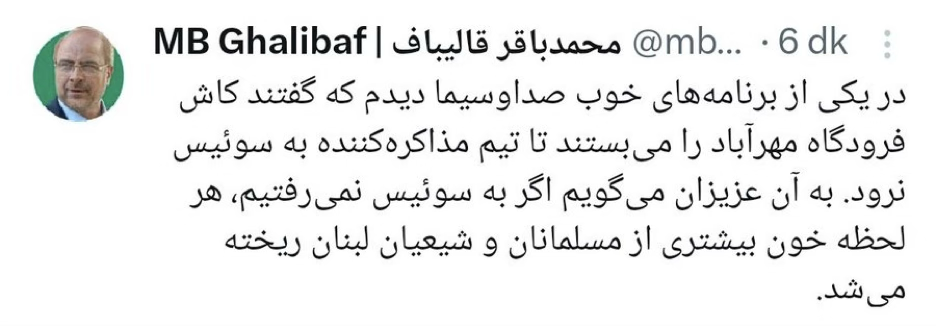
I wish they had closed Mehrabad Airport to prevent the negotiating team from going to Switzerland.
Although Iran presented a cohesive and unified image during the U.S.-Israeli war on Iran, the political scene and internal power balances within the state witnessed sharp disagreements and conflicting rhetoric during the negotiation process that began after the ceasefire.
The so-called hardline conservative “Paydari Front” launched a media campaign against the government of Pezeshkian and Iranian Parliament Speaker Mohammad Bagher Ghalibaf, accusing them of violating the directives of the new Supreme Leader, Ayatollah Mojtaba Khamenei.
The Paydari Front, or “Islamic Revolution Stability Front,” is considered one of the most hardline conservative movements in Iran. It firmly rejects any settlement with the West, to the extent that some of its members previously burned the text of the 2015 nuclear agreement under the dome of parliament, a deal that aimed to limit Iran’s nuclear program.
In contrast, Pezeshkian and Ghalibaf denied these accusations, affirming that the entire negotiation process was conducted in line with Khamenei’s directives.
The statement issued by Khamenei regarding the memorandum of understanding between Iran and the United States also created a state of confusion, which strengthened the position of the Paydari Front.
After the front escalated its attacks against Pezeshkian, Ghalibaf, and Foreign Minister Abbas Araghchi, Khamenei issued an additional statement to clarify some ambiguous wording in his previous remarks.
Overall, the Paydari Front continues to exert extensive pressure within state institutions and on public opinion with the aim of cancelling the agreement or preventing its effective implementation.
We Won’t Accept!
After the outbreak of the war on February 28, 2026, large popular crowds took to all Iranian squares in support of their government against the United States and “Israel”.
With protests continuing even after the ceasefire, the Paydari Front began organizing demonstrations opposing the negotiations and the resulting agreement in various squares across the capital, Tehran.
These rallies also targeted Ghalibaf, Pezeshkian, and Araghchi in several cities, most notably in Ibn Sina Square in Tehran.
In the squares, protesters chanted slogans such as: “Araghchi, resign and leave the country alone,” “Shame on you, Ghalibaf,” and “What will be the fate of our leader’s blood?”
In Enghelab (Revolution) Square, where the largest pro-government demonstrations are held, some supporters of the Paydari Front took over the stage and chanted: “Death to the compromiser” or “Death to the negotiator.”
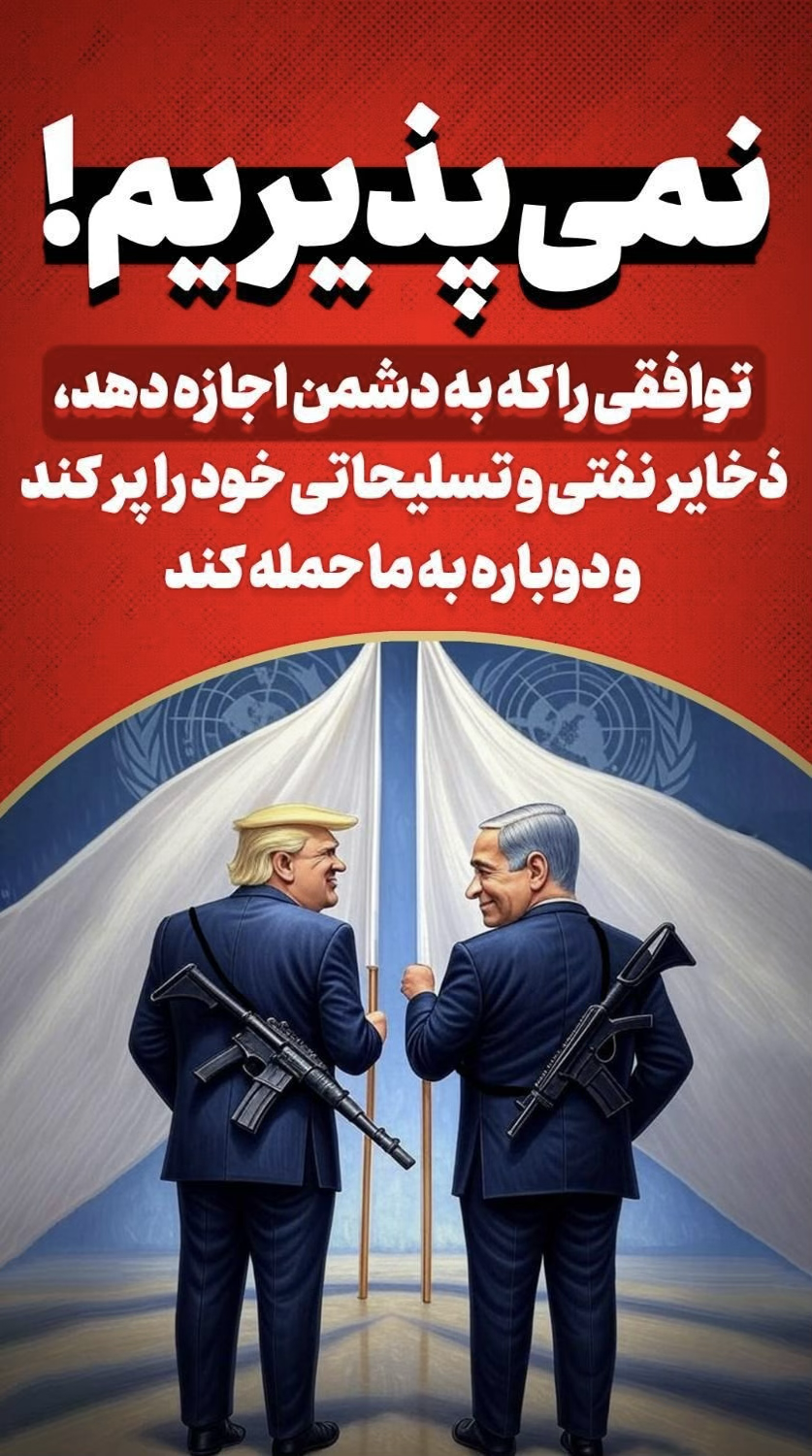
The Reka News agency, which reflects the Paydari Front’s views, also published a poster titled “We will not accept,” which included statements such as: “We do not accept a deal that allows the enemy to fill oil and weapons depots and attack us again.”
Anti-negotiation and anti-government demonstrations began following the publication of this poster.
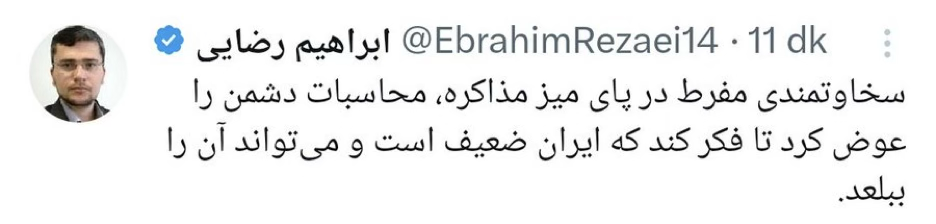
Ebrahim Rezaei, one of the young members of the Iranian Parliament and spokesperson for the Parliamentary National Security and Foreign Policy Committee, is considered one of the most prominent figures in the anti-negotiations campaign.
Rezaei has actively used social media to incite public opinion against the government and the negotiating team, accusing Ghalibaf and Pezeshkian of leading the United States to believe that Iran is weak.
According to Rezaei, “Their lenient stance in offering concessions at the negotiating table has changed the enemy’s perception of Iran, making it appear weak and easily defeatable.”
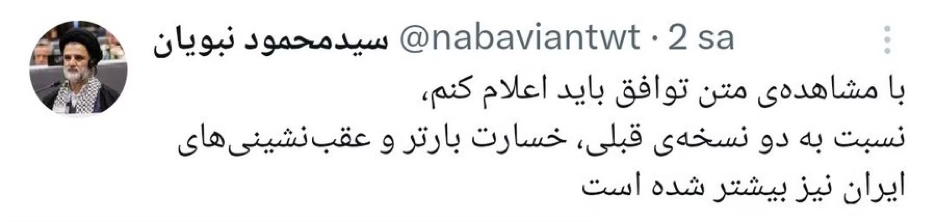
Similarly, Member of Parliament Mahmoud Nabavian was one of the most prominent figures who made efforts to ensure the continuation of the war and to prevent reaching any agreement.
Through state television, Nabavian revealed confidential information discussed in the Supreme National Security Council, and also incited public opinion to rebel against the government via social media, saying, “When looking at the text of the memorandum of understanding, I must note that it is even worse compared to the two previous drafts, and the concessions made by Iran are far greater.”
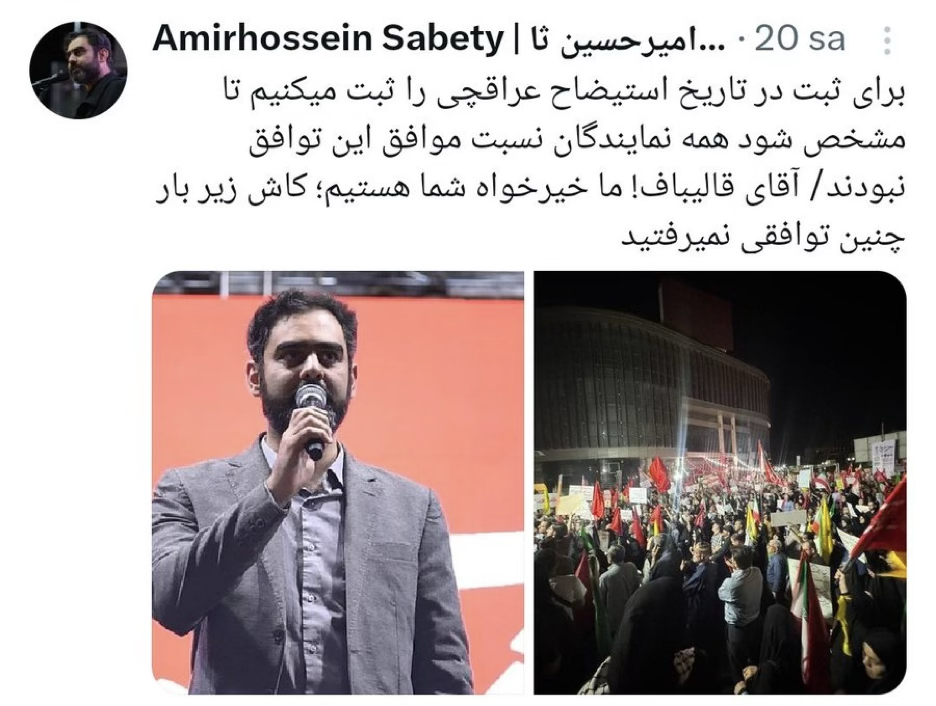
Among the prominent names involved in organizing protests and inciting opposition against the government was Member of Parliament Amir-Hossein Sabeti.
Given his well-known radical conservative views, Sabeti has become one of the key spokespersons and organizers of the Paydari Front.
Sabeti, known for his close ties to Saeed Jalili, Mojtaba Khamenei’s representative in the Supreme National Security Council, announced that they would submit a proposal to parliament to impeach Araghchi from his position as foreign minister.
He stated, “For the record, we are submitting a proposal to impeach Araghchi, which will show that this agreement does not have the approval of all MPs.” He added, “Mr. Ghalibaf! We want what is best for you; you should not have entered into such an agreement.”
Religious Clerics and the Paydari Front
Although the Paydari Front was founded in 2011, its ideological foundations are much older. Ayatollah Mohammad-Taqi Mesbah Yazdi, who died in 2021, is considered the spiritual leader of the Paydari Front.
Following Ayatollah Yazdi’s death, his student Mohammad-Mehdi Mirbagheri succeeded him, and Mojtaba Khamenei is also regarded as one of his disciples.
As the Paydari Front’s opposition to negotiations and the agreement continued, the most anticipated question was the position Mohammad-Mahdi Mirbagheri would take.
After a long silence and amid conflicting positions, Mirbagheri unexpectedly issued a more moderate statement, attributed to the Paydari Front’s lack of public support and backing from Mojtaba Khamenei.
Ayatollah Mohammad-Mahdi Mirbagheri wrote, “Rest assured, the current negotiations will not proceed weakly. I am not worried about a catastrophe occurring. The Supreme Leader (Ayatollah Khamenei) is overseeing the process, issuing necessary warnings, and maintaining control of the situation.”
He explained that “one of the differences in today’s negotiating environment is that the negotiating team is different from previous ones. Therefore, I do not believe that anything bad will ultimately happen. The outcome may not be ideal, but there is no need for excessive concern about a weak result. Accordingly, there is no need for worry and tension, and you should not spread anxiety in society. We must not transfer fear and stress to the people. We must preserve our unity in order to strengthen the social capital of the revolution.”
He added, “Of course, it is our duty to support the activation of the Supreme Leader’s directives and protect the boundaries he has set. Our outlook must be optimistic and positive, while at the same time we must carefully monitor the situation to ensure the implementation of the principles set by our esteemed Leader.”
Many graduates of the Haqqani seminary, founded by Ayatollah Misbah Yazdi in the 1960s, hold important positions within the government.
Therefore, it can be said that graduates of the Haqqani seminary largely share the same views as the Paydari Front, although their governmental positions sometimes prevent them from expressing their opinions as openly as Paydari politicians do.
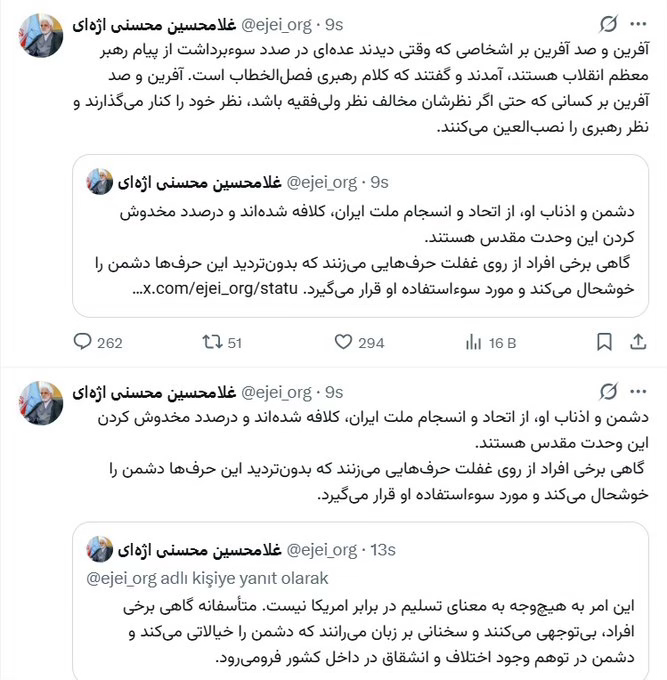
Among the prominent figures holding a senior government position, and one of Ayatollah Misbah Yazdi’s direct students, is the head of the judiciary, Gholam-Hossein Mohseni-Eje’i.
Like his predecessor, the head of the judiciary has, during periods of internal division, adopted a more moderate stance in line with the requirements of his position.
In fact, it is not expected that Gholam-Hossein Mohseni-Eje’i, whose term is nearing its end, would take a decisive stance without receiving a clear message from Khamenei.
Gholam-Hossein Mohseni-Eje’i wrote, “We are certain that the best path is absolute obedience to the Supreme Leader. We must know his opinion and what he approves. Who would trust America (our declared enemy)? As the Supreme Leader said, some officials, out of goodwill and sincerity, and based on their assessment of the system’s interests and the method of confronting the American enemy, have chosen the path of negotiation. This does not at all mean surrender to America.”
He continued, “Unfortunately, some individuals sometimes overlook this and use words that lead the enemy to illusions and fantasies, making it think there are divisions and internal disagreements within the country. The enemy and its agents are troubled by the unity and cohesion of the Iranian nation and are looking for ways to undermine this sacred unity. At times, some people, unintentionally, utter words that please the enemy and are exploited by it.”
He added, “Greetings, thousands of greetings, to those who say: the Leader’s word is the final word; greetings to those who abandon their personal opinions, even if they conflict with the view of the Guardian Jurist, and take his opinion as their guide.”
Sycophants’ Role
Maddahs (religious eulogists and chanters) hold a special place in Iranian culture, and the state, in many cases, helps shape public opinion on various domestic and foreign policy issues through them.
It has been observed how the public was mobilized through maddahs regarding the issues Iran became involved in after the Arab Spring, particularly in the Syrian context.
Following the elegies recited by maddahs about Syria and the relationship between the rise of Shiism and Syria, many Iranians became involved in the Syrian war under the command of the Quds Force of the Islamic Revolutionary Guard Corps (IRGC).
Within this competitive context, it is natural for different factions to seek popular support by using maddahs and chanters aligned with them.
However, death threats issued by some maddahs affiliated with the Paydari Front against Iranian President Masoud Pezeshkian triggered widespread reactions.
Maddah Rasoul Bakhshi, close to the Paydari Front, had stated, “Mr. President! If you do not implement the conditions set by the Leader (Khamenei), then our sword and your throat will meet face to face! We will end your life.”
This threat was met with strong criticism from many Iranians, who called on the head of the judiciary to take necessary measures.
Some commentators said that the blood of Shimr ibn Dhil-Jawshan flows in Rasoul Bakhshi’s veins, arguing that he cannot be considered a true eulogist of the Prophet’s family (Ahl al-Bayt).
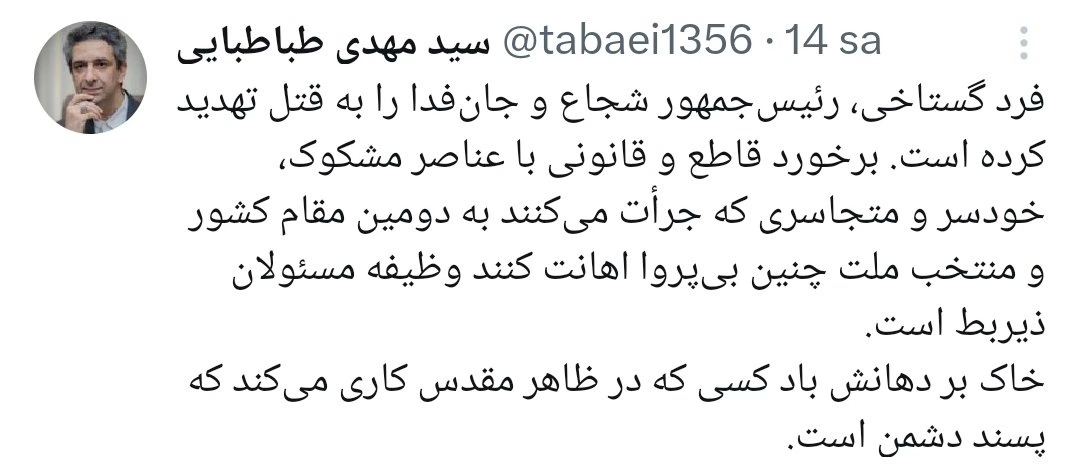
In turn, Seyed Mehdi Tabatabaei, Deputy Head of the Presidential Office for Communications and Media, commented on the eulogist’s remarks, saying, “An insolent person has threatened the courageous and self-sacrificing president with death. The competent authorities must take firm and legal action against these suspicious elements who dare to insult the country’s second-highest office and the elected leader of the nation with such audacity.”
In contrast, Maddah Hossein Taheri sharply criticized the radical Paydari Front, using harsh language.
He described these actions and behaviors as an act of provocation against the Islamic Republic, arguing that, in his view, their perpetrators are no different from Reza Pahlavi.
The Role of Government-Run Television
In Iran, radio and television are under state control. While private newspapers, magazines, and news websites are allowed to operate, radio and television broadcasting remains fully controlled by the state.
Official broadcasting in Iran is managed by the “IRIB” (Islamic Republic of Iran Broadcasting), which reports directly to the Supreme Leader.
This means that the president and senior executive officials of the organization are personally appointed by Mojtaba Khamenei, while the current executive leadership was appointed by his father, Ayatollah Ali Khamenei.
Instead of maintaining neutrality in internal political disputes, Iranian state television has broadcast several materials supporting the positions of the Paydari Front.
Through airing multiple reports criticizing Parliament Speaker Ghalibaf, President Pezeshkian, and Foreign Minister Araghchi, state television has supported the smear campaign against the government and the negotiations, in addition to hosting politicians and clerics close to the Paydari Front in various programs.
Iranian state television also cut the broadcast of President Pezeshkian’s speech and aired a fragmented version of Khamenei’s statement after removing parts that supported the government. It also deleted an interview with Parliament Speaker Ghalibaf a few days earlier.
Ghalibaf later protested the state broadcaster’s coverage on social media, saying, “In one of the programs on state television, I saw them say: ‘I wish they had closed Mehrabad Airport to prevent the negotiating team from going to Switzerland.’ I say to these dear friends: if we had not gone to Switzerland, the blood of Muslims and Shiites in Lebanon would have been shed even more at every moment.”
It can be said that the official state television is effectively influenced by Saeed Jalili, one of the prominent leaders of the Paydari Front and the representative of Ayatollah Mojtaba Khamenei in the Supreme National Security Council.
It is also well known that Saeed Jalili manages the news and programming of state television through his brother, Vahid Jalili, a senior official in Iranian Broadcasting and a figure close to the Paydari Front.
Pezeshkian Fires Back
Although Iranian President Pezeshkian initially remained silent in the face of the anti-negotiation campaign, he ultimately responded firmly.
After being accused by the Paydari Front of acting in a manner contrary to the views of Ayatollah Mojtaba Khamenei, Pezeshkian stressed that no steps had been taken without the approval of the Supreme Leader, and that they had received his approval for all actions undertaken.
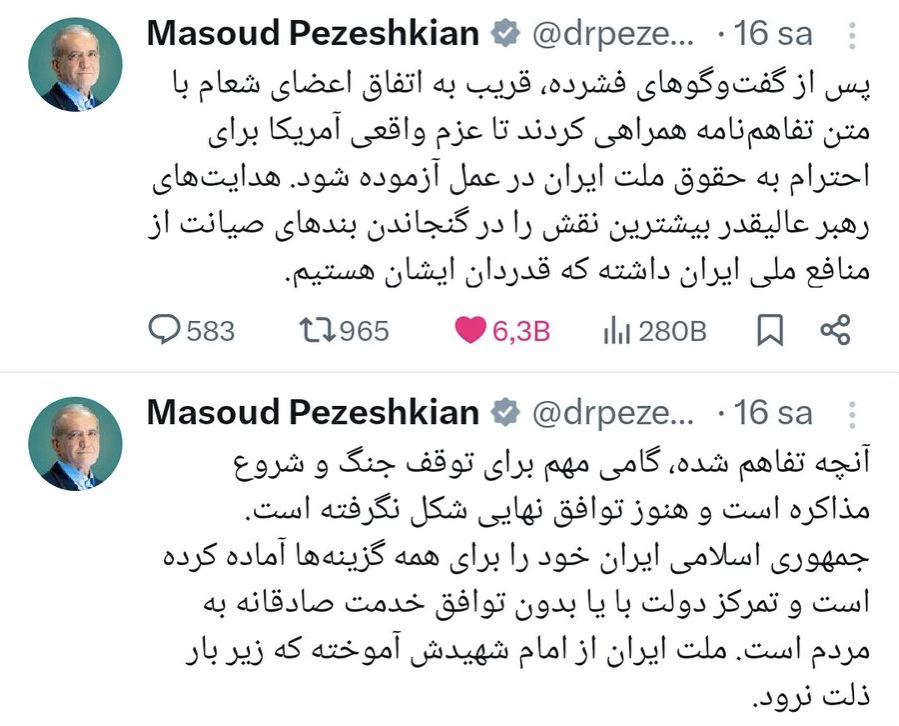
He said, “After extensive discussions, and with the aim of testing the extent of the United States’ commitment to respecting the rights of the Iranian people, the majority of members of the Supreme National Security Council reached a consensus on the memorandum of understanding. The Supreme Leader’s (Mojtaba Khamenei’s) guidance played the greatest role in including provisions that protect Iran’s national interests in the text; we are grateful to him.”
He added, “This agreed text represents an important step toward stopping the war and beginning negotiations, but no final agreement has yet been reached. The Islamic Republic of Iran has prepared for all scenarios; the government’s focus is on serving the people honestly, whether an agreement is reached or not. The Iranian people have learned from their martyred Imam (Ali Khamenei) not to surrender to humiliation.”
Pezeshkian’s reprimand of the representative of Khatam al-Anbiya Headquarters, the main military engineering arm, over his criticisms of the government was also seen as evidence that the government would not remain silent in the face of attacks from the Paydari Front and its supporters.
In a statement issued on June 21, the Iranian president clarified his position, saying, “Without our support, the fighters would not have been able to fight; we supplied the IRGC Air Force with 20 million barrels of government oil. Do you think the armed forces fought alone? We placed our foreign currency reserves at the disposal of the armed forces.”
An informed source in Iran reported that the Iranian president spoke with the commander-in-chief of the IRGC, Ahmad Vahidi, about the Paydari Front’s attacks, saying, “Stop them,” to which Vahidi replied, “They do not listen to us either.”
Khamenei’s Message
The Supreme Leader’s statements regarding the memorandum of understanding caused a state of confusion, which the Paydari Front exploited as a weapon against the government.
Khamenei’s statement included the following, “As you know, a memorandum of understanding has been signed between the presidents of Iran and the United States. The relevant officials made tremendous efforts with sincerity and dedication to reach this stage; and there is no doubt that the U.S. president, driven by desperation, resorted to all means of pressure to achieve this.”
He added, “In principle, I had a different opinion, however, I approved it because the president, as head of the Supreme National Security Council, personally committed, on his own behalf and on behalf of the other members, to uphold the rights of the Iranian people and the Axis of Resistance. He also made it clear that they would not respond to excessive U.S. demands.”
He continued, “From now on, we will wait, you, the honorable people, and this humble servant (referring to himself), for the fulfillment of the stated conditions. However, it is certain that future direct meetings will not mean acceptance of the enemy’s viewpoint.”
The Paydari Front exploited Khamenei’s phrase “In principle, I had a different opinion” as a political tool. President Pezeshkian stated in response that the Supreme Leader’s remarks support the memorandum of understanding. Following the controversy, Mojtaba Khamenei issued a new statement on his official Telegram channel, revising his earlier remarks to refute the Paydari Front’s claims.
In fact, Khamenei’s statement “In principle, I had a different opinion” resembles Ayatollah Khomeini’s statement after the end of the Iran-Iraq War.
At that time, regarding UN Resolution 598 that ended the Iran-Iraq War, Khomeini said, “Until just a few days ago, I believed in the same defensive approach and positions declared during the war, and I considered their implementation to be in the interest of the system, the country, and the revolution; however, after taking into account the views of all senior political and military experts in the country, I accepted the resolution and the ceasefire.”
Overall, the strengthening of the Paydari Front, holding ultra-conservative and sectarian views, within the Iranian administration poses a risk to both Iran and the region. Indeed, part of the Iranian administration recognizes this danger, but more important is whether the IRGC and Supreme Leader Mojtaba Khamenei understand the risk posed by the Paydari Front to the Islamic Republic and the region.
State officials close to Ghalibaf and the reformist wing in Iran have begun to view the Paydari Front, which mobilized public anger over economic problems immediately after the ceasefire, as a threat to national security.
On the other hand, if Ayatollah Mojtaba Khamenei opens the way for this radical faction instead of restraining it, and if this competition results in the Paydari Front gaining dominance within the Islamic Republic, Iran could return to the region in a more aggressive and harsher manner.
In such a case, Iran could pursue a radical policy in Gulf countries and other regional states, based on Iranian nationalism and sectarianism. It appears that regional countries are aware of this situation.
In Iran, especially among those close to Ghalibaf, it is believed that the Paydari Front’s actions serve the interests of Israel and the United States.
A source close to the Speaker of Parliament told me that an operation against the Paydari Front may begin after the situation in Iran returns to normal.