A U.S. Deal to Legitimize Libya’s Power-Sharing: Haftar Welcomes It, Warnings of Foreign Tutelage
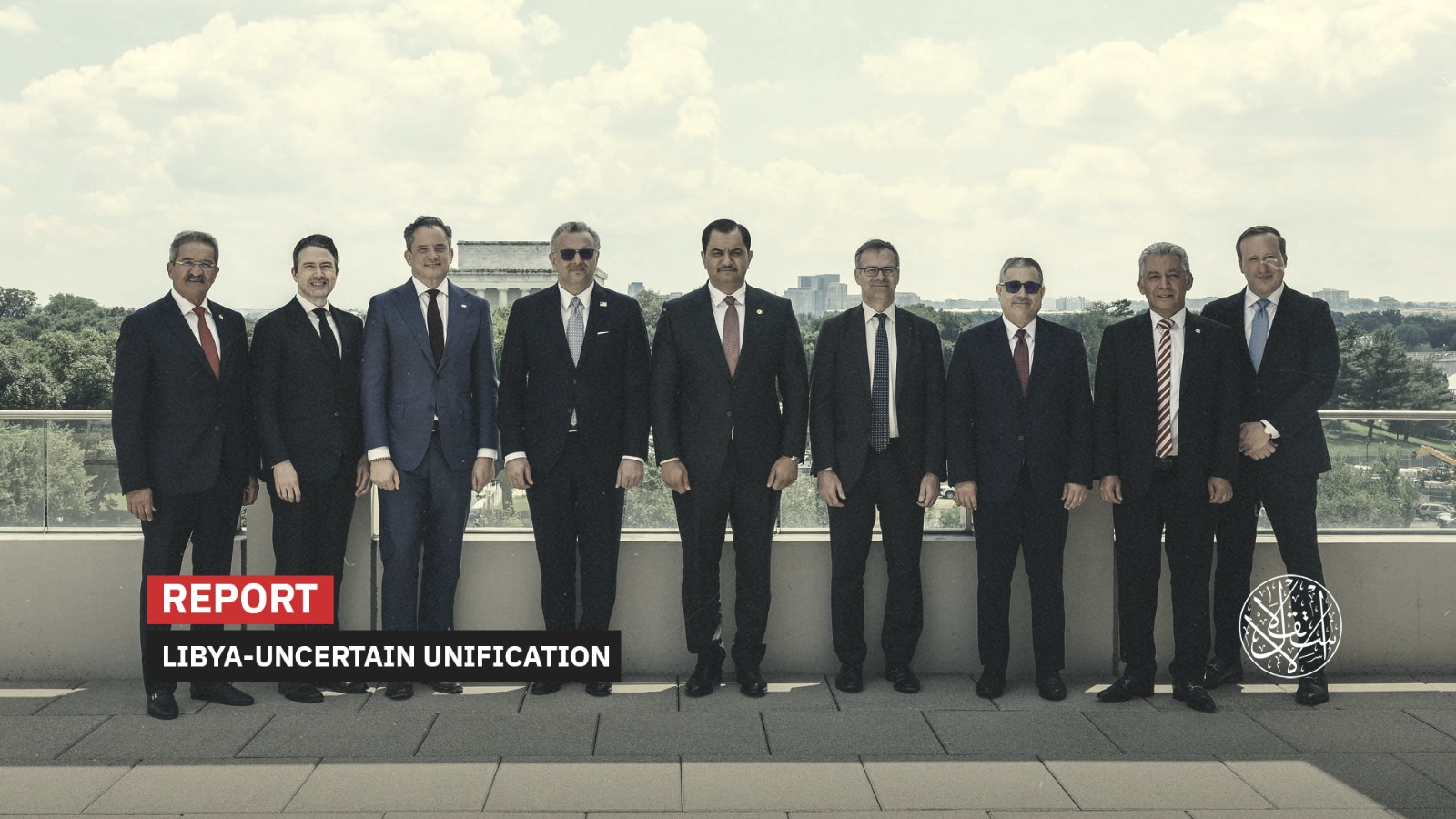
Cairo and Ankara are inclined to push toward de-escalating the division, in a way that aligns with the U.S. effort.
The ongoing political crisis in Libya and its regional implications continue to prompt several powers to propose initiatives aimed at resolving it.
The latest of these is a proposal presented by the so-called “American mediator,” which has triggered mixed reactions within Libya.
According to Massad Boulos, adviser to U.S. President Donald Trump on Middle East and Africa affairs, Washington is working on a plan aimed at unifying Libya’s rival institutions under a single authority, while also encouraging major American companies to expand their investments in Libya’s energy sector.
Boulos claimed in remarks to the Financial Times on June 17, 2026, that the main goal of the initiative is to “form a unified government and consolidate all institutions,” paving the way for a new phase of stability and the exploitation of Libya’s significant economic potential.
Libya has been experiencing a persistent political and security division for more than a decade, amid the failure of successive international efforts to organize presidential and parliamentary elections that would end the struggle for legitimacy between rival institutions in the east and west of the country.

Haftar Welcomes the Move
In the first Libyan reactions to the U.S. move, 57 members of the House of Representatives announced their welcome of the American initiative regarding developments in Libya’s political scene.
The Libyan House of Representatives has 200 seats, but the current number of active members is about 155, due to the lack of elections in some cities because of field conditions.
According to the Fawasel website on June 22, the lawmakers confirmed their support for all efforts aimed at ending political and institutional division, and enabling the Libyan people to exercise their right to choose their representatives through free, fair, and democratic elections.
They stated that the initiative represents a step that can be built upon to move the political process forward, stressing the importance of unifying state institutions and strengthening stability, in order to reach a comprehensive settlement to the Libyan crisis.
This position comes days after 47 members of the House also expressed support for the initiative of U.S. President Donald Trump’s adviser for Middle East and Africa affairs, Massad Boulos, considering it one of the serious opportunities that can be relied upon at this stage to end the political stalemate.
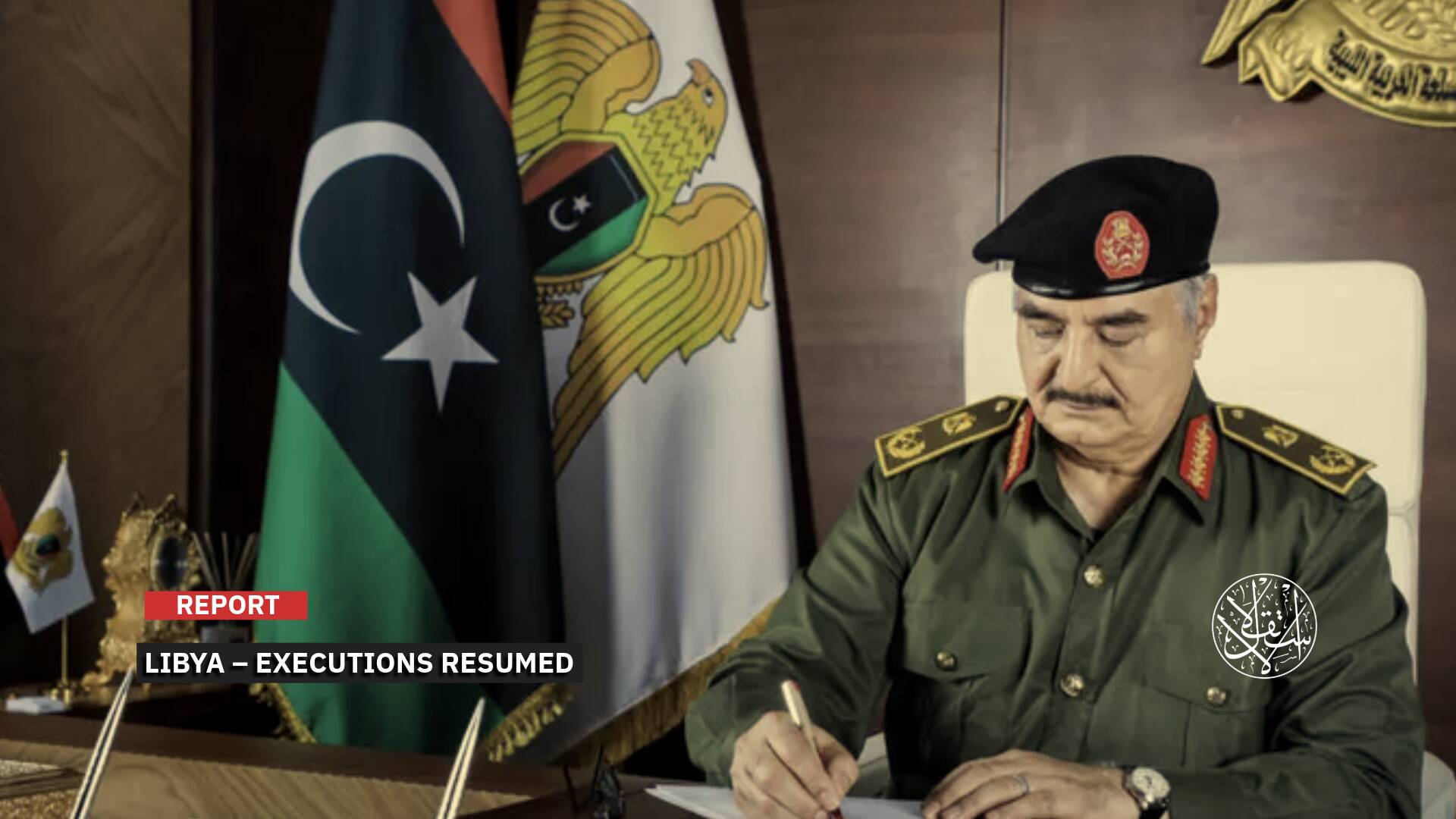
The Libyan National Army (LNA) announced on June 18 its readiness to engage directly in any negotiation process regarding the U.S. initiative to resolve the Libyan crisis.
The LNA stated that the initiative is based on unifying the executive authority as a starting point toward a comprehensive settlement of the political crisis in the country.
It added that the U.S.-proposed initiative differs from previous ones, noting that it is based on “realism” and an understanding of the complexity of the Libyan situation.
The LNA leadership said it had observed through its discussions with U.S. officials “serious intentions” from Washington to help end Libya’s long-standing crisis, especially amid the failure of other tracks to achieve any breakthrough.
The LNA officially announced its readiness to participate in negotiations related to the initiative, in order to complete its details and reach a final formula that serves the supreme national interest and sets a roadmap leading to elections as soon as possible.
It also reaffirmed its support for any local or international efforts that contribute to achieving consensus among Libyans and unifying state institutions, stating that it will do everything possible to ensure the success of the U.S. initiative, provided that sufficient support is available from the United States, the international community, and relevant Libyan parties.
The Democrats Reject
In response to this welcome, the political movement “Ya Biladi” said that what is happening is merely an attempt to reproduce de facto authorities and create new political bodies that would confiscate Libya’s national will and the Libyan people’s right to determine their own fate and build their state on sound constitutional foundations.
In a statement issued on June 19, the movement emphasized that the Libyan crisis has never been a problem of a shortage of governments, councils, or transitional bodies.
Instead, it has always been a crisis of the disruption of the constitutional process and the seizure of popular sovereignty.
The statement noted that the national path launched with the 2011 revolution was not allowed to reach completion, as it was repeatedly obstructed by armed conflicts, military coups, and attempts to impose a fait accompli.
It stressed that one of the most dangerous turning points was Khalifa Haftar’s announcement of a military coup and his suspension of the constitutional declaration on February 14, 2014, a move that pushed the country back to square one and derailed a process that was supposed to lead to lasting stability through constitutional rule.
The movement also warned that interventions did not stop there, as Libya witnessed increasing involvement from the UN mission and some international powers, which, according to the statement, went beyond assistance and facilitation to direct interference in shaping Libya’s political landscape.
The statement affirmed that “legitimacy is not derived from international understandings or political quotas, but from the free will of the Libyan people alone,” reiterating its commitment to the constitutional path as the only proper entry point to end successive transitional phases and build a stable and capable state.
It declared its complete rejection of what it called the “Boulos deal” and the “structured dialogue outputs,” stressing that any political project that bypasses national will and the constitutional process will not be a solution to the crisis, but rather an extension of it.
From the same perspective, the “Social and Political Activities Conference and Civil Society Institutions” in Fezzan (southwest Libya) announced its rejection of what it called the “Massad Boulos power-sharing deal in Libya.”
In a statement on June 22, the conference expressed concern over the diplomatic and political moves carried out by Boulos, stressing that they are shrouded in ambiguity and raise doubts about their true intentions.
It argued that “Boulos’s declared or undeclared efforts to arrange or impose power-sharing formulas, and the related political deals and power-engineering schemes, appear to be striving to impose a new fait accompli on Libyan territory.”
The conference said this reality does not rely on principles of transparency, accountability, or the proper democratic mechanism desired by the Libyan people. It added that attempting to limit Libya’s future to narrow options and steering consensus among specific parties undermines equal citizenship and entrenches divisions.
It declared its absolute rejection of any attempts to impose political settlements that are not based on the will of the people, emphasizing that what Boulos is doing to impose political agendas and arrangements does not represent the will of the Libyan people in any way.
It also rejected recognition of any authority or legitimacy that does not come from elections, stressing that the essence of democracy lies in the people’s right to choose their representatives.
The statement called for the convening of a comprehensive national conference bringing together all authentic Libyan components and groups, allowing all views to be represented and respected, with the aim of establishing a clear roadmap to emerge from what it described as the “dark tunnel” of crisis.
Clash of the Powerful
In contrast, political analyst Ahmed al-Tuhami said that the political momentum surrounding the U.S. initiative on the Libyan file is not due to the clarity or completeness of its details, but rather to the weight of the sponsoring party and the main actors involved.
Al-Tuhami confirmed in an analysis cited by the local website Al-Sa’a 24 that the initiative is still within the framework of political mediation aimed at bringing viewpoints closer between the active forces on the Libyan scene.
He explained that “the U.S. initiative cannot yet be described as a fully developed political project or a finalized document ready for implementation; rather, it represents a negotiation track led by the United States between the two strongest parties in the Libyan landscape, namely the interim Government of National Unity and the General Command of the Armed Forces.”
He added that what has been announced so far is limited to general outlines and main objectives, while the details remain subject to discussion and negotiation among the concerned parties.
Al-Tuhami warned that any political process depends on the seriousness of the participating parties and their genuine willingness to reach an agreement, stressing that the success or failure of the initiative will remain tied to the will of the Libyan forces involved in the negotiations and their ability to overcome existing differences.
He emphasized that any rapprochement between the main eastern and western powers would have a positive impact on the economic and living conditions of citizens, noting that continued political and institutional division has deepened the economic and service crises facing the country.
Khaled al-Turjman, head of the Libyan National Action Group, confirmed that the recent U.S. initiative to address the Libyan crisis differs from initiatives proposed in recent years.
He explained to the Akhbar Libya website on June 24 that this initiative departs from traditional approaches focused on political arrangements and power-sharing, and instead moves toward addressing the root causes of the crisis through the security and economic files.
He stated that most previous UN initiatives focused on political and procedural aspects related to elections, electoral laws, and candidacy conditions, but failed to achieve a real breakthrough in the Libyan crisis.
He pointed out that these tracks gradually turned into repetitive cycles of debates and disputes without reaching practical outcomes to end the state of division.
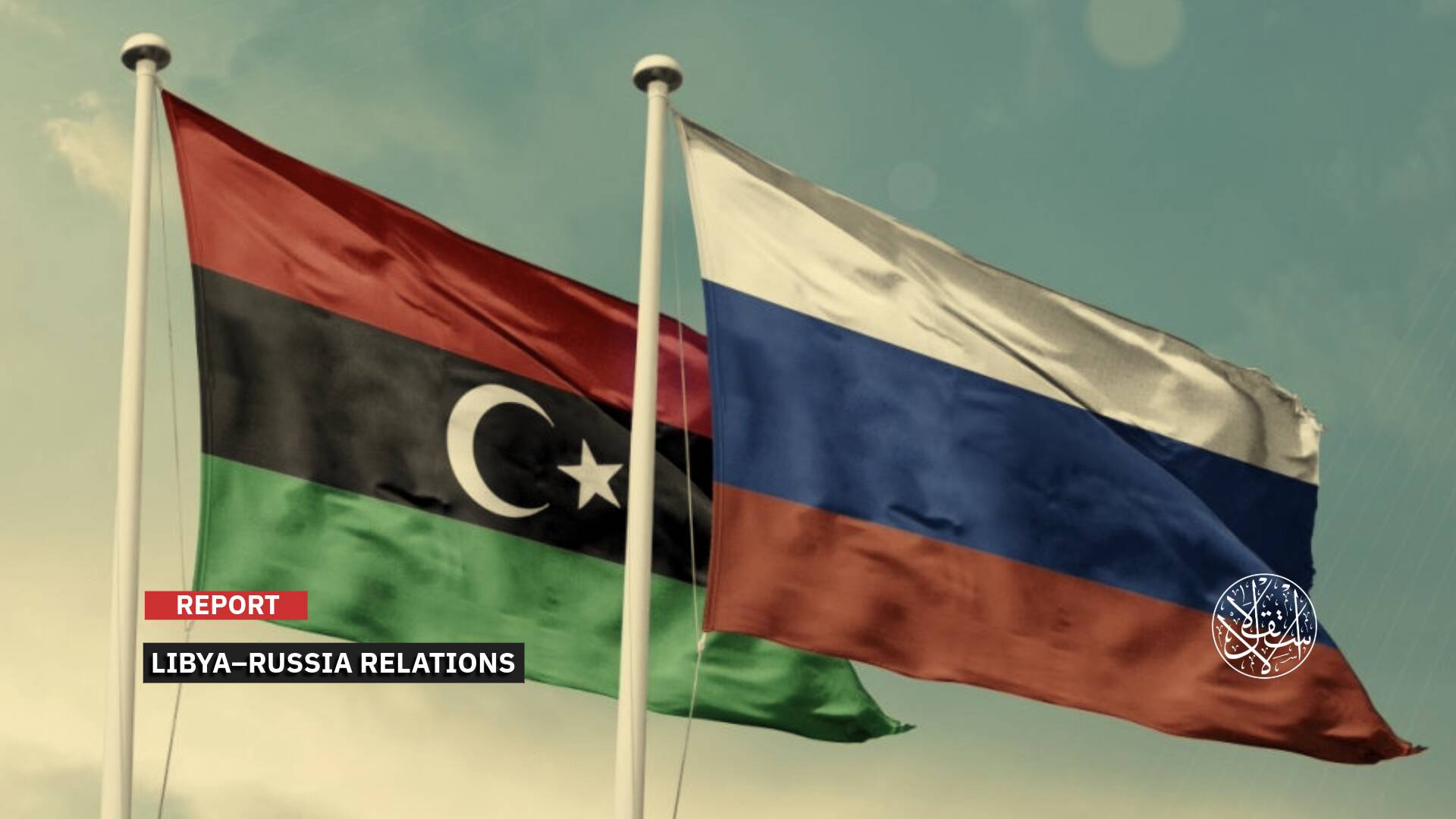
Al-Turjman also highlighted the presence of what he described as a “present-absent” international actor in the Libyan scene, Russia, affirming that Moscow’s position remains an important factor in any future political arrangements due to its influence in Libya in recent years.
He argued that the U.S. initiative, despite its opportunities, still faces several challenges, particularly the need for broader international consensus, especially the roles of Britain and Russia in the Libyan file.
Regarding the future of the political scene if the Boulos initiative succeeds, he ruled out radical changes in the balance of power on the ground, explaining that the initiative appears closer to an attempt to deal with existing political and security realities rather than replacing or bypassing them.
He added that the main actors in the east and west will remain part of any future arrangements, since any realistic political approach cannot ignore the forces that actually exist on the ground, whether politically, security-wise, or militarily.
Economic and Strategic Motivations
In its assessment of U.S. activity in Libya, the “Al-Masar Center for Humanitarian Studies” stated that this activity is based on specific economic and strategic motivations, which are met with calculations unique to each Libyan party dealing with Washington.
In an analysis dated June 16, al-Masar Center explained that some of the U.S. motivations are old and stable, including Libya’s geographic position between Europe and the African Sahel, its latent oil wealth, and competition with Russia over influence in North Africa.
It added that these factors have accumulated over the past two years. The first is that Libya’s oil wealth has gained added value, as Libyan light crude has become an urgent strategic alternative to Russian oil, which Europe is seeking to replace. It stressed that the U.S. has a major interest in Libyan oil, especially amid the war with Iran.
The second factor behind U.S. movement in Libya, according to the same source, relates to the decline of Russian presence in the region after the fall of Bashar al-Assad’s regime in Syria, which led Moscow to refocus on Libya, shifting from reliance on the Wagner Group to direct involvement through the Ministry of Defense.
It noted that former U.S. special envoy to Libya during the Obama administration, Jonathan Winer, had previously stated that Washington hopes to enable the two governments in the east and west to fight armed groups and reduce Russian influence within Haftar’s army, and that it is in Libya’s interest to be governed by a single civilian government and a unified army responsible for security.
The center also highlighted the factor of “field stalemate,” as neither the eastern nor western camps are able to achieve a political or military victory over the other. It stressed that this deadlock has strengthened the prospect of a negotiated settlement led by the United States.
The same source emphasized that recent U.S. activity in Libya has taken on an economic, military, and political dimension, led by the Trump administration through Massad Boulos.
This activity is based on the belief that stability in Libya begins with unifying the financial institution, controlling parallel spending, and building a shared security foundation, before addressing elections and executive unification.
Accordingly, the center said, “U.S. activity has been distributed across three parallel tracks: an economic track aimed at establishing a shared financial foundation between east and west, a military track based on joint training between the divided institutions, and a political track that remains the weakest in presence.”
The center added that rapprochement between eastern and western Libya is a goal where the interests of the United States intersect with those of influential regional powers in the Libyan file, particularly Egypt and Turkiye.
It explained that after years in which each capital supported opposing sides, Egypt with the eastern camp led by Haftar, and Turkiye with the western government in Tripoli, both Cairo and Ankara are now leaning toward de-escalating the divide in a way that aligns with the U.S. approach.
However, it cautioned that this convergence in direction does not mean identical interests, as each actor still maintains its own calculations and fears that any new arrangement could come at the expense of its influence.