French Police Practice ‘Institutionalized Racism’ Against Arabs and Africans: What Is the Story?
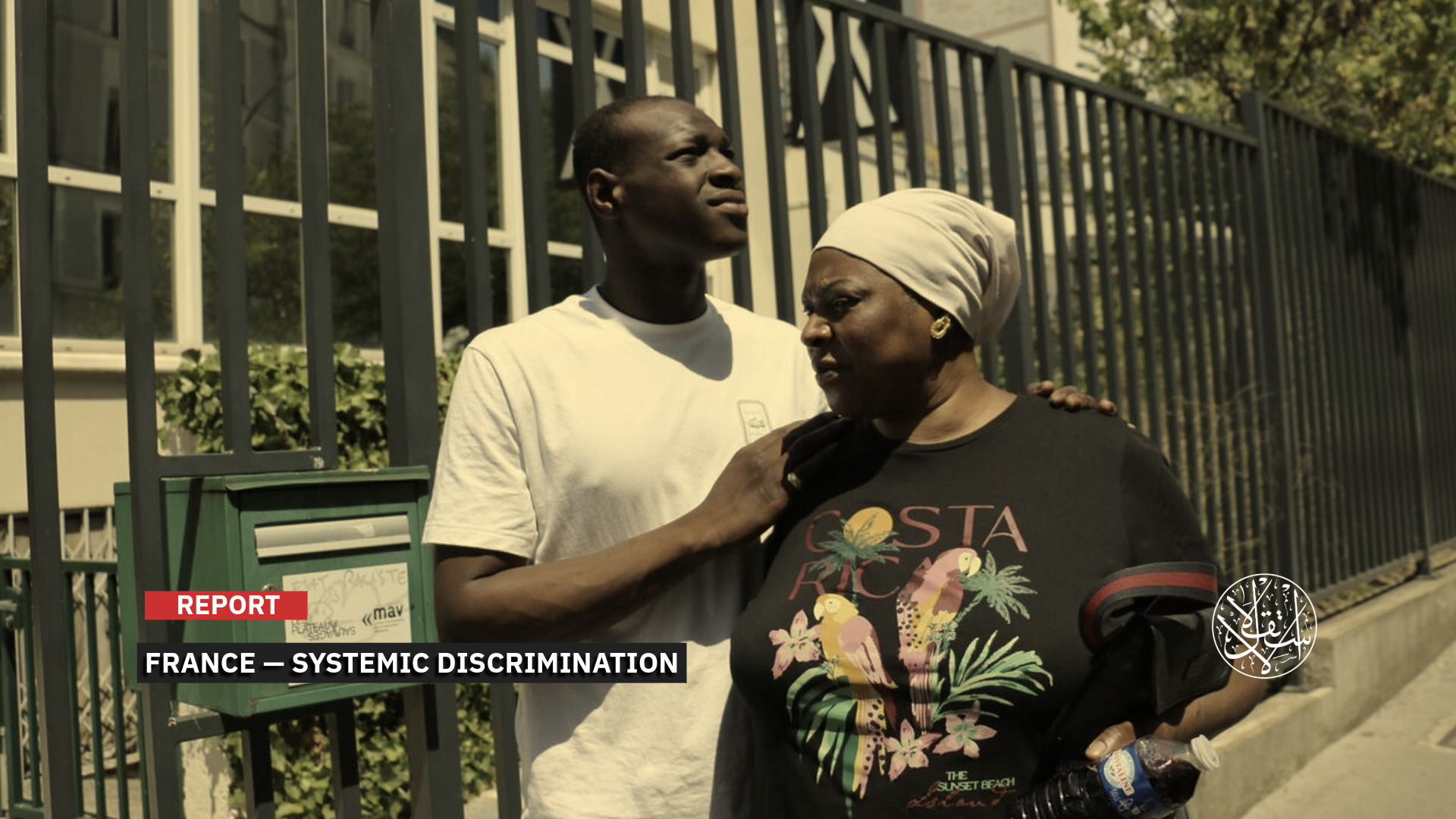
Children opening fire hydrants in the Paris suburbs to cool off during the heat were met with media coverage focusing on “water waste” and “disturbance”.
Despite France’s promotion of the principles of equality and freedom, its reality continues to reveal contradictions that expose discriminatory practices among citizens and the use of the law to target Africans and Arabs, including those who hold French nationality.
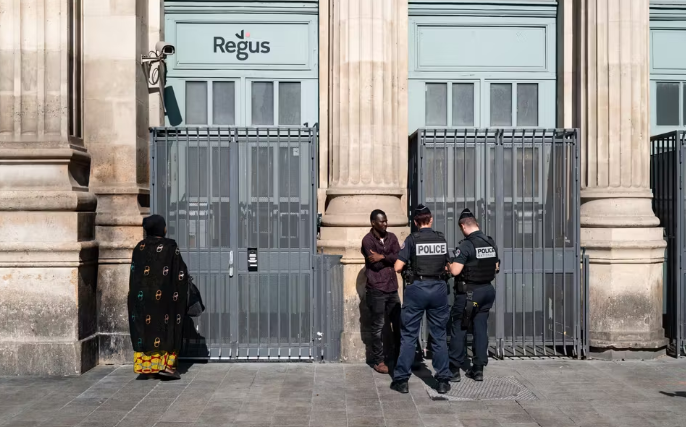
Human rights organizations have accused French police of using a system of on-the-spot criminal fines to target boys and young men who are perceived as Black, Arab, or of North African origin. They say this contributes to deepening social and economic exclusion in working-class neighborhoods.
The allegations were made in a report published in June 2026 by Human Rights Watch, Reclaim, and the Community House for Solidarity Development.
The organizations stated that police impose immediate fines for alleged offenses related to public-order violations, such as making noise, littering, and the unlawful discharge of unhealthy liquids, intending to harass these young people and push them away from public spaces in their neighborhoods, even though they were engaged in ordinary activities such as talking outside their homes or exercising in parks.
According to the report, these fines are imposed based on individual assessments by police officers, without judicial oversight, and those who receive them do not benefit from basic safeguards associated with a fair trial.
The report noted that the law considers incident reports written by police officers to be valid unless proven otherwise, while the process for challenging these fines is filled with obstacles, and most appeals are often rejected.
The organizations documented cases in which children and young people received accumulated fines reaching tens of thousands of euros. The amounts ranged from €1,600 (around $1,728) to €37,000 (around $40,000), while social workers said they were aware of cases in which fines had reached €50,000 (around $54,000).
The report quoted several young people as saying that these debts had led to large portions of their wages and social-security benefits being deducted. Some were forced to choose between paying the fines and covering the costs of food and housing.
Others reportedly left formal employment, closed bank accounts, or withdrew from public life out of fear of receiving further fines.
No Oversight, No Accountability
In this context, Benedicte Jeannerod, director of the France office of Human Rights Watch, said that “racial profiling in France is widespread and persistent, yet police have been granted new powers that allow them to harass young people who are not white without any oversight or accountability.”
In a statement published on the organization’s website on June 17, 2026, Jeannerod emphasized that “French authorities should take immediate steps to end racial profiling instead of expanding police powers that leave young people burdened with debts that can reach tens of thousands of euros and potentially destroy their lives.”
Meanwhile, Omer Mas Capitolin of the Community House for Solidarity Development said that these arbitrary fines had worsened discriminatory police harassment by forcing children and young people out of public spaces through the criminalization of their mere presence there.
He added that these practices “treat them as ‘unwanted’ rather than as full citizens with rights, pushing them toward a form of social death that threatens their future, weakens their participation in society, fuels distrust in institutions, and erodes their sense of belonging to the community.”
France’s highest courts and the United Nations Committee on the Elimination of Racial Discrimination have previously found that police stops and searches disproportionately target young people from ethnic minority backgrounds in low-income neighborhoods.
In 2017, France’s Defender of Rights found that Black and Arab young people were 20 times more likely to be stopped and searched by police.
In 2025, the Defender of Rights stated that discriminatory police stops remained widespread and that stops and fines were part of “an institutional policy aimed at removing populations categorized as ‘undesirable’ from public spaces.”
Another report by the Court of Auditors found that many fines contained procedural errors and lacked independent oversight.
The Exclusion of Arabs and Black People
The joint report sparked several reactions in France, including one from French Socialist politician Clementine Autain, who said in a Facebook post on June 19, 2026, that discrimination between citizens is unacceptable.
She noted that since 2012, a decree has allowed police officers to impose immediate fines for public-order violations such as excessive noise, littering, and spitting. She argued that these offenses have enabled police to carry out arbitrary punishment against some citizens but not others.
After criticizing the heavy financial burden imposed on those affected, Autain said that what is happening amounts to “a sentence of social death for young people, as they have found themselves trapped outside the public sphere in their own neighborhoods.”
She stressed the urgent need to train police officers to combat racism, end unchecked repression, and require police to face effective accountability for widespread racial discrimination. She also called for the creation of a more peaceful relationship between police and local communities.
The French outlet BLAST stated on June 20, 2026, that discriminatory fines are intended to exclude Arab and Black young people from public spaces.
Social worker Omer Mas Capitolin stressed that “what is happening is a way for authorities to tell those affected: you are not full citizens, but rather second-class citizens; therefore, you are treated differently from others.”
According to the same source, Capitolin said that the accumulation of these fines sometimes leads to debts amounting to tens of thousands of euros, causing severe financial hardship for the young people concerned and their families, and depriving them of social life.
The French social worker concluded that “what is happening confirms that we are facing a real system of racist harassment and social exclusion.”
Disparate Treatment
At the official level, and in response to these reactions, French Interior Minister Laurent Nunez rejected and challenged the findings of the report issued by the three non-governmental organizations, dismissing the study’s conclusions.
According to the French website ladepeche, in a report published on June 18, 2026, Nunez said that racial profiling “does not exist” and that fixed fines are “always linked to an offense.”
Laurent Nunez stressed that “the police are a republican force carrying out a mission of ensuring security and maintaining public order,” and that “these young people are like us; they are French citizens.”
Disparities in fines and in the application of the law in France are not new. A report issued by the National Institute for Youth and Popular Education found that around a quarter of young immigrants, descendants of immigrants, or people born abroad reported experiencing discrimination based on skin color, origin, or nationality over the previous five years.
According to France 24 on February 26, 2026, the report stated that unequal treatment of children of African or Arab origin in schools is “often unconscious” and partly systematic.
It added, “This is reflected in the lack of social diversity in some schools, career guidance choices, stigmatizing comments, and physical violence directly linked to students’ backgrounds.”
To address this “segregation,” the report recommends making training courses on “racial biases” mandatory for teachers and staff, and calls for a reassessment of recruitment methods in secondary schools.
Higher education has also not been immune. The report, for example, criticized the use of students’ original high schools as an implicit criterion (through local algorithms) for admission to certain programs, particularly the most selective ones.
The same applies to housing, whether through requirements such as paying a security deposit to rent an apartment, which can discourage young people with fewer financial resources, or through landlords rejecting applications from people perceived as foreigners or as living in priority neighborhoods.
Regarding professional integration, the report noted that, according to the latest measure on perceptions of discrimination in employment published in December 2025, 41% of young people perceived as Black, Arab, or North African reported experiencing discrimination while looking for work over the previous five years, and 33% reported discrimination in career advancement. This compared with 18% and 27%, respectively, among young people perceived as white.
The same source also stressed the need to regulate police identity-check practices and evaluate the effectiveness of these checks and their impact on relations between police and local communities.
The report found that young people perceived as being of foreign origin are, in fact, four times more likely to be subjected to identity checks than the rest of the population, and 12 times more likely to undergo more intrusive forms of checks (including searches, physical searches, being taken to a police station, and being ordered to leave an area).
It further stated that they are twice as likely to experience inappropriate behavior from law enforcement authorities, including the use of the informal “tu” or “you” form of address, as well as insults, provocation, and excessive behavior.
The report concluded that “effective respect for fundamental rights is an essential condition for social cohesion.”

Blistering Heat
During the current period in France, which is experiencing a significant rise in temperatures, French reports have highlighted new manifestations of hostility targeting Arabs and Muslims, this time under the cover of the debate sparked by the country’s exceptional heatwave.
The French website Mediapart reported on May 30, 2026, what it described as an outbreak of racist conflation during a week of extreme heat, as the presence of young men and women of Arab and African backgrounds in public spaces seeking places to cool down became a subject of political and media incitement.
According to the report, the campaign began after videos circulated showing hundreds of holidaymakers from the city of Nantes heading to the Baule beach, with footage showing young men and women pushing to board a train to return home at the end of a hot day.
The website documented how figures and media outlets associated with the far right, such as CNews and newspapers including Le Figaro and JDD, used citizens’ visits to beaches and waterways for recreation and cooling off as an opportunity to immediately link them to insecurity, riots, and security problems that had occurred in the area.
The report argued that these young people, who are from immigrant backgrounds, were portrayed as a source of disorder despite the lack of evidence linking them to the security incidents being discussed. The website described this as an example of turning a climate-related crisis into material for identity-based and racist debates.
The issue was not limited to beaches. Videos showing young people jumping into the Canal Saint-Martin in Paris to escape the heat triggered a wave of racist comments on social media, including insulting descriptions and references to their ethnic backgrounds.
Activists and researchers who spoke to the website said that the real issue was not young people seeking water or shade, but rather what they described as “climate inequality.”
The report stated that “working-class neighborhoods, where the children of immigrants often live, suffer from a shortage of green spaces and higher indoor temperatures in residential buildings, pushing residents to travel long distances to reach beaches, waterways, or public areas that are cooler.”
It highlighted that public debate often ignores the social and climate-related causes of the problem and instead searches for a “culprit.” It added that images of Arab or Black young people in public spaces are frequently interpreted through a security or identity-based lens rather than being viewed as a reflection of worsening social and climate realities.
The report also noted that children opening fire hydrants in the Paris suburbs to cool off during the heat were met with media coverage focusing on “water waste” and “disturbance,” while discussions about difficulties accessing swimming pools or the lack of suitable facilities in poorer neighborhoods were largely absent.