The War's Failures: Will They Lead Gadi Eisenkot to the Israeli Premiership?
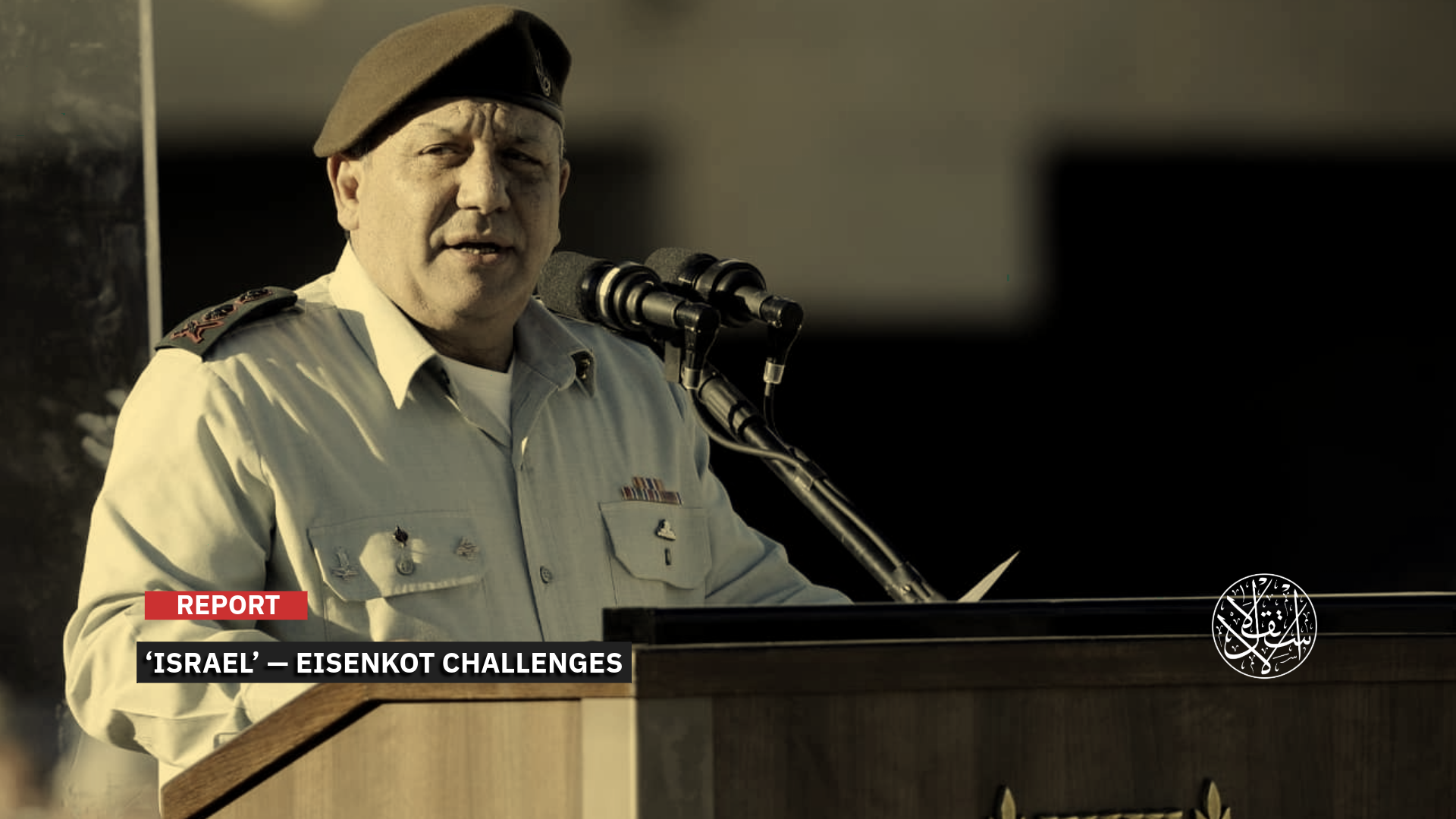
Eisenkot escalated his criticism of Netanyahu, accusing him of leading “Israel” toward a historic decline.
On June 30, 2026, former Israeli Chief of Staff Gadi Eisenkot intensified his attack on Prime Minister Benjamin Netanyahu, accusing him of leading “Israel” into a "historic decline" and of managing the war without a clear strategy, as he simultaneously launched his political campaign to run for prime minister.
This confrontation carries particular significance because Eisenkot was not an opposition figure outside the government. Rather, he was a member of the war cabinet that Netanyahu formed following the October 7, 2023, attack, before resigning from it months later in protest over the way the war was being conducted and the losses sustained by the Israeli military.
Eisenkot is entering the race during one of the most complex periods in “Israel's” history, amid a prolonged war on multiple fronts, unprecedented political and social divisions, escalating tensions with the United States, and a marked decline in Israelis' confidence in their political and military leadership.
Against this backdrop, Eisenkot is presenting himself as the general capable of rebuilding the state's institutions and leading “Israel” in the post-Netanyahu era, after Netanyahu's dominance over Israeli politics for more than fifteen years.
The question remains: Does Gadi Eisenkot possess the political and military credentials, as well as the electoral alliances, needed to bring an end to Benjamin Netanyahu's long-standing dominance of Israeli politics?
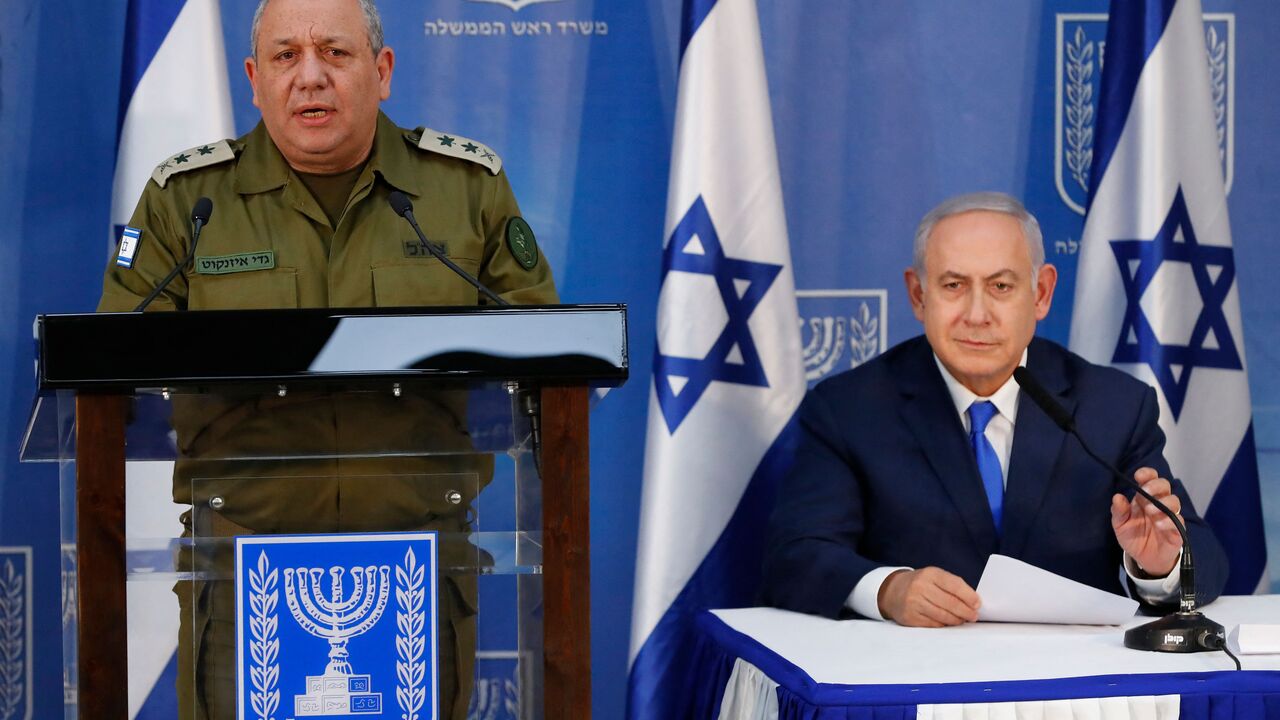
How Did His Project Begin?
Eisenkot's move from the war cabinet to the opposition was not merely a political dispute with Netanyahu; it marked a turning point in the Israeli political landscape.
From his time on the small ministerial forum, he argued that the government lacked a clear political and military vision and that continuing the war without achievable objectives was harming “Israel's” security more than it was serving it.
During his membership in the war cabinet, Eisenkot participated in deliberations over some of the most sensitive military decisions, from the ground operations in the Gaza Strip to the management of the confrontation on the Lebanese front.
He was also among the strongest advocates of prioritizing a prisoner exchange agreement that would secure the return of the Israeli hostages, while continuing military pressure on Hamas.
However, disagreements within the war cabinet gradually widened, particularly over the absence of a political plan for the post-war period, the conduct of military operations, and relations with the United States. In June 2024, he resigned alongside National Unity Party leader Benny Gantz.
From that point onward, his criticism evolved from internal objections into a comprehensive political project. Rather than simply holding Netanyahu responsible for the security failures exposed by the October 7 attacks, Eisenkot began presenting himself as the alternative capable of rebuilding the state's institutions and restoring Israelis' confidence in both the political and military establishments.
This shift coincided with a clear decline in the popularity of Netanyahu's government, the continuation of domestic protests, mounting criticism of the government's handling of the war, delays in securing the return of the hostages, widening disagreements with the military establishment, and an intensifying dispute with the ultra-Orthodox parties over the Haredi military conscription law.
In this political climate, Eisenkot found an opening that had not been available to him before the war. He was no longer seen merely as a former chief of staff, but as a figure with direct experience in managing the most serious security crisis “Israel” has faced since its establishment.
Eisenkot Takes on Netanyahu
On June 30, 2026, Gadi Eisenkot escalated his criticism of Benjamin Netanyahu, accusing him of turning the absence of a strategy from a mere failure in managing the war into a policy in its own right, and arguing that calculations aimed at ensuring his political survival had come to take precedence over considerations of national security.
Netanyahu was quick to respond, launching a direct attack on his new rival and describing him as "a hesitant commander." He argued that had Eisenkot's recommendations been followed during the war, “Israel” would not have achieved what he described as its "military accomplishments" in the Gaza Strip and Lebanon.
The exchange reflects Netanyahu's recognition that his new challenger is confronting him not from the position of a conventional opposition politician, but from within the security establishment, which for decades has been one of the principal sources of his electoral strength.
Opinion polls published after Eisenkot announced the formation of his new party indicate that it could win more than 20 seats in the Knesset.
Such a result would place it among “Israel's” largest political forces and give it a genuine opportunity to compete to form the next government, should the Likud Party fail to secure a parliamentary majority of 61 seats.
These figures carry added significance amid the governing coalition's continued decline in popularity and growing divisions within the right-wing camp.
As a result, the next election is increasingly being viewed within Israeli political circles as a battle over the future of the Netanyahu era, rather than simply a contest between two political parties.
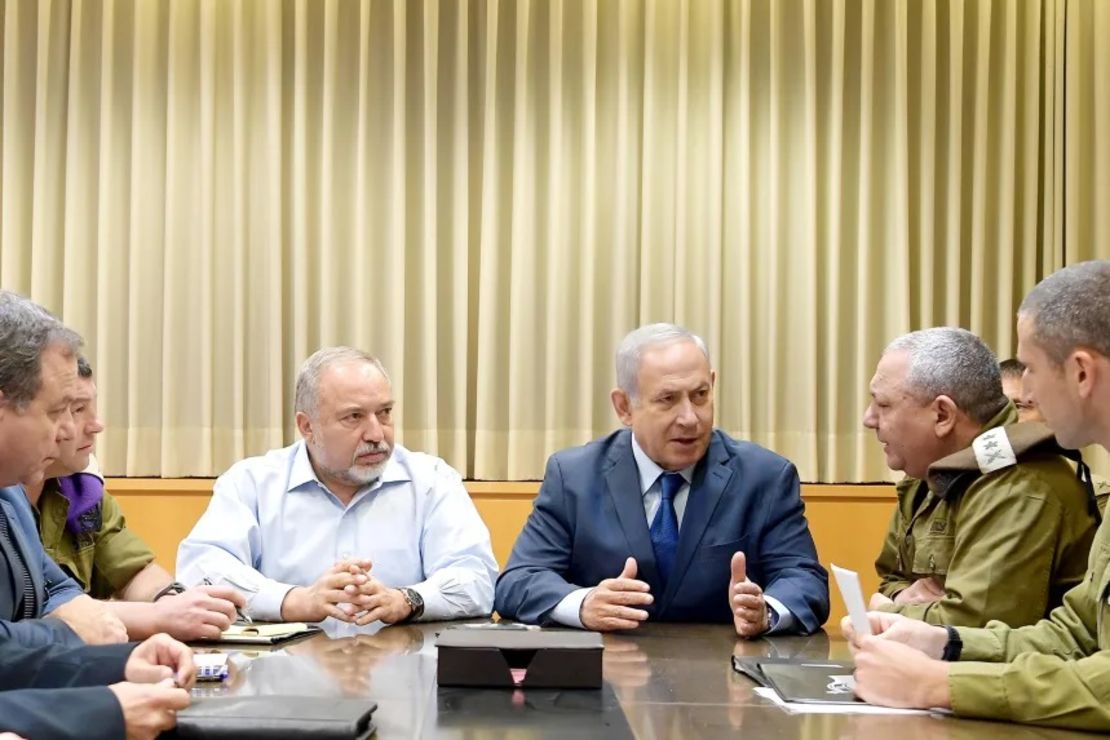
Who Is Behind Eisenkot?
If Gadi Eisenkot's military experience has given him the credibility to compete for the premiership, the path to the prime minister's office in “Israel” does not run through the military establishment, but through the Knesset.
“Israel's” political system does not automatically award power to the largest party. Instead, it is granted to whoever succeeds in forming a parliamentary coalition commanding the support of at least 61 of the Knesset's 120 members.
Consequently, the more important question is not how many seats Eisenkot might win, but whether he can build a coalition capable of removing Benjamin Netanyahu from power.
For this reason, from the very first day of launching his political project, Eisenkot has sought to present himself as a candidate who transcends the traditional divide between the right and the center, rather than merely the leader of a new political party.
He chose the name Yashar ("Straight" or "Integrity") for his party, invoking the ideas of honesty and integrity, while placing the fight against internal polarization and the rebuilding of state institutions at the heart of his political message, rather than limiting himself to criticizing the government.
The project has not been centered on Eisenkot alone. From the outset, he has sought to recruit prominent figures from the security, economic, and public administration sectors, in an effort to present the party as a cohesive team prepared to govern, rather than simply an electoral platform built around a single individual.
Among the most prominent figures to join him are former Shin Bet director Yoram Cohen, former head of the Budgets Department at the Ministry of Finance Shaul Meridor, and several former senior military and security officials.
Through these appointments, Eisenkot has sought to convey the message that the alternative to Netanyahu would be no less experienced in managing “Israel's” security and economic affairs.
Former Israeli Prime Minister Naftali Bennett has also declared that he would refuse to join any government led by Netanyahu, while expressing his willingness to serve in a government headed by Eisenkot if, in his words, it were necessary "to save Israel."
This model differs from that of most traditional Israeli political parties, which are often built around either personal leadership or ideological affiliation.
Eisenkot is instead seeking to capitalize on the trust that “Israel's” security elite continues to enjoy within Israeli society, particularly following the decline in public confidence in the political leadership after the October 7 attacks.
From this perspective, he is betting that the experience of his team in security, military, and economic affairs will appeal to voters seeking a more competent administration at a time when “Israel” faces unprecedented domestic and external challenges.

His electoral base
Gadi Eisenkot's strategy is not limited to the security establishment's elites; it also extends to electoral constituencies that have historically been part of the Likud camp.
Eisenkot, who comes from a Moroccan Jewish family background, is indirectly appealing to Mizrahi (Eastern) Jewish voters, who for decades have formed one of Benjamin Netanyahu's most important electoral bases.
Some Israeli analysts believe that this background gives him a greater ability than Netanyahu's previous rivals to make inroads among parts of the right-wing electorate, unlike figures such as Yair Lapid and Benny Gantz, who have often been portrayed in right-wing discourse as representatives of the Ashkenazi elite.
However, this does not automatically mean that Eisenkot is on the verge of becoming prime minister. The central challenge lies in the nature of “Israel's” coalition-based political system, which makes forming a government far more complicated than simply winning an election.
Even if his party wins more than 20 seats, it would still need to form alliances with centrist parties, some right-wing parties, and possibly receive direct or indirect support from Arab parties in order to secure the parliamentary majority required to form a government.
Eisenkot’s Weaknesses
Meanwhile, Netanyahu and the far-right parties are seeking to target what they consider to be the most significant vulnerability in their political rival's project.
Since Eisenkot announced the establishment of his party, the Likud has repeatedly promoted the argument that any government he leads would only come into existence with the support of Arab parties, in an attempt to revive the rhetoric Netanyahu has repeatedly used against his opponents in recent years.
The campaign has not been limited to political statements; it has also included the release of video materials linking Eisenkot to Arab members of the Knesset, with the aim of convincing right-wing voters that voting for him would effectively mean transferring power to a coalition dependent on the votes of Arab parties.
For these reasons, Eisenkot's greatest challenge is not simply convincing Israelis that he is qualified to serve as prime minister, but proving that he can turn his popularity into a stable parliamentary majority capable of truly ending the Netanyahu era, not merely defeating him at the ballot box.
From this perspective, Eisenkot has avoided going into detail about potential coalition arrangements, preferring instead to focus on a broader idea: forming a wide government composed of moderate Zionist Occupation Forces while excluding parties he considers responsible for deepening internal divisions.
At the same time, he has made clear his interest in building partnerships with prominent figures such as Naftali Bennett, Yair Lapid, and Benny Gantz if doing so would lead to the end of Netanyahu's rule, despite recognizing that bringing these forces together in a single coalition would be a difficult task given their differing political and party orientations.
This equation shows that Eisenkot's battle is not limited to competing with Netanyahu at the ballot box; it also involves testing his ability to manage a complex network of political alliances, a task that often determines who becomes prime minister in “Israel” more than the election results themselves.
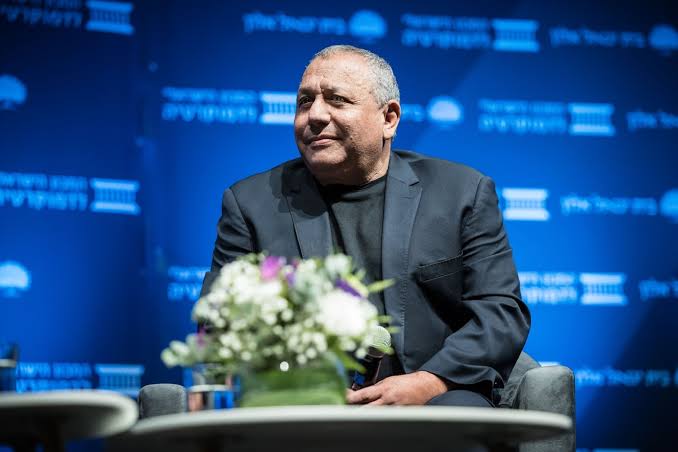
Part Four and Final: What Does Eisenkot Want for ‘Israel’?
Although Gadi Eisenkot presents himself as the political alternative to Benjamin Netanyahu, the difference between the two men does not lie primarily in their broader goals for “Israel”, but rather in the way those goals are managed and the mechanisms used to implement them.
Eisenkot does not put forward a project based on making concessions to the Palestinians or reviving the peace process, nor does he call for reducing “Israel's” military role in the region. Instead, he starts from the same basic assumption held by much of “Israel's” security establishment: that military superiority must remain the central pillar of “Israel's” security.
However, he argues that this superiority loses much of its value when it is managed without a clear political strategy. Since leaving the war cabinet, Eisenkot has repeatedly said that the government made a mistake by linking the war in the Gaza Strip to open-ended slogans without defining achievable political objectives.
In his view, continued military operations cannot be an end in themselves, but rather a means of achieving specific security and political goals, foremost among them the dismantling of Hamas's military capabilities and preventing it from returning to rule the Gaza Strip.
Unlike some far-right ministers, however, Eisenkot rejects the idea of ending the war without a clear vision for the day after. During his time on the war cabinet, he was among the leading advocates of preparing a transitional plan for governing the Gaza Strip.
Such a plan would involve transferring civilian responsibility to a Palestinian administration unaffiliated with Hamas, with support from the United States and several Arab countries, while maintaining “Israel's” military freedom of action against any future security threats.
His position on the West Bank does not differ significantly in terms of its security foundations. At this stage, he does not support the establishment of an independent Palestinian state, arguing that current security conditions do not allow for such a development.
At the same time, he does not adopt the religious right's approach calling for the annexation of the West Bank or unlimited settlement expansion. Instead, he favors maintaining a security and political management approach to the issue in order to prevent it from escalating, while preserving the settlement blocs that he considers part of “Israel's” strategic interests.

Replacing Netanyahu’s Policy
The differences between Eisenkot and Netanyahu are not limited to the issues of Gaza and the West Bank; they also extend to relations with the United States, which have become one of the most prominent areas of debate in “Israel” since the outbreak of the war.
Eisenkot emphasizes that the alliance with Washington is a fundamental pillar of Israeli security, but he criticizes the way Netanyahu has managed this relationship, arguing that the government has weakened “Israel's” standing with its strategic ally and created unnecessary tensions in bilateral relations.
In his latest statements, Eisenkot accused Netanyahu of abandoning one of the principles he had long presented as a source of pride: the ability of an Israeli prime minister to say "no" to the U.S. president when American pressure conflicts with “Israel's” interests.
He argued that Netanyahu, who for years portrayed himself as the leader capable of preserving the independence of Israeli decision-making, has instead begun acting according to calculations of political survival. According to Eisenkot, this has harmed “Israel's” foreign relations and weakened its ability to manage the war.
He also criticized what he described as the absence of a strategic vision in dealing with the various fronts, arguing that Netanyahu's government has placed “Israel” in a state of simultaneous and open-ended confrontation in Gaza, Lebanon, Syria, and Yemen, in addition to continued escalation with Iran, without possessing a comprehensive vision for how to end these conflicts or prevent them from turning into a prolonged war of attrition.
For this reason, some researchers of Israeli affairs argue that Eisenkot does not represent an ideological shift in Israeli politics as much as he represents an attempt to restore the traditional security establishment to the center of decision-making, after years of growing influence by partisan and religious considerations.
In other words, according to this view, Eisenkot's project is based on replacing "security establishment policy" with "Netanyahu's policy", rather than replacing the left with the right.
As “Israel” approaches a new electoral contest, the competition appears to be less about parties with fundamentally different platforms and more about a struggle over who has the ability to govern the country in the post-war era.
In this context, Gadi Eisenkot is betting on his military record, the decline in support for the governing coalition, and his ability to present himself as a figure capable of restoring Israelis' trust in state institutions.
However, the success of this strategy will ultimately depend on his ability to overcome the most difficult obstacle in “Israel's” political system: building a cohesive parliamentary coalition that can give him the majority needed to remove Benjamin Netanyahu from power after years of dominance over the Israeli political scene.