Iraq’s al-Zaidi Campaign: Why Were Some Figures Targeted While Major Names Escaped Scrutiny?
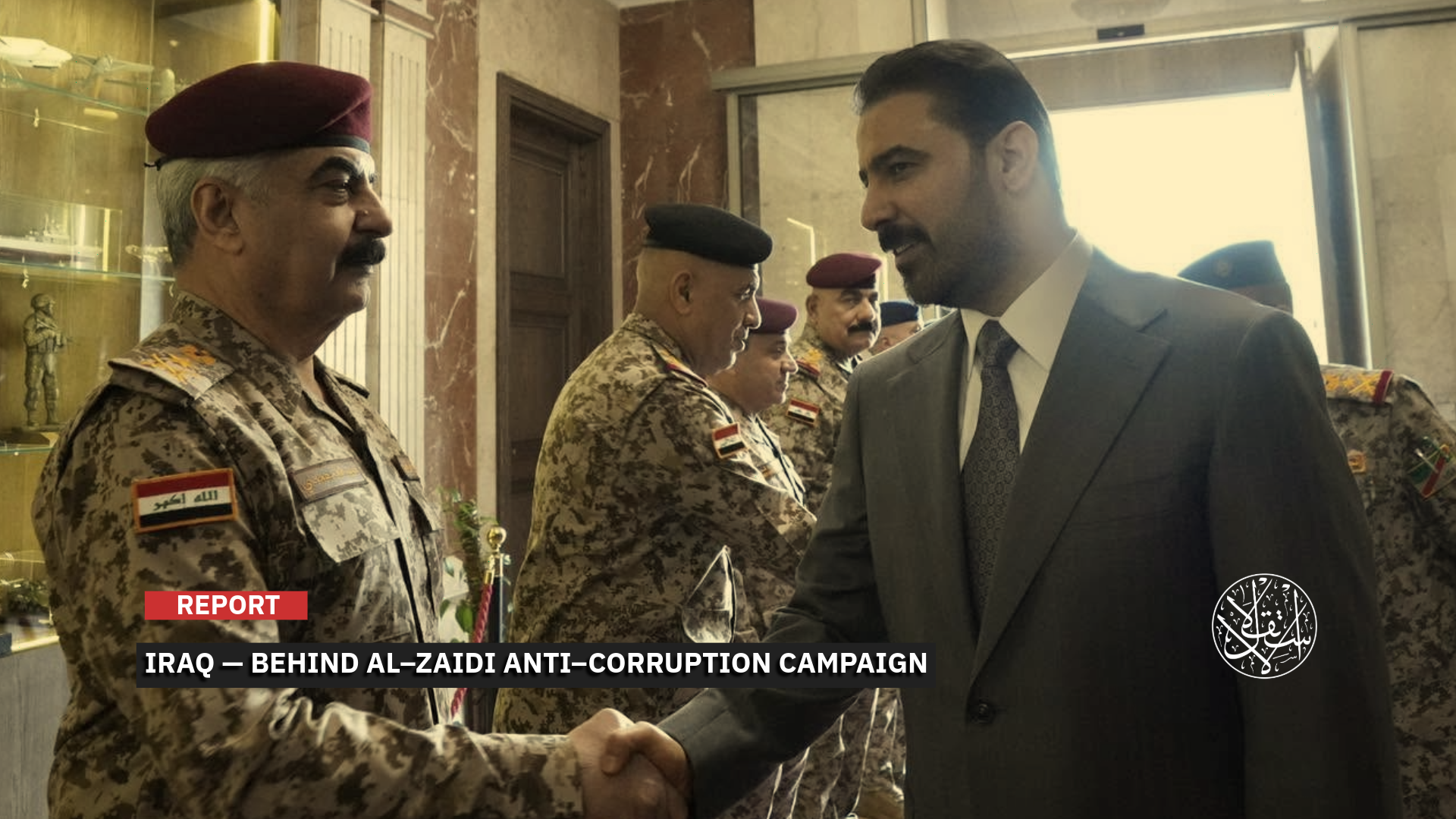
Some leaders within the Coordination Framework objected to al-Zaidi’s anti-corruption campaign.
A sweeping anti-corruption campaign led by Iraqi Prime Minister Ali al-Zaidi has ignited a fierce debate across Iraq after it brought down a number of figures accused of corruption while leaving others untouched. The selective nature of the arrests has prompted questions over whether the crackdown represents a genuine attempt to confront the corruption that has consumed the country since 2003—or another political struggle disguised as a fight against graft in a system where nearly $2 trillion in public funds is believed to have been lost or squandered.
The campaign, dubbed “Dawn Strike,” was launched by Iraqi security forces on June 28, 2026, with pre-dawn raids carried out across Baghdad’s heavily fortified Green Zone and several areas outside the capital. The operation led to the arrest of 47 lawmakers and government officials.
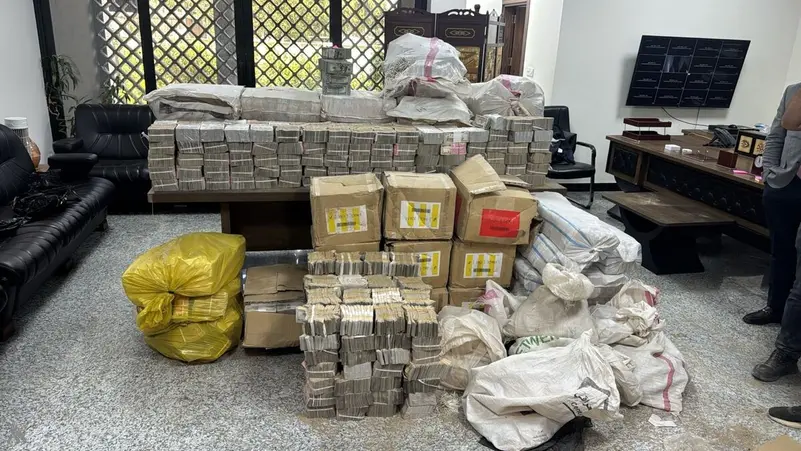
Among those detained were Ali Maraj Al-Bahadli, Iraq’s deputy oil minister for distribution affairs, Muthanna al-Samarrai, the Sunni leader of the Azem Alliance, and several lawmakers closely associated with former Prime Minister Mohammed Shia’ al-Sudani. Authorities also seized millions of dollars in cash, along with gold jewelry.
According to Iraq’s judiciary, the arrest warrants were issued based on testimony from Adnan al-Jumaili, deputy oil minister for refining affairs and director of the Northern Refineries, who was detained in late May and is facing accusations of corruption, bribery, and embezzlement in oil ministry contracts.
A ‘Dawn Strike’ Staged for Show?
Although Iraq’s judiciary has linked the figures targeted in “Dawn Strike” to testimony provided by Adnan al-Jumaili, Iraqi political sources described the operation as little more than a “political theater,” claiming that many of those targeted were informed in advance of the security forces’ arrival, allowing some to avoid arrest.
Speaking to Al-Estiklal on condition of anonymity, the sources said that Muthanna al-Samarrai had received a message from government-linked figures warning him that he would be detained along with several lawmakers on corruption charges. But, they said, he chose not to flee, insisting he had nothing to hide, and remained at a meeting with members of his alliance.
The sources said al-Samarrai was at his home in Baghdad’s Green Zone with lawmakers Mohammed al-Karbouli and Mahmood Alqiesi, as well as Azem figure Haider al-Mulla. Al-Samarrai was arrested, while the other two lawmakers were briefly detained before being released an hour later after officials determined their names were not included on the arrest lists.
They also said that the operation had initially included former parliament speaker Mohammed al-Halboosi, but that he paid $500 million after the government negotiated with him. The sources said this followed al-Jumaili’s testimony against lawmaker Sinan al-Jumaili, a member of al-Halboosi’s Takadum Party, identifying him as the party’s key liaison and financial official.
The sources predicted that al-Samarrai would be released in the coming days, saying he remained in contact with associates and was being treated well in detention. They argued that he was targeted because, as the leader of a Sunni political alliance, he represented the “weakest link” and an easy target for a media spectacle.
They questioned why no major Shiite political figures had been arrested, despite Shiite forces dominating Iraq’s political system since 2003, including former prime ministers Nouri al-Maliki and Mohammed Shia’ al-Sudani, as well as several leaders of armed factions.
The sources dismissed the possibility of senior Shiite figures being detained, arguing that the campaign was a “staged performance” designed to convince Washington that al-Zaidi was seriously fighting corruption ahead of his expected visit to the United States in mid-July and his meeting with President Donald Trump, where he is seeking political backing.
Meanwhile, Omar al-Karawi, brother of detained Sunni lawmaker Mudhar al-Karawi, said his brother received a warning call from an influential political figure hours before the raid, informing him that his name had been added to the arrest lists.
But his response, al-Karawi said, was clear: “I will not run. I will not leave. I am ready for any investigative committee that comes to my door.”
In a Facebook post on June 29, al-Karawi said what raised serious questions was the arrest of his brother alongside two of his minor sons, both under the age of 18, describing the move as raising concerns over the circumstances and motives behind the detention. He added that no money, documents, or direct evidence implicating his brother had been found.
The theory that some lawmakers had prior knowledge of their arrest warrants gained further traction after Hussein Moanes, a lawmaker from the Huquq bloc affiliated with the Iran-backed Kata’ib Hezbollah militia, reportedly fled before security forces arrived to detain him.
Iraqi journalist Yousif Altimimi commented on the case, saying, “It appears Hussein Moanes was among those targeted for arrest in yesterday’s campaign. According to reports circulating, the order came under American pressure, but the security force tasked with carrying it out did not find him.”
In a post published on X on June 28, Altimimi suggested that the timing and details of the operation may have been leaked to Moanes in advance—possibly from within al-Zaidi’s own government—allowing him to disappear before the security forces reached him.
“The arrests carried out yesterday may represent a secondary achievement rather than the main objective,” he added. “The more important target appears to have escaped, while what happened was presented as a major security success.”
‘A Missed Opportunity’
The National reported that the drama surrounding the campaign, along with images of armored vehicles moving through Baghdad’s streets, appeared aimed at portraying al-Zaidi as a reliable partner—particularly in the eyes of the United States.
“It is not unusual for new Iraqi governments to launch anti-corruption campaigns at the beginning of their tenure, only for these efforts to lose momentum over time,” Harith Hasan, a researcher at the Arab Centre for Research and Policy Studies think tank, told The National.
“What makes this episode different, however, is that it appears to have strong backing from the upper echelons of the judiciary and is unfolding in the context of mounting external pressure and growing economic challenges.”
According to The National, the anti-corruption drive sends a message to Washington and other international partners that the Iraqi state, rather than competing with political or armed actors, is taking the lead in enforcing accountability.
But while the report noted that experts believe whether the campaign should be considered a genuine anti-corruption effort depends on the identities of those arrested and the factions they represent, Hasan warned that Iraq may be witnessing another chapter in elite power struggles and sectarian political rivalries.
He said former Prime Minister Mohammed Shia’ al-Sudani appears to be the biggest apparent loser, though he cautioned that it remains too early to draw definitive conclusions.
He concluded that expectations suggest the campaign will come to a halt once its political, security, or institutional costs begin to rise significantly, while adding that current indicators point to the possibility of further arrests.
Meanwhile, Iraqi economic analyst Ziad al-Hashimi argued in a post on X on July 1 that “the Iraqi government has lost the momentum of its anti-corruption attack and has now entered a defensive phase after its one-time attempt to dismantle a network of theft and corruption.”
Al-Hashimi said that “the element of surprise is a decisive factor in the success of any operation” and that the government had used that advantage in its recent campaign—but squandered it by focusing on lower-level corrupt figures instead of targeting the major players.
“Corruption networks are now more cautious and prepared for any future campaigns,” he wrote, making it harder for the government to continue its efforts and achieve meaningful results against those networks and their protectors.
“It is not only that. It appears the political class has mobilized to obstruct the government’s anti-corruption campaign, pressure it to stop, settle for what has already been achieved, and avoid expanding the scope of its targets.”
Al-Hashimi argued that the prime minister “lost a golden opportunity to achieve major results,” instead leaving powerful figures accused of corruption free to pressure the government and deploy drones against its positions to hinder its work—under the pretext of protecting the existing political order and preventing it from being weakened by anti-corruption measures.
He also expressed doubt that future governments would be able to repeat or expand such campaigns, warning that any renewed efforts would face greater obstacles, lack the element of surprise, and likely produce only symbolic results, allowing corruption networks to survive—though this time with greater caution and preparation.
‘The Soldier of Reform’
Amid the heated reactions, influential Shiite cleric Muqtada al-Sadr stepped in to back al-Zaidi, saying his campaign represented a “heroic reform effort that we hope will continue” in a post published on X on June 29.
Al-Sadr renewed his support for the prime minister’s efforts through a message delivered by his aides during Friday prayers on July 3, describing the campaign as part of a long struggle for reform and saying, “You have stood with me through times of ease and hardship.”
During the sermon, al-Sadr’s spokesman, Salah al-Obeidi, quoting the cleric, said, “Let us continue our path of supporting reform, and the new reform, campaign whose light has begun to shine in our beloved Iraq.”
Al-Sadr called on the public to support the government’s efforts, describing the prime minister as “a soldier of reform.”
Referring to the pressure facing al-Zaidi, al-Sadr told his supporters, “Let us strengthen his resolve and weaken the resolve of the corrupt figures who are trying to pressure him and deter him from the courageous and effective raids that have frightened and unsettled many.”
Al-Sadr also warned that any harm caused to reformers would be the responsibility of their opponents, concluding his message by saying, “I hold the corrupt fully responsible for the lives of the reformers, the soldiers of reform, and all those calling for reform who seek to restore the dignity of the nation, religion, and sect.”
Meanwhile, as al-Zaidi pressed ahead with his sweeping campaign, local media reports said he was facing growing resistance from Iraq’s major Shiite political parties over his anti-corruption drive.
Tensions peaked when leaders of the Coordination Framework (CF) held a closed-door meeting in Baghdad on June 29, with discussions focused almost entirely on the prime minister’s campaign. The atmosphere reportedly grew tense as some leaders criticized the government’s handling of the operation.
The Iraqi outlet Middle East Online reported on July 7, citing an unnamed lawmaker, that the main objection was that the government did not need to rely on special forces, armored vehicles, and tanks, shut down the Green Zone in dramatic scenes, and damage the reputations of these figures.
The lawmaker said al-Sudani viewed the operation as a personal attack because it resulted in the arrest of several lawmakers affiliated with his Development and Reconstruction Coalition. Others, he added, told the prime minister that political leaders should be informed in advance about planned arrests—an approach al-Zaidi rejected.
According to the report, political leaders complained that the arrests were carried out “without prior consultation” and that media leaks surrounding the cases were damaging suspects’ reputations before any court rulings had been issued. They also said that some security personnel photographed the homes of those detained and filmed members of their families.
The leaders insisted they supported the fight against corruption in principle but warned that unilateral action could fracture the governing coalition, the CF, according to the Iraqi outlet.
For his part, al-Zaidi called on all Iraqis to report public assets and funds obtained through corruption, urging citizens to help uncover, recover, and return stolen resources to the state as part of their religious, ethical, and national responsibilities, according to a statement issued on July 4.
The anti-corruption campaign comes as Iraq continues to rank poorly on global corruption indicators, placing 136th out of 181 countries in Transparency International’s 2025 Corruption Perceptions Index.
Sources
- Counter Campaign Against al-Zaidi's Anti-Corruption Drive [Arabic]
- Mixed Views: Could al-Zaidi’s Anti-Corruption Drive Shake Iraq’s Ruling Establishment? [Arabic]
- Pay and Get Out”: Settlements with 50 Corrupt Individuals to Recover $200 Billion! [Arabic]
- The Same Between ‘Dawn’s Charge’ and Framework Pressures: Has al-Zaidi’s Real Test Begun? [Arabic]