Washington Charts a New Course in Libya: Power-Sharing or Entrenching Division?
The U.S. plan requires Abdul Hamid Dbeibah to remain as prime minister as part of a unified governance structure.
Unexpectedly, U.S. interest in the Libyan file has intensified. On June 29, 2026, U.S. Secretary of State Marco Rubio received Saddam Haftar, deputy commander of the eastern Libyan forces and the son of Field Marshal Khalifa Haftar, who is widely viewed as his father's likely political heir.
The meeting comes amid growing reports of intensified U.S. diplomatic activity in Washington, reflecting President Donald Trump's administration's desire to resolve the Libyan file by engineering a direct political settlement between the country's de facto power centers in the east and the west.
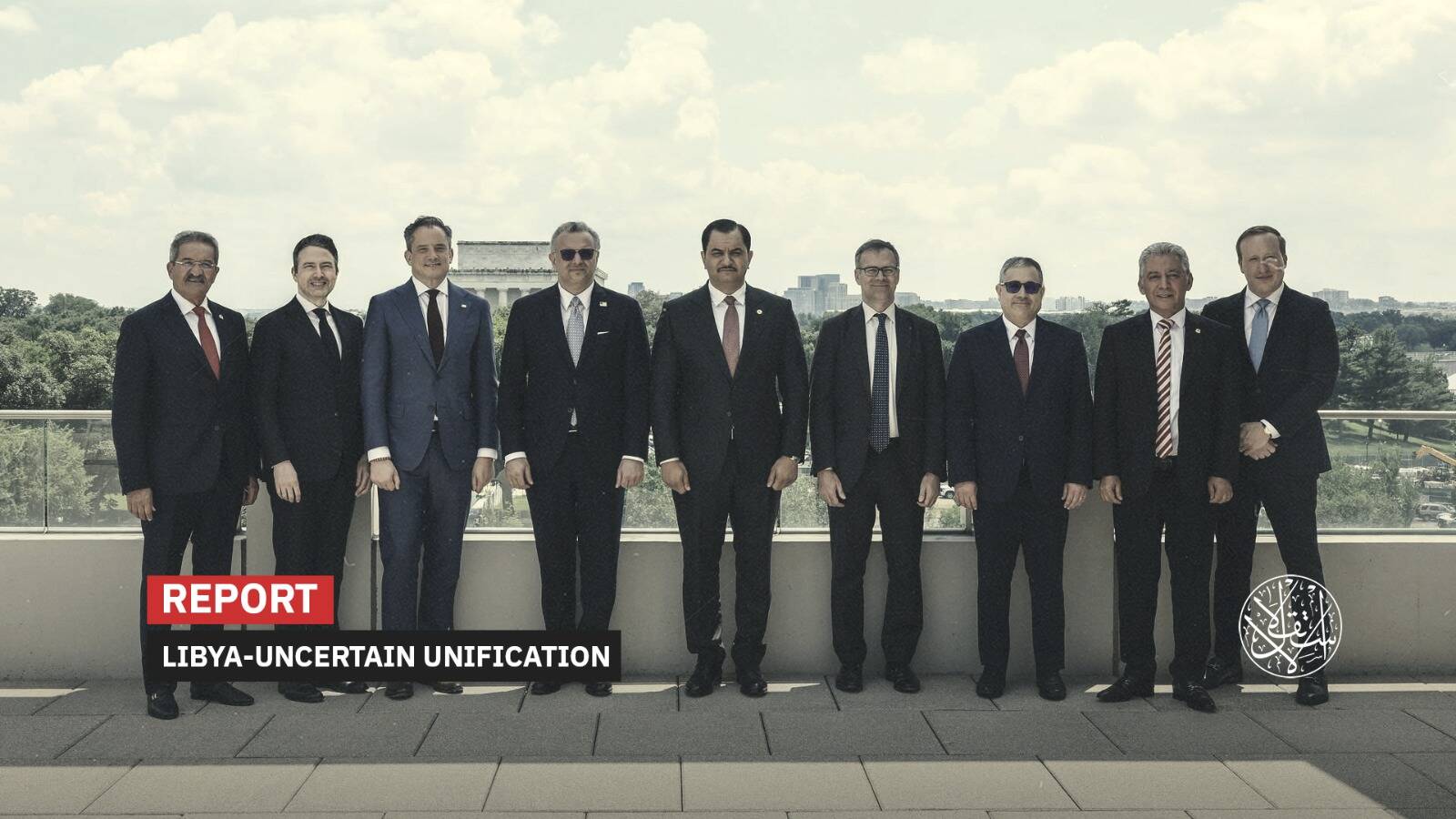
Rubio's meeting with Saddam Haftar came just days after similar talks between U.S. officials and Abdul Salam al-Zoubi, a representative of the Libyan government's forces in Tripoli, with Saddam Haftar also in attendance. The two sides sat together in a scene that raised many questions about the nature of the U.S. moves.
The development has fueled speculation about a plan being advanced by Trump's envoy to the region, Massad Boulos, aimed at promoting a power-sharing formula among the Libyan parties as a prelude to reaching a political agreement that could be signed at the White House.
Experts believe that the primary driver behind this accelerated U.S. engagement is economic interests, foremost among them ensuring the stability of Libya's oil production and exports, in line with an approach adopted by the Trump administration based on the principle of "economy first."
Details of the Plan
According to Libyan sources that spoke to Al Estiklal newspaper, the outlines of the U.S. plan center on a power-sharing deal between the camp of Prime Minister Abdul Hamid Dbeibah, head of the Government of National Unity (GNU), and Khalifa Haftar, commander of eastern Libya's forces.
Under the proposed arrangement, Saddam Haftar would assume a senior executive position, reportedly either as head of state or minister of defense, at the helm of a unified military institution incorporating forces from both eastern and western Libya.
The plan also stipulates that Abdul Hamid Dbeibah remain prime minister within a unified governing structure, paving the way for a political agreement that could be signed in Washington if Libya's rival parties reach a consensus.
A review of statements by U.S. and Libyan mediators, along with the positions of several political actors, indicates that the primary objective of the U.S. initiative is to achieve the political and military integration of Libya's state institutions while incorporating Saddam Haftar into the executive authority, either as interim head of state or as minister of defense, in an effort to end the country's prolonged institutional division.
In this context, the Financial Times reported on June 17, 2026, that Washington is proposing to keep Abdul Hamid Dbeibah as prime minister of a unified government while assigning Saddam Haftar either a senior executive post or the presidency of the Presidential Council, thereby ensuring representation for both the eastern and western camps within the new governing authority.
The U.S. proposals also include unifying Libya's military and economic institutions, ending the division that has persisted for more than a decade, encouraging investment by U.S. energy companies in Libya, and opening the door to large-scale investment in the country's oil sector.
U.S. Secretary of State Marco Rubio's meeting with Saddam Haftar, deputy commander of eastern Libya's forces, to discuss "Libya's efforts to unify its military, economic, and political institutions," according to the U.S. statement, is widely viewed as part of these arrangements aimed at unifying the institutions of eastern and western Libya.
Rubio received Saddam Haftar, widely regarded as his father's political heir, amid an intense round of U.S. diplomatic engagement reflecting President Donald Trump's administration's desire to resolve the Libyan file by brokering a direct political agreement between the country's principal centers of power.
The meeting came just days after similar talks between U.S. officials and Abdul Salam al-Zoubi, a representative of the Libyan government's forces in Tripoli, with Saddam Haftar also in attendance. The two men were seated together amid U.S. reports indicating that Washington's immediate priority is to achieve the military integration of the eastern and western forces.

These meetings reinforced reports of a plan led by U.S. envoy Massad Boulos, acting at the direction of President Donald Trump, to impose a power-sharing formula that would culminate in the signing of an anticipated political agreement at the White House.
There are already positive, though limited, indications of progress along this path. These include the adoption of the first unified budget in more than ten years, as well as the participation of forces from eastern and western Libya in joint military exercises under the supervision of the U.S. Africa Command (AFRICOM). However, observers say these steps remain insufficient to guarantee the success of the political settlement.
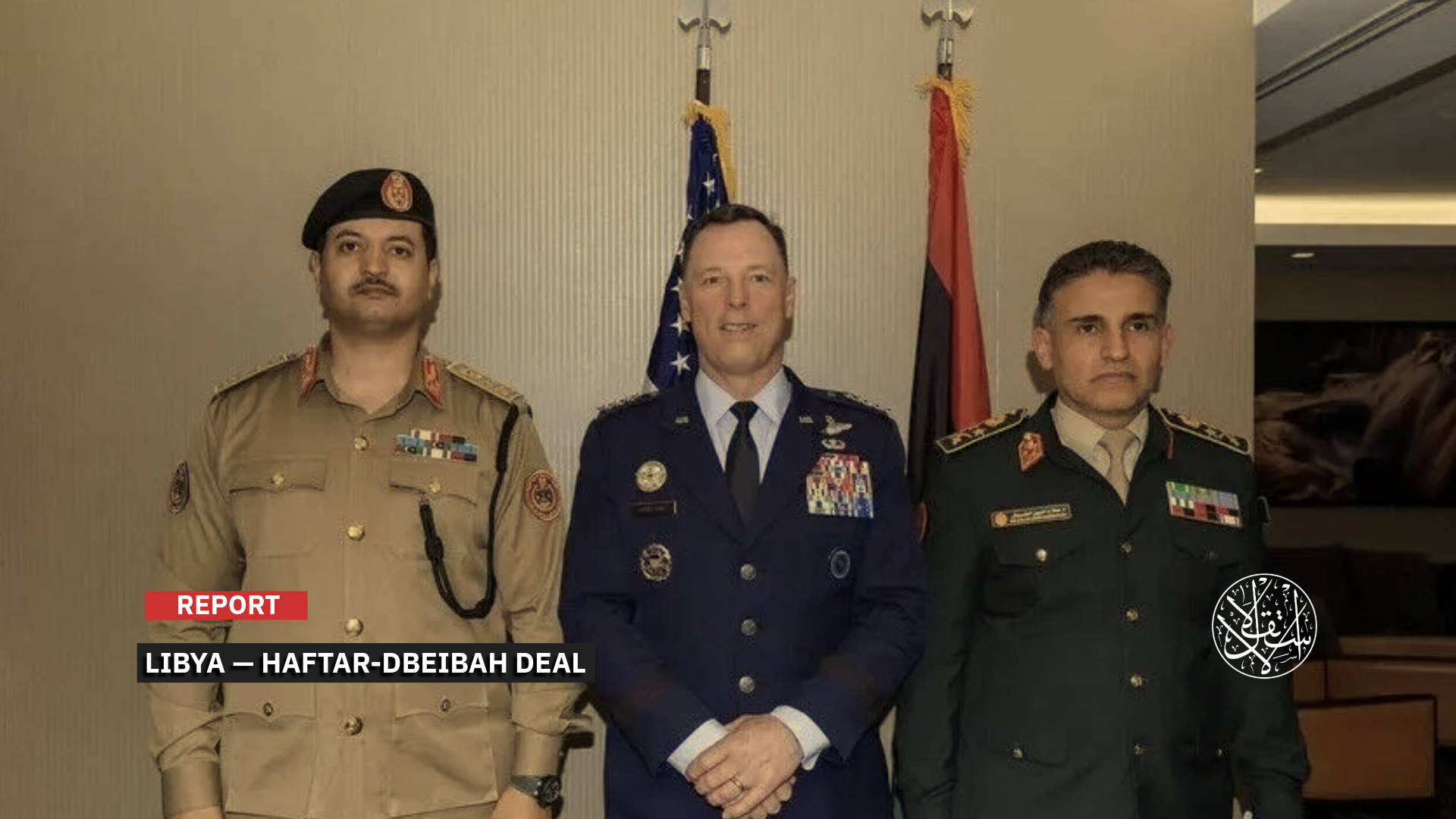
The appearance of Libyan Presidential Council-appointed Chief of Staff Salah al-Din al-Namroush alongside Khaled Haftar, chief of staff of eastern Libya's forces, during their participation in the 2026 African Chiefs of Defense Conference, was also viewed as an additional indication of progress in the U.S.-backed arrangements.
Observers said that the image of al-Namroush and Khaled Haftar together reinforced assessments that the process of completing the unification of Libya's military institution was nearing completion. They suggested that the developments were taking place with the agreement of the relevant parties, reducing the likelihood of a return to war or internal armed conflict, as remaining disputes are limited to the final details of the settlement.
In this context, the two chiefs of staff of Libya's divided military, Salah al-Din al-Namroush and Khaled Haftar, met with U.S. Africa Command (AFRICOM) Commander General Dagvin Anderson on July 4, 2026, according to a statement issued by eastern Libya's forces.

Dbeibah Has Reservations
The Italian newspaper Il Foglio reported on June 30, 2026, citing its sources, that Prime Minister of the Government of National Unity Abdul Hamid Dbeibah has reservations about the U.S. plan, fearing that appointing Saddam Haftar as commander-in-chief of the armed forces could replicate the Egyptian model, whereby the military position becomes a gateway to controlling political power.
According to the newspaper, Dbeibah fears that such a scenario could ultimately lead to his removal from the political scene, either through his arrest or by forcing him into exile. It added that these concerns explain part of the broad opposition the plan faces inside Libya.
The Financial Times also quoted diplomats and experts as saying that the chances of the U.S. initiative succeeding remain uncertain, given the lack of trust between the eastern and western camps and the armed groups' determination to preserve their political and economic gains.
The newspaper added that critics of the initiative fear that the proposed power-sharing formula could entrench the influence of the current elites and postpone elections indefinitely, rather than resolve the political crisis facing the country.
Libyan assessments indicate that arrangements are currently being discussed within the framework of the U.S. initiative, including the formation of a new Presidential Council that would include Saddam Haftar and Abdul Hamid Dbeibah, while ending the mandate of the current Presidential Council headed by Mohamed al-Menfi, as well as dissolving the eastern-based government appointed by the House of Representatives and headed by Osama Hammad.
Under this scenario, Khalifa Haftar, who is backed by Egypt and the UAE, is expected to step aside after nearly 12 years of leading eastern Libya's forces, which fought a prolonged conflict against forces affiliated with the Tripoli-based government and backed internationally. He would be succeeded by his son and deputy, Saddam Haftar, as head of the military institution, paving the way for him to later assume the position of minister of defense or head of state, in accordance with the U.S. plan and based on what is agreed with Dbeibah.
According to Libyan sources, Dbeibah's reservations, or even his rejection of the U.S. plan, stem from his belief that its real objective is to return the Haftar family to the forefront of the political scene by enabling Saddam Haftar to assume the position of head of state or minister of defense, despite the fact that he previously commanded forces that fought against Dbeibah's government during the assault on Tripoli.
In this context, Libyan affairs expert Alaa Farouk believes that Prime Minister Abdul Hamid Dbeibah's tour of several Gulf countries, particularly the UAE and Qatar, is part of an effort to rally Gulf support for his government, as well as for the U.S. plan that would ensure his continuation as head of government if changes are made to the unified executive authority, whether at the level of the Presidential Council or the government.
However, in a post on the Facebook platform, he explained that these moves are taking place amid reports of Egyptian and Turkish reservations regarding the U.S. proposal, with both Cairo and Ankara leaning toward supporting what is known as the "Three Presidencies Initiative", although no official position on the matter has been issued so far.

What Role Do Egypt and Turkiye Play?
The U.S. plan, which is based on power-sharing between the camps of Abdul Hamid Dbeibah and Khalifa Haftar, came at the same time as visits to Libya by the heads of Egypt’s and Turkiye’s intelligence services.
This has raised questions about the two countries’ positions on the initiative and whether they support it or have reservations about it.
According to the Italian newspaper Il Foglio on June 30, 2026, these moves coincided with an intensive diplomatic and security effort led by the United States to push Libyan factions toward a new political settlement.
Following their visits to Libya, Egypt’s General Intelligence Service chief, Major General Hassan Rashad, and Turkiye’s intelligence chief, Ibrahim Kalin, held a meeting on June 30, 2026.
They discussed developments in Libya and the Gaza Strip, as well as the outcomes of their visits to Libya and the talks they held with local actors in both the eastern and western regions of the country.
At the conclusion of the meeting, the two sides affirmed their agreement to coordinate their positions and unify their approaches toward the proposed initiatives.
They also agreed to strengthen cooperation between the two countries in a way that would help advance a comprehensive settlement process and achieve lasting stability in Libya.
Earlier, on June 21, 2026, Libyan Prime Minister of the Government of National Unity Abdul Hamid Dbeibah received Egyptian intelligence chief Hassan Rashad in Tripoli.
It was the first visit by a senior Egyptian official to western Libya since 2021, following years during which Egypt’s relations had been focused largely on engagement with Khalifa Haftar’s camp in eastern Libya.
After returning to Cairo, Hassan Rashad took part in a meeting that brought together U.S. envoy Massad Boulos and Saddam Haftar.
Meanwhile, Turkish intelligence chief Ibrahim Kalin visited Benghazi the following day as part of the same diplomatic momentum. Reports suggested that all these moves were part of U.S.-led efforts aimed at unifying Libya’s institutions.
So far, Cairo has not issued an official position either supporting or rejecting the U.S. initiative led by U.S. presidential adviser Massad Boulos, which seeks to unify eastern and western Libya through a power-sharing formula between Khalifa Haftar’s camp and Abdul Hamid Dbeibah’s government.
However, recent Egyptian diplomatic and security moves suggest that Cairo is approaching the initiative with cautious openness, while at the same time seeking to safeguard its security and strategic interests and avoid alienating its traditional allies in eastern Libya, according to Egyptian sources.
Despite the absence of an official endorsement of the initiative, several indicators point to Cairo’s involvement in the process.
These include hosting meetings that brought together U.S. envoy Massad Boulos with the foreign ministers of Egypt, Saudi Arabia, and Turkey to discuss developments in Libya.
In addition, Egyptian intelligence chief Hassan Rashad made an unprecedented visit to Tripoli, where he met with Prime Minister Abdul Hamid Dbeibah.
The visit was viewed as a shift in Egyptian policy, which had previously been largely limited to engagement with the eastern Libyan camp.

At the same time, Cairo continued its contacts with the leadership in eastern Libya, reflecting its desire to preserve its traditional ties with Khalifa Haftar and avoid relinquishing its influence within that camp.
Egyptian diplomatic sources believe that Cairo may support the U.S. formula, but only under conditions that safeguard its security and strategic interests, foremost among them the security of its western border.
Stability in Libya is a priority for Egyptian national security, given the border between the two countries extends for more than 1,000 kilometers.
The sources told Al-Estiklal that unifying Libyan institutions could open the door for Egyptian companies to participate in reconstruction projects, infrastructure development, and energy initiatives, creating significant economic opportunities.
Egyptian acceptance of the U.S. initiative could also help preserve Cairo’s influence in Libya. After years of supporting Haftar’s camp due to its disagreements with the Tripoli-based government, which included figures associated with Islamist currents, closer engagement with Dbeibah’s government would give Egypt an opportunity to strengthen its presence across the country, especially since relations between the two sides have remained unstable in recent years.
Accordingly, Egypt’s position appears to be closer to cautious support for a political settlement that brings together the eastern and western camps, while maintaining its partnership with Haftar’s camp.
Cairo is seeking to remain an influential actor in any new political arrangements, in a way that would ensure the unification of Libyan institutions, prevent a renewed outbreak of armed conflict, secure Egypt’s western border, and preserve its political and economic influence in Libya.
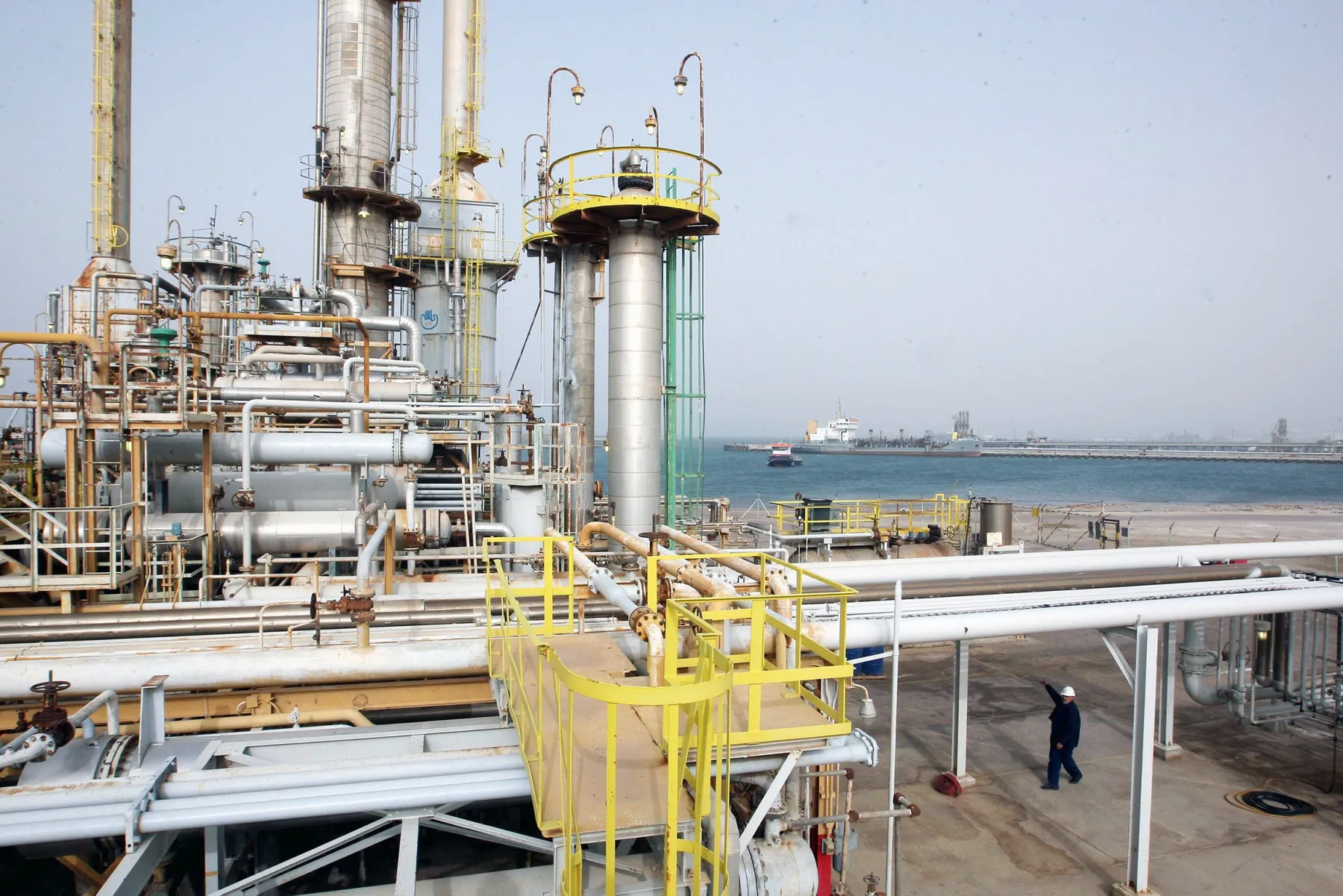
Oil Is the Objective
It appears that the strategy of U.S. President Donald Trump’s administration toward Libya is based on a calculated bet on oil and strengthening regional dominance in the energy sector, rather than on a genuine effort to achieve a comprehensive democratic unity in the country.
According to estimates and reports published by U.S. newspapers and research centers, the United States is actively seeking to broker a power-sharing agreement that would include integrating Khalifa Haftar’s camp into the state’s executive authority.
Such an arrangement would serve U.S. economic interests, foremost among them access to the oil sector, while also expanding Washington’s influence in Libya.
Washington is placing clear priority on strengthening its influence over energy markets by securing access to Africa’s largest proven oil and gas reserves. In this context, major U.S. energy companies such as ConocoPhillips have expanded their operations in Libya, while other firms, such as Chevron Corporation, are preparing to return to the Libyan market.
Rather than seeking a complete reconstruction of the Libyan state, the U.S. plan relies on the role of United States Africa Command (AFRICOM) in securing oil fields and coordinating military cooperation among Libya’s competing factions.
The objective is to increase crude oil production from around 1.3 million barrels per day to between two and three million barrels per day in the coming years.
Accordingly, experts argue that the main driver behind the intensified U.S. engagement in Libya is its focus on oil, with Washington’s approach based on an “economy first” principle, alongside military and strategic calculations related to competition with Russia and China for influence in the region.
At the same time that Saddam Haftar was holding meetings in Washington, his brother Belqasim Haftar, the Director General of the Libya Development and Reconstruction Fund, met inside the U.S. State Department building with U.S. envoy Massad Boulos, Jeremy Brent, and a number of State Department officials. The discussions focused on bilateral relations and investment opportunities in Libya.
The Financial Times, in a report published on June 17, 2026, indicated that the U.S. initiative is directly linked to American economic interests.
The newspaper reported that Massad Boulos said Washington was encouraging major oil companies, including Chevron and ConocoPhillips, to expand their investments in Libya. He expected Libyan oil production to rise to around three million barrels per day by the end of the decade, potentially returning Libya to the ranks of the world’s major oil producers.
The warm reception shown by the U.S. administration toward Khalifa Haftar’s two sons, Saddam and Belqasim, and the senior Trump administration officials who met with them also reflects the growing U.S. interest in the Haftar family and its significant reliance on eastern Libya’s camp.
In return, Washington seeks gains in areas such as oil and reconstruction, with Lebanese-American businessman Massad Boulos, President Trump’s son-in-law’s father, emerging as one of the key architects of this approach.
In its assessment of U.S. moves in Libya, an analysis issued by the Al-Masar Center for Human Studies argued that American engagement is driven by clear economic and strategic motivations, while Libya’s various actors have pursued their own calculations by engaging with Washington.
The study concluded that the Trump administration has revitalized its involvement in the Libyan file through a pragmatic approach focused on oil, security stability, and limiting Russian influence, rather than prioritizing the achievement of a comprehensive political settlement.

The center explained in its analysis, published on June 16, 2026, that U.S. motivations are linked to Libya’s oil wealth, its geographic position between Europe and the African Sahel region, as well as competition with Russia for influence in North Africa.
The study connected the growing U.S. interest in Libya to the increasing importance of Libyan oil amid global energy market disruptions, Washington’s desire to expand the presence of its oil companies, and its efforts to prevent Moscow from consolidating its military and political influence inside the country.
It also noted that Libyan actors approached the U.S. initiative primarily from the perspective of advancing their own interests, rather than as part of a national consensus aimed at ending the political divide.
The study concluded that U.S. moves have achieved some tactical successes, such as the approval of a unified budget, the strengthening of military coordination, and the creation of a more favorable environment for investment. However, they have not addressed the roots of the crisis, which lie in political divisions and the struggle for power.
Accordingly, the study argues that Washington has so far succeeded in managing the crisis and protecting its interests, but has not succeeded in resolving it.
This is due to the continued clash of interests among Libyan and regional powers, making any comprehensive settlement dependent more on the will of Libyans themselves than on external pressure.
In the same context, an analysis published by Bloomberg on June 17, 2026, stated that Libya could be the next stage in Trump’s strategy focused on controlling energy resources, and that U.S. efforts to unify Libya’s rival camps are fundamentally aimed at benefiting from Africa’s largest oil reserves.
The report explained that one of the main pillars of U.S. President Donald Trump’s foreign policy is the drive to expand global oil production, place more energy supplies under American influence, and direct oil investments and activities in favor of U.S. companies.
The Bloomberg report noted that Washington views Libya’s vast oil reserves and growing production potential as a strategic opportunity to expand global energy supplies while creating new investment opportunities for American companies.
The report emphasized that this approach reflects broader features of Trump’s policy toward major oil-producing countries, where energy resources are viewed not only as economic assets but also as tools for strengthening influence and geopolitical leverage on the international stage.