The Speaker of Syria’s New Parliament: Who Is Abdul Hamid Al-Awak?
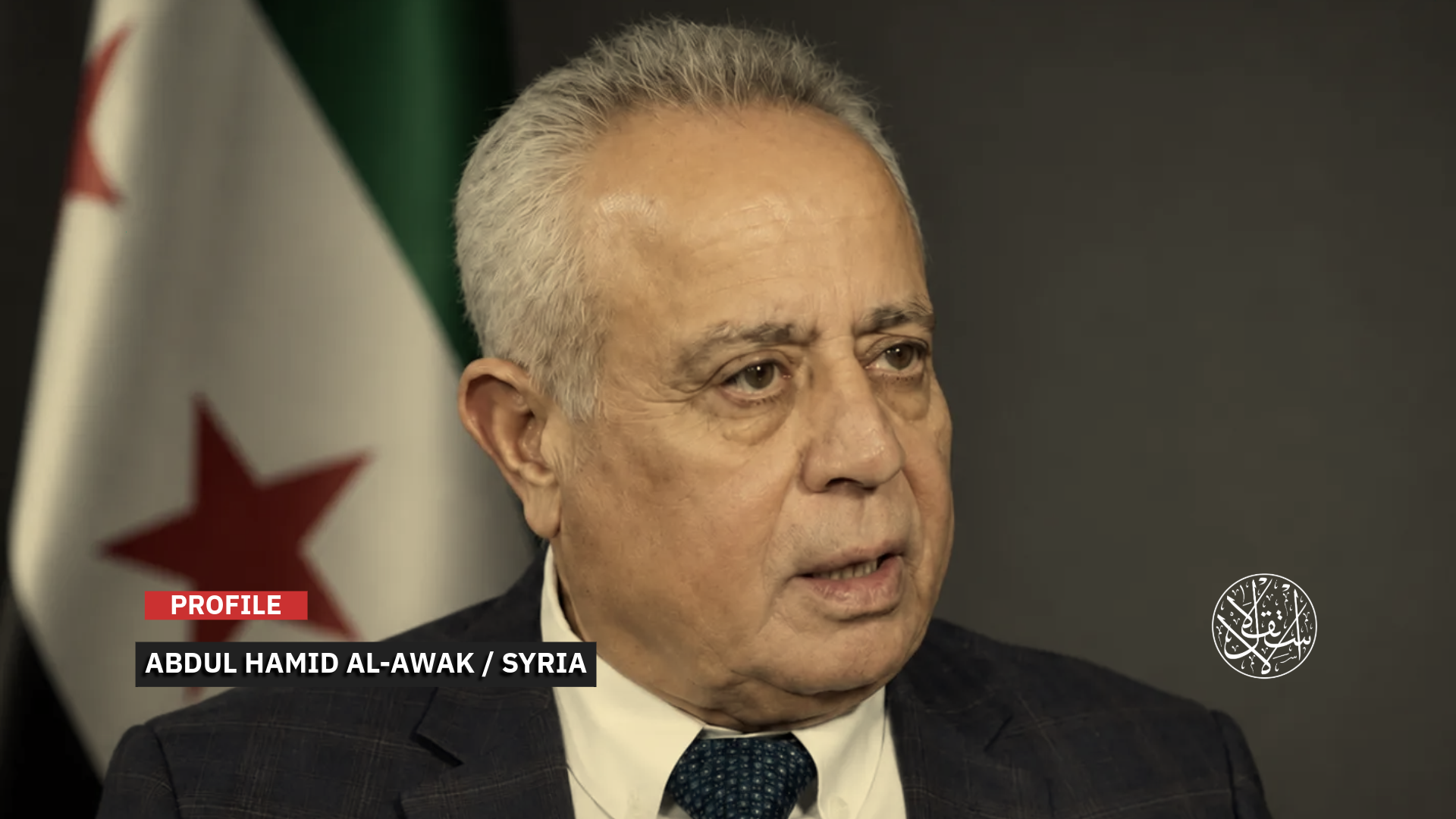
"Al-Awak seeks to strengthen the role of the council and develop its legislative and oversight performance."
Dr. Abdul Hamid Aqil al-Awak was elected Speaker of the first Syrian Parliament formed after the overthrow of Bashar al-Assad's regime in December 2024.
He found himself facing an exceptional responsibility that extended beyond managing a new legislative body; the Parliament was expected to shape a different political phase in the country's history.
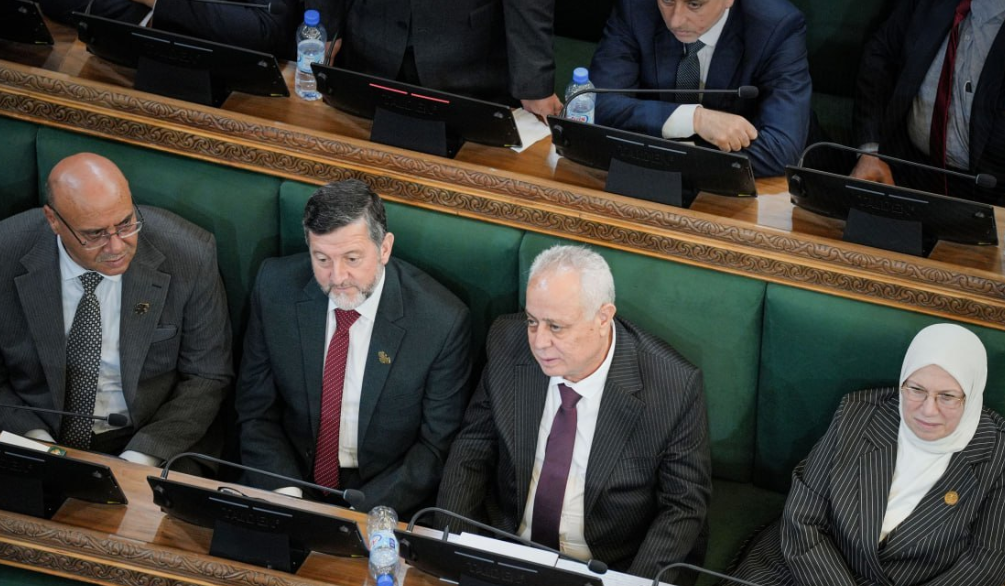
In a democratic election, the members of the new Syrian Parliament elected al-Awak as Speaker on July 12, 2026, during its first session in the capital, Damascus. This followed the opening of nominations for the position by the oldest member of parliament, Osama al-Assaf.
Abdul Hamid al-Awak, Moayad al-Qablawi, and Mohammed Korj were nominated for the speakership. The 206 members of parliament present, out of a total of 210, cast their votes.
Following the vote count, al-Awak received 99 votes, al-Qablawi received 75 votes, and Korj received 31 votes, with one blank ballot.
The Parliament consists of 210 members and will exercise its powers until a permanent constitution for Syria is adopted and elections are held based on it.
Notably, days before the first session of the Parliament, many Syrian experts and observers pointed to Abdul Hamid Al-Awak as the most suitable choice to head the Parliament at this stage, given his legal and academic experience and his understanding of the nature of the transitional phase and its challenges, which could contribute to strengthening the Parliament's role and developing its legislative and oversight performance.
Nevertheless, al-Awak, whose experience was shaped at the intersection of law and the major transformations that Syria has undergone, faces a test in transitioning from a legal legacy linked to decades of one-man and one-party rule to building a legislative system that establishes a state of law, rights, and freedoms.
Legal Experience
Abdul Hamid Aqil Al-Awak was born in 1966 in Hasakah Governorate. He completed his primary, preparatory, and secondary education in the Ghwairan neighborhood of the governorate.
He then moved to Aleppo Governorate, where he earned a law degree from the University of Aleppo in 1990. He later obtained a diploma in public law and a master's degree in administrative law from the Islamic University of Lebanon in 2009.
Furthering his academic career, al-Awak earned a doctorate in constitutional law from Beirut Arab University in 2014. His dissertation was titled: "The Impact of the Arab Spring on the Legal Status of the President of the Republic - The Experiences of Egypt and Tunisia."
Al-Awak became involved in legal work at an early age; He served as the Director of Legal Affairs in the Tigris and Khabur Basin Directorate in Hasakah Governorate between 1993 and 1998.
He joined the judiciary in 1998 and practiced law for 16 years in Hasakah Governorate in northeastern Syria.
He also served as a judge with the rank of advisor in the Syrian Ministry of Justice for ten years, in addition to lecturing at the Faculty of Law at Al-Furat University in eastern Syria.
During his time as a refugee in Turkiye, al-Awak worked as an assistant professor at Mardin Artuklu University from 2016.
He continued to utilize his expertise in various fields, working as a consultant for the Stabilization Support Unit, a Syrian civil society organization operating within Syria in several service and awareness-raising sectors. The unit was founded in 2016 by a group of Syrian experts and civil society leaders.
Over the past decade, he has also worked on implementing programs in the areas of governance, transparency, accountability, decision-making efficiency, and financial management, in cooperation with local governance bodies, civil society organizations, and international partners.
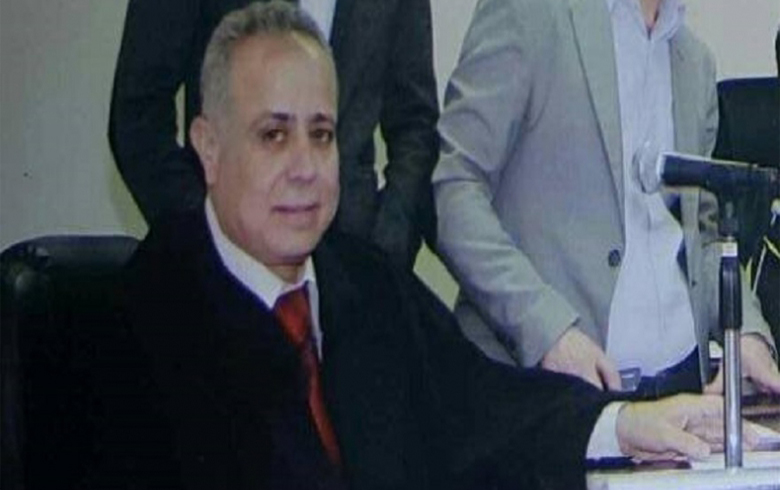
Moral Bias
At the end of 2014, al-Awak left Syria after being summoned by the State Security branch, one of the security branches of Bashar al-Assad's regime, due to his connections with the Syrian revolution. He discovered that there was an attempt to frame him, so he decided to flee to Turkiye and officially join the Syrian revolution.
Al-Awak later participated in training members of the opposition's Constitutional Committee and worked on constitutional awareness programs and organized community dialogues about the future form of the Syrian state.
Following the fall of Bashar al-Assad's regime, when the country needed someone to draft its constitutional declaration for the post-regime era, al-Awak stepped forward, heading the drafting committee. On March 13, 2025, he stood to read the historic document to the Syrian people.
In an interview with Anadolu Agency, al-Awak stated that the committee aimed to establish a state of citizenship based on the principles of justice.
He explained that the constitutional declaration represents a temporary framework for regulating the work of the authorities, but it cannot be a final solution to all the crises and challenges facing the country, contrary to what might be understood or expected of it.
Today, al-Awak faces an even greater challenge. His election as Speaker of Parliament presents him with a real test, at a time when the Syrian public is watching closely to see how the new leadership can dismantle the legacy of the previous legal system, activate parliamentary committees, and strengthen the legislative and oversight role of the Parliament.
The parliamentary leadership also faces the challenge of guiding discussions on the draft of the new constitution and transitioning the legislative institution from decades of partisan monopoly to a space of political pluralism and the rule of law.
Al-Awak now heads an institution tasked with establishing rules that prevent a return to the tyranny Syrians endured from the era of Hafez al-Assad and his son Bashar (1971-2024), and that lay the foundations for a state based on rights and freedoms.
He views the years following his graduation from Aleppo University as the period that shaped him into a blend of administrative and judicial experience, before he turned to academic specialization in constitutional law.
In one of his television interviews, he says that during his doctoral studies, he came to understand the nature of the relationship between power and constitutional texts, and how the positions of political institutions change during major transformations.
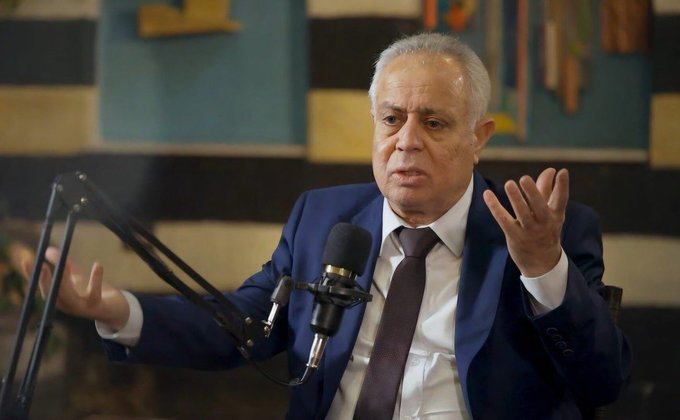
Exceptional Responsibility
When al-Awak was a judge in Hasakah at the outbreak of the Syrian revolution, he affirmed in his statements that he treated demonstrations as a citizen's right, and that he did not arrest any activist or revolutionary whose case was brought before him. On the contrary, he sought to help many detainees within the legal framework.
When he was chosen as a member of the committee drafting the constitutional declaration, this was not surprising from an academic standpoint, given his long career in constitutional law, but he saw it as an exceptional responsibility.
The concept of legitimacy is a central pillar in Al-Awak's thought. He distinguishes between revolutionary legitimacy, which he believes arises when tyranny closes the doors of change to citizens, and constitutional legitimacy, which begins with the existence of a constitution that regulates the authorities and the mechanisms for their selection.
According to his vision, revolutionary legitimacy ends with a constitutional declaration that transitions the country from the revolutionary phase to the state-building phase.
However, he emphasizes that the end of revolutionary legitimacy does not mean the end of the revolution's goals, because achieving freedom, dignity, and the peaceful transfer of power requires years of institutional development.
Al-Awak believes that the constitutional declaration is not a permanent constitution, but rather a transitional document intended to regulate the functioning of the state during an exceptional period.
As for a permanent constitution, he believes it requires a stable environment, elections, an elected constituent Parliament, or a broad societal dialogue that culminates in a popular will.
In an interview with Syria TV in March 2025, al-Awak asserts that seven people, regardless of their experience, cannot formulate all the aspirations of the Syrian people or resolve the major issues related to the state's identity and its final form.
Therefore, he believes that some contentious issues should be postponed until the permanent constitution is drafted.
Al-Awak rejects the idea of building a state based on sectarian or ethnic quotas. In the interview, he stated that a quota-based state is founded on distributing power among groups according to predetermined shares, as seen in some regional experiences, while a state based on citizenship rests on the principle of equality among citizens.
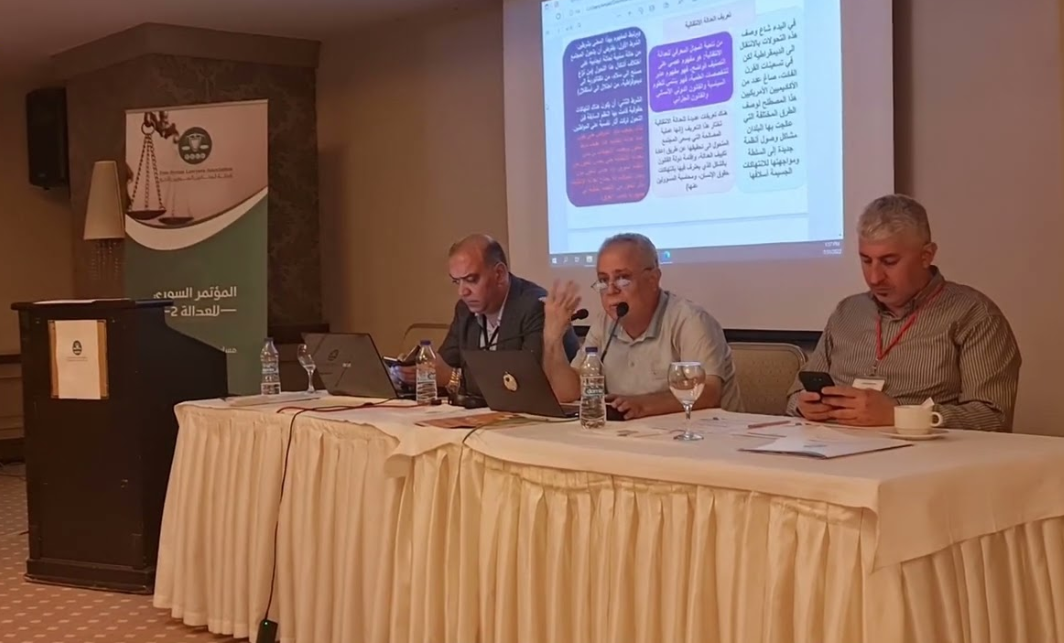
During the television interview, he outlined some of his legal perspectives. He supports the election of a constituent Parliament to draft a permanent constitution, which would then be put to a referendum.
He emphasized that no appointed committee has the authority to alter fundamental principles or resolve contentious issues on behalf of millions of Syrians.
He also believes that disagreements concerning the name of the state, the religion of its president, and the source of legislation are more symbolic than fundamental to the political system.
He maintains that the primary focus should be on protecting rights and freedoms and preventing the abuse of power.
Al-Awak emphasizes that freedom needs constant protection, and that authorities do not grant rights on their own, stressing that citizens must defend their rights and monitor the implementation of the constitution, because texts alone are not enough to prevent the return of tyranny.