Supporter or Opponent: How the Ministry of Defense Statement Confused the Tunisian Scene
"Historically, the Tunisian army has not played a direct political role."
A statement issued by the Tunisian Ministry of Defense has sparked political controversy in the country, as it affirmed the military's role in governance and political conflicts, raising questions about its background and context.
The Ministry emphasized the army's commitment to neutrality and respect for the laws of the state, in light of what it described as repeated attempts to drag it and its leadership into political disputes and power conflicts.
In a statement published on its website on May 21, 2026, the Ministry said, "The National Army is a republican army based on discipline, and it undertakes the duty of defending the homeland, its independence, and its territorial integrity, in full commitment to neutrality and respect for the laws of the state and military regulations."
The statement did not directly address the reasons behind the controversy or the parties involved.
However, political analysts linked it to remarks made by opposition figures within a context marked by social tension and increasing economic pressures.
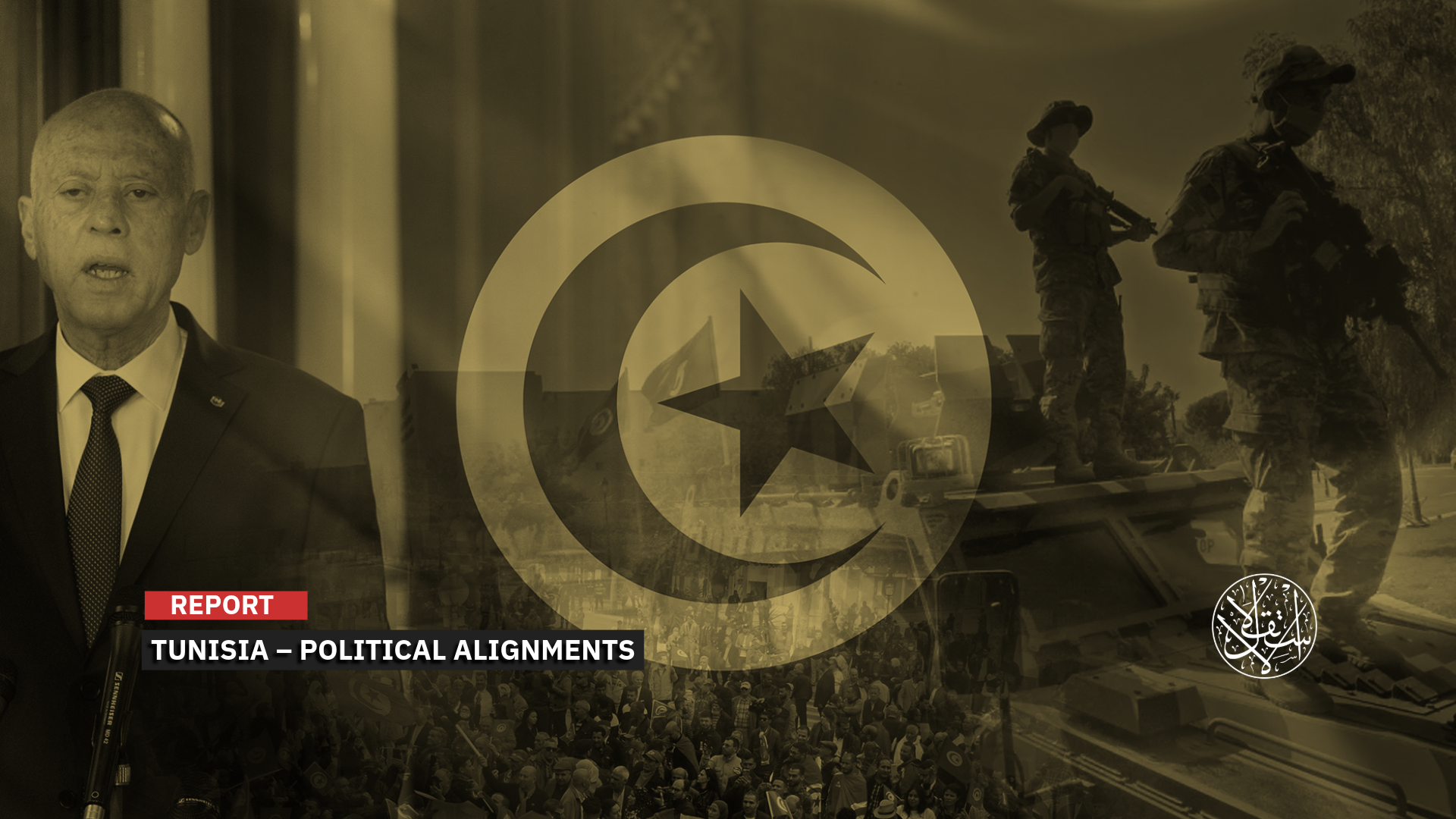
Historically, the Tunisian army has not played a direct political role. Since independence in the 1950s, it has been confined to its defensive duties, remaining outside the political sphere and only being called upon to intervene in exceptional circumstances.
Among the most prominent of these instances are its intervention during natural disasters such as floods, or during social unrest that spiraled out of control, including the events of 1978 linked to the Tunisian General Labour Union (UGTT), widely known as Black Thursday, and the Bread Riots of 1983-1984.
The army presents itself as a neutral republican institution, pointing to its role in protecting state institutions during the period following the 2011 revolution and the fall of former President Zine El Abidine Ben Ali's regime, and emphasizing that it did not intervene to seize power.
Conversely, the military establishment faces criticism from some opposition groups regarding its failure to intervene in protecting the constitution during the democratic transition, or to prevent President Kais Saied's decisions on July 25, 2021, which included suspending the elected parliament and subsequently dissolving several constitutional bodies.
Constitutional Legitimacy
Some political analysts were quick to suggest that the Tunisian army's recent statement was a response to remarks by former President Mohamed Moncef Marzouki, who called for the removal of President Kais Saied and a return to what he termed constitutional legitimacy, including the possibility of military intervention.
In line with these interpretations, Marzouki published a post on May 21, 2026, in which he spoke about President Kais Saied.
"This man who rules Tunisia is illegitimate because he has overturned the constitution that brought him to power... He is illegitimate because he rules with a constitution that was only approved by ten percent of the electoral lists," he said.
"He is illegitimate because he rigged the last presidential elections by imprisoning all his rivals and giving himself a 90% majority, the hallmark of every rigged election," he added.
"He is also an unbalanced individual. No one understands that when he speaks of numerous assassinations attempts against him, global conspiracies, and millions of people taking to the streets in his support, he is not lying but rather raving on live television," he said.
"Most importantly, he is incompetent, as evidenced by the numerous prime ministers and ministers he appointed and dismissed, clearly playing with the fate of Tunisians," he noted.
"It is neither legally, morally, nor patriotically permissible for army and security officers, administrative employees, and all officials, regardless of their position, to obey a man who poses a danger to Tunisia," he stated.
"Legally, morally, constitutionally, and patriotically, they are absolved of obeying such a person. Only a deceiver or someone who has been deceived would stand with him," he pointed out.
He stressed that "it is the duty of all Tunisians to turn the page on this tragic chapter of our history with the least possible damage and through all available peaceful means, so that things do not one day explode and lead to dire consequences."
Marzouki concluded his post by emphasizing that Kais Saied must be dismissed and tried, and what he described as the coup must be brought to an end.
"We must return to the constitution of the revolution and resume building the democratic state for which generations have struggled," he said.

Worrying Statement
In his analysis of the statement, Tunisian political activist Ziad al-Hashemi told Al-Estiklal that the Tunisian army's statement could have multiple implications, most notably two main possibilities.
He noted that the first interpretation is that the statement might reflect an official feeling that the situation has reached a critical point, prompting the military establishment to send a message that it is equidistant from all parties and that the final decision now rests with the people.
"This interpretation aligns with the army's repeated assertions of its commitment to neutrality and non-alignment, meaning it will not intervene on behalf of any party but will remain an observer of developments," he added.
The second interpretation, according to Mr. al-Hashemi, is that the statement may have been the result of pressure exerted on the military establishment to issue a statement that could be interpreted as support for the current regime.
However, he noted that this possibility has significantly diminished in light of the widespread reactions on social media and in the press, which reflected escalating public anger and indications that the regime is facing a highly complex political and economic situation.
Mr. Al-Hashemi concluded by saying that both scenarios lead to the same conclusion, namely that the country is experiencing significant public discontent, coinciding with growing signs of anxiety within the regime regarding the current political landscape.
In his analysis of the statement issued by the Tunisian Ministry of Defense, Tunisian journalist Bassam Bounni said that the mere fact of the military establishment entering the public sphere through an official statement is, in itself, noteworthy and a source of concern for many.
In a statement to the Politiket website on May 22, 2026, Bounni added that the Tunisian Ministry of Defense's communication policy has historically been based on what he described as a doctrine of accumulation, which is limited to announcements related to grants, deals, regional maneuvers, peacekeeping missions, and intervention in natural disasters.
He pointed out that recent history has recorded only a few exceptions where the military leadership broke its silence, most notably after the fall of Ben Ali's regime, when the name of former Chief of Staff Rachid Ammar emerged on two occasions: first, to appease public opinion, and second, to announce his departure from military life in protest against attempts at political interference in the army's affairs.
Based on this, Bounni believes that the phrases in the current statement were not chosen randomly, focusing on the term tensions, which is more commonly used within the ruling system than as an external description.
He also noted the absence of any reference, explicit or implicit, to the head of state as the supreme commander of the armed forces, which he considered a significant point in understanding the context.
He believes that the lack of field data or emerging developments justifying the statement's release at this time increases the level of ambiguity, even given previous calls from some activists for military intervention, which are no longer urgent at the moment.
"This ambiguous context raises fundamental questions about the timing of the statement and its target, leading to the belief that significant developments are taking place behind the scenes of power. In conclusion, the statement's importance lies in its mere issuance and its vague nature," he said.
In analyzing what he described as the deep intentions behind the military statement, Bounni argued that the move went beyond mere clarification, taking on a political dimension and revealing a crack in the structure of the current ruling system led by Kais Saied.
"It seems that the army leadership sensed the magnitude of the historical predicament resulting from its involvement or silence regarding the events of July 25, 2021, and the accompanying political manipulation and the undermining of constitutional institutions," he added.
He considered the statement an attempt to reposition the military establishment in the eyes of domestic and international public opinion, presenting itself as a neutral party after its image, as he put it, had been affected by recent governance.
He concluded by saying that, in his view, the statement reflects signs of discontent within the military establishment regarding the current government's direction, amidst what he described as an unprecedented economic crisis and political suffocation gripping the country.
Strategic Implications
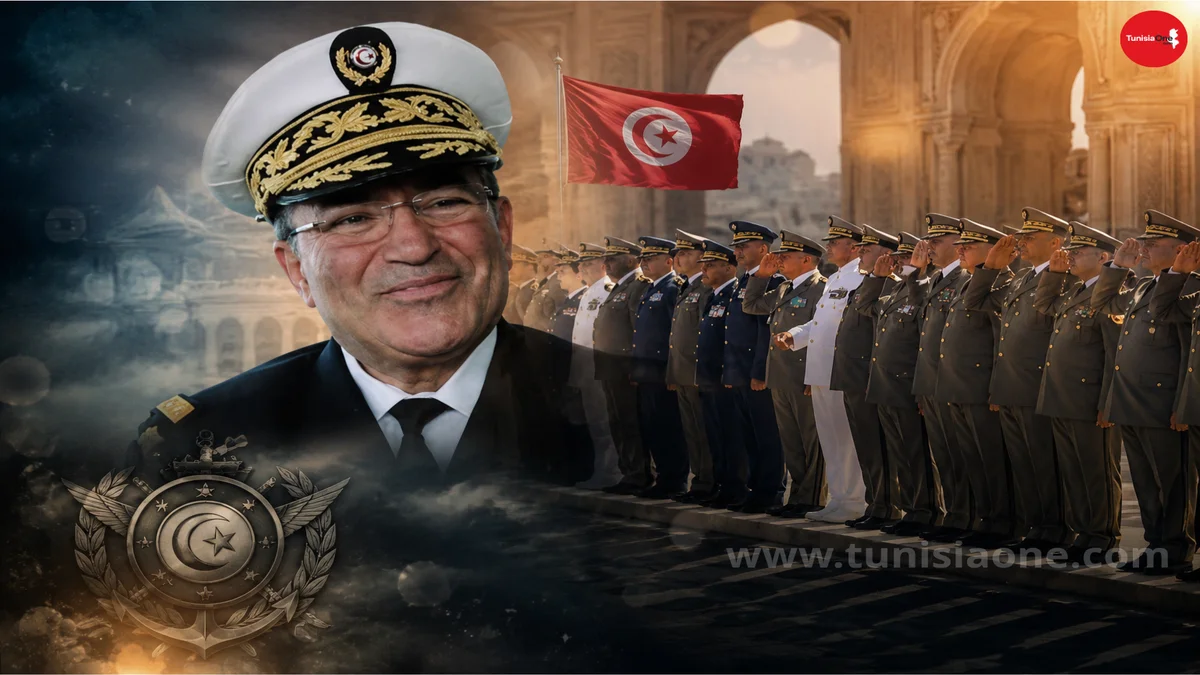
Retired Admiral Kamal Akrout asserted that what he described as the unseen half of the statement issued by the Tunisian Ministry of Defense carries profound strategic implications that transcend its apparent wording.
According to the Tunisia One website on May 22, 2026, Akrout stated that the Ministry of Defense's statement did not come in a vacuum, but rather was issued in the context of a wave of political tension witnessed on social media platforms since mid-May 2026.
The retired admiral believes that the Ministry of Defense's initiative in publishing this statement constitutes a form of strategic communication necessary during times of crisis, aiming to clarify positions and reinforce the core messages of the military establishment.
Akrout explained that the statement was drafted with composure and calm, avoiding any emotional language, and focusing on the fundamental principles of the Tunisian military institution, foremost among them patriotism, selfless service, and prioritizing the supreme national interest.
He emphasized that the explicit stance of neutrality and independence aims to solidify the Tunisian army's doctrine as a republican army that is loyal only to the legitimate institutions of the state and the rule of law.
He noted that one of the most prominent strategic messages directed at the political arena is to put an end to any attempts to involve the military institution in partisan calculations or political conflicts.
He indicated that the statement also carries a message of reassurance to society, affirming that the armed forces remain a fundamental pillar for ensuring the stability of the state and the continuity of its institutions.
He further explained that there is an internal message directed at the military institution itself, aimed at strengthening discipline and protecting its ranks from any external political influences or pressures.
Akrout concluded by noting that the statement reaffirms the identity of the Tunisian army as an institution committed to the constitution and state institutions, and completely independent of any political affiliation.
He emphasized that this military doctrine is what makes the Tunisian army a bulwark of security during times of crisis.
Public Discontent
The Italian newspaper Il Foglio, which is close to Prime Minister Giorgia Meloni's political faction, published a noteworthy article about the Tunisian Ministry of Defense's statement.
The newspaper did not attribute the statement to the ministry, as was officially reported, but rather stated that it was issued directly by the Chief of Staff of the Army, Mohamed El-Ghoul.
According to the newspaper, El-Ghoul sent a clear message to President Kais Saied: "We are at the service of the nation and the state, not at the service of individuals or political conflicts."
The article considered this reading an unprecedented development, noting that the Tunisian military had broken its traditional silence for the first time in years by emphasizing the army's independence, neutrality, and distance from political rivalries.
It also pointed out that the absence of any direct reference to the president in the statement, in contrast to the emphasis on the concept of a republican army and its adherence to the laws of the state, raised questions about the underlying political messages.
The article linked this development to the current political and economic context in Tunisia, suggesting that the military is seeking to solidify its traditional position as a national institution, detached from political conflicts.
According to the article, Tunisia has been experiencing political tension since the political changes that followed the measures of July 25, 2021, with power concentrated in the hands of President Kais Saied.
This comes amidst accusations from the opposition of a regression in the democratic process and restrictions on the functioning of institutions.
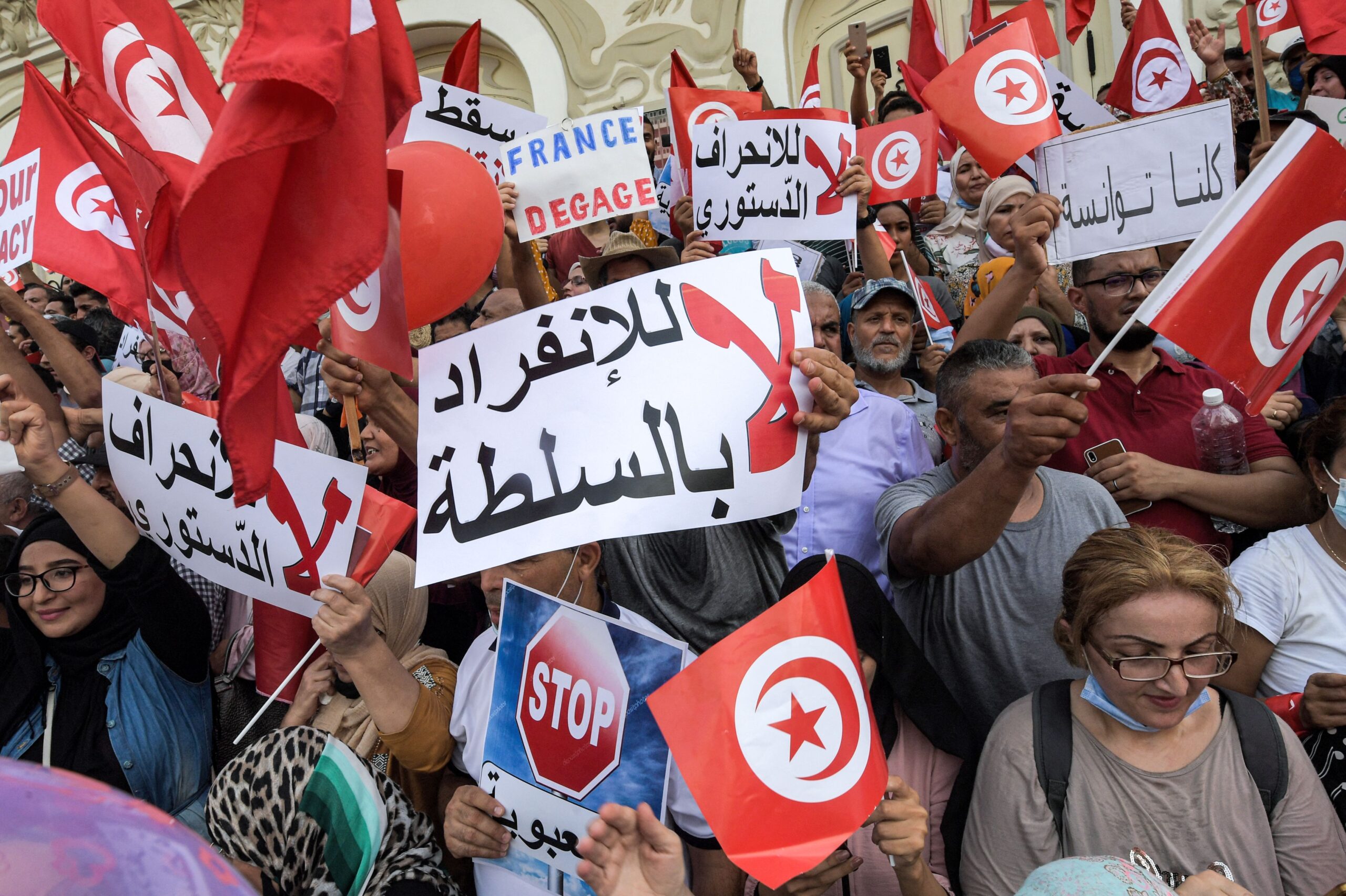
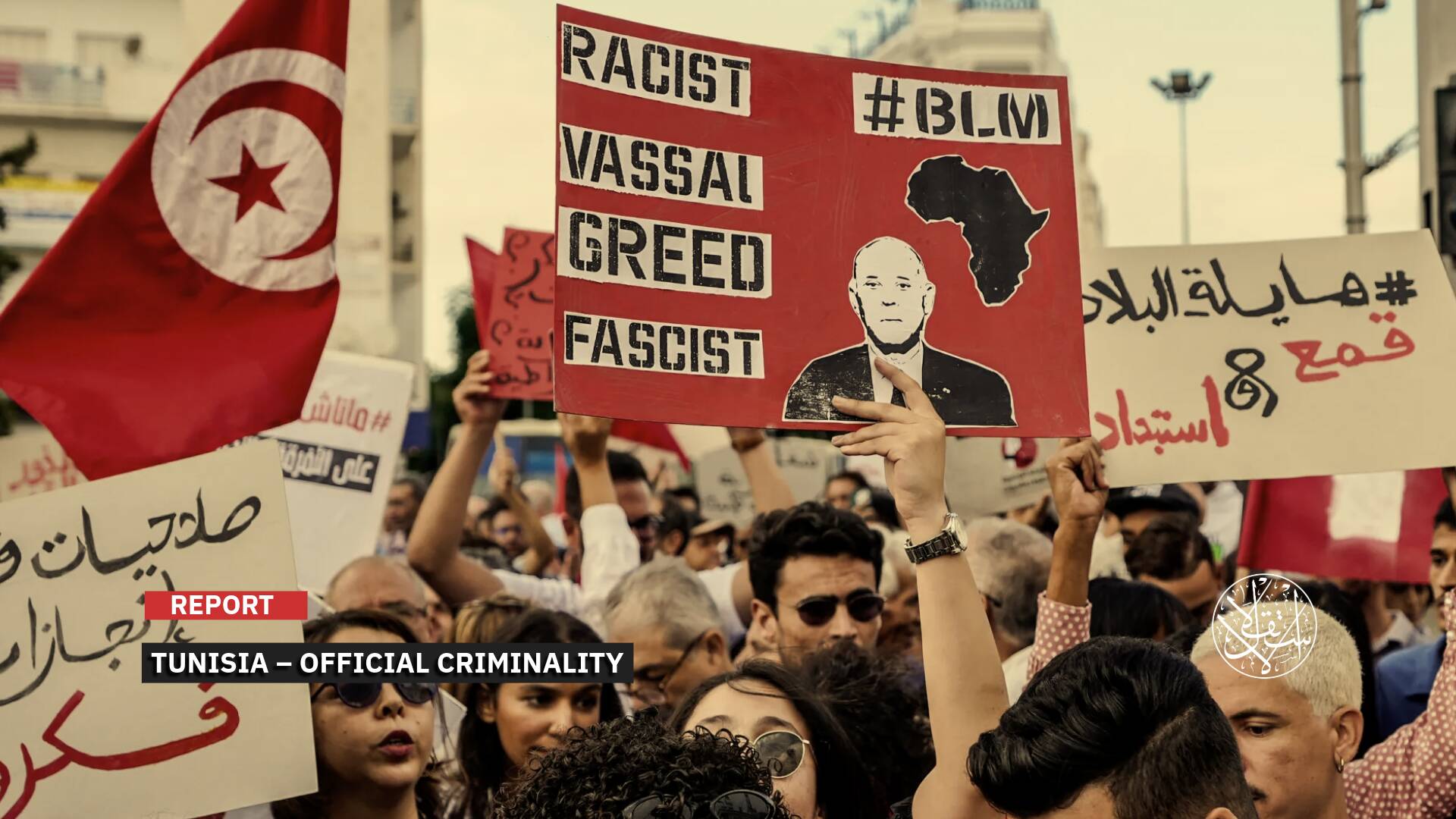
In this context, the Tunisian capital witnessed a massive march on May 16, 2026, under the slogan 'The people are hungry, and the prisons are full', reflecting the worsening social conditions and growing public discontent.
The protesters chanted slogans reflecting the depth of the social crisis, including 'Work, freedom, national dignity' and 'O oppressed citizen, poverty and hunger have increased', with broad participation from various segments of the population.
In turn, the opposition National Salvation Front stated that the march was a rejection of policies of repression, restrictions, and impoverishment, which it believes are deepening the political, social, and economic crisis in the country.
The Front emphasized that the unity of opposition forces is the only way to break the climate of fear and open a new political horizon that will restore Tunisia to its democratic path.