Can Sudan's ‘Shadow Teams’ Bring Darfur War Criminals to Justice?
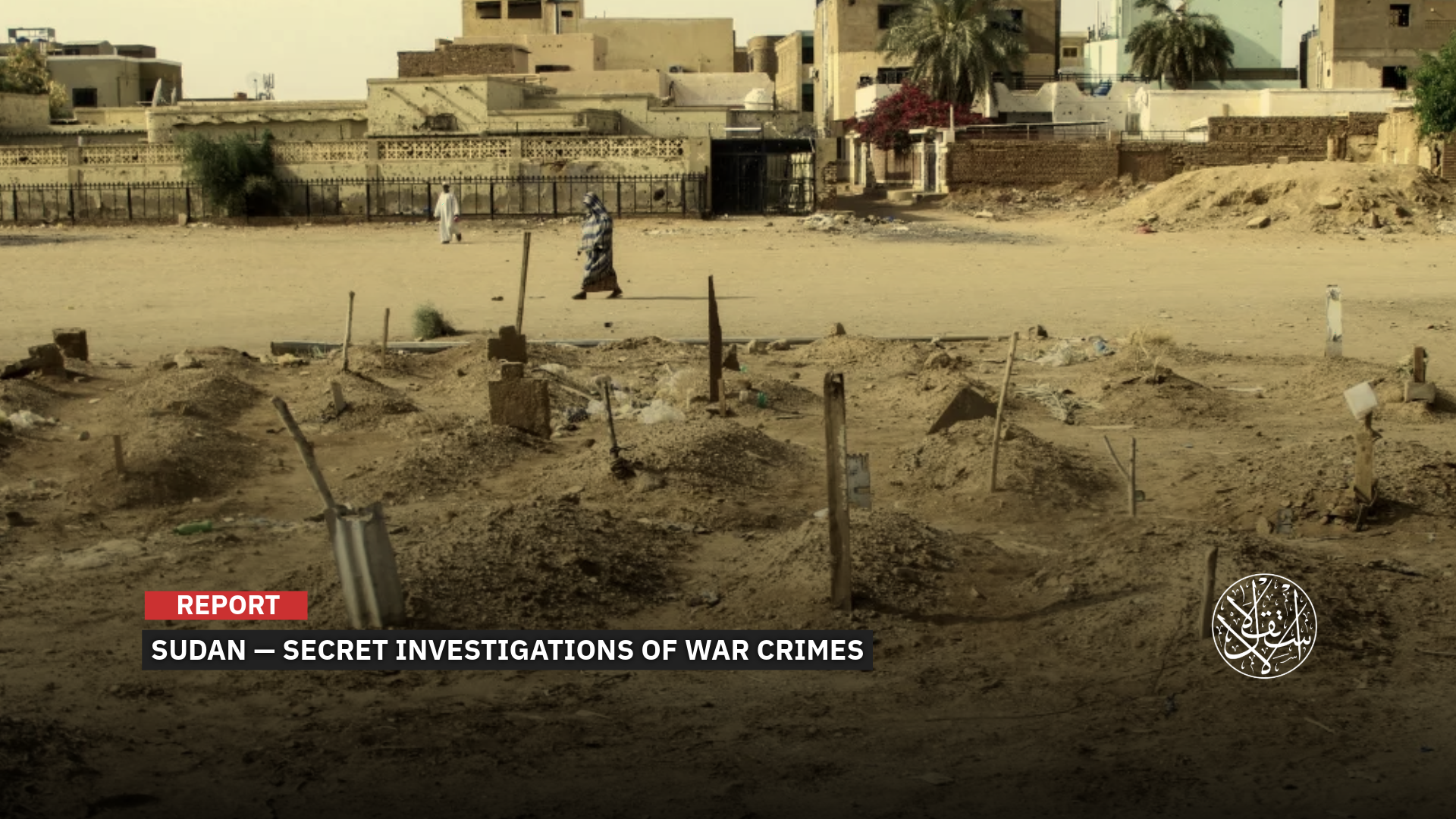
The Shadow Teams rely on people already living inside the cities, allowing them to reach places that are difficult or impossible to access from outside.
As fighting intensifies across Darfur and reports of mass killings, sexual violence, and ethnically motivated detentions continue to mount, covert field teams are quietly gathering evidence from areas that remain largely inaccessible to journalists and human rights organizations.
The teams operate under the Darfur sector of Sudan's National Commission for Human Rights (NCHR), working primarily inside territories controlled by the Rapid Support Forces (RSF) militia. Relying on local networks and limited communication channels, they collect witness testimonies, photographs, and records of victims and detainees.
On July 27, 2026, Rahmatallah Mohamedin Abkar, director of the Darfur Regional Sector at the NCHR, said the material gathered by the teams had enabled the NCHR to document a pattern of ethnically targeted abuses against civilians, stretching from el-Fasher to villages surrounding el-Geneina. Their work, however, unfolds under constant threat, even as the evidence they preserve could one day underpin criminal investigations and war crimes prosecutions in Sudan or abroad.
The battle for Darfur is no longer being fought only with guns. It has also become a race to document what is happening on the ground. As international organizations and news outlets struggle to reach large parts of the war zone, every photograph, testimony, and victim's name has become a piece of evidence that could shape future accountability or disappear forever if not preserved in time.
Why Darfur?
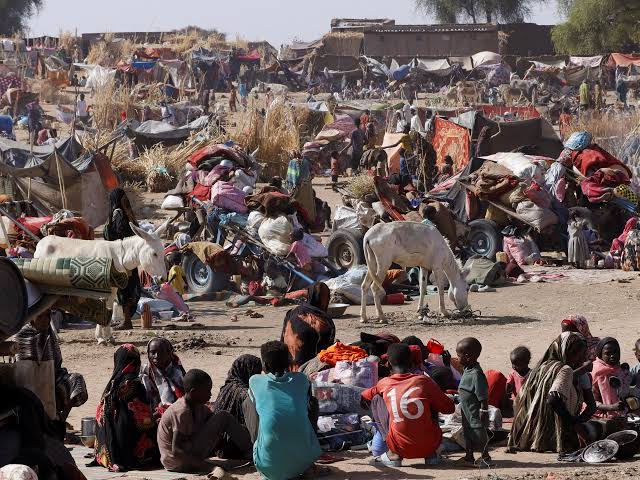
Darfur stands apart from most of Sudan for four key reasons: the RSF militias control vast stretches of the region, including major cities; it has a long history of mass atrocities and ethnically driven violence; the International Criminal Court (ICC) has retained jurisdiction over crimes committed there since the UN Security Council referred the Darfur case in 2005; and the region remains largely inaccessible to international organizations, journalists, and investigators.
Taken together, those factors often leave local witnesses as the only people able to document what happened before victims are buried, communities flee, or records disappear.
On June 23, 2026, the Human Rights Research Center (HRRC) published a study titled The Collapse of Documentation in Sudan’s Conflict and Its Impact on Human Rights Accountability, authored by researcher Mahika Datta.
The report found that the collapse of courts, hospitals, civil registries, and communications networks had created a major gap in documenting abuses inside Sudan. It argued that satellite imagery and refugee testimony, while valuable, cannot fully replace on-the-ground investigations.
Although UN missions and international rights organizations remain active, most rely on interviews with refugees, satellite imagery, or testimony collected weeks or months after incidents occur because of limited access to war zones.
Local monitoring teams, by contrast, operate where abuses are taking place, giving them a chance to secure witness accounts and evidence before they disappear, even as that work exposes them to far greater security risks.
How the ‘Shadow Teams’ Emerged
The "Shadow Teams" are not an independent organization, nor do they appear in the NCHR's formal structure. The term instead refers to the covert monitoring teams and local collaborators the NCHR's Darfur office relies on to reach areas closed off by the war.
The institutional foundation for these teams dates back to the NCHR Law, enacted on May 31, 2009, which authorized the commission to establish regional offices, receive complaints, and investigate human rights violations. Article 10 also empowered it to create committees and working groups and to recruit individuals or organizations on either a permanent or temporary basis.
The NCHR was formally established in January 2012 and later expanded across Sudan's regions. On December 10, 2018, it opened its Darfur office in el-Fasher in cooperation with the joint UN African Union peacekeeping mission, UNAMID.
On November 15, 2022, Rahmatallah Mohamedin Abkar was appointed director of the Darfur sector, about five months before Sudan's civil war erupted.
When fighting broke out on April 15, 2023, conventional monitoring quickly became impossible across large parts of Darfur as courts, hospitals, civil registries, and communications networks collapsed, while many lawyers, journalists, and rights advocates fled the conflict zone.
That is when the idea of working "from the shadows" took shape. Rather than dispatching official human rights missions, the Darfur office began relying on local monitors and collaborators already living in cities, villages, displacement camps, and RSF-controlled areas.
The approach shifted documentation from visible field missions to discreet local networks whose members' identities remain undisclosed, a model driven less by institutional design than by the security realities on the ground in Darfur.
How the ‘Shadow Teams’ Operate
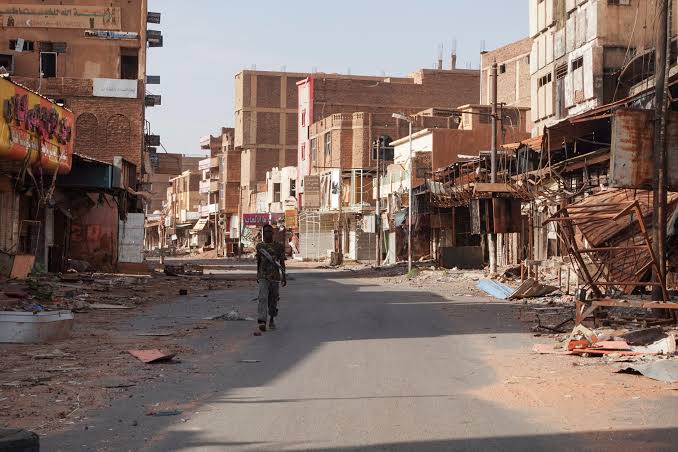
The “Shadow Teams” rely on people already living in cities, villages, and displacement camps, giving them direct access to victims, the families of missing people, and locations that are difficult or impossible to reach from outside. To protect them from arrest or retaliation, the NCHR does not disclose the size of the network, the identities of its members, or where they operate.
According to Abkar, the teams work discreetly inside RSF-controlled areas, using local collaborators and limited communication channels to relay information to the commission's Darfur sector before it is incorporated into reports submitted to the commission and relevant human rights bodies.
Their work typically begins with a report of a killing, disappearance, arbitrary detention, or sexual assault. Team members then collect testimony from victims, relatives, or witnesses and compare those accounts with photographs, videos, victim lists, and available medical records.
By identifying similar incidents across different locations, investigators seek to establish patterns of abuse, identify the units present at the scene, and trace potential chains of command.
The NCHR has not, however, published a detailed methodology explaining how monitors are selected and trained, how evidence is stored and protected, or how the chain of custody is maintained from the moment material is collected until it is handed over.
Those details carry significant legal weight. While human rights reports can establish patterns of abuse and guide investigations, they do not automatically qualify as admissible criminal evidence unless the original material is preserved, its source is verified, and witnesses' identities, consent, and safety are properly protected.
Reaching victims is only one challenge. The teams also contend with communications and power outages, difficulties transmitting files, the risk of exposing local collaborators, and the possibility that witnesses may flee or be killed before their testimony can be fully documented.
The fighting itself further complicates verification, forcing the teams to cross-check testimony, documents, and images from multiple independent sources before accepting them as credible evidence.
What Have the ‘Shadow Teams’ Documented?
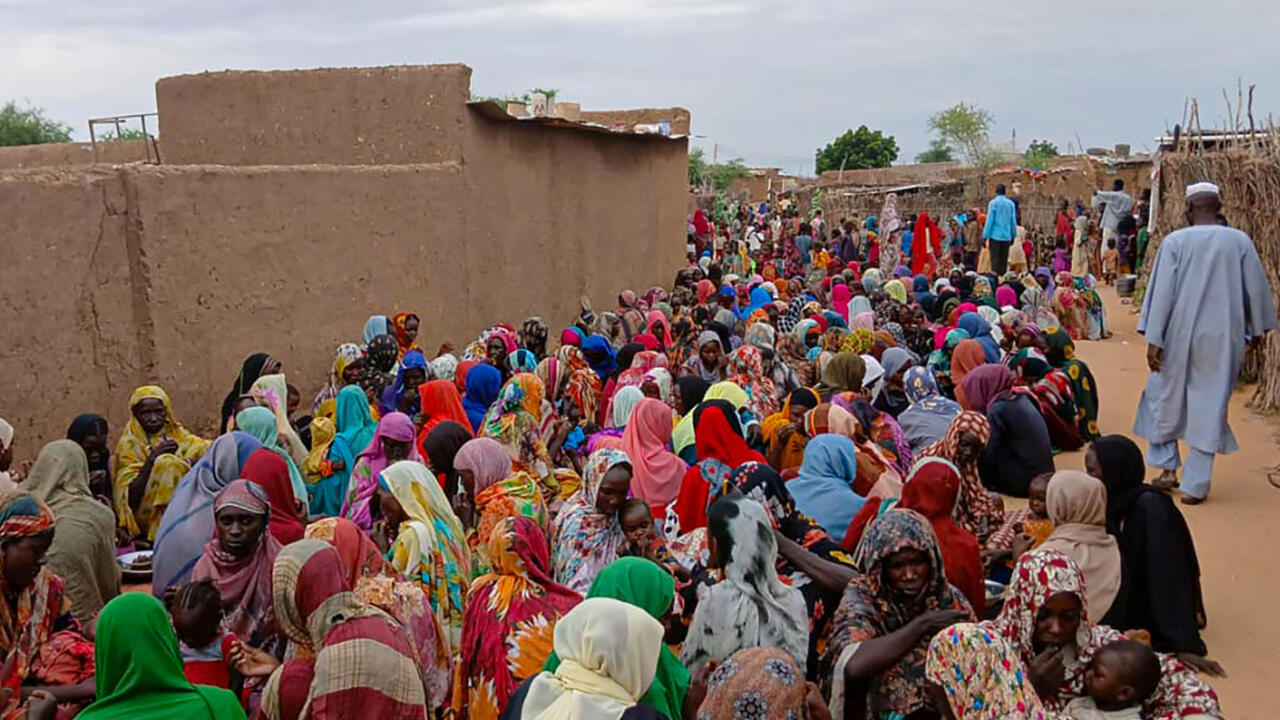
The director of the Darfur sector says the “Shadow Teams” have documented a range of abuses in recent months, including mass killings and executions; ethnically targeted attacks against civilians carried out by RSF militias; as well as arrests, sexual violence, looting, forced displacement, and the destruction of public facilities.
According to Mohamedin Abkar, the NCHR has received reports compiled by the “Shadow Teams” on mass graves in el-Geneina and el-Fasher. The Darfur sector has also recorded nearly 4,000 cases of sexual violence, with girls under the age of 18 accounting for about 20 percent of the victims.
The human rights official said 1,480 civilians were being held at various locations across el-Fasher, including 446 children and 360 women. He also cited around 10,000 detainees at Daqris prison in Nyala, saying women made up a significant share of those held there.
Abkar links the findings from el-Fasher with indicators emerging from villages around el-Geneina, describing a pattern that begins with mass arrests, moves through violence against women and children, and ends with looting and the destruction of infrastructure.
This comparison is what gives the teams’ work its significance. They are not documenting isolated incidents separately but trying to determine whether repeated crimes are individual abuses or part of a coordinated attack targeting a specific population group.
International law distinguishes between human rights documentation and criminal evidence. Documentation aims to preserve facts and prevent them from disappearing, while judicial evidence requires additional standards, including verification of authenticity, a documented chain of custody, and protection of witnesses’ safety.
The value of the material collected by the “Shadow Teams” lies in preserving initial evidence before it vanishes, allowing it to potentially become part of case files pursued by investigators and courts.
Since the UN Security Council referred the Darfur case to the ICC in 2005, crimes committed in the region have fallen under the court’s jurisdiction. The ICC typically relies on a combination of evidence, including witness testimony, documents, photographs, human rights reports, and field investigations.
The court does not rely on a single source, but material gathered by local monitoring networks can help create an initial map of crimes, identify patterns, and point investigators toward locations and individuals requiring further scrutiny.
International law experts note that many genocide and war crimes cases in Rwanda, the former Yugoslavia, and Sierra Leone began with local testimonies collected under similar conditions before later becoming evidence used by international courts to issue convictions.
Observers say Darfur’s particular challenge is that many areas where abuses are reported remain inaccessible to journalists and international missions, making local monitoring networks, in many cases, the only source of information from inside the scene of the crimes.
Why the ‘Shadow Teams’ Matter
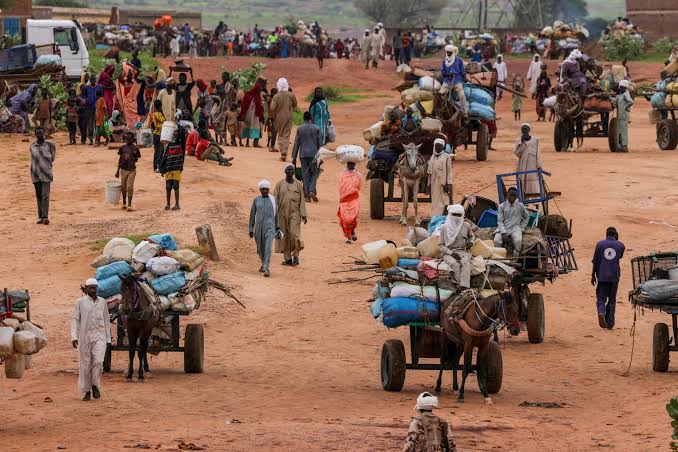
Sudanese politician Ibrahim al-Sheikh told Al-Estiklal that the importance of the “Shadow Teams” extends beyond documenting ongoing abuses. Their role, he said, also lies in preserving the memory of crimes and preventing facts from disappearing as witnesses are killed or displaced or as crime scenes are destroyed.
He argued that collecting similar testimonies and incidents from multiple cities and villages helps determine whether crimes were isolated acts or part of a coordinated policy targeting civilians or specific ethnic groups.
Al-Sheikh added that accurately documenting names, dates, military units, and chains of command can help move investigations from proving that crimes occurred to identifying those who carried them out, those who issued orders, and those who knew about abuses but failed to prevent them.
He said the evidence could be used by Sudanese prosecutors and courts, fact-finding missions, the UN Human Rights Office, and the ICC, provided that the credibility, confidentiality, and chain of custody of the material are preserved.
Al-Sheikh noted that Sudanese courts have had jurisdiction over genocide, crimes against humanity, and war crimes since amendments to the criminal law in 2009. He cited as an example a ruling issued in absentia by a Port Sudan court on July 12, 2026, that sentenced RSF commander Mohamed Hamdan Dagalo, known as “Hemedti,” along with his brothers Abdel Rahim and al-Quni and others, to death in connection with the killing of West Darfur governor Khamis Abakar and the el-Geneina massacres.
He stressed that the value of documentation is not limited to trials. It also includes uncovering the fate of missing people, recording the number of victims and displaced civilians, documenting looted property, and laying the groundwork for compensation, reparations, and the restoration of rights.
Yet turning these files into real accountability depends on the independence of the bodies preserving the evidence, the protection of witnesses, and the ability to link crimes to those who ordered or enabled them. The “Shadow Teams” can record what happened and help preserve the truth, but they cannot, on their own, ensure that suspects appear in court.
As the war continues and abuses expand, the mission of these secret networks has become more than daily documentation. It has become a race against time to preserve the memory of the conflict. Every testimony saved, and every image secured before it disappears, could eventually become part of a legal case determining the responsibility of individuals and commanders for one of the most complex wars in Sudan’s modern history.