Normalization Versus De-Escalation? Debate Over Trump’s Trade-off With Arabs Through an Iran Deal
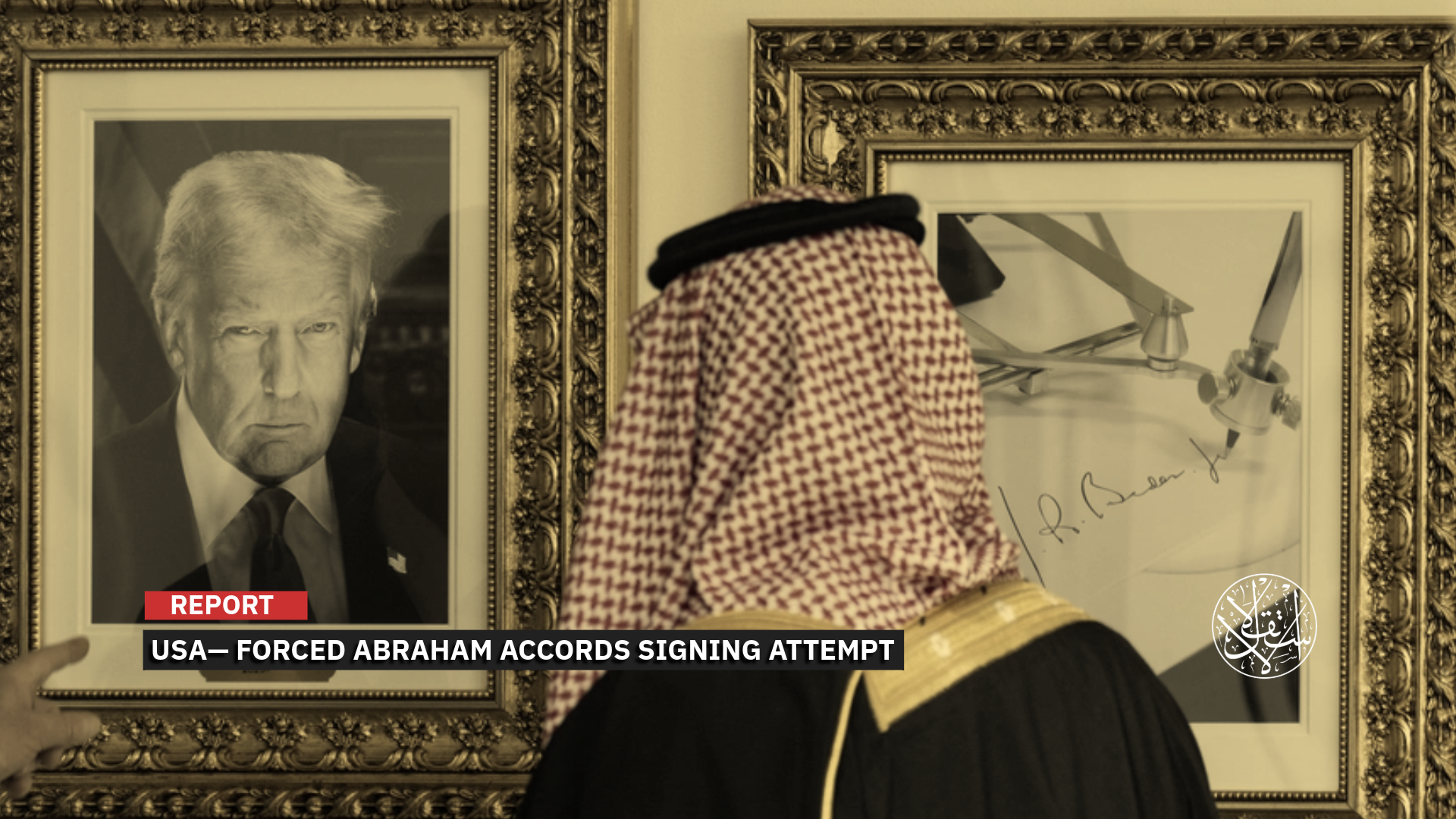
Amid growing reports that a deal seen as granting more gains to Iran than to the United States is close to being reached, and with increasing efforts by the “pro-Israel” lobby to obstruct this path, U.S. President Donald Trump reportedly surprised several Arab and Muslim leaders he contacted to inform them that the agreement was nearing completion.
According to circulating reports, Trump then unexpectedly asked them, including leaders from eight Arab and Muslim countries, to join the “Abraham Accords” normalization framework with “Israel”. The request reportedly extended even to countries that already have peace agreements with “Israel”, such as Egypt and Jordan, making the proposal appear as though it were a trade-off between halting the war against Iran and expanding normalization with “Israel”.
American and Israeli assessments and research centers viewed Trump’s insistence on the Abraham Accords as an attempt to use them as a political lifeline and strategic achievement that could soften perceptions of U.S. setbacks in confronting Iran or offset the political costs of war.
These moves were also interpreted as a final American attempt to craft an image of a “graceful exit” from the crisis with Iran and to project a message of victory to the American public, where criticism of Trump has reportedly been increasing.
However, this American effort encountered obstacles after Pakistan publicly rejected the proposal, while Saudi Arabia expressed reservations despite pressure from the “pro-Israel” lobby within the Trump administration, leaving the U.S. administration’s predicament regarding the war largely unresolved.

Normalization as a Condition for Ending the War
Throughout both his first term (2017–2021) and his second term, which began in 2025, U.S. President Donald Trump has consistently sought to promote what he considers unprecedented achievements, including pushing Arab states toward normalization with “Israel” through what became known as the Abraham Accords, in addition to pursuing a direct confrontation with Iran, unlike previous American presidents.
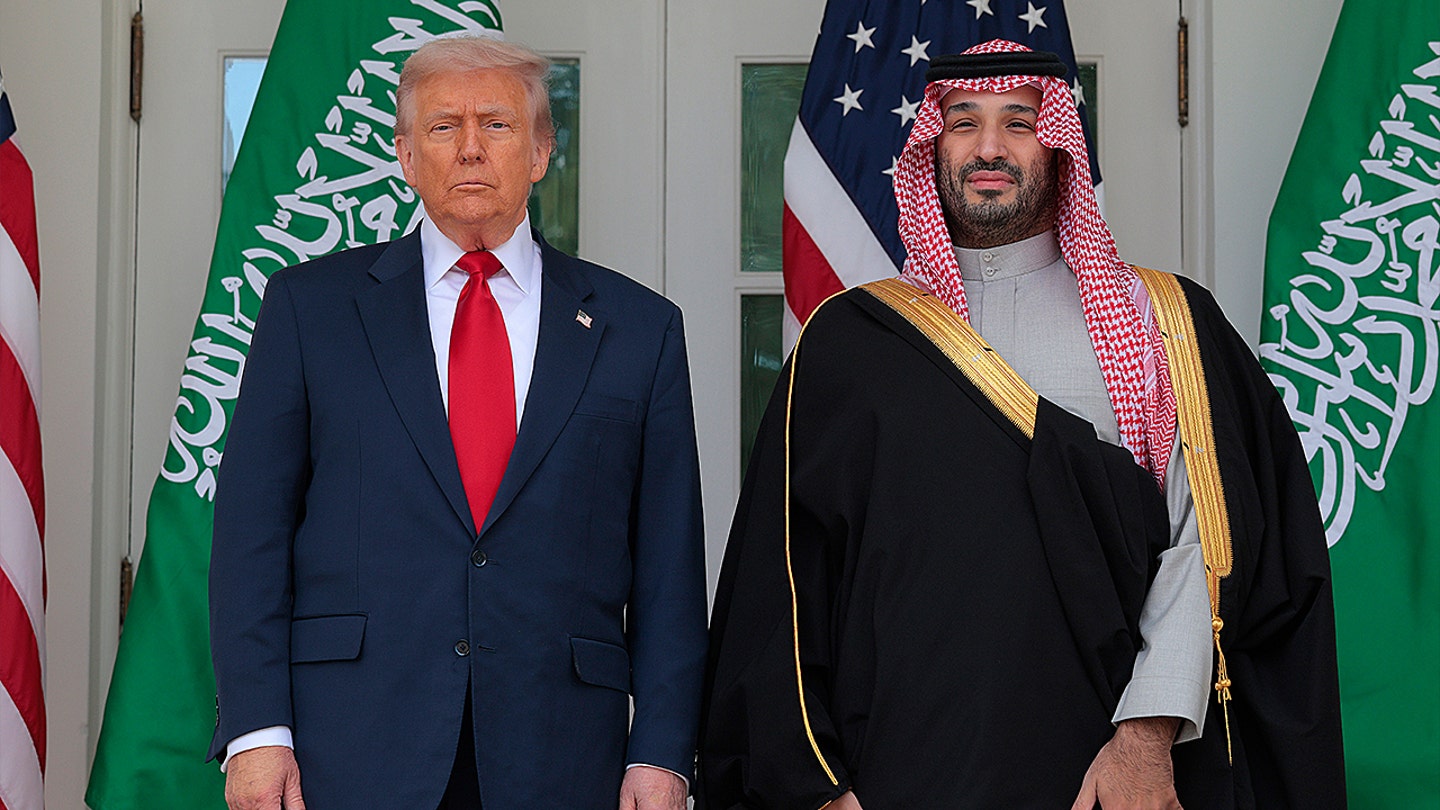
In this context, the series of phone calls Trump held on May 24, 2026, with the leaders of Saudi Arabia, United Arab Emirates, Qatar, Egypt, Bahrain, Jordan, Pakistan, and Turkiye centered on one main objective: urging them to join the “Abraham” initiative, which, according to his vision, represented a lifeline from the repercussions of the crisis with Iran.
In a post on the Truth Social platform, Trump appeared to directly link the achievement of a final peace agreement with Iran to these countries joining the “Abraham Accords,” suggesting that Gulf stability and an end to the war with Tehran had become conditional on expanding normalization with “Israel”.
Trump wrote, “Therefore, I am mandatorily requesting that all Countries immediately sign the Abraham Accords, and that, if Iran signs its Agreement with me, as President of the United States of America, it would be an Honor to have them also be part of this unparalleled World Coalition.”
He also implicitly suggested that this request came in return for “after all the work done by the United States to try and pull this very complex puzzle together,” referring to the war with Iran.
On May 27, 2026, Donald Trump reiterated his position more explicitly, saying, “I want Saudi Arabia, Qatar, and others to join the Abraham Accords, they owe us,” adding, “I’m not sure I’ll make deal with Iran if Gulf countries don’t join Abraham Accords.”
According to the Hebrew newspaper Yedioth Ahronoth, Trump said that the nuclear agreement with Iran “may depend on Gulf normalization with Israel,” expressing uncertainty over the necessity of finalizing the agreement in the absence of such normalization.
Ironically, Trump specifically named the countries he urged to join, namely Saudi Arabia, Qatar, Pakistan, Turkiye, Egypt, and Jordan, while excluding the United Arab Emirates and Bahrain, noting that they had signed the agreements. “already a member!”.
He also called on Egypt and Jordan to join the “Abraham” axis despite their existing peace treaties with “Israel”, based on the view that the Abraham Accords go beyond the concept of traditional peace toward a security, military, and economic partnership aimed at building a broad Arab-Israeli alliance, unlike the so-called “cold peace” that has prevailed because of popular opposition in Egypt and Jordan.
Trump urged Cairo and Amman to adopt the Emirati and Bahraini model of full economic, tourism, and social openness with “Israel” instead of the current state of stagnation hindered by public opposition.
Israeli-American journalist Barak Ravid, who writes for Channel 12 and the American outlet Axios, revealed on May 25, 2026, that Trump surprised the leaders of Saudi Arabia, Qatar, and Pakistan during his calls with them by demanding that they join the “Abraham Accords” after the end of the war with Iran.
According to U.S. officials cited by Axios, Trump informed those leaders that he expected countries that had not yet joined the agreements, or did not have peace treaties with “Israel”, to normalize relations with it after the war ended.
He also indirectly demanded that they recognize “Israel” if they wanted to achieve a ceasefire between the United States and Iran.
According to the same sources, Trump stressed that joining the “Abraham Accords” should be “a fundamental and mandatory condition” in light of American efforts aimed at reaching a peace agreement.
Reports indicated that the leaders who participated in the calls were surprised by Trump’s request, and silence reportedly filled the conversations, prompting him to joke, “Hello… are you still on the line?” as reported by Axios.
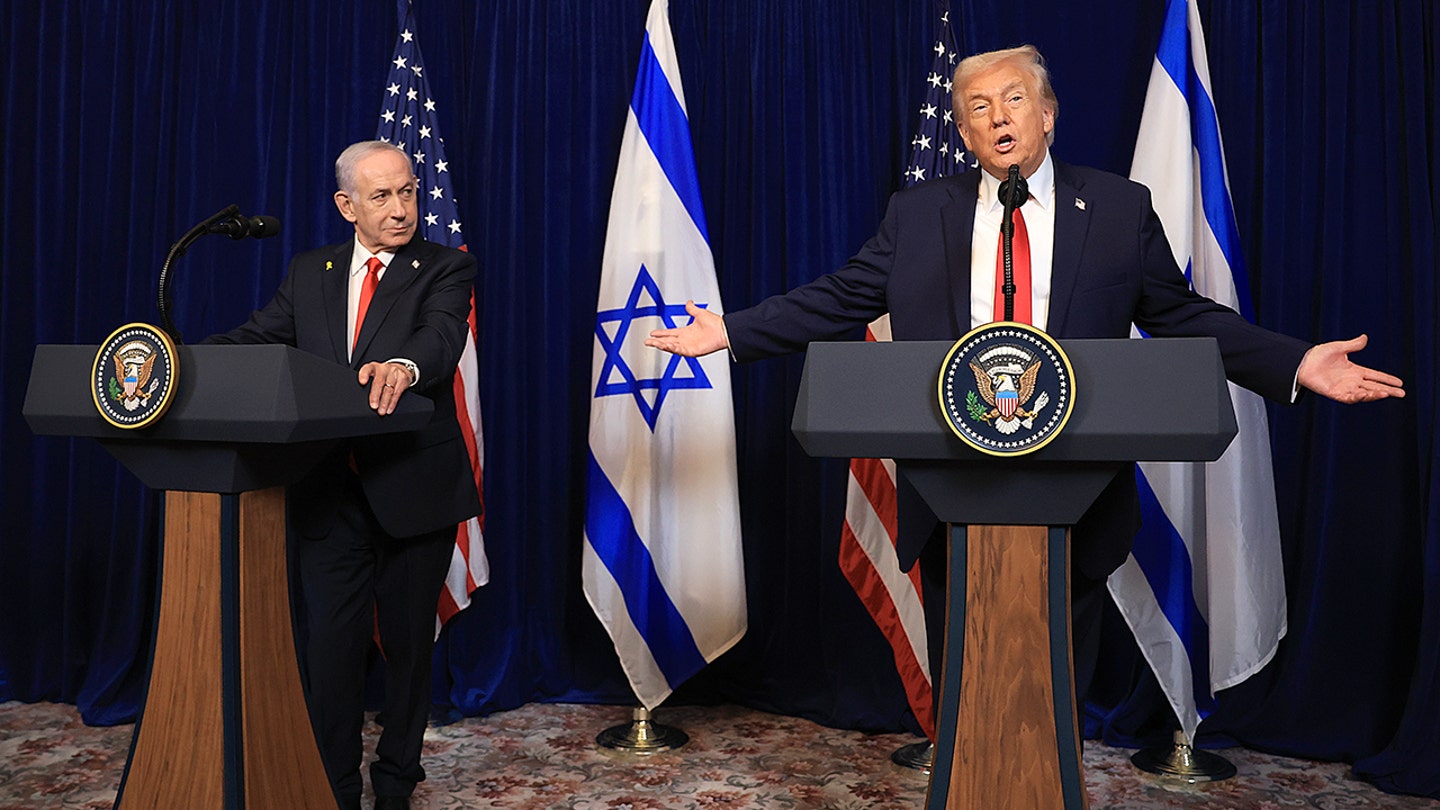
In what appeared to be an attempt to impose a new fait accompli, Trump informed the Arab and Muslim leaders that he intended to contact Israeli Prime Minister Benjamin Netanyahu, expressing hope that Netanyahu would participate in a future group call with them.
He also told them that his envoys, Jared Kushner and Steve Witkoff, would contact them in the coming weeks to follow up on the matter and discuss joining the “Abraham Accords.”
Arab and Muslim Rejection and Ridicule
American media reports confirmed that a number of Arab and Muslim leaders rejected Donald Trump’s request, with some even treating it with ridicule, while others viewed it as a political attempt to contain internal criticism directed at him over the anticipated agreement with Iran, by suggesting that collective normalization with “Israel” would represent a parallel “gain” to that agreement.
In this context, Politico reported on May 26, 2026, that Washington’s allies in the region mocked Trump’s proposal, while Middle Eastern officials downplayed the seriousness of the initiative, considering it a political maneuver aimed at absorbing pressure from hardline Republicans opposed to any potential concessions to Iran.
The magazine added that Arab and Muslim leaders responded to the invitation to join the “Abraham Accords” and recognize “Israel” with “dismissal, ridicule, and at times silence,” noting that Trump’s insistence on this approach could hinder any negotiation track with Iran, according to analysts.
It further argued that some governments might withdraw from regional mediation roles in order to avoid provoking public anger, rather than risk entering into open relations with “Israel” at such a sensitive moment.
On the Saudi position, Saudi Arabia reiterated that normalization with “Israel” remains conditional on the establishment of an independent Palestinian state within a clear and irreversible framework.
According to CNN on May 25, 2026, citing a Saudi source, the Kingdom “will not normalize relations with Israel unless there is an irreversible path toward the establishment of a Palestinian state,” in response to Trump’s remarks about a regional commitment to recognize “Israel” following a deal with Iran.
The source added that Saudi Arabia remains firm in its position, which is based on the necessity of a clear political horizon leading to the creation of an independent Palestinian state.
Pakistan also rejected Trump’s invitation to join the “Abraham Accords.” According to Reuters, a Pakistani official said the proposal represents an attempt to use ceasefire diplomacy with Iran within a broader framework of pressure.
The source stressed that the Iran agreement and the normalization issue with “Israel” are “not linked and cannot be tied together,” adding that Pakistan is “not obliged to respond to such demands.”
An Attempt To Compensate for Failure
Western analyses have suggested that U.S. President Donald Trump’s insistence on expanding the Abraham Accords alongside discussions of a potential agreement with Iran reflects an attempt to present a political exit strategy that would preserve his image after setbacks in wartime objectives.
In this context, the French newspaper Les Echos summarized Trump’s position on May 25, 2026, by stating that he “wants to exit the Iran war in a dignified manner by expanding the Abraham Accords,” arguing that the U.S. president is attempting to link the deal with Tehran to a new breakthrough in Arab-Israeli normalization.
The newspaper added that Trump, alongside what it described as “tug-of-war between Washington and Tehran,” put forward a more ambitious goal: achieving a “lasting peace” in the Middle East through the expansion of the Abraham Accords, originally signed during his first term with several Arab states.
For its part, The Daily Telegraph described Trump’s post regarding expanding the accords, in an analysis published on May 25, 2026, as “the expression of a desperate president who wants to escape the quagmire of war.”
The paper argued that Trump’s calls to expand the Abraham Accords, which his administration brokered in 2020, may amount to little more than “utopian dreams,” given the current political and regional complexities.
It noted that Trump’s insistence on bringing Egypt and Jordan into the “Abraham axis,” despite their peace treaties with “Israel” dating back decades, stems from his perception that those agreements were based on pragmatism and ending wars rather than building deep, comprehensive relations.
In contrast, the Abraham Accords were designed as a broader framework including economic, social, and security cooperation, something that Cairo and Amman have not fully engaged in so far.
The Daily Telegraph also questioned Trump’s assumption that the war on Iran, which erupted on February 28, had brought Middle Eastern countries closer to “Israel”, on the grounds that Iranian missile and drone attacks targeted the entire region indiscriminately.
The newspaper said this narrative is “enthusiastically promoted by Israel,” but it does not necessarily enjoy broad acceptance in the Arab world.
It added that the more widely held Arab narrative is that regional states would not have faced such risks in the first place had it not been for the war launched by the Trump administration, with backing from Israeli Prime Minister Benjamin Netanyahu, against Iran.
The paper further noted that several factors discourage Arab states from joining the Abraham Accords, including rising tensions between “Israel” and both Egypt and Jordan due to the war in Gaza, displacement policies, and attempts to undermine Jordan’s role in overseeing Islamic holy sites in Jerusalem.
Despite this, U.S. politicians close to “Israel” continued to pressure Arab countries to join the accords.
In this context, U.S. Senator and known “pro-Israel” supporter Lindsey Graham urged Saudi Arabia and other states to respond to Trump’s request, warning of “consequences” should they reject the proposal, remarks that observers viewed as direct pressure on Arab capitals.

The Obsolescence of the ‘Abraham Accords’
The irony is that Trump called on Arab countries to join the “Abraham axis” at a time when American reports suggested that the Abraham Accords had collapsed and lost their relevance following Israeli wars, particularly the war against Iran.
Foreign Policy, published by the Council on Foreign Relations in New York, stated on May 4, 2026, what it described as the “end of Abrahamism.”
The magazine explained that for years the United States built its regional strategy on the assumption that “Israel’s” security and that of Gulf states are interconnected, and that the U.S.-backed normalization would bring stability, which led Washington to promote the Abraham Accords with the United Arab Emirates, Bahrain, Morocco, and Sudan.
However, it emphasized that Gulf governments have begun to “reject the U.S. and Israeli vision that seeks to integrate them into a regional security structure centered on Israeli dominance.”
It added that “the current war on Iran has shown that Israel’s ambitions for regional dominance expose the Gulf to risk, and that the gap between Prime Minister Benjamin Netanyahu’s vision of a reshaped Middle East and Arab states’ ambitions has become too wide to bridge.”
According to the magazine, Gulf countries are seeking a security order that reflects their own interests on their own terms, rather than serving as an extension of Israeli or Iranian ambitions, suggesting that the war may ultimately end alongside what it called the “Abraham axis.”
The report stressed that the war against Iran constituted a severe test for what became known as the “Abrahamic religious axis,” or the alliances that emerged after the Abraham Accords under Emirati political and diplomatic leadership.
The project, which was promoted as an entry point to “regional peace” and economic and security integration, is now facing a deep crisis, as the region has turned into an arena of polarization and open warfare.
The magazine explained that the war on Iran exposed the limits of this axis, as it appeared unable to deliver the stability it had promised. Instead, the military confrontation pushed Arab states to reassess their positions between alignment with “Israel” and the United States, and concerns that weakening Iran could pave the way for “Israel” to emerge as an unchecked dominant regional power without any balance.
The war also showed that Arab public priorities remain closely tied to the Palestinian cause and rejection of Israeli dominance, more than to integration into political and economic arrangements that transcend the conflict. This has led to a decline in the political and cultural momentum of the idea of an “Abrahamic Middle East,” in favor of a return to traditional alliances and sharper geopolitical rivalries.
In the same context, American Middle East scholar Steven Cook wrote in Foreign Affairs that the war between “Israel” and Iran revealed a “political illusion” that had been promoted for years, namely the existence of a coherent Arab-Israeli axis ready to jointly confront Iran.
He explained that the Abraham Accords did not establish a true strategic alliance, but rather created a limited network of economic and security interests that could only endure under relative stability. However, as the prospect of full-scale war approached, deep contradictions between “Israel” and Gulf states became increasingly apparent.