Looted Algerian Funds: Will Paris and Algiers Succeed in Overcoming the Asset-Recovery Hurdle?
France’s continued disregard for international conventions is a clear undermining of democracy.
The issue of recovering looted Algerian funds remains a subject of discussion with the French side, amid questions about Paris’s seriousness regarding judicial cooperation with Algeria in this case.
France has expressed its readiness to cooperate with Algeria in its efforts to recover funds and assets linked to corruption cases during the era of the late President Abdelaziz Bouteflika.
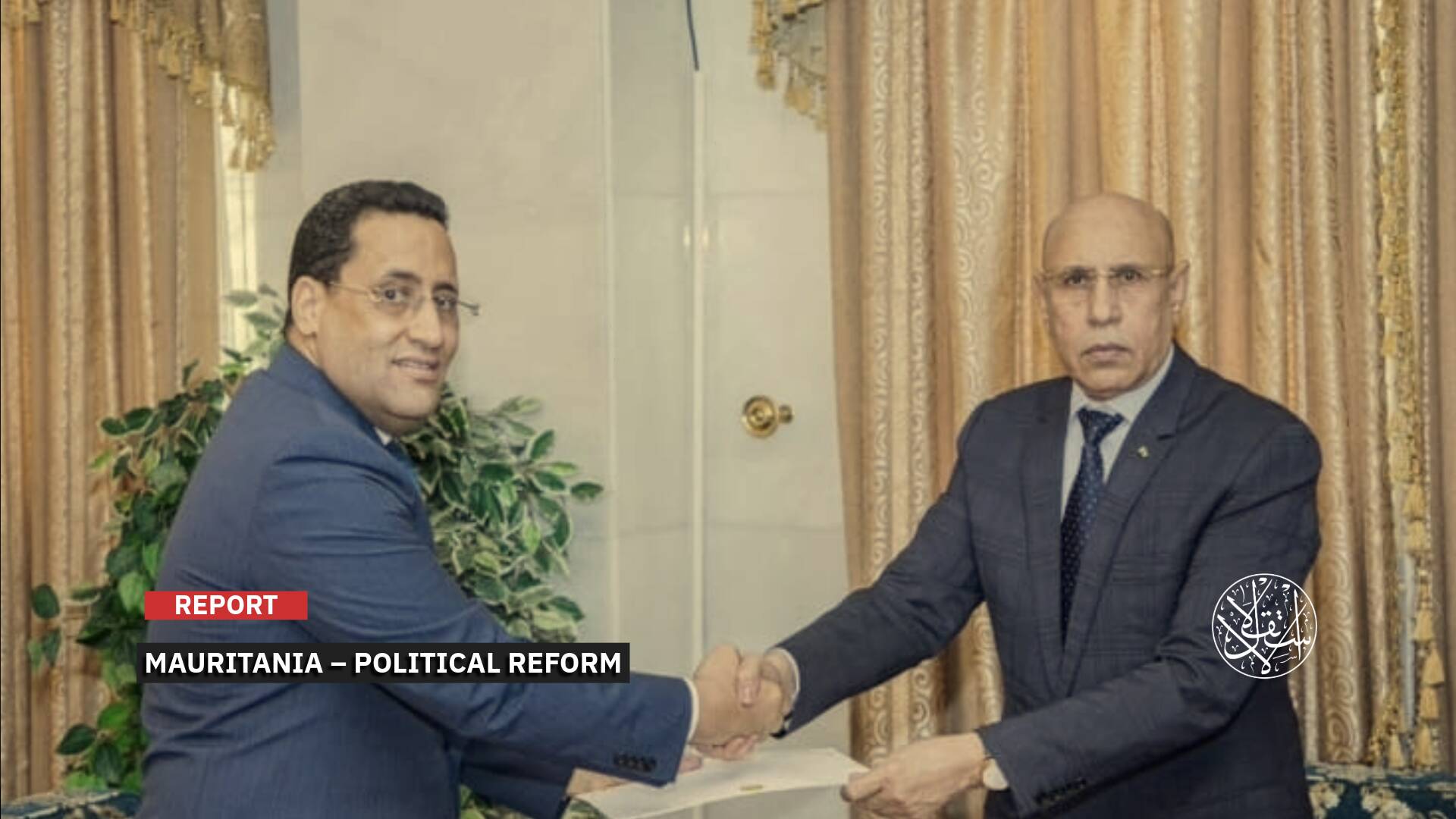
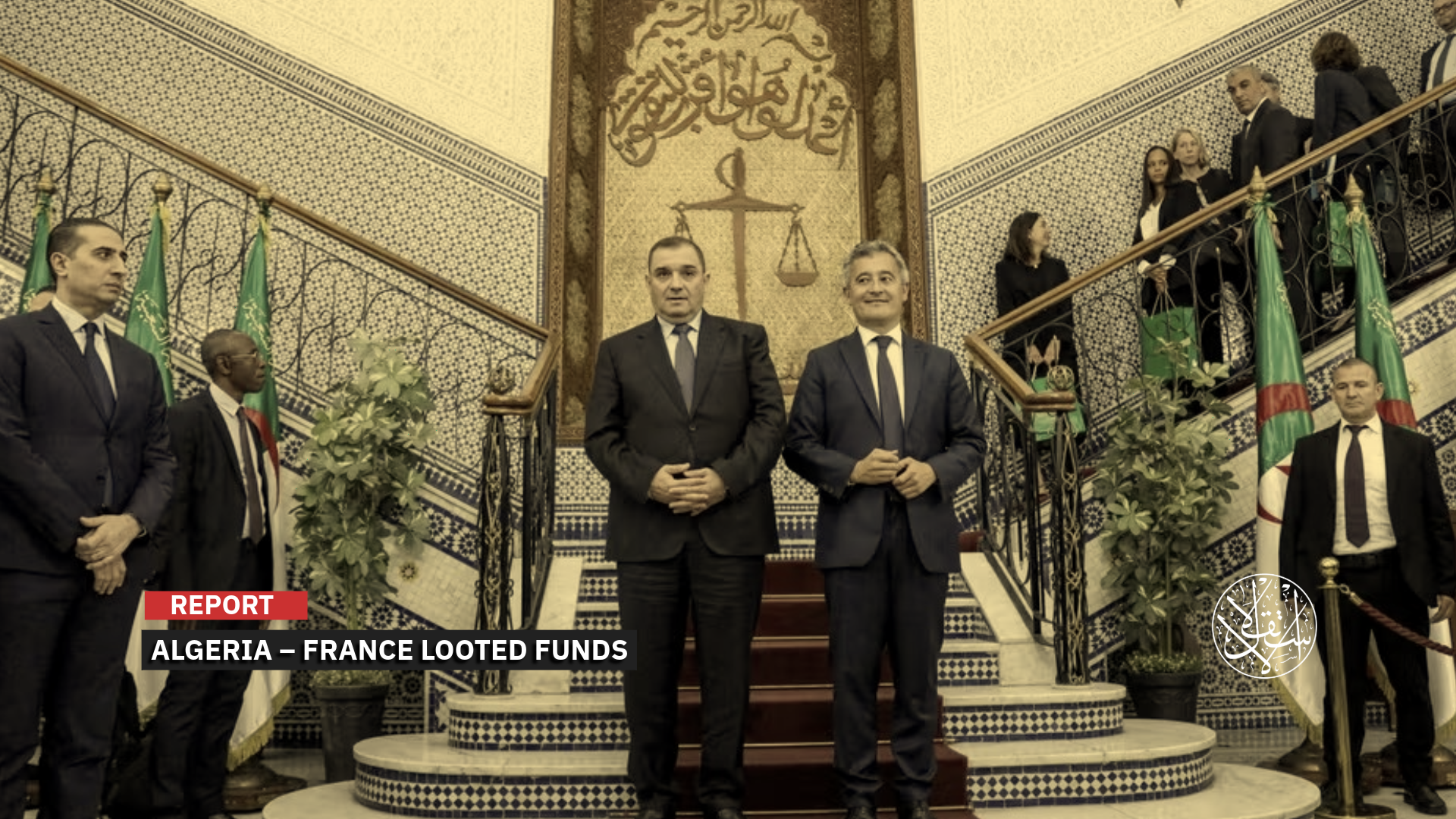
The announcement was made by French Justice Minister Gerald Darmanin during his visit to Algeria, where he was received by President Abdelmadjid Tebboune at the el Mouradia Palace on May 18, 2026.
The Sensitivity of the File
The French minister said that the visit came at the direct request of President Emmanuel Macron, who recently held extensive talks with his Algerian counterpart on a range of bilateral issues, foremost among them the issue of looted funds.
President Tebboune had previously announced in October 2025 that Algeria had succeeded in recovering assets worth $30 billion from proceeds linked to looted funds, noting that several recovered companies and factories had been reintegrated into the national economy under the management of state institutions.
However, Algerian authorities maintain that a large portion of the transferred funds is still dispersed abroad, with no precise official estimates of their actual total.
In this context, the website Algeria Times, in an analysis dated May 20, 2026, stated that the issue of recovering illicitly transferred funds has been one of the key political priorities raised by Algerian authorities since the outbreak of the “Hirak” protests in 2019, which led to the resignation of Bouteflika after 20 years in power.
Since then, the same source adds, “Algeria has launched a broad anti-corruption campaign targeting ministers, businessmen, and influential officials, in an effort to restore public trust and demonstrate a break with a period marked by widespread corruption and abuse of power.”
It further noted that “the recent French move goes beyond the judicial dimension, also carrying political messages linked to attempts to ease bilateral relations, which have experienced repeated crises in recent years over memory issues, migration, and security cooperation.”
It added, “Paris is also aware of the sensitivity of the issue of illicit funds for Algerian public opinion, especially amid the economic and social pressures facing the country.”
The website stressed that “the success of this cooperation depends on the extent of the French judiciary’s responsiveness to Algerian requests, and on the ability of both countries to overcome the legal and financial complexities that usually accompany asset-tracing cases across borders, an extended judicial battle that often moves slowly through the corridors of European banks and courts.”

French Delay Tactics
For many years, Algeria has criticized Paris for its lack of cooperation in these sensitive cases. The recovery of illicitly transferred assets has even become one of the main points of tension in bilateral relations.
President Tebboune publicly condemned this situation during a Council of Ministers meeting on April 5, 2026.
He revealed that Algeria had sent 61 judicial assistance requests to the French judiciary concerning bank accounts, assets, and real estate suspected of being acquired illegally.
According to Algerian authorities, these requests have remained unanswered for several years.
Algeria has consistently compared this situation with the cooperation it has received from other European countries.
For example, Switzerland accepted part of Algeria’s requests, allowing judicial proceedings to be launched concerning more than $110 million.
Spain also cooperated in the case of the el Palace hotel in Barcelona, linked to imprisoned businessman Ali Haddad.
Tensions further escalated following the French court’s refusal to extradite former Algerian Industry Minister Abdeslam Bouchouareb, who had been convicted in several corruption cases in Algeria, particularly those related to embezzlement of public funds; his extradition had previously been denied on health and legal grounds.
Paris’s Objectives
French Justice Minister Gerald Darmanin confirmed in a press statement during the visit that he had come to strengthen judicial cooperation and prison-related cooperation between the two countries, as well as to address issues concerning assets acquired through illicit means.
He revealed that Algerian authorities had submitted around 100 requests for the recovery of assets derived from corruption, in order to enable the Algerian people, government, and authorities to recover these confiscated funds and properties, and subsequently those that may be definitively seized in cooperation with the French judiciary.
Darmanin said, “We discussed this file at length. Following our meeting with the Minister of Justice, the French National Financial Prosecutor’s Office has been working with full independence alongside its Algerian counterparts. We have also invited, at the beginning of June, representatives of the Algerian judicial authorities to come to Paris to further examine these cases so that we can present them before the French courts, particularly regarding seizure and confiscation cases involving, as you know, former Algerian officials.”
The French Justice Minister noted that his meeting with President Tebboune was lengthy, stressing that they addressed the work that must continue to restore trust between the two countries.
“When I served as Interior Minister for four and a half years, I demonstrated that we were able to work frankly, even when we disagreed at times, but with a great deal of respect for both our peoples and in the interest of our two countries and their security. Our countries are bound by a deep historical relationship,” he added.
French Ambassador to Algeria Stephane Romatet confirmed the desire of President Emmanuel Macron and his Algerian counterpart Abdelmadjid Tebboune to accelerate the resumption of dialogue based on “trust, partnership, and respect,” expressing his satisfaction with this direction.
Romatet stated in remarks reported by the Algerian website Ennahar Online on May 18, 2026 that Darmanin’s visit to Algeria came just one week after the visit of the Deputy Minister for the Armed Forces.
He described the shared judicial files between the two countries as “numerous, very important, very sensitive, and very complex,” expressing hope that the visit would provide an opportunity to make progress on them, while respecting judicial independence.
The ambassador added that “France is ready to discuss the issue of Algerian funds that have been looted and transferred abroad, including to France, as well as the issue of extraditing former officials wanted by Algerian justice.”

A Political Interpretation
In his analysis of these developments, Algerian writer and human rights activist Anouar Benmalek stated that the recovery of looted funds is, in principle, a necessary step for any state seeking to rebuild citizens’ trust in its institutions and demonstrate seriousness in the fight against corruption.
He explained to Al-Estiklal that this is especially true when dealing with large sums believed to have been transferred out of the country over many years of mismanagement and political and financial corruption.
Benmalek stressed that the success of this process should not be measured solely by political statements or official visits, but rather by the existence of a genuine will to open files with full transparency and to address the issue according to the logic of the rule of law, not through selectivity, retaliation, or political score-settling.
He argued that “judicial cooperation between France and Algeria can be significant, given that part of the funds, assets, or financial networks linked to these cases exist within European jurisdictions.”
He added, however, that “previous experiences have shown that such cases are legally complex and require a long time, precise evidence, and genuine, reciprocal judicial cooperation.”
“The Algerian public opinion expects tangible results, because talk of recovering looted funds has been repeated many times over the past years under Tebboune’s administration and under General Said Chengriha, while the limited results achieved continue to raise questions about the seriousness and capacity to reach the main figures and major networks that benefited from the corruption system,” Benmalek continued.
Therefore, the political and human rights activist said, any positive assessment of these efforts remains dependent on transparency, the announcement of clear results to public opinion, and adherence to international judicial standards, away from political exploitation, temporary media use, or ceremonial rhetoric.
Accordingly, Benmalek concluded that “the essential conditions are not present within the current Algerian regime, nor are there relations between Algeria and Paris that inspire the level of trust required to deal with such serious cases involving billions of euros, not just millions.”
Previous Criticism
The issue of looted funds has long been the subject of continuous academic and political debate. In this regard, legal scholar and international law expert Mehdi el-Aidi stated that France’s suspension of 61 judicial assistance requests submitted by Algeria up to April 2026 for the recovery of looted assets constitutes a clear violation of the principle of “binding force of treaties” and of good faith.
El-Aidi told the local newspaper Ech-chaab on 6 April 2026 that, amid the major transformations taking place in international criminal and financial law, the issue of recovering Algerian looted funds stands out as a revealing case of double standards.
He added, “We are not merely dealing with diplomatic efforts to recover material assets; rather, we are facing a high-level legal confrontation in which Algeria is placing the international community before a mirror of its moral and contractual responsibilities, in the face of a structural evasion led by Paris under the cover of judicial sovereignty.”
He argued that Algeria’s claim to the looted funds is not an option, but rather the implementation of a binding international obligation.
El-Aidi also noted that France continues to adhere to a rigid procedural system requiring excessively high standards of proof, placing it among states that obstruct the global system and UN efforts to combat transnational corruption and promote human rights principles.
The international law expert cited the case of former Industry Minister Abdeslam Bouchouareb (finally convicted) as a striking example of the instrumental use of French domestic law against international justice.
He added that despite the strong evidence revealed in the Panama Papers, which showed his ownership of the offshore company “Royal Arrival Corp” along with bank accounts and luxury real estate assets in central Paris, the French position shifted from procedural inertia to the implicit benefiting from these funds.
He stressed that this behavior places France in a situation of multiple violations of its international obligations: first, a breach of Article 16 of the United Nations Convention against Corruption (UNCAC) concerning bribery of public officials; and second, a failure to comply with the obligation of confiscation and asset recovery set out in Article 57 of the same convention.
He further stated that France is attempting to convert recovered funds into development aid managed by the French Development Agency, while Algeria rejects this approach as a form of disguised guardianship, insisting that the funds are sovereign property of the Algerian people and must be returned directly and unconditionally to the public treasury in accordance with Article 57 of UNCAC.
El-Aidi added that “France’s continued disregard for these conventions constitutes a clear declaration of the undermining of democratic institutions.”
He concluded that Algeria should work to internationalize pressure for the recovery of looted funds by moving the file from the bilateral level to the Human Rights Council to hold France accountable for violating Article 27 of the Vienna Convention; secondly, by rejecting guardianship and insisting on direct restitution to the treasury; and thirdly, by expanding the Swiss model through strengthening partnerships with legally compliant states to put pressure on delaying states.