Between Escalation and Mediation: Where Is the U.S.–Iran Crisis Headed After the Collapse of the 'Understanding'?
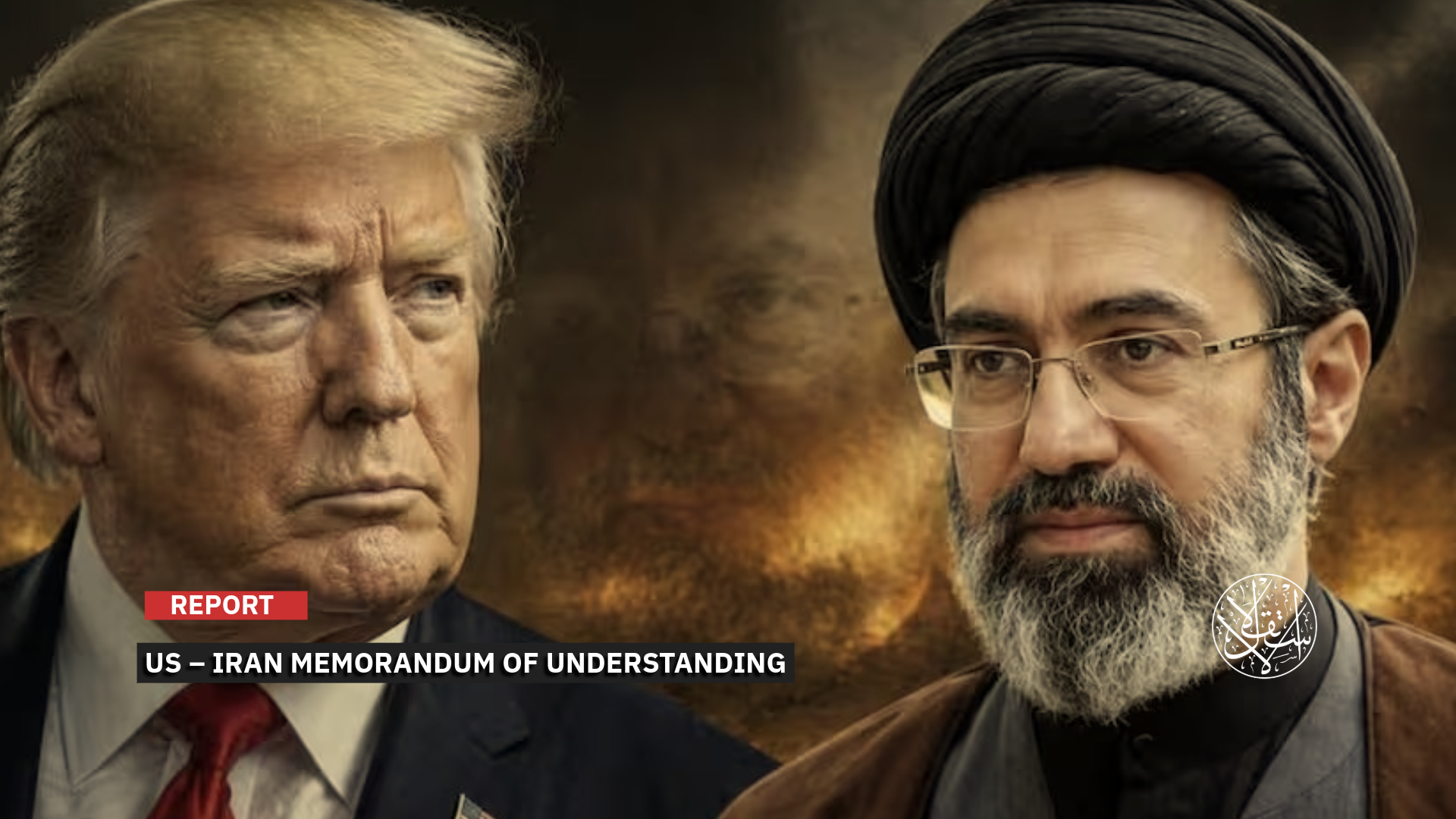
The United States and Iran have officially announced the end of their memorandum of understanding.
With the United States and Iran officially announcing the termination of the Memorandum of Understanding (MoU) they had signed to establish a ceasefire and launch a negotiating process following their reciprocal attacks, numerous questions have emerged about the possible scenarios for the next phase, particularly regarding the prospects of a renewed war and the potential closure of the Strait of Hormuz once again.
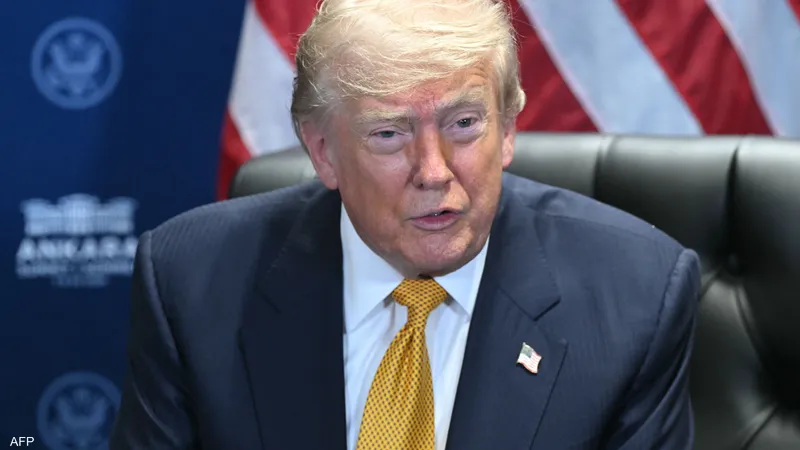
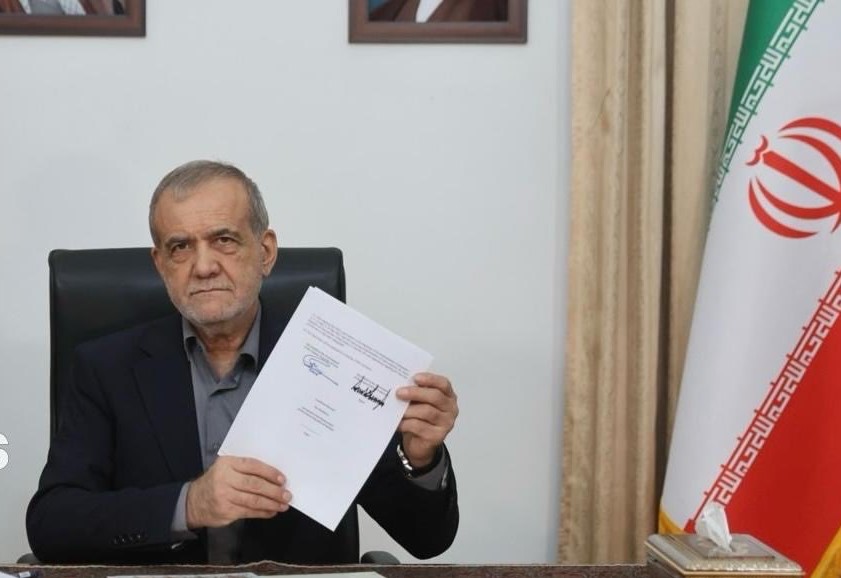
On June 18, 2026, U.S. President Donald Trump and his Iranian counterpart Masoud Pezeshkian electronically signed the Memorandum of Understanding concluded between their two countries to end the conflict in the region.
Pakistani Prime Minister Shehbaz Sharif subsequently announced that the agreement had officially entered into force.
The initial Memorandum of Understanding aimed to halt the military operations that had erupted on February 28 following U.S.-Israeli strikes targeting Iran, while paving the way for negotiations to reach a final agreement within 60 days.
During that period, the United States was to lift its naval blockade of Iran, and the Strait of Hormuz was to be reopened to international maritime traffic.
Back to Square One
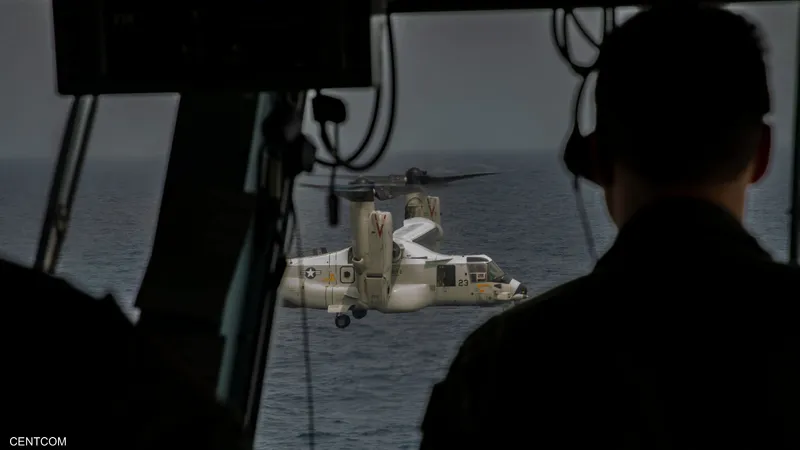
Amid the attacks that targeted three oil and gas tankers in the Strait of Hormuz near the coasts of Oman and the United Arab Emirates on July 7, the United States launched strikes against Iranian military facilities, saying they were intended to "degrade Iran's ability to threaten freedom of navigation in the Strait," according to a statement issued by the U.S. Central Command (CENTCOM).
The statement added that Washington "holds Iran responsible for the unprovoked aggression against commercial vessels."
In response, Iran's Islamic Revolutionary Guard Corps (IRGC) launched missile attacks targeting several countries in the region, particularly the United Arab Emirates, Bahrain, Qatar, and Jordan, claiming that the strikes hit U.S. military bases.
From that moment, the military option increasingly came to the forefront, effectively bringing the Memorandum of Understanding signed by the two sides to an end.
Tehran once again announced its intention to close the Strait of Hormuz, while U.S. President Donald Trump declared that the United States would reimpose its naval blockade on Iran and assume responsibility for safeguarding the Strait.
Iran's Ministry of Foreign Affairs stated that Tehran "will not be the party to initiate a violation of the Memorandum of Understanding, while Washington continues to violate it repeatedly," stressing that Iran "will not implement its obligations under the Memorandum of Understanding with the United States unless the latter fulfills its own commitments."
In a statement issued on July 13, the Iranian Foreign Ministry added that it was seeking to establish a joint mechanism with the Sultanate of Oman for the management of the Strait of Hormuz, "but U.S. pressure is hindering these efforts."
Meanwhile, Iranian Parliament Speaker Mohammad Bagher Ghalibaf wrote on the social media platform X on July 12 that "the era of one-sided deals is over," following overnight U.S. strikes that targeted hundreds of Iranian sites.
In response, Trump said on Truth Social on July 13 that "the Strait of Hormuz is open, and will remain open, with or without Iran." He added, "We are reinstating the Iranian blockade, which is called that because it only prevents Iranian vessels or their proxies from entering or leaving."
The U.S. president noted that "all other countries will enjoy fair and open use of the Strait," adding, "From this moment forward, the United States of America will be known as the Guardian of the Strait of Hormuz, and, in the interest of fairness, will charge a 20 percent fee on all goods, to cover the costs required to provide safety and security across the Strait. The process will begin immediately."
On the same day, Trump commented on the Memorandum of Understanding between Washington and Tehran during a phone interview with Fox News, saying, "We had an agreement, but they broke it. We reached a final agreement, and then they backed out of it. They always violate agreements. We made ten agreements with these people, so we are going to hit them very hard."
Possible Scenarios
Regarding the possible scenarios in the coming phase, Jordanian writer and political analyst Hazem Ayyad said that "the scenario of a return to war does not appear, at this point, to be the most likely one."
In an interview with Al-Estiklal, Ayyad explained that "the United States is not inclined toward a large-scale return to military operations, and it is unlikely to make a decision that would lead it to send additional forces, particularly aircraft carriers, to the region."
He added, "This war does not enjoy broad support among the American public, and it also faces a degree of opposition within Congress, as demonstrated by serious attempts to vote on legislation aimed at restricting the powers of the U.S. president to return to war."
Ayyad stressed that "the possibility of a return to war remains, but it is not the most likely scenario. Moreover, the continuation of prolonged and costly rounds of fighting would place a significant burden on the countries of the region, particularly the Gulf states, in addition to its negative repercussions on the global economy."
The political analyst predicted that pressure on the U.S. administration would increase to return to the negotiating table, either through offering concessions or reaching understandings with the Iranian side, including easing restrictions on Iranian oil exports and releasing additional funds.
"The activity of mediators may increase in the coming period in an effort to find a way out of the crisis. This could coincide with another scenario, in which regional countries seek to develop more serious understandings, alongside the involvement of new international actors, such as Russia and China, to open effective channels of communication between Arab countries and Iran," he said.
He noted that "such a path could place pressure on the U.S. administration and push it to revive the broader framework of negotiations based on the Memorandum of Understanding signed with Iran, because the collapse of this memorandum would be costly for both sides, and its consequences would not be easy to overcome."
Ayyad emphasized that "what has unfolded in recent days reflects U.S. attempts to reshape the memorandum and the situation on the ground in a way that would strip Iran of one of its most important sources of leverage, namely the Strait of Hormuz, by creating alternative routes for maritime traffic. However, these efforts have encountered Iran's rejection."
He concluded that "what is happening represents an important round of fighting and a real test for the Memorandum of Understanding. However, there is currently no alternative to it other than sliding into a broad and costly war, or continuing intermittent rounds of fighting that could push countries in the region to seek independent understandings with Iran, a scenario that the U.S. administration does not want."
Strategic Coercion
In the same context, Iranian affairs specialist and writer Firas Elias said that "the new shift in the course of the U.S. attack on Iran is no longer limited to carrying out military strikes, but has primarily become aimed at stripping Tehran of its ability to disrupt or threaten maritime navigation in the Strait of Hormuz."
In a post published on X on July 9, Elias added that these strikes are paving the way for a return to the negotiating table, but according to new rules and conditions related to the future of the Strait of Hormuz and the mechanisms for managing it.
He noted that "the Trump administration has reached the conclusion that any sustainable understanding with Iran will not be viable as long as the Islamic Revolutionary Guard Corps retains its most important leverage, namely its ability to close the Strait of Hormuz or threaten freedom of navigation there."
He added that the U.S. objective is no longer limited to deterring Iran, but extends to reshaping the balance of power in the Strait of Hormuz by targeting Iran's military and naval capabilities, so that Tehran enters any future round of negotiations without one of the most important tools of "strategic coercion" that it has used for decades in its confrontation with the United States and the international community.
In the same context, the U.S. magazine Politico published a report on July 10 stating that the resumption of U.S. attacks against Iran by the American president has placed the Republican Party in a genuine predicament. The report quoted a Republican lawmaker as saying that this course of action "is pushing us toward the brink."
The magazine added that Trump's announcement of the end of the ceasefire agreement with Iran is forcing Republican members to choose between opposing their president or supporting a conflict that could threaten the party's future ahead of the midterm elections.
It continued that "the president's repeated attempts to broker a peace agreement have led to divisions within the Republican Party, as its members seek to maintain control of Congress. While party leaders strongly supported Trump's efforts to end Iran's nuclear ambitions, they approached the Memorandum of Understanding signed with Tehran in July cautiously, as it largely overlooked the nuclear issue."
In another report published by the U.S. website Axios on July 9, it stated that the U.S. administration is preparing for a scenario of military escalation that could last days or even weeks in the Strait of Hormuz region, after the confrontation with Iran shifted from targeting its nuclear program and missile capabilities to a direct struggle over control of one of the world's most important maritime routes for energy trade.
The website quoted an unnamed U.S. official as saying that the duration of the military campaign would be determined entirely by Iran's next steps, adding that the escalation "could last a day or two, a week, or even a month, depending on whether Iran continues its attacks on commercial vessels in the Strait of Hormuz."
The official explained that the U.S. message to Tehran was clear, saying, "We are going to slap them around a little bit so they understand that we are not joking."
The report emphasized that the diplomatic track is currently stalled, while the military option has returned to the forefront of U.S. President Donald Trump's strategy following the collapse of the 60-day ceasefire stipulated in the Memorandum of Understanding.
Sources
- Ghalibaf: The Era of Unilateral Agreements Is Over, and Iran Expands Its Response [Arabic]
- Trump Announces the Renewed Blockade of Iran and Imposes Transit Fees in the Strait of Hormuz [Arabic]
- Trump’s Renewed Iran Strikes Put Republicans in a Bind
- “Days or Weeks”: Axios Says Trump Administration Preparing for Open-Ended Military Operation Against Iran [Arabic]
- Trump: The Memorandum of Understanding With Iran Has Ended [Arabic]
- Trump and Pezeshkian Sign Memorandum of Understanding to End the War [Arabic]
- United States Announces New Strikes on Iran, as Trump Warns of Intensified Attacks [Arabic]
- Attacks Target Three Tankers in the Strait of Hormuz, Raising Threat Levels Around the Waterway [Arabic]