Back to Square One: Has the Mohammed Qahtan Case Derailed the Prisoner Exchange Deal?
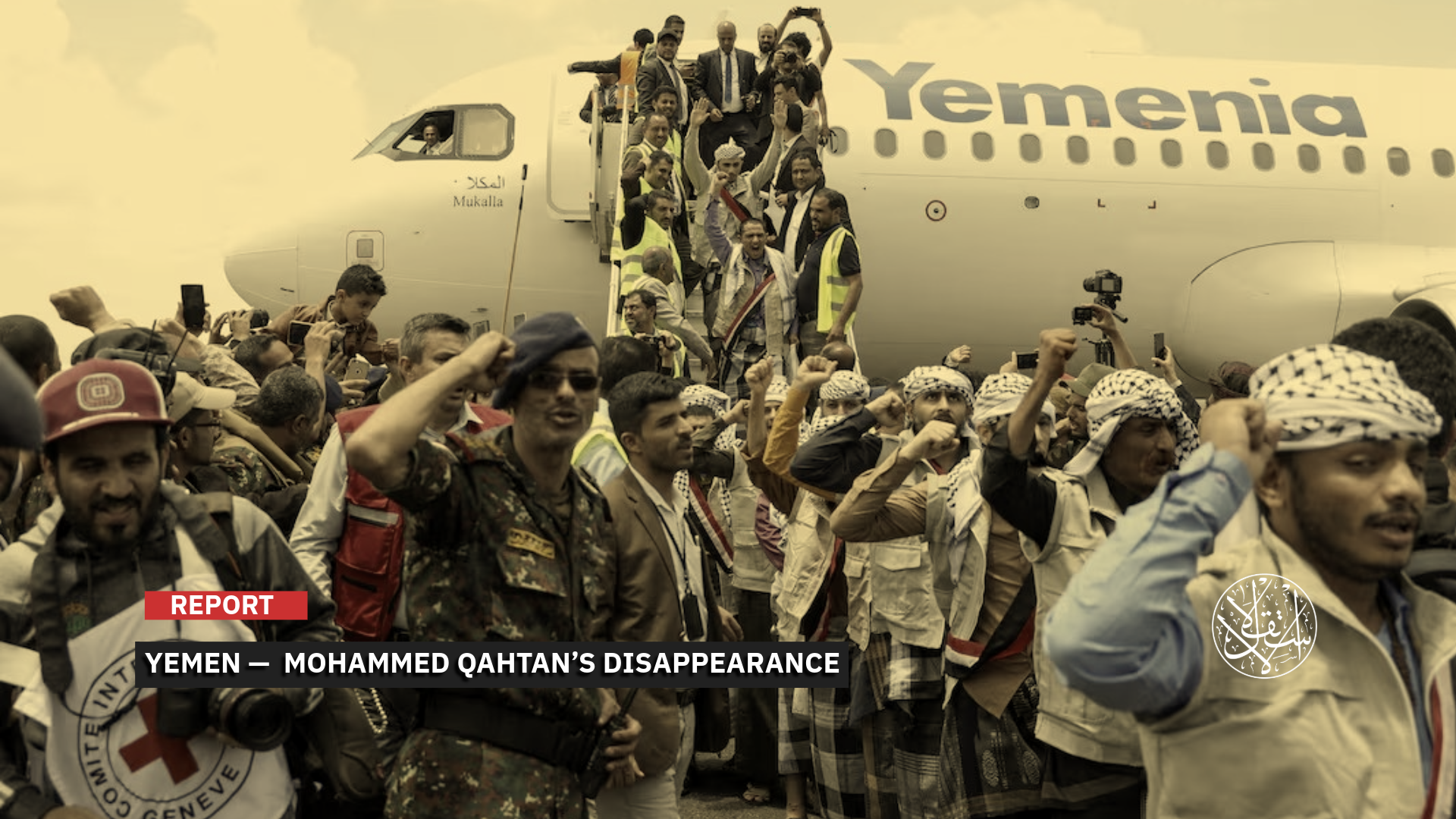
Hours before the prisoner exchange was due to be carried out, the Houthis informed the UN envoy that they were withdrawing.
Just hours before the prisoner exchange agreement between Yemen's internationally recognized government and the Houthi group, which controls the capital, Sanaa, was due to enter into force, the latter decided to withdraw from the deal and suspend its implementation indefinitely, raising numerous questions about the real reasons behind the collapse of the agreement.
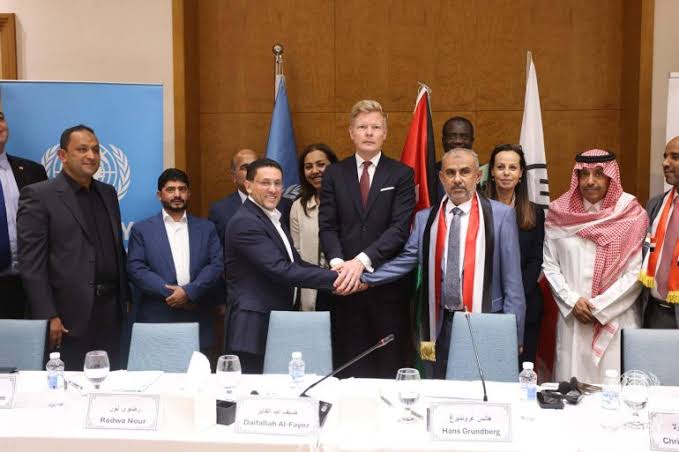
On May 14, 2026, the United Nations announced that the Yemeni parties had reached an agreement to release more than 1,600 detainees, including seven Saudis and 20 Sudanese serving with the Arab Coalition forces, following 90 days of negotiations held in the Jordanian capital, Amman.
The agreement came after the longest round of talks on the issue, following the collapse of a previous agreement reached on December 23, 2025. That deal had provided for the release of 2,900 detainees after 12 days of UN-sponsored negotiations hosted in the Omani capital, Muscat.
Cross-Accusations
Against the backdrop of the failure to implement the prisoner exchange agreement, one day before it was due to enter into force on July 12, Yemen's internationally recognized government and the Houthi group traded accusations over which side was responsible for derailing the long-awaited deal.
Hadi Haij, head of the government negotiating team on the detainees and prisoners file, said the team had "received notification on Friday (July 11) from the International Committee of the Red Cross (ICRC) and the Office of the UN Special Envoy for Yemen that the Houthi militia had refused to implement the deal on its scheduled date of Saturday and had postponed it indefinitely."
He added that the notification came after the government team had completed all the necessary procedures to carry out the exchange and secure the release of detainees and abductees, despite what he described as "obstacles" placed by the Houthi group, according to Yemen's state news agency Saba on July 11.
Haij held the Houthis "responsible for the failure to complete the exchange deal on its scheduled date and for undermining efforts aimed at alleviating the suffering of Yemenis, detainees, abductees, and their families."
He said the move "confirms the Houthi group's continued exploitation of the humanitarian issue of detainees and abductees to achieve political, military, and economic gains, while showing no regard for the suffering of Yemenis."
Abdul Qader al-Murtada, head of the Houthis' National Committee for Prisoners' Affairs, said that "the delay in implementing the prisoner exchange deal is due to the other side's procrastination in fulfilling the agreed commitments, despite the committee's full readiness to proceed with implementing the deal on schedule."
Al-Murtada claimed that the group "had fulfilled all of its obligations and was ready to implement the agreement according to the agreed timetable, but the other side delayed carrying out its commitments, leading to the postponement of the exchange," according to the Houthi-run Saba news agency.
He added that "the other side refused to include the remaining prisoners in its custody, which prevented the agreement from being implemented on schedule, despite the committee having completed all the required procedures."
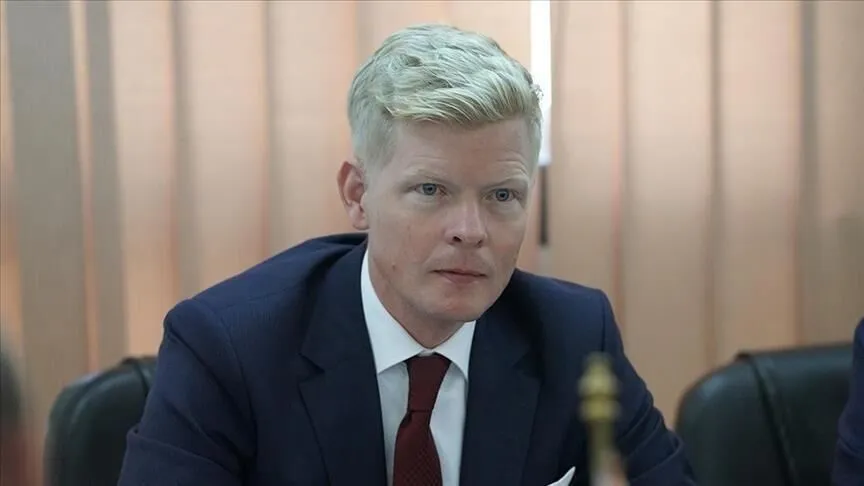
However, UN Special Envoy for Yemen Hans Grundberg announced on July 11 that, over the previous 48 hours, he had received commitments from both the Yemeni government and the Houthi group to implement the prisoner exchange agreement they had reached.
In a statement, the UN envoy urged both parties to "intensify their efforts to finalize the remaining technical and operational arrangements as soon as possible," noting that both sides had reaffirmed their commitment to doing so, without providing further details.
External Pressures
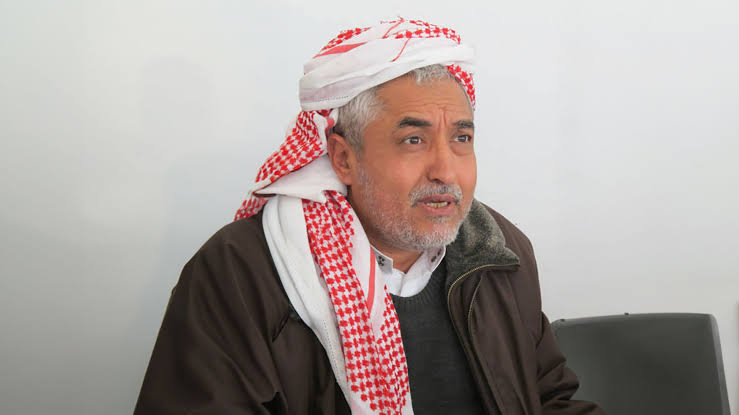
Regarding the reasons behind the collapse of the agreement, Yemeni writer and political analyst Yassin al-Tamimi said that "the prisoner exchange deal stalled, or was suspended indefinitely, because the Houthis failed to disclose the fate of prominent Yemeni politician and senior member of the Yemeni Congregation for Reform (Islah) party, Mohammed Qahtan."
Al-Tamimi told Al-Estiklal that "the official position of the Islah party is that the Houthis have not revealed Qahtan's fate. This is consistent with the position of his family, who rejected human remains handed over to them consisting only of the lower half of a body that was claimed to belong to the politician, who has been abducted since 2015. This prompted the International Committee of the Red Cross (ICRC) to collect samples for DNA testing."
He argued that "the Houthis' conduct, in the eyes of all observers, constitutes a flagrant violation of the abductee's rights and a clear attempt to conceal the truth that Mohammed Qahtan is either still being forcibly disappeared or that they are trying to cover up a crime involving torture and other serious abuses he was subjected to, while claiming that he was killed in an airstrike carried out by the Arab Coalition."
He added, "This constitutes a heinous crime for which the Houthis bear full responsibility, because exposing abductees and detainees to aerial bombardment was part of an explicit and publicly declared punitive policy carried out against the victims."
Al-Tamimi noted that "the process of completing the prisoner and detainee exchange has been suspended unless external parties exert pressure on the government. In addition, some of those the government was due to release are implicated in assassination crimes."
He further said that "protests organized by figures affiliated with the now-defunct Southern Transitional Council called for halting the release of those individuals, and they may also have had another objective, namely, to obstruct the deal for other motives."
The case of Mohammed Qahtan is regarded as one of the most prominent unresolved humanitarian and political issues between the Yemeni government and the Houthis.
It was also among the main items discussed during prisoner exchange talks held in the Jordanian capital, Amman, in May, concerning the exchange of around 1,700 prisoners and detainees.
Qahtan, who was born in 1958 in Ibb Governorate, is widely regarded as one of Yemen's leading opposition political figures. He held several senior positions within the Yemeni Congregation for Reform (Islah) party, including head of its Political Department.
The disappeared Yemeni politician also played a pivotal role in founding the Joint Meeting Parties (JMP), an opposition coalition formed during the rule of former President Ali Abdullah Saleh. He served as the coalition's spokesperson, making him one of the most influential figures in Yemen's political life over the past decades.
A blackmail Tool
Along the same lines, Sadiq Abdul Razzaq al-Ameri, president of the Yemeni Foundation for Supporting Democratic Transition, said that "the Houthi militia's obstruction of the prisoner exchange once again confirms that the group treats Yemeni people as instruments of political blackmail rather than as a humanitarian issue that requires compassion and responsibility."
In a post published on X on July 12, al-Ameri added that "thousands of families had been waiting for the return of their loved ones, but the militia instead slammed the door on hope, keeping abductees and prisoners hostage to its narrow calculations. This conduct reveals blatant disregard for all UN efforts, contempt for the suffering of Yemenis, and a determination to prolong the tragedy."
He stressed that "whoever obstructs the release of prisoners and abductees bears full moral and humanitarian responsibility for the continued suffering of thousands of families. No group that claims to care about the nation can use the freedom of Yemenis as a bargaining chip or turn the suffering of mothers and fathers into a negotiating tool."
Al-Ameri argued that "obstructing this file is not a political position but rather another indictment of conduct that demonstrates the militia does not view humanitarian agreements as commitments that must be honored, but instead as opportunities for maneuvering and buying time, even if the price is the tears of thousands of Yemeni families."
Earlier, Yemeni journalist Khaled Alyan wrote on X, "As the moment to implement the prisoner exchange agreement approached, what Yemenis have come to know by heart as the Houthis' doctrine and way of operating happened once again: repudiating the agreement, reneging on commitments, disrupting the arrangements, and abandoning all values."
Alyan explained that "this is not the first such incident, and no one can understand it in its true context if it is viewed in isolation. Rather, it is an extension of a long trajectory that began when the Houthis emerged from Saada carrying a project of rule by force instead of a state-building project, and a project of a coup instead of a project of change."
He argued that "a group that treats agreements as temporary tools for securing political gains and then abandons them when circumstances change undermines the foundations of any peace process. It also sends a message to both domestic and international audiences that agreements have no value, guarantees carry no weight, and mediators can do little more than record yet another failure."
He noted that "the real victims are those prisoners and abductees whose lives have been consumed by the passage of time, while their mothers waited for years for the day of their return, only for hope itself to be taken hostage before the prisoners could be freed."
Alyan concluded that "when human beings become bargaining chips, the issue is no longer merely political; it becomes a moral and humanitarian one, one that history will record on the page bearing the names of those who made breaking promises a permanent policy and a fixed method of governance."
The Yemeni Mothers of Abductees Association also condemned the postponement of the first phase of the prisoner and abductee exchange, which had been scheduled to take place under UN auspices and the supervision of the International Committee of the Red Cross (ICRC), holding the Houthi group responsible for disrupting the process.
In a statement issued on July 11, the association said that "the decision to postpone the exchange shattered the hopes of thousands of Yemeni families who had been waiting for the release of their loved ones after years of detention." It noted that "a number of families had already traveled to the governorates designated to receive those due to be released before being informed of the postponement at the last moment."
The association stressed that the postponement not only disrupted the exchange process but also deepened the suffering of the families and plunged them back into a cycle of anxiety and waiting.
It added that keeping the issue of prisoners and abductees hostage to political disputes is incompatible with its fundamentally humanitarian nature.