Tailor-Made Legislation: Who Is Akhannouch’s Government Really Serving?
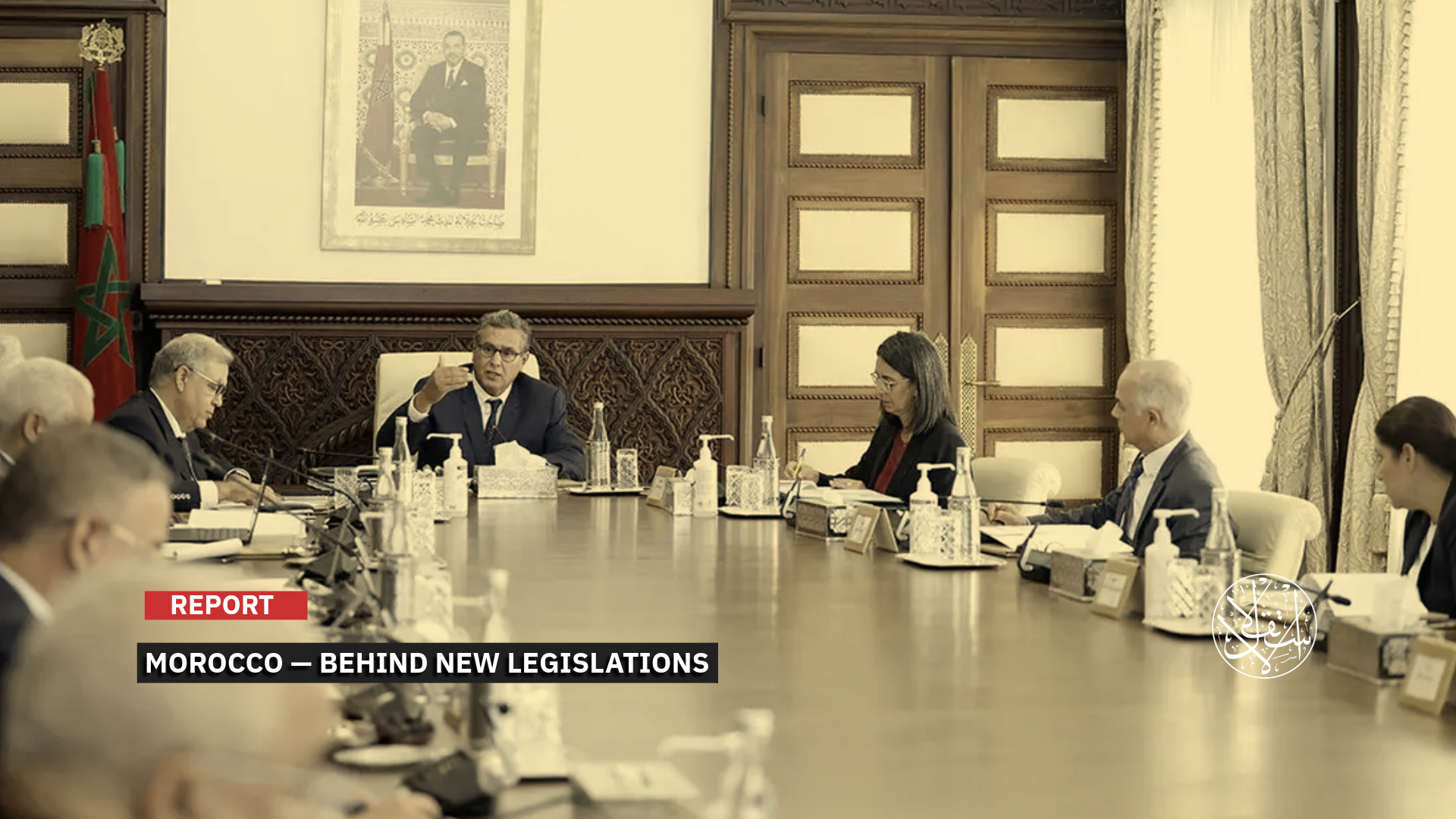
Investment and public procurement laws make market concentration and monopolistic practices easier.
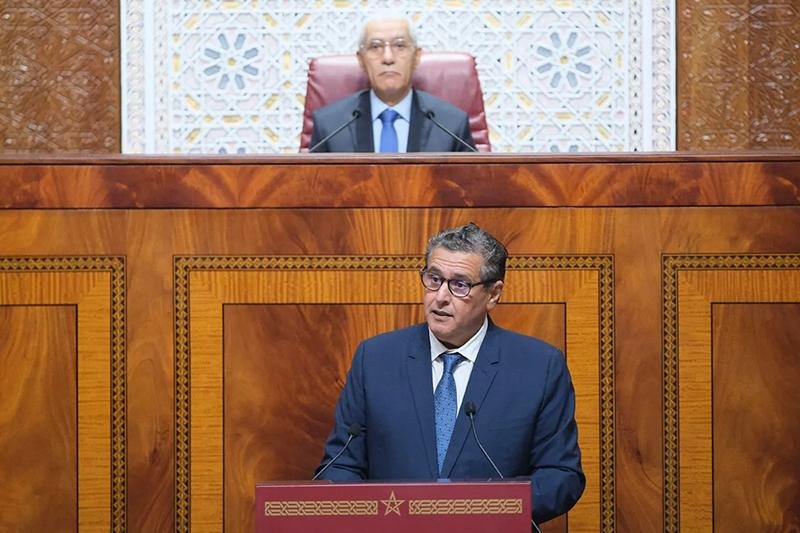
Politicians and academics have accused Prime Minister Aziz Akhannouch's government of using its commanding parliamentary majority to push through tailor-made legislation designed to benefit powerful individuals and business lobbies, often at the expense of the public interest and Moroccans' purchasing power.
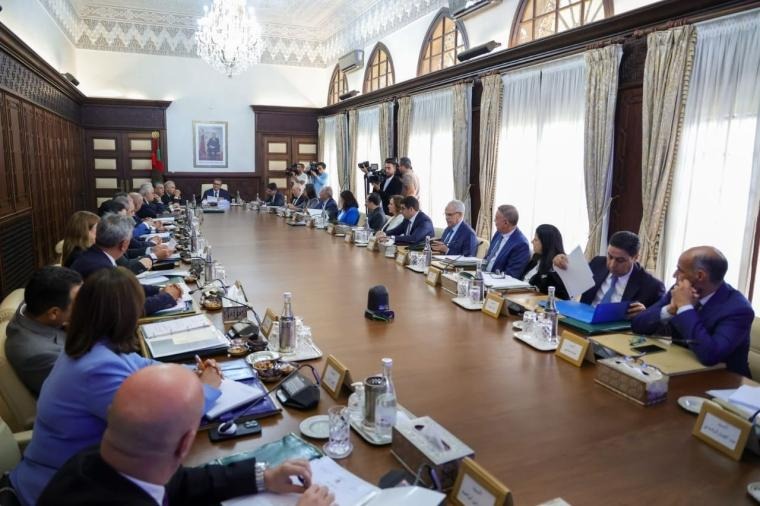
The governing coalition is made up of the National Rally of Independents (RNI), which holds 102 seats and leads the alliance, the Authenticity and Modernity Party (PAM) with 86 seats, and the Istiqlal Party with 81.
Together, the three parties control 269 of the 395 seats in Morocco's House of Representatives, giving Akhannouch's government a comfortable majority capable of passing legislation with little difficulty, despite objections from a fragmented opposition that holds the remaining 126 seats.
The Tyranny of the Majority
Commenting on the issue, Abderrahim Allam, a political science professor at Cadi Ayyad University in Marrakech, argued that democratic legislation should, in principle, be general and impartial, serving the public interest rather than the interests of specific individuals or groups.
Speaking to Al-Estiklal, Allam said democracy is not without flaws, and one of its greatest is what political theorists describe as the "tyranny of the majority"—or what he called "democratic authoritarianism."
When a government is formed from a parliamentary majority, he argued, the separation of powers is weakened because both the executive and the legislature are controlled by the same political bloc. The problem is particularly pronounced in parliamentary democracies, where governments are drawn directly from parliament.
Allam said this is an inherent weakness of parliamentary systems but warned that it becomes even more acute in countries undergoing democratic transitions, especially when governments are elected amid low voter turnout, a weak civil society, fragile political parties and labor unions, and limited media oversight.
He pointed to Britain as an example, noting that parliamentary majorities can also pass legislation that is widely viewed as unpopular.
The crucial difference, he argued, is that Britain has a strong civil society, influential labor unions, active political parties, and an independent media, all of which force governments to think carefully before advancing legislation tailored to particular interests for fear of public scrutiny.
Morocco, by contrast, suffers from weak civil society organizations, political parties, labor unions, and limited media influence, Allam said. As a result, what is already a structural weakness of parliamentary democracy becomes a far more serious democratic deficit.
According to Allam, numerous government bills have been approved by parliament after effectively turning the legislature into "a rubber stamp," with the Akhannouch government relying on its numerical majority to pass legislation with little resistance.
He added that many draft laws are first negotiated and agreed upon within the headquarters of the governing coalition parties before ever reaching parliament, making it unrealistic to expect lawmakers from the ruling bloc to oppose legislation backed by their own government.
The weakness of parliament, civil society, the media, political parties, and labor unions, he argued, has created an environment in which laws perceived as serving powerful lobbying interests can be approved with relative ease.
“Lobbying exists everywhere, including in the United States and Switzerland,” Allam said. “The difference is that, in those countries, lobbying is largely transparent, and it operates alongside strong parliaments, vibrant civil societies, free and fair elections, functioning institutions, and public officials who are subject to meaningful parliamentary oversight.”
A Dangerous Trend
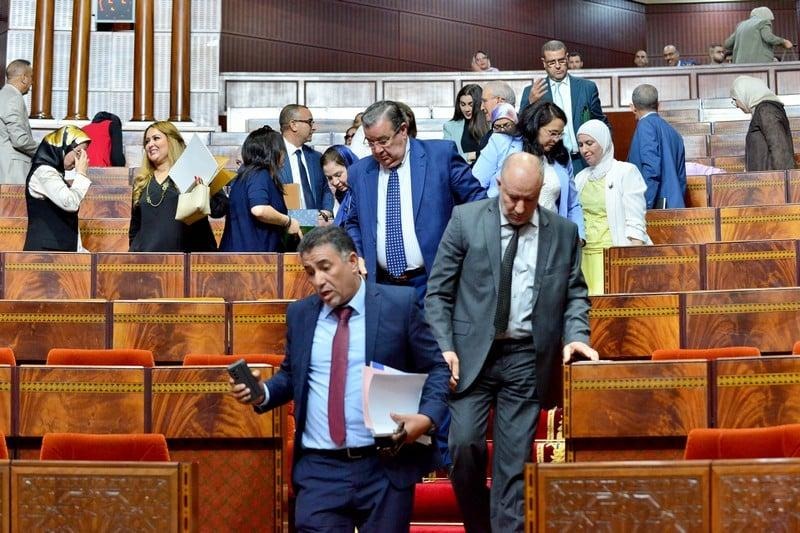
Fatima Zohra Tamni, a lawmaker from the Federation of the Democratic Left, described the practice as "a dangerous trend," accusing the government of crafting tailor-made legislation and selectively advancing legal provisions that serve narrow interests.
“We have repeatedly asked the government a simple question,” she told Al-Estiklal. “Who do these laws serve?”
Tamni argued that the government has rushed bills through parliament without meaningful consultation with key stakeholders while disregarding constitutional and institutional recommendations from bodies such as the Competition Council, the Economic, Social and Environmental Council, and civil society organizations.
“The result is legislation that appears to have been designed to protect specific economic interests rather than the public good,” she said.
“Unfortunately, we are witnessing laws that no longer serve citizens but those with influence and economic power. It is as if the government is legislating not on behalf of the nation but on behalf of powerful lobbies that dominate key sectors.”
Tamni argued that the government's legislative agenda is no longer guided by the public interest but by the practice of crafting laws to fit particular interests.
“We see it in real estate and urban planning laws that benefit major developers, in investment and public procurement laws that facilitate market concentration and monopolistic practices, in health care and pharmaceutical legislation that keeps prices high, and in education laws that accelerate the privatization of the sector,” she said.
‘Referee and Player’
While opposition lawmaker Fatima Zohra Tamni argues that "legislative rent-seeking" has become a recurring feature of Prime Minister Aziz Akhannouch's administration, political communications researcher Hassan Hammouro said the government has come to symbolize a political era defined by conflicts of interest and the prioritization of private gain over the public good.
Speaking to Al-Estiklal, Hammouro argued that instead of promoting free competition and a level playing field, the government has pursued policies that raise serious questions about legislation and public decisions that appear tailored to benefit groups with close ties to political and economic power.
"Tailor-made legislation doesn't just undermine the principle of equality before the law," he said. "It also erodes the confidence of investors and citizens in public institutions. When businesses believe profits depend more on political connections than on innovation and competitiveness, institutions become hostile to investment and fertile ground for monopolies and rent-seeking."
Hammouro pointed to a series of controversies during the current government's term, including disputes over fuel prices and profit margins, as well as major public contracts and state investment projects that, he argued, have raised concerns about whether competition rules and government neutrality were respected.
Within that context, he said, several companies linked to government ministers or figures within the ruling coalition have benefited from public decisions or state policies.
Among the examples he cited were a company owned by the prime minister that secured Casablanca's seawater desalination project, a company linked to the education minister that benefited from contracts and licenses approved by the health minister in the pharmaceutical sector, subsidies granted to large livestock importers with ties to parties in the governing coalition, and customs duty reductions that benefited business figures close to the prime minister's party.
According to Hammouro, the core issue is not simply whether any laws were broken, but the repeated creation of situations in which the government acts as both referee and player.
He warned that the continued use of tailor-made legislation risks undermining public trust in politics, state institutions, and the rule of law—a cost, he argued, that no country seeking long-term development and stability can afford.
"In light of these concerns," he said, "Moroccans have every right to ask how genuine competition can exist amid persistent suspicions of conflicts of interest and legislation designed to serve vested interests. How can small and medium-sized businesses be convinced that equal opportunities exist if winning public contracts appears to depend on political influence or close ties to the prime minister and cabinet ministers?"
Hammouro concluded by calling for a national debate on integrity in public life, urging stronger safeguards against conflicts of interest—which he described as "another name for corruption"—and measures requiring government officials to distance themselves from any financial or political interests that could raise doubts about whether they stand to benefit, directly or indirectly, from legislation or public policy decisions.