Trump's Strategic Realignment: Prioritizing US-Turkiye Ties Over Israeli Objections
Turkiye obtaining its demands would upend the regional balance of power in the Middle East.
Ahead of the NATO summit in Turkiye, The Wall Street Journal revealed on July 4, 2026, that President Donald Trump intends to offer a "gift" to his Turkish counterpart, Recep Tayyip Erdogan, as a reward for Turkiye refraining from entering the war against “Israel” alongside Iran, despite there being no evidence that Ankara intended to do so.
This reward involves bypassing Congress to proceed with the sale of $750 million worth of American F-110 engines for Turkiye's strategic "KAAN" fighter jet.
It also includes the sale of F-35 fighters, which the U.S. had previously halted by removing Turkiye from the program as punishment for purchasing the Russian S-400 air defense system, which is deemed incompatible with Western weapons.
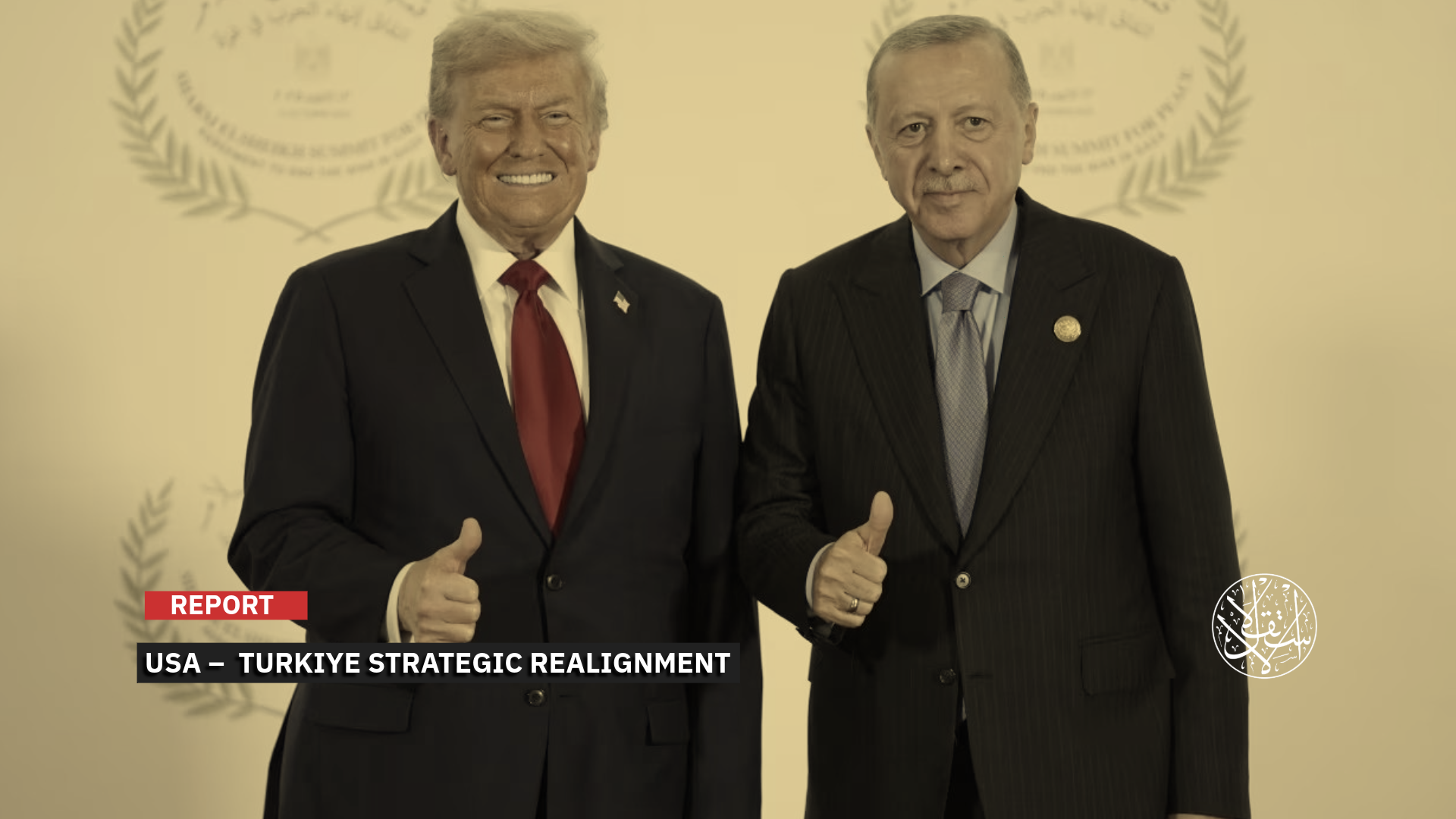
During his meeting with the Turkish President, Trump told reporters he intends to lift the U.S. sanctions imposed on Ankara over the 2019 S-400 purchase and expressed willingness to sell the F-35s that were previously withheld, a move met with approval and appreciation from Erdogan.
U.S. assessments suggest these strategic military deals were facilitated following understandings in which Washington requested that Ankara stay out of the war with Iran, amid U.S. concerns regarding a potential Turkish military confrontation with “Israel”.
However, this "gift" has sparked anger in “Israel”, particularly from Prime Minister Benjamin Netanyahu, who unsuccessfully attempted to block the move and persuade Trump not to announce it.
Israeli newspapers described the step as a "victory for Erdogan," warning that it could diminish “Israel's” aerial superiority and alter the balance of power in the region.
Part of “Tel Aviv's” concern regarding Turkiye acquiring these weapons stems from Ankara's opposition to the "Greater Israel" plan in the region, along with repeated Turkish statements regarding the liberation of Jerusalem, similar to how it was liberated by the Turks in past eras, in the context of warnings over a potential Turkish-Israeli confrontation on Syrian territory.
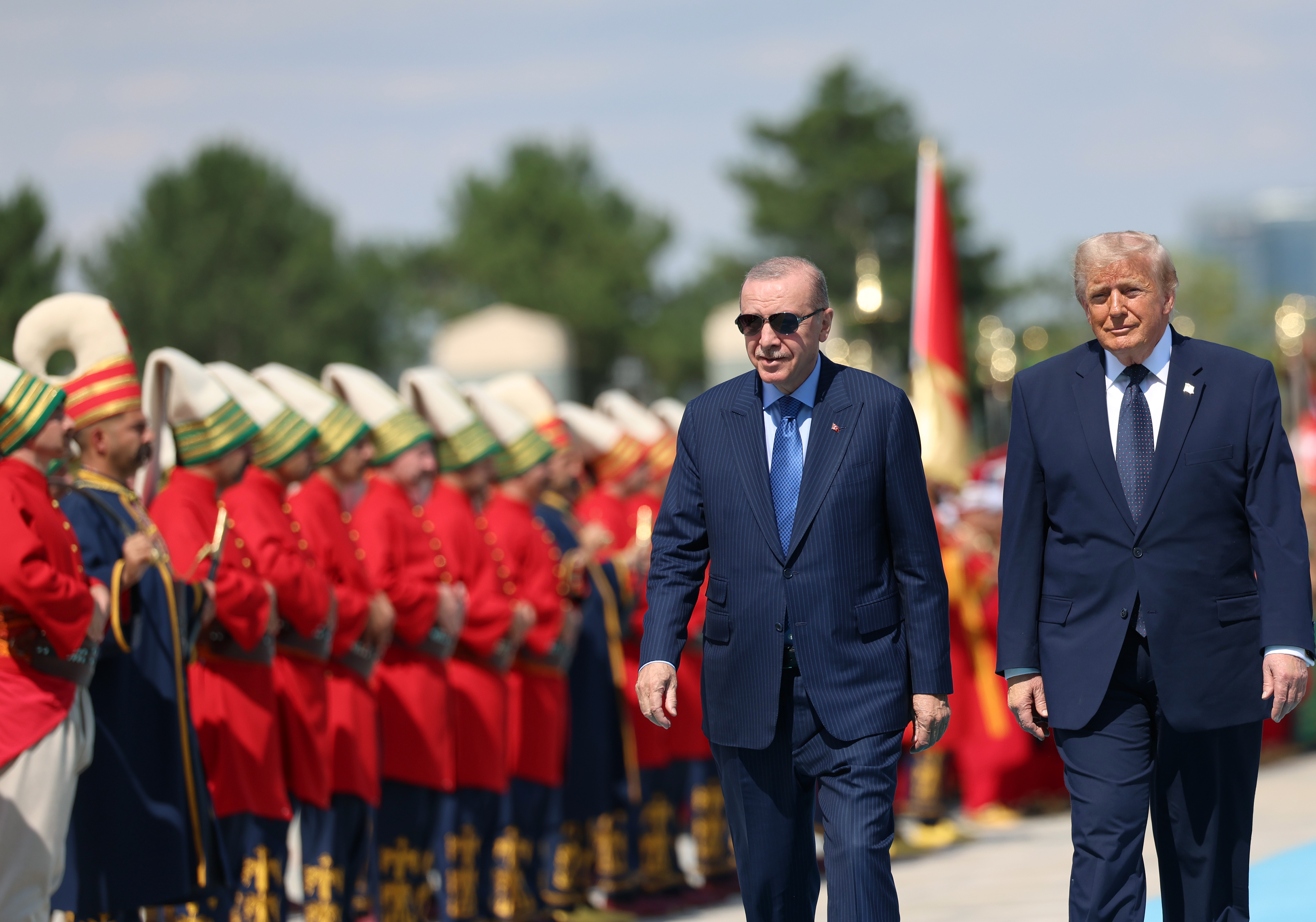
The Reason Behind the Gift
Beyond Trump's rhetoric, which claims he rewarded Turkiye for complying with his request to stay out of the war against Iran and for refraining from striking “Israel”, American media assessments suggest that the "gift" is driven by concerns over Turkiye's growing armament program and the need to ensure “Israel's” security.
Other analyses attribute the move to a desire by Washington to see Turkiye relinquish its Russian S-400 missile systems in exchange for a package of gains, including the lifting of CAATSA sanctions, Turkiye's readmission to the F-35 program, and the restoration of full defense cooperation with the United States.
Furthermore, there is a strategic effort to contain Turkish resentment and prevent Ankara from gradually drifting away from the West.
Turkiye has increasingly shifted toward self-reliance, developing its own national fighter jet (the MMU) which will compete with the American F-35, and has begun supplying arms to Europe.
According to a report by the British newspaper The Telegraph on July 9, Turkiye has sold drones to Ukraine, electronic warfare and radar systems to Poland, and has begun building naval logistics ships for Portugal, while also assisting Spain with advanced jet training. These developments point to an unprecedented level of Turkish military superiority.
According to the Stockholm International Peace Research Institute (SIPRI), Ankara is already ranked as the eleventh-largest arms exporter in the world, having doubled its share of the global arms market within five years. According to official Turkish data, defense exports reached a record of approximately $10.5 billion last year, an increase of about 48 percent in a single year.
Following Turkiye's insistence on purchasing the S-400 system from Moscow, due to the U.S. refusal to sell Patriot defense systems, and the subsequent arrival of these missiles in Ankara, a U.S. decision was issued in 2019 to expel Turkiye from the F-35 fighter jet manufacturing program, deny it the aircraft, and impose sanctions.
At that time, the administration of President Donald Trump, during his first term, issued the decision despite Turkiye having invested $1.4 billion in the program and having manufactured and supplied parts for the American stealth aircraft.
Additional sanctions were later imposed on Turkiye by Congress in 2020 under the Countering America's Adversaries Through Sanctions Act (CAATSA).
The American justification was that operating an advanced Russian system within a NATO member state posed a major security risk, as the S-400 system possesses advanced radars capable, over time, of collecting data on the "signature" of the F-35 stealth aircraft, thereby threatening U.S. security.
Now, after seven years, the United States is seeking to readmit Turkiye to the F-35 program. According to President Erdogan, the U.S. will sell Turkiye five aircraft, even after the latter began its own program to manufacture a jet with the same capabilities as the F-35 and developed its entire defense industry as part of a self-reliance initiative.
The reason lies in Turkiye's geographical location, which has become more important than ever: it controls the Turkish Straits, lies between the Black Sea and the Middle East, and possesses the second-largest army in NATO after the United States, as well as the largest standing army in Europe, granting it increasing weight in any European defense arrangements.
On July 9, the period for congressional notification regarding President Trump's intention to sell F-110 engines to Turkiye for use in its "KAAN" aircraft ended.
Turkish Foreign Minister Hakan Fidan stated, "We expect that no more problems will arise." On July 10, Fidan confirmed to the Turkish channel TRT Haber, “We will soon reach a clear conclusion regarding the CAATSA law, and there will be no obstacles in this regard.”
CAATSA, an acronym for "Countering America's Adversaries Through Sanctions Act," was passed by the U.S. Congress in 2017 to impose sanctions on parties conducting military and intelligence deals with Russia.
In Turkiye's case, the United States imposed sanctions under the law in December 2020 after Ankara completed the purchase and activation of the S-400 system, claiming the deal threatened NATO security.
The CAATSA sanctions included excluding Turkiye from the F-35 program, despite its role as a production partner, due to concerns that the S-400 system could expose the stealth aircraft's secrets to Russia.
They also imposed restrictions on the Turkish Presidency of Defense Industries, banned certain U.S. export licenses, and froze the assets and restricted the visas of several officials.
Turkiye had demanded either the return of the F-35 aircraft it had already paid for, readmission to the program, or compensation for its investment.
In a report published by The National Interest , American writer Peter Suciu, who specializes in military, political, and international affairs, offers an explanation for Trump's admiration for Erdogan through two points:
First, it relates to Trump's psyche, which favors strong, authoritarian leaders, leading to his repeated praise for Turkish President Recep Tayyip Erdogan.
Second, it relates to the war with Iran. The writer suggests that Trump is likely seeking to reward Turkiye for not participating in the war, noting that Trump himself stated he intervened personally to keep Turkiye out of the war against Iran.

The Source of the Anxiety
“Israel” fears that President Trump's statements regarding the study of selling F-35 fighter jets to Turkiye could lead to a military shift in the region, which “Tel Aviv” considers a threat to its air superiority and its ability to conduct aggression against Iran, Syria, and Lebanon, and to maneuver in the Eastern Mediterranean.
According to the Israeli Channel 12, the Israeli military establishment fears that Turkiye's possession of advanced American stealth fighters will affect what “Tel Aviv” describes as the "qualitative superiority" of the Israeli Air Force and restrict its ability to act with impunity in competitive zones with Turkiye, such as Syria, Iran, Lebanon, and the Eastern Mediterranean.
“Tel Aviv” currently possesses 48 aircraft of this type, which will rise to 50 by the end of 2026, and has contracted for 75 more. The arrival of the aircraft in Ankara or providing it with advanced engines for its local fighter, "KAAN," would constitute an important shift in the balance of military power in the region.
The Israeli anxiety is based on the sharp deterioration in relations between “Israel” and Turkiye against the backdrop of the war of extermination in Gaza and the war on Iran, and on the "escalating rhetoric from Erdogan against Israel."
“Tel Aviv” claims that a country like Turkiye, which describes “Israel” as an "enemy state," should not possess military systems of this level, and says that the friction between them is no longer limited to political or rhetorical disputes. Rather, it extends to four main arenas that worry the Israeli security establishment.
First is the arena of negotiations with Iran, where “Israel” views the Turkish role as an attempt to prevent Tehran's defeat, which would lead to broader Israeli hegemony in the region.
Second is the Gaza Strip, where the report indicates Turkiye's support for Hamas and alleges that a wing of Hamas operates from within Turkiye and manages activities against “Israel” from there.
Third is Syria, where “Israel” looks with concern at Turkiye's attempts to expand its influence after the changes the country has witnessed.
According to Channel 12, the Israeli Air Force works to prevent the establishment of a foothold in Syria, including through repeated attacks on the "T4" base, and “Israel” also seeks to prevent Ankara from arming the Syrian army with drones and air defense systems.
Fourth is the maritime arena in the Eastern Mediterranean, as “Israel” fears the expansion of Turkish presence in an area that “Tel Aviv” sees as a vital sphere for its military and economic movements and its relations with Greece and Cyprus.
According to the report, the essence of the Israeli concern does not relate only to Turkiye's possession of advanced weapons, but to what that might mean for the freedom of action of the Israeli Air Force and the Israeli air superiority based on operating in the depth of the region without detection or interception.
“Israel” also fears that Turkiye's possession of these fighters will enable Ankara to study the strengths and weaknesses of the American aircraft, which might make it difficult for the Israeli Air Force to carry out covert or long-range operations in areas where Turkiye has influence.
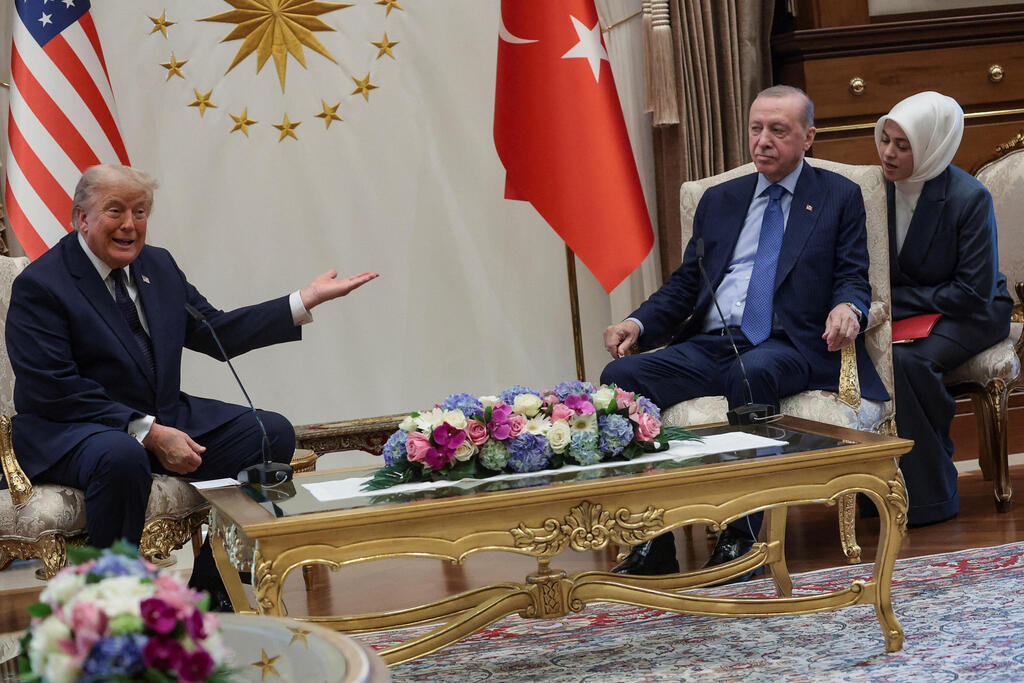
Disrupting the “Balance”
Consequently, Israeli Prime Minister Benjamin Netanyahu urged the United States not to sell F-35 fighter jets or jet engines for an indigenous fighter Turkiye is developing, claiming that “such a move could disrupt the balance of power in the Middle East, which is based on Israel's qualitative air superiority.”
As part of an incitement campaign against Turkiye to pressure the U.S. against the sale, he told the American program Fox & Friends on July 6, 2026, "I don't think Turkiye should be given F-35s." He justified his refusal by stating that “President Recep Tayyip Erdogan publicly calls for the annihilation of “Israel”, occupies half of Cyprus, threatens Greece, and speaks openly about occupying Jerusalem.”
Netanyahu continued, employing the "Muslim Brotherhood" scare tactic: “The Turkish regime is influenced by the Muslim Brotherhood, an extremist movement that hates America, and therefore I don't think they deserve to receive F-35s or jet engines for their fighters, because that would upend the balance of power in the Middle East.”
Netanyahu, who is subject to an arrest warrant from the International Criminal Court for war crimes and genocide, further alleged that the Turkish Foreign Minister publicly stated that "Israel should be wiped off the map," and that the Interior Minister says he "hopes to be the governor of Jerusalem."
He also claimed that “Turkiye funds Hamas, rolls out the red carpet for them, supports the 'bad guys,' and has not lifted a finger to help the United States in confronting Iran.”
On July 10, the American magazine Foreign Policy published an article by researcher Azriel Bermant titled "Why Netanyahu is crying wolf about Turkey," indicating that his cries about a wolf represent an exaggeration and fabrication, according to the famous fable.
He compared Netanyahu to the story of a bored shepherd boy who repeatedly disappointed his fellow villagers by crying that a wolf was attacking his sheep, causing them to rush to his aid, until they grew tired of his constant lying. When a real wolf finally appeared, the villagers ignored his desperate pleas for help, assuming it was just another trick.
Bermant explained that Netanyahu's warnings and escalation regarding Turkiye cannot be separated from his internal political calculations.
He serves his own political goals ahead of elections and allows himself to present himself as the sole defender of “Israel's” security in the face of increasing external threats.
He noted that Netanyahu criticizes Erdogan's ambitions to restore Ottoman influence in the region, even while Netanyahu himself adopts a discourse advocating for the reshuffling of the Middle East and Israeli control over parts of Gaza, Lebanon, and Syria (“Greater Israel”).

In Exchange for the S-400 System
Although there has been no official announcement from the Turkish government regarding a decision to abandon the S-400 system, reports from reliable media sources indicate that Ankara is exploring scenarios to dispose of it or transfer it to a third country, aiming to remove the primary obstacle to lifting U.S. sanctions and returning to the F-35 fighter jet program.
The Turkish newspaper Hurriyet or Freedom stated that Turkiye might soon announce the resale of the S-400 system to a Gulf state to persuade the United States to lift sanctions on Ankara.
On July 10, Reuters cited Turkish sources stating that Ankara is considering re-exporting the S-400 system to a Gulf nation as part of negotiations with Washington to restore defense cooperation, including the F-35 file.
These reports gained significance after the Kremlin confirmed it is in contact with Turkiye regarding the future of the S-400, describing the issue as "extremely sensitive," according to Reuters.
There is no official statement from the Turkish Presidency or the Ministry of Defense confirming a sale, nor is there any announcement regarding the identity of the country to which the system would be transferred.
The Kremlin has only confirmed the existence of talks with Ankara regarding the future of the S-400 without providing further details.
Removing, disabling, or transferring this Russian system to a third party is one of the scenarios currently on the table in negotiations between Washington and Ankara, but Turkiye requires Russia's approval.
According to the Kremlin, the purchase contract does not grant Turkiye the right to freely re-export the system, meaning any transfer to a third party requires Moscow's consent.
Nevertheless, an analysis by Semafor on July 8 and The New York Times on July 6 suggests that Trump dismisses the idea of transferring the Turkish S-400 system to a third party.
When asked about this potential solution for the Russian missile defense systems, Trump stated, “I have no concerns at all about anything.”
Analysts believe that Turkiye is attempting to transform the long-standing S-400 problem into a winning deal, securing the lifting of sanctions, a return to the F-35 program, and the reopening of doors for military and technological cooperation.
They point out that Turkiye is not currently using the Russian system and has its own alternative project, the "Steel Dome," alongside a multi-layered defense arsenal.
Therefore, Erdogan is attempting to dispose of the system, benefit financially from its sale, end U.S. sanctions, and simultaneously avoid damaging his relationship with Moscow.
The gains Turkiye would achieve include the lifting of CAATSA sanctions and a return to the F-35 program, in which it was previously a partner, specifically manufacturing the center fuselage section and other components.
Turkiye is expected to receive 100 F-35A aircraft for approximately $10 billion, having already paid a $1.5 billion deposit, and stands to secure about $11 billion in contracts for the Turkish defense industry.