The Army Occupies the Land and Smotrich Draws the Map: What's Next for Northern Gaza?

Organized preparations for the return of Israeli settlements in Gaza began just months after the Israeli aggression started.
Over the past two and a half years, the idea of reestablishing Israeli settlements in the Gaza Strip has followed a deliberate path, beginning with right-wing conferences and settlement movement proposals before culminating in a formal government initiative in June 2026.
That month, far-right Israeli Finance Minister Bezalel Smotrich revealed that a body within the War Ministry had completed plans for the construction of three settlements in northern Gaza, saying implementation now depends on Prime Minister Benjamin Netanyahu's approval.
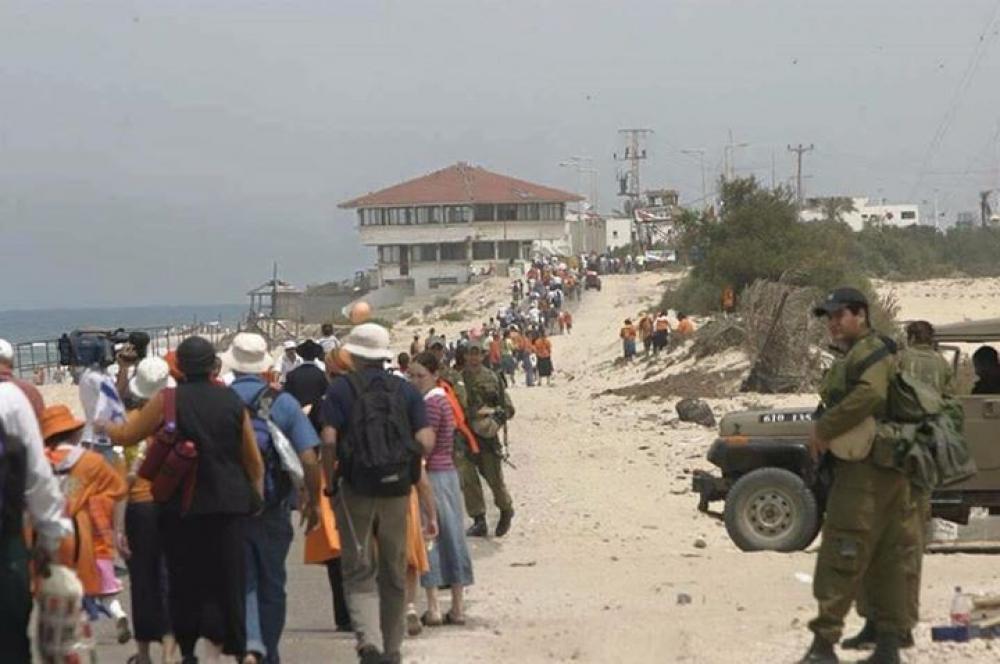
The announcement marked a dramatic reversal of “Israel's” 2005 disengagement from Gaza, when then-Prime Minister Ariel Sharon ordered the evacuation of 21 settlements, home to roughly 9,000 settlers, and withdrew Israeli Occupation forces from the territory after 38 years of occupation that began in 1967.
Rapidly Accelerating Plans
Although the Israeli Occupation government has yet to formally approve implementation, the significance of the latest proposal lies in its timing. “Israel” now exercises effective control over more than 60% of the Gaza Strip after expanding “military zones” and restricted areas beyond what is known as the “Yellow Line.”
On May 28, 2026, Prime Minister Benjamin Netanyahu instructed the Israeli military to expand its control to 70% of Gaza, a move that would provide the far-right settlement movement with vast areas under Israeli military authority that could be transformed from buffer zones and military-controlled areas into settlement outposts once political approval is granted.
Organized planning for the return of Israeli settlements began just months after the Israeli aggression on Gaza started on October 7, 2023.
On January 30, 2024, Yedioth Ahronoth published an investigation detailing a plan by the radical Israeli settler organization Nachala to establish new settlement outposts in Gaza. The strategy centered on building lobbies inside the Knesset, winning over government ministers and lawmakers, coordinating with pro-settlement groups in the United States, and preparing settler families to enter Gaza within hours when what the movement called the "moment of opportunity" arrived.
At that stage, the objective was to move the idea into “Israel's” political and public mainstream. Nachala organized meetings for settlers from towns in the south of the occupied territories and prepared settler family groups, equipment, and plans to move toward the Strip.
According to the investigation, the initial on-the-ground steps could take the form of raising flags, entering for prayer, establishing an agricultural farm, or setting up a small group near the border fence. It would then gradually expand, following the model used by settlers in the West Bank to establish outposts and later force government recognition of them.
By late 2024, the project had become more concrete during a tour titled "Looking Toward Gaza," organized by the Knesset lobby for renewing settlements in the Strip. Participants unveiled a map outlining six proposed settlement hubs stretching from northern to southern Gaza, while Nachala said around 1,000 families were ready to relocate.
The movement's stated goals included amending the 2005 Disengagement Law, restoring Israeli settlements throughout Gaza, annexing parts of northern Gaza to the municipality of “Sderot,” and promoting what Israel's right calls the "voluntary migration" of Palestinians.
The Israeli Occupation government's rhetoric shifted further in December 2025, when War Minister Israel Katz announced plans to establish "Nahal nuclei" in northern Gaza on the sites of settlements evacuated in 2005.
Hours later, however, Katz issued a statement in English saying the outposts were intended solely for security purposes and that the government had no plans to build settlements in Gaza.
The reversal came after direct U.S. intervention. “Israel's” public broadcaster Kan reported that an American official stationed at the U.S. military headquarters in “Kiryat Gat” said Washington didn't understand where the statement came from and sought clarification because it conflicted with the U.S. vision for Gaza's future.
The settlement movements moved on to demonstrative actions inside Gaza. On February 20, 2026, dozens of Israelis from the Nachala movement stormed the border, including children and Knesset Deputy Speaker Limor Son Har-Melech from the Jewish Power party, before the army returned them back inside.

A Turning Point
The most significant shift came on June 29, 2026, during a meeting between “Sderot” Mayor Alon Davidi and Finance Minister Bezalel Smotrich. Smotrich announced that the Settlement Administration within the War Ministry—an administrative body under his authority that has traditionally overseen settlement affairs in the occupied West Bank—had completed planning for the construction of three settlements in northern Gaza.
Smotrich tied the project directly to the complete takeover of Gaza, saying the army already controlled nearly 70% of the Gaza Strip and calling for the occupation of the remaining territory to establish "a belt of Jewish communities that will provide security for Sderot and the Gaza border communities."
He repeated his long-standing slogan, "Where there is no settlement, there is no security," framing settlements as both a security strategy and a political tool to cement Israeli control and prevent any future withdrawal from Gaza.
Two days later, during an interview with Israel's Channel 14, Prime Minister Benjamin Netanyahu left open the possibility of rebuilding settlements in Gaza.
Asked whether “Israel” could return to settlement construction in the Strip, Netanyahu replied, "The question is: Do you prefer action or words? Yes, I prefer not to comment."
Channel 14 noted that Netanyahu had previously ruled out rebuilding settlements in Gaza but, this time, declined to deny the possibility.
The remarks were quickly welcomed by far-right lawmakers. Religious Zionist Party MK Zvi Sukkot urged the Israeli Occupation government to move forward with restoring settlements, saying Smotrich had effectively overseen the establishment of more settlements than anyone else in the past 50 years and expressing confidence that settlements in northern Gaza would soon become a reality.
Sukkot added that his party would continue working to "strengthen the return to Gaza and settlement there," while calling on Netanyahu to "correct" what he described as the "historic injustice" of Israel's 2005 withdrawal from the Strip.
Likud MK Avichai Boaron also endorsed Netanyahu's position, arguing that "settlements bring security."
Meanwhile, Israeli Innovation, Science and Technology Minister Gila Gamliel said she had submitted a government plan to relocate Palestinians from Gaza with the backing of the Mossad. She also vowed to expand Israeli control over the besieged enclave, saying, "Gaza could become an excellent opportunity for settlement once voluntary migration takes place."
Prospects for Implementation
Smotrich has placed responsibility directly on Netanyahu, saying the Settlement Administration only needs political approval to move forward. But Israel Hayom reported at the end of June that such approval appears unlikely under the Gaza plan promoted by U.S. President Donald Trump’s administration.
The newspaper questioned whether Smotrich’s announcement was merely an “election promise,” suggesting the proposal could be used to mobilize right-wing voters ahead of the October 2026 Knesset elections.
It argued that Netanyahu’s approval of Smotrich’s plan remains unlikely because Trump’s proposal envisions transferring governance of Gaza to a civilian Palestinian authority, establishing international security arrangements, and eventually moving toward an Israeli military withdrawal.
On July 6, 2026, the Board of Peace, the body appointed by Trump to oversee his Gaza plan, welcomed Hamas’ announcement that it would dissolve its governing oversight body and prepare to transfer administration to the National Committee for the Administration of Gaza (NCAG), a Palestinian technocratic body headed by Ali Shaath.
The plan remains stalled over disputes surrounding the issue of the Palestinian Resistance Movement’s weapons and the Israeli withdrawal, but it presents a U.S. vision that conflicts with the establishment of permanent Israeli settlements inside Gaza.
The contradiction lies in “Israel’s” government demanding implementation of the U.S. plan on disarmament while Netanyahu insists on maintaining control over areas occupied by the Israeli Occupation military and Smotrich continues advancing a settlement project that contradicts the withdrawal provisions of the ceasefire agreement.
These contradictions allow Netanyahu to use the settlement proposal to maintain ties with far-right allies while avoiding an official decision that could trigger a confrontation with Washington.
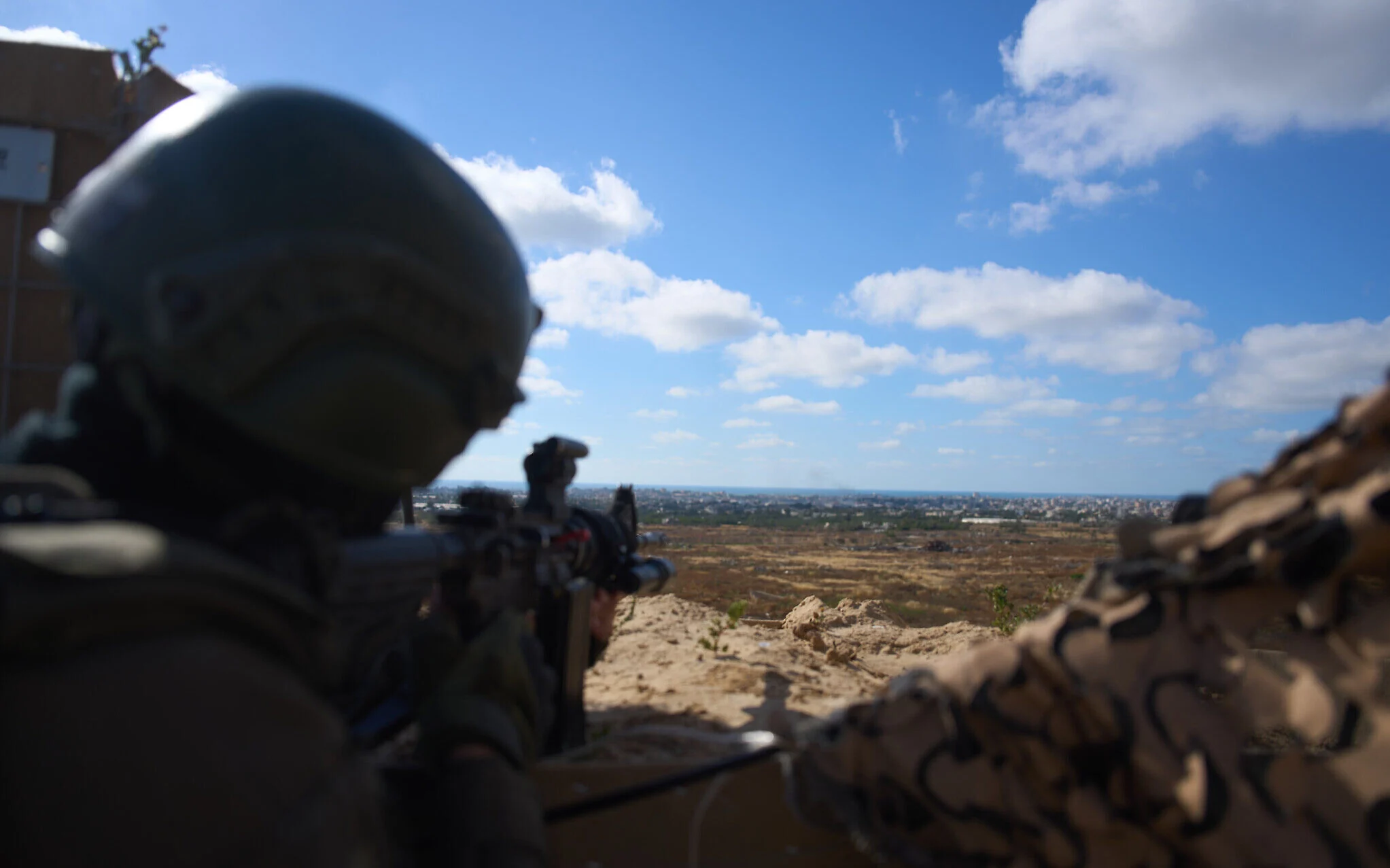
The Israeli military’s public actions, meanwhile, suggest that its role remains focused on occupation and territorial control. Roads, buffer zones, demolitions, and restrictions preventing Palestinians from accessing large areas have created a military framework that could later be transformed into a settlement project if political approval is granted.
If such a plan were implemented, the return of displaced Palestinians from northern Gaza would become tied to the boundaries of this settlement belt, the roads built for settlers, and the areas designated by the Israeli Occupation for future settlements.
Such a move would transform what appears to be temporary military control into a reality that would be difficult to reverse, potentially removing large areas from reconstruction plans and confining Palestinians to increasingly crowded zones.
The experience of settlement expansion in the occupied West Bank shows that each settlement creates its own network of security zones, checkpoints, restricted roads, and expansion areas, meaning the practical footprint of the proposed project could extend far beyond the three planned settlements.
This trajectory is closely linked to forced displacement. The Israeli right pushing for settlement expansion has also promoted policies encouraging Palestinians to leave Gaza, with participants in the “Looking Toward Gaza” tour placing this goal alongside demands to amend the Disengagement Law and prevent the transfer of control over the Strip to any Palestinian or international authority.
Sources
- Israeli troops kill Palestinians for crossing a vague ceasefire line that’s sometimes unmarked
- Smotrich says plans drawn up to establish 3 Israeli settlements in Gaza
- Smotrich: "We Are Ready to Build Three Settlements in Northern Gaza" [Hebrew]
- Smotrich's Election Pledge? "We'll Build Three Settlements in Gaza." [Hebrew]
- Katz Sparks U.S. Anger, Then Retreats From His Remarks [Hebrew]
- Deputy Knesset Speaker Crosses Into Gaza Without Authorization; Israeli Military Condemns Move as Security Risk [Hebrew]