From Conscription to a Volunteer Army: How Syria Is Rebuilding Its Military
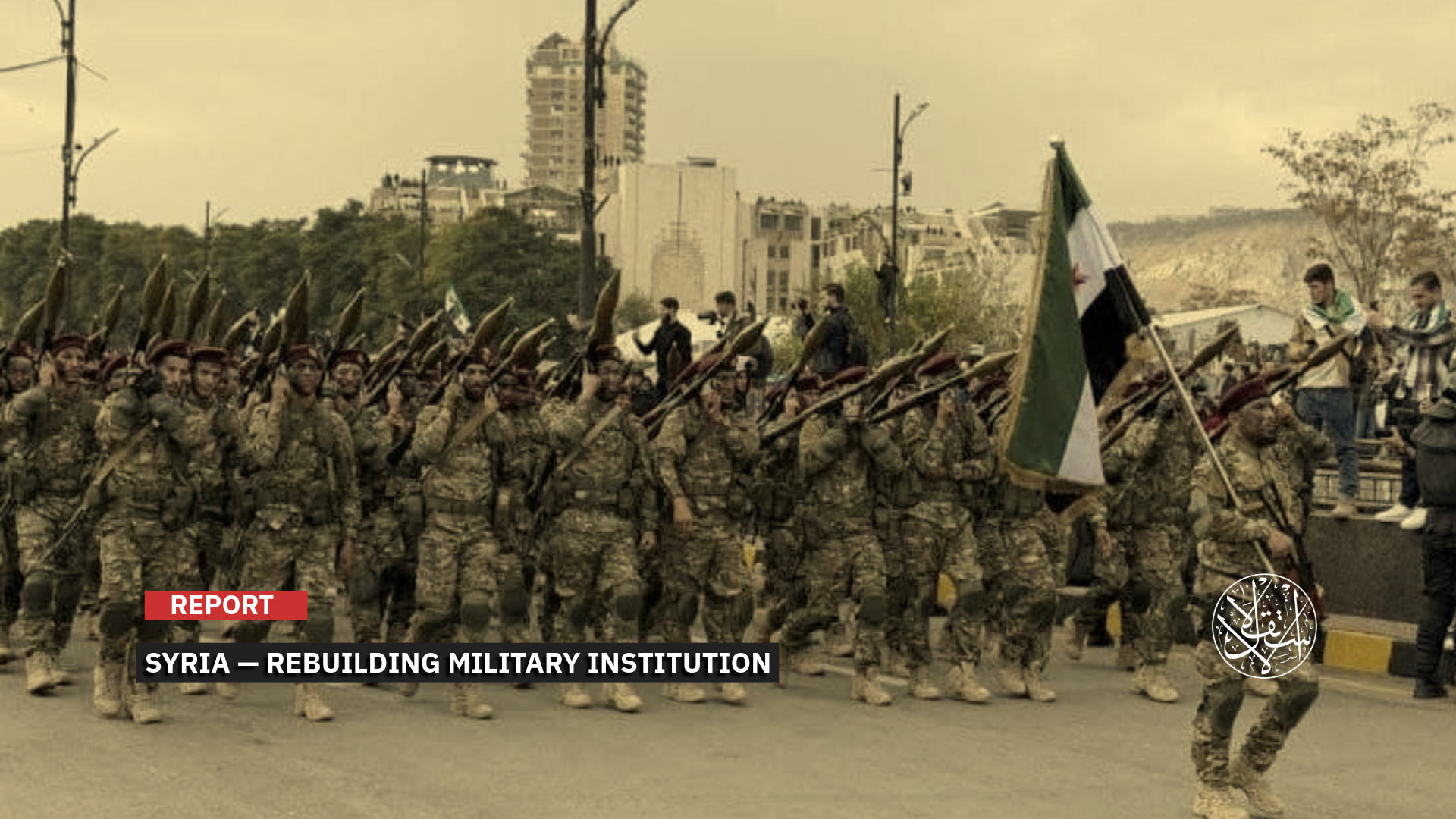
"Voluntary service forms the foundation for retraining and rehabilitating personnel in the army."
For generations of Syrians, the image of the army has been tied to decades of mandatory conscription, a system that represented far more than military service, blending fear, coercion, and a deep loss of trust in the institution itself.
With the fall of Bashar al-Assad’s regime on December 8, 2024, Syria entered a new phase in which authorities are seeking to redefine the role of the military: transforming it from an institution associated with the former ruling order into a national force built around professionalism, belonging, and voluntary service.
A Volunteer Army Takes Shape
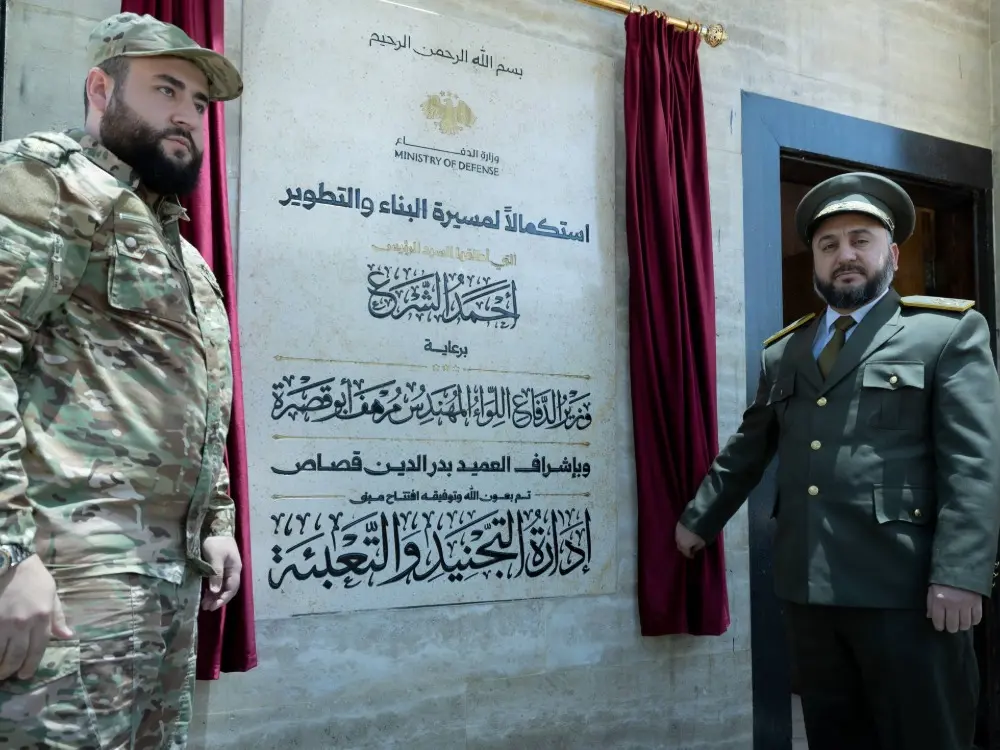
In a move signaling a break with the legacy of mandatory conscription, Syrian Defense Minister Major General Murhaf Abu Qasra inaugurated the Recruitment and Mobilization Administration headquarters in Damascus on July 2, 2026, following renovation and rehabilitation work. The ceremony was attended by the administration’s director, Brigadier General Badr al-Din Qassas, along with senior officers.
Abu Qasra stressed the administration’s role in supplying the Syrian Army with new volunteers, emphasizing the need to simplify and organize recruitment procedures in line with approved regulations.
Asim Ghalyoun, head of media and communications at the Defense Ministry, described the opening of the central recruitment headquarters as another step in the broader effort to rebuild and modernize the military.
Ghalyoun said this place, once associated in Syrians’ memories with fear and the forced conscription of young men into a service used to protect criminals, has now become a destination for those seeking to volunteer to serve Syria and its people.
The Defense Ministry had previously opened a recruitment center in ar-Raqqah on February 16, 2026, aimed at organizing applications and easing registration procedures as part of efforts to restructure military operations in the region.
In August 2025, the Recruitment and Mobilization Administration also announced the opening of recruitment centers across Syrian provinces to receive applications from those seeking to join the Syrian Army as volunteers.
For many Syrians, however, recruitment offices remain deeply tied to memories of fear under the rule of Hafez and Bashar al-Assad between 1971 and 2024, when compulsory military service was associated with forcing young men into an army used to protect the former regime and its ruling apparatus.
The Syrian military under the Assad regime was also widely associated with a culture of humiliation inside the ranks, where loyalty to the leader often became intertwined with notions of patriotism.
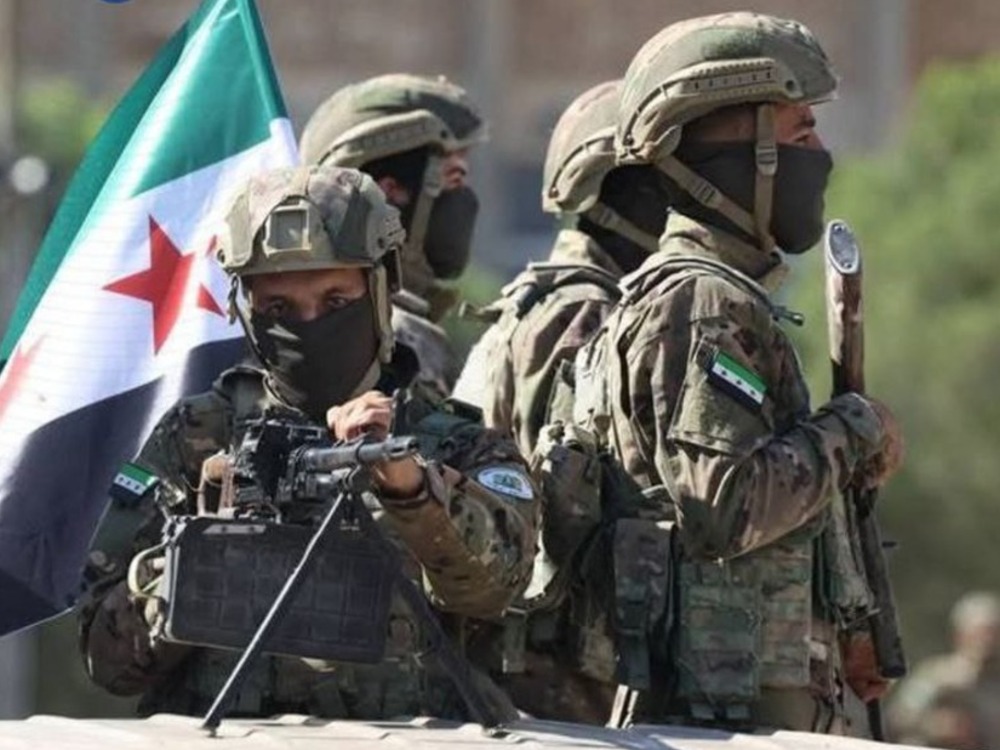
After the fall of Bashar al-Assad, the new authorities announced the dissolution of the army and security services, the abolition of mandatory conscription, and plans to build a professional military based on former opposition factions and new volunteers.
The Defense Ministry said on June 28, 2025, that the army in its new form will be more just and professional and that young people will play a central role in shaping the future of a secure and strong Syria.
The ministry has also moved to integrate armed opposition factions into newly formed military structures deployed across the country.
Building Trust
As one of the most powerful symbols of statehood and sovereignty, the military’s transformation into a professional Syrian army will require, according to experts, clear scientific, academic, and legal foundations.
The Syrian Defense Ministry is betting on the participation of young people in the armed forces as a way to strengthen national partnership and give citizens a direct role in rebuilding the military institution around a new model based on voluntary service rather than the compulsory conscription system that defined the Assad era.
Over the past year, the ministry has opened recruitment and mobilization directorates across Syria’s provinces, aiming to involve people from all regions in shaping the country’s new military structure.
Experts say recruitment through these centers reflects a shift in the philosophy of military service—moving from a system long associated by many Syrians with coercion, abuse, and corruption toward a voluntary model built on transparent rules that protect rights and dignity.
The opening of these directorates is also viewed as part of broader efforts to restore stability, strengthen security, and rebuild trust between state institutions and society after years of war.
Volunteer service is increasingly being framed as a central pillar of rebuilding the military as a state institution, helping restore government authority and reinforce security and stability.
In this context, military expert Abdullah al-Asaad said the renovated facility was the central recruitment branch formerly known as the General Recruitment Administration under the previous regime.
“This means the end of the era of fear surrounding military conscription,” al-Asaad told Al-Estiklal. “Syrians are now turning toward volunteering by their own choice and desire, becoming active participants in public security and in this important stage of Syria’s state-building process.”
“The military institution is working to remove the barriers that previously prevented Syrians from joining state institutions, as was the case under the former regime,” he added.
Al-Asaad explained that the new Recruitment and Mobilization Administration has become the main center responsible for archiving soldiers’ and officers’ records and issuing recruitment and mobilization directives nationwide according to professional and academic standards.
He said the administration is also responsible for issuing instructions to provincial recruitment offices regarding the requirements for accepting new personnel and the procedures for joining various military specialties, including combat, engineering, technical, and other fields.
The transition from compulsory service to voluntary enlistment, he argued, represents a fundamental change in the concept of military service, allowing individuals to join based on personal choice and conviction after ending a system long associated with coercion and mistreatment.
He added that opening recruitment centers across the provinces would allow the military to absorb the required numbers of volunteers and distribute them among units according to operational needs in each region.
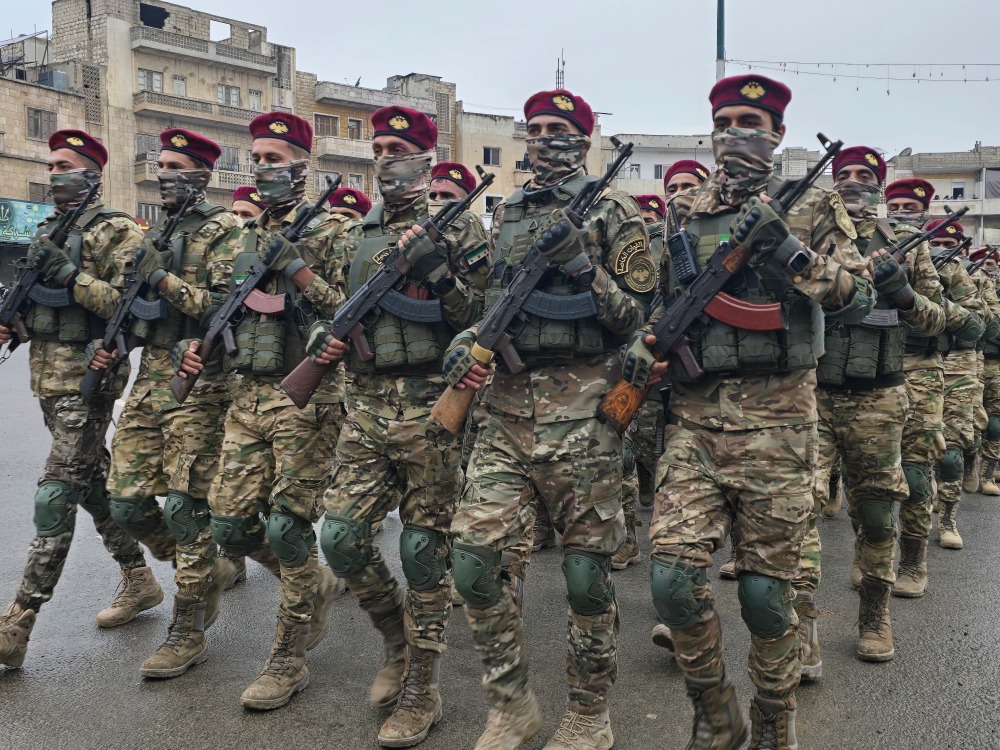
The goal, he said, is to complete the formation of new military structures—including divisions, brigades, battalions, and companies—under a modern organizational framework.
Attracting Expertise
As Damascus moves to rebuild its security and military institutions, several countries have expressed readiness to help develop the capabilities of the Syrian army, including Turkiye, Britain, and the Czech Republic.
On October 30, 2025, Ankara announced that Syrian soldiers would be allowed to use Turkish military facilities for training aimed at strengthening their capabilities, while 49 Syrian cadets would begin studying at Turkish military academies.
The two countries had previously signed a military training and advisory agreement in August 2025, under which Turkiye pledged to provide Damascus with weapons systems and logistical support equipment, train Syrian forces in their use, and expand cooperation in other military fields.
Syrian Defense Minister Abu Qasra also met with Czech military and air representative Colonel Stanislav Vacik on June 10, 2025, to discuss ways to strengthen military cooperation and exchange expertise in defense-related fields.
The Czech Republic is among the world’s established arms producers and exporters, with a long defense industry history dating back to the Czechoslovak era, when the country was known for its advanced weapons manufacturing capabilities. Today, it is home to companies specializing in small arms, armored vehicles, ammunition, military aircraft, radar systems, and defense equipment.
Earlier, in mid-May 2025, Abu Qasra received a British military delegation led by Charles Smith at the ministry’s headquarters in Damascus. The two sides discussed shared issues, focusing on ways to expand military cooperation and build the army’s capabilities in support of regional stability.
Al-Asaad emphasized the importance of “attracting expertise and specialists,” noting that a volunteer-based army would rely on recruits to fill a wide range of fields, including artillery, armored units, electronic warfare, logistics, and technical and administrative roles, rather than relying solely on infantry forces.
“Voluntary service forms the foundation for retraining and rehabilitating personnel and for improving the army’s capabilities through specialized training programs inside and outside Syria, strengthening the readiness of the military institution,” he added.
Experts say the success of Syria’s volunteer military model will depend on providing housing and accommodation facilities, financial and logistical support, and developing the army’s administrative structures to absorb the growing number of new recruits.
Sources
- Defense Minister Opens Rehabilitated Recruitment and Mobilization Administration Building [Arabic]
- Syrian Defense Minister Meets Czech Military Representative in Damascus [Arabic]
- Syrians to use Turkish military barracks, attend military academies, Turkish ministry says
- Defense Ministry Opens Recruitment Center in ar-Raqqah Province [Arabic]