War on Iran: Will Gulf States Join the Fight or Abandon U.S. Bases?
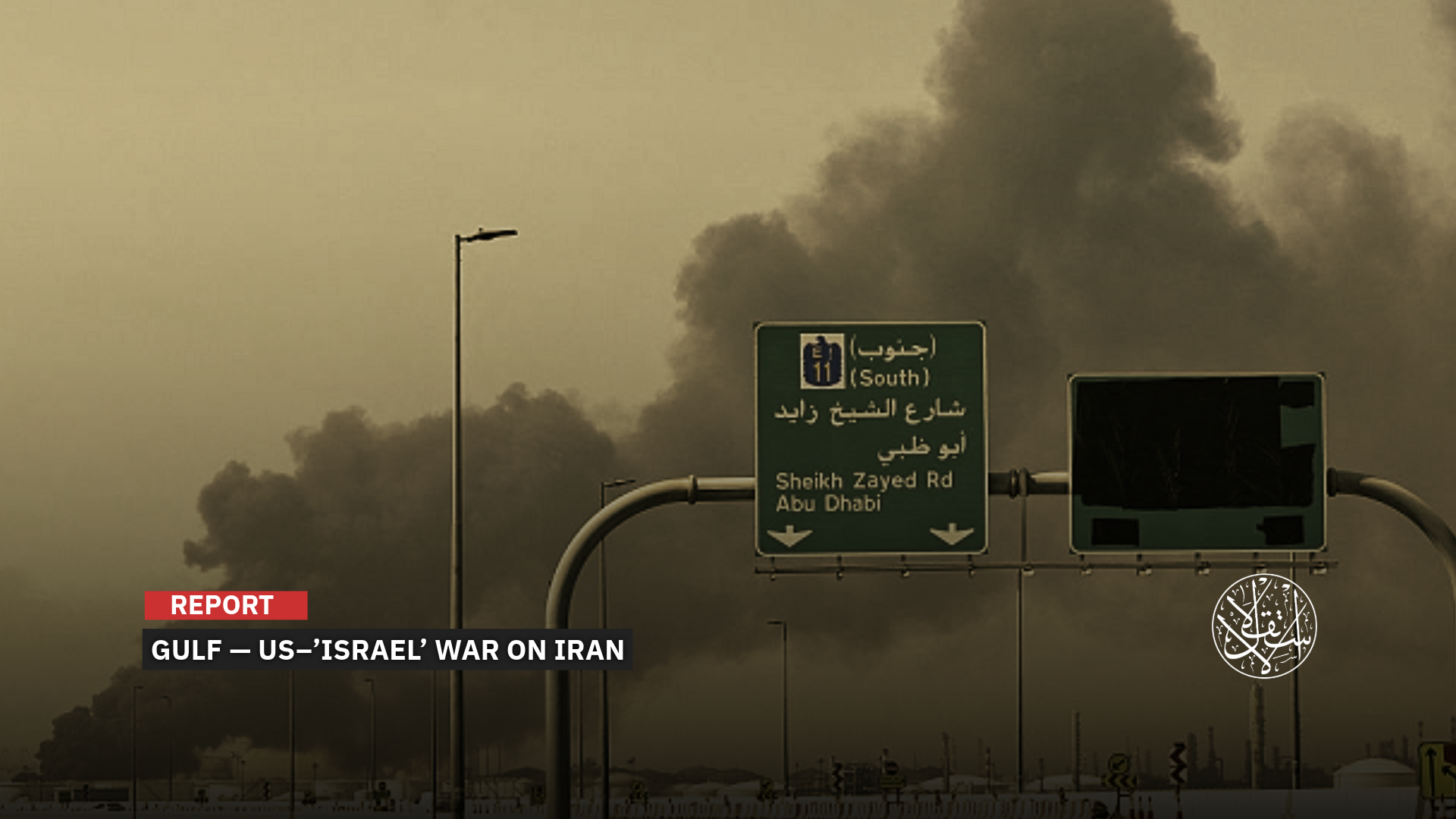
The Iranian attacks targeted all six Gulf Cooperation Council countries.
For decades, the Gulf region conjured an image of relative stability amid a turbulent neighborhood—a calm island in a stormy sea stretching from Iraq to Yemen, from Syria to Afghanistan. Its states built a reputation as beacons of security and economic prosperity, magnets for global investment, and safe havens for capital and populations fleeing conflict zones.
This carefully cultivated image, reinforced by international alliances and a robust foreign military presence, is now facing a severe test. The war launched by President Donald Trump, in coordination with the Israeli Occupation, against Iran has abruptly dragged the Gulf into the heart of the confrontation.
No longer distant observers, Gulf states now find themselves at the center of a fragile deterrence balance, under growing pressure from military signals and escalating threats from all sides.
For decades, Gulf security strategy leaned on a simple equation: host U.S. bases, strengthen ties with Washington, and enjoy a shield against Iranian threats. But recent events have exposed the cracks in that logic. What was once protection is now a magnet for attack—Gulf soil has become a stage for missiles and drones, a stark reminder that any role in a war against Iran, whether direct or indirect, comes at a heavy price.
Alliances that once promised reassurance now bring the specter of explosion. Cities once insulated from the echoes of regional wars have seen missiles and drones arrive on their doorstep with unprecedented boldness. What was presented as a fortress against aggression now looks, in some ways, like an invitation for danger, placing states unwillingly at the center of a war they did not choose.
The question, therefore, is no longer confined to the trajectory of a jointly led American-Israeli war against Iran. It strikes at the very core of Gulf security thinking: Are American bases still a guarantee of safety, or have they become an open strategic risk? Can these states truly remain on the sidelines of a conflict escalating at their borders, or have geography and alliance tied them irrevocably to a larger equation of confrontation?
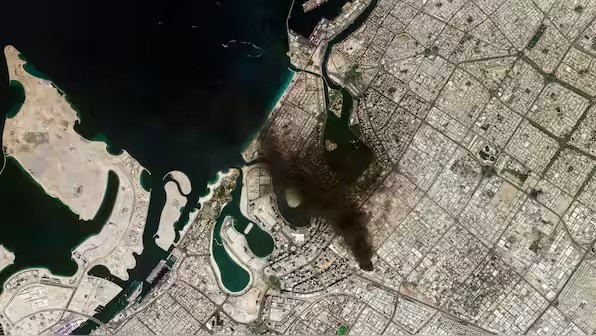
In the Heart of the Blaze
Just as Gulf states were pressing ahead with ambitious economic projects and grand visions for development—betting on stability, openness, and global investment—they suddenly found themselves engulfed in a storm of raids, missiles, and drones.
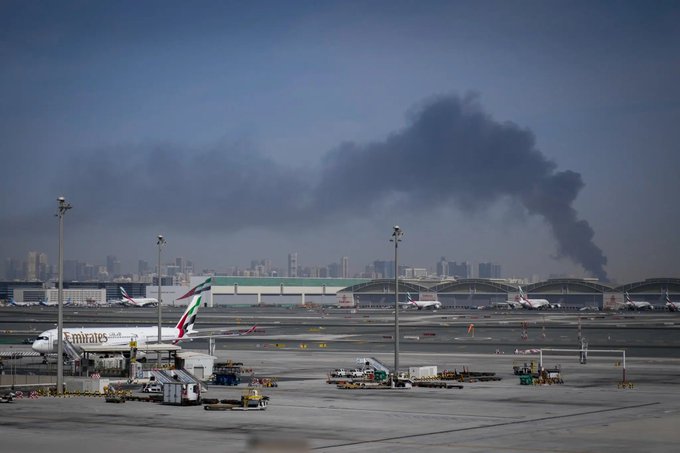
The familiar skyline of business, tourism, and wealth transformed overnight. Fiery projectiles tore through the night sky, explosions rocked military bases and critical infrastructure, and strikes spilled over into hotels and oil facilities.
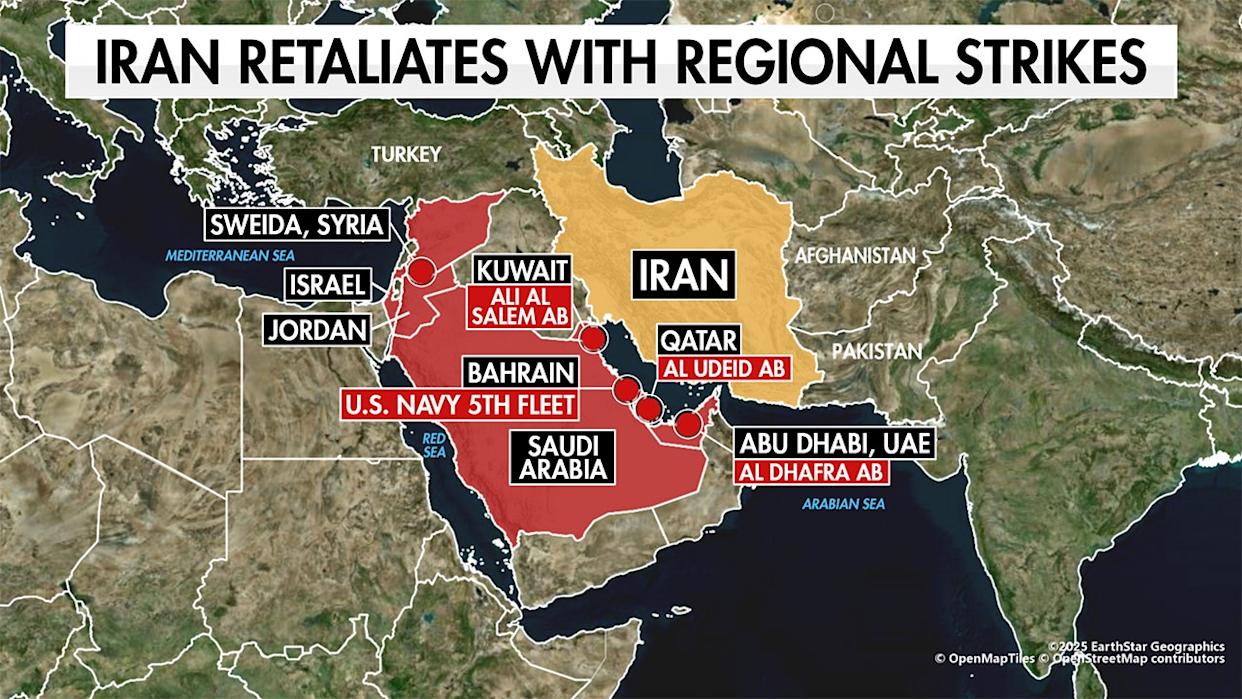
Following the joint U.S.-Israeli aggression that killed Iran’s Supreme Leader Ali Khamenei and several top military and political figures, Tehran responded swiftly. Intense waves of ballistic missiles and suicide drones targeted American bases across Bahrain, Qatar, the United Arab Emirates (UAE), and Kuwait—an unprecedented escalation that brought the conflict squarely into the heart of the Gulf.
All six Gulf Cooperation Council (GCC) states felt the impact, including Oman, which had acted as a mediator in nuclear negotiations between Tehran and the Trump administration. Strikes also hit Jordan, Iraq, and the Israeli Occupation, signaling that Iran’s response would not be confined to a single battlefield.
The UAE and Bahrain bore the brunt symbolically and in intensity. The U.S. Fifth Fleet’s naval base in Manama took a direct hit, while shocking explosions rattled hotels in Dubai, believed to host Israeli and American personnel.
At least four people were killed and more than a hundred wounded, sending waves of panic through the region.
Footage circulated widely on social media, posted by influencers and migrant workers alike, showing fiery missiles streaking across the night sky above Dubai and Manama’s iconic skyscrapers before crashing into their targets.
A drone even struck Dubai’s five-star Burj al-Arab hotel, rising 321 meters on its artificial island—a blow laden with psychological and economic symbolism.
Following the strike, the Tasnim News Agency, close to Iran’s Revolutionary Guard, claimed the hotel had been targeted for hosting CIA officers, alleging six senior operatives were killed and two others wounded.
In Kuwait, reports described the “complete shutdown” of Ali al-Salem Air Base and the destruction of three maritime facilities in the Mohammad al-Ahmad area, in addition to serious damage to Bahrain’s Salman naval base.
Three Kuwaiti sites were hit daily, damaging or destroying multiple installations, including satellite communications equipment. Four U.S. servicemen were reported killed, and three American aircraft were downed—though Washington said they had been struck by friendly Kuwaiti fire.
The UAE Ministry of Defense reported that, in just the first two days of the war, more than 540 drones and 165 ballistic and cruise missiles targeted the country, including al-Dhafra Air Base, with 21 drones hitting civilian targets.
Despite the UAE claiming to have intercepted 92 percent of the projectiles, Kelly Grieco of the Stimson Center warned that this “tactical victory” masks a costly strategic drain. She estimated that Iran spent between $177 million and $360 million on missiles and drones, while Abu Dhabi incurred $1.45–2.28 billion in interception costs—five to ten times the attack’s cost—consuming a large portion of its missile defense stockpile, painstakingly built over years, in just 48 hours.
By contrast, Iran appeared to temper its focus on Saudi Arabia and Qatar. Riyadh is currently in a phase of relative rapprochement with Tehran and possesses stronger defensive capabilities, while Doha maintains open channels of communication and plays a mediating role, even while hosting a major U.S. base.
Gulf governments publicly sought to prevent a full-scale war between the United States and Iran, aware that their economic models rely on regional stability and the ability to provide a safe environment for investors and tourists. Yet the human and military toll reported by the Revolutionary Guard—claiming 560 American servicemen killed or wounded in the first two days—heightened anxiety across the region.
In response, Gulf states, particularly Qatar and the UAE, applied pressure on Washington to end the war quickly after Trump suggested it could last up to four weeks.
Bloomberg analysis indicated that Qatar’s Patriot missile stockpile might only last a few days if the attacks continued at the same pace, while the UAE faced the risk of rapidly depleting its own defensive reserves.
Thus, a region that had long bet on development and prosperity suddenly found itself in the heart of an open-ended war of attrition—one measured not just in missiles launched or intercepted but in the very cost and fragility of its security and the vulnerabilities exposed in the Gulf’s once-assumed stability.
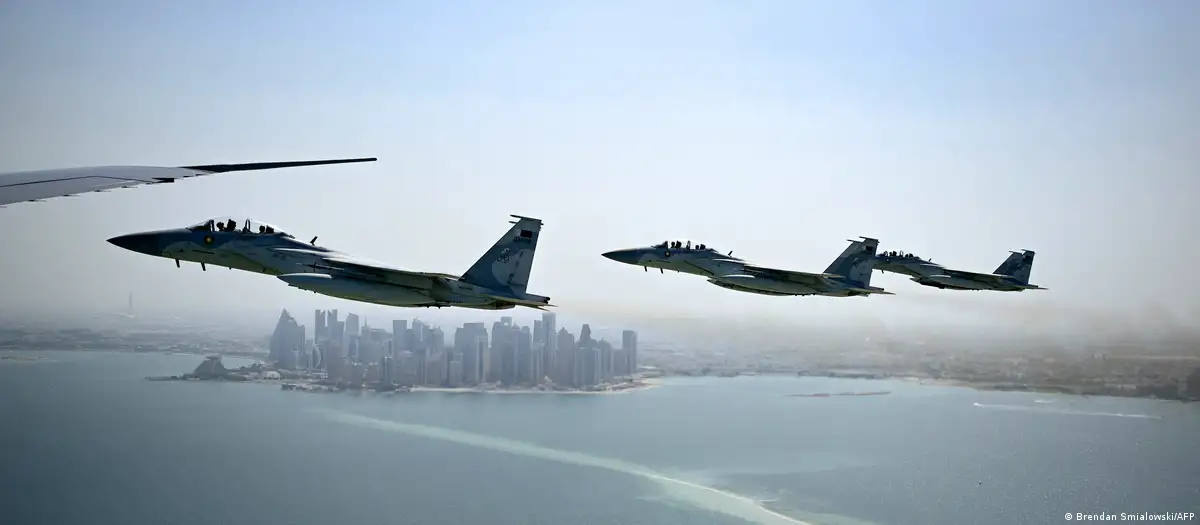
US Bases Under Fire
For decades, the presence of American military bases in the Gulf rested on a clear-cut bargain: security in exchange for alliance. Washington provided a shield of military deterrence, while Gulf capitals offered strategic locations and advanced infrastructure—a partnership long seen as a cornerstone of regional stability.
Under this umbrella, economies flourished, skyscrapers rose, airports expanded, and tourism thrived, all on the belief that a U.S. presence was enough to repel any external threat.
The shift in Trump's approach toward Iran and the subsequent widespread military escalation have shaken that equation. What once served as a protective buffer is now, in Tehran’s view, a direct target. By hosting these installations, Gulf states have been drawn into the battlefield.
Today, capitals across the region recognize that what was once considered a deterrent has become a magnet for danger. Without U.S. bases or military infrastructure facilitating operations, these countries—by this logic—would not have been the target of hundreds of missiles and drones launched by the Revolutionary Guard. Providing logistical support or serving as a launchpad toward strikes on Iran has placed them squarely in the crosshairs.
Questions have also arisen about air defense systems such as the Patriot and THAAD batteries deployed in some Gulf states. Analysts note that their primary purpose is to protect U.S. assets and personnel rather than commercial centers or the megaprojects that drive the region’s economic ambitions.
American reports indicate that Oman was the only Gulf state spared a broad Iranian strike, aside from a single attack on an oil tanker near its ports. Observers attribute this to the absence of U.S. bases on its soil and its continued role as a mediator between Washington and Tehran. By contrast, every state hosting American military infrastructure was hit, sending a clear message: the cost of hosting is no longer merely political—it is a direct military burden.
According to analysts speaking to Reuters on 28 February 2026, the Iranian strikes aimed to demonstrate that no U.S. ally in the region is out of reach and that supporting Washington’s war on Tehran carries a heavy price.
Amid this escalation, Iran revived the idea of a regional security forum excluding the United States as an alternative to conventional arrangements. Yet the proposal gained little traction within the GCC, where member states remain reliant on external security guarantees and find it difficult to envision a purely regional deterrent in an environment of mutual distrust and competing interests.
The debate is no longer limited to managing a temporary war. It strikes at the core of Gulf security doctrine: should the old “protection bargain” continue despite its growing cost, or does this moment mark the start of a strategic reassessment that could redefine the very concept of security and alliance in the Gulf?
Dragged into War?
As Iranian strikes expanded beyond U.S. bases in the Gulf and official threats of military retaliation mounted, questions intensified over whether these states might be drawn—against their will—into the fire of war.
The American-Israeli war against Iran is no longer distant geographically or politically. It now presses directly on Gulf capitals, threatening their internal security and economies.
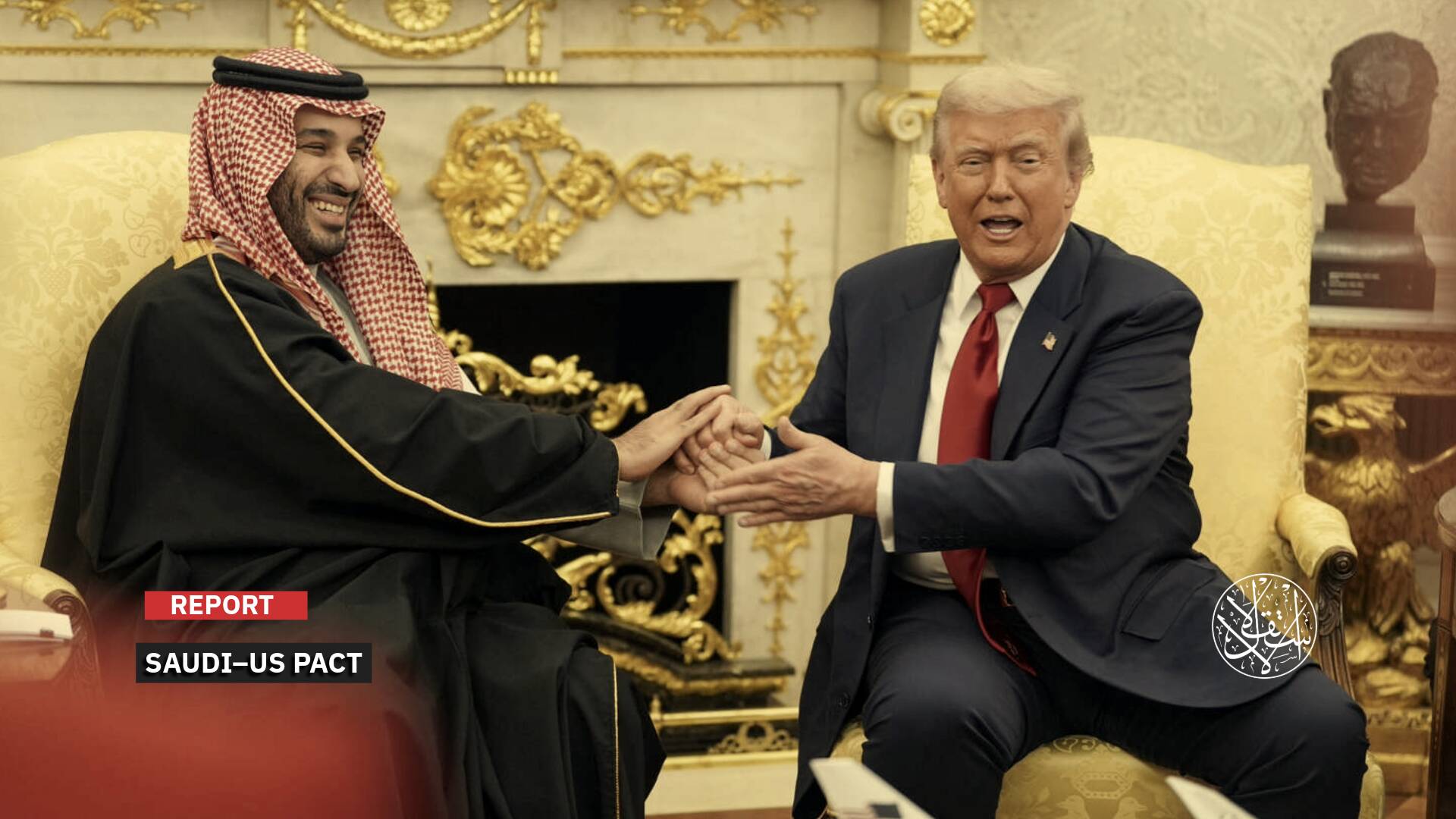
Tensions escalated further after Trump’s incendiary remarks. According to the Washington Post on 28 February 2026, he suggested that the war on Iran had begun in coordination with Saudi Arabia, portraying Riyadh as a key partner in igniting the war.
The Saudi embassy in Washington denied the claim, reaffirming the kingdom’s commitment to diplomacy and its rejection of being drawn into a regional confrontation.
In an early March 2026 phone interview with the Daily Mail, Trump commented on reports of possible Saudi involvement in strikes on Iran. “They’re fighting, they’re fighting too,” he said.
Observers interpreted the statement as an attempt to frame the war as a broader conflict, potentially with a sectarian dimension between a “Sunni axis” and a “Shia axis.”
Axios also reported that Saudi Arabia had allegedly requested a strike on Iran during a visit by its defense minister to Washington—a claim officially denied by Saudi media.
These reports coincided with pressure from “Israel” and hardline voices in the U.S. and Europe calling for direct Gulf involvement in the war.
In contrast, former Qatari Prime Minister Hamad bin Jassim bin Jaber al-Thani warned against sliding into direct confrontation with Iran. Speaking on X, he stressed that while some powers recognize that the current clash between America and “Israel” on one side and Iran on the other will eventually conclude, they are trying to draw GCC states into a costly conflict that would drain regional resources and invite wider external intervention.
He emphasized the importance of GCC countries remaining “united” against any aggression, without allowing political coercion or pressure to dictate their actions.
On the military front, Andreas Krieg, professor of security studies at King’s College London, told Deutsche Welle (DW) in early March 2026 that Gulf armies could conceivably enter the war, but only in a limited self-defense role—not by launching direct strikes on Iran.
He suggested that Gulf states would prioritize containing the fallout rather than joining the conflict, strengthening air and missile defenses, securing bases and critical infrastructure, and tightening internal security.
The Economist, in its 28 February 2026 issue, noted that U.S.-allied Gulf states are facing “a moment of great peril,” questioning whether they are prepared to take sides in an open-ended war.
While these states have long regarded the Islamic Republic as a strategic threat due to its nuclear program, missile arsenal, and regional networks, they have also spent recent years pursuing rapprochement to avoid precisely this scenario. Saudi Arabia resumed diplomatic ties with Iran in 2023 after a seven-year break, the UAE followed a similar path, and both nations publicly urged Trump to avoid war.
Yet Iranian strikes on hotels, ports, and airports across the Gulf have upended the calculations. According to a Wall Street Journal analysis in early March 2026, Tehran’s miscalculations and targeting of Gulf territories could backfire, pushing these states closer into opposition against Iran. The wave of missiles and drones striking sensitive civilian and economic sites has reinforced among some Gulf elites the urgent need to confront the Iranian threat more decisively.
Still, there is no clear consensus in the Gulf over the next move. Some officials continue to bet on reviving diplomacy and containing the escalation, while others believe events may have already crossed the point of no return.
Caught between these positions, Gulf states face an extraordinarily complex equation: how to protect their security without becoming active participants in a regional war that could redraw the balance of power in the Middle East for years to come.
‘Israel’ Fishing in Troubled Waters
Amid the American-Israeli war on Iran, accusations have surfaced that “Israel” is seeking to widen the battlefield—not only militarily but also politically and sectarianly—by inflaming tensions between the so-called Sunni and Shia axes. According to this view, “Tel Aviv” has moved on two parallel tracks, exploiting the fog of war and the confusion of competing narratives.
The first front involved promoting media narratives—echoed by Trump—claiming that Saudi Arabia, and possibly the UAE, were among the Arab states urging Washington to attack Iran. Despite official Saudi denials, these claims continued to circulate, which observers interpret as an attempt to corner Riyadh into a public alignment and turn the war into a sectarian conflict, serving broader efforts to reshape regional alliances.
The second front, advanced by some political analysts, posits that “Israel” may have—indirectly—been behind attacks on oil and civilian infrastructure in certain Gulf states, while attributing the strikes to Iran. The goal, according to this view, would be to deepen doubts and pressure Gulf capitals into taking direct military action.
Although there is no conclusive evidence to support this scenario, the timing and strategic sensitivity of some attacks have fueled the debate.
On 2 March 2026, Saudi Arabia’s Ministry of Defense reported a “minor fire” at the Ras Tanura facility, one of the kingdom’s key Aramco oil refining and export hubs, caused by debris from two intercepted drones. Ras Tanura is central to the global energy supply chain, giving the incident international economic significance well beyond Saudi borders.
By contrast, Iran’s foreign minister insisted that the country was “not responsible for the attacks on Aramco,” noting that Riyadh had been officially informed. The Tasnim News Agency cited a military source saying that oil facilities in the region have never been and are not targets of Iranian strikes.
The conflicting accounts have fueled speculation over who actually benefits from the attacks on Saudi energy infrastructure at such a sensitive moment.
Meanwhile, the New York Times (NYT) reported in early March 2026 that the Iranian strikes on Gulf states, particularly Dubai, have shaken the city’s image as a safe haven in a volatile region. A city long accustomed to hosting Iranian businessmen, American celebrities, and wealthy Russians and seen as a model of stability and prosperity, suddenly found itself at the center of an unprecedented missile and drone crisis.
Amid these divergent narratives and strikes of both symbolic and strategic significance, the region has become an open arena—not just for the exchange of fire but for a battle of narratives as multiple actors attempt to redraw lines of division and alliance.
In these troubled waters, security calculations intersect with political ambitions, leaving Gulf states facing a dual dilemma: how to safeguard internal stability while avoiding a slide into a wider regional conflict that could far exceed the bounds of the current confrontation.
Sources
- Iran Strikes U.S. Military Facilities Across Gulf Region
- America’s Gulf allies face a moment of great peril
- Iran’s Attacks on Persian Gulf Countries Crack Their Safe Haven Image
- Will Gulf states enter the Iran war?
- Iran missiles brings war to Gulf doorstep; hardens support for US–Israel campaign
- Push from Saudis, Israel helped move Trump to attack Iran