Forced Replacement: How Did Palestinians Become Excluded From the Israeli Labor Market?
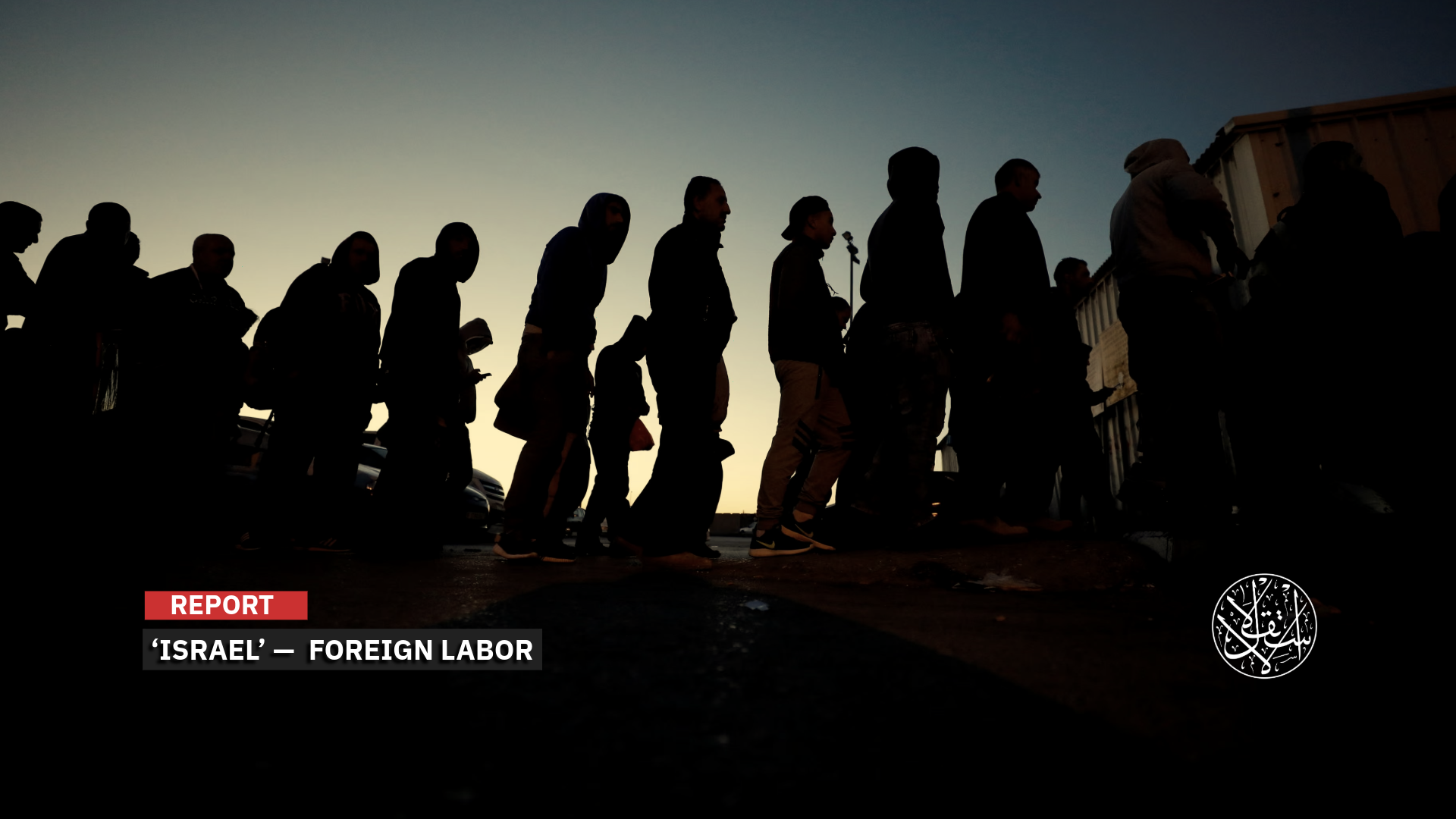
Most West Bank workers’ permits inside the occupied territories were suspended or frozen.
In the days following October 7, 2023, the vehicles that transported Palestinian workers to construction sites inside the territories occupied in 1948 stopped running.
What initially appeared to many as a temporary closure quickly became a sudden cutoff of an economic lifeline that supported tens of thousands of families in the West Bank and Gaza Strip.
For decades, Palestinian workers had been an integral part of the daily functioning of the Israeli economy, particularly in construction, agriculture, and services, not as outsiders in the labor market, but as a workforce that the occupation itself helped shape its reliance on, before abruptly moving to exclude it under security pretexts.
Devastating Ban
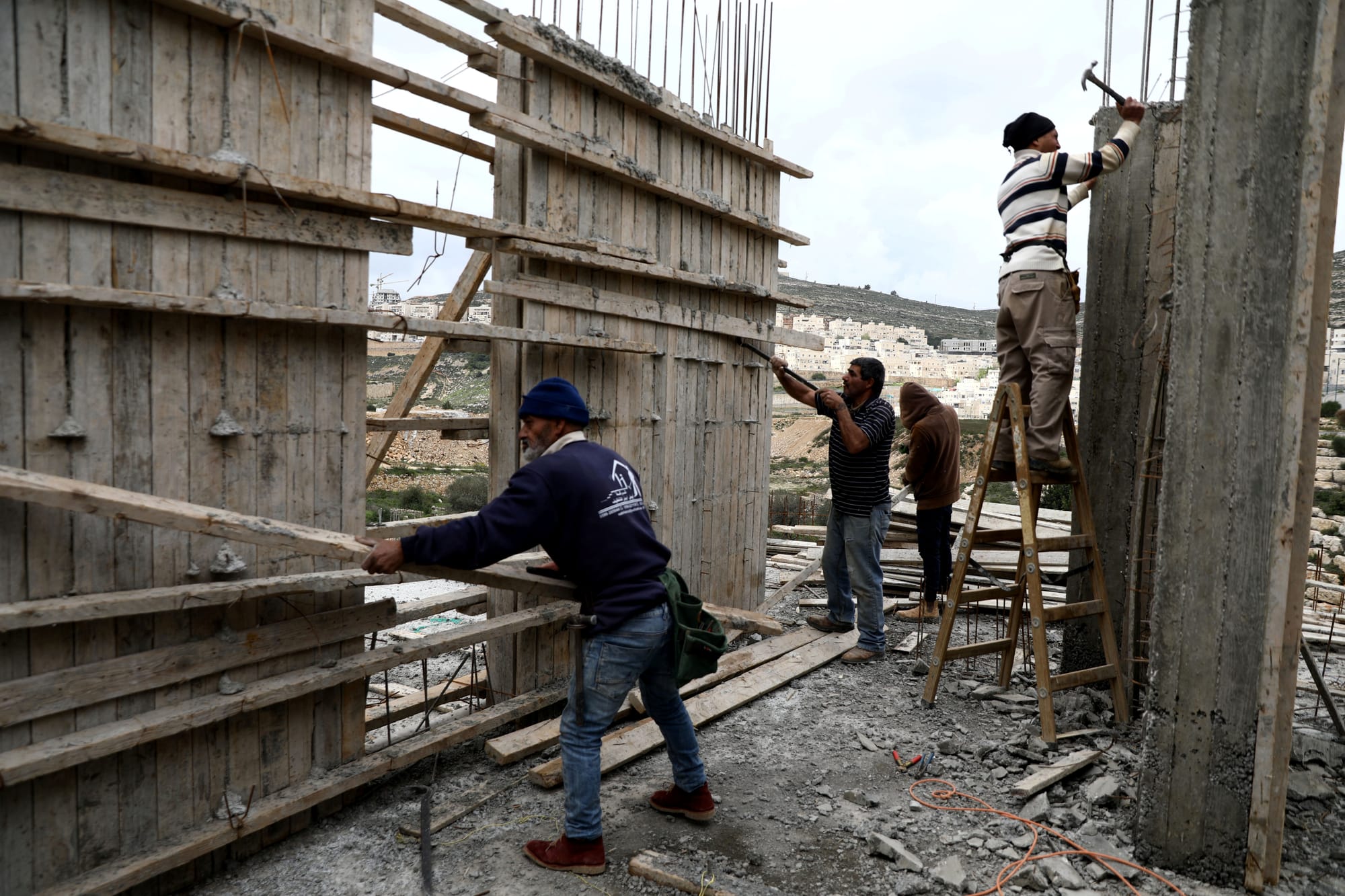
Work in “Israel” was not merely an option, but a necessity imposed by military and economic restrictions, particularly in the West Bank. Israeli construction sites relied on tens of thousands of Palestinian workers for tasks that many Israelis were unwilling to do, such as plastering, tiling, formwork, steelwork, and finishing.
In agriculture as well, there was heavy reliance on Palestinians, alongside foreign workers, in sectors that required daily, low-cost labor. Despite being difficult and insecure, these jobs provided a more stable income compared to the low wages available in the West Bank.
Following the Operation al-Aqsa Flood, “Israel” decided to close access and revoked the permits of around 18,000 workers from Gaza entirely, some of whom had only begun working months earlier for the first time in decades.
Most West Bank workers’ permits were also suspended or effectively frozen, with only a small number later allowed to return to work in settlements under strict security restrictions.
Some industrial and agricultural settlements relied on a limited number of workers to avoid collapsing operations, while many construction sites shut down, companies laid off thousands of workers, and Israeli contractors began pressuring for foreign labor.
According to data from the Palestinian Central Bureau of Statistics, the figures partially recovered in 2025 with some workers returning to settlements and sites inside the territories occupied in 1948. However, the number of official work permit holders remained far below pre-war levels.
The number of workers fell to around 25,000 at the end of 2023, then gradually rose to 51,000 in the last quarter of 2025, before dropping again to about 48,000 in the first quarter of 2026.
Only about 11,700 of them hold official work permits, while 16,800 work without permits, and 19,100 enter using Israeli IDs or foreign documents. This breakdown contributed to unemployment reaching 29.5% in the West Bank in early 2026, with around 294,000 unemployed people.
As a result, thousands of workers suddenly found themselves without income, including Abu Adam, a pseudonym for one of the workers who is no longer allowed to work inside “Israel”.
He says his monthly income used to be enough to pay his home loan, support his family, and fund his children’s university education.
In an interview with Al-Estiklal, the man, a father of five who requested anonymity for fear of harm, explains that although the job was neither comfortable nor fully protected in terms of rights, it was far better than the limited opportunities available in the West Bank.
Abu Adam, originally from Ramallah, worked in construction inside “Israel”. Today, everything has stopped. He says the contractor who once waited for him at the site can no longer bring him in, and the permit that once guaranteed a working day has become a useless piece of paper.
He adds that what he thought would be a temporary closure turned into many long months, and his income dropped from thousands of shekels to occasional jobs inside the West Bank that are not enough to cover loans, rent, or daily expenses.
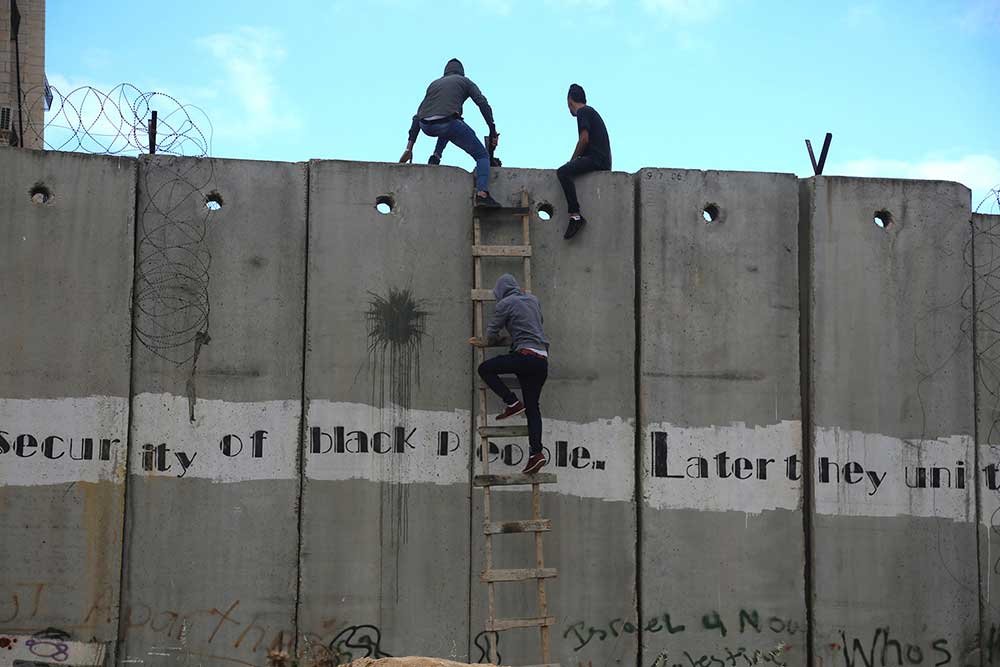
Like many others, he considered entering through “smuggling routes,” but feared arrest or harm, especially “amid Israeli chaos after the Operation al-Aqsa Flood.” He says he is now waiting for conditions to calm in order to try returning to work inside.
Who Replaced Them?
After “Israel” closed the door to Palestinian workers, it found no immediate substitute in the local labor market, and instead opened a broad channel for importing foreign labor.
At the beginning of 2024, the Israeli government announced a plan to bring in around 65,000 foreign construction workers from India, Sri Lanka, and Uzbekistan, after construction sites had lost tens of thousands of Palestinian workers who were removed from jobs following October 7.
This was not a normal migration flow, but a direct replacement policy for a labor gap created by a security and political decision. Later, the plan expanded from construction into other sectors as well.
According to the Israeli Population and Immigration Authority in August 2025, more than 85,000 foreign workers had entered “Israel” since the start of the war, with about 50% going into construction, 17% into nursing and care, and 16% into agriculture, as reported by the Jewish News Syndicate (JNS).
India led with around 24,880 workers, followed by Sri Lanka with about 15,284, and Thailand with around 14,423. In this sense, the foreign replacement was not a single unified group.
In construction, “Israel” focused on India, Sri Lanka, Uzbekistan, Moldova, and China to varying degrees. In agriculture, Thai workers remained a longstanding core workforce.
Before October 7, there were about 30,000 Thai workers in “Israel”, most of them in agriculture. After the war began, some returned home, but the number later rose again to over 38,000 due to higher wages and “Israel’s” continued demand for agricultural labor.
According to figures from the Organisation for Economic Co-operation and Development (OECD), “Israel” did not merely fill a temporary gap, but fundamentally expanded its foreign labor ceiling. By the end of 2024, the number of foreign workers in “Israel” reached about 156,800, a 41% increase compared to 2023.
The sharpest rise was in construction, where the number reached 51,600, an increase of 108%, and in agriculture, which reached 33,100, an increase of 92%.
The OECD notes that post–October 7 Israeli policy explicitly focused on expanding foreign labor channels to replace the suspension of daily Palestinian workers.
However, this replacement was not simply a matter of moving workers from an airport to a construction site. Foreign workers enter through a more complex recruitment system involving bilateral agreements, recruitment companies, fees, housing, transport, training, and visas that tie their legal status to an employer or sector.
In the case of India, the first construction workers departed for “Israel” in April 2024 under an agreement allowing up to 40,000 Indian workers in construction and healthcare, while around 18,000 Indians were already in the occupied territories, mostly in caregiving roles.

What Are the Limits of Substitution?
The limits of substitution first appear in the construction sector. Before the war, Israeli construction sites employed around 72,000 Palestinian workers, according to Reuters citing Israeli sources, while other estimates put the number closer to 80,000 in core trades such as steelwork, flooring, formwork, plastering, and finishing.
These workers were not marginal labor, but the backbone of the earliest and most demanding stages of construction. When they were removed, it was not only a numerical gap that emerged, but also a deep and accumulated skills shortage built over many years.
After the closure, Reuters reported that around half of construction sites in “Israel” were shut down or disrupted due to labor shortages, and that activity in the sector fell by up to 95% in late 2023, as part of a broader economic contraction of 19% in the final quarter of that year.
Despite the later arrival of foreign workers, around 40% of construction activity reportedly remained halted as of March 2024, according to estimates cited by Reuters.
However, bringing in foreign labor did not mean “Israel” could replace Palestinian workers with the same speed or efficiency. Palestinian workers are geographically close, familiar with the language, the market, and construction practices, and can arrive daily from the West Bank whenever checkpoints open.
Foreign workers, by contrast, require recruitment, housing, training, visas, and staffing agencies, as well as time to adapt to local work patterns. As a result, wages for available labor rose sharply in some sites, while contractors reported financial losses, delay penalties, and missed deadlines.
The limits of substitution are also visible in the gap between political rhetoric and economic necessity. “Israel” has stated its intention to reduce reliance on Palestinian labor, while at the same time allowing some workers to return to settlements.
A joint report by three Israeli rights organizations, Gisha, Kav LaOved, and Physicians for Human Rights Israel, stated that “Israel” prevented around 115,000 West Bank workers holding permits from reaching their jobs inside “Israel” after October 7.
Later, only about 14,000 permits to work inside “Israel” were reinstated, while around 32,000 Palestinians were allowed to work in settlements out of approximately 48,000 who had worked there before the war. This suggests that the restrictions were not purely security-driven.
The cost was not borne by Palestinians alone. According to the same report, “Israel’s” Ministry of Finance estimated losses of about 25 billion shekels for the Israeli economy by August 2024 due to the exclusion of Palestinian workers.
Israeli security officials also warned, according to Gisha, that depriving more than 100,000 Palestinian families of income could threaten stability in the West Bank.
Recent Palestinian data shows that partial returns have not closed the gap. In the first quarter of 2026, the number of West Bank workers in “Israel” and settlements stood at about 48,000, including roughly 30,000 inside “Israel” and 17,600 in settlements, compared to 51,000 in the last quarter of 2025.
This means the Israeli labor market still absorbs some Palestinian workers, but at a significantly lower level than before the war.
A clearer sign of failed substitution is the continued irregular crossing. The Associated Press reports that West Bank Palestinians now pay smugglers between 300 and 1,000 shekels to cross the barrier, with some sleeping in fields, farms, or construction sites to avoid arrest.
Thus, “Israel” does not appear to have eliminated its reliance on Palestinian labor, but rather restructured it. It reduced their presence in the formal labor market inside “Israel”, expanded foreign labor intake, yet still retained Palestinian workers where needed, particularly in settlements.