‘From Hodu to Kush’: Netanyahu’s Biblical Framing of an Alliance Against the Muslim Brotherhood and the Shia
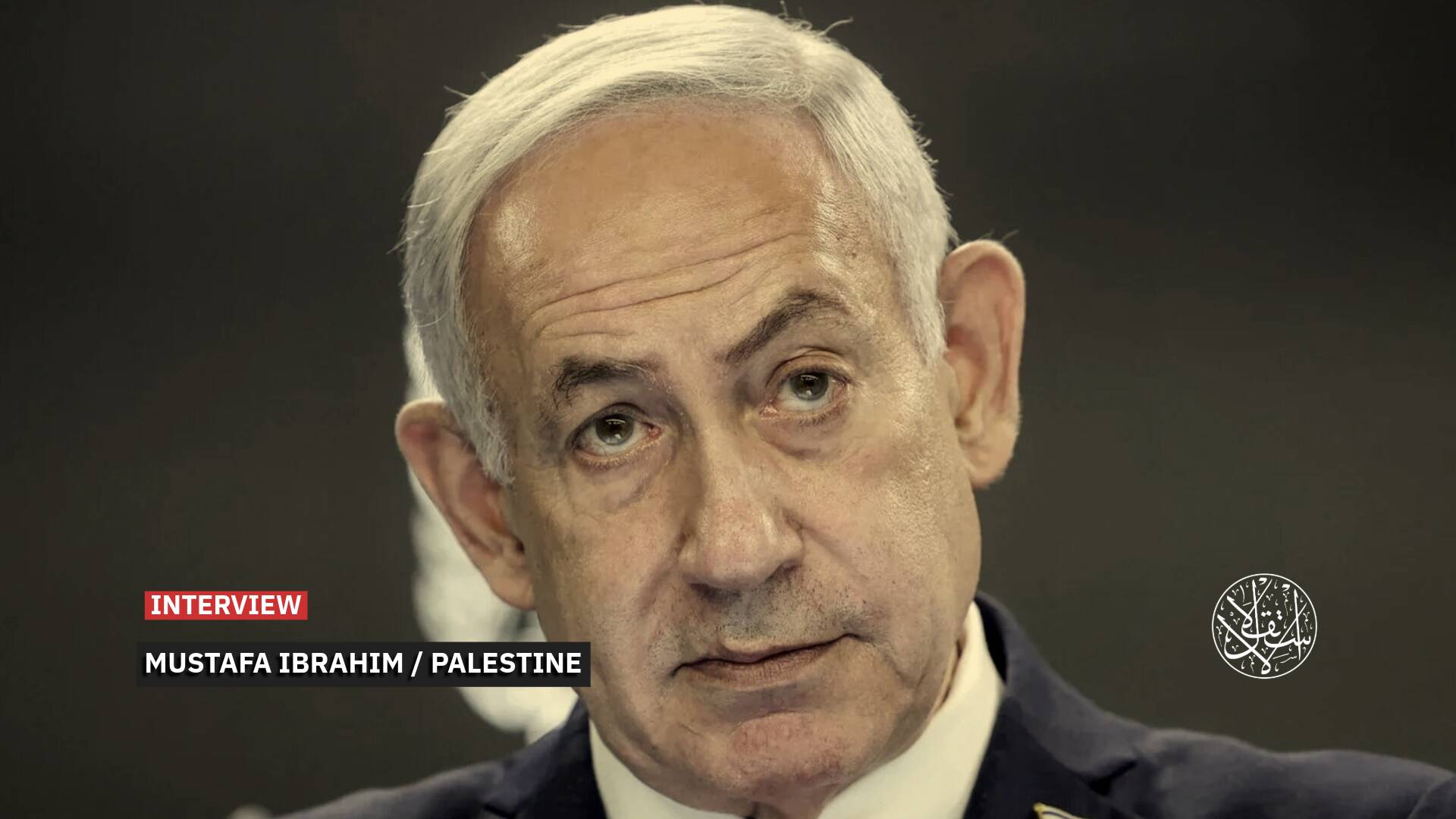
Benjamin Netanyahu has returned to invoking biblical terminology in his political speech.
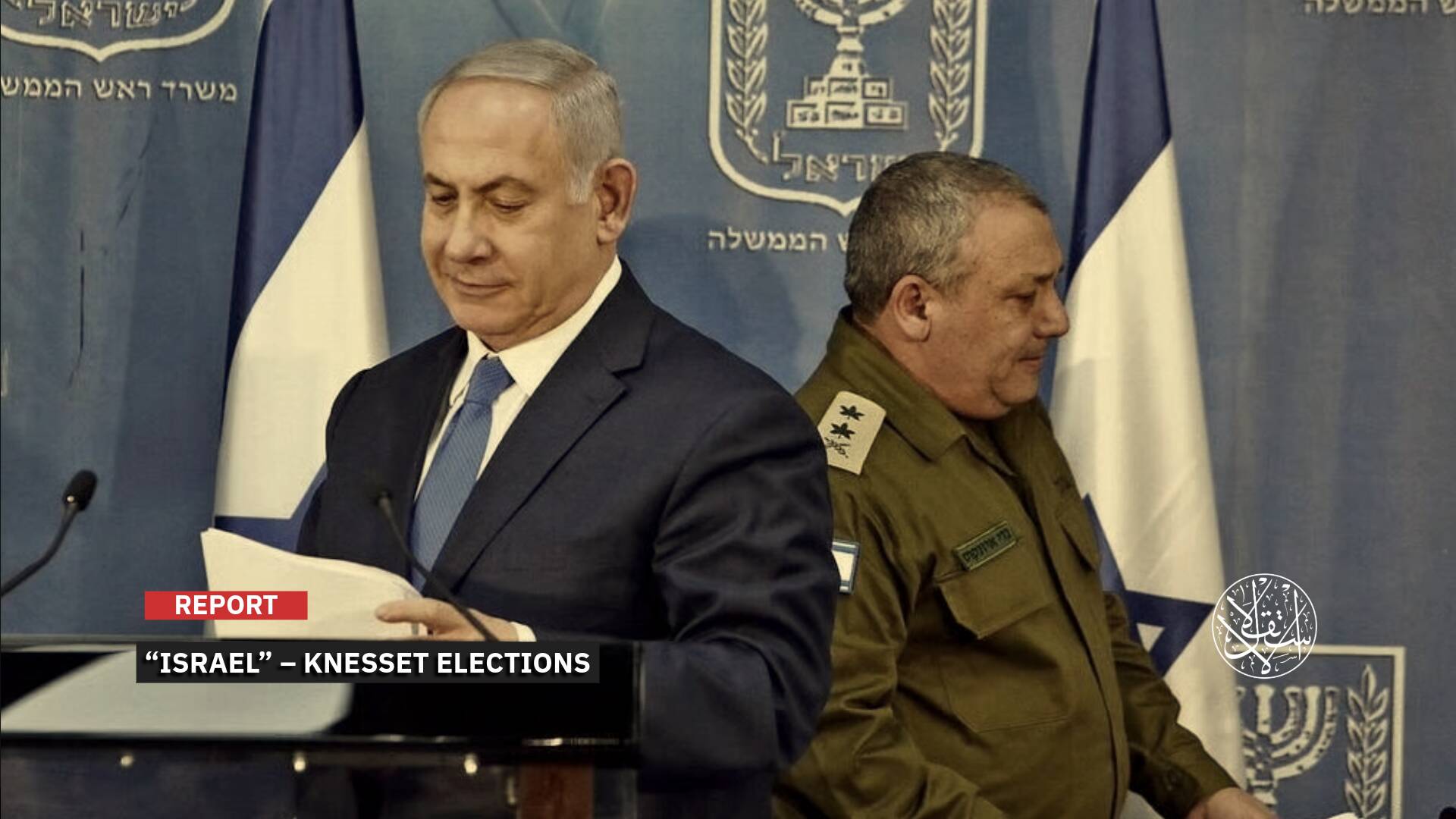
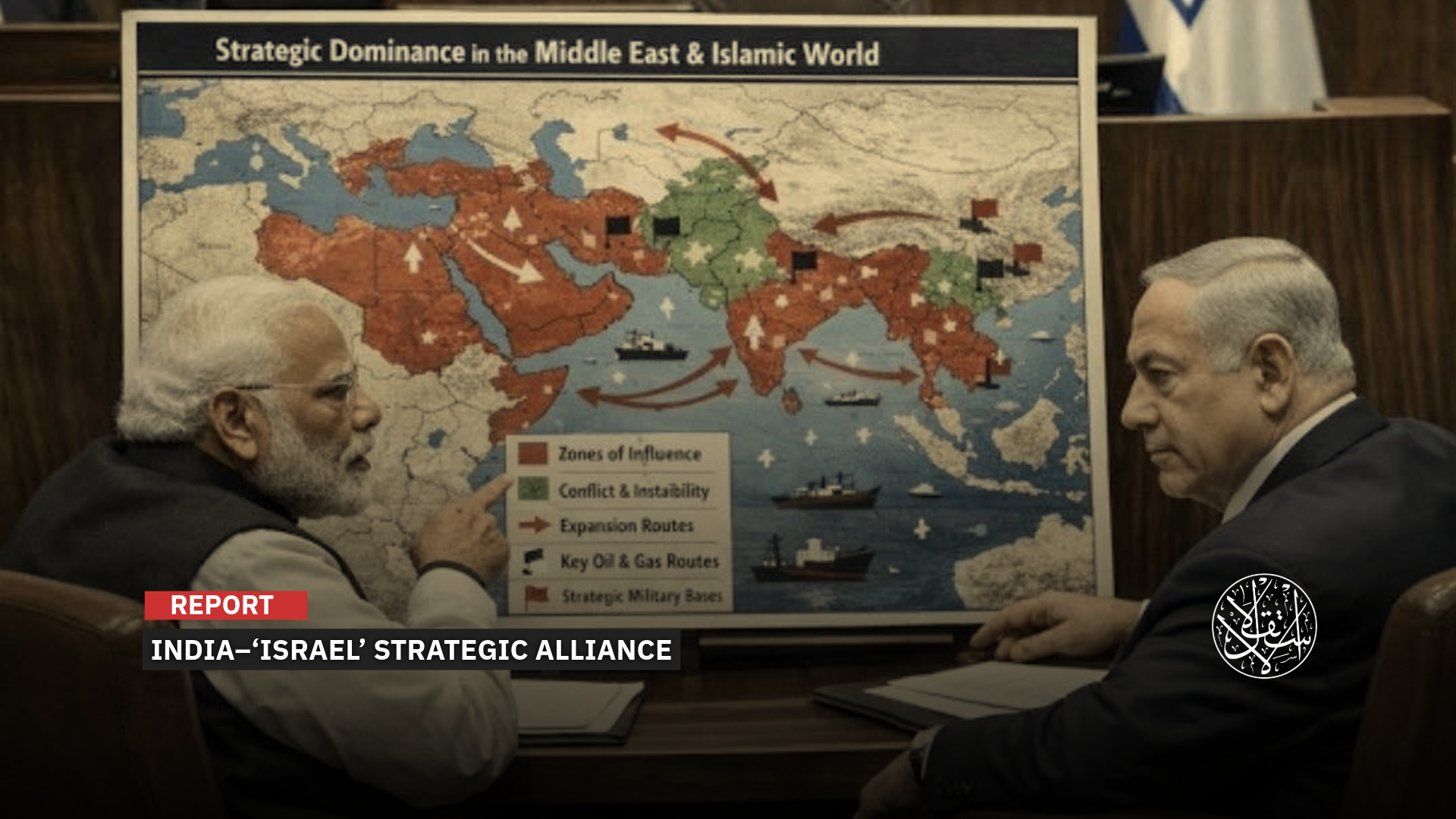
Benjamin Netanyahu has returned to invoking biblical terminology in his political speech, using the expression “from Hodu to Kush” to describe a regional axis he is seeking to shape, stretching, in his formulation, from India, through the Middle East, to the Mediterranean.
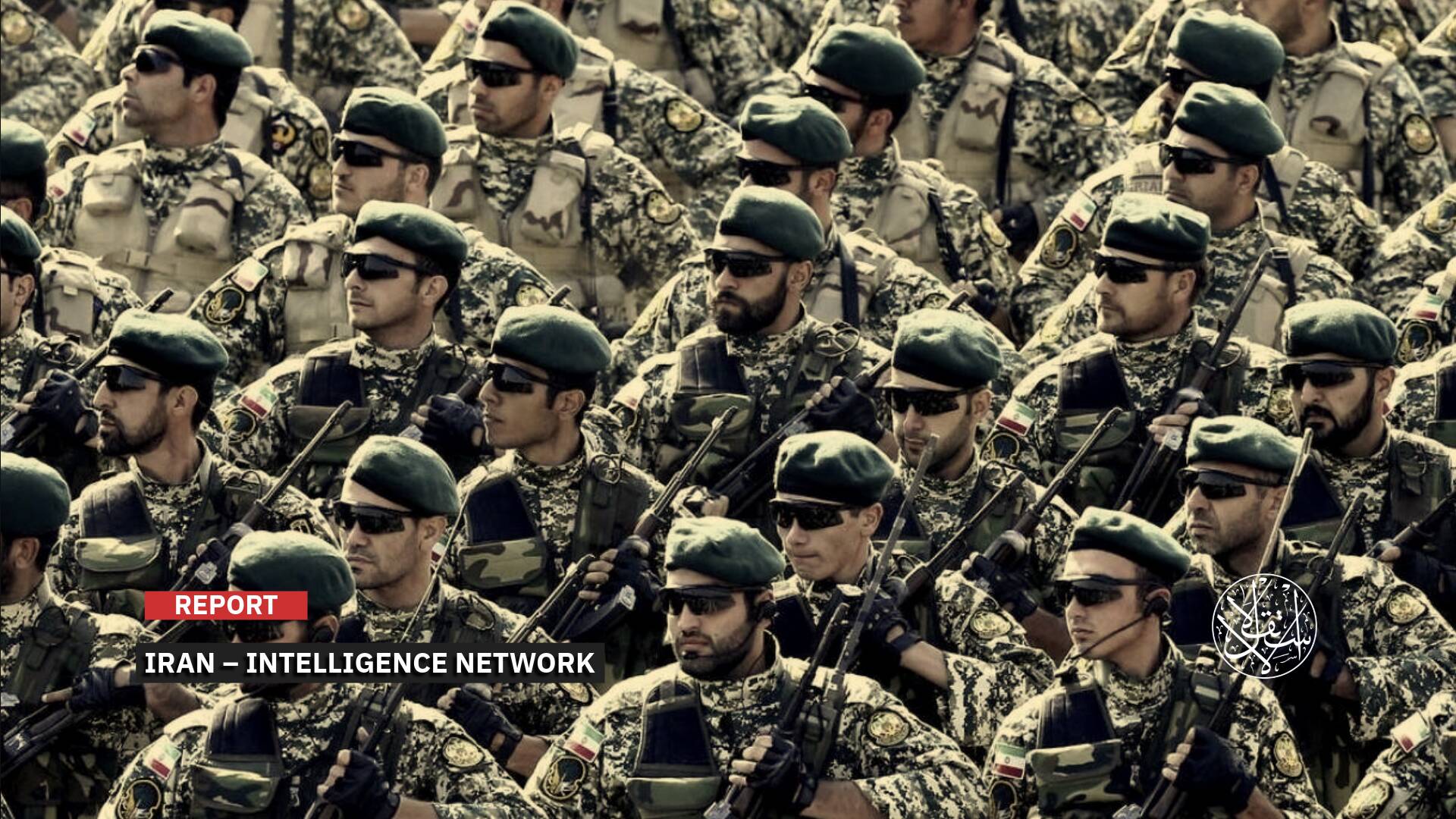
Netanyahu presented this axis as a framework to counterbalance what he termed the “Shia axis”, a reference to Iran and its allies, as well as what he described as the “Sunni Muslim Brotherhood axis”, according to his wording.
The proposal was advanced alongside a visit to “Israel” by India’s Prime Minister, Narendra Modi, and amid efforts by “Tel Aviv” to deepen ties with a number of countries expected to fall within this geographic and political arc, including Ethiopia, Greece, Cyprus and the United Arab Emirates.
The use of the biblical term reflects an attempt to lend historical and symbolic weight to a geopolitical alliance project that extends beyond a bilateral framework, casting it instead as a broad regional vision aimed at reshaping alignments across the eastern Mediterranean, the Horn of Africa and South Asia.

Features and Dimensions of the Axis
On February 22, 2026, “Israel’s” Prime Minister, Benjamin Netanyahu, stirred wide speculation when he announced that “Israel” was working to establish a “six-nation alliance” encircling the Middle East, comprising India, Greece and Cyprus, alongside unnamed Arab, African and Asian states.
He said he would develop the concept during a visit by India’s Prime Minister, Narendra Modi, to “Tel Aviv” on February 24, 2026, a move seen as signaling an emerging map of new regional alignments.
Three days later, speaking at a conference for the leadership of “Israel’s” internal security service, the Shin Bet, on February 25, Netanyahu said “Israel” had a “great interest in creating our own axis of countries that oppose the axes of extremist Islam.”
He added that he was seeking to forge a regional alliance to counter what he called the Iranian-led “Shiite axis” and a Sunni axis he associated with the Muslim Brotherhood, according to “Israel’s” Channel 12.
Netanyahu described the project as an “axis of states that oppose both axes of radical Islam,” saying several countries were already involved, “some are visiting us these days, and some we are visiting,” and adding that he was speaking of a “circle of peace encompassing the Middle East.”
Israeli and international reports indicate that the emerging alliance includes “Israel,” India, Greece, Cyprus and Ethiopia, as well as the United Arab Emirates, within a vision stretching from South Asia to the eastern Mediterranean and the Horn of Africa.
In this context, Yonatan Adiri, a former adviser to “Israel’s” late President Shimon Peres, wrote an article titled “Alliances from India to Kush: Israel leaves fence and returns to form the region,” offering a historical, Talmudic reading that links Netanyahu’s ambition to the borders of the ancient Persian Empire.
Adiri compared that empire’s geographic reach, from the frontiers of India in the east to Nubia, then known as “Kush,” in southern Egypt, with the axis Netanyahu is seeking to build under the slogan “from India to Kush.”
He argued that “Israel’s” new strategy repositions the country at the heart of a network of alliances structured around four central pillars, India to the east, Ethiopia to the south, Azerbaijan to the north, and Greece and Cyprus to the west.
Adiri viewed the vision as unfolding in the context of efforts to counter Turkiye’s expanding footprint, as Ankara has bolstered its military and economic presence in Libya and Somalia and, in the Israeli reading, seeks to complete a triangle of influence through Syria.
He also said Modi’s visit to Ethiopia in December 2025, followed by his trip to “Israel,” injected momentum into Indo-Israeli ties and helped advance the idea of an axis stretching from India to the Nile Valley, aimed at curbing Turkish expansion and constructing a new geopolitical balance.
In the same vein, the U.S. Ambassador to “Israel,” Mike Huckabee, said “Israel” was fighting a “war on seven fronts,” encompassing actors in Egypt, Jordan, Lebanon, Syria, Yemen, Iran and the Gaza Strip.
In an interview on The Tucker Carlson Show, hosted by Tucker Carlson, he clarified that in some cases the reference was not to states themselves but to actors within them, pointing in particular to the Muslim Brotherhood in Egypt and Jordan, alongside arenas including Lebanon and Syria.
Between the biblical rhetoric invoking “from Hodu to Kush” and the accelerating diplomatic activity, “Israel” appears to be seeking to recast its network of alliances on new geopolitical and security foundations, where historical imagery intersects with calculations of regional balance.

The Story of ‘Hodu’ and ‘Kush’
“Hodu” in biblical literature is understood to refer to India, or the distant eastern territories regarded as lying on the fringes of the ancient Persian Empire.
“Kush,” by contrast, denotes the kingdom that flourished in Nubia in northern Sudan along the Nile Valley, reaching its zenith around 750 B.C. before declining by about A.D. 300.
Accordingly, the expanse evoked by the phrase “from India to Kush,” invoked by Benjamin Netanyahu, symbolizes a vast geographic sweep beginning in the far east, India, and extending deep into Africa south of Egypt.
According to a report published by the website Din Online on March 14, 2025, the eastern region stretching from present-day India to the borders of China was referred to in the Torah as “Hodu.”
In contrast, “Kush” was used to describe a broad expanse of Africa, excluding its northern regions, which were subject to other civilizations.
This interpretation draws on a Talmudic explanation stating that “Egypt equals one-sixth the size of Kush,” suggesting that Ancient Egypt represented only a limited portion of the territory known as “Kush,” which, under that reading, extended across much of Africa.
Studies published on the same site further argue that the Arabian Peninsula also fell within the broader conceptual frame of “Kush,” and that “Hodu” and “Kush” were adjacent lands under the sovereignty of the Persian emperor Ahasuerus, whose rule, according to the religious narrative, stretched “from Hodu to Kush,” across 127 provinces.
The expression “from India to Kush” appears in the Book of Esther, which recounts the story of the Persian king Ahasuerus and his wife, Queen Esther.
The narrative relates that Esther, who concealed her Jewish identity, thwarted a plot by the king’s minister Haman to annihilate the Jews after he became enraged at Mordecai for refusing to bow to him.
According to the religious narrative, Esther exposed the plot, prompting the king’s fury and his order to execute Haman, allowing the Jews to escape annihilation.
In Jewish religious consciousness, the story has come to symbolize collective deliverance from an existential threat, lending its invocation in political discourse a resonance that extends beyond the historical frame.
During his visit to “Israel,” coinciding with Netanyahu’s remarks, India’s Prime Minister, Narendra Modi, said there was a civilizational link between Jews and Hindus that stretches through the Talmud, describing the Jewish community in India as an embodiment of that historic relationship.
Since the outbreak of the Gaza war, Netanyahu and his government have intensified their use of biblical terminology in official rhetoric. In the early days of the war, he invoked what is known as the “Prophecy of Isaiah,” and referred to “Amalek,” the traditional biblical enemy of the Israelites, in an effort to rally troops.
The website Ultra Palestine reported on March 31, 2022, that of roughly 250 names assigned by the Israeli military to operations or weapons developed since its founding, nearly a third were drawn from biblical sources, while the remaining designations blended religious symbols with historical references such as the Exodus from Egypt.
Haaretz has argued that deploying such religious vocabulary in public discourse casts the conflict as something beyond a political or security dispute, presenting it instead as a confrontation with existential or even cosmic dimensions, a framing that can reinforce internal cohesion and broaden the scope for justifying the use of force.
The rhetoric is also seen as a means of appealing to external allies, particularly evangelical circles in the United States, as well as of consolidating the domestic front by portraying opponents as weak or as departing from a “historic consensus.”
Between its ancient religious connotations and its contemporary political deployment, the phrase “from Hodu to Kush” remains central to understanding the symbolic dimension Netanyahu seeks to attach to his regional project, where geography merges with history and faith intersects with geopolitical alliances.
What is India’s role?
The visit of India’s Prime Minister, Narendra Modi, to “Israel” on February 25, 2026, came hours after remarks by “Israel’s” Prime Minister, Benjamin Netanyahu, about efforts to build what he described as a “special axis” comprising countries that oppose what he termed “extremist Islam,” a sequence seen as underscoring the accelerating strategic convergence between the two sides.
The newspaper Yedioth Ahronoth highlighted the significance of the visit in advancing what Israeli analysts describe as a new regional framework centered on establishing an economic corridor linking India to Europe via the Middle East, in response to what some in “Israel” view as expanding Turkish influence in the region.
In that context, Avner Golov, deputy head of the organization MIND Israel and a former official at Israel’s National Security Council, said cooperation with India reflects reciprocal support during military conflicts, pointing to political backing exchanged during confrontations faced by both countries in recent years.
Israeli analysts have also linked the rapprochement with India to broader regional shifts, including strengthened ties among Saudi Arabia, Turkiye and Pakistan, arguing that the objective is to consolidate what they describe as a “moderate axis” in the face of rising regional influence by rival powers.
Oshrit Birvadker, an Israeli affairs analyst for Channel 12, said the alliance with India has become a central pillar of Israeli strategy since the events of October 7, 2023, adding that Modi’s current visit amounts to an implicit declaration of the birth of a new strategic axis.
Yonatan Adiri, a former adviser to “Israel’s” late President Shimon Peres, went so far as to describe Modi as “the key to determining Israel’s future in the region,” citing a geopolitical vision in which “Israel’s” strategic space extends, from an Indian perspective, from New Delhi eastward to “Israel” and the Horn of Africa to the west, a concept he referred to as an “extended security space.”
Some Israeli analyses have pointed to a model dubbed the “diamond architecture,” in which India forms the eastern pillar, Azerbaijan the northern pillar, Ethiopia the southern pillar, and Greece and Cyprus the western pillar.
On the military front, ties between the two countries have included defense deals estimated at about $10 billion, encompassing missile systems, drones and artificial intelligence technologies, strengthening cooperation in advanced security fields, according to the newspaper The Jerusalem Post.
The visit, however, has drawn domestic criticism in India, particularly from leftist currents and political opposition groups.
Some voices accused Modi’s government of aligning with “Israel” in the Gaza war, with politicians from the Indian National Congress arguing that official rhetoric indirectly justified the continuation of Israeli military operations in the enclave.
Academic and civil society circles in India have also criticized the rapprochement, contending that hosting a state accused of serious violations against Palestinians risks damaging India’s international image, despite student and political protests within the country.
A joint statement issued by the group Indians in Solidarity with Palestine and the Indian branch of the Boycott, Divestment and Sanctions movement accused Modi’s government of close cooperation with “Israel,” arguing that such alignment provides political cover for the conflict and undermines India’s democratic image in international forums.
Sources
- Modi Visits Israel as Both Seek 'Axis Against Extremist Islam' Amid Tensions With Turkey
- From Hodu to Kush: Achashverosh’s Kingdom
- Modi's Israel Visit to Test India's Priorities in the Middle East
- Israel-India Defense Boost: Major Deals Mark a Turning Point in Strategic Relations – Explainer
- The Alliance With India Has Become a Necessity for the State of Israel [Arabic]
- Mumbai – Haifa: How the Modi–Netanyahu Alliance Is Changing the Middle East [Arabic]