Six Presidents in Six Years: Why Algeria's Intelligence Services Keep Changing Leadership
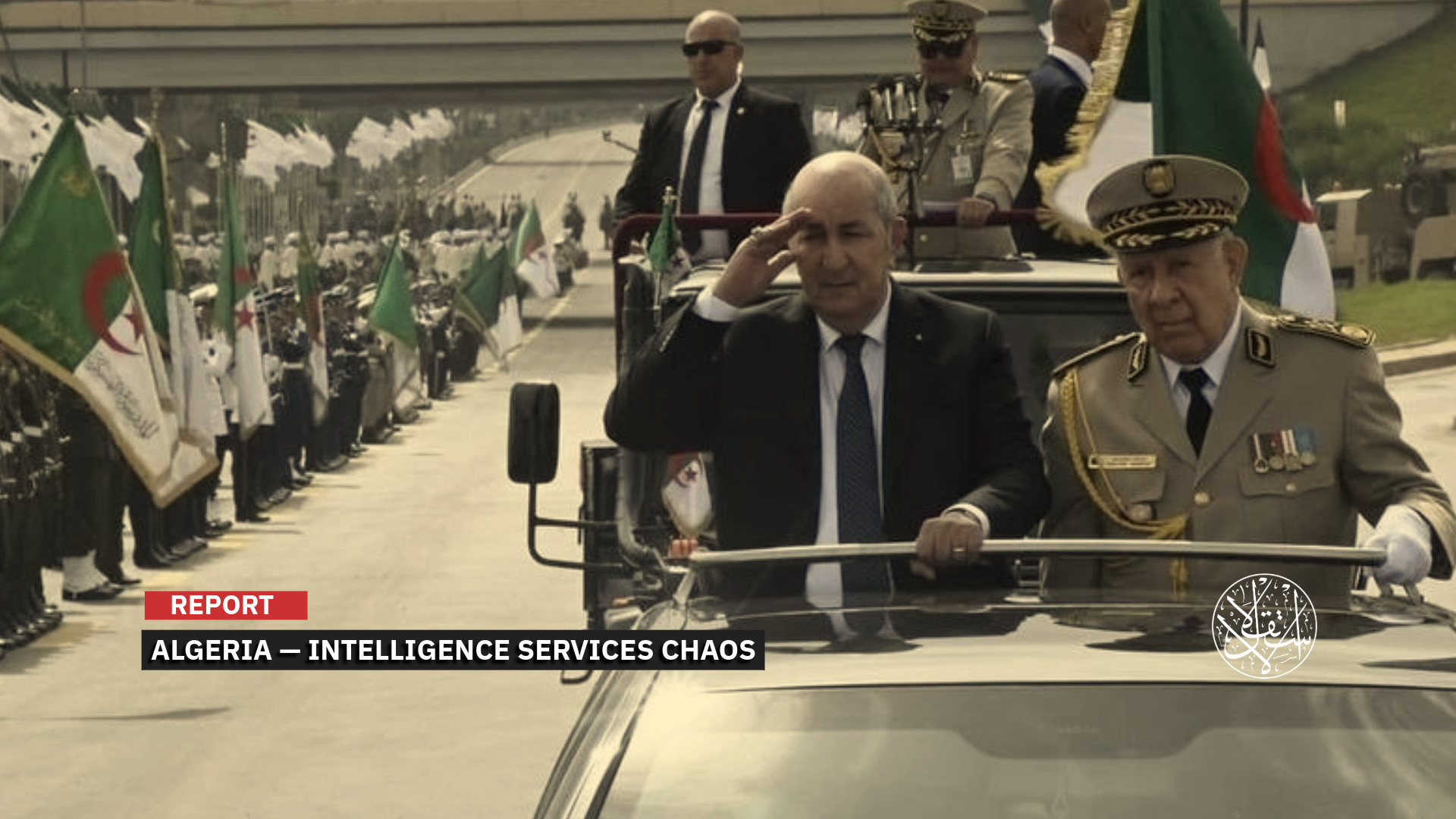
Algeria’s intelligence apparatus has been experiencing instability since 2019.
The Algerian intelligence institution has been experiencing instability in recent years, with six different heads appointed in six years, raising questions about the reasons behind this rapid turnover and its internal drivers.
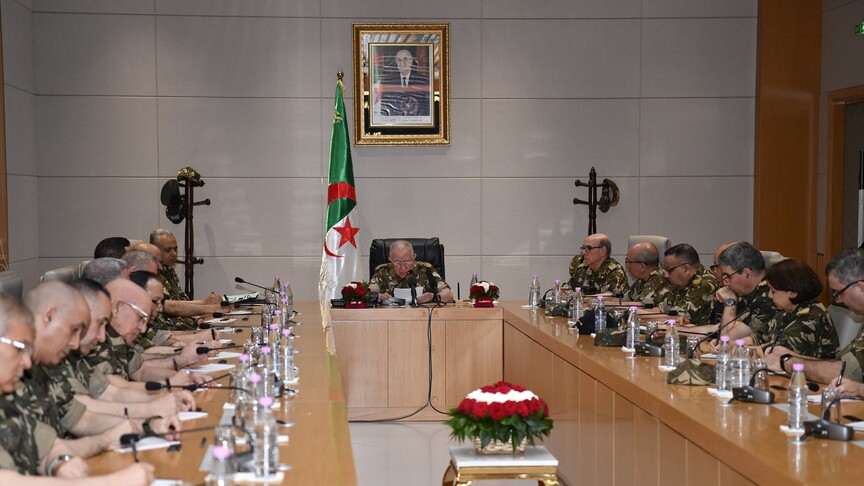
Algeria’s army chief of staff, Lieutenant General Said Chengriha, oversaw on Thursday, May 21, 2026, the installation of Major General Mounir Zahi as Director General of Internal Security within the domestic intelligence service, replacing Major General Abdelkader Ouarabi, whose mandate ended after just one year in office.
A statement from the Algerian Ministry of National Defence said Chengriha issued a series of instructions to the intelligence apparatus’s personnel, calling on them to redouble their dedicated efforts in serving the nation and to strictly adhere to the execution of their assigned missions with a spirit of discipline and perseverance.
The General Directorate of Internal Security is responsible for domestic intelligence operations in Algeria, including security and political monitoring, media surveillance, and cyber warfare-related files.
The intelligence apparatus was established as an independent structure as part of the restructuring of Algerian intelligence services following the dismissal of its former head, General Mohamed Mediene, in September 2015, when it was divided into three main directorates: internal security, external security, and military security.
In early 2016, then-President Abdelaziz Bouteflika transferred the intelligence services from military oversight to the presidency, before then-army chief General Ahmed Gaïd Salah reversed the operational chain of command back to the army leadership in April 2019, following the outbreak of the Hirak protest movement and Bouteflika’s removal.
Since then, the internal security directorate has seen a succession of leaders, including Major General Wassini Bouazza (April 2019-April 2020), Major General Abdelghani Rachedi (April 2020-July 2022), Major General Djamel Kehal Medjdoub (July 2022-June 2024), Major General Abdelkader Haddad (summer 2024-May 2025), Major General Abdelkader Ouarabi (May 2025-May 2026), and most recently, Major General Mounir Zahi, appointed in May 2026.
Prior to his appointment as head of internal security, Zahi held roles linked to dialogue with the United States, having co-chaired the 2023 Joint Military Dialogue meeting in Washington alongside Jennifer Zakriski, the acting U.S. official for African affairs at the Department of Defense.

Algerian Reading
At the domestic level, the rapid changes within Algeria’s intelligence apparatus have generated a range of interpretations. In this regard, Algeria Times reported on May 25, 2026, that the apparatus is going through one of its most sensitive phases, suggesting that the dismissal of Ouarabi came as a surprise given its timing and political and security context.
The outlet stressed that the removal of Major General Abdelkader Ouarabi, known as “General Hassan,” raises multiple questions about the nature of the ongoing shifts within one of Algeria’s most sensitive state institutions, particularly amid the absence of any official announcement through conventional channels.
According to the same source, this ambiguity has opened the door to various interpretations regarding the background of the decision and whether it is linked to an internal administrative reshuffle or to a deeper move tied to the rebalancing of influence within the military establishment.
The intelligence service has been experiencing instability since 2019, with several officials rotating through its leadership in relatively short periods, reflecting a fluctuating dynamic within the structure of Algerian intelligence.
This situation raises questions about the internal balances governing the apparatus, which is responsible for highly sensitive portfolios, including counterintelligence, monitoring internal security threats, and tracking cross-border networks.
The report further suggested that the sequence of leadership changes points to a recurring pattern of continuous recalibration of decision-making and influence centers as part of a careful management of power balances within the security establishment, particularly amid rising regional challenges linked to the Sahel and increasing security risks along the country’s southern borders.
These shifts appear to be part of an internal restructuring within the military hierarchy led by Lieutenant General Said Chengriha, as the process of reshaping power centers within the Algerian army has accelerated since the death of General Ahmed Gaid Salah, reflecting a clear effort to redistribute influence within sovereign institutions and ensure renewed loyalties across key security and military decision-making nodes.
The outlet also pointed to interpretations linking these developments to heightened security alert levels following explosions in the Blida province in recent weeks, which coincided with the official visit of Pope Leo XIV to Algeria, an event that drew significant international attention despite the domestic media blackout surrounding its coverage.
A Man in Focus
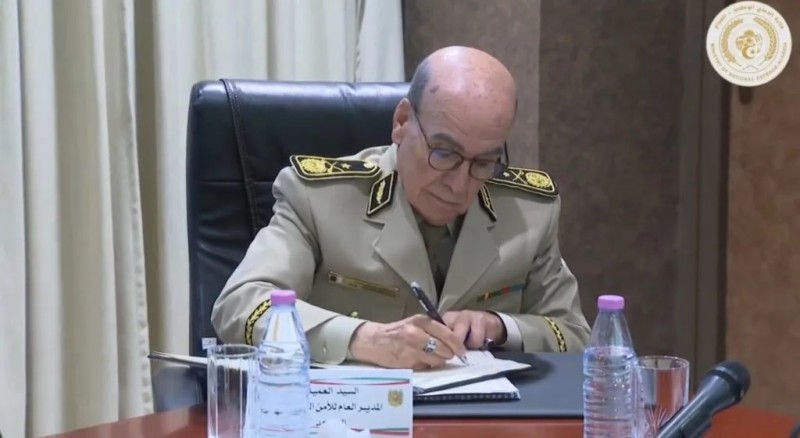
In a post dated May 22, 2026, Le Point reported that the dismissed intelligence chief had received the Army Medal, the country’s highest military decoration, in recognition of his role in foiling several plots.
The outlet noted that he has more than 51 years of experience in counterterrorism and previously headed the Counterterrorism Coordination Unit (SCORET).
However, it added that in 2015, amid a power struggle between intelligence services and the army, he was arrested and convicted by the International Criminal Court on charges related to “the destruction of critical documentary evidence” and “insubordination.”
He was first released in August 2020, before being fully acquitted in 2021.
The report said that during his tenure, the General Directorate of Intelligence and Security (DGSI) underwent restructuring in October 2025, when it was transformed into a central police directorate—seen as an indication of a repositioning of the apparatus within the security architecture and a return of its influence to the core of political decision-making circles.
Under the headline “What do we know about the circumstances of the dismissal of General Hassan, head of Algerian internal security?” Jeune Afrique said the head of the DGSI was removed after less than a year in office (342 days).
The magazine noted that General Hassan, appointed on May 25, 2025, to lead an institution that has experienced repeated turbulence over the past six years, was dismissed abruptly and without explanation, following a pattern seen with several of his predecessors.
It also noted that the general is considered a veteran in counterterrorism, known for his competence and experience, and was the sixth person to lead the apparatus since President Abdelmadjid Tebboune came to power.
Jeune Afrique explained that to understand the depth of the chronic instability affecting one of the country’s most important security institutions, it is enough to recall that General Mohamed Mediene, known as “Toufik,” remained at the head of the intelligence service for 25 years, between 1990 and 2015.
The magazine added that there was nothing indicating the imminent dismissal of General Hassan, as he was present on May 15 at a meeting convened by President Tebboune, attended by seven other officials, to discuss final preparations for the legislative elections scheduled for July 2, 2026.
It also quoted close associates as saying he was in his office at the headquarters of the General Directorate of Internal Security in the heights of the capital Algiers on Monday, May 18, when he was informed of his removal.
Jeune Afrique then questioned whether the dismissal resulted from disagreements with the presidency and its inner circle—known for its sensitivity toward internal security services—or whether it was linked to his health condition, suggesting that this factor alone does not fully explain the sudden decision.
The magazine noted that the General Directorate of Internal Security holds broad powers, including investigating corruption, illicit enrichment, suspicious behavior, and ties with foreign entities, including cases involving figures close to the presidential circle—raising questions about whether the dismissed general may have crossed “red lines.”
According to the magazine, some leaks suggest that the former official showed particular interest in files related to suspicious financial activities and the growing influence of a senior government official, which reportedly caused internal discomfort.
Jeune Afrique further stated that Major General Mounir Zahi, who succeeded him and comes from the air force with training in U.S. military academies, is considered part of what are described as “Chengriha’s men.”
Algerian journalist and political analyst Oualid Kebir argued that what is happening reflects, in his view, the growing dominance of Army Chief of Staff Said Chengriha, who treats state institutions as tools for reshaping power balances within the military establishment.
“Algeria is paying the price for this ongoing political and security disarray,” he told Al-Estiklal, pointing to what he described as leaks about a possible dismissal of the head of the external intelligence service as well.
Kebir criticized what he sees as escalating internal power struggles at the top of the Algerian state, arguing that ending this situation would require, in his view, putting an end to personalized governance—whether through change or accountability—warning that its continuation could threaten the cohesion of state institutions.
Sources
- Did the Blida explosions bring down the head of Algeria’s most important intelligence agency? [Arabic]
- What do we know about the circumstances of the dismissal of General Hassan, head of Algerian internal security? [French]
- Why Did “Hassan,” a Leading Figure in Counterterrorism, Leave His Post as Head of Algeria’s DGSI? [French]