The U.S. Sanctions on Lebanon: Pressure on Hezbollah or a Reshaping of the Political Landscape?
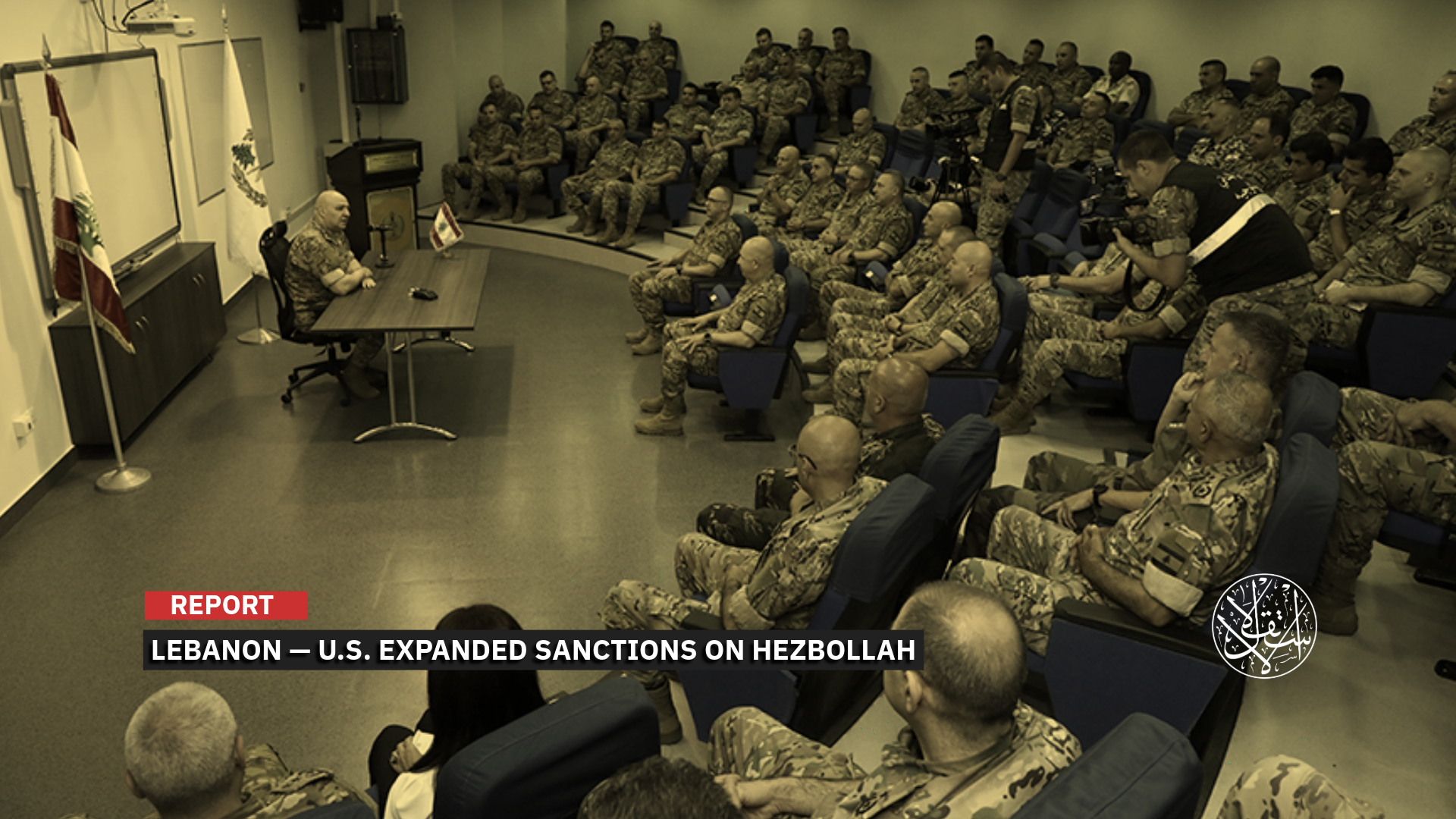
U.S. sanctions have targeted military figures as well as lawmakers affiliated with Lebanon’s Hezbollah and the Amal Movement.
Lebanon has entered a new phase of political and security escalation following the United States’ announcement of sanctions on nine Lebanese figures, including members of parliament, security and military officials, as well as Iran’s ambassador to Beirut.
The U.S. sanctions, imposed on May 21, 2026, were linked to accusations of obstructing what Washington described as the “peace process” and supporting the influence of the Lebanese Hezbollah within Lebanese state institutions.
The move comes at a sensitive moment, amid ongoing tensions along Lebanon’s border with the occupied territories and growing reports of indirect negotiations between Beirut and “Tel Aviv” under U.S. mediation, alongside mounting international pressure to disarm Hezbollah and curb its influence within official institutions.
For the first time, the sanctions have expanded to include officers serving in official security and military institutions, a shift widely seen as a qualitative escalation in Washington’s pressure campaign.
Sanctions are no longer limited to the party’s political and financial leadership, but now also target figures accused by the United States of providing security or intelligence cover for the group.
Messages of the Sanctions
The U.S. sanctions reflect a clear shift in Washington’s approach to the Lebanese file. The United States is no longer limiting itself to targeting the financial and organizational structure of the Lebanese Hezbollah, but is instead sending direct messages to Lebanese state institutions themselves, particularly the security and military apparatus and the political class allied with the group.
The U.S. Department of the Treasury justified the sanctions by stating that the targeted individuals are “deeply embedded within parliament and official security bodies, and work to protect the party’s influence and prevent any process that could lead to its disarmament or strengthen Lebanese state sovereignty.”
Accordingly, the sanctions appear not merely as a financial measure, but as part of a political pressure strategy aimed at reshaping the balance of power inside Lebanon, according to the U.S. statement.
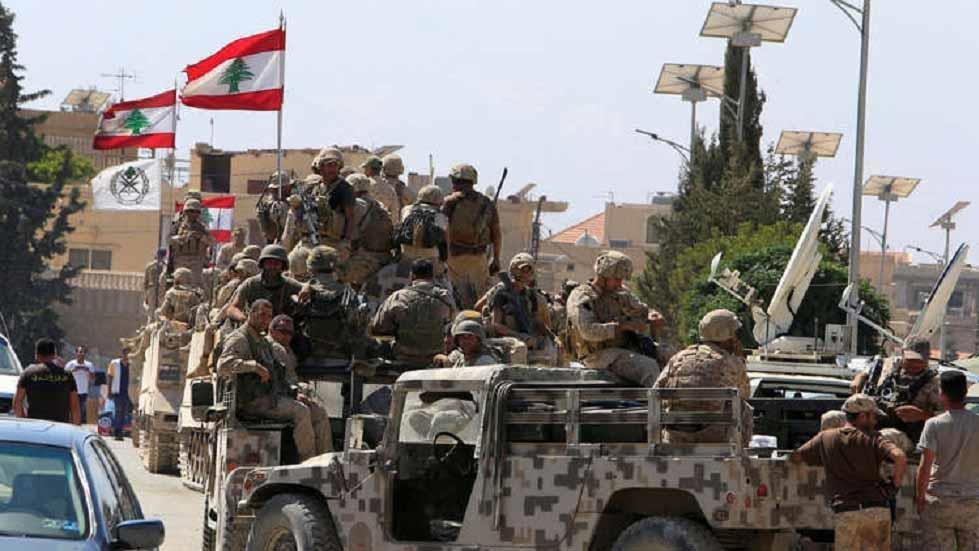
Notably, the sanctions included, for the first time, two Lebanese officers, one from the Military Intelligence Directorate of the Lebanese Armed Forces and another from General Security, accused of exchanging intelligence information with the party during confrontations with “Israel”.
This development carries sensitive implications, as Washington has long treated the Lebanese military institution as a key partner in support programs and security coordination.
The inclusion of figures from the Amal Movement, led by Parliament Speaker Nabih Berri, a main ally of the party, indicates that U.S. messaging is no longer aimed at the group alone, but also at the broader political and security environment supporting it.
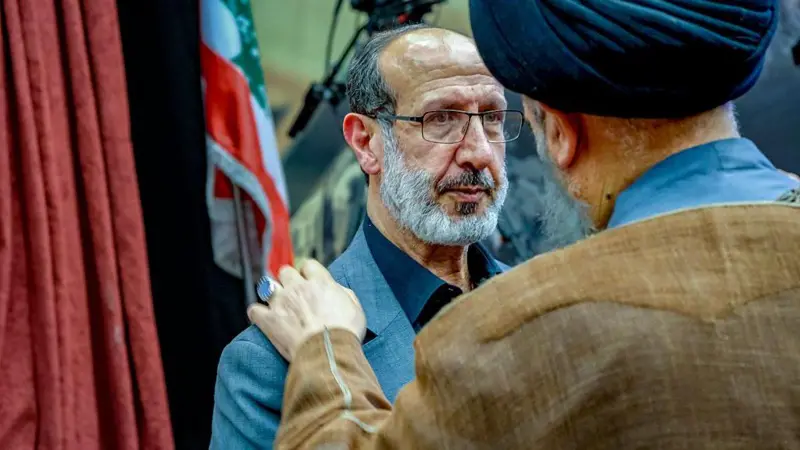
The U.S. sanctions list included three MPs and political figures linked to the Lebanese Hezbollah: Mohammad Fneish, MPs Hassan Fadlallah, Ibrahim al-Moussawi, and Hussein al-Hajj Hassan, in addition to Iran’s ambassador to Lebanon, Mohammad Reza Sheibani.
In an unprecedented step, the sanctions also targeted two Lebanese officers: Brigadier General Khattar Nasser al-Din, head of the National Security Division at General Security, and Colonel Samer Hammada, head of the Dahieh branch in Military Intelligence, on charges of sharing intelligence with Hezbollah.
The U.S. Treasury sanctions also included Ahmad Asaad Baalbaki and Ali Ahmad Safawi, both affiliated with the Amal Movement, whom Washington accused of security and military coordination with the group.
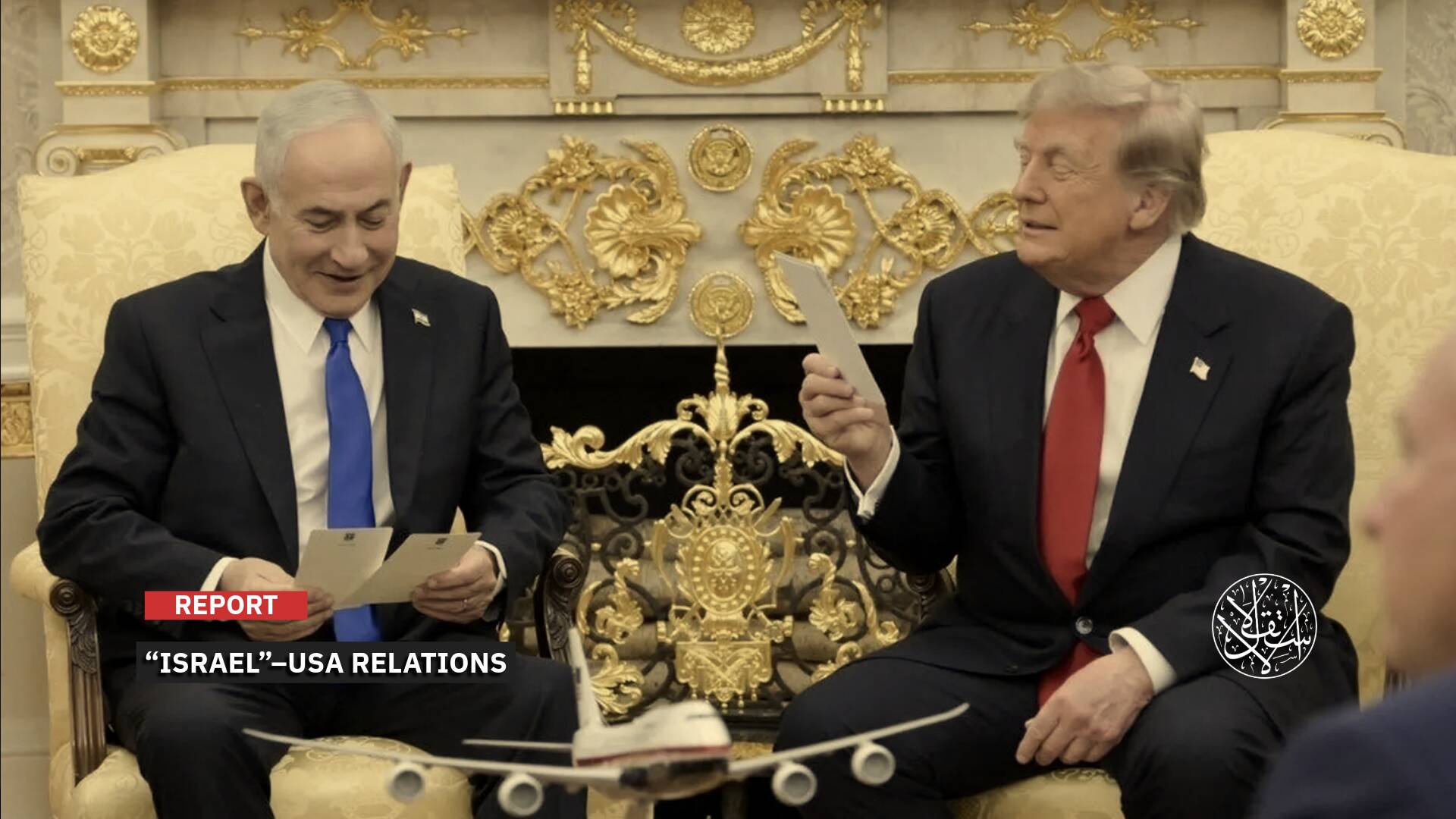
Observers argue that Washington intended to send a direct warning to the Speaker of the Lebanese Parliament, suggesting that a policy of “gray positions” is no longer acceptable to the United States, particularly ahead of upcoming security and military meetings in Washington related to the border situation and indirect negotiations with “Israel”.
From another perspective, the sanctions against the Iranian ambassador in Beirut reflect a U.S. desire to constrain Iran’s political and diplomatic presence in Lebanon and to link any future settlement to reducing direct Iranian influence.
Washington is attempting to use sanctions as a tool to compel the Lebanese state to separate its official institutions from the influence of Hezbollah, sending a message that any cooperation or coordination with the group within state institutions could expose individuals to direct sanctions.
An Attempt to Intimidate
In response, the Lebanese Army stated that the loyalty of its personnel lies “solely with the military institution and the nation,” in an attempt to contain the political and moral repercussions of the sanctions.
The targeting of an intelligence officer within the Military Intelligence Directorate is considered an unusual precedent in the relationship between the Lebanese Army and Washington.
In its statement issued on May 22, the army emphasized that officers and military personnel operate in accordance with official laws and directives. It also noted that the leadership had not been informed in advance of the sanctions through official channels, a remark widely interpreted as an implicit objection to the U.S. handling of the Lebanese military institution.
The army, it appears, is aware of the sensitivity of the current phase and is trying to avoid being portrayed as a party to internal political conflict, especially as it continues to rely heavily on U.S. support in terms of armament and training.
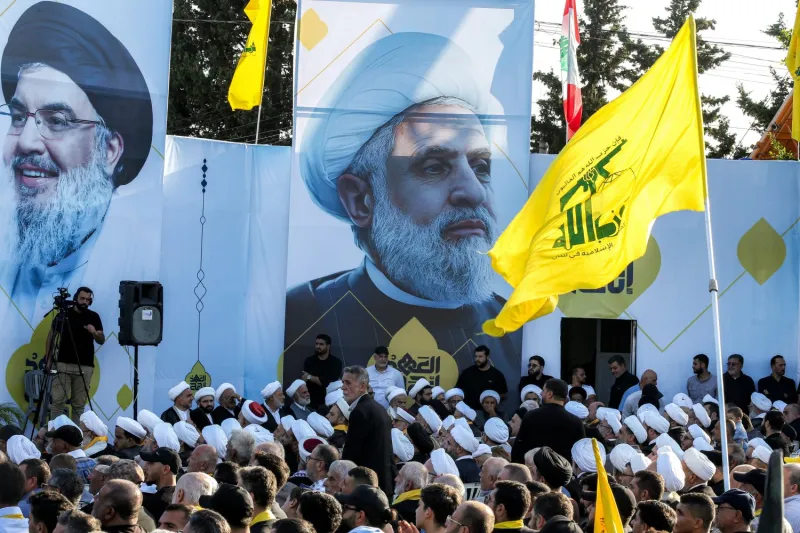
The Lebanese Hezbollah responded to the sanctions as part of what it described as a U.S. “political war” against the “resistance,” according to a statement issued on May 22.
The group argued that the sanctions target the will of Lebanese citizens who reject calls for its disarmament, describing the move as an attempt to intimidate security and military institutions and push the state into submission to what it called “U.S. tutelage.”
The tone of the statement reflected the group’s firm commitment to retaining its weapons and its rejection of any negotiation process that could lead to dismantling its military capabilities, describing the sanctions imposed on its members as a “badge of honor” for those affected.
At the same time, the group sent a clear message to Lebanese authorities, urging them to defend official institutions and not allow the United States to interfere in Lebanon’s sovereign decision-making.
This divergence in responses highlights the depth of Lebanon’s current dilemma: the state is trying to maintain its relationship with Washington and international support, while the group insists on its discourse of resistance and rejection of external pressure.
Against this backdrop, Lebanese state institutions face an increasing challenge in maintaining internal balance amid escalating regional and international pressure, as well as ongoing Israeli military strikes in southern Lebanon.
A New Development
The U.S. sanctions have sparked widespread debate within Lebanese political and media circles, with analysts arguing that the move goes beyond its financial dimension and instead reflects an attempt to reshape Lebanon’s entire political and security landscape.
Lebanese writer Hussein Attieh said in an article published on the website “Janoubia” on May 24 that the sanctions carry “multi-layered messages” at a highly sensitive time, particularly as they preceded an upcoming security and military meeting at the Pentagon.
Attieh argued that the most significant message was directed at Nabih Berri through the targeting of prominent security-linked figures within the Amal Movement, suggesting that Washington no longer accepts a policy of balance between the party and the state.
He also noted that the sanctions on Lebanese officers send a direct message to the leadership of the army and security institutions to distance themselves from any coordination with the Lebanese Hezbollah, especially amid discussions of sensitive security negotiations related to the southern border.
Political analyst Bechara Khairallah, meanwhile, said the sanctions are part of a U.S. approach based on imposing “peace by force,” linking them to a negotiation track that Washington is seeking to push Lebanon toward.
In remarks cited by “Hona Lebanon” on May 24, Khairallah stressed that the central message is that any party obstructing this process will face direct measures, whether political or security-related.
He added that Lebanon is currently engaged in a negotiation process with “Israel”, stating that “no one should be allowed to obstruct this process, especially from within official institutions,” emphasizing that security and military agencies “must operate under the authority of the state and Cabinet decisions.”
According to Khairallah, “it is unacceptable for officers to be suspected of cooperating with the Lebanese Hezbollah, facilitating its activities, or transferring information to it,” clarifying that he was speaking in general terms rather than referring to specific individuals.
He further argued that the strongest message in the sanctions was directed specifically at Parliament Speaker Nabih Berri, conveying that “any attempt to obstruct the negotiation process will be met with direct U.S. action.”
Khairallah added that sanctions targeting officers carry greater implications than those targeting MPs, noting that the party is already classified as a terrorist organization, and suggested that this step could accelerate negotiations in the coming period.
In the same context, Sami Nader, head of the “Levant Institute for Strategic Affairs,” said the sanctions target what he described as the “deep state” within Lebanese institutions.
He noted that, from Washington’s perspective, the issue is no longer limited to political decisions but to the failure to implement those decisions within administrative and security bodies.
According to Nader, the United States is signaling through the sanctions that it believes the Lebanese government has at certain stages taken commitments related to security arrangements and the disarmament of the Lebanese Hezbollah.
The Lebanese Army has also reportedly developed plans and implementation mechanisms, but these decisions, from the U.S. perspective, face internal obstruction within parts of the state, allowing the group’s influence within official institutions to persist.