Amid Israeli Criticism: How Andy Burnham Assumed Leadership of Britain’s Ruling Labour Party
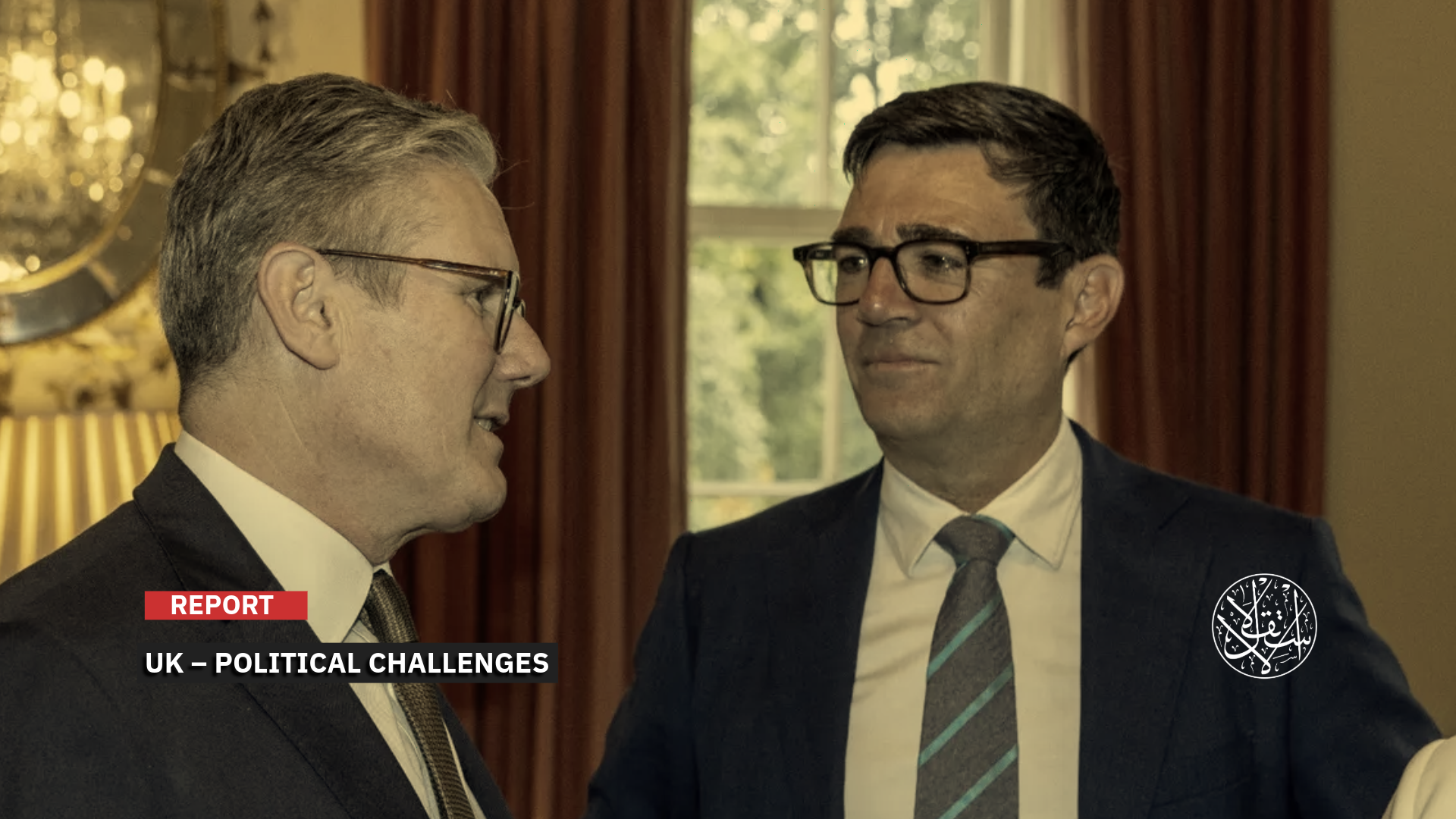
“Burnham called for sanctions and restrictions on trade with Israeli settlements in the West Bank.”
Andy Burnham is poised to succeed Keir Starmer as British Prime Minister next Monday; mere weeks after returning to the House of Commons, the doors to 10 Downing Street have opened for the 56-year-old.
Burnham has pledged to form a government representing the various factions of the Labour Party, prioritizing the cost of living, economic growth, and the devolution of powers from London to the regions.
According to the BBC, Burnham will become Britain’s 59th Prime Minister and the first politician since Harold Wilson—in the 1960s and 1970s—to place his Northern identity at the heart of his political agenda.
Burnham has yet to provide full details on how he intends to fund his program, particularly given his promises to expand public investment while maintaining fiscal discipline and avoiding tax hikes on working people.
Consequently, he will face issues that lie outside his experience in local government—ranging from defense spending, immigration, and relations with the European Union to dealing with the administration of US President Donald Trump, the war in Ukraine, and tensions in the Middle East.
It is worth noting that the Labour Party had seen its popularity wane in favor of the Green Party and the Reform Party—which made significant gains in local elections earlier this year—thereby increasing pressure on Prime Minister Keir Starmer to step aside for a politician capable of countering the rise of the Reform Party.
"Israel" is concerned about Burnham’s election to the post due to his past statements regarding the country; he has hinted at an intention to adopt a much tougher stance than Starmer, whose government recognized the State of Palestine.
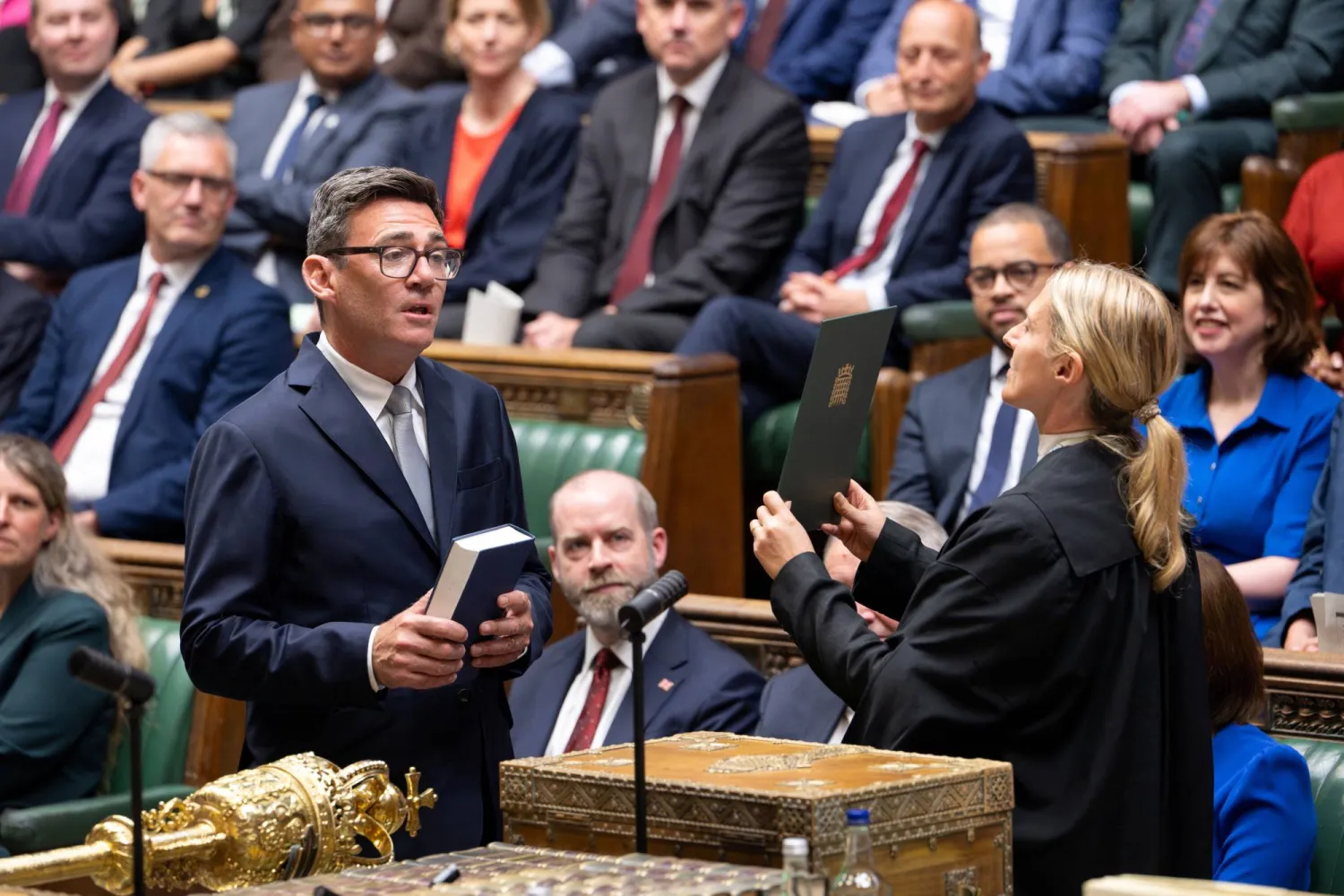
King of the North
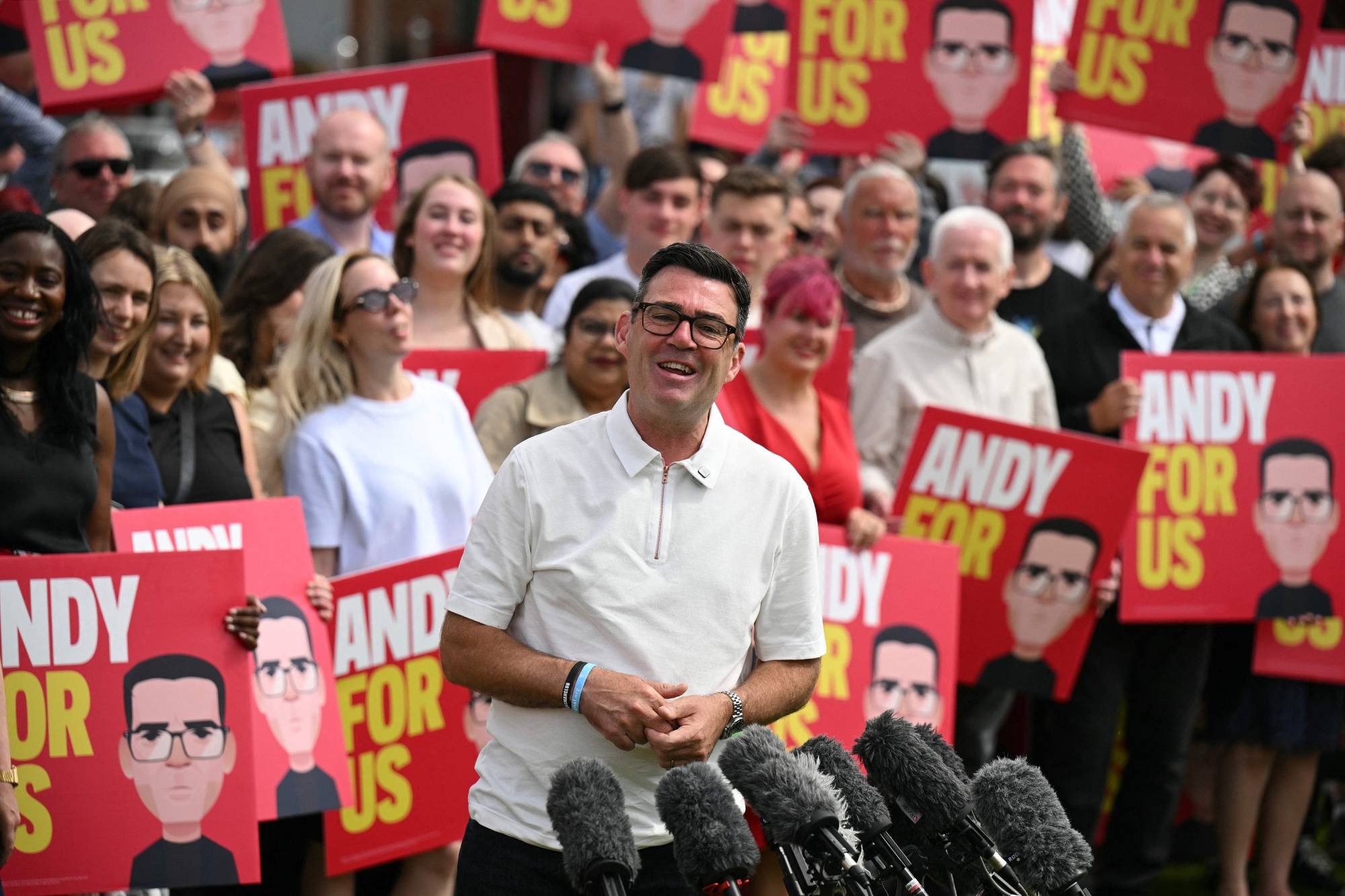
Andy Burnham pledged to chart a new course for Britain upon being confirmed as leader of the ruling Labour Party—and the next Prime Minister—during a special party conference in London.
Burnham secured the backing of 379 out of 403 Labour MPs, while no rival managed to gather the 81 nominations required to challenge him.
Burnham is set to succeed Keir Starmer, who resigned as Prime Minister on June 22 following months of political turmoil, scandals, and setbacks.
The center-left Labour Party has held an overwhelming parliamentary majority since the 2024 elections, meaning its leader automatically assumes the role of head of government without the need for a new general election.
It has been only four weeks since Burnham—the former Mayor of Manchester—made a surprise return to the House of Commons after a nine-year absence, driven by his ambition to succeed Starmer.
Burnham will become Britain's seventh Prime Minister in a decade. Labour MPs are betting that he offers the party its best chance of curbing the rise of the anti-immigration Reform UK party, led by Nigel Farage—a party that opinion polls suggest could win the next general election, expected in 2029.
Burnham earned the nickname 'King of the North' after winning three consecutive terms as Mayor of Greater Manchester.
Burnham belongs to the moderate left faction of the Labour Party and advocates for strengthening state authority over public services.
He is set to take charge of the British government after meeting King Charles III on the morning of July 20.
Burnham’s Agenda
Labour MPs hope he will be more capable than Starmer of connecting with the British public and more willing to adopt a radical approach to reforming crumbling public services.
Observers believe Burnham will face the same daunting challenges that confronted Starmer: a sluggish economy, high government borrowing costs, and the influx of irregular migrants via small boats—a trend that has bolstered support for the Reform Party.
His tenure also faces potential disruption from volatile energy prices driven by the US-Iran conflict and the unpredictability of US President Donald Trump’s stance.
Burnham has indicated that he will not deviate significantly from the foreign policy pursued by Starmer—which is generally highly regarded—maintaining close ties with NATO members and other allies.
He wrote in The Times this month: "Our relationship with the United States will remain vital as our most important defense and security ally, and Britain’s support for Ukraine will not waver."
Burnham will also need to find other funding sources to plug a £4.7 billion ($6.3 billion) gap over four years in the UK’s defense investment plan.
Starmer unveiled the plan last month—after repeatedly delaying its announcement—but the task of implementing it will fall to Burnham.
Burnham is also likely to face pressure—both domestically and from allies, including the United States—to further increase defense spending and meet the NATO target of allocating 3.5 percent of GDP to defense by 2035.
He has previously stated that he would take responsibility for funding the defense plan and would not compromise on the matter.
Burnham’s key idea involves devolving more powers to other cities in an effort to revitalize the British economy, including the creation of an office dubbed "10 Downing Street in the North."
He added: "Making the economy work for citizens across the UK requires a new path, different from the one Britain has followed over the past 40 years."
In a speech on July 17, Burnham pledged to chart a new political course that clearly reflects the Labour Party’s identity, distancing it from the approaches of parties on the political fringes.
He vowed to reform underfunded sectors—such as social care services—an area he had attempted to overhaul radically during his tenure as Health Secretary in 2009.
He also promised to boost housing construction in an effort to tackle the homelessness crisis, though he faced criticism for sidestepping tough questions from the British media.
Burnham announced plans to support small businesses and revitalize the industrial sector, alongside strengthening state control over the water, transport, and energy sectors.
The Financial Times reported that he might ease restrictions on North Sea oil and gas exploration to help lower energy bills.
His choice of Chancellor—yet to be announced—may well define the contours of his economic agenda, determining whether it shifts to the left or adopts a more centrist approach.
Significant Steps
Public pressure has mounted in Britain recently, demanding a review of official policy regarding the Palestinian cause following months of criticism directed at Keir Starmer’s Labour government.
Burnham appears attuned to this public sentiment—mindful of how his predecessor’s popularity suffered due to his stance on the war—as he has acknowledged errors in the party's handling of the early stages of the Israeli military campaign in the Gaza Strip.
He recently apologized for the ruling Labour Party's initial stance on the Israeli war in the Gaza Strip.
He described the suffering of Gaza's residents as a stain on the collective conscience, pointing to the continued killing of Palestinian civilians, the failure to allow sufficient humanitarian aid, and the Israeli military's ongoing expansion of its areas of control.
He also criticized the sharp rise in settler violence in the West Bank and East Jerusalem, as well as the continued expansion of illegal settlements that leads to the displacement of Palestinian communities.
He pledged to adopt a tougher policy toward the Israeli government—a move described as a significant shift in the Labour Party's approach to the Middle East issue.
In an interview with The Guardian, he stated that he would exert greater pressure on the Israeli government by imposing additional sanctions on individuals and entities and by considering a ban on trade in goods from illegal Israeli settlements.
Burnham emphasized that Britain needs to do more to pressure Israel, saying: "Yes, we have taken some important steps, but let’s be frank: the UK was too slow to call for a ceasefire, and we must now strengthen our approach."
However, he stopped short of describing the events in Gaza as genocide—a demand championed by figures on the party's left wing—stating that while there is growing evidence of potential war crimes, it is up to international courts, not politicians, to make that determination.
He added: "I was deeply shocked by what I saw and read regarding the destruction in Gaza. There is mounting evidence that war crimes may have been committed. There must be accountability for the scale of suffering endured by the people of Gaza, though ultimately, this is a matter for international courts."
Burnham noted that the government had previously taken significant steps, including formally recognizing the State of Palestine, imposing sanctions on Israeli ministers and settlers involved in violence, and restricting arms export licenses to prevent the Israeli military from using British-made bombs or munitions in the Palestinian territories.
For her part, Labour MP Apsana Begum argued that the party’s policies remain flawed and expressed skepticism that Burnham would alter his predecessors' stance toward "Israel".
In contrast, Burnham sought to reassure the UK’s Jewish community, asserting that his tougher stance on the Israeli government does not conflict with his firm opposition to antisemitism; he also reiterated his condemnation of the October 7, 2023, attack by Hamas.
The Board of Deputies of British Jews and the Jewish Leadership Council—two of the UK’s leading Jewish organizations—responded with sharp criticism of Burnham’s remarks. In a joint statement, they confirmed having directly conveyed their grave concerns regarding his recent positions to his team.
The statement warned that some political criticism can cross the line into hostility toward Jews and Israelis. Prominent Labour figures also suggested that Burnham’s statements could damage British-Israeli relations.
Alex Hearn, co-director of Labour Against Antisemitism (LAAS), expressed concern that Burnham chose a foreign policy issue as the focus of his initial political stances, particularly at a time when the country is grappling with escalating domestic challenges in vital sectors such as healthcare and the justice system.
A number of Labour MPs also criticized his pledge to toughen British policy toward Benjamin Netanyahu’s government.
Burnham is expected to face pressure from the party's left wing to ban all arms shipments to Israel—which currently include spare parts for F-35 fighter jets—and to adopt a different approach regarding the ban on the group Palestine Action.

Political Beginnings
Andrew Murray Burnham was born on January 7, 1970, in Aintree, a suburb of Liverpool. However, he grew up in the quiet village of Culcheth in Cheshire—located between Liverpool and Manchester—in a household deeply committed to the Labour Party.
He studied English Literature at the prestigious University of Cambridge; after graduating, he moved to London and began his career in specialized journalism.
His political career took off when he worked as a researcher for the late Labour MP Tessa Jowell, who later became a prominent minister in the governments of Tony Blair and Gordon Brown.
He subsequently served as an advisor to Culture Secretary Chris Smith, placing him at the heart of the New Labour project led by Blair in the 1990s. In 2001, he was elected MP for the constituency of Leigh in Greater Manchester.
He rose rapidly through the parliamentary ranks, holding junior ministerial posts at the Home Office and the Department of Health during the Blair era.
When Gordon Brown became Prime Minister in 2007, Burnham was promoted to the Cabinet, serving first as Chief Secretary to the Treasury, then as Secretary of State for Culture, Media and Sport, and finally as Health Secretary between 2009 and 2010.
As a Member of Parliament, he remained the MP for Leigh from 2001 to 2017, before eventually returning to the House of Commons as the MP for Makerfield on June 18.
After the Labour Party lost the 2010 general election and Gordon Brown resigned, Burnham made his first bid for the party leadership, finishing fourth out of five candidates.
He spent the following years in the Shadow Cabinet—focusing particularly on the health portfolio—and worked to strengthen ties between party members and trade unions.
In 2015, he tried his luck again, this time positioning himself as a centrist and business-friendly candidate. However, his campaign could not withstand the wave of widespread support for the left-wing figure Jeremy Corbyn.
Consequently, Burnham finished a distant second, but he agreed to serve under Corbyn and assumed the role of Shadow Home Secretary.
He refused to join the wave of resignations aimed at ousting Corbyn in 2016, following the Brexit referendum.
Sources
- Burnham promises huge change - but leaves questions about plan to deliver it
- Burnham Becomes Labour Leader Pledging to Deliver Hope to Britain
- Thousands rally in London in support of Gaza, demand new PM take action
- Andy Burnham
- Andy Burnham apologises for Labour’s stance on Gaza and says it ‘didn’t get it right’
- Andy Burnham poised to become UK’s next prime minister after winning Labour vote