Alternative Arena: Is Trump Trying To Compensate for His Failure in Iran by Invading Cuba?
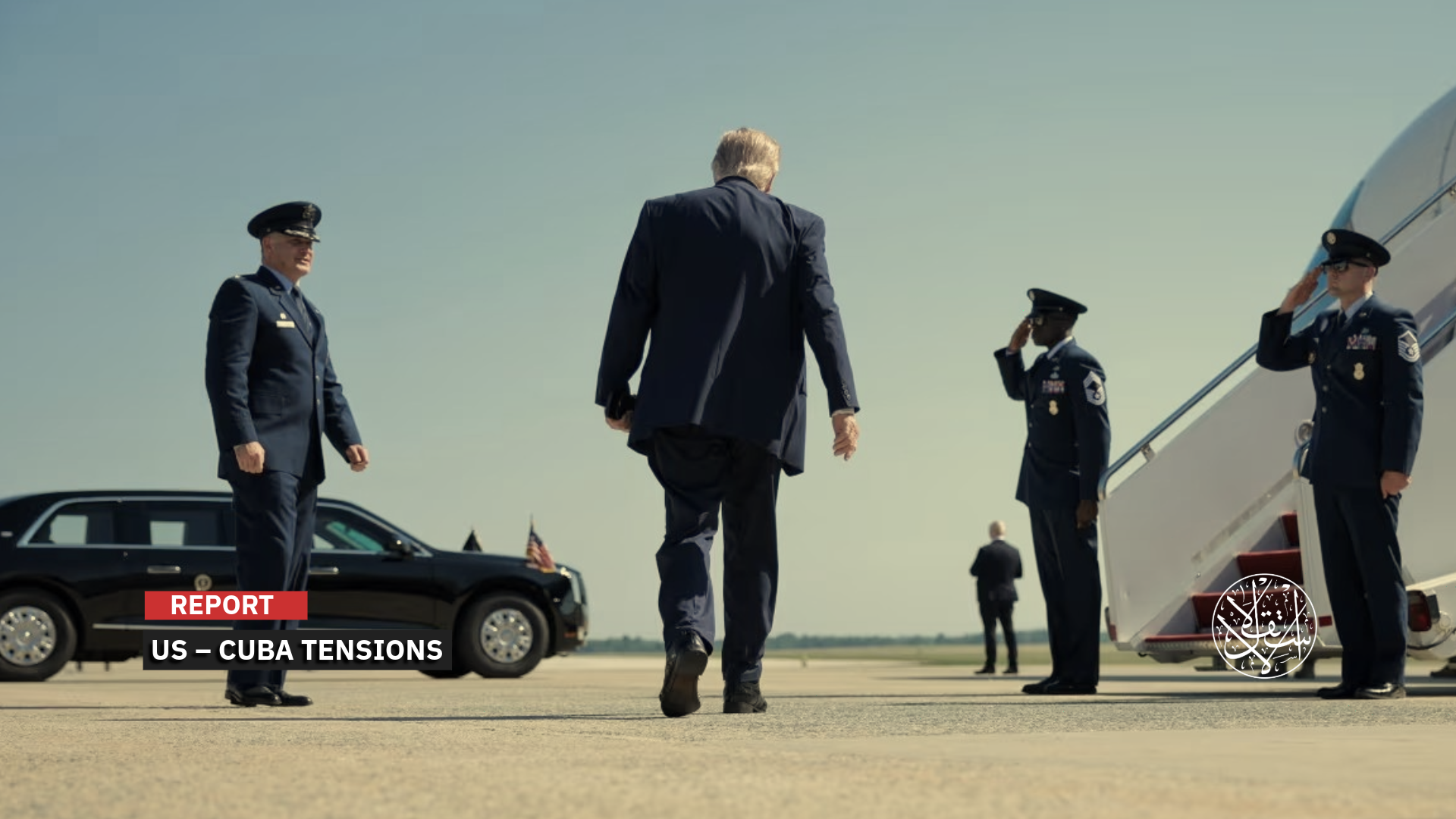
Because the U.S. naval base at Guantanamo Bay Naval Base, located on Cuban territory, has held major strategic, military, and political importance for the United States for more than a century, the administration of Donald Trump has reportedly used it as a pretext to promote possible justifications for military action against the government in Cuba.
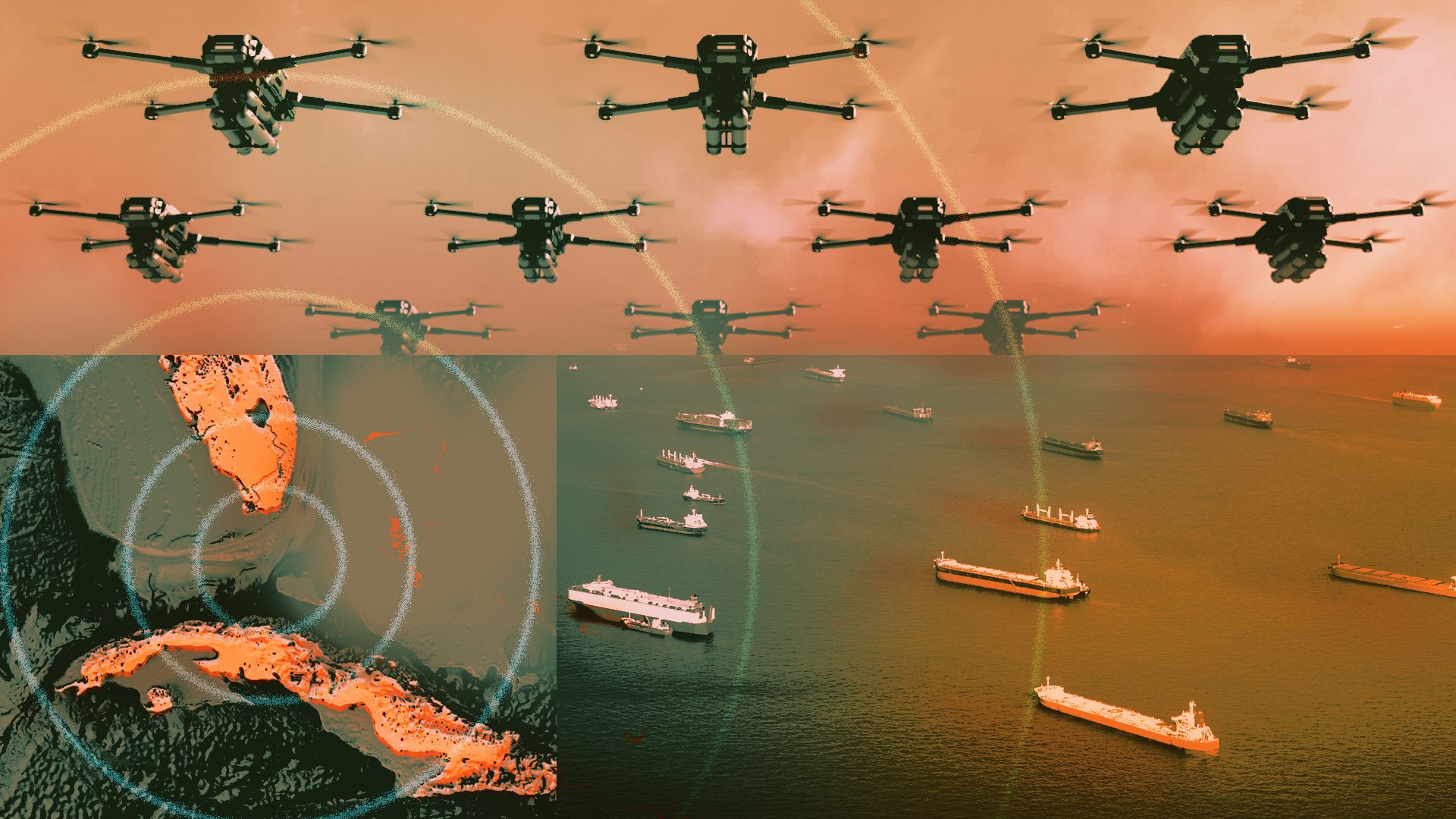
In this context, U.S. officials leaked information to Axios, a media outlet considered close to decision-making circles in Washington, on May 17, 2026, claiming, without verified evidence, that Cuba was preparing to attack the Guantanamo base, which Cuba regards as “occupied territory,” using more than 300 drones.
Analysts believe that Trump may be seeking a limited military escalation or a symbolic show-of-force operation in Cuba in an effort to strengthen his domestic political image after setbacks in his foreign policy agenda and a decline in what has been described as the “political momentum” surrounding his handling of other international issues.
Relations between Cuba and the United States have seen a noticeable rise in tensions in recent weeks. Trump has repeatedly hinted at the possibility of intervention or imposing control over the island unless there is a change in Cuba’s political system, amid recurring U.S. accusations that Havana is deepening its ties with Russia, China, and Iran.
Attack on Guantanamo
Amid escalating tensions between Washington and Havana, U.S. President Donald Trump has sought to capitalize on what has been described as the “political momentum” following unclear developments in Venezuela, in order to increase pressure on Cuba, the second most prominent left-wing regime in Latin America.
In this context, the U.S. administration has moved to intensify political and economic pressure on Cuba through sanctions and a tightening of the economic embargo, including reductions in energy supplies. This has had a direct impact on living conditions inside the country, amid repeated U.S. accusations that Havana is strengthening its relations with Russia, Iran, and Venezuela.
At the same time, Trump has indirectly hinted at the possibility of taking more drastic measures, as the United States seeks to prevent the formation of any anti-Washington bloc in the Caribbean and Latin America.
These developments come alongside media reports, including those published by Axios, citing U.S. officials who expressed concerns that Cuba may have acquired drones, believed to originate from Russia and Iran, with potential use in any escalation near the U.S. naval base at Guantanamo Bay Naval Base, which Havana considers “occupied territory.”
The outlet reported on May 17, 2026, quoting a U.S. official who said that “the proximity of drone capabilities to U.S. coasts is increasingly concerning, especially given the presence of criminal networks and growing military ties between regional and international actors.”
Other officials, according to the same report, also cited claims that Cuba had requested additional Russian support in the field of drone technology, and that Iran was expanding cooperation in military training, as part of what is believed to be the development of both defensive and offensive capabilities.
In the same context, U.S. Secretary of War Pete Hegseth stated during a congressional hearing on May 12, 2026, that Washington “has long-standing concerns about adversaries geographically close to U.S. shores using sensitive locations, given the potential threats this could pose.”
Cuban President Miguel Diaz-Canel warned on May 18, 2026, that any potential military action against his country could lead to “catastrophic consequences for regional security and stability,” describing the current situation as “extremely dangerous.”
Cuban Foreign Minister Bruno Rodriguez Parrilla also stated that his country “retains its full right to self-defense under the United Nations Charter,” adding that the military justifications being presented against Cuba are based on “unsubstantiated allegations.”
Diaz-Canel had previously reiterated on April 17, 2026, during commemorations marking the failure of the Bay of Pigs invasion, Cuba’s commitment to its socialist system and its readiness to confront any external threat, amid ongoing tensions with the United States in recent months.
Alternative to the Iran Dilemma
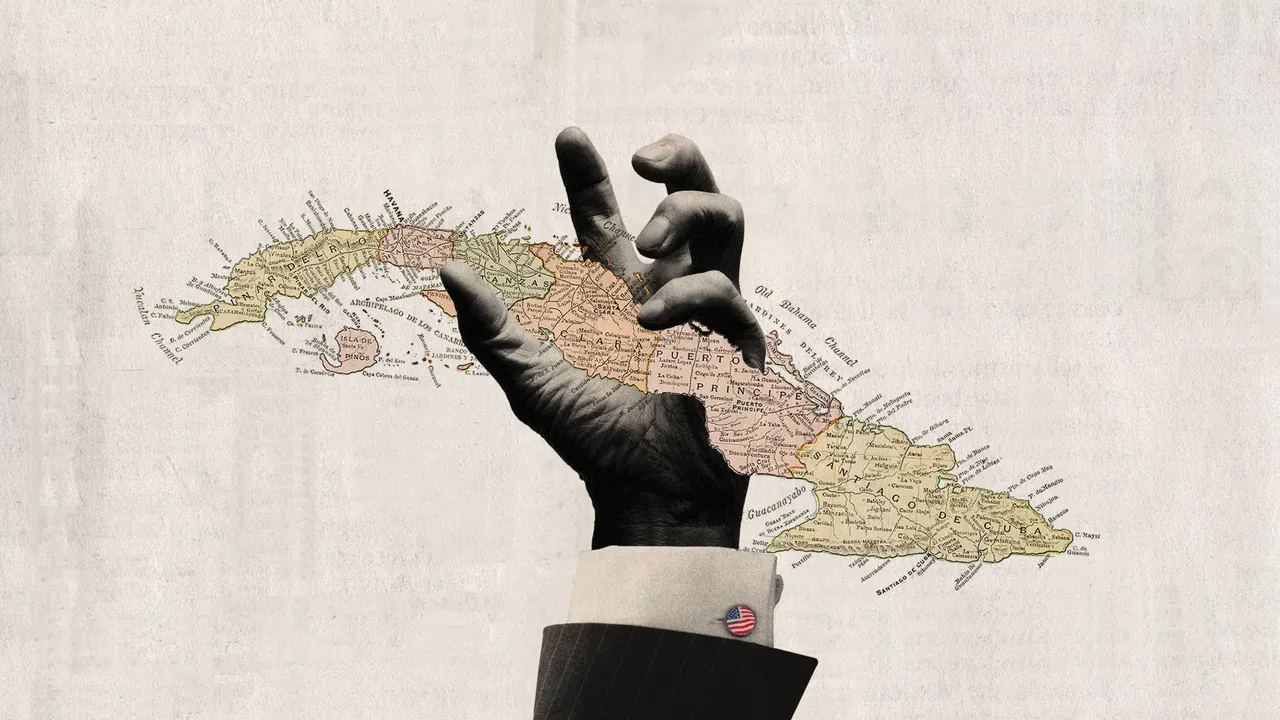
Several Western reports have explicitly stated that U.S. President Donald Trump’s increasingly aggressive rhetoric toward Cuba in recent months is linked to complications surrounding the Iranian file, with some U.S. administration circles reportedly viewing Cuba as a “lower-cost arena” to demonstrate American power in the Western Hemisphere.
Analysts argue that this shift in tone is connected to Trump’s attempt to project political firmness after setbacks in his approach to the Iran issue, as well as to leverage anti-communist rhetoric domestically, particularly in Florida, which has a large Cuban community that tends to support him. It is also seen as an attempt to capitalize on Havana’s worsening economic crisis.
Some observers further suggest that this approach reflects an attempt to revive a modern version of the “Monroe Doctrine,” reinforcing U.S. influence in the Caribbean and Latin America.
In this context, U.S. columnist Heather Digby Parton, writing in Salon on May 12, 2026, stated that Trump understands he “cannot achieve a victory through bombing in Iran,” and may therefore shift toward “another military operation” that is geographically closer and politically easier, namely Cuba.
She added that the president may see a return to the Western Hemisphere as a way to reduce pressure stemming from the stalled Middle East policy, noting that “Cuba is currently in a weak position, which could make a quick victory possible, but what comes after is the harder question.”
Separately, journalist Jonathan Lemire, writing in The Atlantic on May 8, 2026, suggested that Trump may redirect his focus toward Cuba due to fatigue with the war in Iran, which he described as more complex and prolonged than expected, amid internal concerns within the Republican Party about its economic and political consequences.
In the same vein, CNN reported on May 21, 2026, that Trump is seeking to regain strategic initiative on Cuba after setbacks in Iran, through an attempt to achieve a “decisive victory,” potentially in the form of political change in Havana.
The network noted that legal actions against former Cuban officials, including Raul Castro, represent a significant escalation in the level of confrontation between Washington and the island, a standoff that has lasted for decades.
Meanwhile, the French newspaper Le Monde reported on May 19, 2026, that the U.S. focus on the Iran file is one of the reasons behind the relative restraint toward Cuba, despite the escalation in political rhetoric.
A poll published by The New York Times in collaboration with Siena College Research Institute on May 18, 2026, found that 64% of Americans believed the decision to go to war against Iran was “wrong,” rising to 73% among independent voters.
In a related development, The Week reported on May 15, 2026, that Trump “is running out of patience” and may view Cuba as a potential target in the next phase, despite ongoing tensions in the Middle East.
NBC News quoted a former U.S. official as saying that Trump “talks about Cuba as if he wants to make it the 51st state.”
Trump himself reportedly hinted on March 16, 2026, at the possibility of political change in Cuba after the Iran file was resolved, a remark that analysts interpreted as linking the two theaters.
Some political interpretations suggest that the escalation toward Cuba coincides with tightening sanctions and economic pressure, along with rhetoric about the “liberation of Cuba,” reflecting a gradual intensification of U.S. pressure tools.
However, reports, including one from The Hill on May 12, 2026, warn that any potential military move could face opposition in Congress, despite some shifts in positions within parts of the Republican Party.

Is Cuba Backing Down?
Following a call by U.S. Secretary of State Marco Rubio on May 13, 2026, for a change of leadership in Cuba, and his offer of $100 million in aid in exchange for the resignation of the leftist president, CIA Director John Ratcliffe reportedly met Cuban officials in Havana.
After the visit concluded on May 15, 2026, and following discussions with Cuban officials on regional and international security issues, it was claimed that Havana was “ready” to consider the proposal for regime change.
In the same context, Cuba was said to be open to discussing the U.S. proposal regarding $100 million in aid, amid worsening domestic conditions, recurring electricity outages due to fuel shortages, and rare protests near the capital Havana.
Cuban Foreign Minister Bruno Rodriguez Parrilla stated on X, “We are ready to hear the details of the proposal and how it would be implemented,” noting that Washington had required the Catholic Church to distribute the aid without going through state institutions.
He added, “Temperatures continue to rise, and the impact of the blockade is already causing us significant harm, as we still do not receive fuel.”
In an effort to ease economic pressure and respond to some U.S. demands, Cuban Foreign Trade Minister Oscar Perez-Oliva told NBC News that Cuba was “open to establishing flexible trade relations with U.S. companies.”
Before traveling to China, U.S. President Donald Trump stated that Cuba “is asking for help,” suggesting the possible deployment of an aircraft carrier near Cuban waters and asserting that Havana could “surrender” upon seeing U.S. naval power.
Trump wrote on his platform Truth Social, “Cuba is a failed state heading in only one direction, downward, and it is asking for help, and we will talk about it after my visit to China.”
On March 17, 2026, Trump pledged to “take over” Cuba amid a severe electricity crisis caused by fuel shortages, widespread economic decline, and scattered protests.
Speaking to reporters at the White House, he said, “Whether I liberate it or take it over, I think I can do whatever I want with it. They are a very weak country right now.”
Since the United States backed the removal of Venezuelan President Nicolas Maduro, Cuba’s key ally, and imposed an oil blockade on the country, the island has reportedly not received any fuel shipments since January 9, 2026, except for Russian aid that has since been consumed.
In response, Cuban President Miguel Diaz-Canel rejected these threats and warned against any potential U.S. military intervention.
He stated on May 17, 2026, that his country has the right to defend itself and is a “free and independent nation,” adding that Cuba “has not been the aggressor, but has been under attack by the United States for more than six decades.”
He further warned that any U.S. attack would result in a “bloodbath with incalculable consequences,” stressing that the country is “ready to defend the homeland to the last drop of blood.”
Foreign Minister Bruno Rodriguez said that Cuba “is not for sale,” adding that the Cuban people “will not surrender to threats or blackmail.”
On May 18, 2026, the U.S. Department of the Treasury United States Department of the Treasury imposed new sanctions targeting the Cuban intelligence agency and nine officials, including ministers in communications, energy, and justice, as well as several senior Communist Party officials and three generals.
The United States continues to enforce an oil embargo on Cuba since January 2026, arguing that the island constitutes an “extraordinary threat” to U.S. national security, while Havana maintains that these measures have worsened the energy crisis and humanitarian conditions inside the country.