The Nairobi Summit Reveals France’s Ongoing Losses in Africa: What’s the Story?
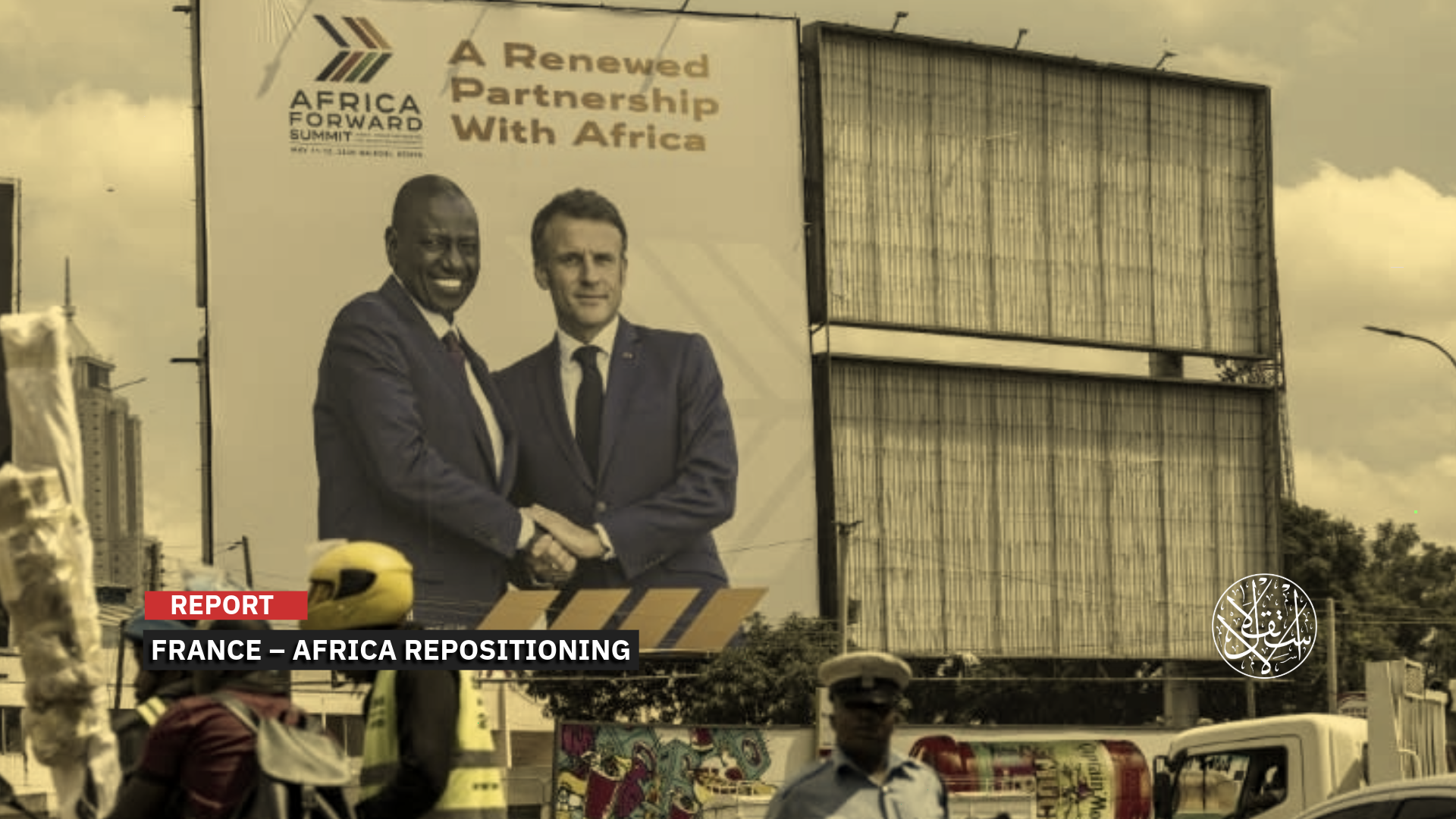
Relocating the summit to Nairobi is not a positive choice; rather, it is an imposed constraint and a forced repositioning.
A joint summit between France and several African countries was held, once again highlighting the decline of French influence in Africa and the growing international competition to benefit from the continent’s vast resources and wealth.
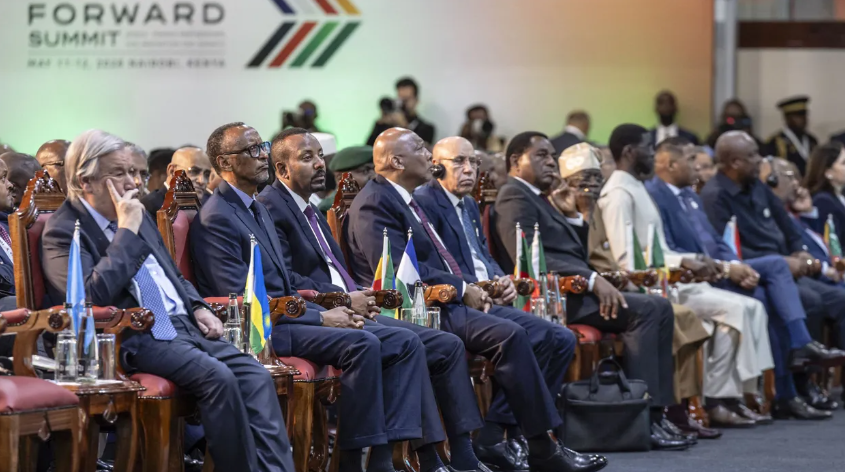
The summit took place on May 11–12, 2026, in Nairobi, the Kenyan capital, and focused mainly on economic partnership, investment, and innovation. It brought together a number of heads of state and government, leaders of financial institutions, businesspeople, and young stakeholders.
The summit is considered especially significant because it was organized for the first time in partnership with an English-speaking African country, after French-African summits had long been associated with the Francophone sphere.

Promises and Reluctance
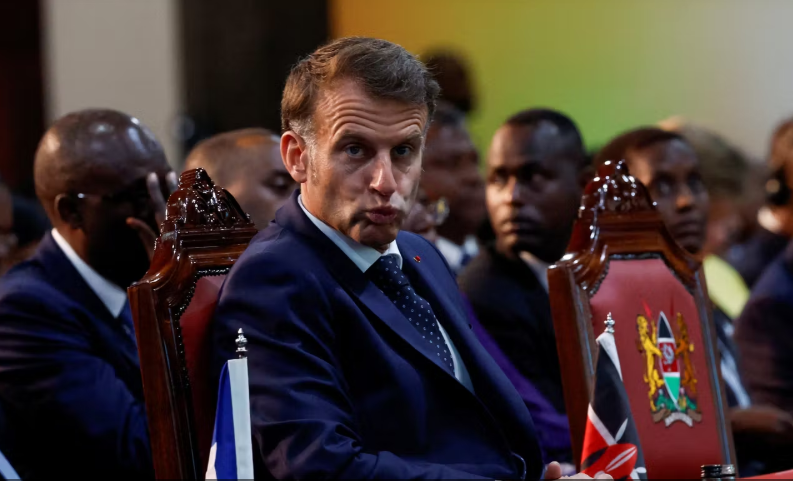
French President Emmanuel Macron announced during the summit that €23 billion ($27.11 billion) had been raised for investment in Africa on the first day of the “Africa Forward” summit.
According to France 24 on May 11, Macron called for efforts to focus on “investment” rather than public aid, which Europe is no longer able to provide generously to Africa.
Macron said, “Usually, this kind of summit would begin with a meeting between French and African officials,” during which French officials would tell Africans, “Here is what is good for you; we will help you.” Quoting Kenyan President William Ruto, he stressed that “this is absolutely no longer what Africa needs or wants to hear.”
“We also no longer have unlimited means,” He added, referring to the decline in public development aid in France and other Western countries facing public finance crises.
Macron continued, “Africa is succeeding… and it needs investment in order to become more sovereign.”
In an interview published Monday, May 11, by the magazines Jeune Afrique and The Africa Report, Macron recalled that he had “strongly condemned colonialism” since 2017, the year he came to power.
Responding to criticism of former colonial powers, he argued that “the paradox is that Europeans are not the predators of this century.”
He also said that “Europe defends the international order, multilateralism, the rule of law, and free and open trade,” while the United States and China “act according to a logic of trade confrontation” without respecting the rules.
The participation described as “weak” by African heads of state at the new summit, compared with previous summits, drew international media attention and scrutiny.
In this regard, the Belgian outlet RTBF reported on May 12 that although the Elysee Palace announced the participation of “30 countries,” the reality was more disappointing.
The outlet added, “They announced the attendance of between 30 and 40 heads of state, but in the end we realized there were ministers and representatives… not heads of state. I counted around ten, or perhaps twelve, out of 55 countries, and that is a very small number.”
This was stated by Leslie Varenne, a specialist in African defense and security issues at the Institute for Monitoring and Study of International and Strategic Relations (IVERIS).
She stressed that the absence of South Africa, an English-speaking power, as well as the absence of the Sahel states (Mali, Burkina Faso, and Niger), which had been invited to Montpellier five years earlier, appeared to be an admission of failure.
She added, “This is his last summit, and it is a summit of reckoning. It is Macron’s record in Africa, and it will follow him for a very long time, because this is where he truly failed.”
According to the expert, moving the summit to Nairobi was not a positive choice, but rather a constraint, a forced repositioning, and a way to bypass numerous problems.
She emphasized that this summit could not have been held in a French-speaking country because leaders close to France, such as Benin or Ivory Coast, would not have dared host it due to the intensity of negative public opinion toward France.
Leslie Varenne viewed the shift to Kenya as an alternative strategy and a forced change of venue, because the summit could no longer realistically be held in a French-speaking country.
Historic Weakness
The French website Challenge stated in an analysis published on May 11 that, after losing much of its standing in Africa, especially in its former French-speaking sphere of influence, which has significantly eroded in recent years, France is trying to adopt a more cautious approach at the new summit.
The website stressed that the summit resembles an attempt to revive diplomatic relations and carry out a process of strategic repositioning.
The same source noted that holding the summit for the first time in an English-speaking country carries strong symbolic significance. For decades, French-African relations were built on Francophone influence, including political networks, military cooperation, cultural influence, and economic interests.
“Today, that foundation is collapsing rapidly, as the Sahel region has turned its back on Paris,” the website said, adding, “Other African capitals are also, more discreetly, seeking to diversify their strategic alliances.”
It continued, “In this context, Nairobi emerges as an attempt to open up to another Africa: the Africa of English-speaking economies, technology hubs, emerging financial markets, and new entrepreneurial classes.”
The analysis explained that, toward the end of Emmanuel Macron’s presidency, France faces accusations of interference, military rejection, loss of economic influence, and fierce competition from new powers such as China, Turkiye, the United Arab Emirates, and Russia. Paris increasingly appears as a declining actor in a continent it long regarded as its exclusive sphere of influence.
The website viewed France’s choice of Nairobi as the summit venue as an attempt by Paris to send the message that France remains determined to be a major player in Africa’s new economic and political landscape.
It added that, after weakening in part of its former sphere of influence in the French-speaking world, the French president is trying to reposition France in the English-speaking world by focusing on a dynamic and influential country such as Kenya.
The report concluded that this decision demonstrates a desire for diversification, but also implicitly points to the erosion of France’s traditional influence.
Meanwhile, the website African Readings stated in an analysis on May 14 that, after the summit concluded, and despite the major media momentum surrounding it, turning these promises into reality remains a difficult task for President Macron.
The report continued, “African leaders also bear the responsibility of avoiding excessive promotion of French issues and positions that have not yet been resolved, and which have not even gained credibility or acceptance among segments of African youth.”
The source also noted that Macron had previously pledged before African leaders in 2017 to return African artworks and artifacts looted during the colonial era within five years, a deadline that ended in 2021, yet five full years passed without any real progress on this path.
The website highlighted France’s fears over declining regional influence in West Africa and the Sahel region, stressing that this became clearly evident in the absence of government representation from several countries in the region at the latest summit.
It emphasized that France is seeking to recover some of its lost image in Africa after suffering major setbacks in its traditional strongholds in West Africa and the Sahel in favor of other international actors.
The report added that France’s popularity as a cultural power and political model has also declined among many African peoples and elites, especially among the youth.
Remain on Paper!
Former member of the Pan-African Parliament, Noureddine Korbal, believes that France’s new commitment of $27 billion during this summit, with around 50 percent expected to come from the public and private sectors, raises questions about implementation so that these partnerships do not remain merely on paper.
Korbal told Al-Estiklal that any agreement not accompanied by institutionalization, adequate financing, good governance, accountability, moving beyond the logic of the tribe toward the logic of the continent, shifting from the mentality of spoils to the public interest, and adopting mechanisms for implementation, execution, and evaluation, will remain ineffective.
He stressed that France will face competition from a group of countries that have strengthened their relations with Africa, including the United States, Russia, China, South Korea, the United Kingdom, Turkiye, Japan, India, Pakistan, and others.
He emphasized that France faces a major challenge in carefully navigating an international environment marked by uncertainty, while freeing itself from a mentality of superiority and moving toward one focused on human development and nation-building.
Korbal pointed out that the success of this ambitious project between Africa and France depends on signing partnerships based on justice, respect for African sovereignty, and establishing mechanisms to measure the level of implementation and execution.
On the other hand, the former African Parliament member noted that Africa is rich. Still, unfortunately, its people are poor, and the solutions lie with Africans themselves through cooperation, solidarity, South-South partnerships, and mutually beneficial arrangements. He added that this does not prevent openness to global products and opportunities, provided it is done from a position of sovereignty and independence.
He stressed that Africa possesses natural and human wealth, especially its young population, and is capable of ensuring sustainable financing. However, he said the continent has unfortunately been pushed into geopolitical tensions, environmental crises, and social disruptions that prevent it from benefiting from these resources.