Is Europe Abandoning the UN Umbrella in Libya? Lifting the IRINI Mandate Opens a New Phase
The Libyan file has once again returned to the forefront of international debate.
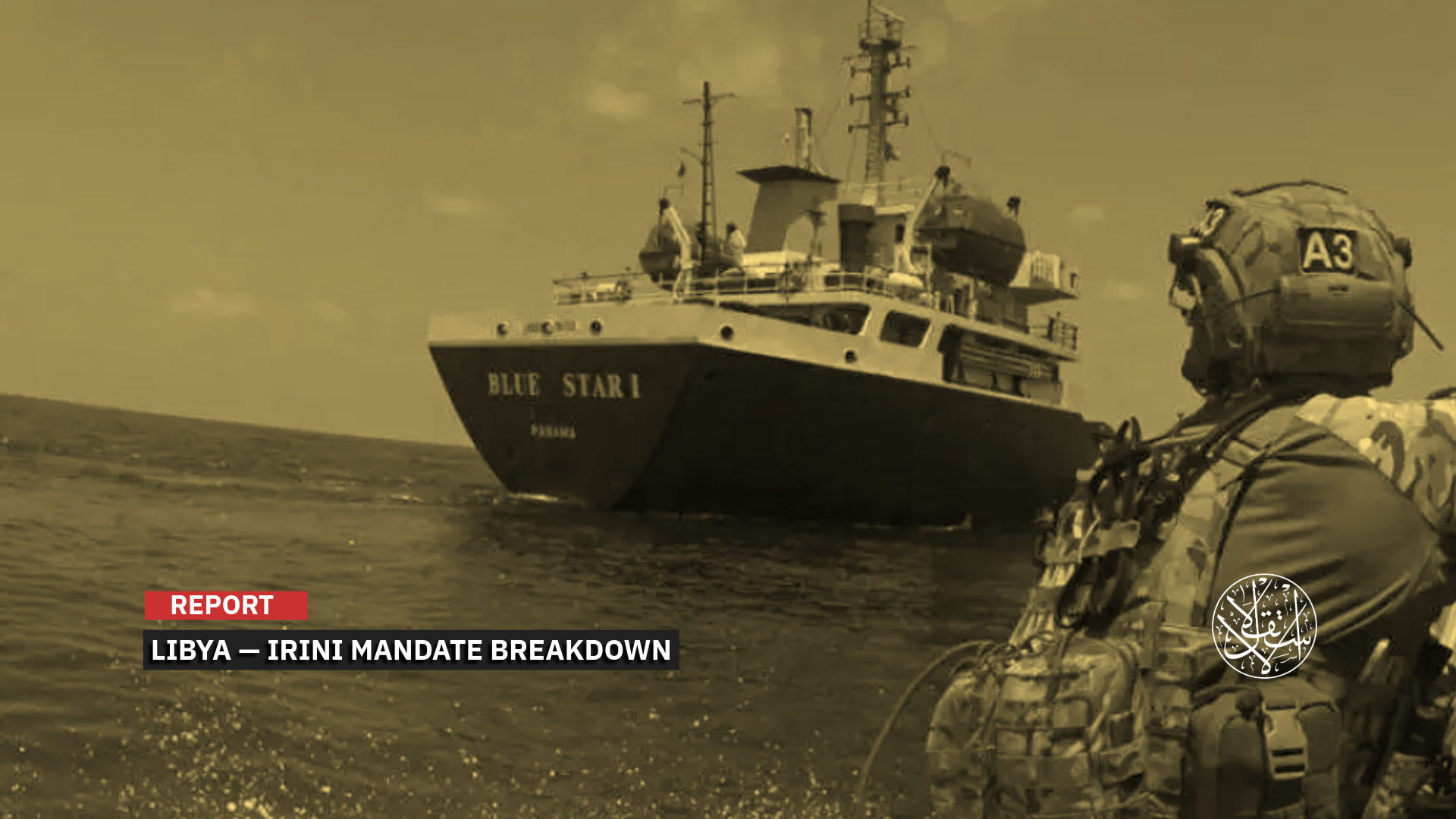
Amid growing talk of diverging European visions on Libya and conflicting Western interests over migration, energy, and maritime security, the Libyan file has returned to the forefront of international debate following the UN Security Council’s decision not to renew the legal mandate underpinning the European naval operation IRINI
At first glance, the decision appeared technical, related to ship inspections and arms embargo enforcement. In reality, however, it has opened broader questions about the future of the UN role, the limits of European influence, and the emerging balance of power shaping the trajectory of the Libyan crisis.
The move carries implications that go beyond procedure, as the European operation will continue on the ground after May 25, 2026, but without the United Nations legal umbrella it has relied on for years.
This development raises questions over whether Europe is truly moving toward a more independent management of the Libyan file, or whether it reflects the beginning of a weakening international consensus that has governed the crisis since the overthrow of Muammar Gaddafi in 2011.
The Birth of IRINI
The IRINI operation did not emerge in a vacuum, but was one of the direct outcomes of the Berlin Conference held in January 2020, with the participation of international and regional powers involved in the Libyan crisis.
At the time, the stated objective was to consolidate a political process aimed at limiting external interference and curbing the flow of weapons into Libya, which had become an open arena for regional and international competition.
As part of implementing the conference outcomes, the EU Foreign Affairs Council decided in February 2020 to launch a new naval operation under the European Union’s Common Security and Defence Policy.
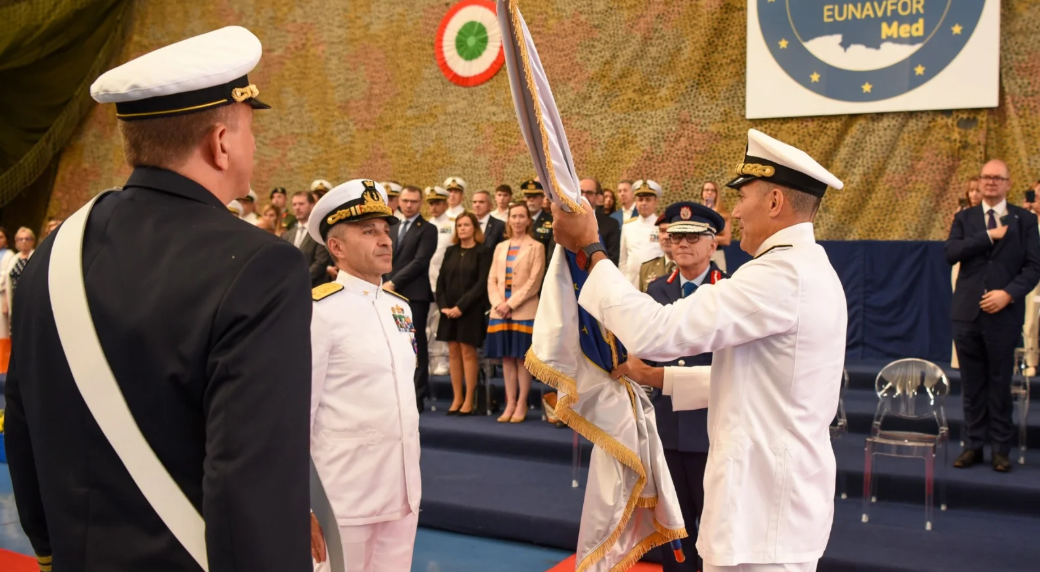
The mission was named “EUNAVFOR MED IRINI,” derived from the Greek word for “peace,” in an effort to frame it as a stability-oriented initiative rather than a purely military monitoring mechanism.
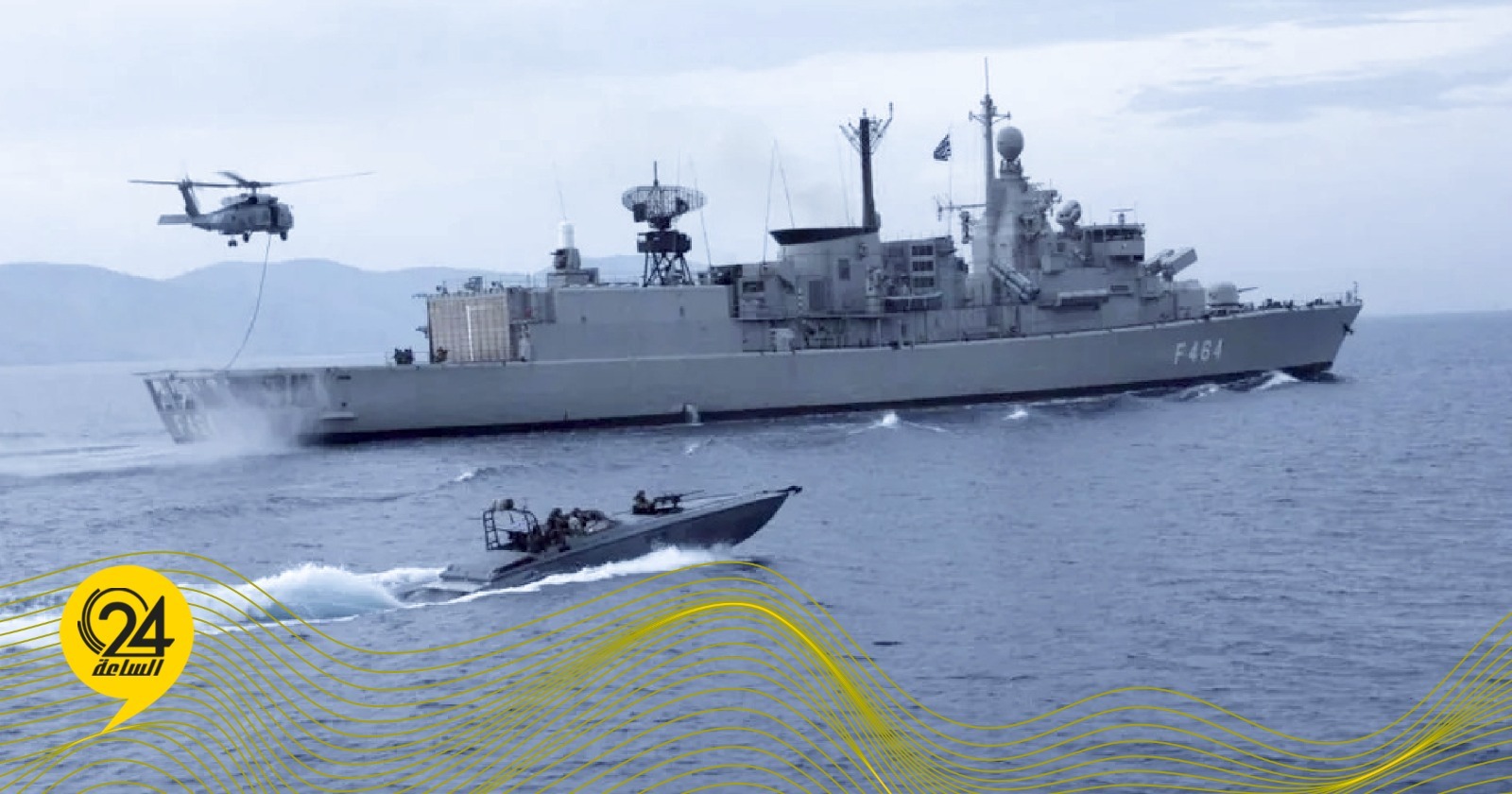
The operation officially began in March 2020, with its primary mandate defined as monitoring the UN arms embargo on Libya through naval, aerial, and satellite capabilities to track suspicious vessels, aircraft, and transport routes.
Over time, its role expanded to include monitoring illicit oil exports, gathering intelligence on fuel smuggling, and supporting Libyan institutions in maritime training, capacity building, and search-and-rescue operations. This expansion gave the mission an economic and security dimension beyond arms control.
Notably, in the latest development, Greece and France, the two countries that led the drafting of UN Security Council Resolution 2292 in 2016 on ship inspections off Libya, did not this time request the annual renewal of the mandate.
Media reports interpreted this as reflecting internal European discussions aimed at separating the operation from the UN framework and granting it greater autonomy.
Observers argue that Europe is increasingly inclined to build its own security tools outside the slow consensus-driven mechanisms of the UN Security Council, particularly amid rising global competition and deadlocks caused by conflicting interests among major powers.
However, this shift carries risks, as continuing a maritime monitoring operation without a clear UN mandate could create legal and political challenges, especially if its scope expands further or if it becomes involved in migration enforcement or arms interdiction incidents.
The decision also indirectly reflects divisions within the European Union itself, as member states prioritize Libya differently: Italy views it through the lens of energy and migration, France focuses on regional security and political influence, while Greece emphasizes Eastern Mediterranean dynamics and maritime disputes.
Deeper Shifts
Libyan political analyst Ibrahim al-Asifer believes that lifting the UN umbrella from IRINI should not be treated as a narrow procedural dispute, but as an indicator of deeper shifts in how the Libyan file is managed internationally.
In remarks to Al-Estiklal, al-Asifer said that the inability of major powers to renew a mandate covering arms monitoring, migration, and maritime borders means that the consensus that governed the Libyan crisis in recent years is effectively eroding, and that Libya has entered a new phase defined more by the management of interests than by the pursuit of comprehensive solutions.
He added that the United Nations has, throughout the past period, served as the framework providing legal and political legitimacy for various forms of external intervention, even when those interventions carried conflicting agendas.
Today, however, the continuation of European roles without UN authorization reflects a shift toward more direct management of spheres of influence.
Libya appears at the center of this transformation due to its sensitive geographic position. It sits at the crossroads of Mediterranean security, energy routes, irregular migration, and military competition, making it an ideal arena for testing new patterns of influence.
The most serious aspect of the decision, according to Libyan readings, does not concern maritime operations alone, but what it may mean inside Libya itself. Any weakening of international oversight could give smuggling and migration networks greater freedom to operate and reposition.
These networks function within a complex environment shaped by political fragmentation, weak institutions, and a rapidly expanding parallel economy in recent years.
As a result, weakening monitoring tools would not only risk increased arms smuggling, but also strengthen illicit economic power structures.
Al-Asifer warns that migration networks are no longer small coastal groups, but a cross-border economic system linked to fuel smuggling, arms trafficking, and money laundering. With Libya’s continued institutional fragility, these networks are gradually becoming part of local power balances.
From this perspective, he argues that Europe is increasingly treating Libya as a zone of security containment rather than a state-building project requiring a comprehensive political settlement, a shift that may offer Europe short-term stability but prolongs the crisis over the long term.
Oil and Migration
One of the key issues that has emerged in recent years relates to attempts to expand the mandate of IRINI to include monitoring oil and petroleum products leaving Libya illegally.
Libyan reports indicate that Libyan authorities had previously raised the idea of incorporating oil-related restrictions into the operation’s mandate, but the proposal faced objections from international parties that viewed it as potentially affecting existing economic and political interests.
This debate reveals that the struggle over Libya is no longer limited to weapons or political legitimacy, but has expanded to include economic resources, supply routes, and energy. Libyan oil remains a central element in the balance of influence inside and outside the country.
On the other hand, irregular migration occupies a top priority in European calculations, especially amid growing concerns about Libya being used as a major transit route to the Mediterranean. For this reason, Brussels has increasingly focused on border control and preventing migrant flows.
Despite the political controversy, IRINI has continued its operations at a high pace in recent months. Latest figures indicate that 72 suspicious flights were detected in April 2026 as part of monitoring the arms embargo.
The operation also inspected and monitored 453 commercial vessels in the Mediterranean, while continuing surveillance of dozens of Libyan airports and ports, with the participation of 24 European countries.
These figures show that the operation still maintains significant operational presence, even with the weakening of its UN umbrella. At the same time, however, they raise questions about whether such activity can continue without a clear international legal framework.
UN Secretary-General Antonio Guterres had previously called for strengthening the operation’s role and expanding its capabilities in inspecting air and sea shipments, as well as developing training programs for Libyan personnel responsible for implementing the embargo.

European Shift
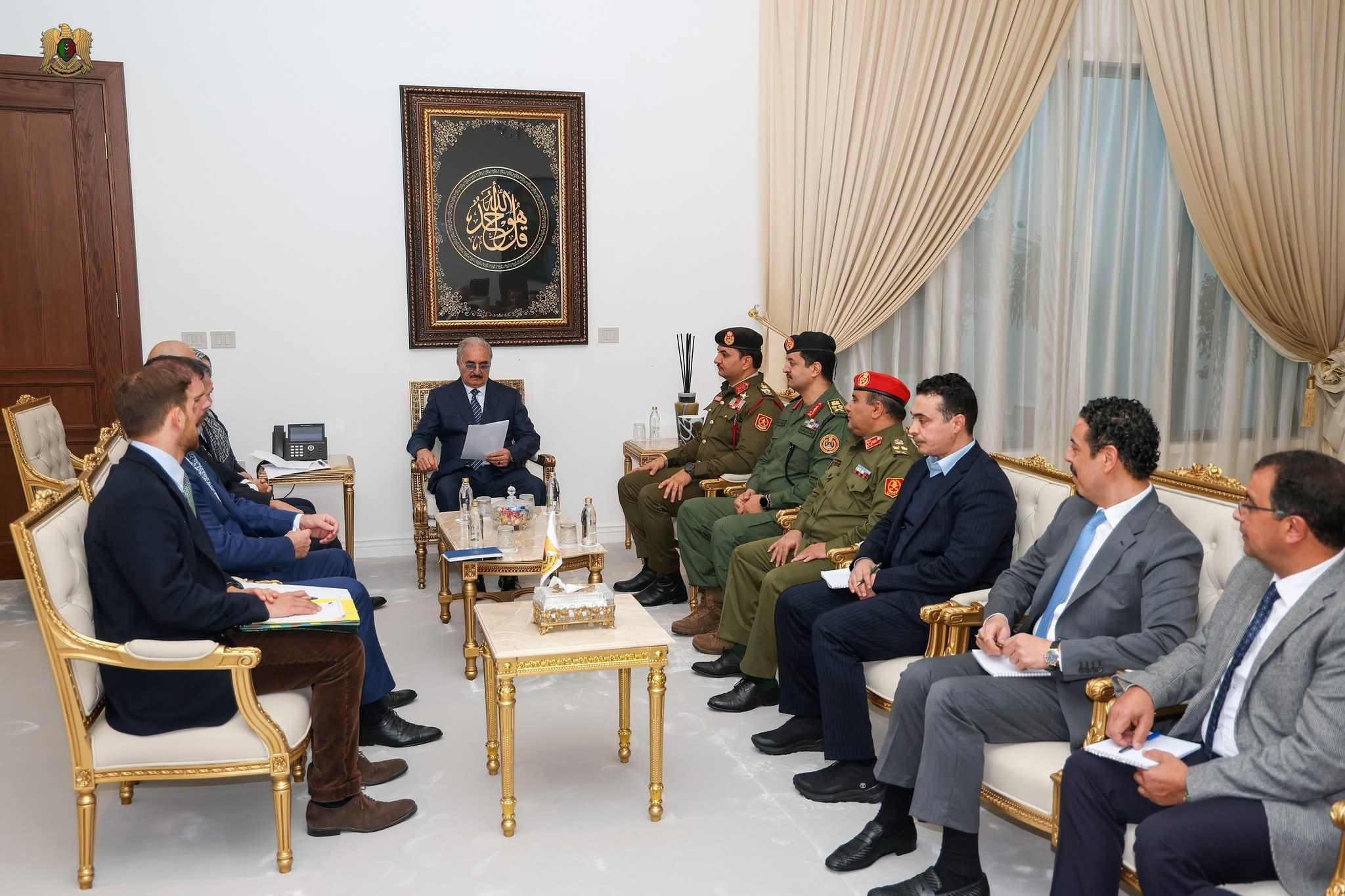
Parallel to the mandate crisis, a notable shift has emerged in the European approach toward eastern Libya, following the announcement by the EU Ambassador to Libya, Nicola Orlando, of a move to strengthen direct cooperation with eastern authorities.
Available indications suggest that this approach is not limited to security cooperation, but also includes development projects, infrastructure upgrades, border management, technical training, and municipal support.
This trajectory reflects a pragmatic shift in EU policy, as it increasingly tends to engage with actors that possess on-the-ground influence and executive capacity, regardless of Libya’s political complexities and internal divisions.
The focus on eastern Libya is also linked to migration and border security calculations, given the region’s geographic position and its role in transit routes originating from deeper in Africa.
Experts believe this shift could grant eastern Libya greater visibility in international relations, but it may also raise concerns about deepening internal divisions if not accompanied by a comprehensive political process.
Perhaps the most significant implication lies in the boundaries of the UN role itself. The United Nations, which for years served as the central framework for initiatives, dialogues, and agreements on Libya, now appears less capable of enforcing consensus even on technical issues.
This reflects a broader transformation in the international system, where the idea of multilateral consensus is giving way to direct influence policies, flexible alliances, and shifting interests.
Given Libya’s position at the crossroads of energy, migration, and maritime security, it has become a clear arena where these changes are most visible. The current crisis surrounding IRINI may therefore be only the beginning of larger shifts in how the Libyan file is managed.
According to observers, the decision not to renew the UN mandate for Operation IRINI does not appear to be an isolated procedural event, but rather an indicator of a broader reconfiguration in approaches to Libya.
While Europe seeks to expand its security autonomy, the UN’s role is gradually diminishing, and priorities related to migration, energy, and border security are increasingly overtaking political settlement tracks.
In the context of Libya’s ongoing internal divisions, the country appears to be entering a new phase, where the goal may be less about ending the conflict than about managing it and preventing its escalation.
However, this approach, while capable of containing crises in the short term, may further entrench Libya’s fragility and postpone stability rather than achieve it, especially if international actors continue to treat Libya as a field of competing interests rather than a state-building project.