One Field, Two Sovereignties: How the North Field Complicates Qatar’s Calculations in the War on Iran
The North Field underpins Qatar’s LNG industry and has been central to its rise as a global energy power.
The Israeli Occupation strike on gas processing facilities in Iran’s South Pars field on March 18, 2026, sent shockwaves far beyond Iran’s shores, rattling energy balances across the Gulf.
A day later, Tehran hit back, targeting facilities in Qatar’s Ras Laffan Industrial City and sparking fires in one of the world’s largest LNG hubs, forcing a temporary drop in part of the country’s export capacity.
For years, the North Field-South Pars reservoir has functioned as a shared resource beneath the Gulf, anchoring Qatar’s rise as a leading global LNG supplier while serving as a critical energy lifeline for Iran. As tensions escalate, that deep interdependence has once again brought the field’s strategic weight into sharp focus at the center of both regional stability and global energy markets.
A Shared Field
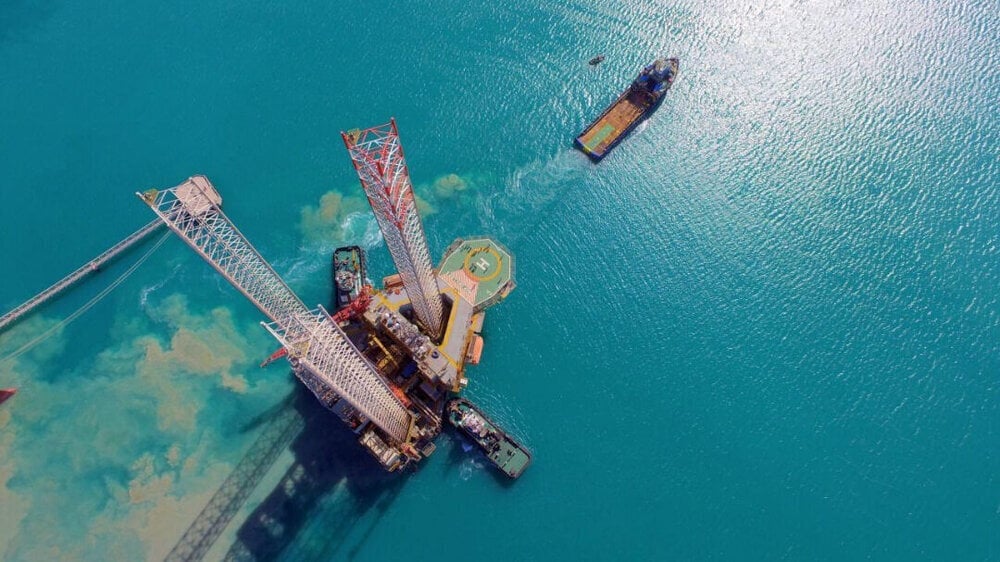
The world’s largest offshore gas field lies beneath the Persian Gulf. Doha calls its portion the North Field, while Tehran refers to its side as South Pars. The different names, however, mask a simple reality: it is a single geological reservoir stretching across maritime borders.
The field covers roughly 9,700 square kilometers, with about 6,000 in Qatari waters and 3,700 in Iranian territory, and holds an estimated 51 trillion cubic meters of recoverable gas. Qatar alone says its share contains more than 900 trillion cubic feet in reserves.
Despite sharing the same reservoir, there is no joint development framework. Each country operates independently. Qatar opened the North Field to international partners, then imposed a development pause in 2005 to study reservoir behavior before resuming expansion. Iran, by contrast, has developed South Pars in phases around Assaluyeh under the constraints of sanctions and limited access to advanced technology.
The relationship, then, is geological and economic rather than contractual. One reservoir, two sovereignties.
Yet the field does not carry the same meaning for both sides. For Qatar, it is the foundation of its LNG industry and the source of its global influence, underpinning current output of 77 million tons a year and expansion plans to reach 126 million by 2027 and 142 million by 2030. It is not just a strategic asset but the backbone of the country’s entire economic model—exports, financial surpluses, and long-term supply contracts with Asia and Europe.
For Iran, South Pars plays a different role. It is not a gateway to global LNG markets but a domestic energy lifeline. The field supplies between 70 and 75 percent of Iran’s gas production, with more than 90 percent consumed locally. It fuels roughly 85 percent of the country’s electricity generation, with most of its output directed toward domestic heating, power, industry, and petrochemicals, and only limited volumes are exported via pipeline to neighboring states.
A Fragile Energy Architecture
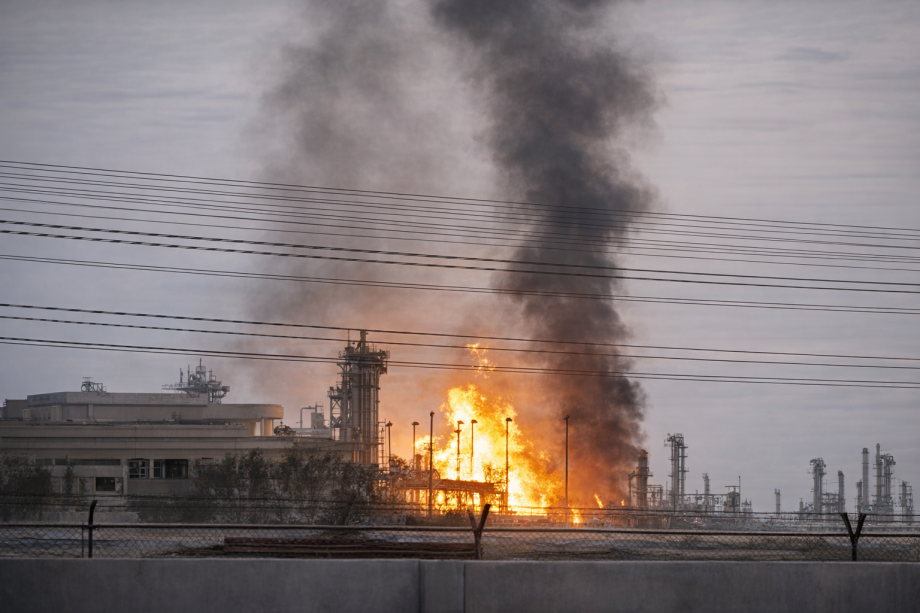
The U.S.-Israeli War on Iran has exposed just how fragile the region’s energy architecture is. On March 18, strikes on South Pars and Assaluyeh knocked out roughly 100 million cubic meters per day of processing capacity—about 14 percent of Iran’s gas output.
A day later, the fallout spread across the Gulf’s energy system. Facilities in Qatar’s Ras Laffan Industrial City were hit, affecting two of its 14 LNG trains and damaging the Pearl GTL plant. Doha responded by declaring force majeure, a temporary legal measure to manage contractual obligations under extraordinary circumstances.
The impact was immediate. Around 12.8 million tons per year of Qatar’s export capacity was taken offline, with official estimates suggesting that full repairs could take between three and five years. Energy Minister Saad al-Kaabi put annual losses at roughly $20 billion, warning that some phases of the North Field expansion could be delayed by more than a year.
These were no longer isolated strikes on energy infrastructure but a turning point that laid bare the depth of interdependence within the Gulf’s gas system. Shared infrastructure and tightly linked supply chains mean that disruption in one location quickly ripples across the entire network.
That interdependence is critical. Qatari gas is processed and exported through an integrated system centered on Ras Laffan before moving through vital maritime routes to global markets—making the stability of this network a cornerstone of global energy security.
Kristian Ulrichsen of the Baker Institute notes that targeting facilities in Assaluyeh and Ras Laffan underscores the interconnected nature of the shared reservoir. Any disruption on one side, he argues, reverberates across supply, investor confidence, and financing and insurance costs.
Markets have already reacted. Insurers have reassessed regional risk, sharply increasing premiums for vessels passing through the Strait of Hormuz. Estimates suggest that restoring full operations could take years, with knock-on effects for the cost and viability of future energy projects.
The financial implications are also mounting. Fitch Ratings has placed Qatar’s sovereign rating under review, reflecting growing market scrutiny, while consultancies have revised down global LNG supply forecasts due to damage and delayed expansion plans.
As Ira Joseph of Columbia University’s Center on Global Energy Policy points out, any significant drop in Qatari LNG exports carries wide-reaching consequences, particularly for Asia, which absorbs the bulk of these supplies. The result, he warns, is likely to be sustained upward pressure on prices until the market regains balance.
Caught in a Tight Spot
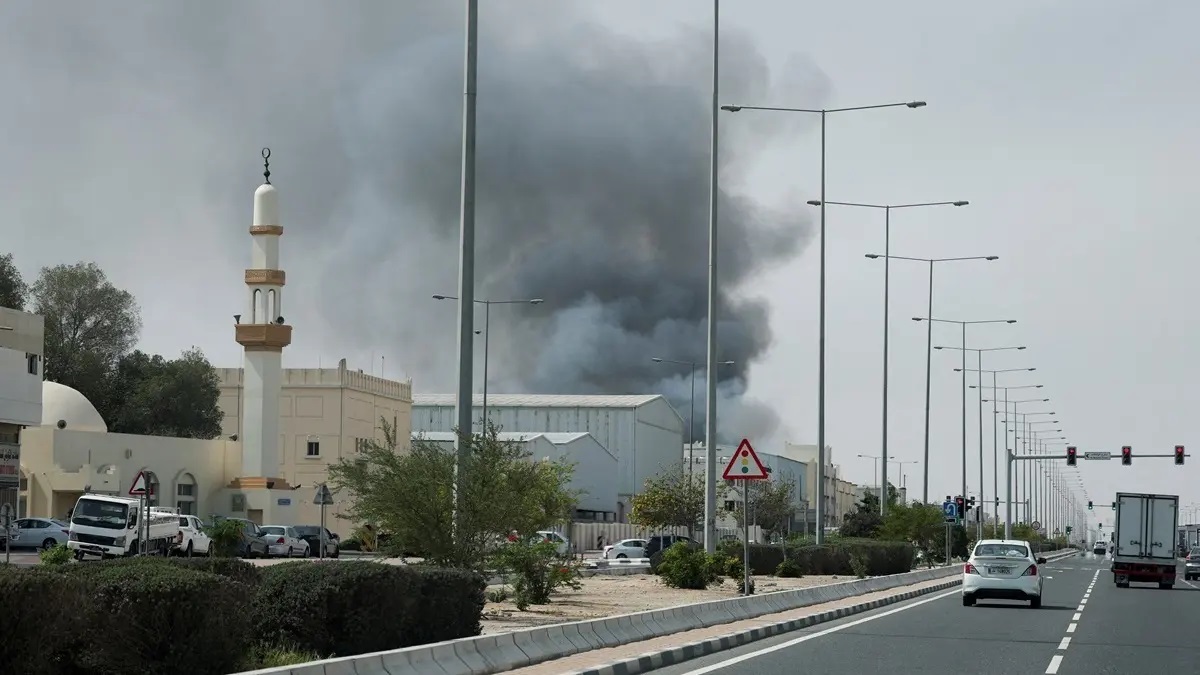
Since the start of the U.S.-Israeli War on Iran, Qatar has tried to hold a careful line between Washington and Tehran. It hosts the largest U.S. military base in the region, yet cannot treat Iran as a distant adversary, given that part of its most critical gas wealth extends geologically into Iranian territory.
That tension has shaped a dual response. Doha condemned the strike on South Pars as a “dangerous and irresponsible” escalation, then denounced the Iranian strike on Ras Laffan as a direct threat to its national security, ordering Iranian security and military representatives to leave the country within 24 hours.
What has changed is that caution is no longer just a diplomatic preference—it is dictated by the structure of Qatar’s own resources. The country now finds itself in an unusually constrained position. As the Middle East Council on Global Affairs, Afkar, said, Qatar’s reaction was not simply diplomatic language but an acknowledgment of a shared geological fate—one that leaves it unable to fully align with Iran, yet equally unable to shield itself from the consequences of damage to the field.
Unlike Saudi Arabia and the UAE, which have partial pipeline alternatives that bypass the Strait of Hormuz, Qatar depends heavily on a single chain: the North Field, Ras Laffan, and the strait itself. That concentration has long been a source of strength. In wartime, it becomes a vulnerability.
This helps explain Doha’s repeated calls for de-escalation and its support for diplomatic channels. A prolonged war does not only mean greater political and military risk but also delays to expansion projects, rising insurance and financing costs, and potential damage to the reputation Qatar has built over decades as a reliable supplier.
The immediate effects are already visible. Expansion projects at the North Field East and South—expected to begin production in mid-2026—have been halted, raising concerns about supply reliability and unsettling investors and shipping companies.
Fitch has warned that a prolonged war could turn Qatar into a sustained risk environment, potentially affecting its credit rating. Reuters analysis points to rising insurance and financing costs across the region, prompting energy firms to reconsider exposure to high-risk zones.
The Stimson Center has described the targeting of energy infrastructure as part of a broader infrastructure warfare, where attacks are used to constrain options and force negotiations—warning that damage to the field could trigger sharp volatility in global markets.
There is also a domestic dimension. Qatar’s ability to sustain electricity and water services, both heavily dependent on gas from the North Field, has become increasingly tied to regional stability.
Analysts warn that repeated strikes on Ras Laffan or prolonged repair timelines could ripple through the local economy and push up energy costs. For now, Doha is left trying to balance its strategic alliance with Washington against its need to avoid provoking Tehran—a position that grows more precarious the longer the war drags on.
Sources
- Israel’s Strike on North Field–South Pars: Energy War and Global Risk
- Why are Iran’s South Pars gasfield, Qatar’s Ras Laffan, so significant?
- Factbox: Qatar, Iran share world's biggest gas field
- Iran's giant South Pars gas field at the centre of Gulf war escalation
- Qatar's North Field East gas expansion to begin output in mid-2026
- Live Updates: US-Israeli Attacks on Iran and Global Energy Impacts
- South Pars Strike Marks Major Step in Persian Gulf Energy Warfare