‘Entrapment Strategy’: How Trump Sought to Pull Gulf States into the Heart of His War on Iran
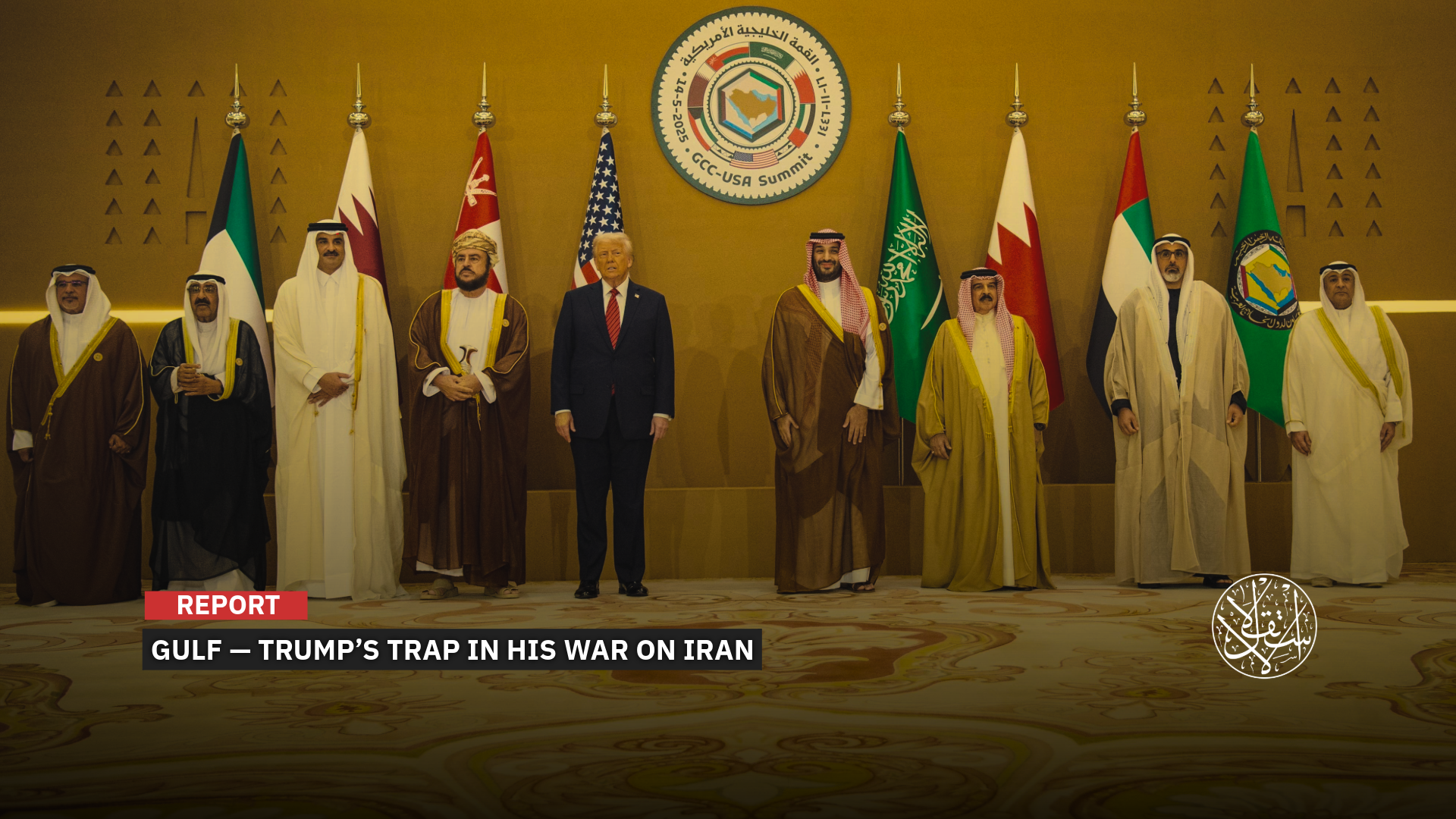
Trump is pressuring Gulf states to bear the cost of the war on Iran.
Since the outbreak of the U.S.-Israeli War on Iran, President Donald Trump has pressed Gulf states to step closer to direct military confrontation with Tehran, raising urgent questions about whether Washington is seeking to draw these oil-rich allies into the front lines—only to step back when the costs begin to mount.
The war, which began with a joint U.S.-Israeli aggression on Iran on February 28, 2026, entered a fragile pause after forty days, with a 15-day ceasefire taking effect on April 9 to allow for negotiations brokered by Pakistan. The first round of talks, held in Islamabad, failed.
Pushing Allies to the Brink
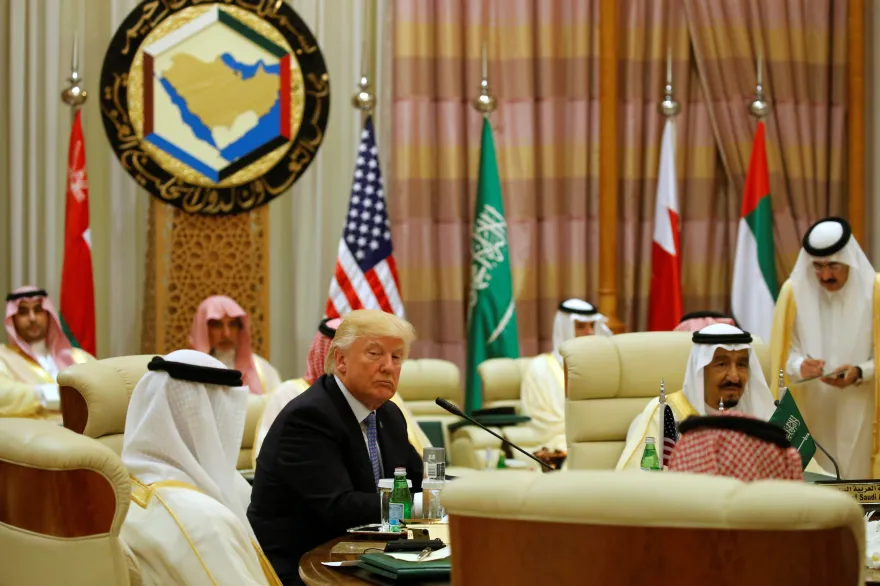
Throughout the war, the U.S. president repeatedly stressed the need for Washington’s Gulf allies to become more deeply involved in a regional strategy to counter what he described as “the Iranian threat,” urging closer military and security coordination across the Gulf.
On March 10, Israel Hayom reported that Trump had sent a message to Gulf leaders calling on them to sever ties with Iran and join the war.
After the collapse of the Islamabad talks, Trump escalated further, announcing a naval blockade of the Strait of Hormuz and urging Arab states—particularly members of the Gulf Cooperation Council (GCC)—to align with Washington in enforcing it.
In an interview with Fox News on April 12, he struck a more ambiguous tone when asked whether he expected allied support for the blockade. “So the Gulf states, now you could say they're much closer, so maybe they have to do it. But you know, they also could stay out,” he said.
That same day, writing on Truth Social, Trump declared that the U.S. Navy would begin immediately enforcing a blockade on all vessels attempting to enter or leave the Strait of Hormuz, describing the policy as “all or nothing,” and warning that any Iranian forces targeting U.S. troops or civilian ships would be blown out of the water.
He also ordered the interception of any vessel in international waters found to have paid what he called “illegal” fees to Iran for safe passage—moves that followed the failure of 21-hour negotiations over Iran’s nuclear program, an issue Trump described as the most important of all.
Pressure extended beyond the battlefield. White House press secretary Karoline Leavitt suggested on March 31 that Trump was considering asking Gulf states to help shoulder the financial burden of the war, declining to speak definitively but acknowledging the idea was under discussion.
According to military cost-tracking estimates, the war had already cost more than $42.1 billion by day 37, with nearly $12 billion spent in just the first six days alone.
Emirati Involvement
Despite mounting U.S. pressure on Gulf states, the United Arab Emirates (UAE) is the only country that Hebrew media reports have suggested may have entered the war—a claim the Emirati government has firmly denied, even as Iranian outlets accused it of being behind strikes on one of Iran’s oil facilities.
On March 8, Yedioth Ahronoth reported that the UAE had carried out an attack targeting an Iranian desalination plant, framing the incident as a calculated warning to Tehran in case attacks on Emirati territory escalated.
The report suggested Israeli assessments viewed the strike as a signal of possible Emirati involvement—however limited—in the U.S. aggression on Iran.
But Ali al-Noaimi, head of the defense affairs committee in the UAE’s Federal National Council, swiftly dismissed the claim, writing on X, “This is fake news. The UAE didn’t do that.”
The Hebrew outlet Ynet echoed similar claims, reporting that after several days of sustained fire, the UAE attacked Iran, alleging that the strike targeted an Iranian desalination plant and was viewed by “Israel,” at least for now, as a signal to the leadership.
It added that if Iranian attacks were to escalate, there remained a “real possibility” that the UAE could join the war, even in a limited capacity. The report also noted that since the outbreak of the aggression, Iran had launched missiles and drones at Gulf states, including the UAE, initially claiming to target only U.S. bases, though there were also reports of civilian sites being hit.
According to the same source, the building housing the Israeli embassy in Abu Dhabi sustained damage, with two Israelis reportedly suffering minor injuries.
Emirati circles, however, have expressed frustration over Israeli leaks linking Abu Dhabi to strikes inside Iran, warning that such claims could strain bilateral ties and complicate ongoing diplomatic efforts in the region.
Israel’s i24 News, citing an unnamed source close to Emirati authorities, reported that Abu Dhabi was struggling to understand Israel’s handling of media leaks and official briefings, stressing that the UAE is a sovereign state that makes its own decisions.
The source added that such reports do not help regional efforts and may harm relations, arguing that it is inappropriate for what was described as a senior Israeli source to speak on behalf of another country or circulate claims about attacks carried out by a sovereign state.
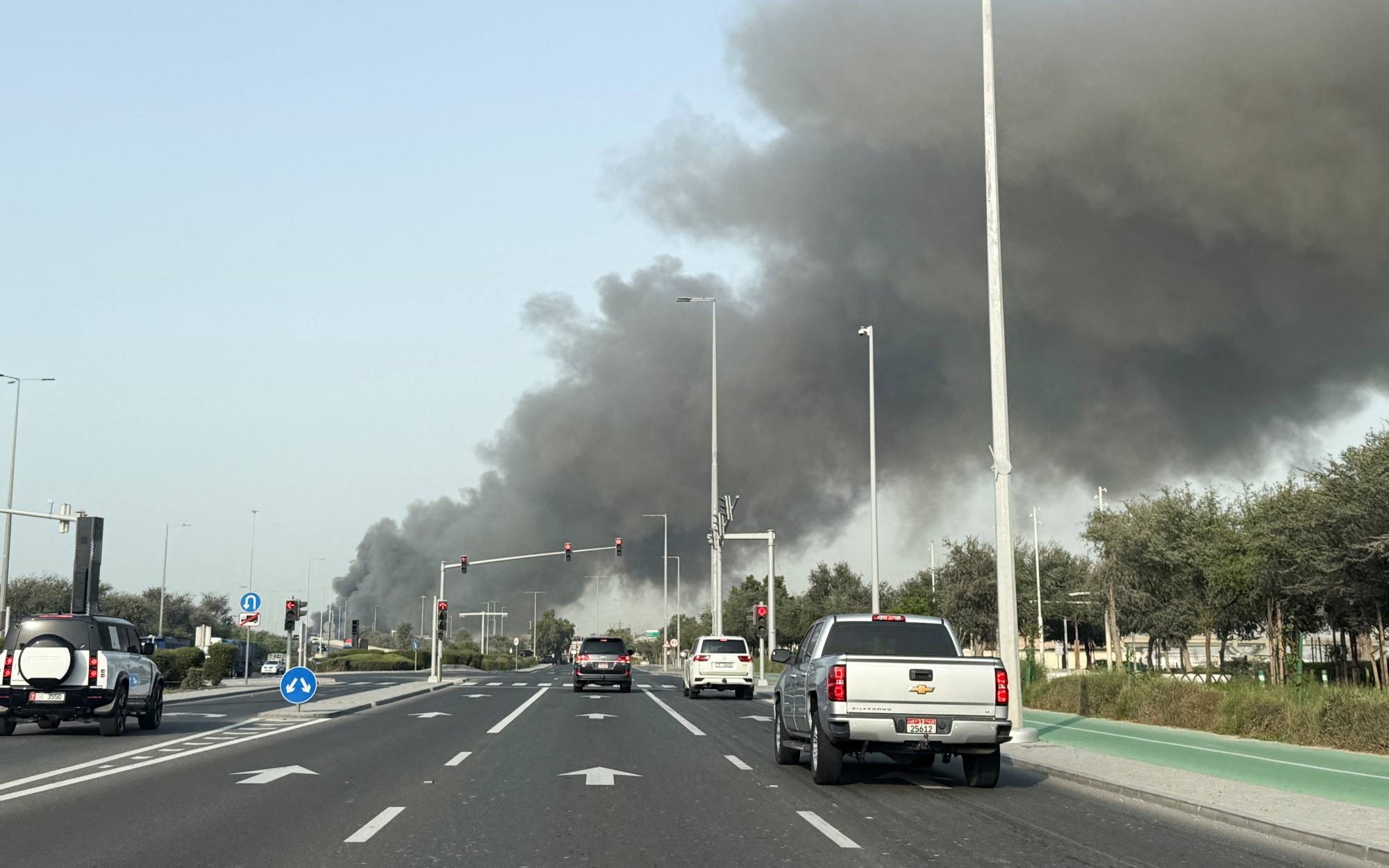
In a further escalation, Iranian military sources directly accused the UAE of being responsible for a devastating strike on the strategic Lavan Island oil refinery in the final moments before the ceasefire came into effect on April 9.
Iran’s Mizan News Agency, affiliated with the judiciary, reported that the attack on the island’s oil facilities was carried out using French-made Mirage fighter jets—aircraft operated by the UAE Air Force—effectively assigning responsibility to Abu Dhabi for involvement in the war on Iran.
An American Trap
As pressure mounted on Gulf states to enter the U.S.-Israeli War on Iran, Ali al-Hail, a political science professor at Qatar University, argued that from the very outset, the U.S. president, members of his administration, and Israeli Prime Minister Benjamin Netanyahu had been intent on pulling Gulf countries into a direct confrontation with Iran.
Speaking to Al-Estiklal, Al-Hail said this war “is neither a Gulf war nor even an American one, but Netanyahu’s war,” adding that Gulf leaders had so far avoided falling into what he described as a calculated trap—despite Iranian strikes on civilian and energy infrastructure, even as Tehran was fully aware of the locations of U.S. bases in the region.
He questioned why the U.S. Department of Defense had circulated footage suggesting aircraft launches from certain Gulf bases, suggesting this could fuel tensions against Gulf states. “Iran could have directed its missiles and drones toward Israel instead of Gulf countries,” he added.
Al-Hail argued that Gulf states have come to recognize a broader dynamic at play: that Washington and “Tel Aviv” are seeking to draw them into a direct war with Iran, only to step back later while continuing to profit, whether through arms sales to both sides or primarily to Gulf capitals.
In his view, such a scenario would not only drain Gulf resources but also risk undoing decades of economic and institutional development. “They have not—and will not—fall into this trap,” he said.
A report published by Foreign Affairs on April 6 echoed broader concerns, noting that the U.S.-Israeli War on Iran has forced Gulf states to reassess their relationship with Washington.
Gulf states do not speak openly about it, but the war has compelled regional leaders to rethink their ties with the United States and President Donald Trump.
According to the report, many Gulf leaders welcomed Trump’s re-election to a second term, citing an appreciation for his pragmatic approach to foreign policy and noting that Gulf states remain heavily dependent on U.S. protection, giving Washington considerable leverage over their decisions.
Gulf leaders are aware that U.S. interests often diverge from their own, yet moving away from Washington is far from easy, the report added, pointing out that public opinion across Gulf states has begun to question U.S. credibility and the value of hosting American military bases on their territory.
Sources
- Trump Calls on Arab States to Join Naval Blockade on Iran [Arabic]
- Is Trump Turning to Gulf States to Pay the Cost of the War With Iran? [Arabic]
- Media: War on Iran Forces Gulf States to Rethink Ties with Washington [Arabic]
- UAE Denies Israeli Claims of Targeting a Water Desalination Facility in Iran [Arabic]
- Emirati Discontent Over Israeli Leak on Iran Strike: “We Do Not Seek Escalation” [Arabic]
- Cost of U.S. Military Operation in Iran Exceeds $42 Billion [Arabic]
- Iran Hints at UAE Involvement in “Lavan” Attack Using French Fighter Jets [Arabic]
- UAE Denies Israeli Newspaper Claim That Abu Dhabi Bombed a Water Desalination Plant in Iran [Arabic]
- Yedioth Ahronoth: Trump Sent a Message to Gulf Leaders [Arabic]