Who Is a True ‘Son of the Community’? Sunni Leaders’ Wartime Absence From Iraq
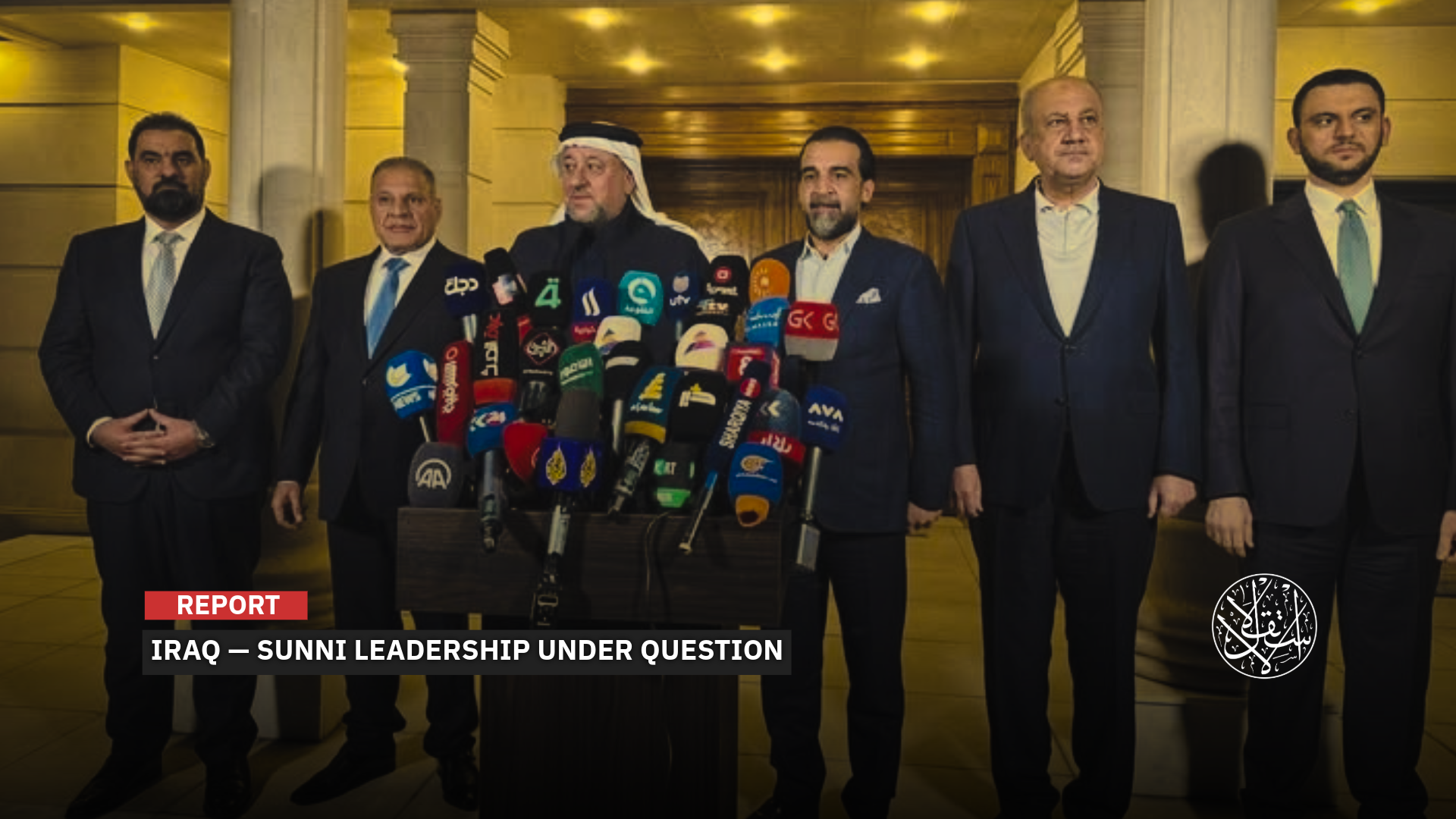
Activists and media outlets are questioning the reasons behind these leaders’ absence.
Amid the broader Middle East war following U.S. and Israeli strikes on Iran, Iraq’s predominantly Sunni provinces have come under a series of attacks, some linked to the presence of Popular Mobilization Forces (PMF) units and others hitting U.S. interests, as competing scenarios emerge over the future of these cities once the conflict subsides.
Yet despite their importance and growing questions about what comes next, most Sunni political leaders remain notably absent. This includes heads of parties and parliamentary blocs within the National Political Council (NPC), raising fresh questions about their populist rhetoric during election periods.
‘Merchants of Suffering’
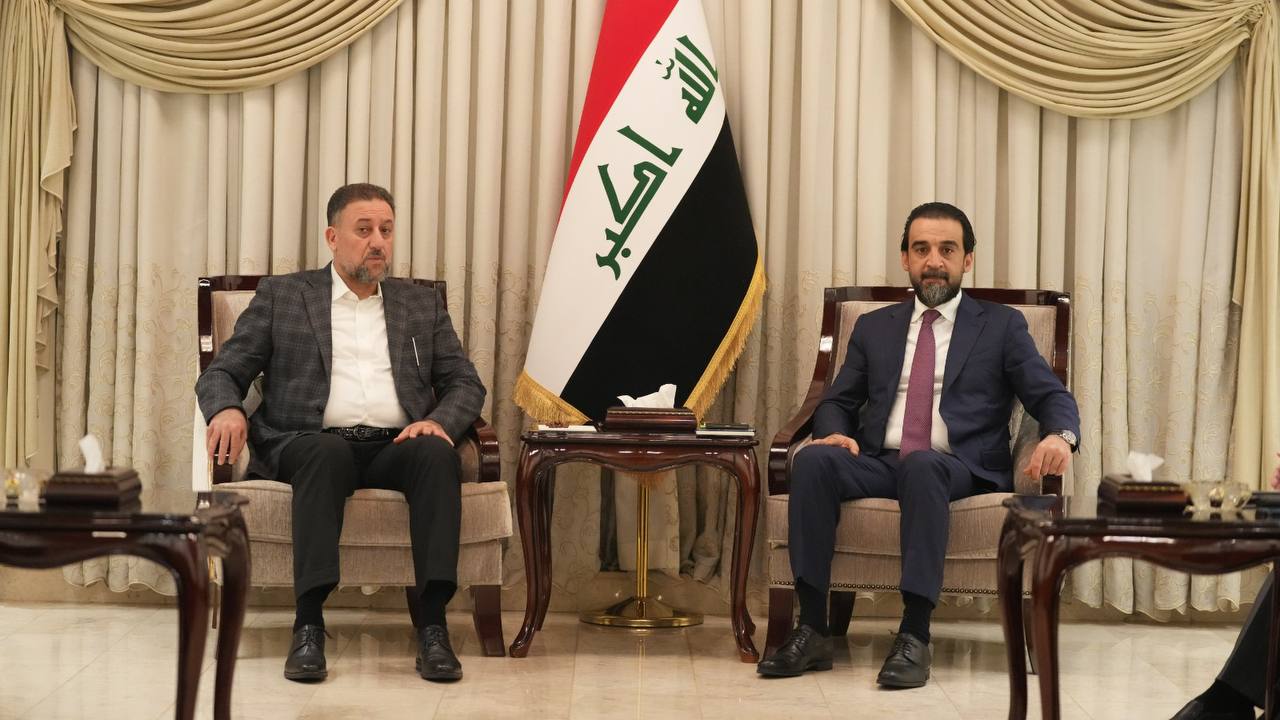
These political figures, who routinely adopt the slogan of “defending the rights of the Sunni community” during every election cycle, have now vanished from the scene, reviving memories of 2014 when ISIS swept through Iraq’s Sunni-majority provinces and some fled the country with their families, leaving communities to face their fate alone.
Among the most prominent leaders whose absence has sparked questions on social media are Mohamed al-Halboosi, head of the Takadum Party; Khames al-Khanjar, leader of the al-Siyada Alliance Party; Ahmed al-Jubouri (Abu Mazen) of the Iraqi al-Jamahir al-Watanya Party; and Thabit al-Abbasi of the al-Hasm Party.
All of them have stayed out of public view since the outbreak of the U.S.-Israeli War on Iran on February 28, 2026. Reports suggest that al-Halboosi is currently based in Jordan, just across the border from his political stronghold in Iraq’s Anbar province.
Al-Halboosi has made only one public appearance since then, receiving Iraq’s national football team at Queen Alia International Airport on April 2 after returning overland from Mexico, following Iraq’s qualification for the 2026 World Cup.
The others have not been seen in Baghdad or in Sunni-majority provinces such as Anbar, Nineveh, Diyala, Kirkuk, and Salah al-Din, even as near-daily strikes continue in these areas targeting PMF units and deepening security and economic pressures.
Iraqi Sunni opposition politician Thaer al-Bayati wrote on X on March 23, calling these figures “thieves and merchants of Sunni suffering,” amid growing questions over the absence of those who claim to represent the community.
Iraqi activist al-Sultan also commented, saying they were “frauds who have enriched themselves through slogans at the expense of the disappeared, prisoners, and those missing in militia custody,” referring to around 100,000 Sunnis detained in government prisons or missing after being taken by Iran-backed militias during the war against ISIS (2014–2017).
By contrast, former Iraqi MP from the Takadum Party Abdullah al-Khirbit praised these leaders for staying out of sight during the current period, saying, “They did the right thing; it’s none of their concern.”
Defeated Leaders
Several online commentators say the only major Sunni political figure still visibly active on the ground across Sunni-majority provinces—meeting tribal elders and local communities—is Muthanna al-Samarrai, leader of the Azm Alliance.
Videos circulated by local media and official Azm Alliance accounts show al-Samarrai making repeated visits to Anbar, Nineveh, and Salah al-Din, as well as areas on the outskirts of Baghdad, throughout the ongoing regional war.
During a visit to Anbar, where he met tribal leaders, al-Samarrai said his trip carried no political agenda, particularly in the absence of an election cycle, but was instead aimed at maintaining contact with communities amid the current conflict.
“As representatives of these provinces, it is our duty to clarify key issues related to their future and not be swayed by emotions that could harm the public,” he said. “We are not a party to this conflict, and we will not be drawn into its disputes.”
He stressed the importance of protecting the interests of these provinces and their people, adding, “We will stand with our people in hardship and ease, not just in times of comfort, and we will not abandon them.”
Azm Alliance member Salah Aldin al-Dulaimi said during an interview on April 4 that there is a “real absence of Sunni leadership,” calling it unjustified and unacceptable, while excluding Muthanna al-Samarrai, who he said continues field visits to Anbar, Salah al-Din, and Nineveh, alongside political meetings in Baghdad.
Al-Dulaimi added that “the only active Sunni political figure on the scene right now is Azm Alliance leader Muthanna al-Samarrai,” arguing that the absence of other leaders reflects a failure and a sense of defeat at a time of crisis, leaving the public to face a real ordeal alone.
He said Iraq is going through difficult circumstances and that leaders should have been present among their communities, stressing that Azm Alliance figures remain visible both on the ground and in the media and are not withdrawn or absent.
He added that the current situation exposes the true leader from those “manufactured by external circumstances,” in an apparent reference to previous foreign influence in the rise of some political figures.
Al-Dulaimi ruled out security concerns as a reason for the leaders leaving the country, saying they “enjoy protection and fortified compounds,” and suggesting instead that their absence stems from “fear of how the situation may unfold.” He added that “a real leader shows up in crises and stands at the front lines.”
As of April 6, no official explanations had been issued by the leaders of these parties or their lawmakers regarding their continued absence from Iraq or from their provinces amid the ongoing developments.
‘Son of the Community’
In explaining their absence, Iraqi political researcher Hamed al-Obaidi told Al-Estiklal that “personal interests dominate most Sunni leaders, as is the case with many other political forces in the country. That is why they leave Iraq during times of crisis and return when positions and gains are being distributed.”
“Mohamed al-Halboosi left Iraq a day before the war [on Iran] began and has not returned since, despite frequently speaking about standing with Sunni-majority provinces that are under daily attacks,” he said.
“Al-Halboosi presents himself as a leader of the Sunni community based on his parliamentary weight, but tends to disappear during crises.”
“Khames al-Khanjar was also absent from his constituents, limiting his presence to statements issued from outside Iraq, as he did during ISIS’s capture of Sunni-majority provinces in 2014,” al-Obaidi added.
“The real test of leaders comes in times of hardship, not when positions and gains are being handed out,” he said, adding that these figures “have residences in Baghdad, and if a government were formed tomorrow, you would see them rush back to attend meetings over cabinet shares, then leave again once it’s over.”
Al-Obaidi stressed that those who remain with their communities during wartime deserve the label “son of the community,” not those seeking symbolic leadership, but those signaling that their fate is tied to their society.
He urged voters in Sunni provinces to reconsider their representatives in the coming period, and to move away from leaders who appear only during election seasons and fail to deliver on promises—especially the promise of standing with their constituencies during crises.
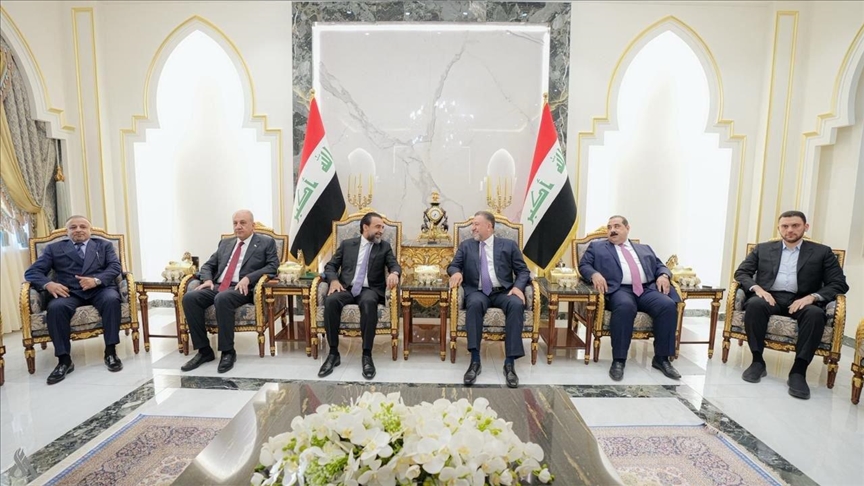
Sunni political forces that won seats in parliament announced on November 23, 2025, the formation of the NPC, a unified umbrella aimed at consolidating decision-making after years of fragmentation, loosely modeled on the Shiite Coordination Framework (CF).
The NPC—bringing together the Takadum, al-Azm Alliance, al-Hasm Party, al-Siyada Alliance, and al-Jamahir al-Watanya—said in its founding statement that it seeks to strengthen joint action in service of its constituents and improve political performance.
It called on Sunni voters to back the initiative, saying it could mark a new phase of stability and reconstruction.
The NPC brings together five major blocs holding around 75 parliamentary seats, excluding roughly 10 Sunni MPs aligned with Prime Minister Mohammed Shia’ al-Sudani’s Reconstruction and Development Coalition (RDC), alongside the Kurdistan Democratic Party (PDK) led by Masoud Barzani.
Sources
- To Discuss Public Issues, al-Samarrai Visits Tribal Leader’s Guesthouse in Anbar [Arabic]
- Al-Samarrai Visits Albu Fahd Tribal Guesthouse in Anbar, Discusses Services and Security With Tribal Leaders [Arabic]
- Al-Halboosi Receives National Football Team at Queen Alia International Airport in Amman [Arabic]
- Iraq’s National Political Council: A True Sunni Platform or Just a Power-Sharing Alliance?