Yasser Mahmoud Abbas: Canadian–Based Palestinian Businessman Seeks to Succeed His Father
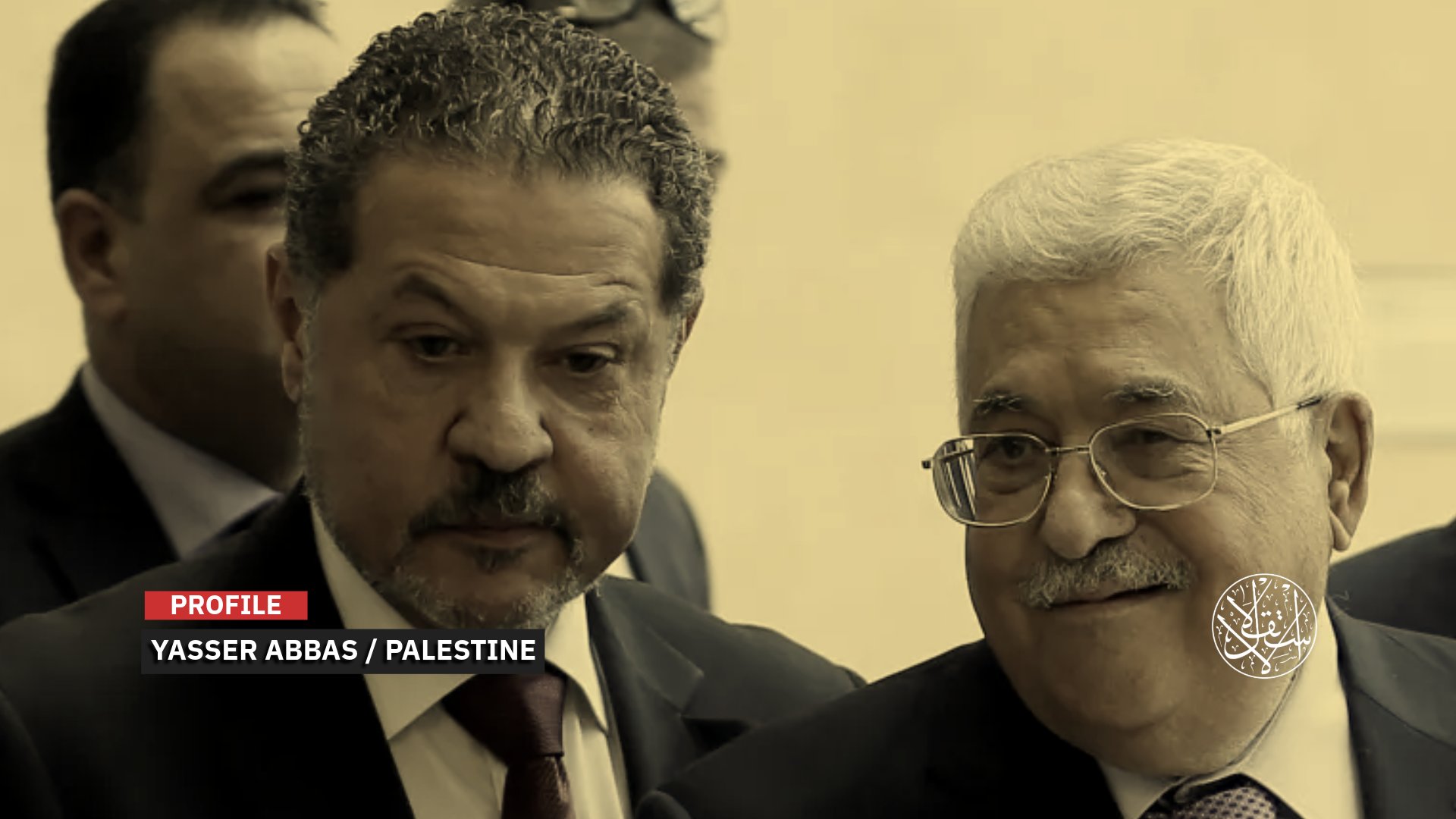
Yasser Abbas is a businessman who spends much of his time outside the Palestinian territories.
Yasser Mahmoud Reda Abbas’s victory in the Central Committee elections of the Palestinian National Liberation Movement (PLO), Fatah, was not merely another name added to the results of the movement’s eighth Congress. It marked the striking rise of a man long known through business circles and behind-the-scenes assignments into the highest decision-making body of the movement.
On May 18, 2026, Fatah announced the preliminary official results of its eighth general congress following voting held across four locations: Ramallah, Gaza, Lebanon, and Cairo.
The numbers reflected the scale of competition inside the movement. A total of 2,595 members took part in the vote, with 59 candidates competing for 18 seats on the Central Committee and 450 candidates contesting 80 seats on the Revolutionary Council, amid a turnout of 94.64 percent.
Detained leader Marwan Barghouti topped the list with 1,893 votes, followed by General Intelligence chief Majed Faraj with 1,884 votes, then Jibril Rajoub with 1,631, and Hussein al-Sheikh with 1,586. Yasser Abbas came eighth with 1,301 votes.
With that result, Yasser Abbas is no longer confined to the margins of business dealings or special assignments. He has entered one of the movement’s most influential leadership bodies at a moment when Fatah faces growing questions about the post-Mahmoud Abbas era and whether the president’s son’s rise reflects an internal restructuring effort or simply the outcome of a long-delayed organizational congress.
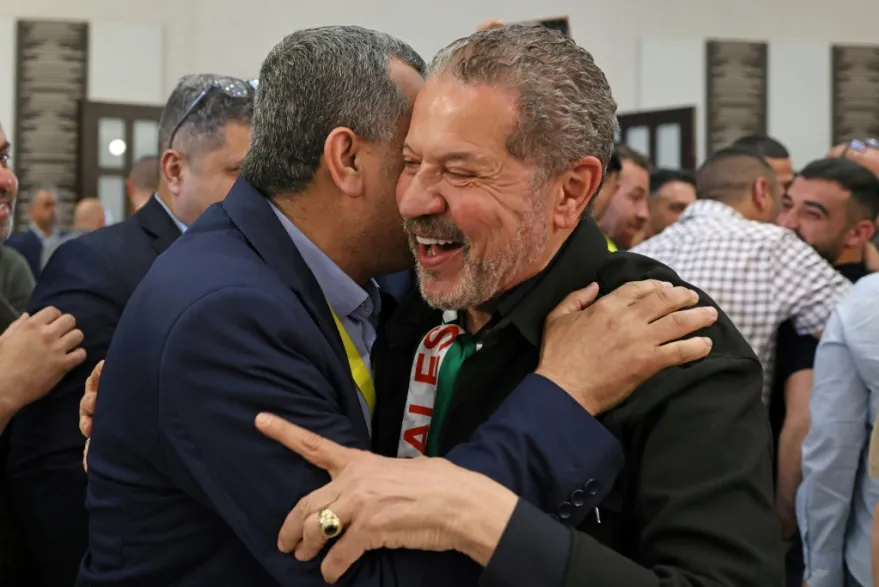
Who Is Yasser Abbas?
Yasser Mahmoud Reda Abbas, 64, is one of the sons of Palestinian Authority President Mahmoud Abbas. Known as a Palestinian-Canadian businessman, he spends much of his time outside the Palestinian territories, particularly in Canada, while maintaining business interests in the occupied West Bank.
Before joining Fatah’s Central Committee, he was not widely known as a traditional party figure within the movement but rather as a businessman closely tied to the family and political center of power surrounding his father.
Widely circulated biographies say he was born in 1962 and studied civil engineering in the United States before launching business ventures in Canada and later returning to the Palestinian territories, where he founded the Falcon business group.
The company expanded into construction, telecommunications, tobacco, and public investment sectors across areas of the West Bank administered by the Palestinian Authority.
But that commercial expansion placed his name at the center of controversy early on. For years, both Yasser and his brother Tarek faced accusations of benefiting from public funds or political influence to support their businesses.
In 2009, Reuters reported that companies run by Yasser and Tarek Abbas had received more than $2 million in contracts and subcontracting work funded by the United States Agency for International Development (USAID) since 2005.
The report also cited USAID as saying the contracts had been awarded through “full and open competition” and that family ties played no role in the process, while a lawyer for the Abbas brothers denied any favoritism or preferential treatment.
The details of the contracts highlighted the sensitivity of the issue. In May 2005, Yasser Abbas’s Falcon company signed a $1.89 million contract with USAID to build a sewage facility in Hebron, of which $872,578 was ultimately paid.
Reuters also reported that First Option Project Construction Management, a company linked to Yasser Abbas, received subcontracting work worth $296,933 from a major American engineering firm operating in the West Bank.
In 2012, Yasser Abbas returned to the spotlight after an article published by Foreign Policy examined the wealth of the Palestinian president’s sons.
Yasser filed a defamation lawsuit in the United States against the magazine and the article’s author, but the District of Columbia Court of Appeals upheld the dismissal of the case, ruling that questions raised about the family’s wealth and its sources were insufficient under Washington law to constitute defamation.
Following his election, Yasser Abbas said Fatah would work to bring Gaza “back into the fold of Palestinian legitimacy,” referring to ending Hamas’s control over the enclave.
Speaking to reporters while receiving congratulations on his victory, he said that achieving full national unity required acceptance of all the conditions tied to the PLO, including “one law, one state, one legitimate weapon,” and recognition of the PLO as the “sole legitimate representative” of the Palestinian people.
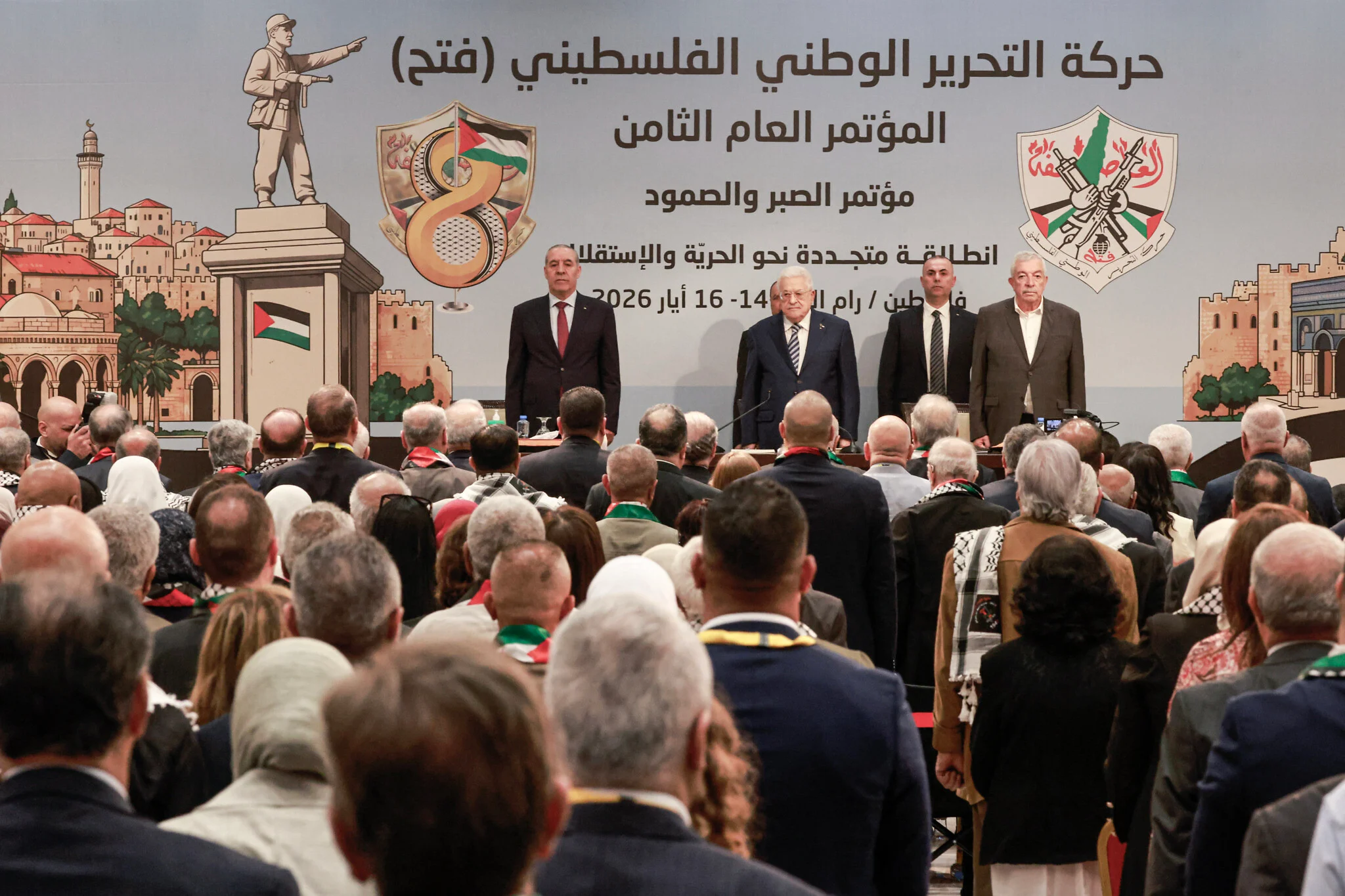
The congress also re-elected Mahmoud Abbas, 90, as Fatah leader, extending his two-decade grip over the Palestinian Authority, the movement, and the PLO, which includes most Palestinian factions but excludes Hamas and Palestine Islamic Jihad (PIJ).
From Business to Politics: How Did He Rise?
Until the eighth Fatah congress, Yasser Abbas did not hold an elected organizational position within either Fatah or the Palestinian Authority, despite frequently accompanying his father in political meetings, including a 2025 visit to Moscow during which Mahmoud Abbas met Russian President Vladimir Putin and the head of the Egyptian regime, Abdel Fattah el-Sisi.
For that reason, his victory in the Central Committee marks a transition from family-linked business influence and special assignments into an elected leadership role within the movement, although he had not been entirely absent from politics.
In April 2026, Palestine TV described him as the “special representative of the president” during a meeting in Beirut with officials from the United Nations Relief and Works Agency for Palestine Refugees (UNRWA) attended by the Palestinian ambassador to Lebanon.
The discussions focused on the conditions of Palestinian refugees, including those displaced from Syria to Lebanon, as well as the UNRWA’s growing financial difficulties.
His name also appeared in official Lebanese meetings. Lebanese Prime Minister Nawaf Salam received a Palestinian delegation that included Yasser Abbas, with talks covering the conditions of Palestinian refugees, the issue of handing over weapons inside refugee camps, and broader humanitarian, social, and economic matters.
That involvement suggested his role was not purely ceremonial but connected to sensitive political, security, and social files within the Lebanese arena.
Reuters went further, reporting that Mahmoud Abbas tasked his son in 2025 with overseeing the Lebanon portfolio within the PLO and supervising the handover of Palestinian weapons to the Lebanese army.
It also said Yasser Abbas held meetings ahead of the congress with factions inside Fatah linked to the Palestinian Authority’s security establishment, as well as groups representing Palestinian detainees held in Israeli Occupation jails, networks that may have helped secure support for him in the Central Committee vote.
But that role also fueled controversy. According to a policy paper by the Coalition for Integrity and Accountability, Aman, appointing the president’s son as a “special representative” may be understandable in limited diplomatic or ceremonial contexts abroad but becomes more problematic when extended into domestic affairs or official institutions such as the government or the PLO.
Aman, a Palestinian civil society organization focused on fighting corruption and promoting transparency and accountability, argued that Palestinian Basic Law contains no explicit provision granting the president authority to appoint special representatives for internal missions. The absence of a clear legal framework, it said, risks reinforcing perceptions of favoritism, political inheritance, and overlapping power.
In that sense, Yasser Abbas’s rise did not begin solely at the Fatah ballot box. It first passed through a non-elected track of special assignments tied to Lebanon, the refugee camps, UNRWA, relations with Lebanese officials, and the Palestinian weapons file before eventually moving into the organizational sphere through the Eighth Congress.
The importance of the Central Committee lies in the fact that it is far more than a symbolic body. It oversees major party institutions and budgets within Fatah and carries influence over appointments inside the Palestinian Authority, particularly given the movement’s longstanding dominance over both the PLO and the Authority itself.
Why the Controversy?
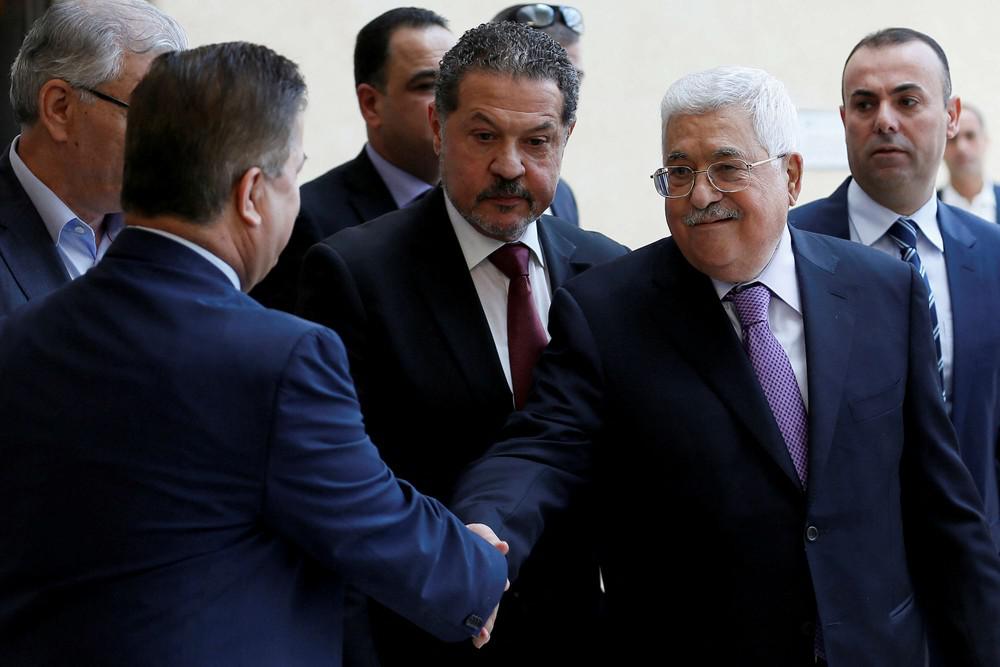
Yasser Abbas’s rise generates controversy at the intersection of three issues: money, family, and succession. On one hand, longstanding accusations continue to surround his links to business contracts and commercial interests operating under a system headed by his father.
On another, the president’s son has entered one of Fatah’s highest decision making bodies at a time when there is no clear national electoral path. On a third level, Mahmoud Abbas’s succession has become an open question within Fatah, the Palestinian Authority, and the PLO.
Reuters captured this tension bluntly, saying Yasser Abbas’s entry into politics has fueled speculation that his father may be positioning him as a potential successor within Fatah’s leadership.
Critics inside Fatah argue that Yasser Abbas lacks a record of organizational work or proven ability to unify Palestinians, particularly in the absence of national elections since 2006 and the stagnation of the state-building process.
Mahmoud Abbas has ruled by decree since his mandate expired in 2009, at a time when the Palestinian Authority faces financial crisis, declining public trust, and political paralysis following the collapse of “peace talks” with the Israeli Occupation in 2014.
Domestically, the debate is not limited to Fatah’s rivals. Yasser Abbas’s election has also revived discussions of political inheritance even without any formal declaration, especially as his position on the Central Committee gives him weight in post-Abbas arrangements.
Local media quoted Fatah insiders defending the results as the outcome of an internal vote involving congress members, while other voices argued that the structure of the Palestinian political system and its competing centers of power make any leadership transition far more complex than a single name.
Hussein al-Sheikh, recently appointed deputy head of the PLO Executive Committee and vice president of the State of Palestine, is seen as one of the leading institutional contenders to succeed Abbas. However, his role remains transitional, as real authority would depend on circumstances following the current president’s departure, while the PLO Executive Committee itself remains a contested arena of rival factions and power centers.
The Carnegie Endowment for International Peace has noted that the 2025 constitutional arrangement, placing the deputy head of the PLO Executive Committee in an interim leadership position after Abbas, has elevated Hussein al-Sheikh’s profile in succession debates, without resolving them.
Meanwhile, Marwan Barghouti commands a very different form of legitimacy rooted in popularity and symbolism, with his strong showing in Fatah’s Central Committee vote from inside Israeli Occupation prisons underscoring the continued appeal of detainees and resistance figures over security officials or wealthy elites.
Majed Faraj’s second place reflects the growing institutional authority of the security services within Fatah, while Jibril Rajoub represents long-standing organizational weight. Zakaria Zubeidi adds a field and resistance symbolism to the mix. Against this landscape, Yasser Abbas appears as a new figure, but not the only one.
International readings echo similar conclusions. Le Monde suggested Mahmoud Abbas is bringing his son into the political stage through Fatah’s Central Committee, while noting that Hussein al-Sheikh remains widely viewed as the most likely successor and that Yasser’s rise does not necessarily displace him.
The Financial Times linked Yasser Abbas’s nomination to his father’s efforts to consolidate influence within Fatah under internal and external pressure. Israeli Occupation coverage, including The Times of Israel, focused on the Congress as a process shaping a Central Committee that could play a decisive role in the post Abbas era.
The sensitivity of the debate is heightened by the broader legitimacy crisis surrounding the Palestinian political system. Fatah held its first general congress in nearly a decade, while no presidential elections have taken place since 2005 and no legislative elections since 2006.
In his opening remarks, Abbas pledged reforms and promised presidential and legislative elections, but without setting a timetable. In the gap between reform pledges and absent deadlines, Yasser Abbas’s rise to the Central Committee is not a passing procedural detail but part of a wider, unresolved question about his place in the post-Abbas order.
Sources
- Palestinian leader's son wins role in Abbas' party, official says
- Official preliminary results for Fatah Central Committee and Revolutionary Council elections announced
- Palestinian leader's son wins role in Abbas' party, official says
- Exclusive: Firms run by President Abbas's sons get U.S. contracts
- Abbas v. Foreign Policy Grp., LLC, No. 13-7171 (D.C. Cir. 2015)
- The President’s Special Representative and the Palestinian Ambassador to Lebanon Receive UNRWA Acting Commissioner General and Lebanon Director [Arabic]
- Palestinian leader's son, long in the shadows, seeks political role
- After President Appoints His Son Yasser Abbas as Special Representative, Aman Warns of Risks and Challenges [Arabic]
- Fatah Meets in Ramallah
- A look at the PLO’s new vice president, Hussein al-Sheikh
- Palestinian President Mahmoud Abbas's maneuvers to lock in the Fatah congress
- Fatah gathers for first election in decade, as PA’s Abbas pledges to continue reforms