How Israeli Settlement Activity Is Destroying the Livelihoods of Palestinians in the Occupied West Bank
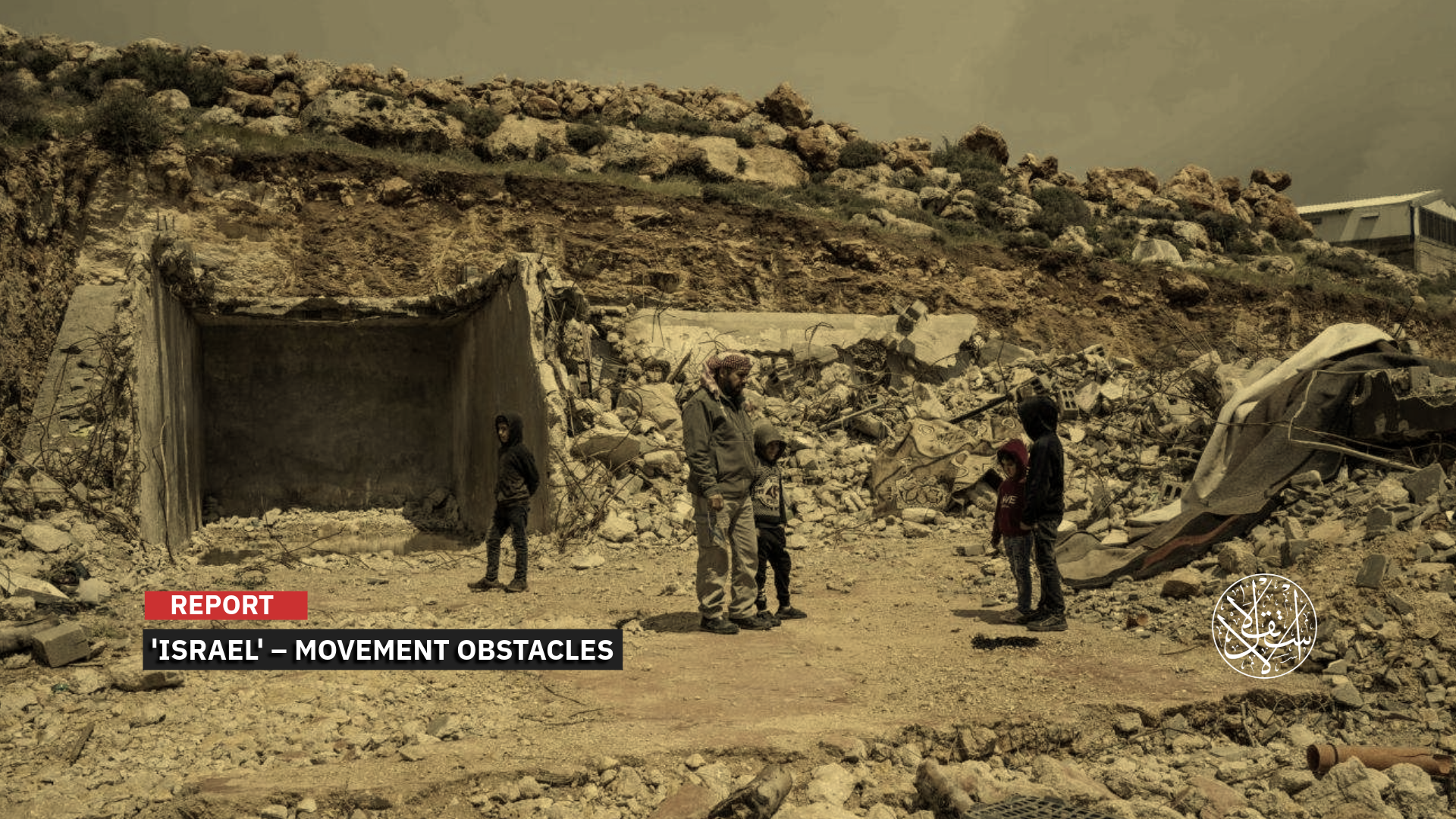
“Israeli occupation forces demolished approximately fifty commercial structures in al-Ezariyeh.”
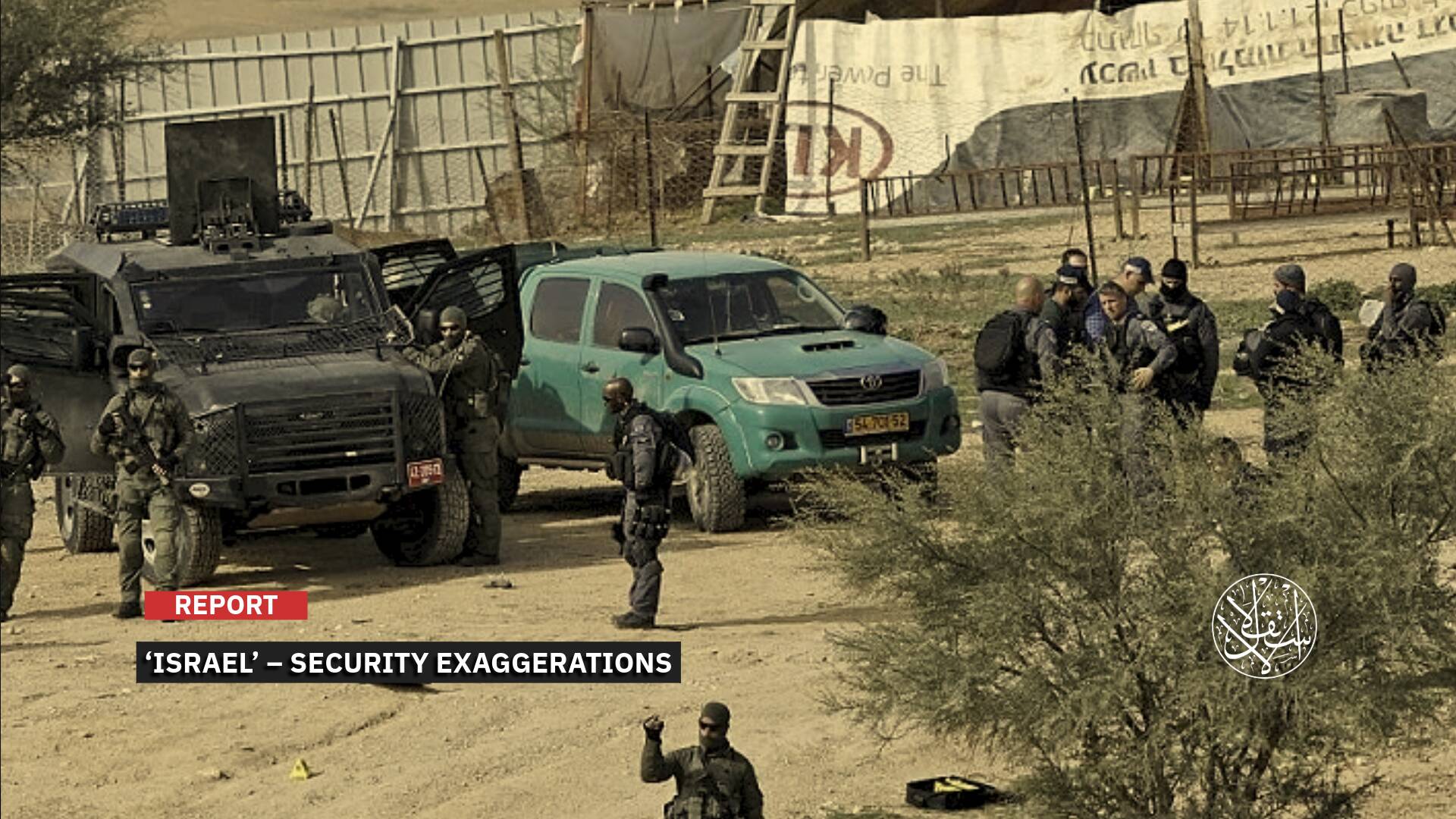
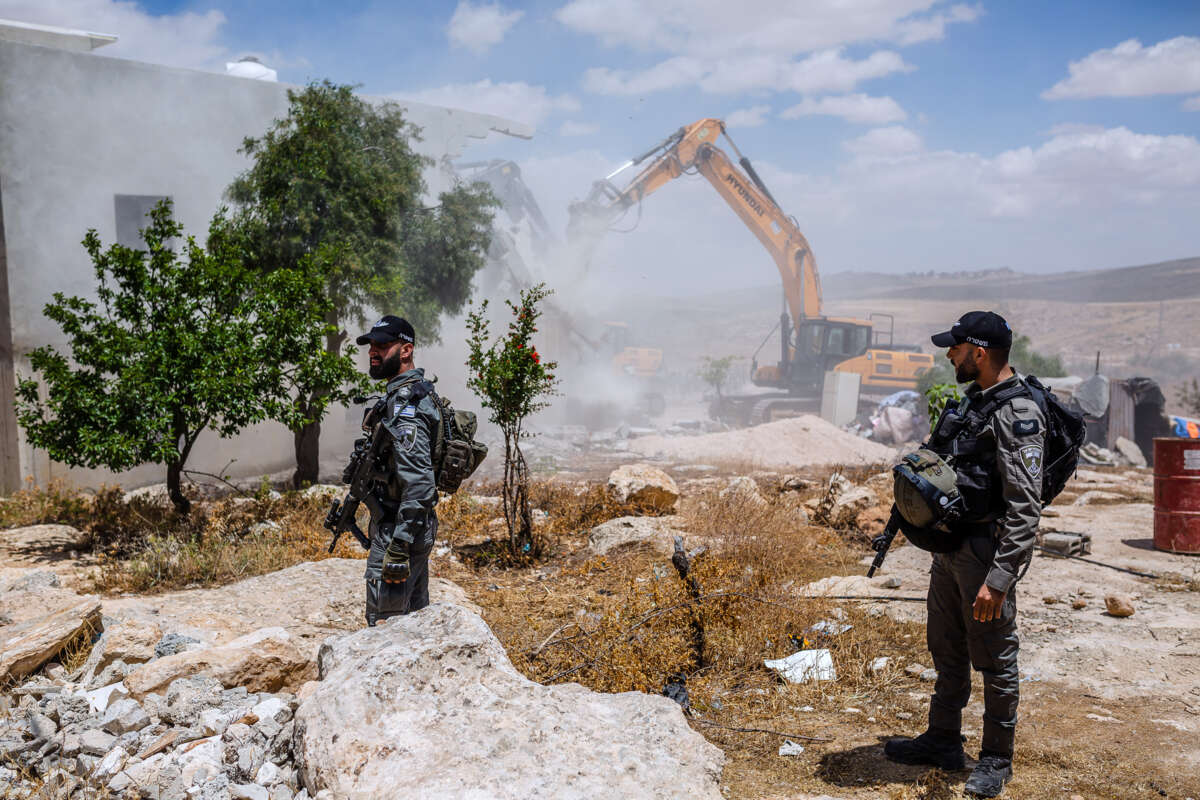
On the afternoon of May 12, 2026, residents of the town of al-Ezariyeh, east of Jerusalem, watched as Israeli machinery stormed into a commercial district, razing dozens of shops to the ground under the pretext of unlicensed construction.
The owners of garages, car washes, and restaurants held up old notices, hoping they might buy them some time; yet, the bulldozers pressed on relentlessly until some fifty commercial establishments had vanished from the map.
This incident was not merely the demolition of shops, but a prime example of how the settlement enterprise transformed into a system of economic pressure—where road networks linked to settlements, military checkpoints, and demolition operations fundamentally redraw the movement of people, goods, and livelihoods.
Movement Obstacles
In the Occupied West Bank, roads have recently become instruments for re-engineering movement. This is driven by the expansion of bypass roads connected to settlements, alongside a proliferation of gates, checkpoints, and closure points that force Palestinians onto longer, slower, and more costly routes.
As of December 2025, the United Nations Office for the Coordination of Humanitarian Affairs (OCHA) documented 925 movement obstacles that permanently or intermittently restrict the movement of 3.4 million Palestinians across the West Bank, including East Jerusalem.
Documented obstacles include: 89 checkpoints staffed 24/7; 218 partial (intermittently staffed) checkpoints, of which 152 (70%) have gates that are either usually open (90) or frequently closed (62); 232 road gates (of which 159 are frequently closed).
Furthermore, more than 459 obstacles block roads connecting towns or divert vehicular traffic onto secondary routes, while 121 obstacles cut off access to Route 60—one of the most critical transportation arteries linking the northern and southern West Bank.
The impact of this system is starkly evident in al-Ezariyeh, where occupation forces demolished approximately fifty commercial structures that supported the livelihoods of 25 families—comprising 135 individuals, including 76 children—according to OCHA. Meanwhile, local sources reported that more than 200 families have been adversely affected by the loss of commercial activity linked to the area.
These demolitions were carried out to facilitate a new corridor known as the Sovereignty Road, which "Israel" plans to construct between al-Ezariyeh and the village of A-Zae’im in Jerusalem. The route passes near the E1 area, which abuts the settlement of Ma'ale Adumim.
The E1 area is considered one of the most sensitive zones on settlement maps; linking it to Ma'ale Adumim threatens to further sever East Jerusalem from its Palestinian surroundings and disrupts geographical contiguity between the northern and southern parts of the West Bank.
"Israel" claims that the road will serve Palestinians by segregating their movement from settler traffic lanes.
However, the Israeli anti-settlement organization Peace Now warns that, in practice, the project will effectively seal off the Ma'ale Adumim and E1 areas—which together constitute approximately 3 percent of the West Bank's total landmass—to Palestinians.
According to municipal sources cited by the Balasan Initiative for Human Rights—an organization dedicated to monitoring settlement and displacement policies—approximately 3,000 dunams of land in al-Ezariyeh have been confiscated via military orders to make way for the road and its associated infrastructure.
The discrepancy between Israeli rhetoric and the reality of the road reflects the existence of a dual-track movement regime: settlements are provided with short, efficient road networks, while Palestinians are compelled to take lengthy detours—routes that consume both time and fuel, thereby driving up transportation costs.
This dual-network system means that goods which once traveled just a few kilometers between one town and another may now require a much longer journey—diverted onto secondary roads or through gates that open only by military decree.
These detours do not merely consume time; they also drive up transportation costs, damage perishable goods, cut off customers from commercial shops, and transform the road network from an economic artery into an instrument of disruption.
Economic Strangulation
The issue extends beyond simply closing roads linked to settlements to Palestinians; military checkpoints and gates are, in fact, actively redrawing the contours of the Palestinian economy. Today, Hebron stands as one of the starkest examples of this economic strangulation.
According to OCHA, Hebron’s H2 zone—the sector under direct Israeli security control, which also houses settlement outposts—contains approximately 34 permanent checkpoints out of the 89 located across the West Bank, in addition to 101 movement obstacles out of a total of 925.
Roughly 7,000 Palestinians reside in this heavily restricted zone, alongside several hundred settlers. Since October 2023, Palestinian access has been restricted exclusively to registered residents of the area, permitted only through three main checkpoints that operate between 7:00 AM and 8:00 PM—and which frequently remain closed outside of these hours.
The gravity of this Israeli policy is compounded by Hebron’s pivotal role within the Palestinian economy; the city alone generates approximately 44 percent of the Gross Domestic Product (GDP) for the Palestinian territories.
Adnan Natsheh, Vice President of the Hebron Chamber, stated that the city experienced an economic collapse following the recent war on Gaza, explaining that it used to ship 40% of its goods to the besieged Strip before that market was cut off.
Speaking to Le Monde, he noted that a truck that once took three hours to reach Jenin might now require a full day due to the increase of checkpoints and detours.
Huwara, south of Nablus, offers another example of a market stifled by checkpoints. After October 7, 2023, the town, located on Route 60, transformed from a bustling commercial hub into a street riddled with gates.
The Guardian documented that residents were forced to travel approximately 14 kilometers around iron gates separating two parts of the town that were only meters apart.
In Huwara, the losses are not limited to a single day of closure. The commercial street, which thrived on the movement of cars and passing customers, loses its value when movement becomes contingent on a military checkpoint, a permit, or a lengthy detour.
The same impact can be seen in other villages and towns that have lost a significant portion of their activity due to the closure of crossings and checkpoints.
For example, in the town of Ni'lin in the Ramallah district, a checkpoint that allowed workers and customers to travel to the Palestinian territories occupied in 1948 was closed.
After its closure, the Associated Press reported that the village streets emptied and that sales in its shops plummeted.
One shop owner said prices had risen by about 30 percent due to increased transportation and supplier costs, and that sales had plummeted by 70%, while four neighboring shops have closed since October 2023.

Land and Agriculture
If markets lose customers due to checkpoints, farmers lose their land due to the wall, bypass roads, and settler attacks. Agriculture, especially the olive harvest, is not just a seasonal activity in the West Bank; it's a vital source of income.
The Palestinian Farmers Union indicates that approximately 110,000 farmers directly benefit from the olive harvest, while another 50,000 rely on work related to the trees and their products as a significant source of income. However, access to the land itself has become fraught with danger.
During the 2025 olive harvest, attacks on farmers escalated rapidly. In early November, The Guardian reported that the United Nations had recorded 86 attacks related to the harvest, resulting in injuries to 112 Palestinians and damage to more than 3,000 trees and saplings.
Following the harvest, a joint statement issued in January 2026 by Western and European diplomatic missions in Jerusalem and Ramallah documented more than 150 incidents of violence linked to the olive harvest in over 75 villages.
According to the statement, which cited UN data, these attacks resulted in more than 140 injuries and the destruction or damage of over 4,200 olive trees.
The Palestinian Farmers Union stated that approximately 60% of olive farmers were unable to harvest their crops in 2023, and estimated that this figure could reach 70% during the 2025 season.
This indicates that the problem is no longer limited to attacks alone, but also includes the prevention of regular access to the land.
In the town of As-Sawiya, south of Nablus, the economic impact is even more pronounced. The union reported that approximately 70% of olive groves are no longer accessible without the risk of confrontation with settlers or occupation forces.
As a result, olive oil production in the town has plummeted from approximately 150,000 liters annually to a mere 30,000 liters.
The problem is not limited to direct attacks, as the separation wall and agricultural gates stand as a constant barrier between farmers and their land.

According to UN data, farmers need prior coordination with the army to access lands near settlements or behind barriers. Families may be granted only one day for harvesting, even though the work requires several days.
These restrictions delay the harvest, reduce the quality of the oil, and increase costs. They also make the agricultural season subject to security decisions.
This pressure on agriculture comes at a time when the economy is generally declining.
According to the latest data from the Palestinian Central Bureau of Statistics, unemployment in the West Bank reached 29.5% in the first quarter of 2026, with the number of unemployed reaching approximately 294,000.
The number of West Bank workers employed within the 1948 occupied territories also declined to approximately 48,000 during the same period.
With limited job opportunities, agriculture served as a lifeline for many families, but restrictions on land access and settler violence are turning this sector into a losing proposition.
Sources
- Israeli bulldozers raze about 50 Palestinian shops ahead of settlement-linked road project
- Humanitarian Situation Report | 15 May 2026
- The Government Says Construction of ‘Sovereignty Road’ Will Begin, Closing 3% of the West Bank to Palestinians
- Fact Sheet: Movement and Access in the West Bank, April 2026
- Israel’s New “Sovereignty Road”: Materializing the “E-1” Plan
- ‘We can’t even cross’: the West Bank town split in two by Israel