Washington Presses With Sanctions: Can al-Zaidi Push Iraq’s Factions Out of Government?
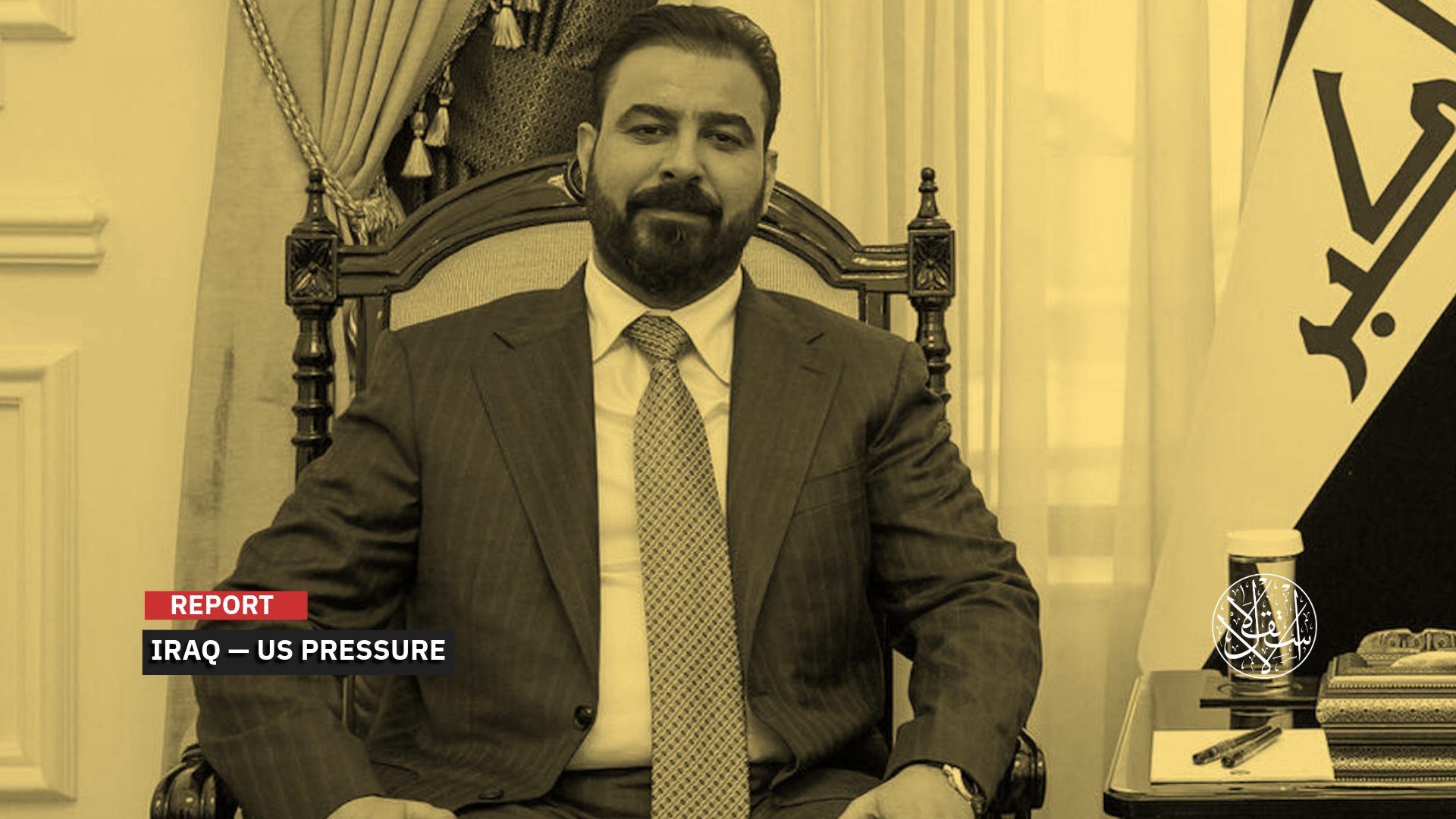
Al-Zaidi faces U.S. pressure and close American scrutiny over efforts to sideline armed factions from the government.
As Iraqi prime minister-designate Ali al-Zaidi pushes ahead with efforts to form a new government, the United States is simultaneously imposing sanctions on Iraqi figures and leaders of armed factions while issuing repeated warnings against including such groups in the upcoming cabinet.
Amid mounting U.S. pressure on al-Zaidi, a central question is emerging over whether he can succeed in keeping armed factions out of the new government—a move that would mark a first since Iraq’s political process began following the U.S. occupation in 2003.
The Weapon of Sanctions
Just days before the new cabinet is presented to parliament for a confidence vote, the United States continues to wield sanctions as a tool of pressure on Iraq’s political class and armed factions in an attempt to shape the composition of the next government.
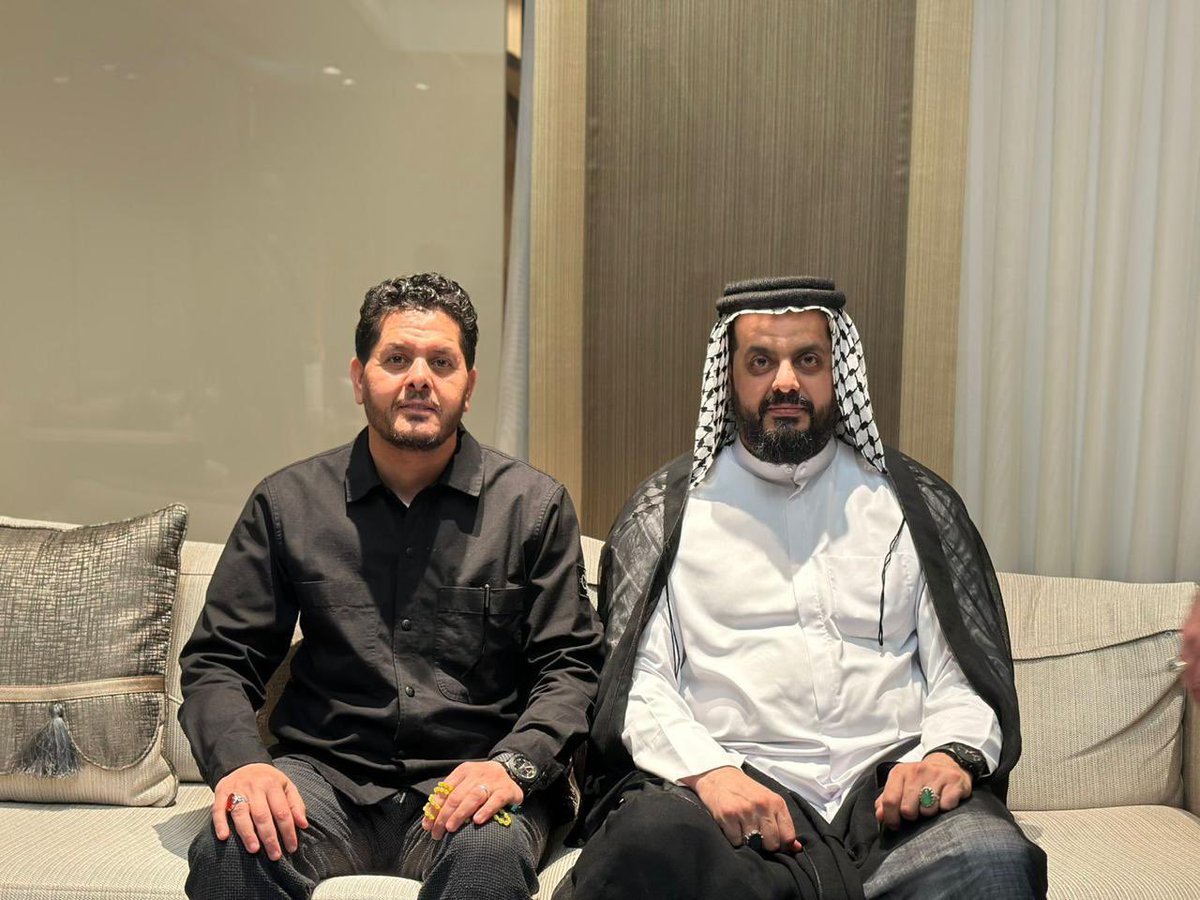
On May 7, 2026, the U.S. Treasury imposed sanctions on Iraq’s deputy oil minister and three leaders of Iraqi armed factions, accusing them of “exploiting Iraq’s oil sector and undermining the country’s security.”
U.S. Treasury Secretary Scott Bessent said in an official statement that the measures targeted three senior leaders of “Iran-aligned militias,” adding that they also included the Iraqi deputy oil minister over his alleged involvement in a scheme to help Iran sell its oil.
Bessent accused the deputy minister of abusing his position to facilitate the diversion of oil shipments and their sale on behalf of the Iranian government.
“Like a rogue gang, the Iranian regime is pillaging resources that rightfully belong to the Iraqi people,” said the U.S. official. “Treasury will not stand idly by as Iran’s military exploits Iraqi oil to fund terrorism against the United States and our partners.”
Bessent added that the “Economic Fury” forms part of Washington’s “maximum pressure” strategy against Iran, explaining that the maritime blockade is pushing the United States to directly target the main source of Iranian oil revenues.
On the same day, the Treasury revealed a wide network of financial and economic activities linked to “Iran-backed Iraqi militias,” accusing senior figures in Asa’ib Ahl al-Haq, including Laith al-Khazali, brother of the group’s secretary-general, as well as members of Kata’ib Sayyid al-Shuhada, of overseeing oil smuggling operations, financing, and weapons procurement, in coordination with Iran’s Islamic Revolutionary Guard Corps (IRGC) and Lebanon’s Hezbollah, within what it described as a cross-border illicit financing system.
According to the statement, Mustafa Hashim Lazim al-Behadili, known as Sayyid Awn, played a central role within Asa’ib Ahl al-Haq as an economic and leadership figure, overseeing for years oil smuggling networks and the transfer of stolen or subsidized fuel, using companies and government contracts as financial fronts for the group’s activities in southern Iraq.
Washington added that al-Behadili worked directly with Asa’ib Ahl al-Haq leader Laith al-Khazali to control oil smuggling revenues and coordinated with Iran’s Quds Force on oil shipments and related contracts. The Treasury also accused him of negotiating Iranian oil shipments and facilitating their transport on behalf of the militia.
As part of the sanctions package, the United States designated four Iraqi companies linked to al-Behadili, operating in the oil, services, and maritime transport sectors, which it said serve as financial fronts owned or controlled by him and used to support Asa’ib Ahl al-Haq activities.
The Treasury also expanded its sanctions list to include officials from Kata’ib Sayyid al-Shuhada, among them Ahmed Khudair al-Maksousi and Mohammed Issa Kadhim al-Shuwaili, known as “Abu Maryam,” accusing the latter of cooperating with Hezbollah-linked illicit financing networks and coordinating weapons deals and multimillion-dollar transfers to facilitate arms procurement and transport into Iraq.
Washington said these measures aim to dismantle the financing and logistical support networks used by Iran-backed armed groups and to disrupt their funding streams linked to oil smuggling and illicit economic activity.
The sanctions come as figures such as Deputy Oil Minister Ali Maarij and Laith al-Khazali have been floated in local media as potential candidates for posts in the new government, with the former linked to the oil ministry and the latter to the position of deputy prime minister for security affairs.
Since the 2014 Erbil Agreement, the United States has also offered financial rewards of up to $10 million for information on wanted leaders of Iran-aligned factions, including Akram al-Kaabi of Harakat al-Nujaba, as well as Haydar al-Gharawi of Harakat Ansar Allah al-Awfiya (HAAA), Abu Alaa al-Walai of Kata’ib Sayyid al-Shuhada, and Abu Hussein al-Hamidawi of Kata’ib Hezbollah.
‘Blurry Line’
Alongside the Trump administration’s concrete measures, a senior U.S. State Department official said Washington expects Iraq’s next prime minister to take “concrete actions” to curb the influence of armed groups affiliated with Iran, warning of a suspension of security assistance and a redirection of financial resources to Baghdad.
On May 6, Barron’s quoted the official, speaking on condition of anonymity, as saying that al-Zaidi must address the “blurry line” between pro-Iran armed groups in the Shia’-majority country and the state.
He added that the full resumption of U.S. support for Iraq, including oil revenue transfers and security assistance, would depend on steps such as expelling “terrorist militias” from state institutions, cutting their funding, and ending salary payments to their members.
“Those are the type of concrete actions that would give us confidence and say that there's a new mindset,” the U.S. official said.
Amid these warnings, local media reported that former CIA director General David Petraeus will visit Iraq to closely monitor efforts to sideline armed factions from al-Zaidi’s government.
The Iraqi al-Rasheed TV channel reported on May 9 that “sources revealed an upcoming visit by David Petraeus to Baghdad to verify the seriousness of the new Iraqi government in fully severing ties with armed groups.”
Meanwhile, Kurdistan Democratic Party (KDP) figure Majid Shankali said there is talk of appointing Petraeus as a special envoy to Iraq, suggesting he may arrive in Baghdad soon.
Shankali said Iran has entered into efforts to integrate factions within the Popular Mobilization Forces (PMF), noting that Americans may accept this as a first step, while the Coordination Framework (CF) has made a pledge to Washington to address the factions’ file.
He added that Asa’ib Ahl al-Haq is acting pragmatically and moving toward political integration, estimating that it has become “the leading party,” with strong electoral experience and significant political and economic influence.
He also noted that parts of Harakat al-Nujaba, Kata’ib Sayyid al-Shuhada, and Kata’ib Imam Ali are already present within the PMF.
Shankali said the recent U.S.-Israeli War on Iran had removed Mohammed Shia’ al-Sudani from office and cost him a second term, stressing that state control over decision-making means no parallel armed power can continue alongside the state.
Iraqi security expert Jalil Khalaf suggested that the factions’ agreement to hand over their weapons to the PMF as a state institution reflects their recognition of the importance of stability in Iraq.
Speaking to al-Mirbad on May 5, Khalaf said there must be a mechanism to formalize the handover of weapons to the state, especially as many faction leaders have shifted into political work and now hold parliamentary seats, noting what he described as “positive signs,” particularly after U.S. support for al-Zaidi in forming the next government.
He added that some armed faction leaders now have business interests and companies, making integration into the PMF or the army necessary, describing Iraq’s situation as being “at a crossroads.”
The security expert said the region is heading toward major changes, whether in the Gulf, Lebanon, or Gaza, which will in turn be reflected in Iraq.
The Last Chance
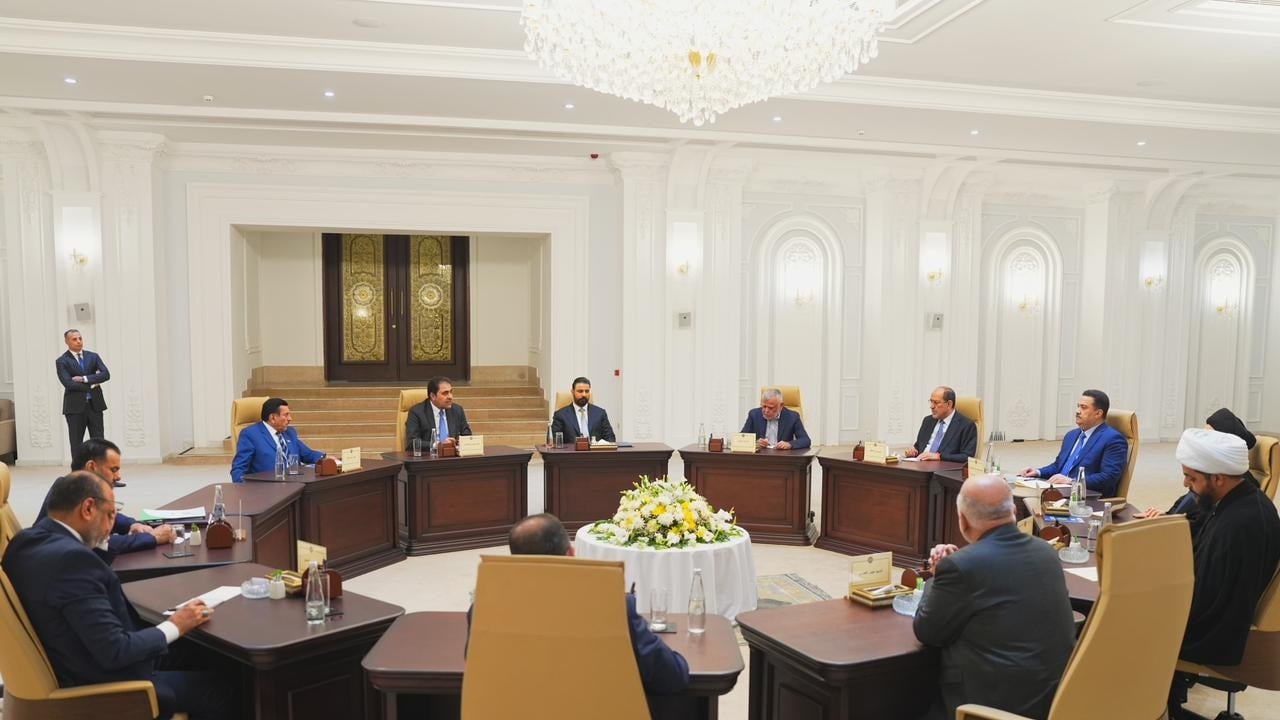
On whether Ali al-Zaidi can dismantle armed militias, disarm them, and bring weapons exclusively under the control of the Iraqi state, Iraqi political researcher Iyad Thabit said the file represents “the last chance” the United States is giving to the Shiite political class that has governed the country since 2003.
Speaking to Al-Estiklal, Thabit said the United States has grown weary of the political forces and Shiite armed factions delaying the severing of ties with Iran and the resolution of the weapons issue and has therefore turned to using sanctions against figures nominated for executive positions, whether the premiership or ministerial posts.
He noted that the pressure Washington is placing on these forces is inescapable: either a government distanced from Iran and its affiliated armed factions, enjoying U.S. recognition and support, or a government that faces U.S. rejection and potentially sanctions on Iraq.
Thabit explained that the distribution of positions linked to armed factions participating in elections and holding parliamentary blocs will be managed through the appointment of figures from outside their ranks who nonetheless remain loyal to them.
He said early signs of this could be seen in reports that media figure Nabil Jasim may replace Asa’ib Ahl al-Haq member Rabeea Nader as director of the prime minister’s media office, in what appears to have been arranged in advance.
“The post remains allocated to Asa’ib Ahl al-Haq, but al-Zaidi is compelled to exclude figures openly associated with the faction, without removing the position from them entirely, instead keeping it while assigning someone not directly identified with them,” the researcher added.
“The challenge facing al-Zaidi is extremely large, and the public support from U.S. President Donald Trump increases the pressure on him, as he is expected to live up to the endorsement while managing relations with armed factions without sliding into armed confrontation.”
“Al-Zaidi will fail to dismantle all the armed factions, especially those aligned with Iran and those that fought alongside it in the recent war,” the researcher said, adding that the Iraqi premier-designate may distance himself from them if they come under U.S. attack, while most armed groups are likely to integrate into the political system to preserve their gains.
Iraq’s Sadrist movement leader Muqtada al-Sadr called on the next government to transform armed factions into a formation under the name “Religious Ritual Guards,” regardless of their affiliations, under the authority of the Hajj and Umrah Commission or into a humanitarian relief body, warning that those who refuse would be considered outside the law.
Al-Sadr added, in a post on X, that if such steps are taken, he is ready to dissolve the “Promised Day Brigade” formation and hand over the Peace Brigades to the commander-in-chief of the armed forces, urging all sides to do the same as soon as possible.
The Sadrist leader stressed the need to avoid forming the cabinet using what he described as a “mixture of conflicting interests,” calling for the complete exclusion of anyone who holds an armed wing and the formation of a government that meets the demands of the people.
Al-Sadr also emphasized the need to crack down on corruption within a period not exceeding 90 days, starting with the case known as the “Heist of the Century” and all those implicated.
The “Heist of the Century” in Iraq refers to a major embezzlement case uncovered in 2022, in which around $2.5 billion was stolen from tax deposits at Rafidain Bank, involving businessmen and former officials.
He also called for strengthening Iraq’s foreign relations “within frameworks that preserve the country’s dignity and openness to the Arab, Islamic, and international environment, without external interference from any party and without aggression against anyone,” saying this would elevate Iraq, religion, sect, and a people “burned by the fires of war.”
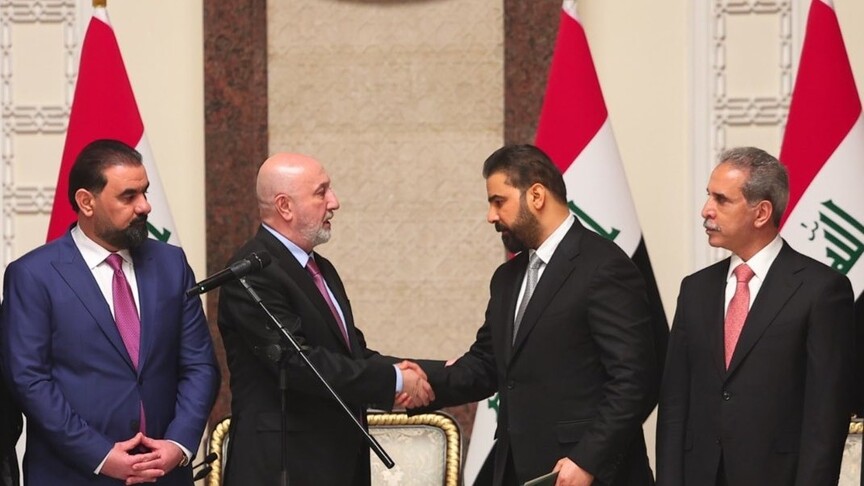
President Nizar Amidi tasked the nominee of the largest parliamentary bloc, Ali al-Zaidi, on April 27 with forming the new government, giving him up to 30 days to present his cabinet for a parliamentary vote of confidence, in line with the constitution.
On May 8, al-Zaidi submitted his government program to Parliament Speaker Haibat Hamad al-Halbousi ahead of its distribution to lawmakers for review.
The “strengthening state sovereignty and national security” clause topped the ministerial program, with al-Zaidi’s vision focusing on “monopolizing weapons in the hands of the state and enforcing the rule of law,” alongside strengthening the capabilities of the security, intelligence, and military apparatus, expanding state control, and diversifying arms sources.
The program also stressed developing the capacities of PMF personnel to enhance their combat effectiveness, defining their responsibilities and role within the security and military structure in accordance with the law, and unifying security decision-making while linking all resources and capabilities to the official state system.
Sources
- US Sanctions Target Iraq’s Deputy Oil Minister and Three Faction Leaders [Arabic]
- Muqtada al-Sadr Calls for Armed Factions to Be Merged Under “Religious Ritual Guards” Banner [Arabic]
- Al-Zaidi Submits Ministerial Program to Parliament Speaker [Arabic]
- Shankali: Al-Zaidi’s Ministers Await US “Approval” as Faction Integration Gains Momentum – Full Details With Haroun al-Rashid [Arabic]
- Security Expert to al-Mirbad: Armed Factions Likely to Hand Over Weapons and Merge Into PMF Amid Signs of Political Stability [Arabic]
- Al-Zaidi Government Program 2026–2029: Security First, Economic Reforms, and Full Digital Transformation [Arabic]